The story
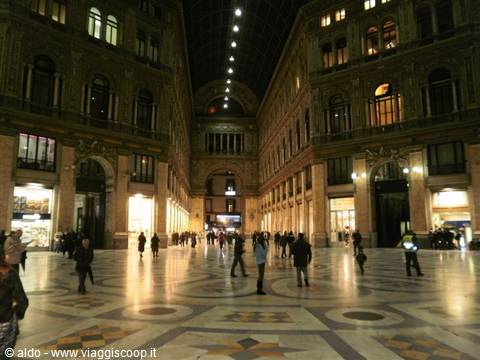
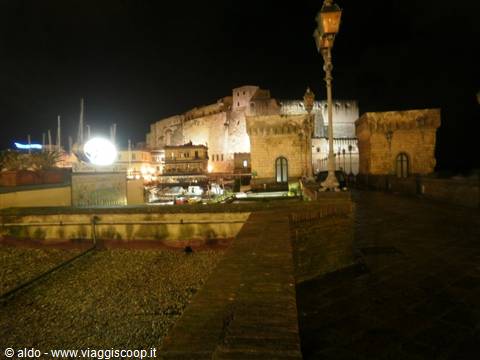
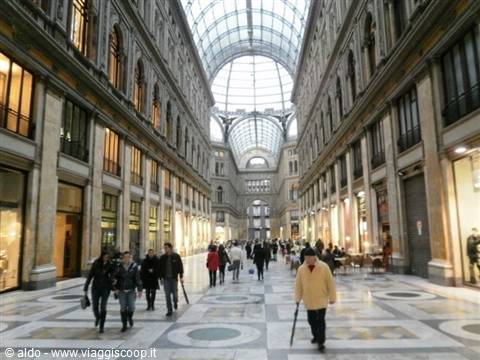
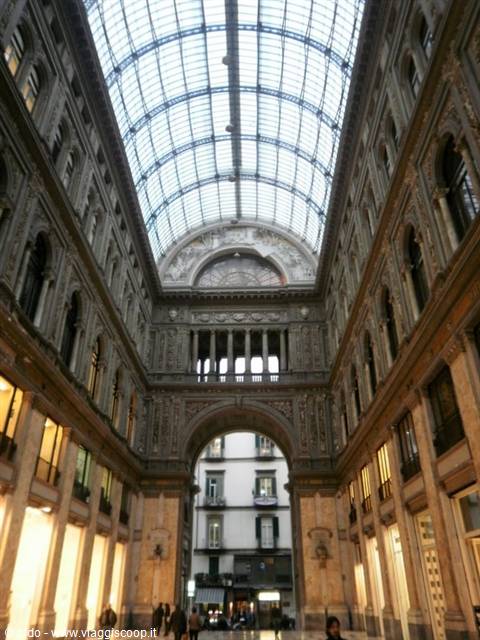
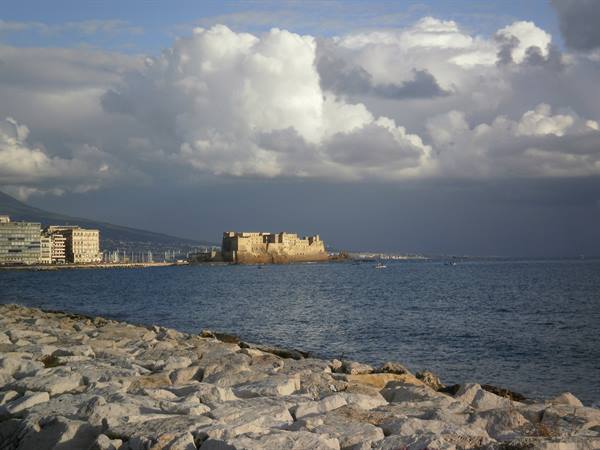
I set off by car on 17/11 heading for Naples, where my girlfriend's parents live. Arriving in the afternoon, at 15.00 we decide to go into the centre by car because my girlfriend is bursting with enthusiasm to show me her city, which despite everything she loves very much. The weather is a bit rainy but that doesn't stop us taking a stroll along the seafront near Castel dell'Ovo and having a coffee in the Galleria; the city, despite the weather, is still beautiful. In the evening we go back to the outskirts to have dinner at her parents' home.
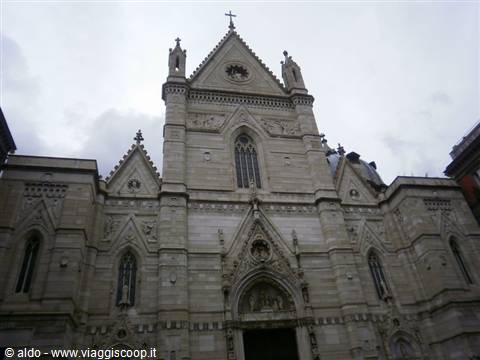
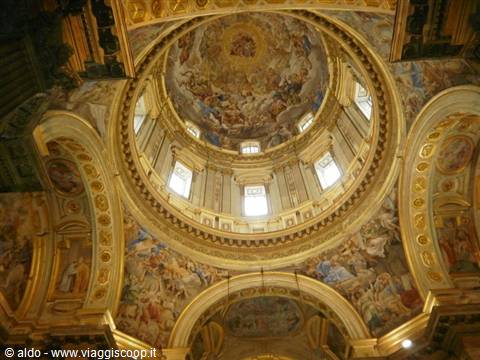
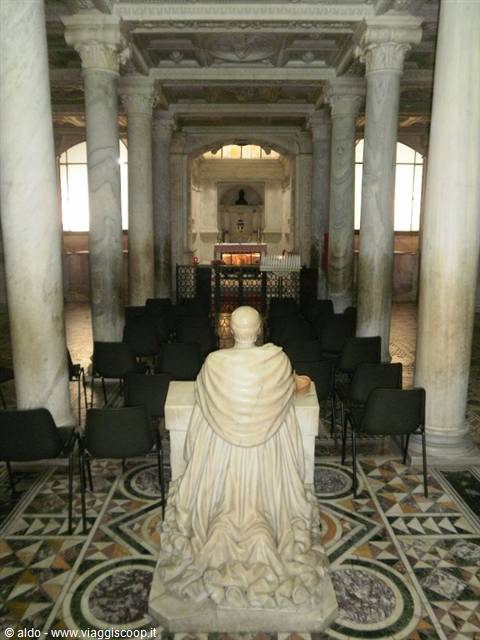
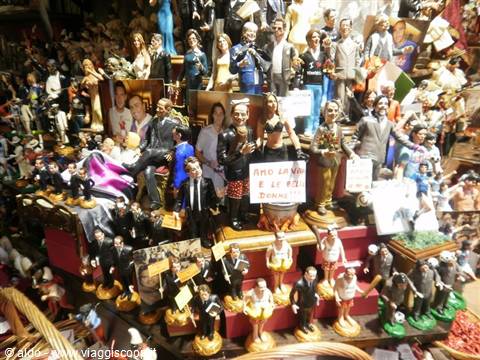
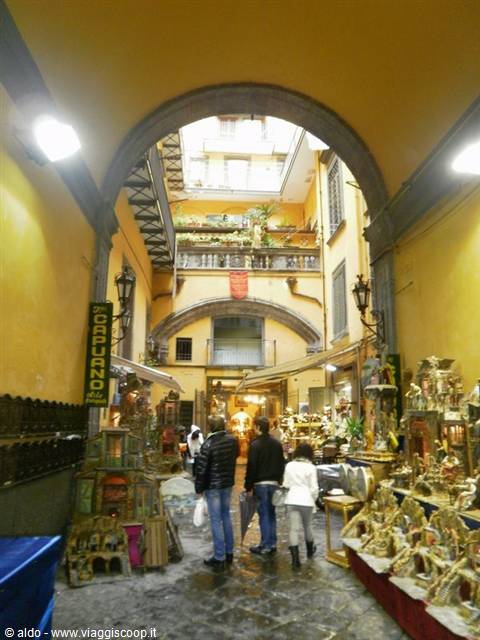
On Thursday 18/11 we buy a 3.10 euro ticket that lets us use the metro and buses for the whole day; we go down to the centre and begin with a visit to the 14th-century Duomo with the Chapel of St Januarius, then head for the quarter of San Gregorio Armeno, where we could admire the beautiful figurines of the most famous show-business characters and the handmade nativity scenes, unique in the world; at the end of the street we come across the beautiful church of Santa Maria delle Anime del Purgatorio, from whose front you can get a lovely view over the San Lorenzo and San Gregorio Armeno quarter.
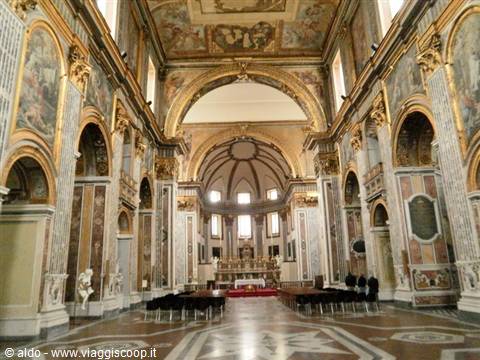
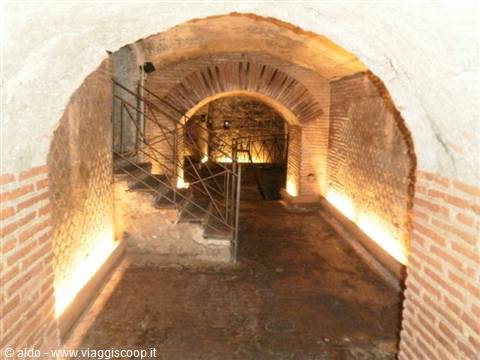
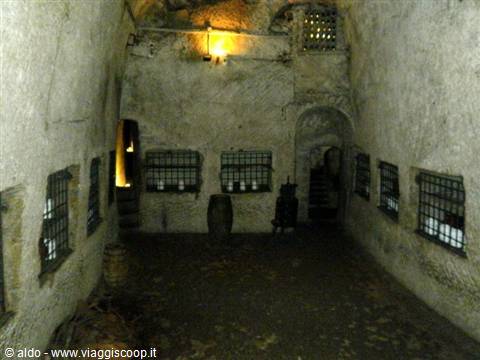
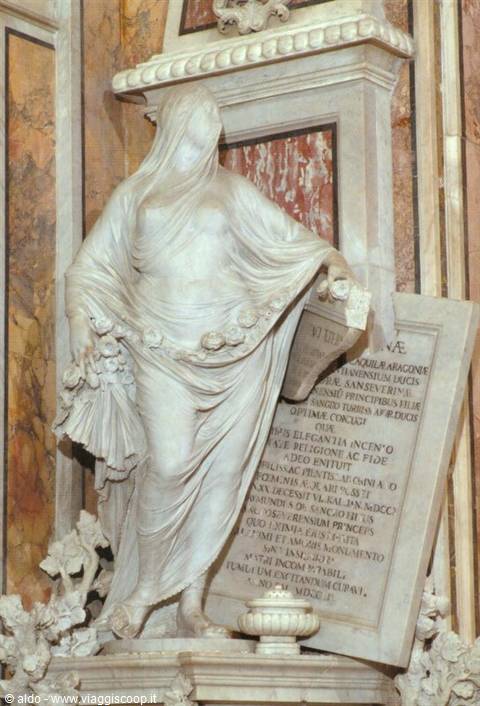
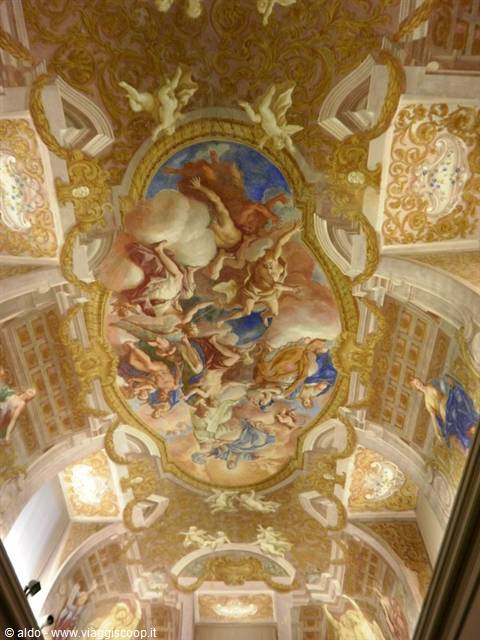
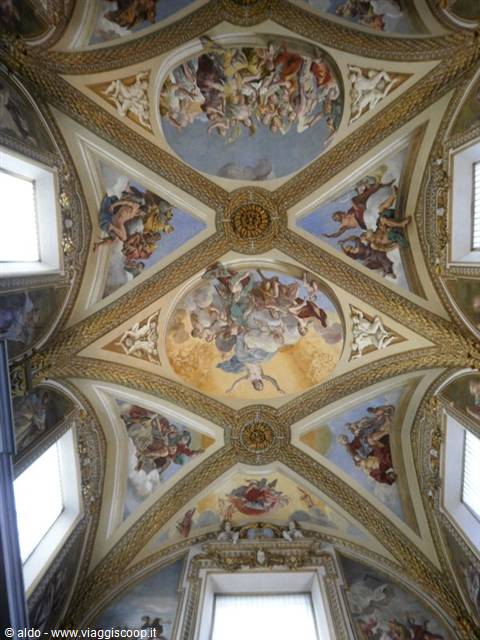
Right next to that church is the entrance to "Underground Naples"; we decide to go in with a guided tour for 9 euros, and for an hour and a half we are shown a part of it, a lattice of tunnels and cisterns used until the Second World War for collecting water, then as a shelter during the war and finally as dumps in the post-war years. Today they have been recovered and restored to their splendour; curious is the story of the "munaciello". Coming out we went to the Cappella Sansevero (7 euros), from the 16th century, of the Sangro family, where you can see the beautiful frescoes on the ceiling and in particular the sculpture of the Veiled Christ by G. Sammartino or that of "La Pudicizia" by A. Corradini; in the lower part, not to be missed, are the two bodies in the anatomical study of an 18th-century alchemist.
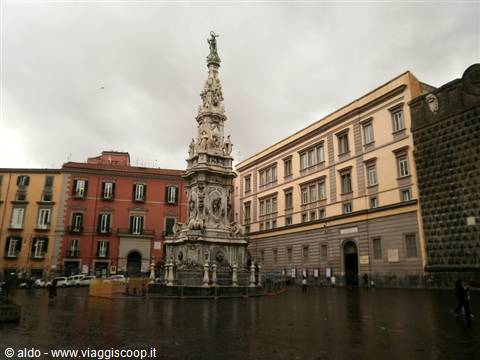
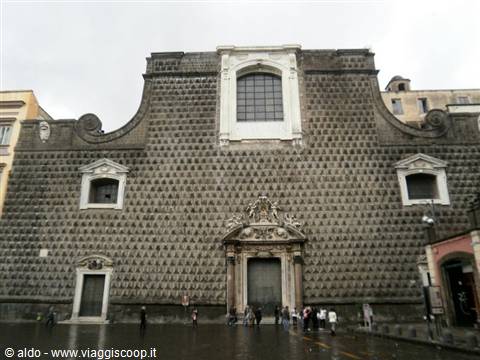
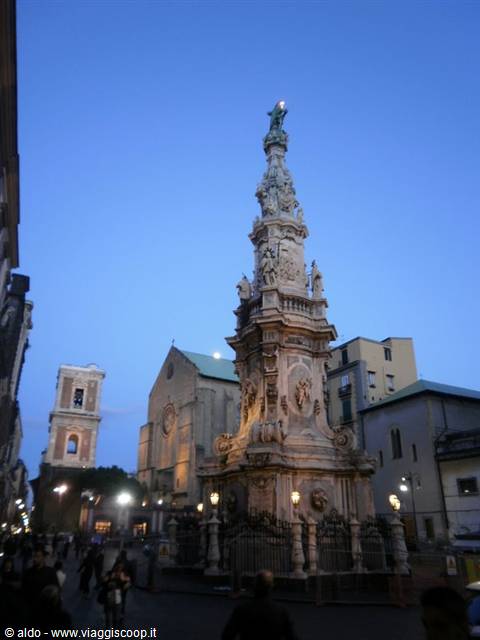
From the Cappella Sansevero we head in sequence for the Church of San Domenico Maggiore, then to Portalba, the area of booksellers and musical instruments, Piazza Dante, and finally to Piazza del Gesu, where the spire of the Immaculate rises with the statue of the virgin in gilded copper and the beautiful church of Gesu Nuovo from the 16th century. Right opposite the Church of Gesu is the Gothic-Provencal church of Santa Chiara from the 14th century, commissioned by Sancha of Majorca, wife of Robert of Anjou, and the adjoining cloister of the Poor Clares, also 14th century, decorated with majolica tiles depicting landscapes and rural and mythological scenes (entry 5 euros).
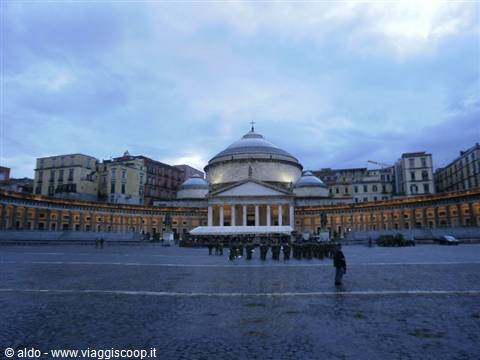
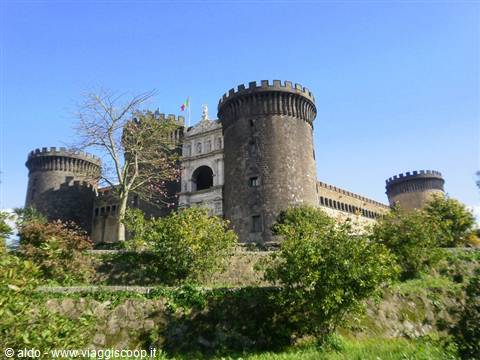
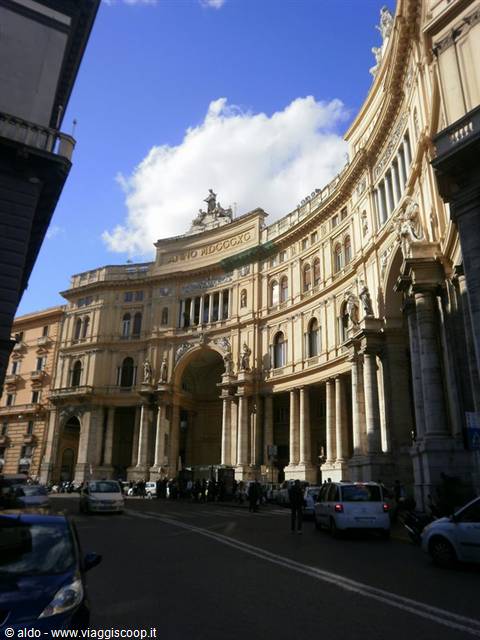
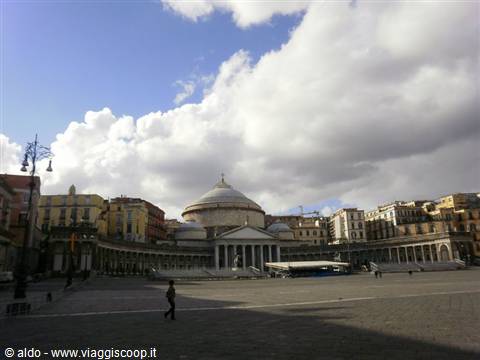
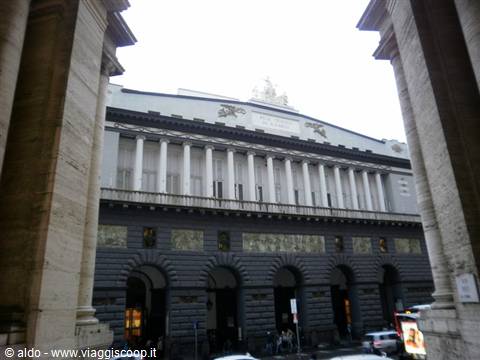
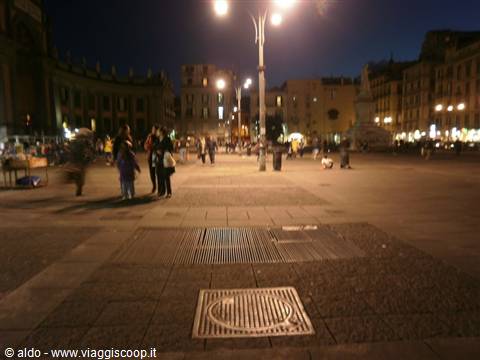
Coming out of the cloisters we go to the very central area of the city, where in a few metres are concentrated the 19th-century Galleria Umberto I, the Teatro San Carlo, the Maschio Angioino (entry 5 euros) built by Charles I of Anjou at the end of the 13th century, Piazza Trento e Trieste, the majestic and beautiful Piazza del Plebiscito where the basilica of San Paolo stands out and the semi-elliptical portico. Opposite the church is the beautiful royal palace erected at the beginning of the 1600s; behind the square rises the characteristic quarter of Pizzofalcone.
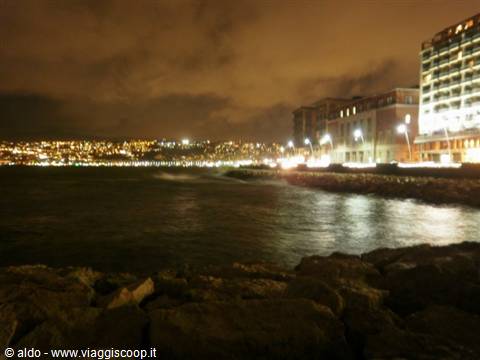
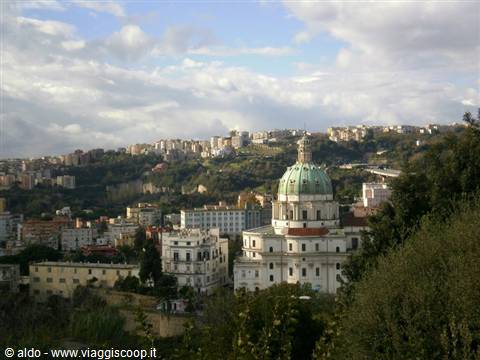
It is now evening, people are busy among the fashion streets (via Chiaia) and the various bars; we decide to go home, take a shower and go out to dinner on the seafront in Via Partenope, where we eat fantastic fried fish and pizza! On Friday 19/11, heartened by bright sunshine, we again buy a 3.10 euro ticket that includes all transport and begin with Castel Sant'Elmo from the 14th century, built by Robert of Anjou, and the Certosa di San Martino, built by Charles of Anjou in the 14th century and a splendid example of Neapolitan Baroque. Entry costs 6 euros and you can see in its museum displays of boats of the period (1800s), nativity scenes, sculptures, paintings, and take a walk in the beautiful garden with orange trees of the charterhouse; you can also enjoy a beautiful panoramic view over the city.
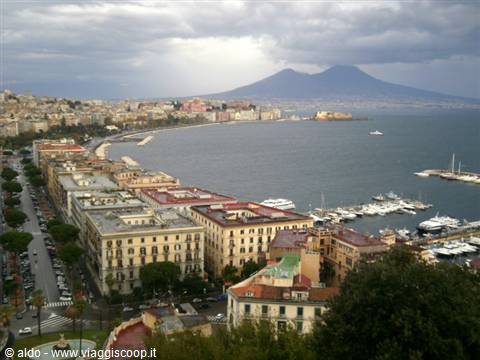
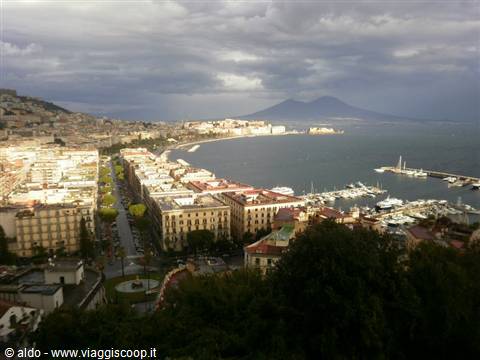
Coming out of San Martino we go down towards the elegant Vomero quarter, where we take the funicular back down towards the city centre, exactly at Piazza Municipio, then in front of the Maschio Angioino, the Galleria and Piazza del Plebiscito. At 13.00 we enter the Teatro San Carlo, where a guide (5 euros) briefly explains its history; built by Charles of Bourbon in 1737 and rebuilt after a fire in 1817, it is the second most important in Italy after La Scala in Milan. Having finished the visit we head for the seafront by bus towards Via Caracciolo, where beautiful buildings with vivid colours face the sea, and then towards the inlet of Mergellina at the foot of Posillipo.
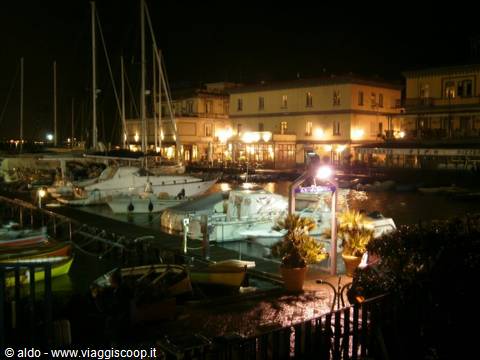
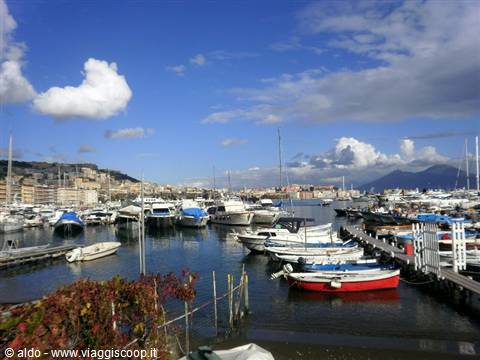
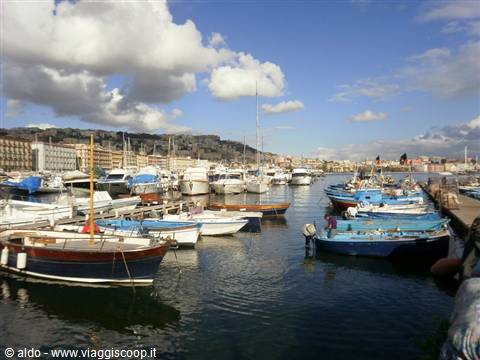
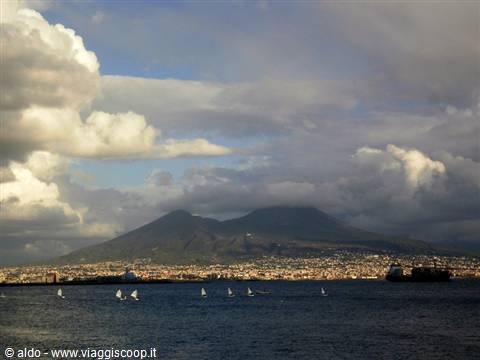
Here we decide to get an ice cream and linger for an hour on the pier to enjoy the warmth of the sun and take the chance to snap panoramic photos of the city with Castel dell'Ovo and, in the background, Vesuvius, as well as the island of Capri. In the late afternoon we decide to go back towards the centre by bus, we visit Piazza Garibaldi (the one by the station), the Chinese quarter and the two ancient gates still visible, Porta Nolana and Porta Capuana, commissioned by Ferdinand I of Aragon at the end of the 1400s; from here we pass in front of the church of Carmine and end with a visit to the pizzeria "da Michele", the one where the Margherita pizza was invented in 1870 and where Julia Roberts also went not long ago.
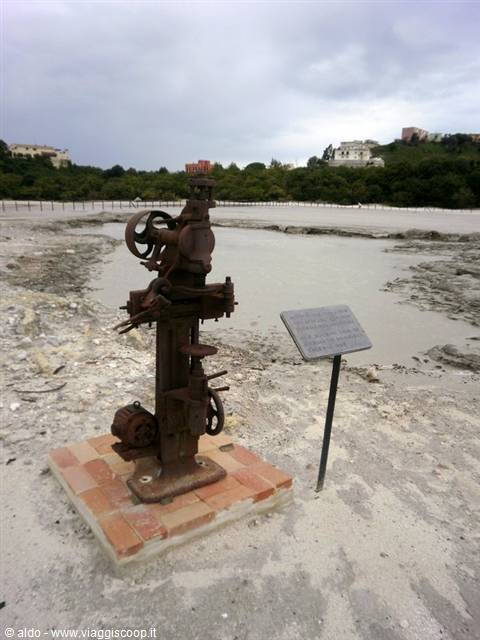
We return through Piazza del Gesu, lit up in the evening, to Piazza Dante, where we take the metro home; tiredness gets the better of us and we decide to have dinner with my girlfriend's parents. On Saturday 20/11 the day is initially sunny, and by car we decide to tackle the chaotic Neapolitan traffic and see the surroundings. We begin with the Capodimonte museum and its large park, a true green lung of the city and an outlet for the people of Naples, then visit the beautiful church of Capodimonte and pass into the Fuorigrotta quarter to take a look at the San Paolo stadium, the mythical kingdom of the great Diego Maradona. Then we go to the Solfatara of the Phlegraean Fields at Pozzuoli (entry 6 euros), where the Romans already built spa and holiday centres; here in an hour we visit the whole site with its still very active fumaroles, the boiling mud and the central crater.
We come out, get back in the car and pass in front of Nisida, the little island of volcanic origin now become a juvenile prison; we continue and go to Piazza della Vittoria, from which you enjoy a unique panorama over the city, before going home to take a shower and return to the centre for an aperitif in Piazza Vanvitelli at the Vomero with friends. We get home at 20.00 to finish our "holiday" with all my girlfriend's relatives, dining in a restaurant in Volla on fish and pizza! What I want to stress is that the city of Naples, for a tourist, is well served: there are 6 modern metro lines and 3 funiculars leading to all places of interest.
The food is fabulous, the restaurants by the sea are inexpensive too, the pizza, the fish, the desserts are exquisite...! Unfortunately the flip side is the rubbish scattered around the city (although tourist spots are almost preserved) and above all the indiscipline of many of its inhabitants, who don't respect even a minimum of rules for civil coexistence, whether it's driving a car or wearing a helmet on a scooter or dropping a piece of paper. Naples could truly, as the Neapolitans say, be the most "beautiful city in the world", but the absolute lack of civic sense, as for example in not defacing the monuments present in the city that are a heritage of the citizens themselves, makes it a city unable to express all its potential, with tourists snubbing it more and more.
The journey's photographs
58 photographs · click to open them full screen




















0 reader comments