This winter my friend Roberta suggested I join her on a trip organised by the Ciaspole association, which includes a visit to Vicenza and to some villas along the banks of the Brenta canal. After hearing for a long time Roberta's enthusiastic accounts of the activities organised by the Ciaspole association, of which she is a member, I decided the moment had come to sign up myself and to start getting to know this association, the activities they carry out and above all the people who are part of it. This short trip seems to me the right occasion to begin.
I visited this area that overlooks the Brenta canal with my parents many years ago, but we hadn't been to Vicenza. So it could be the right occasion to see a beautiful part of Italy again and to discover a city I still don't know.
Day 18 May 2010
Sailing on the Brenta
The meeting point is at 5. Luckily Roberta and her boyfriend, Fabrizio, have already arrived so I feel a little less disoriented since I practically don't know anyone.
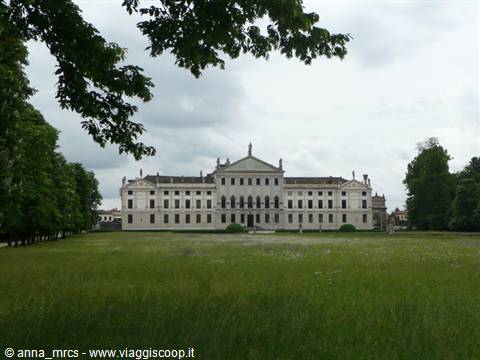
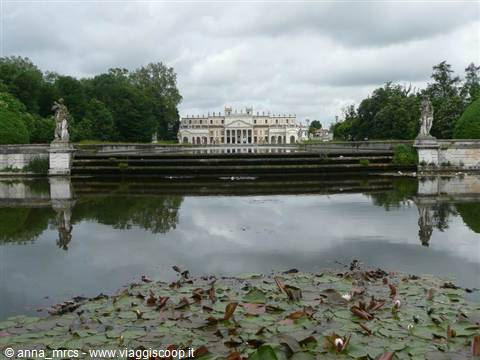
After loading the luggage and taking our seats on the bus, we set off for the mini vacation! The trip passes quickly, a nap, a bit of chatting, some reading, in short, almost without realizing it we arrive at Villa Pisani in the late morning. A guide is waiting for us and takes us to discover the beautiful park of Villa Pisani (Stra - VE). Villa Pisani, also known as the Nazionale, is a beautiful villa with an enormous park (about 10 hectares) surrounded by a perimeter wall that offers openings here and there from which you can see the surrounding countryside, or a glimpse of this splendid garden, if you look inside from the outside. The villa, from the 18th century, faces directly onto the banks of the Brenta. We only visit the garden since the time available to us isn't enough to let us see the interiors as well.
The view of the fish pond, from the 20th century, with the stables in the background deserves a nice photograph. The visit in the park lasts about an hour. We get to see the Coffee House set on a little hill, the stables, the gardener's house, the ice house and the labyrinth with the central tower. Even though we don't have much time, we still decide to put our sense of direction to the test with the labyrinth. It seemed easy.. but no.... In the end, to manage to reach the central tower we are guided by a staff member of the villa who points us to the winding path that leads us to the center of the labyrinth. From the top of the tower we can see the labyrinth from above, a tangle of paths; finding the way on our own would have taken a very long time.
We immediately realize that the way out of the labyrinth is not at all easy, so, since time is pressing, the staff member offers to guide us... and just like that we manage to be out of the labyrinth and ready to leave for our next destination in no time at all.
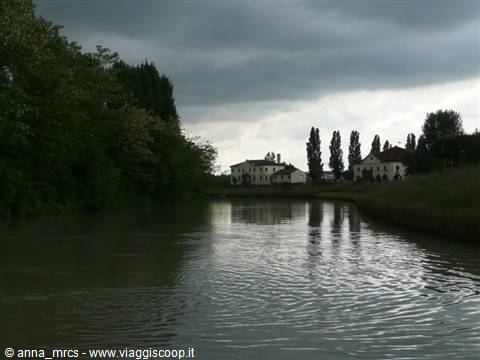
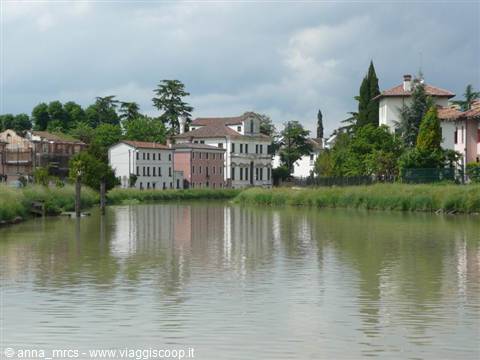
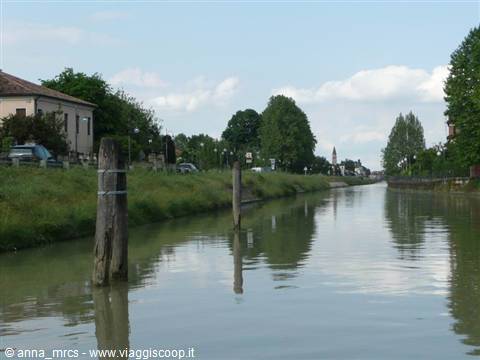
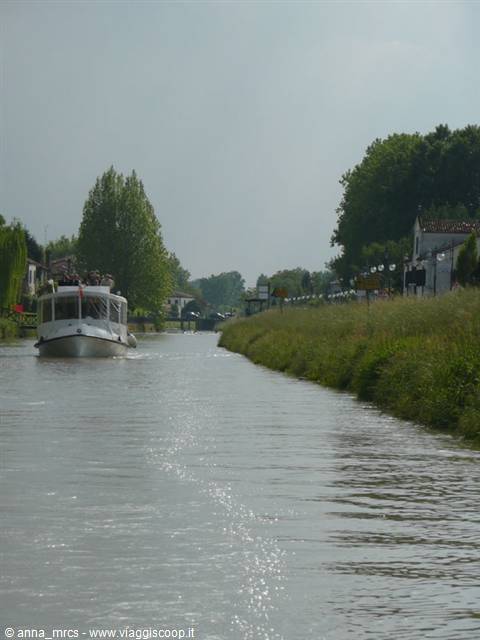
And so we arrive in Dolo at lunchtime; the appointment is at two o'clock at the boarding point of the boat, the Burchiello. Roberta, Fabrizio and I look for a quiet spot along the banks of the canal to eat our lunch, and meanwhile we see a nutria busy on the opposite bank. We board the Burchiello together with the guide who will accompany us along the entire route, describing these places to us, telling us about the villas we'll encounter along this journey and maybe even telling us some beautiful legend or curious story. These boats, still called Burchielli today, still keep the name by which they were called in the past, the boats that shuttled between Venice and Padua. It was a very widely used transport system in the past; today, of course, it's only a tourist attraction.
But it's also thanks to tourism that this local tradition continues to survive and stay alive; if it weren't for that, it would be lost.
The navigation is pleasant, the landscape flows slowly, giving us glimpses of particular beauty.
Luckily the Burchiello we're traveling on is fully covered because the rain decides to make itself heard forcefully and at a certain point it rains so hard it almost seems like someone turned on a faucet.
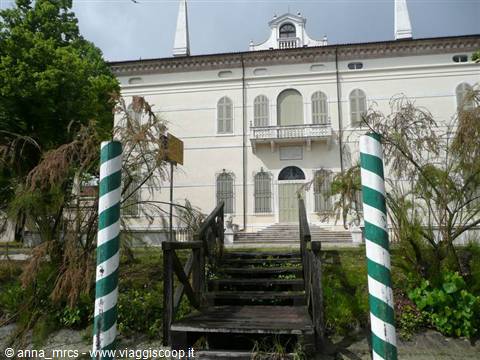
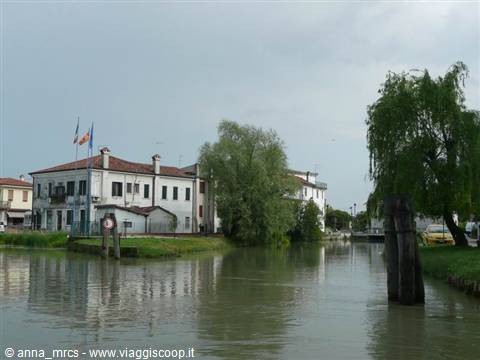
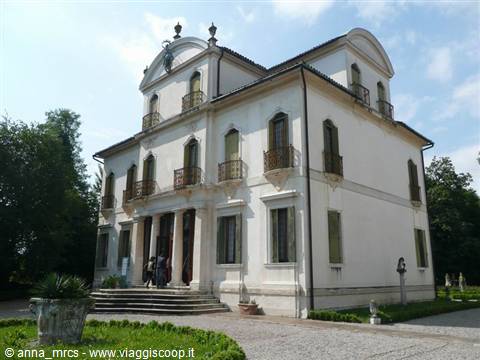
The bridge keepers, those who operate the bridges along the canal, chase us and precede us from one bridge to the next: a lock to open and close, a bridge to rotate. A curious and amusing aspect of this journey. If today the Burchiello mainly fascinates tourists, in the past there were many writers who were fascinated by these boats, and were so fascinated that they mentioned them in their works. Writers like Goldoni, Casanova, Byron, Goethe, D'Annunzio... and now I too will mention or write about the Burchiello! Our tranquil sailing is interrupted for a short stop at Villa Widmann (Mira - VE). We visit the interiors and the garden with the albino and colored peacocks strolling undisturbed through the park. The villa, from the 18th century, has passed through history into the hands of various owners. In fact, its full name lists a myriad of surnames.
Very beautiful is the ballroom and the splendid frescoes on the walls and ceilings depicting mythological scenes. The garden too, in its simplicity, deserves a visit; impressive is the majesty of the bald cypresses of Canada rising in all their grandeur from the waters of the park's little lake!
We resume navigation and in less than an hour we arrive at the end of our journey on the canal. The Burchiello drops us off right in front of Villa La Malcontenta, which we don't have time to visit, but even if we'd had the time we couldn't have visited it since, as Roberta points out to me, it's open only a few hours a day. The name of this villa, it's said, is due to the wife of the man who commissioned this villa, a wealthy Venetian. Returning from one of his countless business trips to Venice, he discovered that his wife did not remain sad and disheartened waiting for his return by the hearth, quite the opposite.. So he relegated her to this house far from the good life of Venice, from all her friends and also from those who fueled her husband's jealousy.
Segregated in this splendid dwelling far from everyone and everything, the poor woman, sad and unhappy, died of loneliness; hence the nickname 'La Malcontenta'.
We get back on the bus heading for Vicenza, where we will not only spend the night but also spend tomorrow discovering this beautiful city.
The hotel is very nice, and so is our room. I share it with another girl whom I immediately get to know: Sonia, who will turn out to be a perfect roommate.
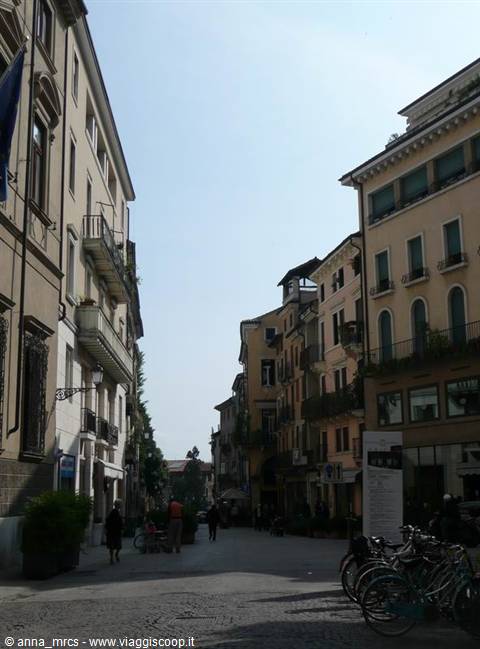
Dinner is at a typical little restaurant in the center that Roberta, Fabrizio and I decide to reach on foot. It's a walk of about twenty minutes. We walk the entire main street of the city: Corso Palladio. It's our first encounter with this city, which we immediately discover to be lively and cheerful. Corso Palladio, a pedestrian island, teems with people strolling, meeting up for an aperitivo, chatting, or returning from some shopping; in short, the city center is lively and cheerful.
The dinner was delicious and pleasant both for the excellent quality of the food and for the company. To use a comment from Roberta, "we ate like marmots." If I'm honest, I don't know how much marmots eat, but we ate a lot. Of course, the baccalà alla vicentina couldn't be missing, and a typical dessert accompanied by mostarda vicentina, slightly spicy.
Vicenza
Day 29 May 2010
Vicenza
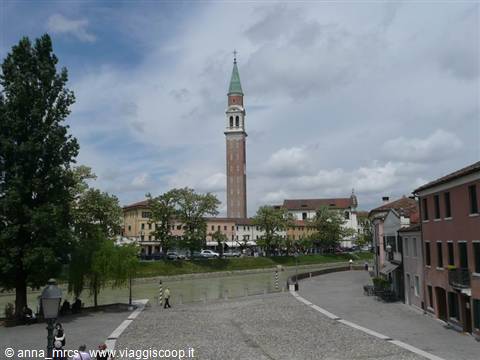
After leaving the hotel we head by bus to the vicinity of the center where, accompanied by a guide, we set off to discover the city. Vicenza is a city of about 120,000 inhabitants. You wouldn't say so, since my impression was of a town built on a human scale. Vicenza is also known as the city of Palladio precisely because the architect Andrea Palladio, in the late Renaissance, created numerous works there. Since 1994 Vicenza has been part of UNESCO's World Heritage, like many of the Veneto villas.
We stop right away in front of Palazzo Chiericati. Austere and imposing. We visit some rooms on the first floor. It was commissioned as a private residence by a nobleman of the time from Andrea Palladio, who designed it in 1550. Currently it's the home of the civic art gallery. This palazzo too has been included in UNESCO's World Heritage. A little curiosity I read... the White House was designed in the Palladian style. But...
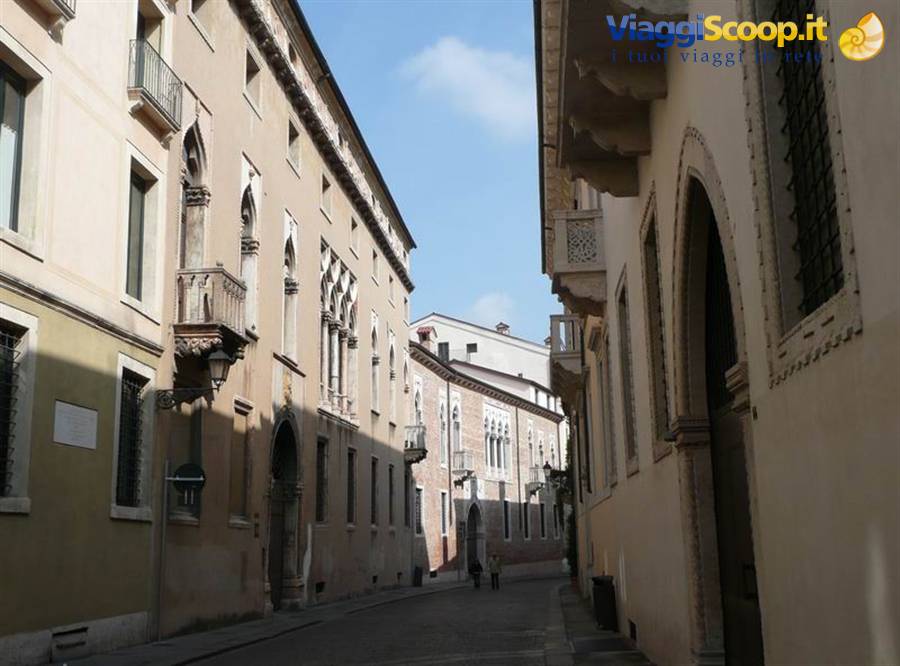
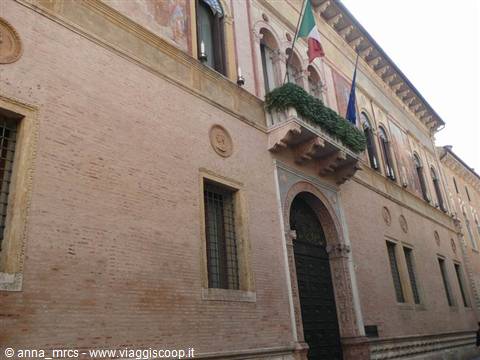
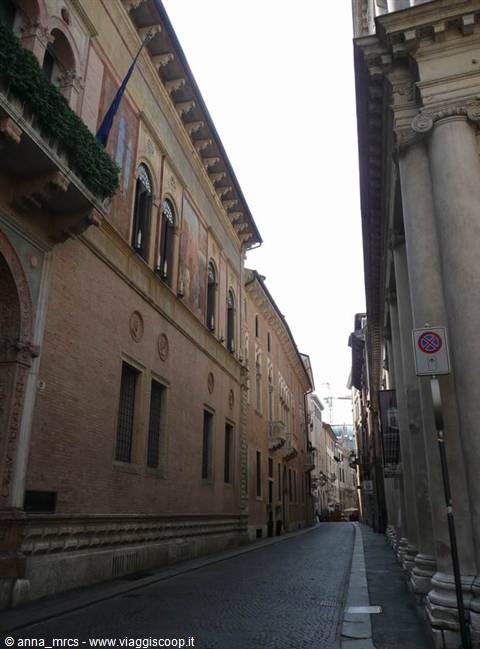
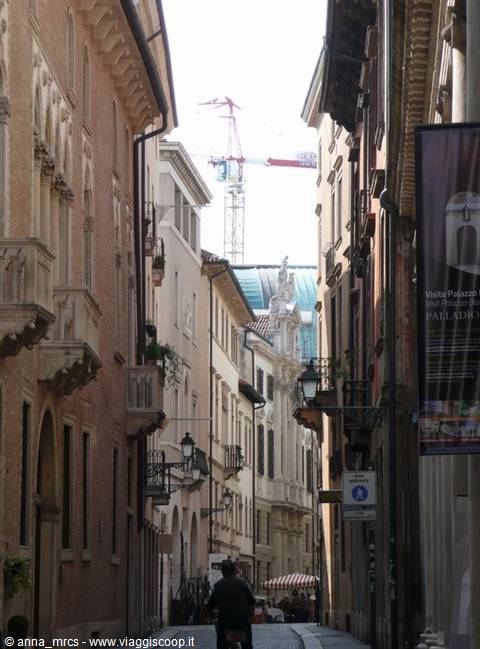
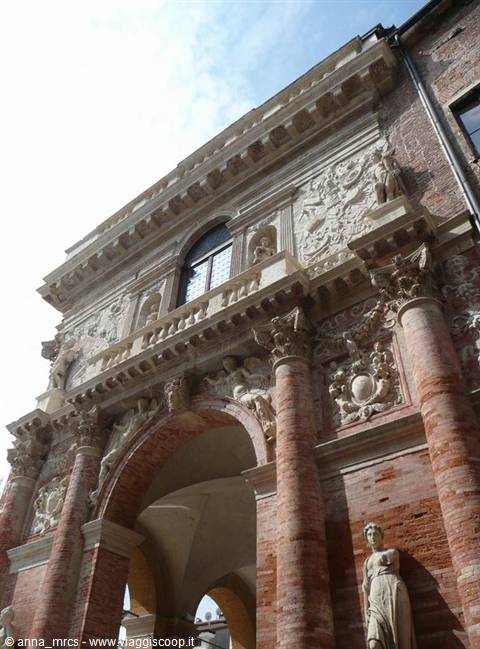
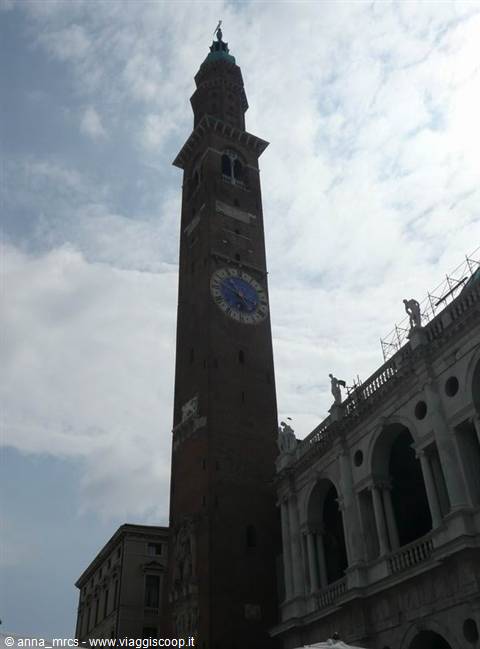
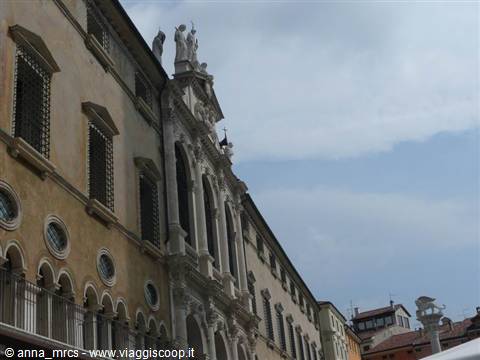
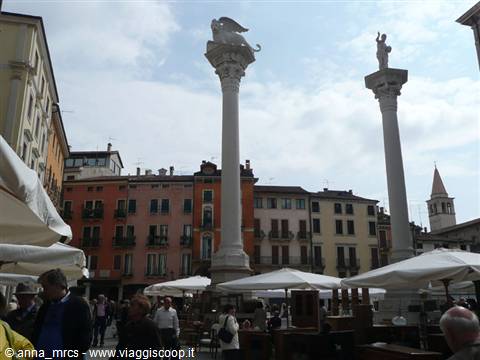
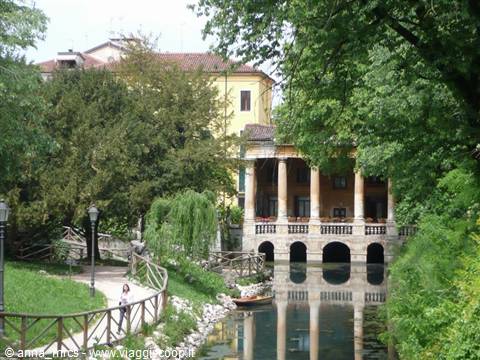
Our visit then continues along Corso Palladio and through the streets and alleys of the center, discovering its splendid palazzos and corners. So before our eyes pass sumptuous and austere palazzos. We see the Cà d'Oro, Palazzo Tiene, and many others. We then arrive at Piazza dei Signori, the main square of the city, crowded with stalls; there's a kind of flea market going on. Despite this, the Basilica Palladiana stands in all its majesty. Beside the Basilica, one of the tallest buildings in the city: the Bissara tower. The name of the square, Piazza dei Signori, is a toponym found in many Veneto cities. It always identifies the main square of the city where the city government was, and therefore from where the lords of the time administered the city. The Loggia del Capitano, another splendid palazzo by Andrea Palladio, faces onto this square, exactly opposite the Basilica.
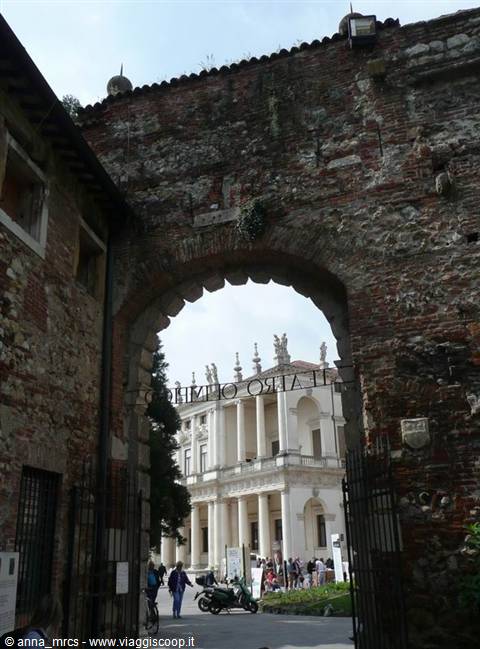
Last, we visit the Teatro Olimpico. Impressive! It was the last building designed by Palladio and he didn't see its completion. The theater recreates the structure of a Roman theater and was begun in 1580 by Palladio, to be completed by his pupil Vincenzo Scamozzi. It's something truly unique. It alone is worth the trip to Vicenza. It was inaugurated on March 3, 1585 with a performance of Sophocles' Oedipus Rex, whose scenery is still visible today. The theater is still used for concerts and theatrical performances that suit the theatrical presence of the theater well.
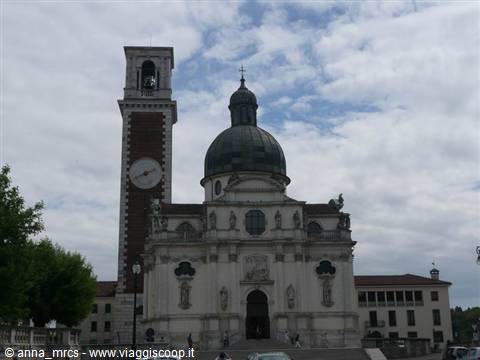
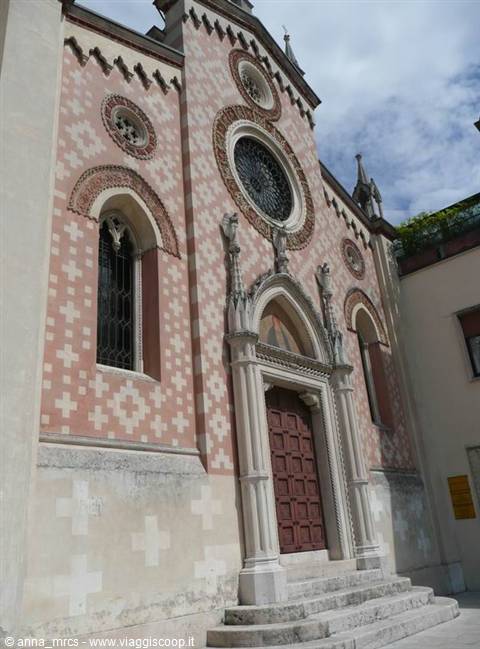
After wandering a bit around the city and stocking up nicely on postcards for my exchanges with the rest of the world, loaded with our purchases, we slowly head toward Monte Berico. The sun has come out and it feels really nice. In Piazza del Casello we pass under the Torrione di Porta Castello; to our right are the Salvi gardens. We would have liked to take the Via delle Scalette, thus passing under the Arco delle Scalette, also attributed to Palladio, and from there climb toward Monte Berico by going up the 192 steps divided into several flights along this route. But a sign pointing us the way to Monte Berico makes us take the wrong road. We take the road lined with porticoes that in a short time brings us in front of the Sanctuary of the Madonna di Monte Berico. The Porticoes of Monte Berico are a sort of Stations of the Cross.
They were designed in 1745 by the architect Francesco Muttoni, but were only built in 1748 after the architect's death. The Sanctuary of the Madonna di Monte Berico consists of two churches: the first is a smaller church in Gothic style, and the other, the actual sanctuary, in classical and Baroque style. As the guide explains to us, the construction of the sanctuary is linked to the apparition of the Madonna in this place. The first apparition dates back to 1424, but, as often happens on these occasions, it wasn't considered true, while the second, in 1428, gave rise to the construction of a small church where the smaller church now stands. At that time a bad plague epidemic was raging in the city of Vicenza. Tradition holds that the Madonna asked for the construction of a small church and in exchange would put an end to the plague.
Inside the basilica, artworks of inestimable value are preserved, including "The Supper of Saint Gregory the Great" by Paolo Veronese (1572). With a pleasant walk we move on to visit Villa Valmarana known as "Ai Nani". Along the perimeter walls that line the road there are statues of dwarfs. And they're not the usual Snow White garden gnomes but beautiful statues depicting people from the everyday life of the time. Once they were scattered throughout the park; now they're positioned along the villa's perimeter wall. Legend has it that the daughter of the lords who owned the villa was affected by dwarfism. To keep the daughter from realizing her condition and suffering from it, all the servants and domestics of the villa were dwarfs. But as always happens in these stories, our maiden one day saw a handsome prince and fell in love with him.
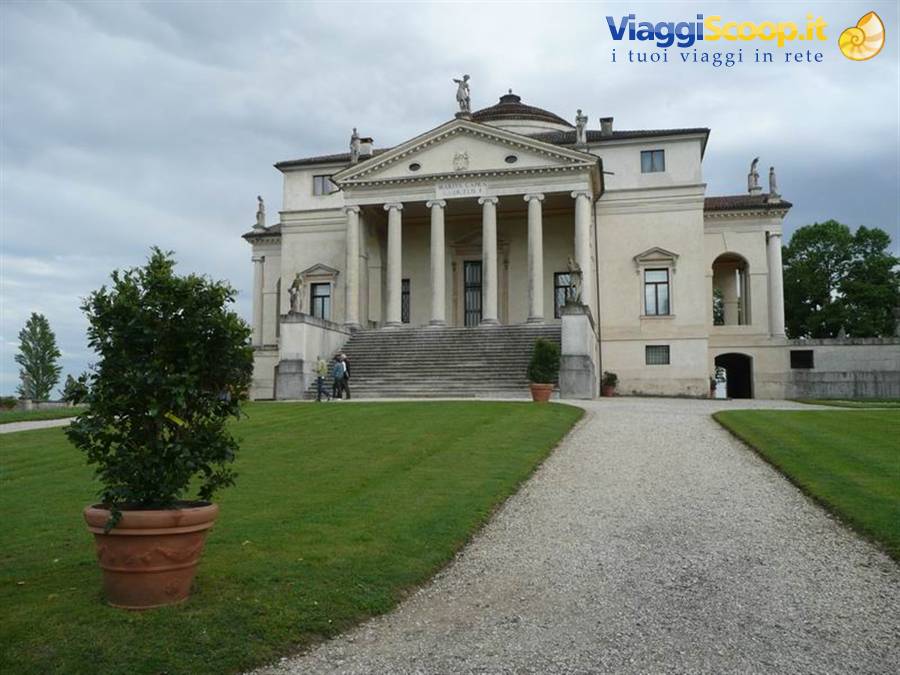
Unrequited love that led the unfortunate girl to suicide. From grief all the servants were petrified! We visit the villa and the guesthouse; they are very beautiful, as is the park in front of the villa. Today it's a private residence and every now and then it's inhabited by the owners, but... The frescoes in the villa and the guesthouse are the work of Giambattista and Giandomenico Tiepolo, father and son. While the father preferred epic themes, the son preferred scenes of everyday life of nobles and commoners. There's also a room frescoed in Chinese style, or rather according to what Tiepolo the son thought distant China was like. We continue our visit toward the last villa we'll visit: Villa Almerico Capra known as "La Rotonda". Its central plan is distinctive. Built on a design by Palladio, it was completed, only after Palladio's death, by Vincenzo Scamozzi.
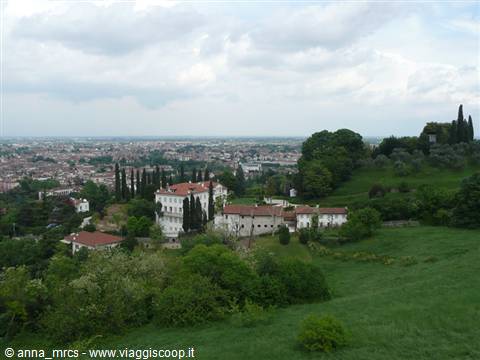
Almerico was the one who commissioned the construction of this villa; upon his death it passed by inheritance to his son, who was forced to sell the villa since, to put it simply, he wasn't doing too well. It was thus sold to the Capra brothers, who completed its construction. The villa is austere, almost a mausoleum; the view from the park over the city and the sanctuary of Monte Berico is stupendous. We only visit the gardens. This dwelling too is a UNESCO World Heritage Site. And so ends our wandering through the streets and beautiful dwellings of this city. Our bus is ready to leave and all that's left for us is to say goodbye to these places and head home. It was a pleasant surprise, a great weekend dedicated to discovering a corner of the Bel Paese that I didn't imagine was so beautiful and full of charm.
And it was also a great trip for the company, for the people with whom I shared these days, those I already knew and those I met in these days. In conclusion of this short diary I want to thank Silvana and Laura, the two people who made this trip possible, who organized, planned and carried out this intense weekend. It's only right to think of them because organizing and carrying out a trip is no small thing. It's easy to complain if something wasn't liked or if you wanted to do things differently, and it's equally easy to forget the hard work that Silvana and Laura did to make these days pleasant, interesting and above all possible.







0 reader comments