The story
In the imagination of the young director Fausto Paravidino, this place is like Texas: borderland, the meeting point between the mountain and the plain crossed by the "highway"... There are even farms, and above all farmers, bars and young people, tough, passionate, but also lost, torn between their farming roots and the city that seems close but isn't really that close after all. In the 2005 film Texas, Rocca Grimalda was portrayed like this, and thanks to that movie all Italians were able to discover a truly unusual village and area. Texas, why not? Here we're not between the United States and Mexico, but between Piedmont and Liguria, yet there is something deeply similar to the places of the on the road myth. Strong feelings, the beauty of a wild landscape, the love for traditions, for animals, for nature, and for travel.
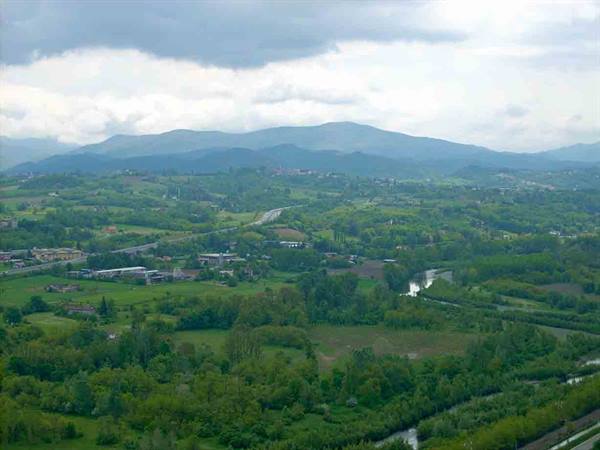
You reach Rocca Grimalda a few kilometres after leaving the motorway at Ovada, and while we had set off with the intention of visiting the locations of the film, even those just passing through between Genoa and Milan may easily be tempted by the urge to climb that spectacular rocky spur that towers over the road on the left bank of the Orba river. In Roman times the city of Rondinaria stood here, and various archaeological finds suggest the existence of settlements already in pre-Roman times, even above the hill. Rocca Grimalda, given its sheer drop over the Orba river, is a natural fortress, and thanks to this peculiarity it was contested over the centuries by the Republic of Genoa, by the Marquises of Montferrat and even by the Duchy of Milan.
While in the dense forests that until the 18th century covered much of the surrounding hills banditry flourished, in popular imagination intriguing stories and legends were born about witches who would set off from this height at night, flying on various animals, to take part in magical gatherings in the woods.
Traditions in Rocca Grimalda come back to life in numerous events and cultural appointments that follow one another during the year. Here takes place one of the most characteristic events in the region, the Lachera. It is an archaic carnival rite and consists of a masked procession with dances and touches of theatre during which the characters interact with one another with masks and costumes. The roles of the characters are many and well defined, handed down from generation to generation, while the costumes reflect the historical periods the Lachera has passed through.
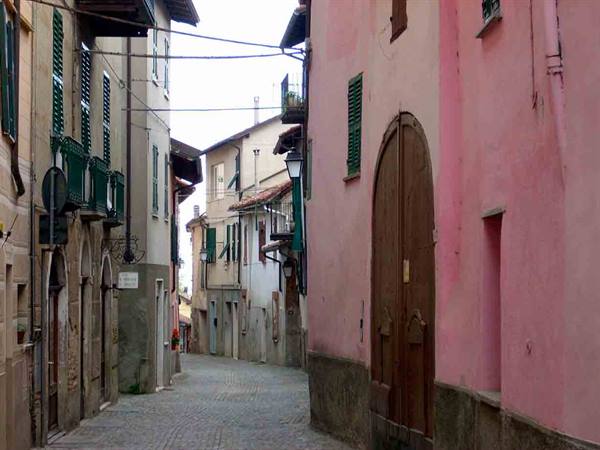
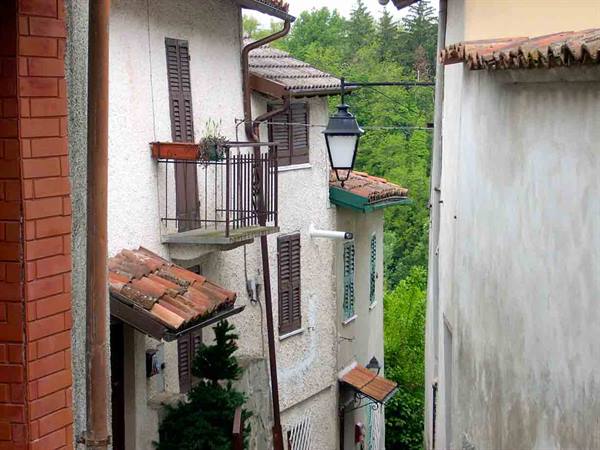
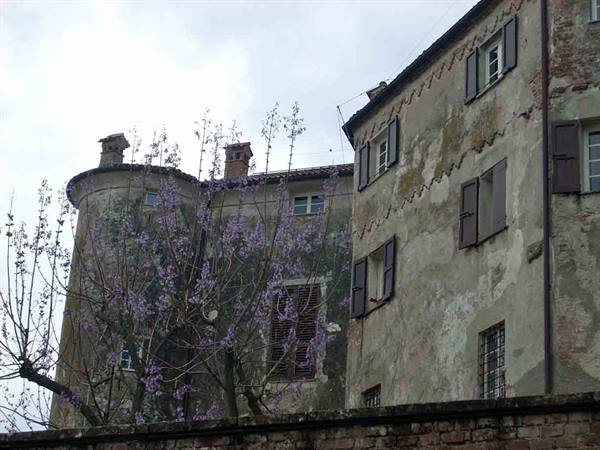
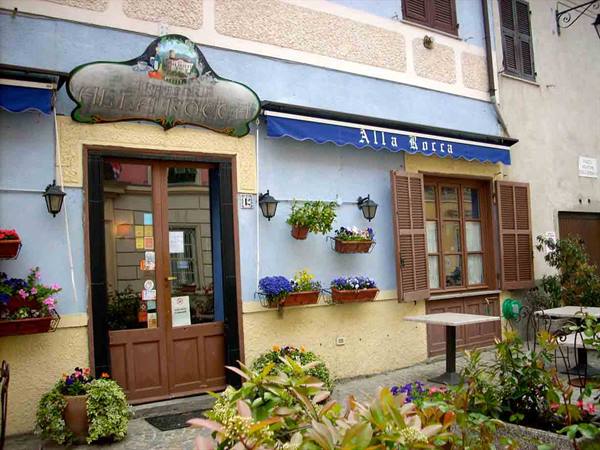
While waiting to return here during Carnival, we visited the famous Mask Museum, which gathers the results of the multi-year scientific work carried out by the Ethno-Anthropological Laboratory of Rocca Grimalda. The visit was an exciting journey within a journey, through the masks, costumes and carnival characters. During our walk through the medieval village we also admired the breathtaking panorama from the Belvedere Marconi, and when we sat down at the table of the Trattoria alla Rocca, next to the Castle, between one tasty typical dish and the next, Mrs Alessandra, the owner of the trattoria, told us several other curiosities about Rocca Grimalda.
While from the mixed Piedmontese antipasto, a good eight courses all homemade, we moved on to the typical dish par excellence of Rocca Grimalda, namely the peirbuieira, a tasty dish of beans and homemade lasagne to which a big festival is dedicated at the end of August, Mrs Alessandra told us that in Rocca Grimalda, in the months of June and September, the Cammino di Santa Limbania takes place, the patron saint of travellers. A pilgrimage between faith and taste, to which is added, in July, an important international festival of classical music and theatre. In short, between cultural and tasty offerings, in Rocca Grimalda there's nothing but choice, so we kept tasting the typical dishes and asking questions also about the history of the place where we were. Before opening this trattoria, Mrs Alessandra had lived for fifteen years in Madagascar.
"Local Madagascan cuisine isn't very interesting; there is instead a decent French cuisine. In our place we couldn't offer much in the way of Italian dishes, because several fundamental ingredients are missing there, such as pasta and olive oil", she told us as she served us ricotta ravioli with asparagus sauce and orange zest. Our dinner then continued with a rabbit roll stuffed with bitter-herb omelette and ham. Our friends also tasted a ruotina with six types of selected cheeses and knife-chopped meat with ginger and green apple. After this day we are sure we have won the favour of Santa Limbania: the patron saint of travellers accompanied us to a place that truly deserves to be visited.
Francesca Bertha
For information:
0143/873333
The journey's photographs
7 photographs · click to open them full screen

0 reader comments