Sirmione sul Garda (14.02.2010)
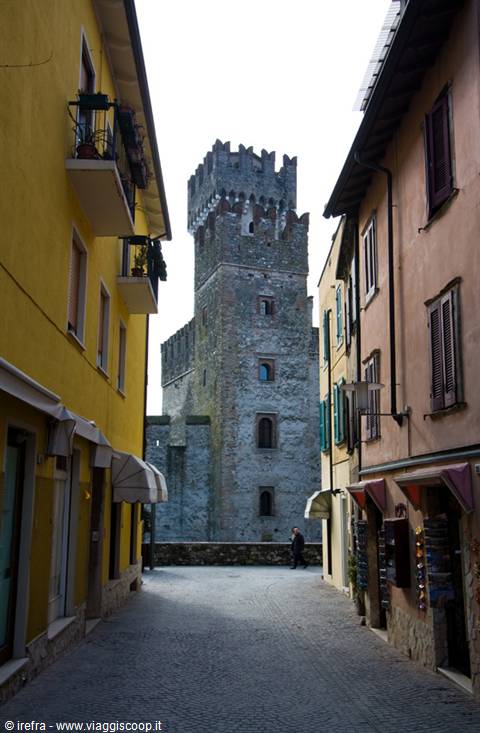
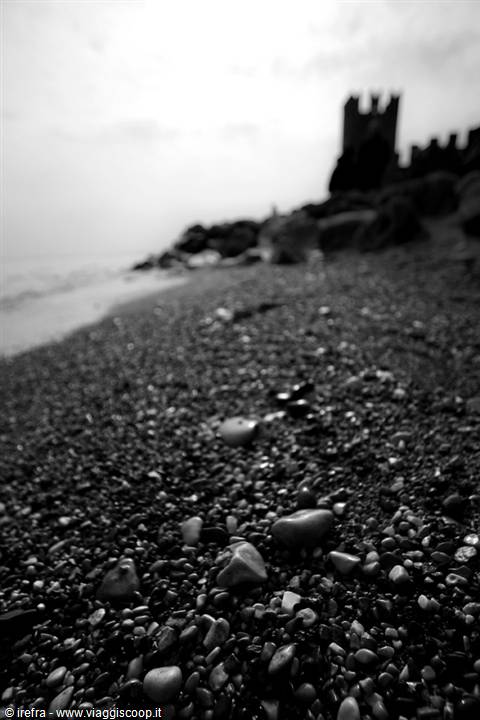
Looking at the lake and its brilliant green shore gives a light, carefree feeling of freedom. It may seem incredible how the gaze can roam over the gigantic, framed expanse of water. We are part of that frame, a frame of humanity reflected in the blue, searching for remnants of a great past. Sirmione stands out against the rosy morning sky, a shining white bulwark defending Garda. We look at it from Desenzano, our little tour van races along the coast, we draw closer to our destination, to the great fortified castle, to the romantic Grottoes of Catullus. We get off the coach in the town and begin to wander among the picturesque streets and the small, colorful houses. We reach some villas on the shore of the lake, right behind the castle. There are pebble beaches and reed beds where the waves break. We turn around, and behind us is a city teeming with life, today, as it was in the past.
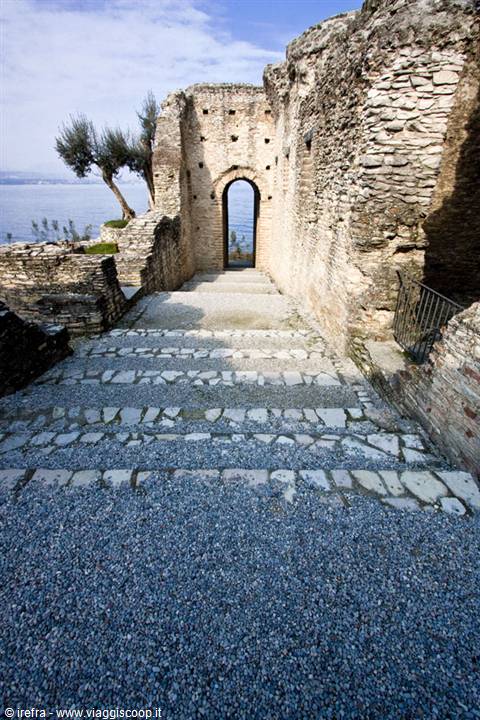
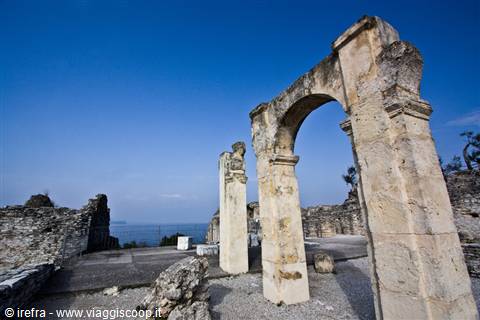
In front of us, the azure veil of the lake. And now we find ourselves in the green, just above the built-up center. Grass and trees surround us, their color mingled with that of the foam of the waves. The branches and leaves bend serenely to the wind. Various paths wind through these miniature clearings, and all of them lead to the very tip of the peninsula. We follow them, immersing ourselves in the green, the brown and the jarring gray of the rocks, until our eyes come to see the pearly white of the ancient buildings. These are the ghosts of the so-called "Grottoes of Catullus."
Introduction: brief historical overview.
Springing up at the very tip of a peninsula that stretches south of Lake Garda, Sirmione is a town that blooms and blooms again continuously, from the most distant eras of history right up to our own day. The site on which the town stands bears traces of human settlement as far back as the Neolithic, but the first urbanization of any real significance dates back to the 1st century BC. Sirmione is later the residence of the patrician family of the Valerii, to which the poet Catullus (87-54 BC) also belonged, who made the place famous in one of his carmina. The importance of the town in Roman times was also determined by the presence of an important rest station for travelers, the so-called Sirmione Mansio, which is also referenced in the Antonine Itinerary (3rd century AD). Under the Lombards, Sirmione is a fortified citadel endowed with a certain political and legal autonomy.
The district of Sirmione is in fact controlled directly by the sovereign, and is granted exemptions and other privileges. This autonomy is lost with Charlemagne, but Sirmione will always maintain a dominant position of control and defense of lake transport, as well as a special relationship with sovereigns and courts. In the 13th century the Castle is built, by Mastino I della Scala, which remains a military garrison until the 19th century, even after the actual defensive role is taken on by Peschiera, while during the 15th century an economic and political bond develops with the Republic of Venice, a bond that will not be broken until the capitulation of the Most Serene Republic, in 1797. Tourist Sirmione is a post-war discovery, when people began to exploit the possibilities of the sulfurous waters that spring up in the area.
Consequently, there has also been a notable urban development, which has helped make Sirmione a sought-after destination both from a historical and a purely tourist point of view.
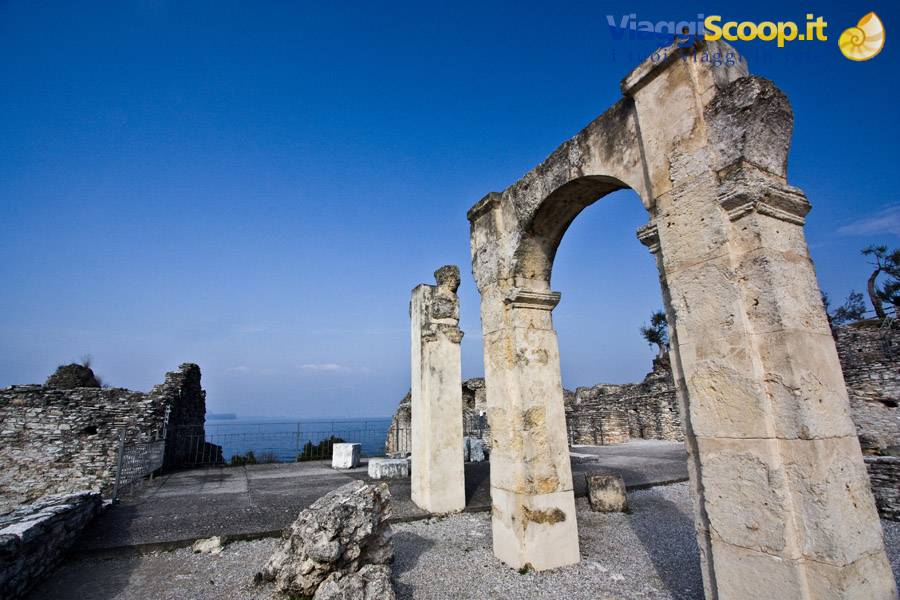
The Grottoes of Catullus
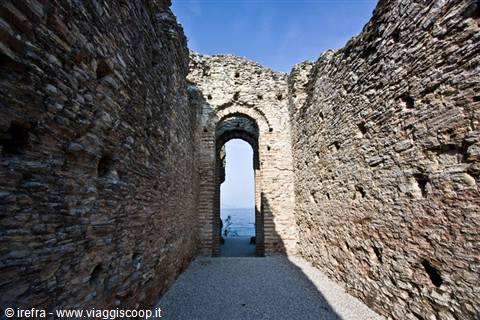
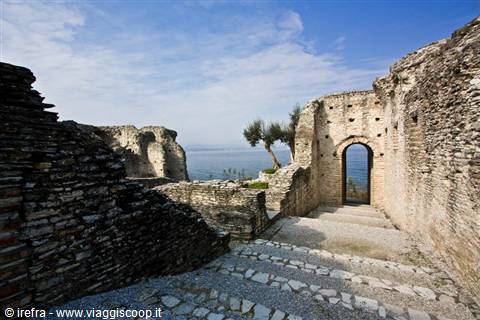
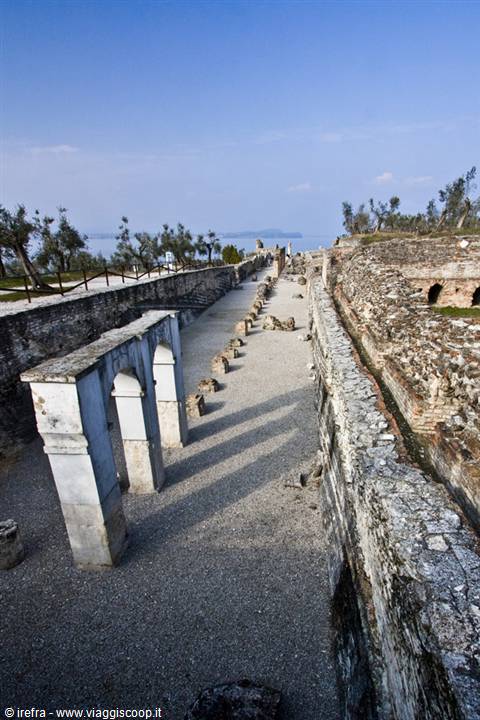
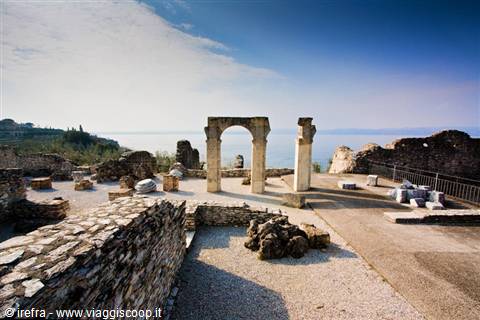
This complex of splendid ruins sits right at the very tip of the Sirmione peninsula. "Grottoes" is a Renaissance term used to indicate collapsed structures, and in most cases covered with earth or ivy. This one, due to the slope of the terrain, rises on several levels, created thanks to a series of massive cuts in the rock. According to the tradition of the 15th and 16th centuries, these would be the remains of the poet's Sirmione residence: however, we have no certain proof that this is so. Without a doubt Catullus stayed in Sirmione, as the verses of Carmen XXXI attest.
Sirmione, pearl of peninsulas and islands, of all of them, on the expanse of a transparent lake or of the boundless sea, offers Neptune of the fresh and salt waters, with what pleasure, with what joy I return to see you; I can hardly persuade myself that I have left Thynia and the lands of Bithynia, and that I can look upon you in all peace. But is there anything happier than having freed oneself from cares, when the mind lays down its burden and, weary from a journey in foreign lands, we have returned to our own hearth and lie down in the bed we longed for? This, in exchange for so many labors, is the only satisfaction. Hail, lovely Sirmione, celebrate your master, and you, waves of the Lydian lake, celebrate him: I want from you a burst of laughter, all the laughter you have.
In the 19th century the first archaeological excavations of the area were carried out by the Veronese Girolamo Orti Manara, who published the results in a work from '56. Manara's research is particularly careful and precise and was completed with meticulous floor plans. The Superintendency began its excavations and restoration between 1939 and 1940. What emerged are two overlapping structures: a villa dating back to the 1st century BC and a second one from the 1st century AD, probably belonging to a member of the Valerii family. Also considering two foreparts rising on the short sides of the complex, the villa extends for almost two hectares. It is certain that it was in use until the end of the 1st century, and it is equally certain that by the 5th century it had already been abandoned.
The site that today stands at the entrance of the actual archaeological area is called the Antiquarium. Tourists visiting the grottoes can find there all the most interesting material that emerged during the archaeological excavations. These are everyday objects, but also artistic ones. Among them appear particularly beautiful frescoes decorated with marine scenes, and one depicting a poet. Could it be Catullus himself, the one to whom tradition has assigned ownership of the splendid villa?
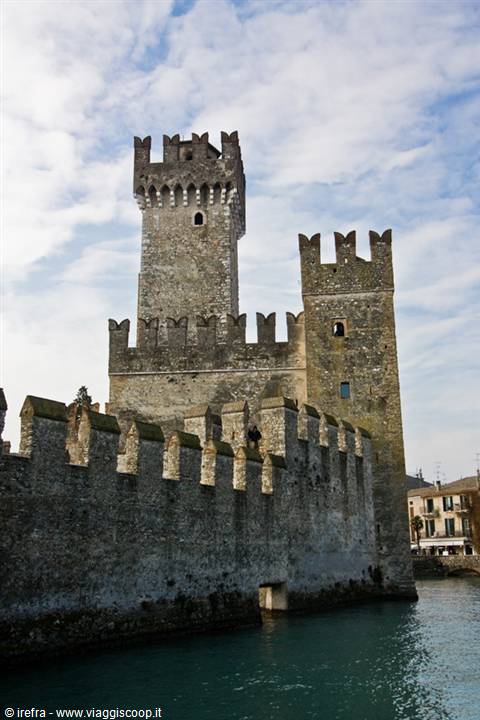
The Castle or Scaliger Fortress
An imposing structure that faces directly onto the lake, the Castle of Sirmione has been for centuries a fundamental outpost for the control of the waters. It features a dock still in perfect condition, which is one of the rare examples of a fortification used exclusively as a harbor. Overall, the impact with the rest of the built-up area is one of great detachment, of imposing presence, but also of harmony. The Castle was built during the 13th century by Mastino della Scala; however, in the portico we can still find a Roman lapidary inscription. It is possible to access the walls, from which you can perfectly admire the fortified dock, the favorite refuge of the Scaliger fleet. It was further reinforced when, in 1405, Sirmione was annexed to the Republic of Venice, which opted for a general renewal of the castle's fortifications.
On the whole, the fortress of Sirmione is among the best preserved in Italy. Visitors are allowed to enter through the drawbridge, and walk along the imposing crenellated walls, along the patrol walkways, after having climbed a good 146 steps to reach the main keep!


0 reader comments