The story
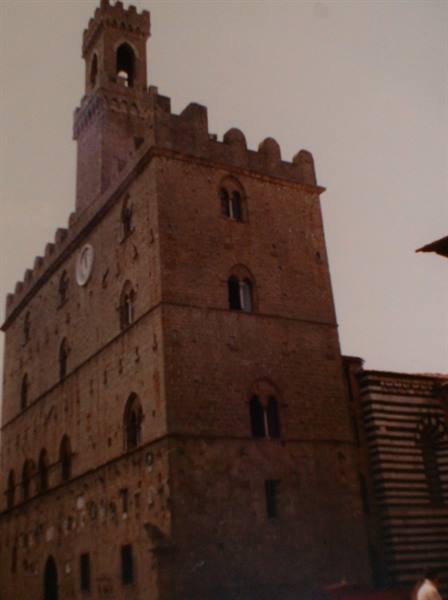
Volterra, a 'magical and mysterious' city, has its roots in three thousand years of history. Traces and testimonies of every period can be found, all of which have helped make it unique among art cities. From the Etruscan period remain the city walls, the imposing Porta all'Arco, the Marmini necropolis and the numerous archaeological finds preserved in the Guarnacci Etruscan Museum, from the Ombra della Sera, with its unique profile, to the cinerary urns and finely worked jewellery. The Teatro di Vallebona, of the Augustan age, bears witness to the importance Volterra had in Roman times. But it is from the Middle Ages that the structure of the city we find today derives, not only in the city walls - the more inner one - but also in the urban layout, with its narrow alleyways, its palazzi, its tower-houses and its churches.
The Renaissance civilisation affected Volterra considerably, but without altering its medieval atmosphere. From this period date the superb palazzi Minucci Solaini, Incontri-Viti and Inghirami, set within the medieval urban fabric, the imposing Medici Fortress and the convent complex of San Girolamo.
The journey's photographs
2 photographs · click to open them full screen
0 reader comments