Abruzzo National Park, Gran Sasso National Park · Abruzzo
When
25 Apr 2008 – 3 May 2008 9 days · trip of 2008
Who
Anna M. · @anna_mrcs · Provincia di Torino
How
Travel diary
The story · 9 days
A short trip in the mountains of Abruzzo. A year has passed since we made this trip. I started roughing out the diary a few months after the journey but, because of various commitments, it dragged on much longer than I had expected. We had taken advantage of about ten days of holiday coinciding with the spring bank holidays and so had decided to return to the mountains of the Abruzzo Apennines. We had been there several years earlier and had been struck by the beauty of these Apennine places and by the charm of these Abruzzo villages perched on the mountains. I found myself a bit embarrassed, I wondered whether it was worth finishing it given everything that had happened, given all the dramatic images of the earthquake that the television gave us about a part of Abruzzo that we too had visited.
An earthquake is a terrible thing for those who live through it and leaves speechless anyone who finds themselves watching its images on television, in the newspapers. It is something that once again underlines the fragility of our lives, of what we have around us, of what we base our security on. I wondered whether it was right to talk about these places; part of the journey in fact follows the roads of L'Aquila, the mountains and villages around the Gran Sasso. I wondered whether it was right to talk about something as futile as a trip, describing places that no longer exist, roads that no longer exist or streets swept away by the fury of the earthquake. The answer I gave myself was yes.
It is right to celebrate the beauty of these places, the beauty that my eyes saw and that I knew, if only as a form of good wish and respect for all the people who are suffering and are slowly trying to start again. So I want to describe this trip of ours in Abruzzo, to describe the places of the Abruzzo National Park, which fortunately was not touched by the destructive fury of the earthquake, and those places around L'Aquila that I saw and knew, with the wish and hope for all those living through this tragedy that these places may soon return to being what I saw and knew, that they may soon return to enchanting tourists and to describing this splendid land. And it is to all these people that, with all my affection, I want to dedicate these few pages.
Day 125 Apr 2008
We leave on April 25th precisely, and like us, so many other people made this choice—so much for smart departures! Ha ha ha! So in Bologna, on the highway, we have to sit through a terrifying traffic jam. Fortunately Fiorello and Baldini, with their fun radio show, keep us company, brightening the time spent in the jam getting past Bologna.
Our first destination is the National Park of Abruzzo, Lazio and Molise, one of Italy's best-known protected areas along with the Gran Paradiso National Park. The park was founded on September 9, 1922, but its official birth is dated January 11, 1923. It has had and still has a fundamental role in the conservation of certain species that otherwise would already be extinct, such as the Marsican bear, the Abruzzo chamois and the Apennine wolf. The Marsican brown bear, symbol of the park, is perhaps the best-known and most loved animal by tourists—a little less so by those who have to live alongside it every day—but it is also the animal most at risk of extinction in the entire park.
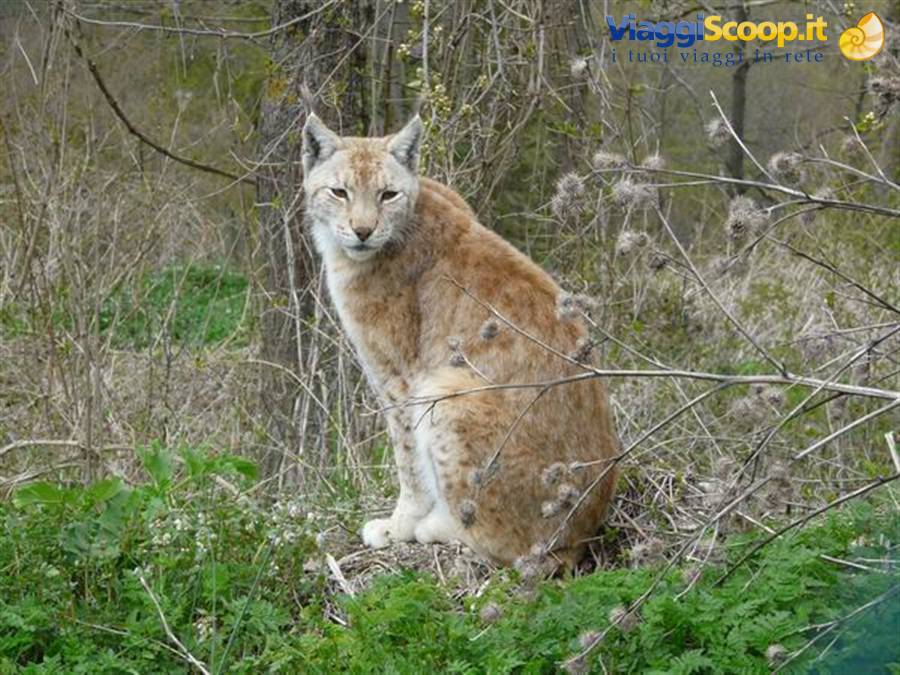
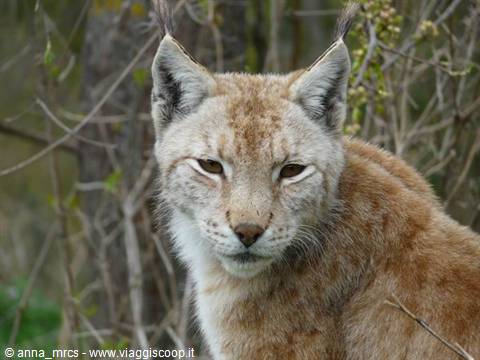
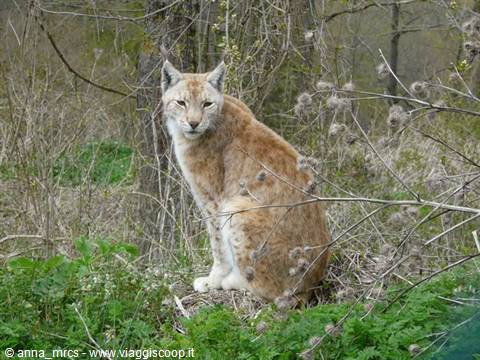
It isn't easy to spot it in the wild because the specimens present in the park are few and bears are by nature shy, solitary animals; but every now and then, especially in winter, some specimens come too close to the houses, making this coexistence between man and bear dangerous. The Marsican bear, in any case, lives mainly in forests and high-altitude meadows at the edge of the woods. Another inhabitant of the park, even harder to spot than the bear, is the wolf; its particularly solitary nature and its mainly nocturnal habits make observations difficult. But among the shy and mysterious animals living in the Abruzzo National Park we must also remember the Lynx, a beautiful big cat with a mysterious charm that lives in wild areas with almost exclusively nocturnal habits. Easier to see, on the other hand, are the Abruzzo chamois; there are about 700 specimens throughout the park.
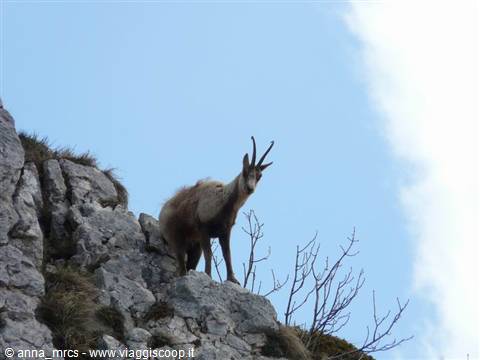
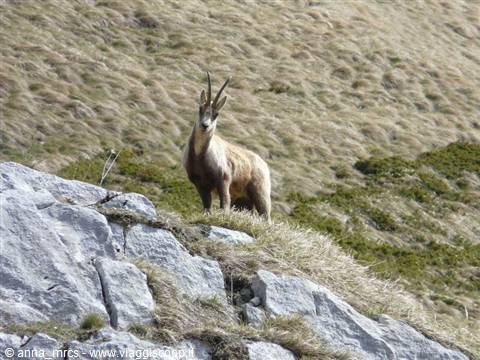
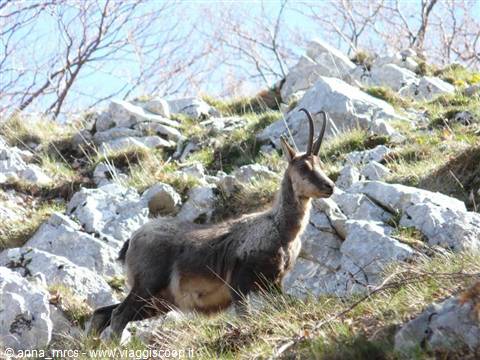
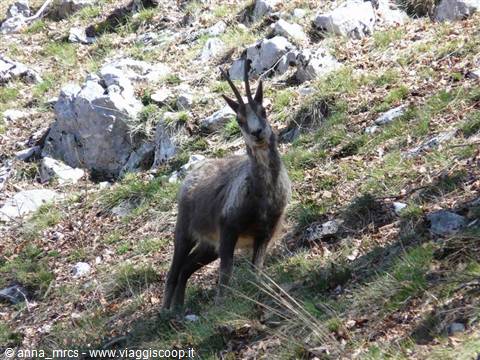
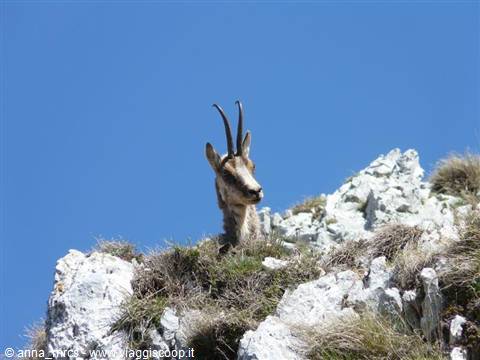
Compared to the Alpine chamois, the Abruzzo chamois has an exceptionally developed horns, which, together with the color of its coat, differentiate it from other chamois species. In the 1970s the deer and the roe deer, which had almost disappeared from the park's territory, were reintroduced, not without controversy.
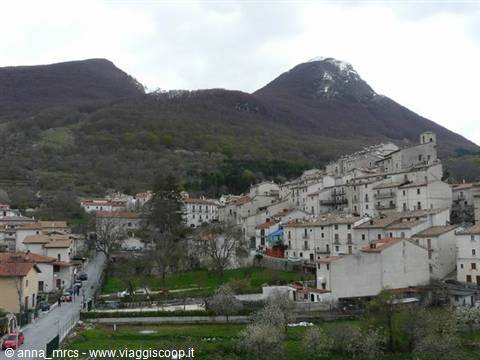
But back to our trip... We arrive in Pescasseroli, which lies in the heart of the Abruzzo National Park, around dinner time. Pescasseroli (1167 m) is located in the upper Sangro valley. It's a simple and pretty town, very touristy. Just strolling through its streets and seeing the hordes of tourists who, both in winter and summer, stay in the town, and the high number of hotels present locally, is enough to understand that it's a flourishing tourist center. Historically it was the Peligni who founded Pescasseroli with the name Pesculum Seroli, which meant precisely 'rock jutting out/emerging over the Sangro.' Interesting things to see include the Abbey of Saints Peter and Paul of medieval origin, the sanctuary of the Madonna of Monte Tranquillo, and in the historic center: Palazzo Sipari, whose construction dates back to 1839.
In this palazzo, on February 25, 1866, the philosopher Benedetto Croce was born. Today it is the seat of the foundation named after Erminio Sipari, who was among those who founded the Abruzzo National Park. And finally there are the mountains and valleys that are part of the national park, with their trails, their protected areas, the various wildlife centers and the park's facilities. In Pescasseroli is headquartered the Centro Natura, where it's possible to visit the natural history museum and the wildlife park. The latter hosts some specimens of animals that populate the park, which were either born in captivity or found injured, treated, and since they could no longer survive on their own in the wild, they live in this wildlife park. We chose a small hotel: the Hotel Valle dell'Oro (whose stay proved pleasant and whose good Abruzzo cuisine was the true star of all our dinners).
08 Lynx
Day 226 Apr 2008
Today we have planned a nice snowshoe trip in the Valle di Rose, our hiking destination for today, or rather Marco's—I'll stop on the hillock—it's Monte Capraio in the Val di Rose. We take our car toward the medieval village of Civitella Alfedena: a village of indisputable charm. The origins of this village are distant; it seems to have already existed in Roman times. The town lies in the heart of the Abruzzo National Park, and on its territory you can visit the wildlife area of the Apennine wolf and the lynx one, as well as the wolf museum and a park information center. Among the perched streets of the village there are some restaurants and shops selling typical local products. Strolling through the tiny alleyways is particularly pleasant.
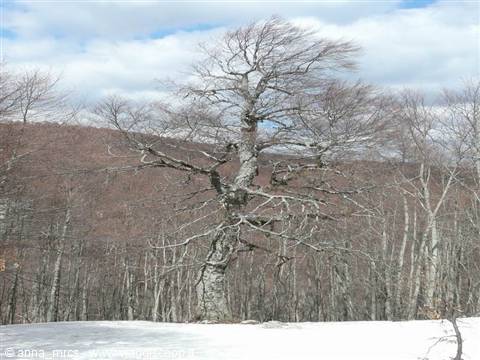
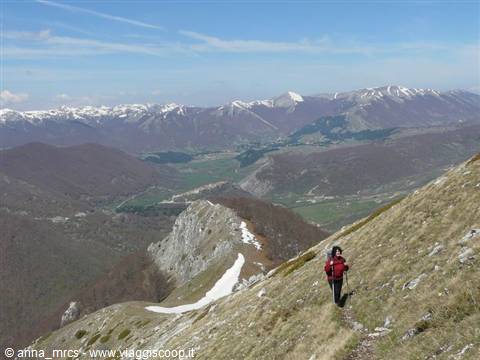
We leave our car in the parking lot uphill from the built-up area of Civitella Alfedena, and from here we set off on the trail, a rather stony one, F1, which goes into the Valle di Rose. It seems that in summer access to the Val di Rose is granted only with a park guide. We immediately come across a green lizard dozing in the sun. Years ago we had already passed this point on the trail and had encountered one then too. What a coincidence! After an initial steep stretch, the trail enters a beautiful beech forest, then comes out of it at around 1700 m. From here we climb toward the little pass of Passo Cavuto. The last stretch of the ascent to reach the hillock is rather steep. From the hillock the view is very beautiful. While I calmly begin to descend into the other little valley looking for a spot for lunch, Marco heads toward the north ridge of Monte Capraio to reach the summit.
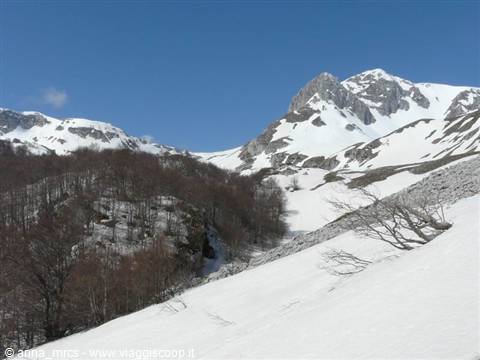
The weather isn't exactly nice—it's windy and quite cold—but I still managed to find a sheltered little corner to have lunch and enjoy a bit of rest and all this silence that envelops us. Apart from one person, we didn't meet any other hikers. This is also one of the positive aspects of visiting these places in this season: you can enjoy in silence all this vastness, these snow-capped peaks and these endless spaces. We return along the trail that runs through the Iannanghera valley along trail K6, then return to Civitella Alfedena via trail I4. So with this nice loop hike we were able to see two different valleys. The trips that involve going up one way and coming down another are my favorites: a whole world to discover from start to finish! On the way down we also come across a few chamois grazing on the first green patches.
In the Val di Rose—and perhaps that's the reason why in summer access to the valley is limited—a great number of Abruzzo chamois live.
Back in Civitella Alfedena we make a quick stop at the lynx enclosure and the wolf one. The lynxes, two of them, stay quietly not far from the fence, and it's a spectacle to observe these huge, proud big cats—though behind the fence they make me a bit too sad, I would have preferred to see them free in the mountains—while the wolves aren't visible, they're evidently somewhere hidden, dozing. On the other hand, two deer graze calmly a few meters from the enclosure... these deer like to tempt fate!!! And what if there were a hole in the fence?
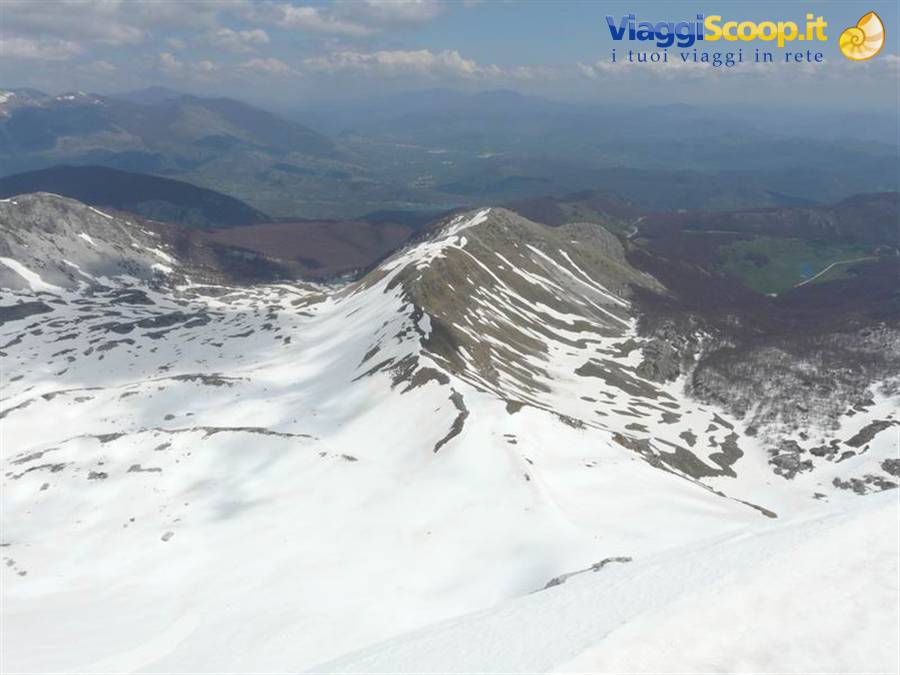
16 View from Monte Meta
Day 327 Apr 2008
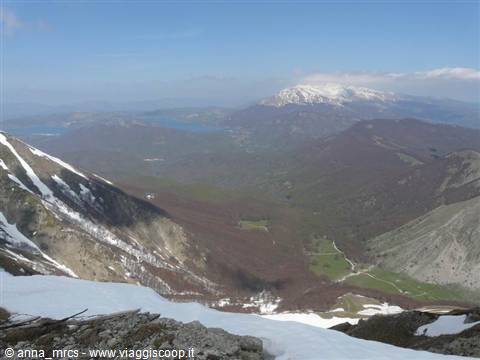
Today's destination takes us a bit farther from Pescasseroli, to an area of equal beauty, the Monte Meta area. We'll go up through the Val Pagana from Pizzone, thus also visiting a part of the park in Molise. Monte Meta, with its 2242 meters of height, is one of the highest peaks of the Abruzzo Apennines and of the Abruzzo, Lazio and Molise National Park itself. Often this mountain is referred to in the feminine, calling it precisely "la Meta." The name originates from the mountain range "Monti della Meta," of which this peak is a part.
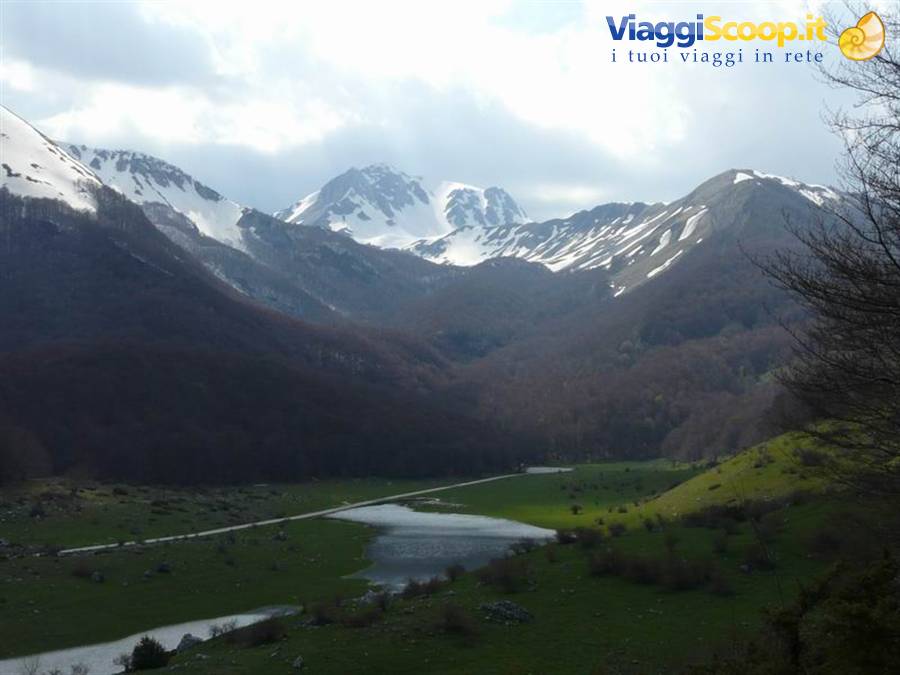
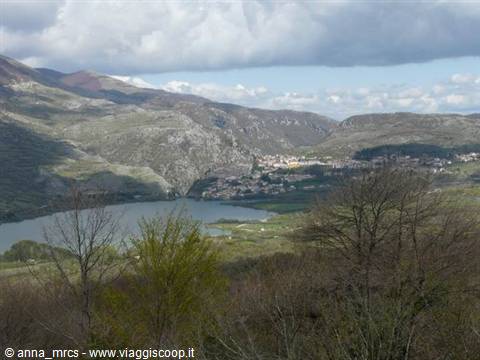
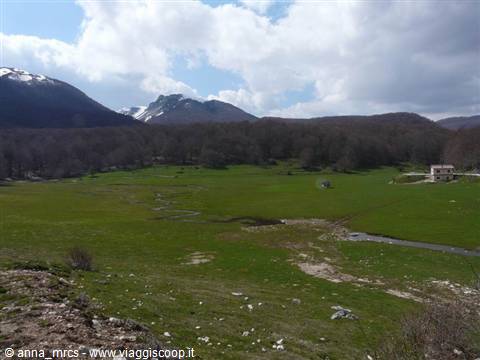
The road we take, the statale 85, crosses a series of villages of enormous charm: Opi, which we'll have a chance to talk about tomorrow, Villetta Barrea with the Pine Forest of Black Pine, the medieval Barrea in front of the homonymous Lake of Barrea, and Alfedana, where it's possible to visit the ruins of the acropolis of the Curino dating back to the 7th century. In short, we reach Piano Le Forme (Pizzone (Isernia)) with a nice scenic little drive. Piano Le Forme is an immense solitary plain and this gives it a particular charm. As we drive toward the bottom of the plain, where we'll leave our car, we see a group of wild boars quickly fleeing into the woods. Did we surprise them while they were looking for food, turning over the earth in the meadows, to the joy of breeders and farmers? From the parking lot we follow itinerary M1 toward Passo dei Monaci.
At first we load our snowshoes onto our backpacks, but we don't take long to put them on. On the way up we also meet a few chamois. Once we reach the pass we climb Monte Meta via the SSW side, which practically has no snow left. We descend instead through the Vallone dei Biscurri. Just below the Passo dei Monaci, heading toward Val Biscurri, we meet a group coming up, doing the opposite loop from ours. We exchange a few impressions about the snow and then we'll all meet again in the parking lot at Pian Le Forme, where we'll exchange impressions about the trip and gather a few tips on other hikes for the coming days. The descent into the Vallone dei Biscurri is pleasant, the landscape is evocative until it goes deep into the thick of the forest.
Once at the Rifugio Campitelli, to reach Piano Le Forme you can decide to take the same dirt road you drive on by car, but since this means greatly lengthening the route, we decide instead to follow some tracks that seem to connect the two valleys, allowing us to cross the hill and quickly reach our car without doing the whole loop.
24 Piano Le Forme
Day 428 Apr 2008
Today we have planned a nice little outing in the Val Fondello all the way up to the top of Monte Amaro (m. 1862), not far from Pescasseroli. We leave our car in the parking lot of the Val Fondello, in the municipality of Opi. Opi is another of these suggestive Abruzzo villages perched on a spur that lies in the middle of an amphitheater of mountains, including Monte Marsicano (m. 2242) and Monte Petroso (m. 2247), and the Meta group—in short, an enchanting position for a village rich in charm. Among all the hypotheses made about the origin of the place and the name, the one that is perhaps the most favored by popular tradition is the one that traces the origin of the name Opi to the name of the Roman goddess of the earth: Ope, who mythology says built this land. Who knows...
As I said, we leave our car in the parking lot at the start of the Val Fondillo and follow the valley-bottom road south until the wooden bridge that lets us cross the stream. If you continue on the main road you can go visit the Grotta delle Fate, which is roughly halfway if you want to go to the Passo dell'Orso (a highly recommended and sought-after destination in summer, but alas access here too is regulated). The Grotta delle Fate is nothing but a low, long cavity from which clear water flows.
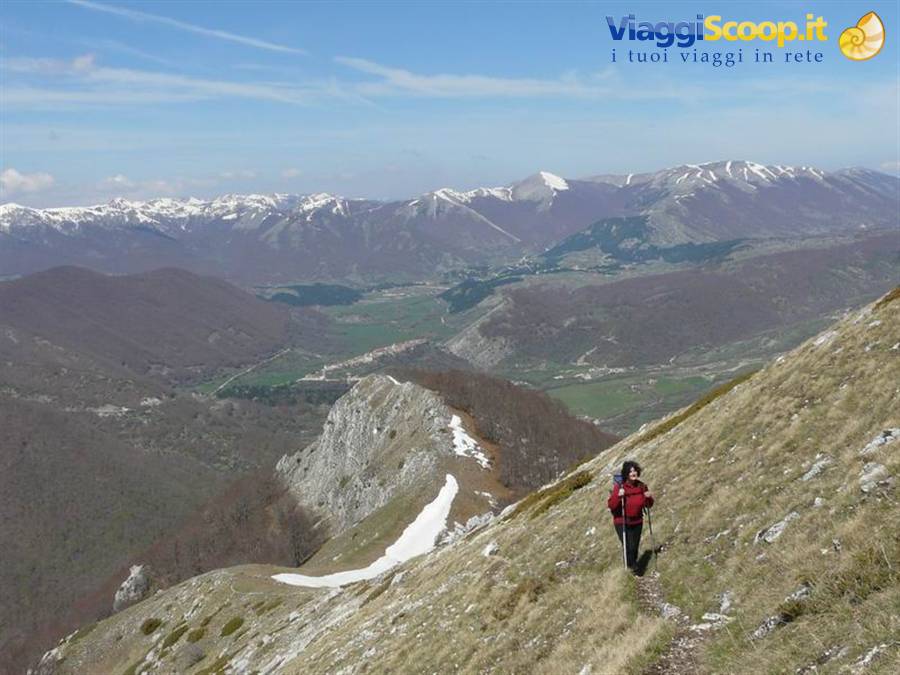
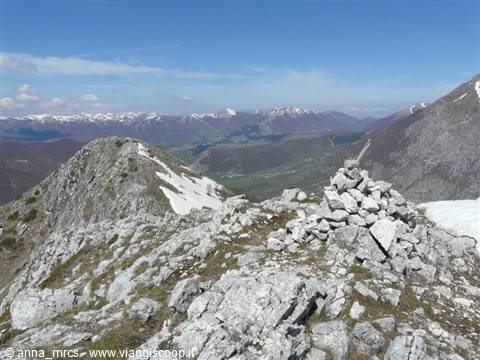
But back to our loop: once we've crossed the bridge we're a bit uncertain about which road to take because there aren't big signs, but consulting the map we immediately understand which direction to go. We take the trail heading north along the stream for a few hundred meters; from here we follow the turnoff to the right (trail F1) which climbs with numerous steep, narrow switchbacks through the beech forest, keeping mainly to the WNW ridge. The forest landscape is evocative; I like it, Marco a bit less—he prefers open spaces and high-altitude trails. At around 1700 m we come out of the forest and in a short time reach the western summit. To reach the eastern summit (15 m higher), you have to descend to a little saddle (trail marked with daubs of paint) and obviously climb back up. Today we didn't have to use our snowshoes because there was practically no snow.
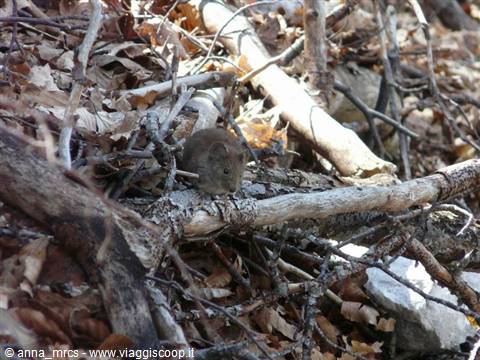
On the way up, almost near the summit, we met a nice group of chamois grazing calmly among the rocks, and a little below the highest peak there was another group. Another curious thing: on the trail we saw a great many voles or little mice. It was really funny—I had never happened to see so many scampering around an undergrowth. On the way back from the loop we stop a while in one of the green meadows of the Val Fondillo to rest; this beautiful spring sun made our nap pleasant.
For the record, in summer things get a bit more complicated. While on the one hand the possibility of trekking and getting around is made easier by the absence of snow and the good weather, on the other, for protection reasons, access to this valley, as well as to others including the Val di Rose, is strictly regulated to the point that it isn't possible to hike these trails independently or without the necessary permits. It's all managed by the Park authority.
On the way back to Pescasseroli I stop at a local honey producer. I'm not a fan of souvenirs like figurines or various trinkets, but I do like, when I go somewhere, to taste and bring home local products. A nice jar of honey produced by Abruzzo bees amply fills this requirement. Other typical local products are cheeses, wines and liqueurs made with undergrowth fruits—but we're teetotalers, so... From a craft standpoint it should be noted that in the area many objects are produced with iron, copper and leather. In the Civitella Alfedena area they also make beautiful ceramic objects, while in Scanno, bobbin lace embroidery. These traditions and crafts are part of the culture of these places, and it's good that they be handed down and preserved, precisely to keep alive the identity of a place, of a people, of an ancient tradition.
32 Towards Monte Amaro
Day 529 Apr 2008
Today we leave this beautiful area to move to the Gran Sasso area. Unfortunately we only have about ten days available, so we have to make the most of our visit and our outings. Again this time it's not a farewell but a see-you-later; who knows, maybe we'll return in another season. Before heading toward the Gran Sasso we decide to make a small detour to Villavallelonga because here there is the Bear center, museum and wildlife area. What can I say? Once in Villavallelonga we drive around the deserted streets of the town looking for some sign about the Bear center. No luck... we can't find them. We take a road that goes into the valley and at a certain point becomes a dirt road; we go back to town, turn here, turn there, but nothing doing.
We just can't find the road to the wildlife area, and around town the signs are certainly not plentiful since we don't see a single one! We spot a lady along the street. She's almost part of the folklore of this place, of this characteristic village, with its narrow streets, stone houses, and this somewhat stooped lady all dressed in black, with a black kitchen apron and white hair. She almost seems placed there on purpose to give emphasis to these places, to these traditions, as if she had come out of a folkloric performance. We ask her about the center, but her dialect is incomprehensible to us and we can't understand her directions. Fortunately we find another person who points us to the center. There are two bears, one per enclosure, but both make me very sad; these things always have this effect on me.
They don't have much space available and I don't know—their eyes, their gaze, their pacing back and forth along the fence always in the same meters, always the same gestures, fill me with such sadness. I tell myself that maybe they'd rather live just one day in freedom than a life closed in an enclosure! We leave a bit sorry, but deep down we shouldn't have expected anything different. We've seen bears free in America, we've seen them free in their environment; it's impossible to think they can live happily in an enclosure. All this fills me with much sadness.
Once back in our car we get on the road to L'Aquila; we could take the highway and be there in a flash, but why give up the beauty of these places, the slowness of travel they require, to choose a straight strip of asphalt? So we choose to reach L'Aquila passing through the Sirente-Velino Regional Park. Let's go see a bit what it's about, so that next time we come back to these parts we have another place to visit. This regional park was established in 1989, so relatively young. Though the day isn't the best and the weather is particularly cold and foggy, we don't hesitate to stop here and there along the road that crosses the park, to admire villages, valleys and these splendid mountains.
And yes, it must be said, this area would deserve a more in-depth visit! Wolves, bears and chamois populate these splendid valleys, and on July 7, 1994, six Griffon Vultures were released as part of a repopulation project for this species. The Griffon Vulture is one of the largest European birds, with a wingspan of 2.80 meters. The first reintroduction was, of course, followed by others. Also noteworthy and very visited are the Stiffe Caves, not far from L'Aquila, and the Celano gorges, one of the most famous and spectacular canyons of the Apennines.
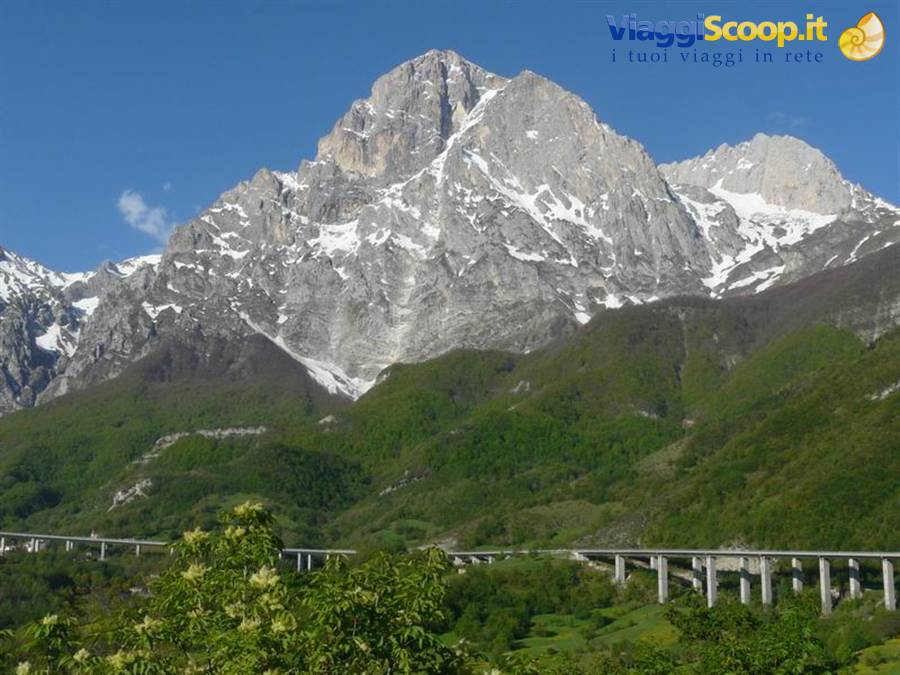
After this nice interlude in the Sirente-Velino Regional Park we arrive at our destination; the final view that opens up over the Gran Sasso before descending toward L'Aquila is very beautiful. Having left our luggage at the hotel (Albero Lo Shaly - Bazzano), since here dinner is late anyway, we decide to go visit L'Aquila, which is also the capital of the Abruzzo Region. It's a nice town that enjoys a beautiful panoramic position over the Gran Sasso. Someone has called L'Aquila "one of the greatest urban achievements of the Middle Ages"; unfortunately the earthquake (April 2009) made its buildings and streets collapse, but I'm sure the people of L'Aquila will make this city flourish again just as I saw it and just as someone rightly labeled it.
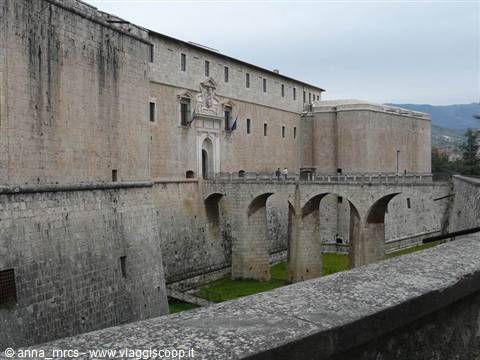
We take a stroll along the main street packed with people and shops, we get as far as the Forte, known as the sixteenth-century castle, and even though it looks like it might rain, the weather thanks us and lets us do our loop. It's a simple, quiet city, pleasant for strolling and spending what's left of this day. Its history is characterized by frequent name changes, though the word Aquila has always been present. Around 1230 Frederick II of Swabia designed this city and gave it the name Aquila; later in 1861 it became Aquila degli Abruzzi, until finally, by decree of 1939 of the Ministry of the Interior, it became L'Aquila. Interesting are the Basilica of Santa Maria, dating back to 1287, and the fifteenth-century church of San Bernardino.
We stop in a big bookstore in the center where we come out loaded with mountain books and itineraries of the various national and regional parks of Abruzzo. If they're not needed this time, they'll be needed for the next time we return to Abruzzo! L'Aquila doesn't feel like a provincial capital, not like we're used to with Turin, but a simple provincial town with its streets, its people, its historic buildings, its houses facing the street, its shops; it's a nice place to spend an afternoon strolling. This is the L'Aquila I knew and it's the one I want to remember and which I hope can soon return to being!
39 Climbing to the Corno Grande - some distance covered
Day 630 Apr 2008
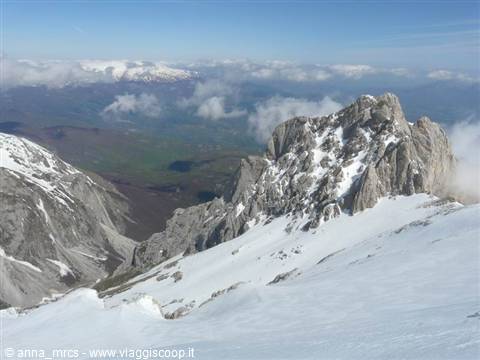
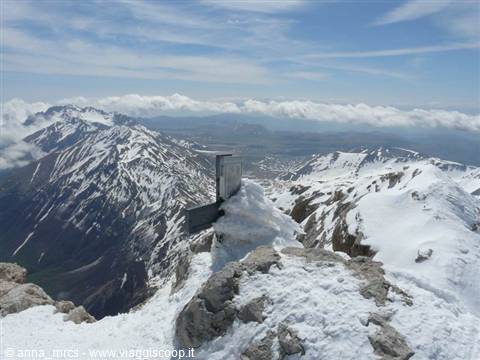
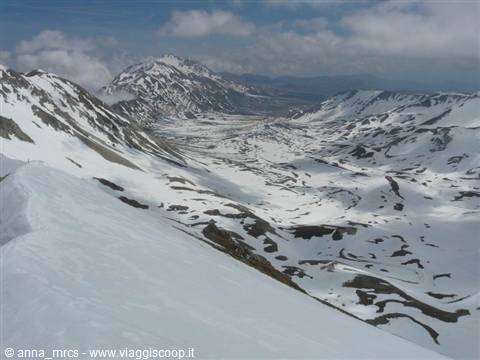
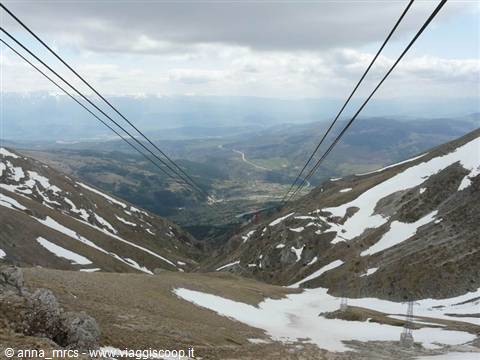
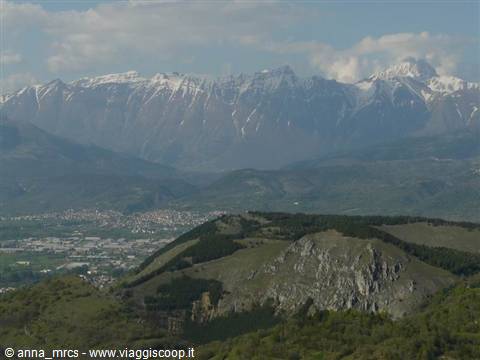
Today we start our visit to the Gran Sasso National Park, and for the first day Marco has chosen to reach the summit of the Gran Sasso, the Corno Grande; I, on the other hand, settle for a little outing. The Gran Sasso National Park extends over about 160,000 hectares; this territory is mostly in Abruzzo, and within it lie the suggestive mountain ranges of the Gran Sasso and the Monti della Laga. This park is also relatively recent; it was in fact founded in 1991. The highest peak of the park, and the highest in the entire Apennines, is precisely the Corno Grande (m 2912), and it's also on this mountain that there is the only glacier of the Apennines, the Calderone, which also boasts the record of being the southernmost in Europe. Campo Imperatore (1600 m a.s.l.) is among the best-known and most appreciated localities of this area.
It's an enormous plateau reachable by car in summer and by cable car in winter, which allows access to the ski facilities. The road is in fact closed with the first snowfalls at Assergi, and as the good season advances the road is reopened. On the other side of the Gran Sasso massif we find the Gran Sasso d'Italia ski complex. We were in that latter area a few years ago; we had stayed in a deserted hotel at Prati di Tivo, an area full of hotels and ski resorts. That time too it was during the spring long weekend, so there were really few tourists around. I remember the hotel we stayed in because it had a long, long, dark, dark corridor that reminded me of the one in the hotel in the movie "Shining." I also remember the beautiful village of Pietracamela, with its narrow, narrow alleyways.
Among the park's fauna it's mandatory to mention the wolf and the chamois, the latter recently reintroduced to the park, and the Orsini viper. I mention it because, curse it, the only one that had just come out of winter torpor it was my pleasure to encounter—and to think I don't like reptiles at all!!!!
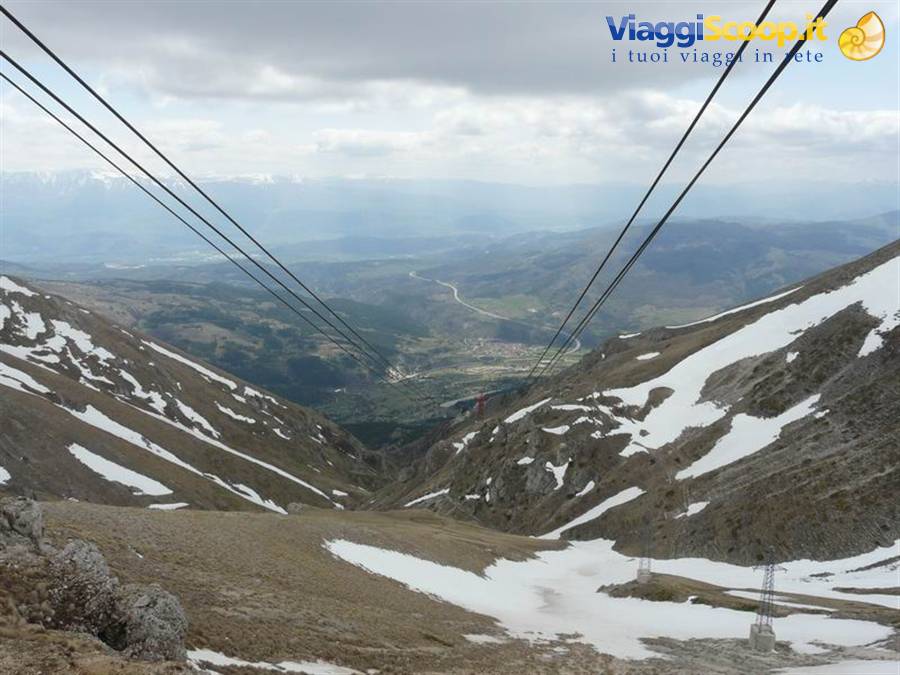
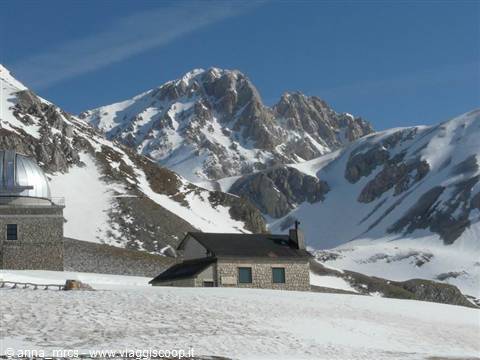
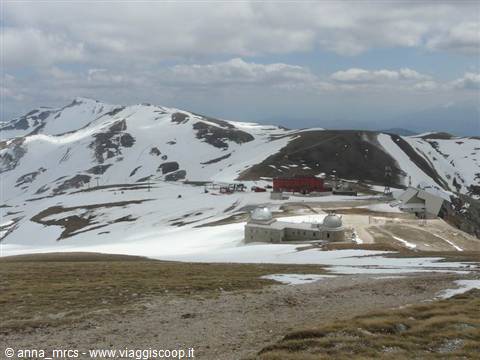
We go up with the cable car from Fonte Cerreto (Assergi) on the first morning run (8:30) together with other people who, judging by their gear, intend to do the same loop as Marco. Once at Campo Imperatore, Marco gets ready carefully and sets off toward his destination, while I, who after all won't go very far, have all the time to poke around a bit and then take the trail that will lead me to the Rifugio Duca degli Abruzzi. There's a big hotel, an observatory, but I notice that everything is strictly closed. Hmm... The ski facilities are operating and some skiers are already starting their morning on skis. In the famous hotel of Campo Imperatore, in 1943, Mussolini was held prisoner until his liberation by German soldiers. If I may offer a comment, the facilities at Campo Imperatore do not have a negligible environmental impact, on the contrary...
They are a bit of what you'd call an "eyesore," they disfigure the landscape and ruin the whole. But couldn't they have been built with a slightly less showy environmental impact? Trying to preserve the beauty and aesthetics of the place!?!
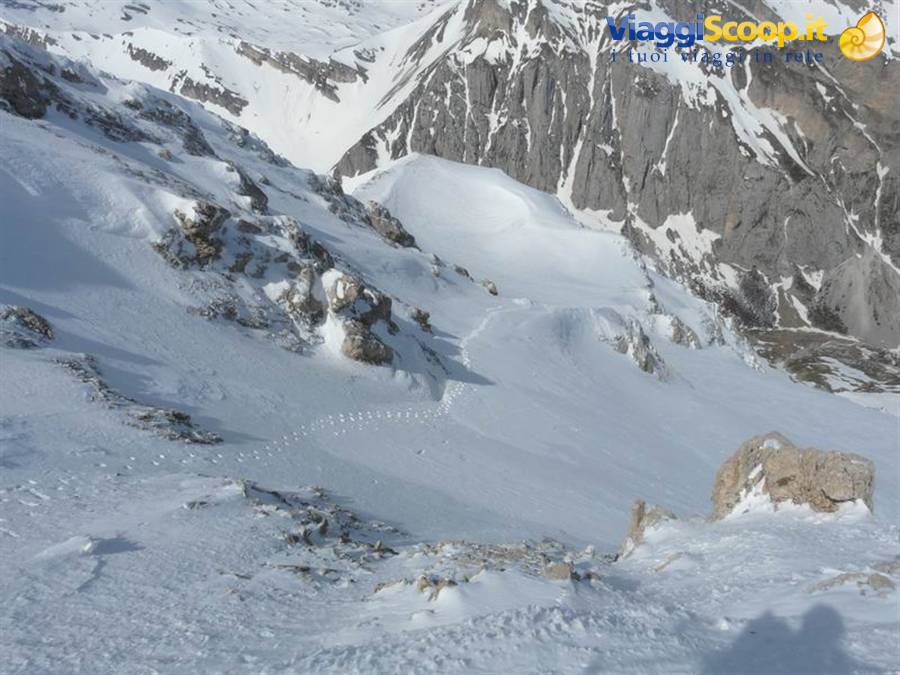
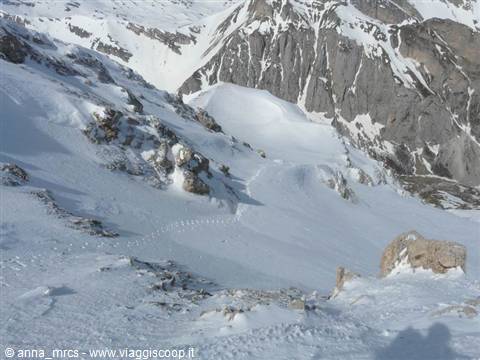
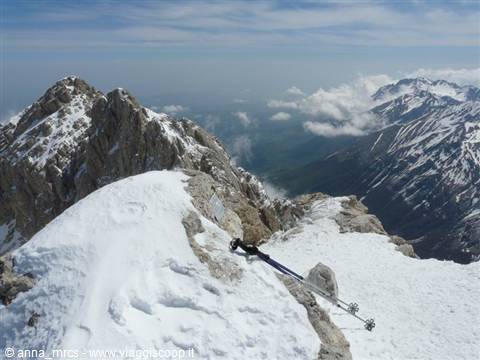
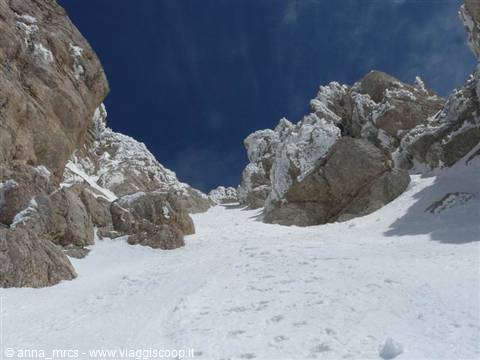
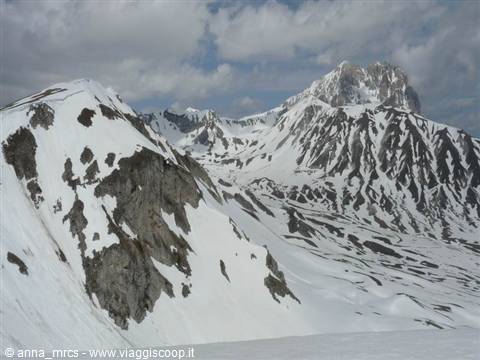
For the record, I climbed, at a leisurely pace, to the Rifugio Duca degli Abruzzi, where I found myself a nice sunny corner, since the day wasn't at all warm, and here I waited for Marco to return from his trip. The itinerary chosen by Marco involved reaching the western summit of the Corno Grande via the direttissima route used in winter. In summer the climb is done via another trail and is also suitable for poor hikers like yours truly. In winter, however, basic mountaineering skills are required, which I don't have and don't intend to acquire! This is the itinerary he followed: from the cable car arrival he headed north.
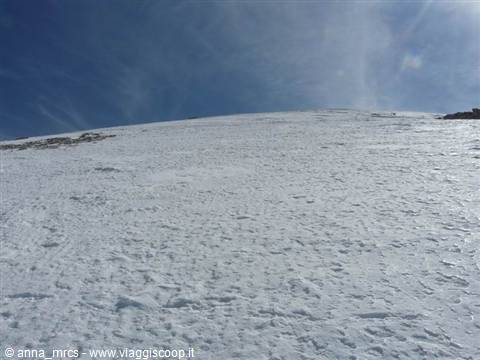
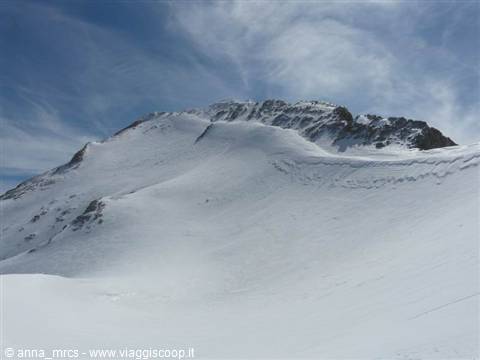
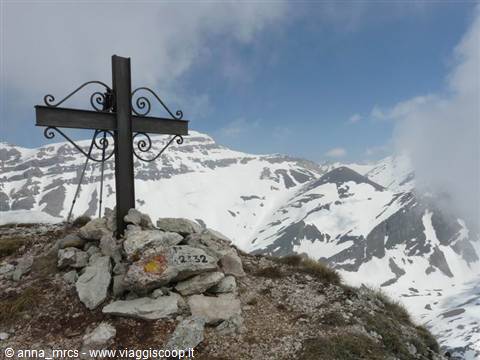
For the approach to the direttissima there are two possibilities: climb toward the Rifugio degli Abruzzi to the left after the Campo Imperatore Observatory, or even faster (and this was the choice of Marco and other climbers) pass to the right of it and skirt above a valley that closes to the north below Monte Aquila. Having chosen the latter possibility, after about half an hour of walking you climb toward a saddle via a steep little ridge at 55°, 150m, from where the Corno Grande appears. From here you must head, via non-obligatory routes, to the start of a series of little gullies that lead to the summit (1 hour 30 min) at the Sassone, 2560 m. From the Sassone, after about 1 hour 45 min of walking, you're at the summit of the Corno Grande (m 2912). The descent can be done via the same route as the ascent.
The environment, according to Marco, is spectacular—"nothing to envy the Alps," that was his comment!
After this beautiful day we return to the hotel where for dinner there are arrosticini, yummyyyyyyyyyyy!!!!!! Abruzzo cuisine is rich in dishes tied to the traditions of this land. Arrosticini are a skewer where the meat, from sheep (lamb or ewe), is cut into small pieces and threaded onto skewers to then be cooked.
45 Descending by cable car
Day 71 May 2008
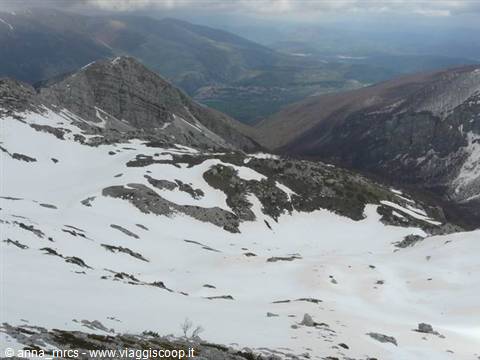
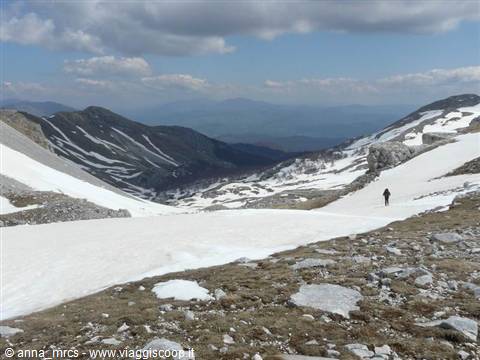
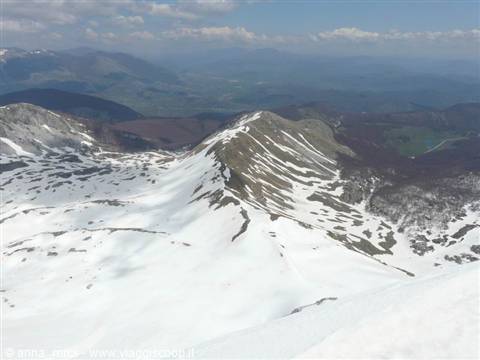
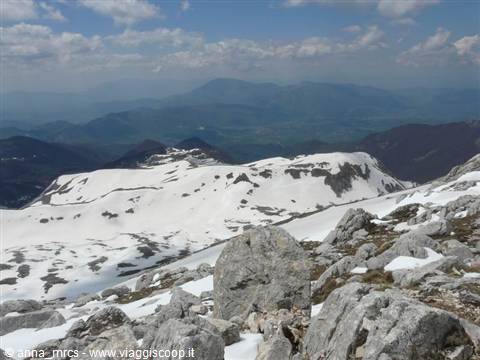
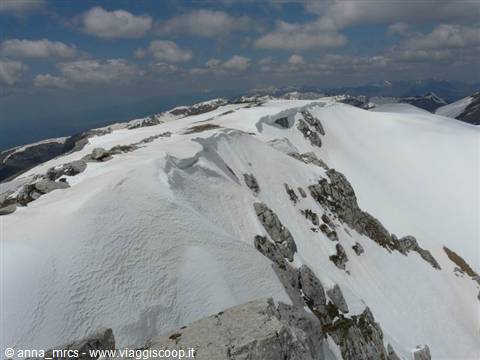
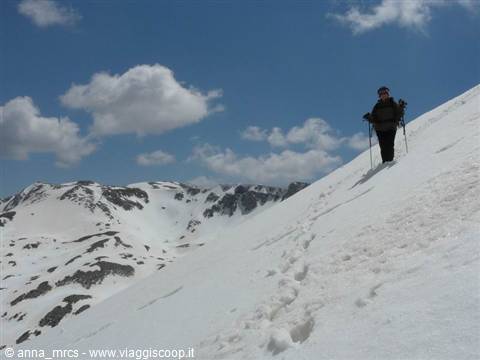
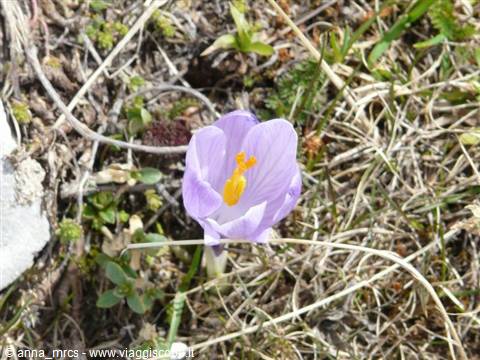
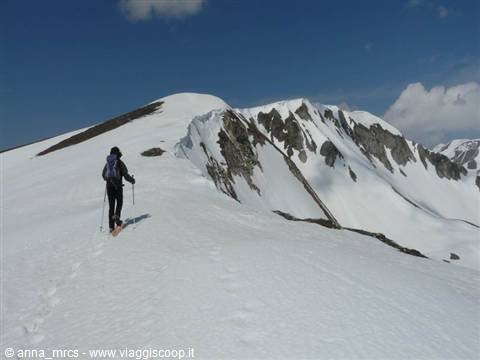
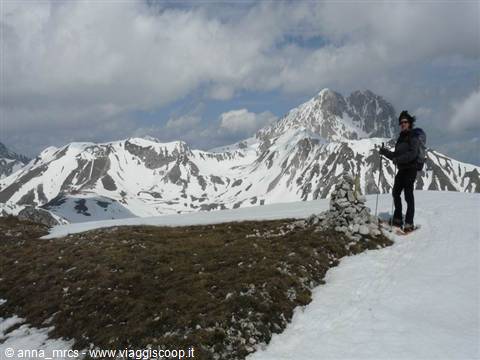
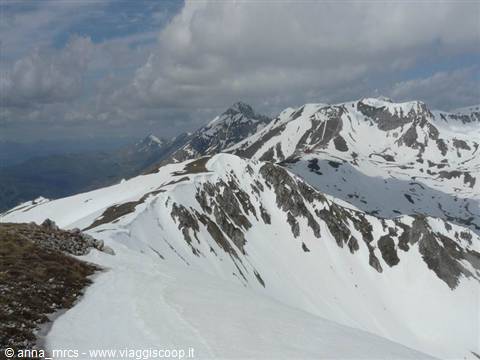
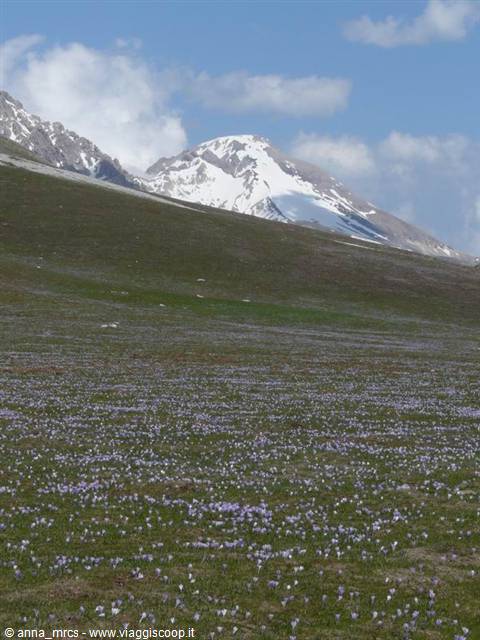
Today we chose to go to Monte Scindarella (m 2233), a place that offers splendid panoramas over the Gran Sasso and Campo Imperatore. We leave our car at the junction of S. Egidio (1650) and from here we set off on the south-facing slopes that lead to the summit of Monte San Gregorio di Paganica. The meadows, where the snow has now melted, are teeming with purple crocuses. From a distance you can admire immense purple expanses—a spectacle—and stepping on them almost feels like sacrilege. A little below the mountain we put on our snowshoes. From the summit of Monte S.Gregorio di Paganica we continue along the ridge westward to Monte Scindarella. The route is fairly flat and the view is spectacular.
After lunch, instead of descending the same way we came up, we decide to go down the steep south slope, still full of snow, heading directly to the Sella della Scindarella, and from here we returned to our car crossing the flat Fossa di Paganica, teeming with little purple flowers! A spectacle!
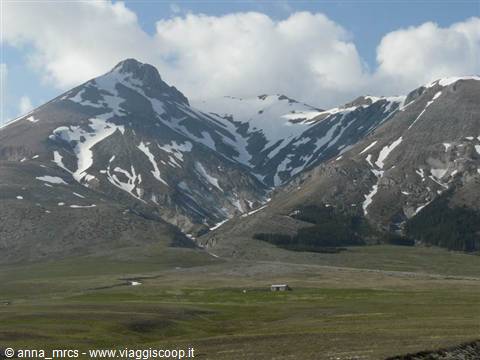
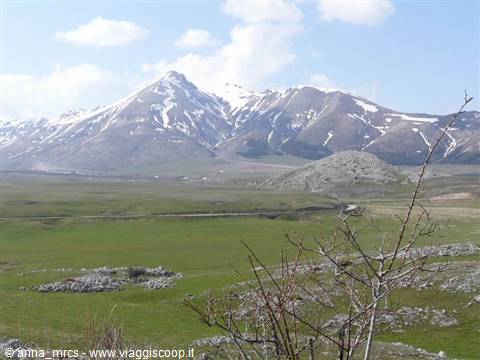
Since today we still have quite a bit of time before dinner, we decide to explore these places a bit better, so instead of the usual return itinerary we go deep into the vastness of this plateau that is Campo Imperatore, driving the very scenic S.S.17 bis, which, apart from some higher stretches, is already entirely drivable by car. In one spot there's still snow at the sides of the road forming a very tall wall of snow, and it's impressive to pass alongside it. Campo Imperatore is a vast—indeed, very vast—plateau of glacial origin located at about 2000 meters of altitude and is part of the Gran Sasso and Monti della Laga National Park. It has been nicknamed Little Tibet precisely for its particular territory and landscape that, even if in reduced form, resemble the plateaus of Tibet.
We come across a lone fox wandering in search of food; it sniffs a bush, behind a stone, and then disappears from our view. The vastness of these places, which have been the backdrop for many films and commercials, is impressive, and even more so is the silence that surrounds us. We meet very few cars. The meadows are already partly free of snow, and where the grass is coming back to life a myriad of little flowers color the meadows purple. Boundless meadows surrounded by spectacular peaks exceeding 2500 meters of altitude—this is Campo Imperatore. Truly something unique and splendid. Marco is drawn to Monte Camicia but he can't convince me... maybe next time. We cross evocative places, splendid villages where time seems to have stopped, such as Castel del Monte, and Rocca Calascio.
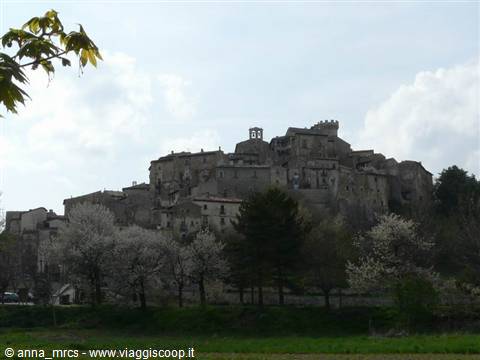
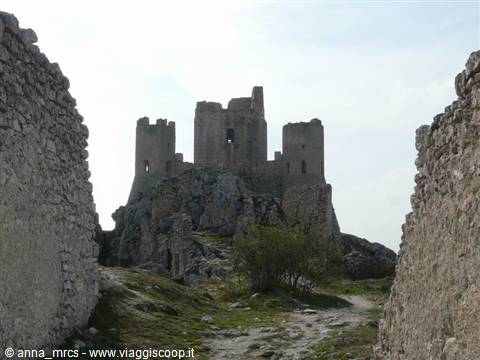
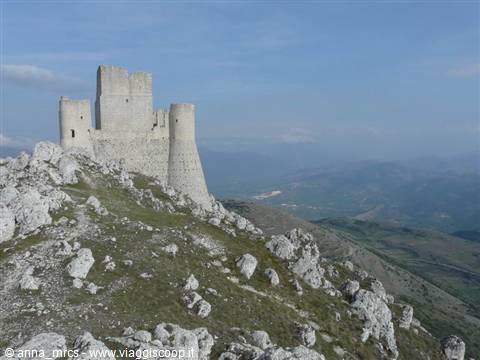
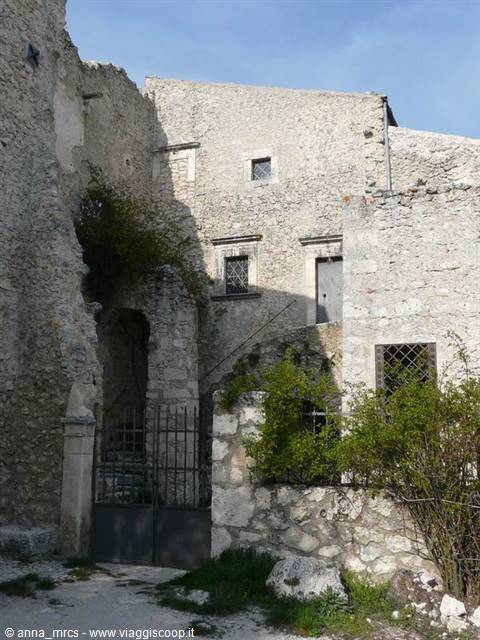
Castel del Monte is considered the symbolic town of the Transhumance, so much so that in 2004 the Italian Post Office even dedicated a stamp to it. "The most beautiful villages in Italy" is a kind of association, founded in 2001, with the aim of preserving, precisely as the name says, small villages or centers of particular artistic and historic interest. Castel del Monte is part of this association along with 18 other Abruzzo villages. The aim of this association is to preserve and maintain the villages that oblivion or being outside tourist circuits would otherwise lead to slow decay and the enormous loss of the artistic and cultural wealth they represent. Villages from all over Italy are part of this association. In Rocca Calascio (1460 m) we meet a few more tourists than in the rest of the villages or park.
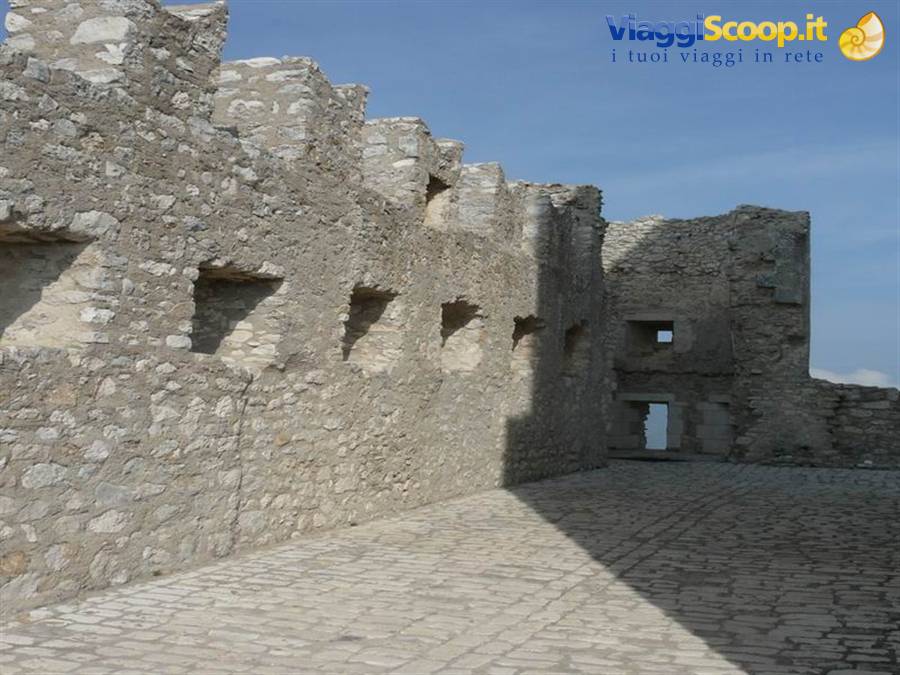
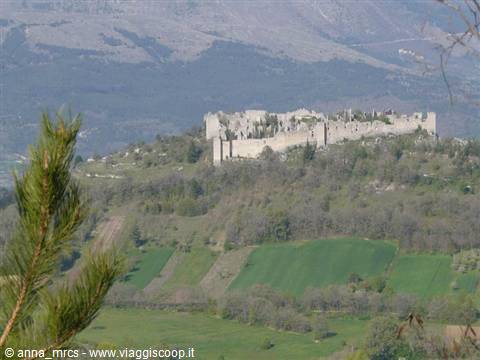
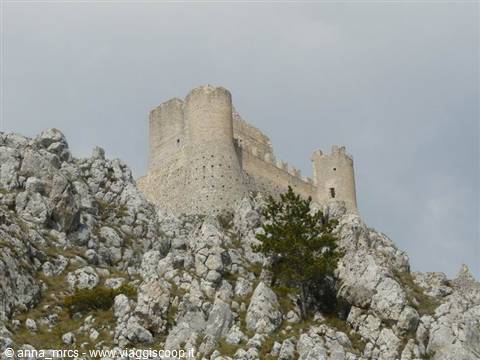
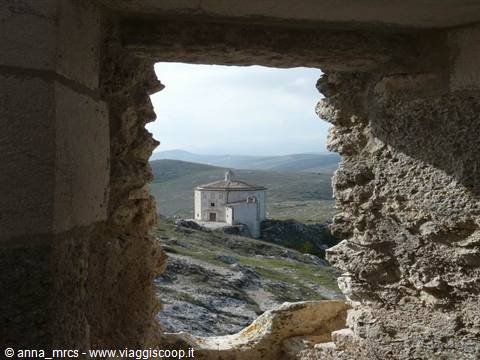
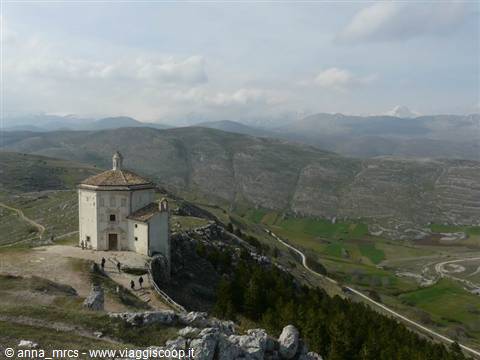
It must be said that this medieval village, visible from afar due to the presence of the castle that dominates the rock, is enchanting. The castle of Rocca Calascio is the highest in Italy, and the medieval village is partly abandoned and partly the subject of various public restoration works and also by private individuals seeking to recover this inestimable historical heritage. Before reaching the castle, the road that leads from the village to the Castle passes in front of the Oratory of Santa Maria della Pietà. An old legend tells that the church was built on the spot where the population managed to get the better of a band of brigands. The view you enjoy from here over the Gran Sasso is simply splendid. Unfortunately the church is closed so it can't be visited.
The castle was founded instead around the year 1000; given its position, over the course of history it has always played an important strategic role. You can wander among its walls and ruins in complete tranquility.
What can I say about today? It was a very intense day; we enjoyed splendid landscapes and discovered fascinating villages—we couldn't have asked for more!
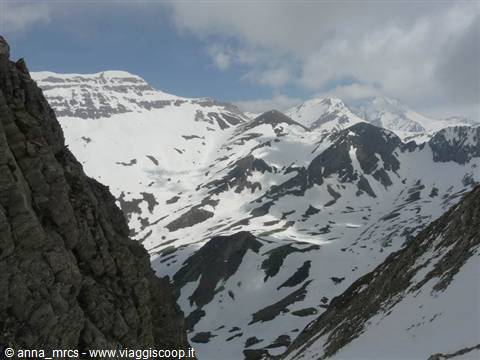
53 Gran Sasso
Day 82 May 2008
Today too we have planned a nice hike in the park. Pizzo di Camarda (m. 2332) and Monte Ienca (m. 2208) from the Valle del Vasto. From Assergi we again follow the road toward Campo Imperatore, but instead of taking the turn for Campo Imperatore we turn left toward the Valle di Vasto. Park near a bend at a place called Croce Pantano, just before the Sorgente Acqua Bernardo. There are no signs indicating the start of the trail or anything else; we go a bit by instinct. After loading our backpacks on our shoulders we follow the dirt road to Colle Quadreglio (1861 m), where there are some buildings. From here we continue uphill in the gully to the Piano di Camarda, where there's a small pond (2051 m). At this point we continue to the right along the ridge to Pizzo di Camarda (2332 m).
Then we come back to the Piano di Camarda and climb from the opposite side heading southwest to the summit of Monte Ienca (2208 m). Today too we did a nice loop and discovered new places; too bad about the fog that enveloped the peaks!
As I've said, I'm a fan of souvenirs, and what did I bring home from this area? The Canestrato! I hope I'm not getting the name wrong! In any case it's a very good sheep's milk cheese. It's produced in the mountain pastures in the Castel del Monte and Scanno areas. I bought a small wheel which I then shared with my in-laws, who are cheese connoisseurs, and what can I say... a marvel! Too bad it's all gone! And of course I couldn't not bring home some saffron too, mostly cultivated in the Navelli plateau, which has obtained the PDO label (protected designation of origin). Just to stay on the culinary theme, the mortadella di Campotto should also be mentioned, with its characteristic ovoid shape.
62 Rocca Calascio - The castle
Day 93 May 2008
And so the day of return arrives too. Bags packed, we leave our hotel and take the road home, first making a stop near the church of the Madonna d'Appari di Paganica. We had passed by it, in the small tunnel, several times without stopping, so now the time has come to go visit it, especially since our vacation ends here. The caretaker is cleaning up the garden, and the little church in all its simplicity and character is very pretty. Its being carved into the rock right beside the road is peculiar. The name Appari is tied to a tradition that says the Madonna, with her dead son in her lap, appeared to a shepherdess while she was leading her flock to pasture. The church was therefore built in this place by the citizens of Paganica as a symbol of devotion to the Madonna. Historically, first a votive shrine was built, and then the church.
Once again we cross the village of Assergi, located in the Rajale valley. Its ancient village preserves within its walls an excellent example of Romanesque art. Historically, Assergi saw its birth around the middle of the 1st century AD, in Roman times, when a small village was founded to house the workers who worked in the nearby mines. Interesting is the Church of Santa Maria della Neve located on an overhanging rock. In Assergi there is also the headquarters of the park authority. And from here we take the highway that leads us home.
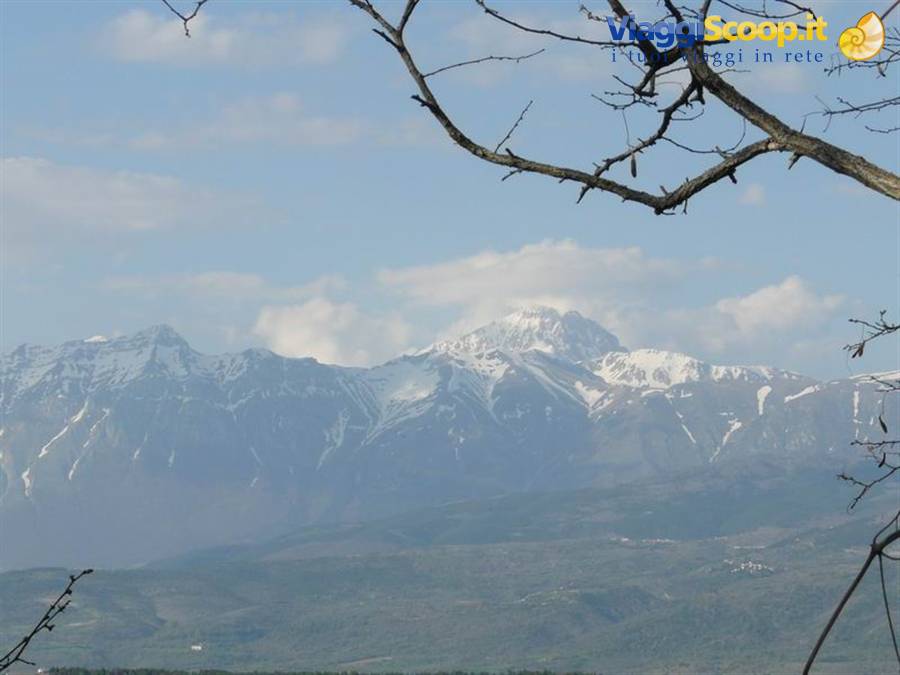
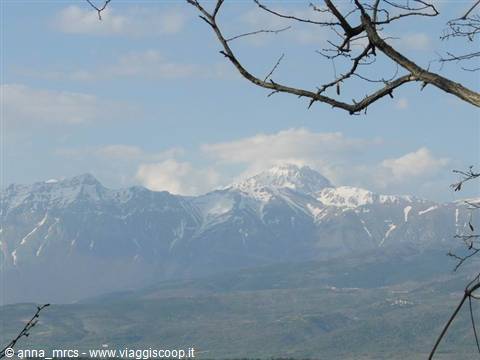
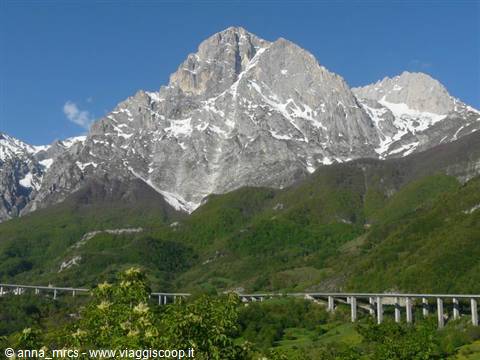
After passing the long Gran Sasso tunnel we turn around one last time to enjoy the splendid landscape offered by this










0 reader comments