The story
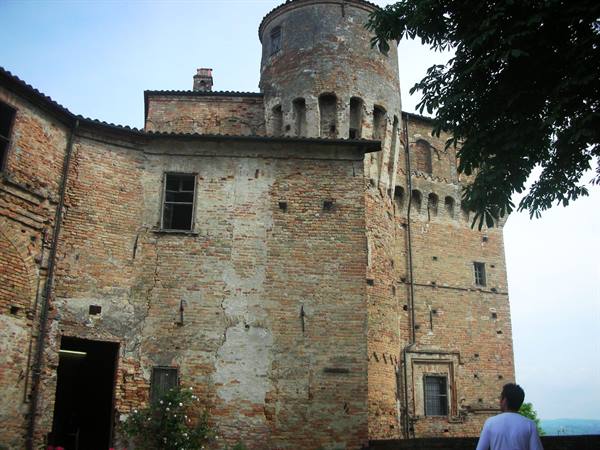
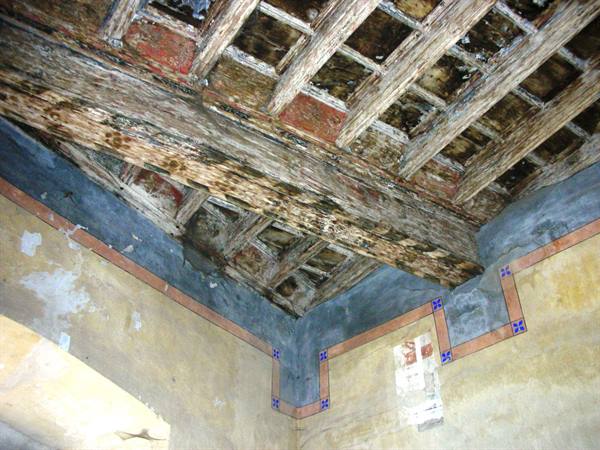
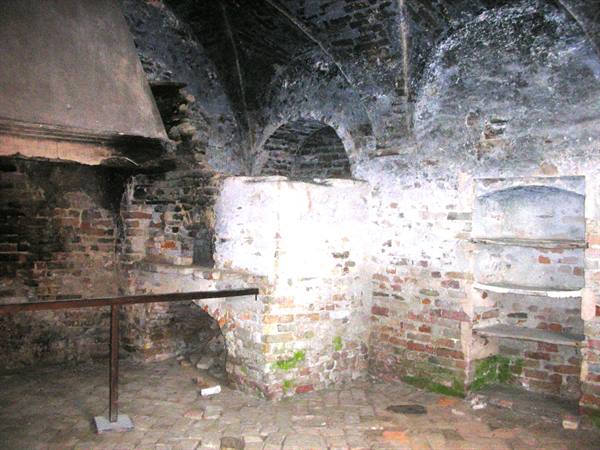
It stands in a privileged, panoramic position over the Langhe on the hill of Roddi (CN). The Castle dates back to 1100, and access is via the church square slightly further down. In ancient times there was a moat and a drawbridge; today little remains of the whole complex. Looking at it from outside, you can see that two different blocks make up the building, one facing the valley and the other towards the church. The castle is on several floors, with a cylindrical tower; it is currently home to occasional exhibitions of paintings by local artists, has not been recently restored and is clearly decaying. Entry is free and the visit is self-guided; inside there are no furnishings or other fittings, just a few frescoes, wooden coffered ceilings, and some spaces identifiable as kitchens and an oven.
This castle too, like those of Serralunga and Barolo, belonged to the Counts Falletti, typically medieval. Beside the castle stands the 18th-century church of the Assumption. The Castle is signposted once you are in the town. It is open every Sunday from May to October. Roddi is a small town in the Langhe, not far from Alba; Roddi's historic centre also evokes the Middle Ages and clearly recalls the Counts Falletti. Inside the dilapidated castle there are the marks of a fire that destroyed part of the rooms; many parts are abandoned and in ruins, while a few rooms are still well preserved. From outside it gives no obvious sign of decay; set on the hill of Roddi, it is a very ancient medieval castle (around 1100) that often hosts exhibitions of paintings by emerging local artists.
Entry is free and there are no guided tours; at the entrance a kind lady gives some (scant) information, and the castle takes part in the annual Italian "open castles" initiative. You enter through a little door, across a lawn that was perhaps once a moat, and there is an entrance (not the original main one). The castle doesn't have much to offer: it's not restored, not very interesting, it preserves no notable paintings or furniture, and there is nothing special to draw the attention except the obvious signs of an old fire that is thought to have destroyed something... Three floors of decay, half-ruined walls, everything made safe by mild means, a few doors propped up, and on the upper floor the greatest decay and bare, dark rooms.
In short, what can I say? It's definitely not worth it! Certainly the worst-preserved castle in the Piedmontese Langhe area; it has only the remains of an old fireplace now walled up, with the remains of an ancient fresco above it... a few wooden coffered ceilings that no longer show any colour or paintings... a single trace of a painting on a load-bearing wall above a passage. During my visit to this relic there was an ongoing exhibition of paintings, the only touch of colour... Two very old rooms thought to have been kitchens, because there are the remains of an ancient oven and some shelves, all in stone, blackened by a fire. The information given about the castle is written on a sheet handed out at the entrance... The castle was originally probably very beautiful, in medieval style, and it too belonged to the Counts Falletti.
The name of the medieval village of Roddi probably derives from the Celtic Rand or Rod, meaning River; already on old 18th-century maps you can admire an ancient castle leaning against the parish church. The old castle also passed into the hands of the royal Savoy family, then was ceded to the public domain. They are certainly right not to charge for entry, and who knows, maybe one day there will be a restoration that will make it at least acceptable...
The journey's photographs
6 photographs · click to open them full screen



0 reader comments