Tripscoop›Europe›ITALY›A Weekend in the Bologna Hills, Between Shows and the Flavours of Good Food - Part I
ITALY · Europe
The story
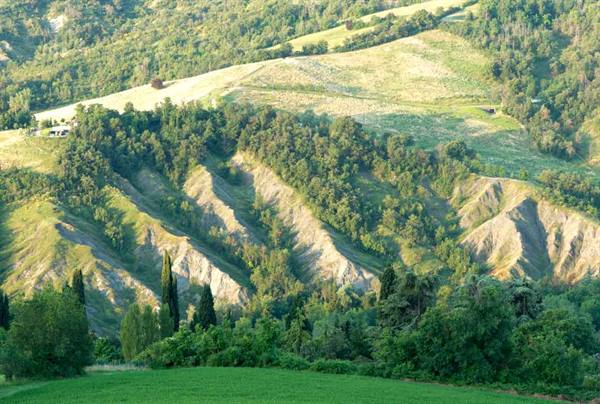
During our first stroll through Bologna, which comes before a long weekend to be spent in the green of the hills surrounding this historic university city, we are drawn into Bologna's charm by the memory of another walk, taken more than four hundred years ago. It was 1602 when a shoemaker named Vincenzo Casciarolo decided to take a stroll near the church of the Paderno district. At a certain point, in the half-light of sunset, among the furrows of the badlands, the man noticed stones embedded in the clay that glittered like diamonds. The cobbler, who was also an amateur alchemist in constant search of pigments he could use in his work, took the strange glittering stones home and, after various experiments, concluded that those stones could hold the light of the sun and then re-emit it: it was the discovery of the phenomenon of phosphorescence.
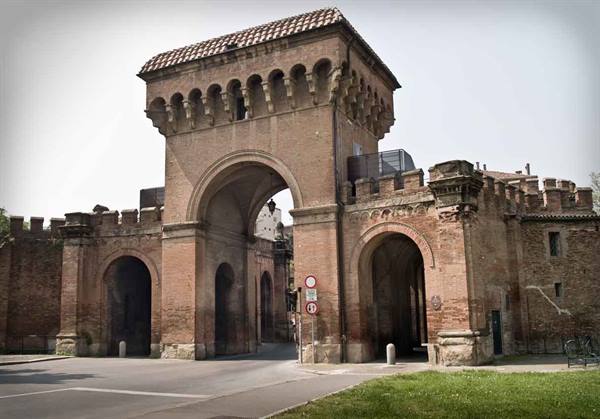
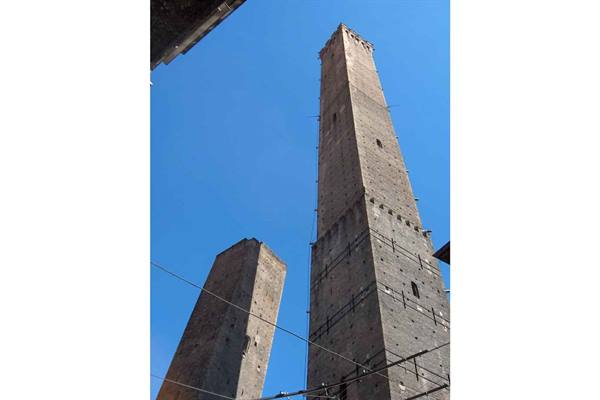
Yet it is not only the famous Bologna stone, also known as the moon stone or spongia lucis, that shines with its own light, but the whole city, steeped in great charm. Historically surrounded by three rings of walls, Bologna has remained one of the most intact and extensive historic centres in Italy. Of the ancient walled circuit we can still admire several surviving stretches, as well as monuments such as Porta Saragozza, one of the original twelve gates, not to mention the torresotti, part of the ring built in the 12th century. To see Italy's tallest leaning tower you do not need to go to Pisa, but to Bologna, among whose symbols the Torre degli Asinelli rises, slightly tilting, almost a hundred metres high, together with the shorter Torre della Garisenda, the most leaning of the famous "two towers", mentioned even by Dante in his Inferno.
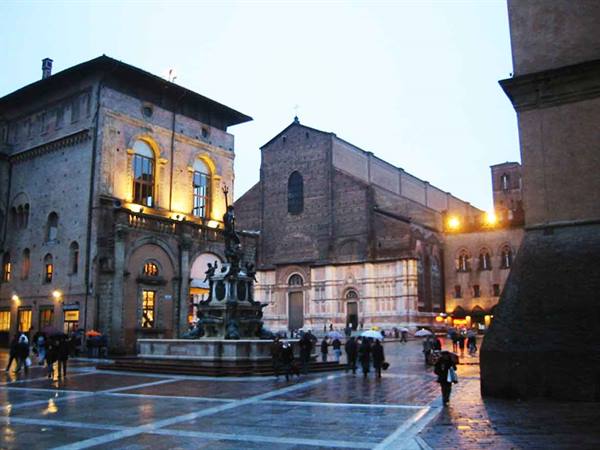
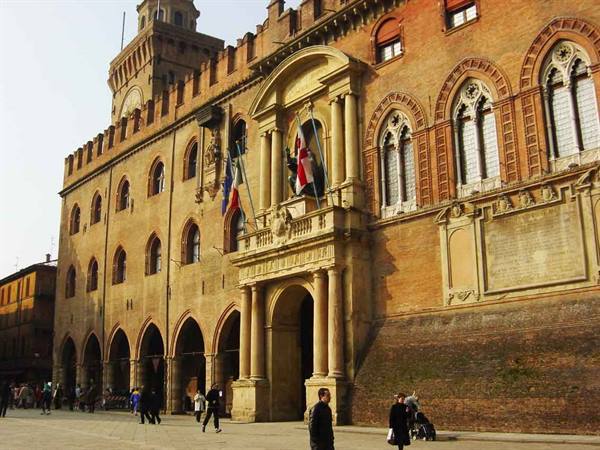
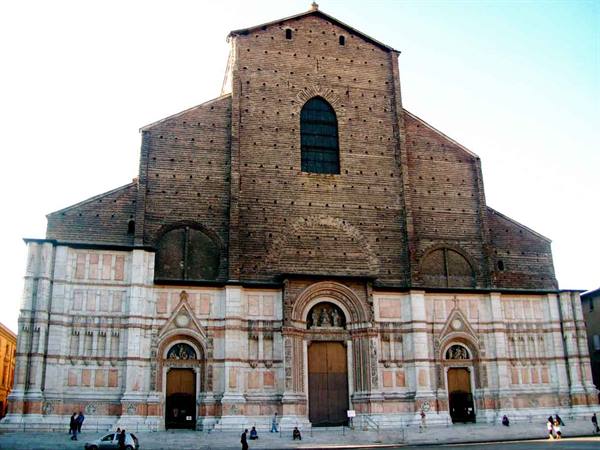
When we reach the striking Piazza Maggiore, dominated by the imposing basilica of San Petronio, built in Gothic style from 1390, we discover that the only one of the square's splendid buildings that Dante too could see during his walks is Palazzo Accursio, now the seat of the City Hall. Before becoming, in 1336, the residence of the Anziani, the municipal magistracy, it was the home of the jurist Accursio. Beside the basilica we admire Palazzo dei Banchi, erected in the 15th century and known for the workshops and the banks of the money-changers' guild. The famous portico, the Pavaglione, starts right here and connects the sumptuous square with the 16th-century Palazzo dell'Archiginnasio, Bologna's first university seat.
From the art of past ages to that of our own times, from the historic centre to a place where art, nature, food and hospitality blend harmoniously to bring well-being, it is a short step. Just ten minutes by car, ideally following in the footsteps of the cobbler Casciarolo, take us to where the phosphorescent stones shine with all the colours of relaxation, and where the light of art is reflected in every detail: Casa Fluò Relais, next to Fienile Fluò, a farm stay with zero-mile cuisine and a multipurpose arts space. The name Fluò is inspired by the famous phosphorescent stone, the "wonderful stone" that also stars in one of the many cultural events on the venue's rich calendar, a hub of ever new and original ideas capable of bringing even the most distracted people closer to culture, through genuine artistic, sensory and culinary experiences to enjoy during your stay.
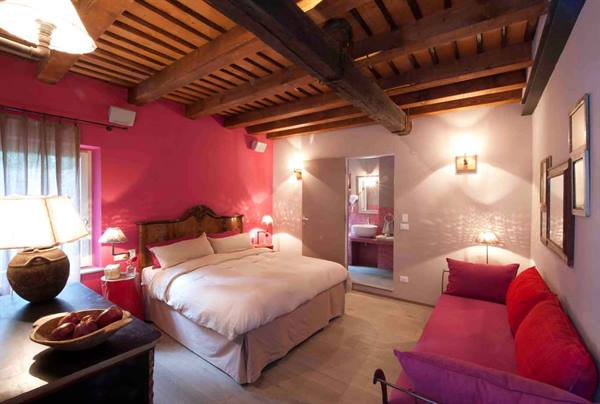
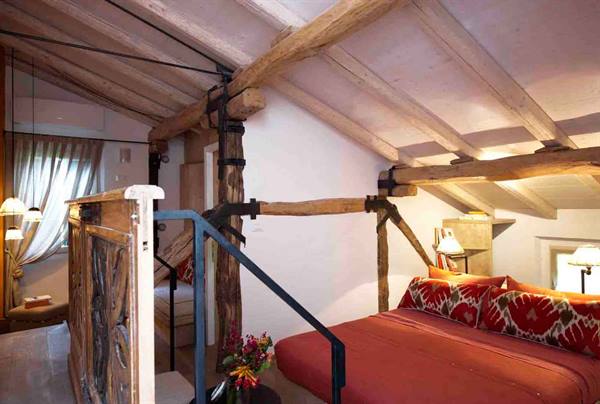
We settle into two of the relais' four charming rooms, all tastefully furnished and attentive to detail through a careful restyling of furniture and décor. Our imagination is also stimulated by the refined design objects created ad hoc from reclaimed materials, and the charm of past eras blends harmoniously with the most modern comforts, including free wifi and a stereo system with music diffusion that we can connect to with our devices. Each room is characterised by a colour, a scent and a style: the large red room, the bright yellow room, the romantic blue attic, the spacious orange loft. We choose the red room, the largest in the relais, and the comfortable, spacious loft. In the red room we are wrapped in a passionate ruby colour and caressed by the scent of talc.
Our rest is ensured by a large, soft bed from another era, and we can pamper ourselves with the in-room Turkish bath and colour therapy. There are many details that, like phosphorescent stones, infuse beauty into the room, from the bedside tables made from tree trunks lacquered in Chinese style to the comfortable daybed full of soft cushions. Outside the window our gaze can wander over the green garden. Our friends who chose the loft, after their excursions along the trails, can enjoy the whirlpool tub and regenerate themselves thanks also to the shades of orange, coral and red that dominate the room, characterised by old exposed beams and lit by a skylight and a window overlooking the hills.
Welcoming us with great kindness and helpfulness is the owner, Angelica Zanardi, who guides us in discovering the relais and Fienile Fluò, the old renovated barn, a place of art, entertainment and fun where we will spend many pleasant moments of our days between tasty dinners and cultural events. "My dream was to create a place that combined a love of art and a bond with nature, a passion for authentic flavours and a vocation for sharing and hospitality. Here you never get bored," Angelica tells us. "Besides the many activities you can enjoy while wandering around the hill, when you come back there will always be something interesting to do, between workshops for children, theatre and music shows, cinema and courses."
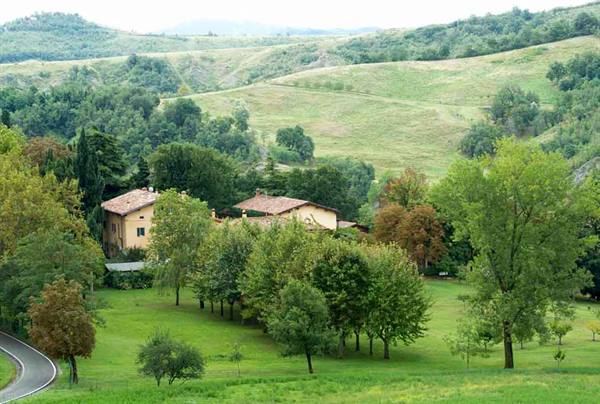
Our days in fact pass between regenerative outings in the unspoilt, protected nature of the hill's landscape conservation area, which surprises us with its wild, authentic and free beauty, despite being just a few minutes from the historic centre. Our walks on foot and by bike — at Casa Fluò it is also possible to book and rent bicycles — take us to visit the striking badlands of the Parco dei Gessi, where we can admire these monumental geological formations of great charm. Our "cowboy" friends even venture out on a fine horse trek, and at the end of the day we return to our lodgings with a wolf's appetite.
The journey's photographs
9 photographs · click to open them full screen
0 reader comments