Tripscoop›Europe›ITALY›The Beauty of Jewels Reflected in a Golden Countryside: A Weekend of Relaxation and Outings in Valenza
ITALY · Europe
The story
There are millions of people in the world who, without even realising it, have experienced emotions linked to Valenza before even visiting this town located on the right bank of the Po, between the outermost hilly spurs of Monferrato and the endless rice fields of Lomellina. These "unwitting visitors" may have seen the 1660 painting by Juan de la Corte, a pupil of Velázquez who had immortalised the fortifications erected during Spanish rule, but they may also have recognised the charm of the Piedmontese landscape that in the 1955 film "War and Peace", adapted from Tolstoy's famous novel and partly scripted by Mario Soldati, formed the backdrop to the Battle of the Berezina.
The town, today known mainly for its great goldsmith tradition, due to Vincenzo Melchiorre, goldsmith, jeweller and entrepreneur considered the father of modern Italian jewellery, has not only entered artistic legend, but is itself founded on a legend, the one linked to the dove of San Massimo. It is said, in fact, that from the first settlement that became a forum in Roman times, in the 5th century AD the population came down to the place where the town now stands, following the flight of a dove released by San Massimo. The spot where the animal landed was called Colombina and is still one of the town's districts, also known for the Colombina bastion, which survived the demolition of the walls carried out by Napoleon.
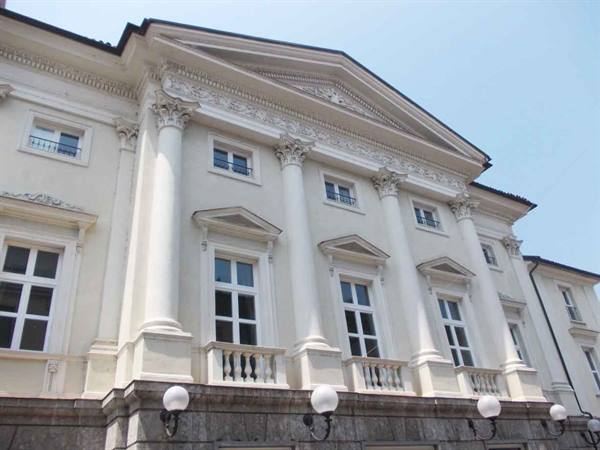
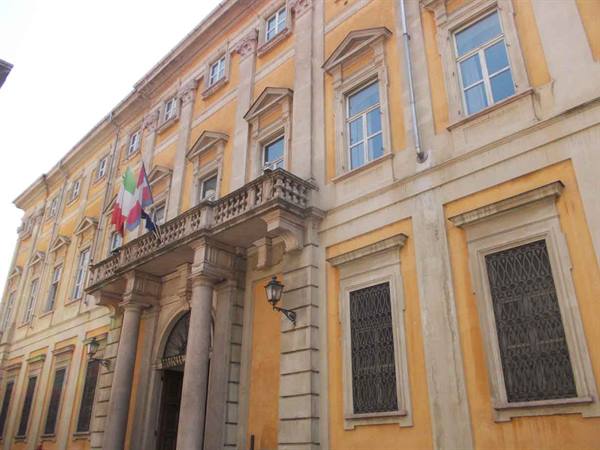
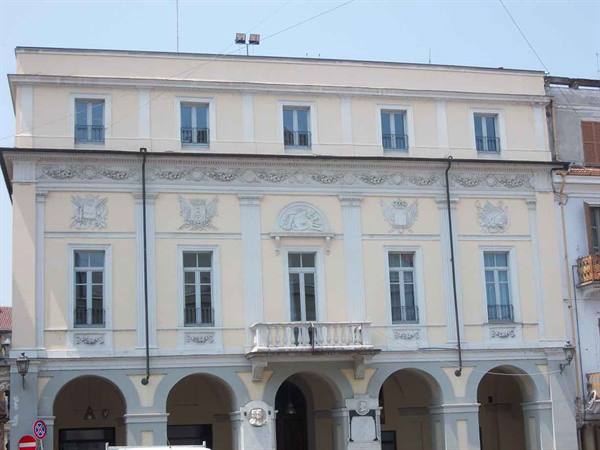
The strategic position of Valenza today represents an important advantage for the town, which attracts visitors both for work and for tourism from all over northern Italy and beyond, but in the past it was a source of many troubles given the numerous sieges to which Valenza was exposed over the centuries. Despite its troubled history, the town is rich in architectural beauties, especially villas and palaces, including the eighteenth-century Palazzo Pellizzari, the town hall, and Palazzo Valentino, built on the site of the original praetorian palace of the 13th century.
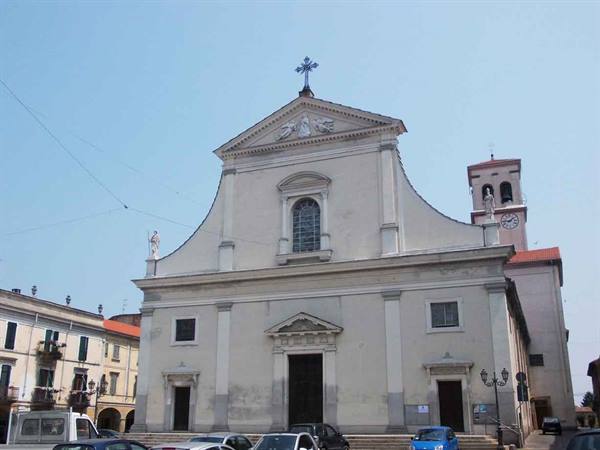
From the fifteenth century onwards the construction of splendid villas immersed in breathtaking panoramas developed, and among them there is also one known for its mysterious character: it is the case of the nineteenth-century Villa Pastore, now in ruins, an object of interest for many scholars of the paranormal, intrigued by the sweet piano melodies that seem to come from time to time from those abandoned walls. Whether there are spirits in Valenza we do not know, but it is certain instead that we can visit several splendid places of spirituality, including first of all the Cathedral, dedicated to Santa Maria Maggiore and erected in 1606 on the site of an ancient Romanesque church dating back to the 12th century.
Among the other religious buildings of artistic importance we visit the church of the Most Holy Trinity, whose construction began in 1585 and which contains beautiful altar decorations dating back to 1633. Very beautiful too is the sixteenth-century church of San Bernardino, which preserves an organ by Paolo Mentasti of Casale Monferrato, built in 1894. If the town was founded where a dove indicated, the destination of our holiday is indicated to us instead by a splendid purple heron, a specimen belonging to the dense nesting colony in the Po and Orba River Park. It is precisely within this nature paradise that Cascina Nuova is located, an organic farm stay with a vocation for outings and regenerating holidays during which you can alternate pleasant idleness with sporting or creative activities.
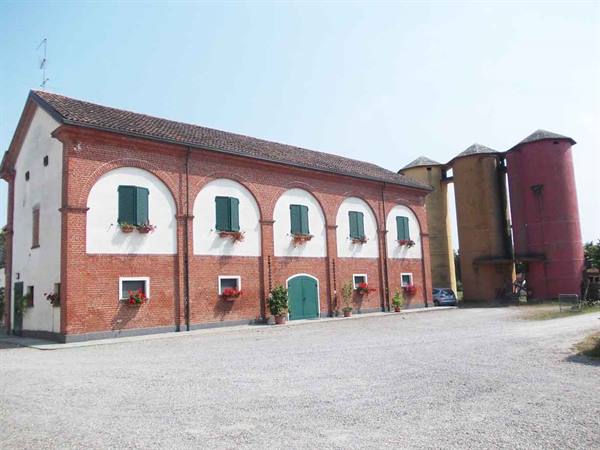
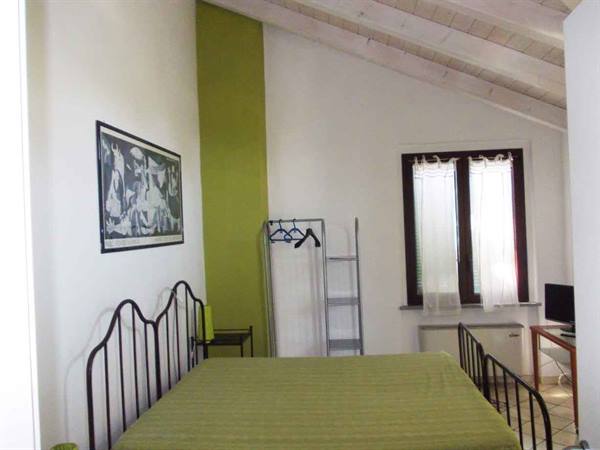
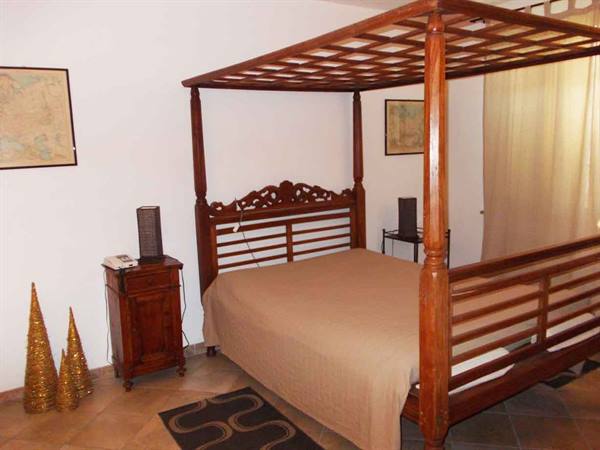
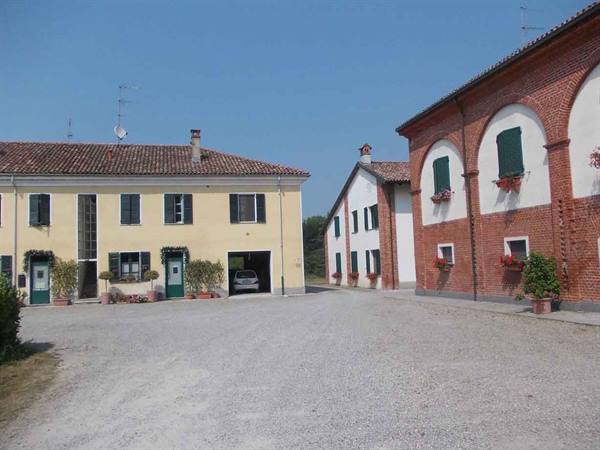
We have no trouble finding the address, and when we reach the tree-lined avenue with the picturesque colourful silos, we know we have arrived. We park comfortably in the courtyard and are welcomed with great kindness by the owners, Mrs Armanda and Mr Federico. Our accommodation is spread across the ten apartments distributed between the Casa dei Fiori and the Casa dell'Arte: two characteristic and finely restored properties, converted respectively from the stable, the hayloft, the chicken coop and the tractor workshop. Each apartment is different from the others; some are furnished in a charming country style, others bring a touch of modernity to the countryside. "Besides the ten spacious studios, equipped with kitchen, air conditioning and wifi, we also have three rooms with the same comforts, generally requested by those who stop during a business trip.
Some of our guests are people who work in the gold and jewellery sector, but for some time tourism too has been acquiring ever greater importance, in particular eco-sustainable tourism," Mrs Armanda explains; she had followed her husband to this place immersed in nature in 1993. "My husband had inherited the farm from his grandfather and still devotes himself to the production of organic cereals, from spelt to maize, from sunflower to wheat, grown in rotation so as not to impoverish the soil. To this traditional activity we added hospitality as early as 1997, starting with the first five studios, to which the others were added in 2006." Today Cascina Nuova is an oasis where guests can reclaim themselves, their own wellbeing and a pace of life on a human scale.
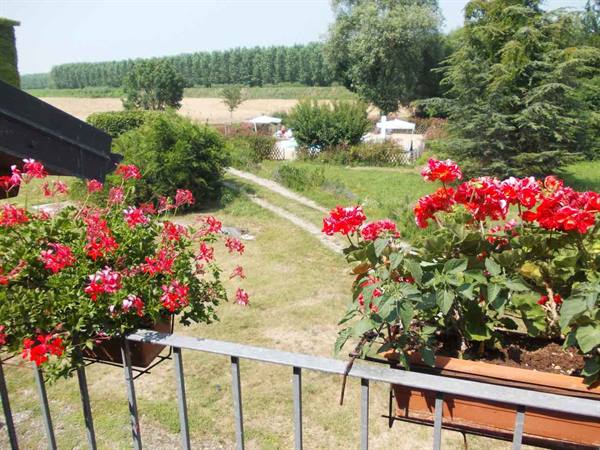
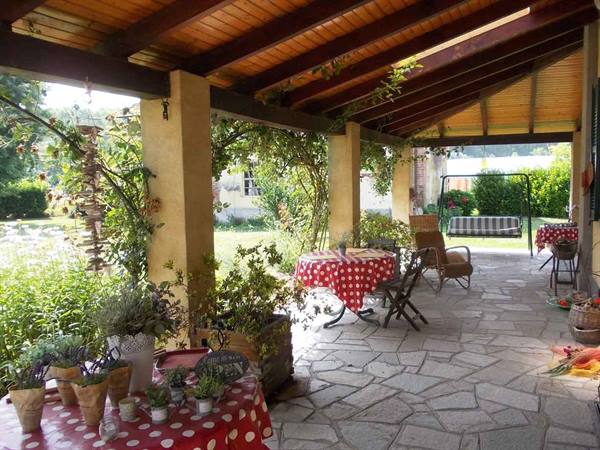
Our days begin with an abundant buffet breakfast based on organic products, with homemade cakes, bread, milk and zero-kilometre fruit, sweet and savoury treats and eco-solidarity coffee. While some of us devote themselves to relaxation, reading a good book in the shade of the flowered terrace, chosen from the Cascina's library, some of the ladies amuse themselves with a course in creative paper crafts. The sporty ones in the group instead go for a nice mountain bike ride within the Po and Orba Park, along the river about two hundred metres away and pushing as far as the rice fields of Lomellina. The Cascina is part of the Bike Friendly circuit of Monferrato, and it is also possible to take part in weekend cycling outings through the Monferrato hills thanks to tours with licensed guides both on road and off-road, organised in collaboration with Monferrato Bike Ride.
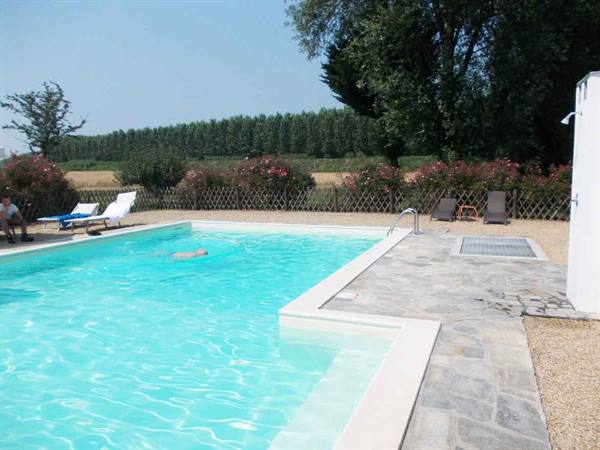
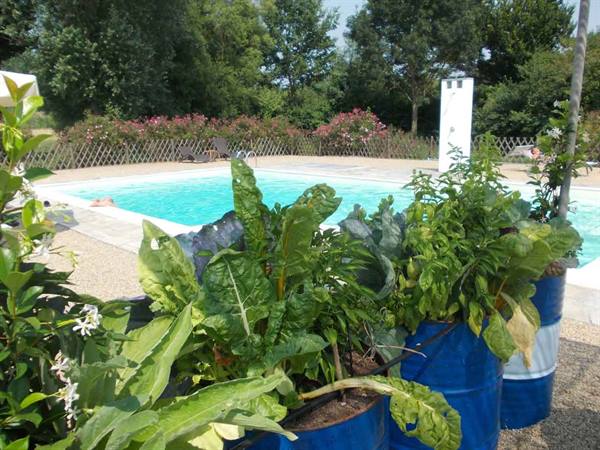
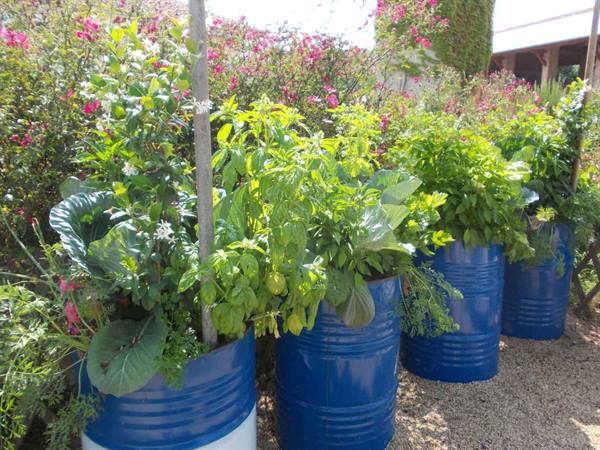
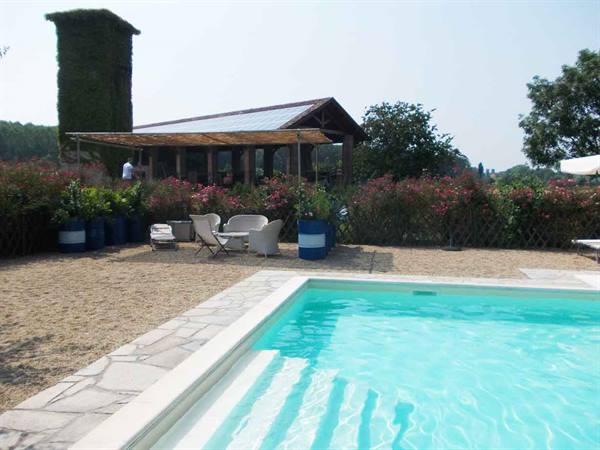
For those without a bike, there is also the possibility of renting one for these guided tours. After the outings there is nothing better than relaxing in the pool, enjoying the cool of the pleasant stretch of water set among the vegetable gardens. And if splashing about makes us hungry, no panic: the original Orto in Piscina, created in old recovered and repainted iron barrels that, thanks to the luxuriant vegetables, also provide shade to the relaxation area, is a few metres from us and, together with the nearby organic vegetable garden, will provide us with everything we need to prepare an exquisite dinner. The ecological vocation that led the Cascina to become a quality environmental supplier of the Po and Orba River Park can be seen in every detail: from the photovoltaic system to the courtesy products such as soap, which is dispensed through anti-waste dispensers.
Even the wood for the new heating system is produced and cut by the owners of the Cascina. At the end of our holiday we return to the town regenerated in mind and body, and from now on, if closing our eyes we dream of the countryside, it will not be the one of fields all the same where the geometric order of the plants leaves no room even for a weed: we have learned that seeing a few poppies or other flowers and grasses frequented by colourful butterflies sprout among the wheat is a sign of organic farming, that is of quality and goodness. We will be happy to take another fine bicycle ride among these beautiful fields and the surrounding hills next time too.
The journey's photographs
15 photographs · click to open them full screen
0 reader comments