Tripscoop›Europe›ITALY›Where the Sun and the Moon Dwell: a Weekend in Cerretto Langhe Among Art, History and Nature – Part I
ITALY · Europe
The story
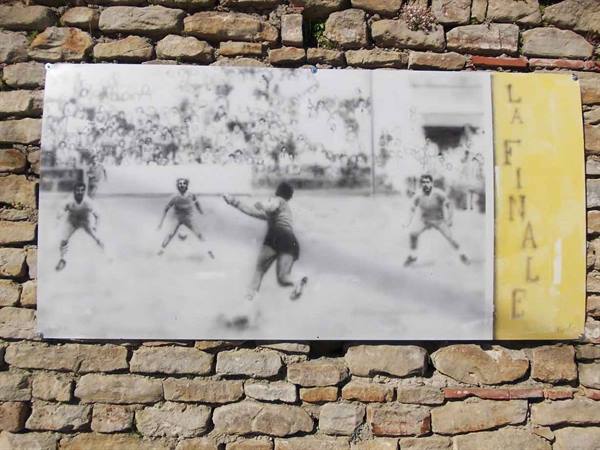
Besides being giants of literature, there is something else — a little-known fact linked to the Langhe — that unites Edmondo De Amicis, Giacomo Leopardi, Cesare Pavese and Beppe Fenoglio. All of them had happened to watch, and some even to play in, tournaments of pallapugno, the ancient traditional sport once widespread in Piedmont and Liguria, but still particularly loved in the Langhe. A light ball that bounces off the pantalera, a kind of roofed structure, and whose flight is intercepted by the suitably bandaged forearm of skilful players arranged in teams of four. The adrenaline, the thrill of the game, the poetry contained in the unpredictability of the trajectory of the coloured balls bouncing in an old square of the historic centre: these were elements that could not leave writers indifferent.
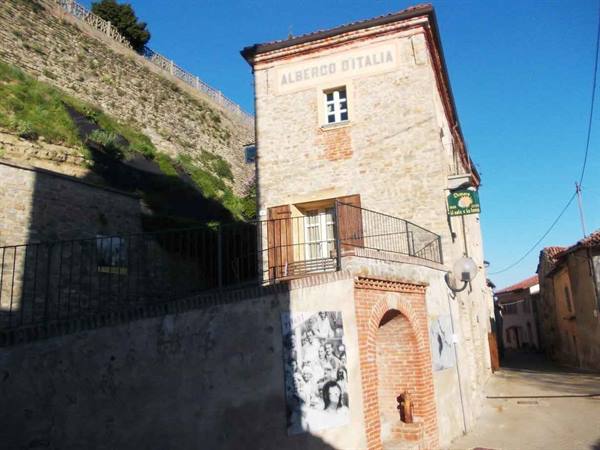
From the game — celebrated every year in Cerretto Langhe with the Balun d'Or event — Leopardi drew inspiration to write in 1821 the poem A un vincitore nel pallone, while the author of the book Cuore even dedicated a novel to it, Gli Azzurri e i Rossi, published in 1897. Strolling through the characteristic streets of this jewel village of the Cuneo Langhe, you see artistic images of the game of balun everywhere, made by a former player, and every year, on the occasion of Balun d'Or, the village gains a new painting, so that the emotions of the game can be experienced even when the square is wrapped in that timeless silence so loved by the tourists who come here to rediscover a stress-free dimension.
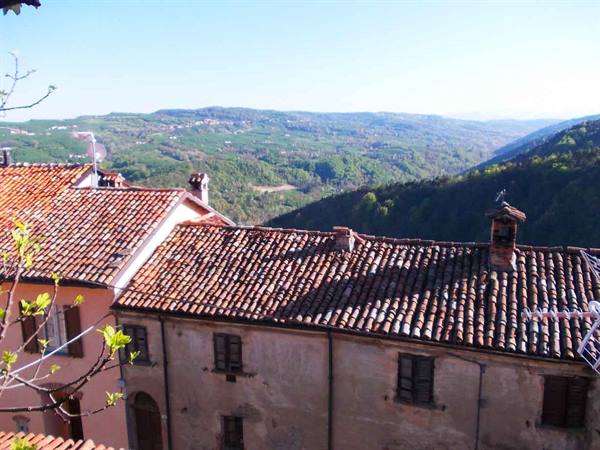
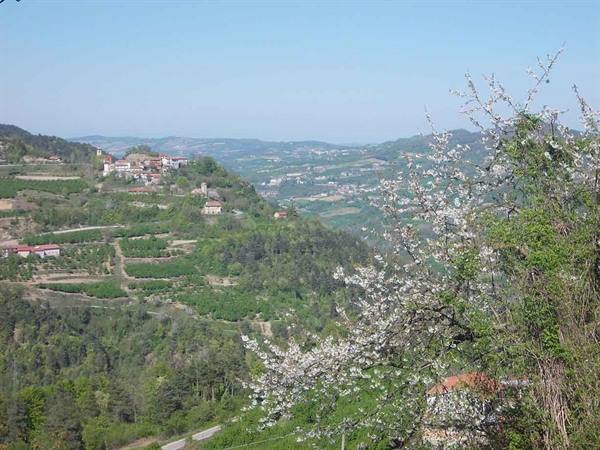
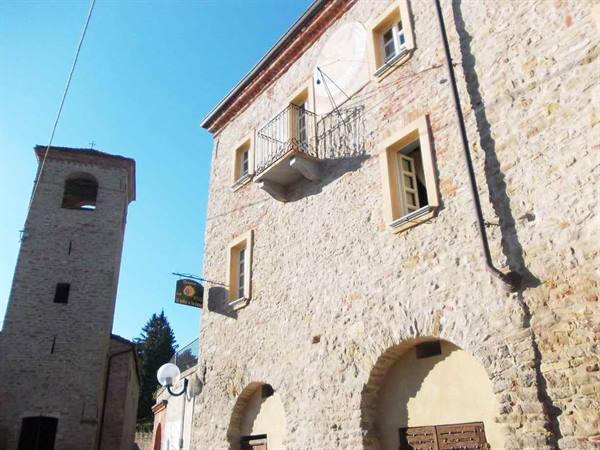
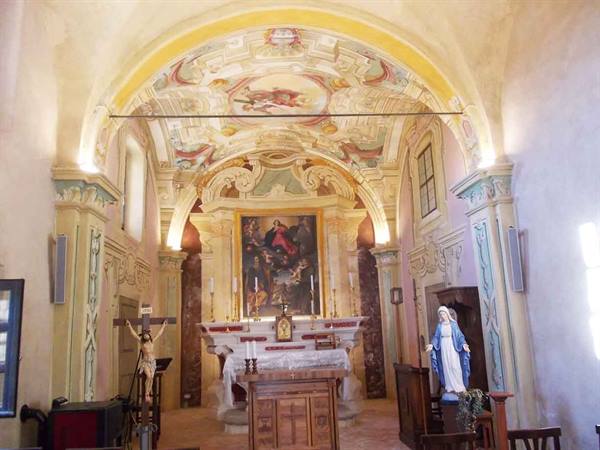
Cerretto Langhe has so many viewpoints from which to admire the gentle Langhe landscape — they even say that from the area where the castle once stood you can see twelve villages at once — that it seems like one great belvedere steeped in history. A belvedere where the gaze gladly roams upwards not only to catch the players' ball, but also to raise the heart towards themes of spirituality. Delimiting the central square is the mighty tower of the church of Sant'Andrea, a wonderful and intimate religious building dating from the 13th century that until 1612 was the parish church of the village. Besides a lamb carved on the keystone of the entrance door, the ancient church guards numerous fine decorations and frescoes of the Baroque period, including the vault depicting Sant'Andrea.
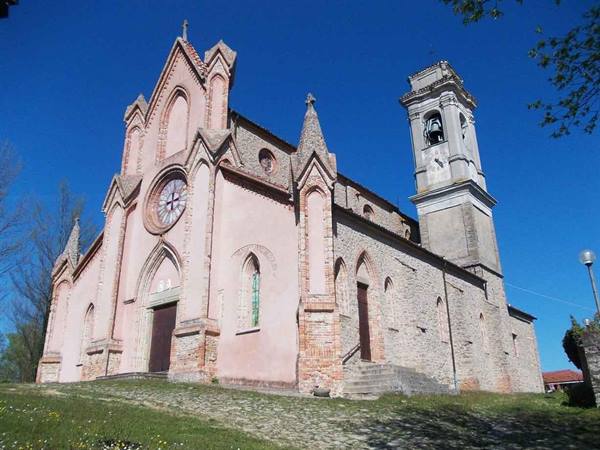
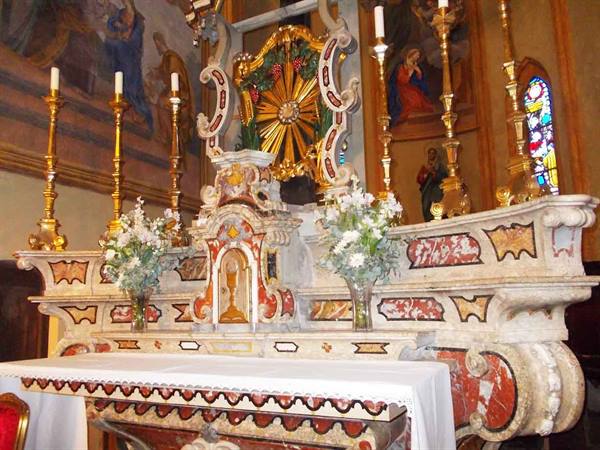
Raising the heart of those who stopped to look at its buildings was instead the aim — fully achieved — of Giovanni Battista Schellino, the tireless self-taught architect from Dogliani to whom the parish church of the S.S. Annunziata is owed, along with numerous buildings of suggestive charm in Piedmont. The church, built in Neo-Gothic style over a pre-existing religious building, shapes the village skyline and attracts travellers' eyes from afar. Its elongated spires, Schellino's trademark — he was also called the Gaudí of the Langhe — stand out towards the sky and seem really to touch it. Inside the recently restored church the magic continues thanks to the wonderful frescoes alongside a starry sky painted on the vault and a marble altar said to be the finest in Piedmont.
The journey's photographs
8 photographs · click to open them full screen
0 reader comments