Tripscoop›Europe›ITALY›Bridges Between Past and Present: a Weekend at an Old Farmhouse in the Upper Monferrato – Part I
ITALY · Europe
The story
That most ancient world, indeed pre-Roman, in which the Statielli Ligurians, won over by the beauty of the landscape and its wealth of natural resources, decided to settle, founding today's Acqui Terme along with villages in the surrounding area, is linked to our world of today by bridges. In the same way, between the Roman era in which, according to the Latin writer Pliny the Elder, the baths of Acqui were among the most important in the Empire, and our own time, when we admire the remains of the Roman aqueducts as tourists and visit these places surrounded by greenery to escape the stress of the big cities, there have always been connecting bridges. It is not only, and above all, about bridges in the sense of long weekends, but about those bridges that in Roman times gave their name to the pretty village near Acqui where we decide to spend a long weekend.
Ponti is so called because during the building of the via Emilia Scauri the Romans built several bridges over the streams flowing into the river Bormida. Of these ancient constructions what remains today is the memory and the certainty that invisible and also ideal bridges link these places to the most glorious moments of history.
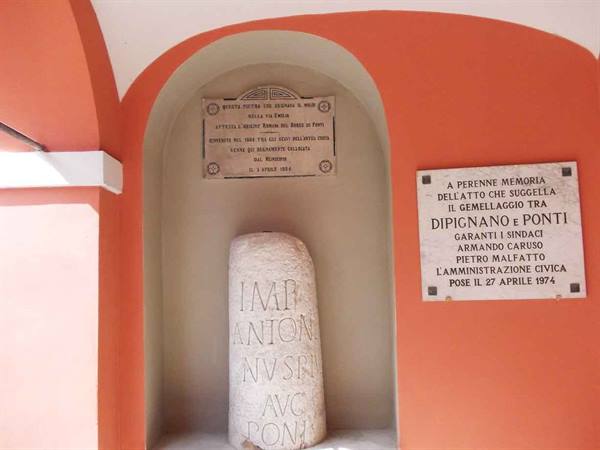
The first stop on our journey into times past is right along a Roman road, from which comes the Colonna Antonina, an ancient milestone found in 1860 outside the old church and since 1924 walled into the atrium of the town hall, bearing witness to the Roman presence in the municipality.
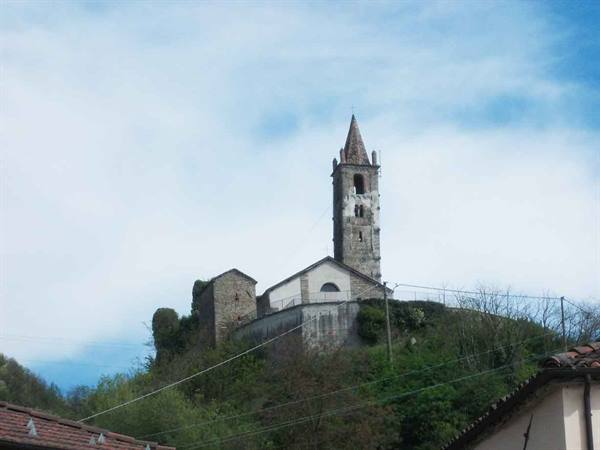
Another monument of notable historical interest is the old church itself, that is, the church of the Assunta Alta, built during the 11th-12th centuries on the site of an ancient temple dedicated to the goddess Diana. As the name suggests, it stands at the top of a hill from which it dominates the village with its mighty bell tower dating from the year 1000, which originally also served as a defensive tower. Regarded as the symbol of the village, the bell tower is the work of the esteemed Lombard master stonemasons who also built the Romanesque cathedral of San Guido in Acqui Terme.
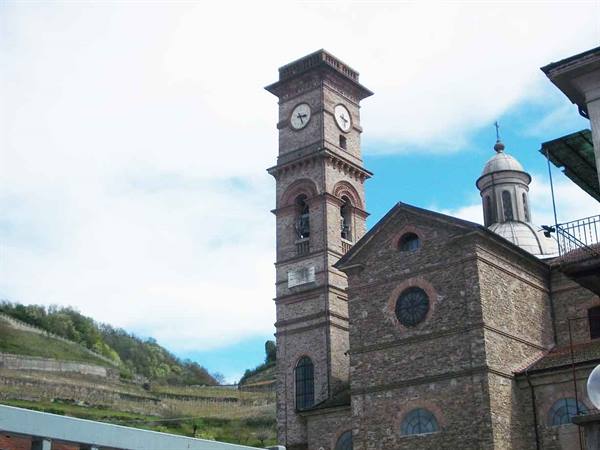
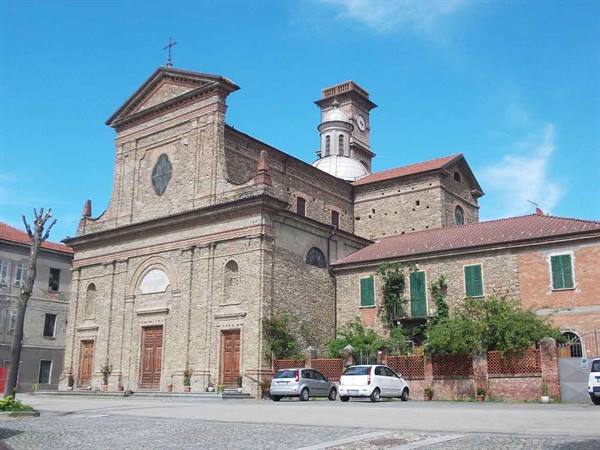
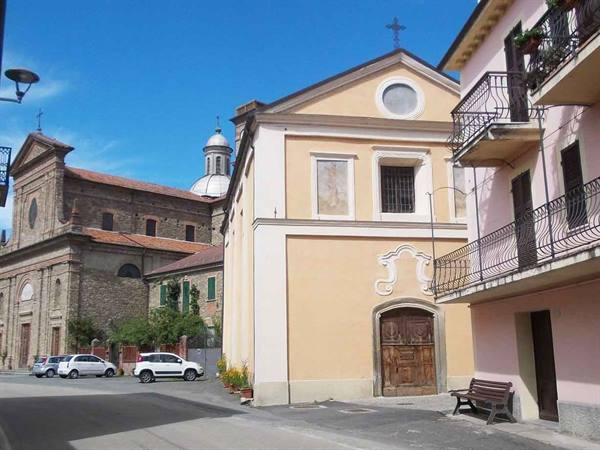
Returning to the road that crosses the village, we admire the parish church of the Assunta, the monumental church built between 1895 and 1897 in Renaissance style. Inside, the religious building guards several fine works of art, including a beautiful organ by Montesti, two marble altars and an artistic choir with mirrors and American-wood backrests.
The journey's photographs
7 photographs · click to open them full screen
0 reader comments