Tripscoop›Europe›ITALY›Along the Via Emilia, among art, poetry and good food: a day in Reggio Emilia, part one
ITALY · Europe
The story
The imposing dome of the cathedral had yet to be designed and built, the tower of the basilica of San Prospero had collapsed only a few years earlier, and the Marian miracle that would set in motion the building of the Sanctuary of the Beata Vergine della Ghiara had still to happen, when along the characterful streets of central Reggio Emilia you would occasionally see a young man strolling, the firstborn of ten children of a noble family. By frequenting the court he could have lived a life of amusement, but he preferred to devote himself to study, especially the study of literature, of which he would become one of the most famous exponents.
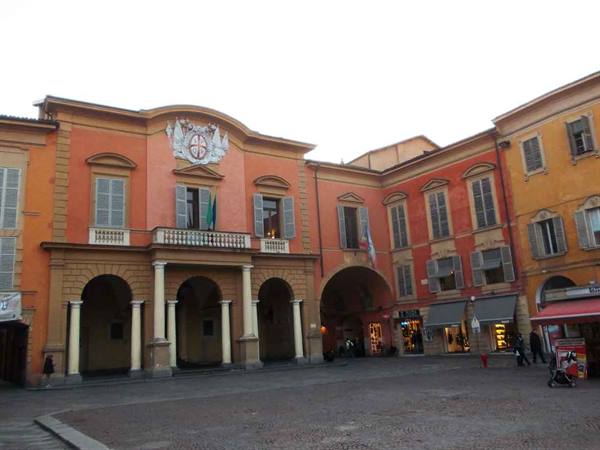
It was in those years, towards the end of the fifteenth century, that in the heart of the young Ludovico Ariosto a bond formed so strong with his native city that he wrote, about twenty years later, by then a veteran of numerous journeys: 'Let him who wishes to roam, roam: let him see England, Hungary, France and Spain; I like to dwell in my own district.' They say this spirit still characterises the inhabitants of Reggio Emilia today: alongside a sincere openness to new things, the style of metropolises full of fashionable shops as on the central and ancient Via Emilia, and alongside a welcoming spirit towards those who come from outside, deep in their hearts is rooted the love for their own roots and traditions. Not by chance are we in the city of the Tricolore: the Italian flag was conceived and displayed for the first time on 7 January 1797 in the Sala del Tricolore of the Town Hall.
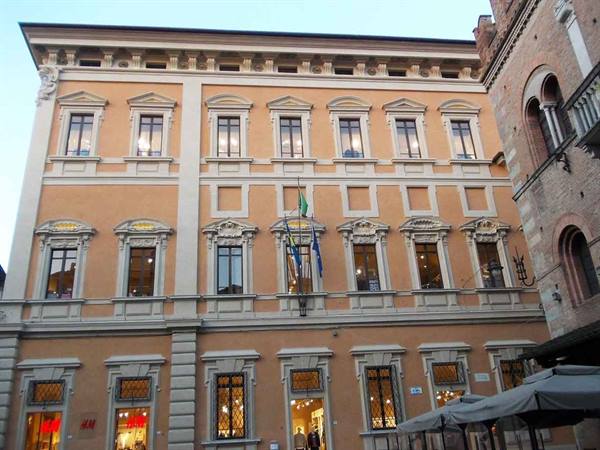
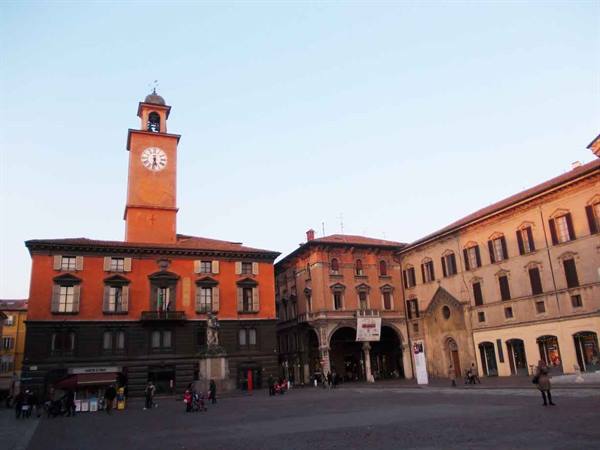
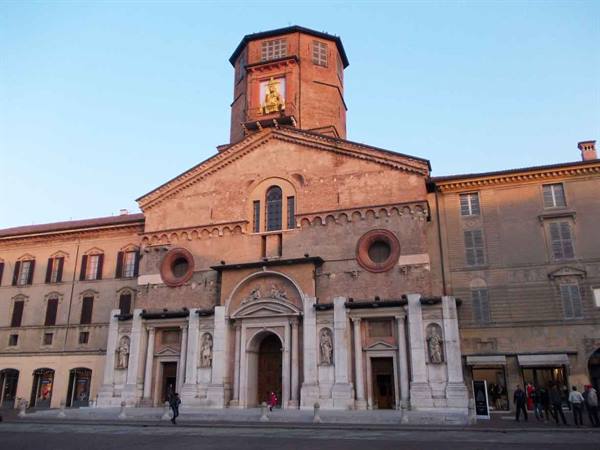
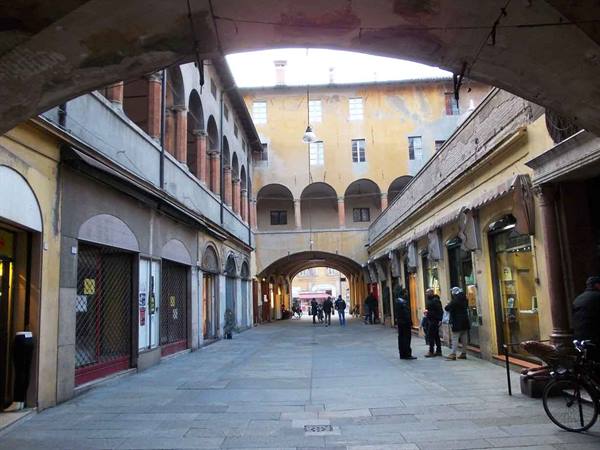
Our day discovering the 'contrada' so beloved of Ariosto takes us pleasantly 'a-roaming' through the characterful streets and the evocative squares of the old town, such as piazza Fontanesi with its mysterious charm, linked to one another by fascinating porticoed routes, and among the palazzi behind whose doors wonderful gardens in a Spanish style are often hidden. Among our first destinations is the very central piazza Prampolini, known as piazza Grande or piazza del Duomo, overlooked by the most important buildings of the city: as well as the cathedral, the town hall, the palazzo del Monte with the clock tower, and the bishop's palace. Here too you can admire the baptistery, built in the Middle Ages and recently restored, whose original plan echoed that of the Holy Sepulchre in Jerusalem.
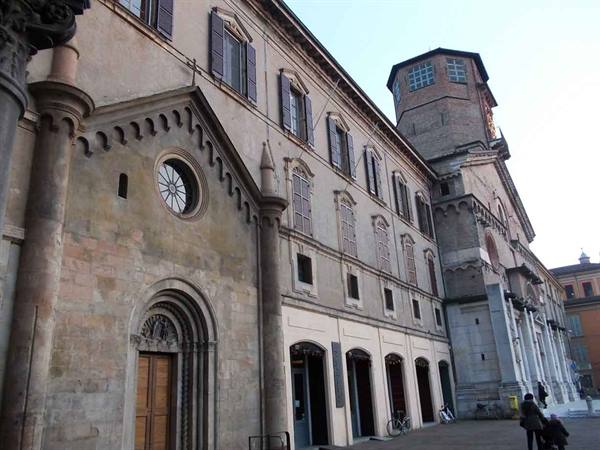
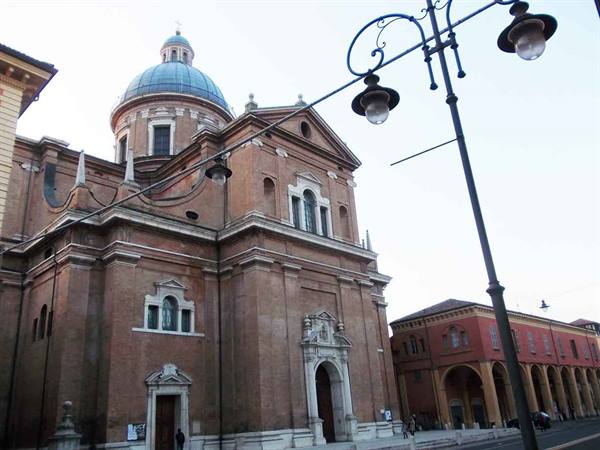
The cathedral building probably already existed in 451, although the first records concerning it date back to the ninth century. The octagonal bell tower dates from 1268, the year it was rebuilt after a collapse forty years earlier, while to admire the sumptuous dome you had to wait until 1623. In Reggio Emilia art is met at every corner in the most varied forms, and it is also in the legacy of the city's illustrious natives. As well as Ariosto, the fifteenth-century poet Matteo Maria Boiardo, the painter Antonio Allegro known as il Correggio, and the famous actor Romolo Valli, after whom the municipal theatre is named, were all from here. The artistic flair of Reggio knows no obstacles to creativity: in piazza del Duomo there even stands the sculpture of a river. The allegorical figure of the Crostolo, the watercourse that crosses the city, is much loved by the inhabitants.
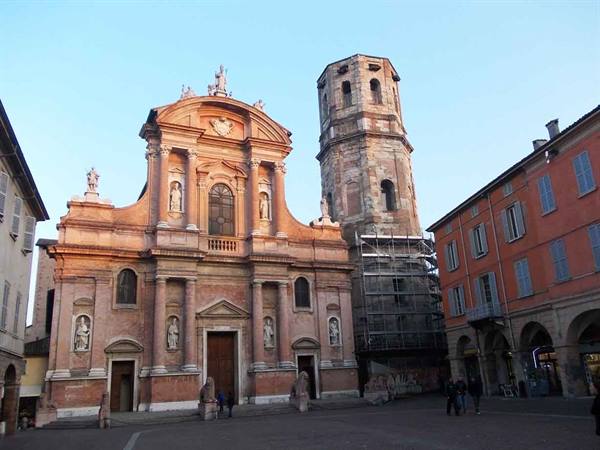
Many centuries ago, not far from the central square, there was a modest convent inhabited until 1313 by the Servite friars. On the wall of this structure's vegetable garden an image of the Madonna was painted, and it is told that a deaf-mute named Marchino regained the gift of speech and hearing after praying before it. The site of the miracle soon became a place of pilgrimage and in 1597 the foundation stone of the sanctuary of the Beata Vergine della Ghiara was laid. Another important miracle was performed in the fifth century by the bishop Saint Prosper, patron of Reggio Emilia: invoking providential intervention, the saint managed to keep Attila's Huns away from the town thanks to a thick blanket of fog that enveloped the city after his prayer. Today the basilica of San Prospero, which also preserves the relics of the saint, is one of the most important monuments of the city.
A significant example of Emilian Baroque, the original church building was consecrated in 997, and over the following centuries it was rebuilt on various occasions: the tower was demolished in 1487 and the octagonal bell tower returned to watch over the square between 1536 and 1570, while the basilica itself, after a troubled reconstruction, was reconsecrated in 1543. The basilica, with its facade dating from the mid-eighteenth century, preserves inside several precious sixteenth- and seventeenth-century paintings, as well as fine sculptural groups.
The journey's photographs
8 photographs · click to open them full screen
0 reader comments