The story
“Here, in front of the Nativity scene, dear Child, I am enchanted, just like a child.” This line from an old Genoese nursery rhyme vividly evokes the joyful Christmas atmosphere that has marked the most beloved feast in the Superb since the most ancient times. During the centuries of the glorious Genoese maritime Republic, the arrival of Christmas was also announced by an ox-drawn cart decorated with ribbons and bells, carrying a large laurel trunk, a symbol of peace and prosperity, with which the Doge would wish the city well. From the seventeenth century onwards, the old Christmas customs were enriched by the spread of Nativity scenes made by highly skilled sculptors, the most famous of whom was Anton Maria Maragliano.
The oldest document relating to the existence of a Nativity scene in Genoa dates back to 1610 and consists of the handwritten chronicle of the Carmelite Convent of Monte Oliveto near the coastal suburb of Multedo, already known for having been, in Nero's time, the landing place of Saints Nazarius and Celsus, engaged in the evangelisation of Liguria.
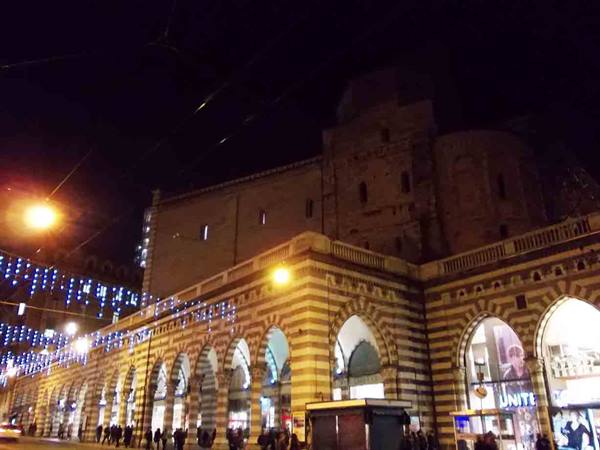
During the Christmas period, when the sumptuous palaces of the centre, as well as the caruggi overlooked by towers and ancient churches, dress themselves in festive lights, rediscovering a spiritual dimension becomes almost inevitable. In Genoa, a city with a notable tradition of carvers of Nativity figurines (the Giannettino Luxoro Museum preserves more than eight hundred), the mystery of the Nativity also takes on a significant artistic value thanks to the city's numerous Nativity scenes. To discover them, simply follow in the footsteps of Henry Aubert who, in his 1923 Villes et gens d'Italie, suggested making a veritable tour of the Nativity scenes:
“No Nativity scene here is the same as another…they all differ in size and richness. Some are a masterpiece of good taste and ingenuity. The men who build them, priests or laypeople, vie in zeal. All compete to attract the greatest number of people, lavishing attention on details, proportions and the whole. The Genoese Nativity scenes are the joy of Christmas…Here Christmas has not lost its original meaning. It is purely the feast of childhood and of hope for men of goodwill. The Nativity scene is the triumph of the Genoese. From Christmas Day onwards they go to visit them one after another.”
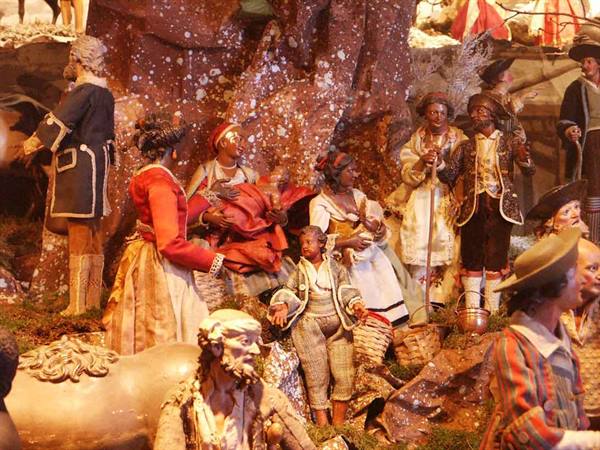
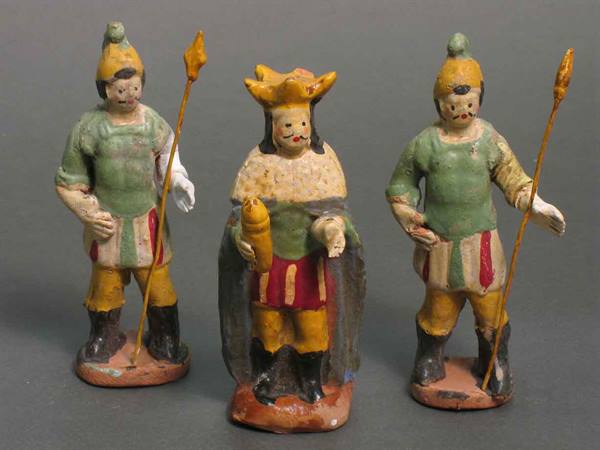
Let us go and visit them together, then, starting our tour of the Nativity scenes at the Giannettino Luxoro Museum, set amid the Nervi park inhabited by cheerful little squirrels and overlooking the splendid cliff. Inside the early-twentieth-century mansion you can admire the more than eight hundred pieces of the City of Genoa's collection of Nativity figurines, which fully document the production of Genoese carvers from the seventeenth to the nineteenth century. Some of the figurines are displayed in glass cases or in a permanent scenographic installation, while others are kept in storage, visitable on request. Among them stand out examples exceptional for their quality, such as the two Moorish slaves in the procession of the Magi, the Magi themselves, or for their typological rarity, such as the three Dromedaries, all masterpieces by Pasquale Navone.
At the Oratory of the Santissimo Sacramento and San Bartolomeo in Staglieno you can visit the evocative artistic Nativity scene (17th century) with figures by Maragliano and Navone, of which the quality of the carving of the eighteenth-century figures and the richness of the costumes of the Magi and their procession deserve particular mention.
The Nativity scene of the Capuchin Museum
Not to be missed either is the animated biblical Nativity scene by Franco Curti at the Auditorium of the Museum of Capuchin Cultural Heritage in Genoa (open from 7 December 2014 to 1 February 2015. A series of guided tours will also be organised (8 and 21 December; 11 and 18 January; 2 February - 3.30 pm). It is a mechanical Nativity scene with 150 moving figurines and almost 40 square metres of scenes and landscape reconstructions of Bethany, Jerusalem and Bethlehem at the time of Jesus. Inside the Museum, as is traditional, the eighteenth-century mannequin figures are also displayed, some of them attributed to the prestigious school of Anton Maria Maragliano or to the circle of Pasquale Navone, accompanied by popular Genoese and Neapolitan figurines.
Framing the Nativity scenes is a display of paintings by great masters from the end of the fifteenth century to the second half of the seventeenth century.
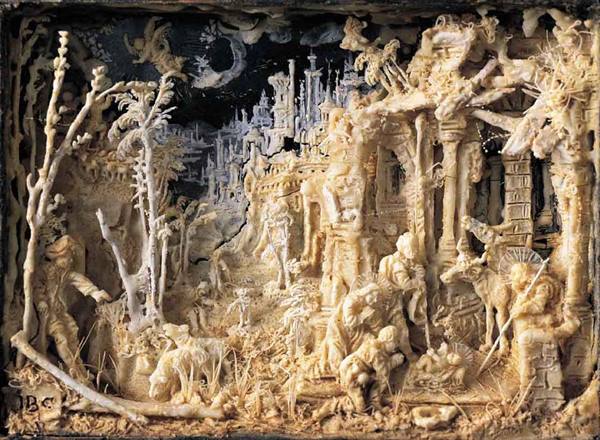
The tour of Genoa's Nativity scenes is a spiritual and artistic journey during which the sheer size of the reproductions of the Nativity scene also strikes you: at the Accademia Ligustica is displayed the Nativity scene by the Bavarian wax-modeller of Italian origin, Johann Baptist Cetto, which measures a little over 8 cm by 6. Not even the space of a smartphone screen, yet for the artist it was enough to perform a miracle, creating a scene dense with figures and elements of every kind, from columns down to blades of grass, all meticulously crafted and enriched with detail.
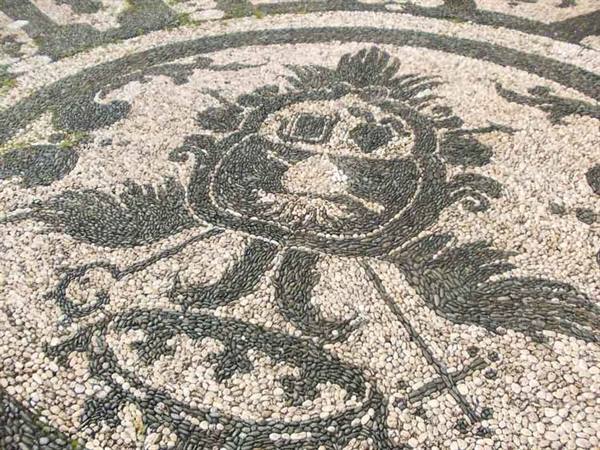
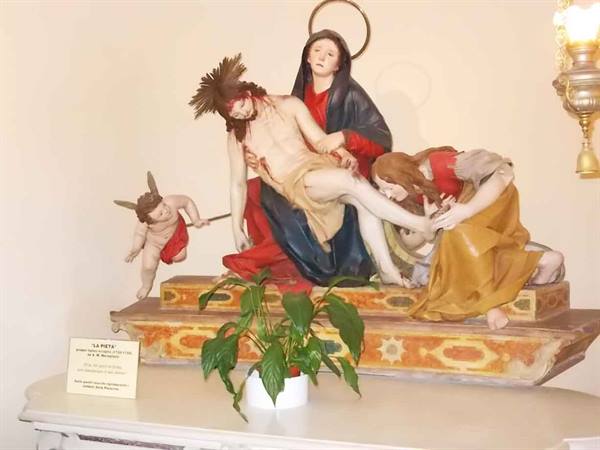
From the smallest Nativity scene to the largest the path is vertical and is taken by riding the funicular, from which a breathtaking view of the city opens up. In this way you reach the Sanctuary of Nostra Signora Assunta di Carbonara, known as the Sanctuary of the Madonnetta, built at the end of the seventeenth century on the site of a series of Marian apparitions. The octagonal church, preceded by a spectacular churchyard of white and black pebbles, is an extraordinary place of recollection, the religious building with which Genoa reconsecrated itself to the Madonna, particularly rich in works of art and precious objects of worship, including 25,000 relics displayed on the walls. In the Chapel of the Pietà you can admire a wonderful wooden group carved by Anton Maria Maragliano between 1732 and 1733, depicting the Pietà.
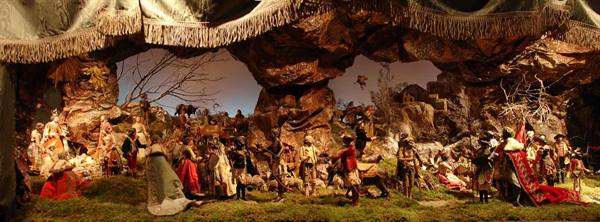
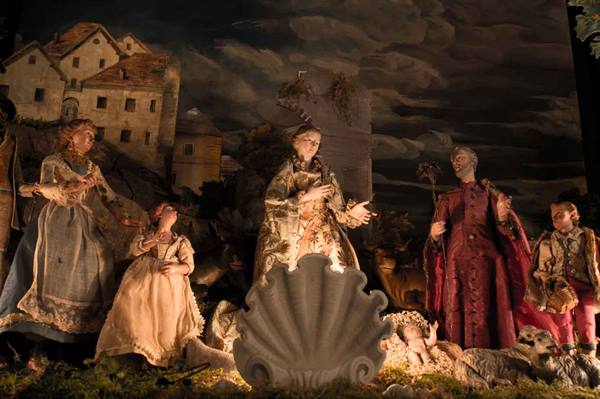
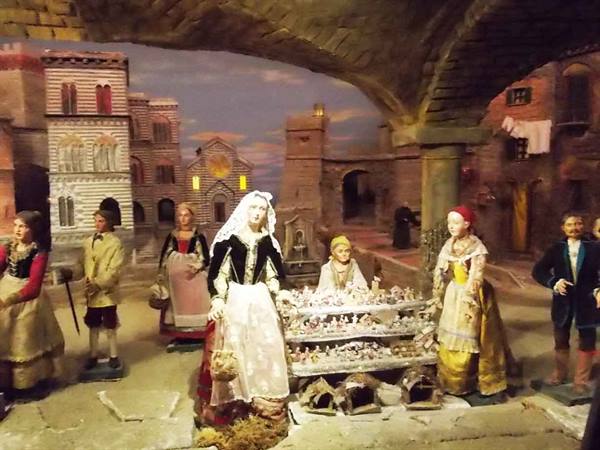
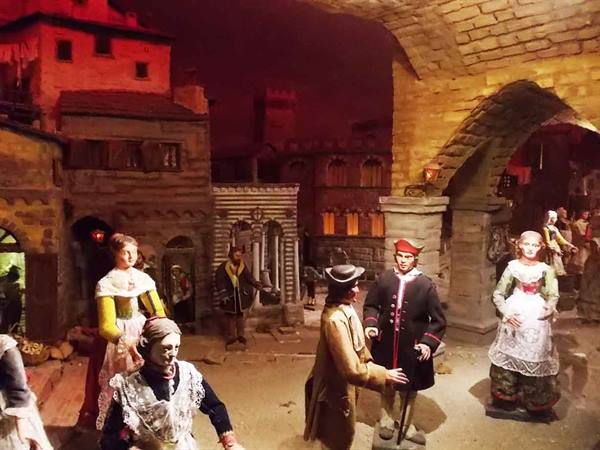
We thus arrive at the Nativity scene, one of the most evocative among those of Genoa and visitable all year round. Laid out over a vast semicircular surface, the work presents a multitude of historic figurines dating from the seventeenth to the nineteenth century, placed in a scenographic setting of ancient Genoa. Among the beautiful painted-wood figurines we recognise many of the city's historic sites: from Porta Soprana to Palazzo San Giorgio, and on to the market, the towers and the churches, confirming that in Genoa you never stop travelling.
Francesca Bertha
Also read the travel story about Genoa:
FOR INFORMATION:
Facebook: Genova Turismo, Genova Eventi e Cultura
Twitter: @GenovaEventi Instagram: @genovamorethanthis #genova #genovamorethanthis
The journey's photographs
10 photographs · click to open them full screen
0 reader comments