Tripscoop›Europe›ITALY›In Blue Painted Blue, Tasting the Super Magician's Ice Creams: a Day in Polignano a Mare
ITALY · Europe
The story
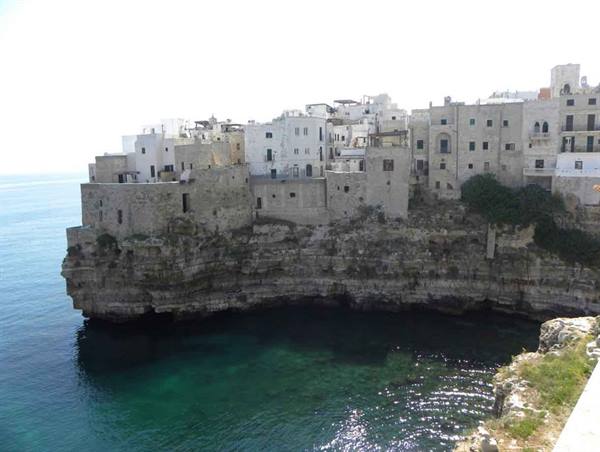
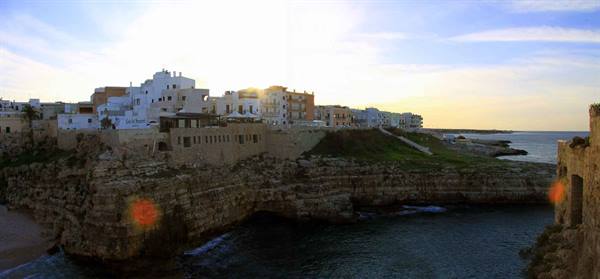
Towards the end of the second century BC a little falcon took off from a Roman sailing ship passing along the Apulian coast. It was set free by the consul Gaius Marius, who was looking for a safe harbour. The little falcon began to fly in the infinite sky and flew, flew happily higher than the sun and higher still while the world slowly disappeared below. It was thus that at a certain point, in the midst of that blue painted blue in which the sky merges with the sea, the little falcon landed on a steep cliff sheer above the sea, thus showing the leader the spot where the town of Polignano a Mare would rise. Although the image of the falcon of the legend is imprinted on the municipal coat of arms, scholars actually believe that the ancient Neapolis arose on a pre-existing settlement around the fourth century BC, on the initiative of Dionysius the Younger.
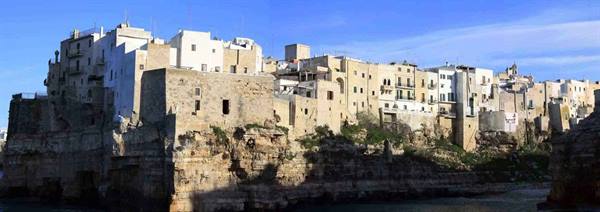
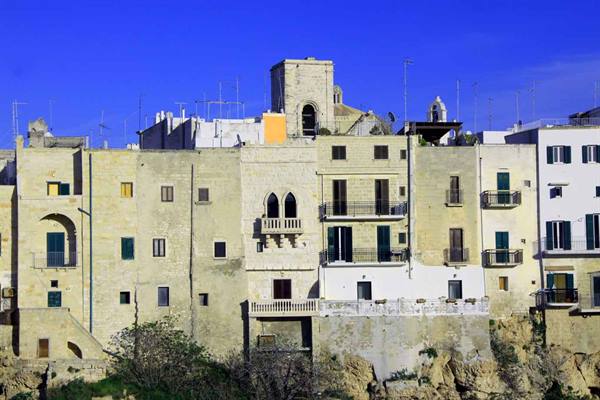
Our walk begins by crossing the marquis arch that was once the only way into the town and that today leads us among the treasures of that casket of very pale colours that is the historic centre of Polignano, whose views have served as a backdrop for many famous films, including The Girl with the Pistol, Saturday, Sunday and Monday or Turné. After admiring the fifteenth-century Palazzo del Governatore, we reach piazza dell'Orologio, where we discover that the old clock is still wound by hand with a rope. A short distance away stands the Chiesa Matrice dedicated to Santa Maria Assunta, which until 1818 was the cathedral of the town.
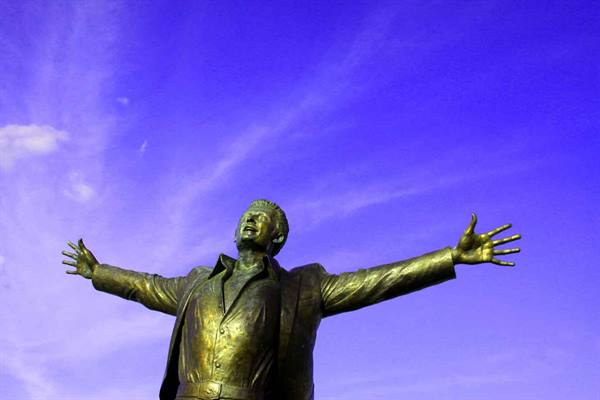
From here it is a great pleasure to lose oneself among the little streets that lead to the terraces, that is, to evocative loggias sheer above the sea from which the gaze can fly far away, just as the poetic text of the famous song by Domenico Modugno, a native of Polignano, whose statue, the work of Hermann Mejer erected in 2009, is among the town's main monuments, suggests.
Music, films, but not only: Polignano a Mare is among the favourite destinations of lovers of contemporary art too, thanks to the presence of the Museo Pino Pascali, dedicated to the sculptor and set designer born in Bari to parents from Polignano, a master of Arte Povera who died prematurely.
Moving about three kilometres from the historic centre, we visit the hamlet of San Vito, with a natural harbour, once a destination not only for sailors and merchants, but also for pirates. Close to the little harbour is the imposing complex of the abbey of San Vito, whose history is closely linked to the saint. In fact, in 801 the ship of Princess Florenza landed on these shores carrying the relics of the body of Saint Vitus and his tutors, Modestus and Crescentia. According to a legend, these remains were kept by the Basilian monastic community, which resided at the time in the grottoes beneath the current abbey building.
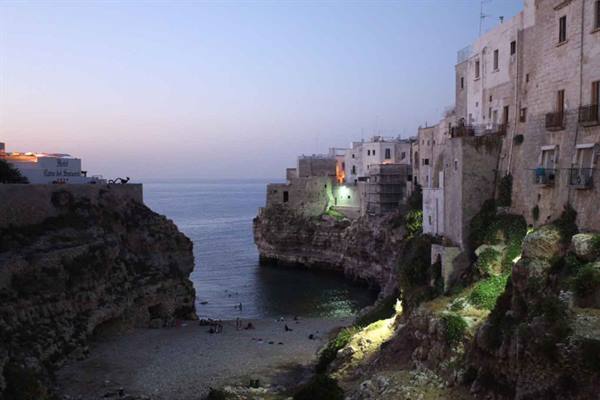
The numerous caves, the spectacular inlets and the so-called lame, that is, shallow erosion furrows, are among the most singular natural beauties of the Apulian landscape. Among the deep inlets that open onto the high and jagged coast the best known is the Lama Monachile, which however has nothing to do with monks; instead it takes its name from the monk seal that has been sighted here. During the warm season it is an unmissable experience to visit the caves and little grottoes with fairy-tale names, bathed by the crystal-clear water of the Adriatic. Rowing in a little boat you can venture into the Grotta del Guardiano, the Grotta delle Rondinelle, the Grotta dei Colombi or the Grotta della Foca, while the more “courageous” can discover what lies inside the Grotta dei Ladroni.
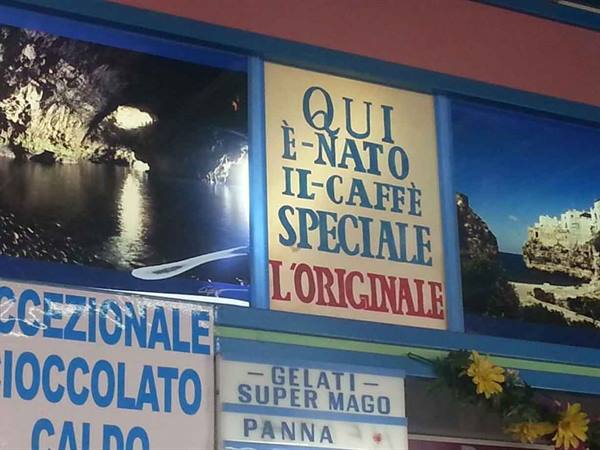
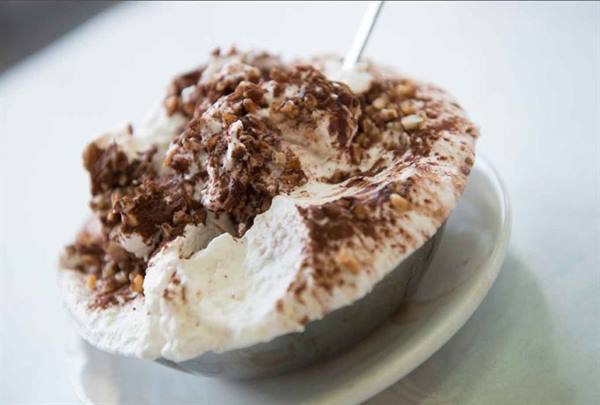
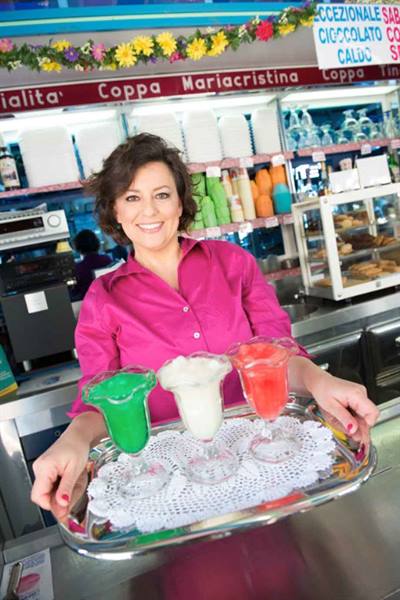
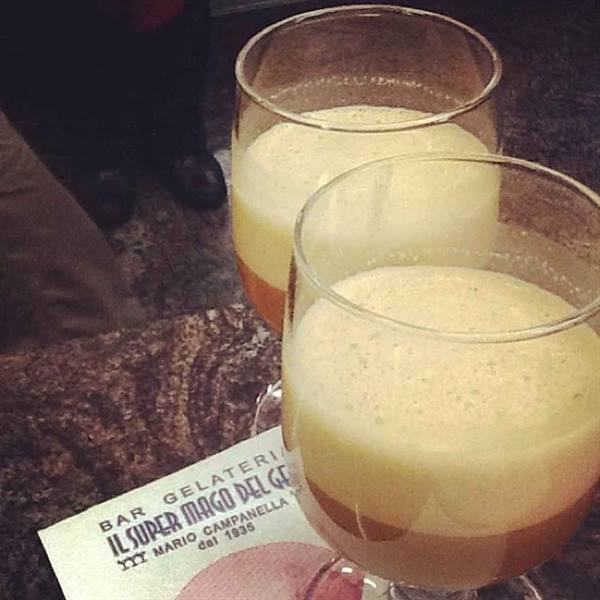
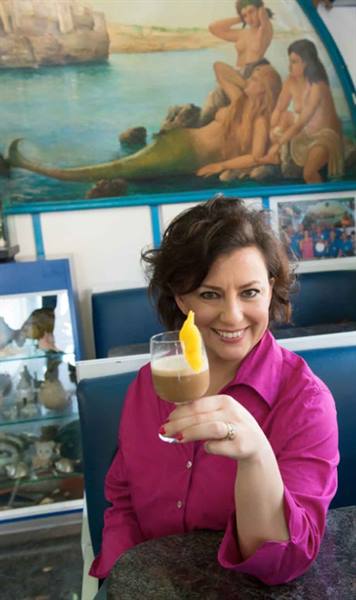
From the fabulous world of the caves to the magical world of ice creams the step is short: returning to the heart of the historic centre we plunge into a cool and sweet world in which the pastel colours of the fabulous ice-cream cups recall those of the landscape around us. Here we are at the legendary gelateria of Mario Campanella, the Super Magician of Ice. There can be no trip to Polignano without a stop at this renowned house of frozen delights, where every spoonful of dessert created with love and imagination tells a story. As we enjoy a cup with coffee, cream and San Marzano, a creation that dad Mario had dedicated to his younger daughter Maria Cristina, the elder daughter, Anastasia, and the wife Tina recall the origins of this now historic establishment.
We listen to their story while enjoying the tasty combinations that characterise the ice creams that dad Mario had created, dedicating them to his own family: cream, chocolate, peanuts, cocoa and the Super Magician's amaretto make up the fabulous Tina cup, while the Anastasia ice-cream cake is a triumph of coffee ice cream with cream. The wife and daughters, who after the passing of Mr Mario continue the sweet family tradition, had repaid dad with a chocolate and cream ice-cream cake that bears his name. “Our dad was an alchemist and a genius of communication. He often did not sleep, he devised new creations even during the night and when the next day he put those ideas into practice, you could be sure of success,” recalls Anastasia.
The bursting imagination of the Super Magician produced countless varieties of excellent ice cream made in the old artisan way, and his cups, ice-cream cakes and cones have also entered the hearts of numerous figures from culture and show business who have passed through here. Several souvenir photos on the walls immortalise Mario Campanella in the company of Gianni Morandi, Pippo Baudo, Monica Vitti, Michele Placido, not to mention Domenico Modugno who, as Mrs Tina recalls, was a regular at the gelateria during his returns to Polignano.
But the story of this island of frozen delights dates back to before the war; in fact the gelateria was founded in 1935 by the cavaliere Giuseppe Campanella, Mario's father. Giuseppe was an almond seller who that year began travelling on foot from Conversano to Polignano. He was probably inspired by the hot climate of the coast together with the aroma of the almonds, and so he began selling the “grattose” he had invented from a little handcart. Later he created a small workshop that became famous under the management of his son Mario, who in a certain sense had a childhood that would be many children's dream: all day among the ice creams. Every moment of gluttony was, however, balanced by careful study, thanks to which the boy soon learned the secrets of the trade.
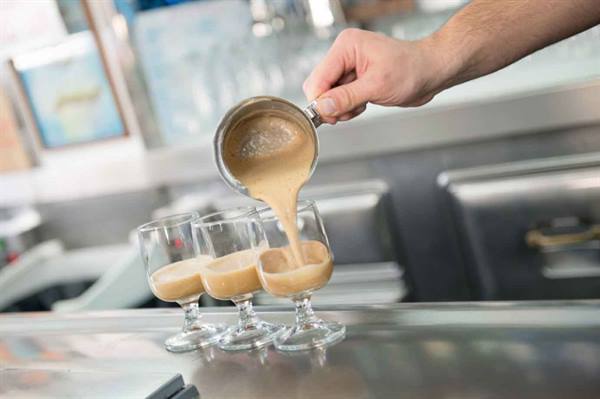
Before continuing our Polignano walk we also taste another fabulous product of the Super Magician of Ice's inventiveness, the special coffee prepared with coffee, cream and lemon zest, with the addition of the Super Magician's amaretto made from crushed sweet almonds.
From the sea of Polignano stands out an isolated and hard-to-reach rock, called the Hermit's Rock. On those rocks rests a shop where they make ice creams so good that people, just to taste them, cross the sea walking on water. This vision, poised between the legendary and the surreal, is a recurring dream of Mrs Tina, imagining the family gelateria in that impossible yet beloved position. A dream that reflects decades of hard work and that pays tribute to the loyal customers among whom, from now on, we too will be. And if need be, to eat a cup of coffee and cream or chocolate ice cream from the Super Magician of Ice, we will certainly not hesitate to cross a stretch of sea on foot.
Francesca Bertha
FOR INFORMATION:
The journey's photographs
13 photographs · click to open them full screen

0 reader comments