Tripscoop›Europe›ITALY›On the lake of miracles guarded by cormorants: a peaceful weekend between Angera and old Capronno
ITALY · Europe
The story
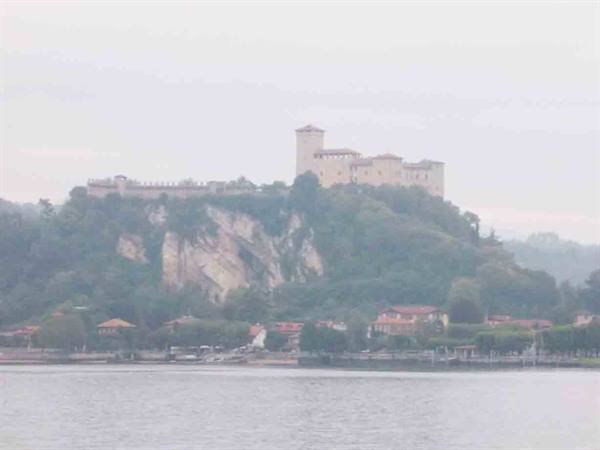
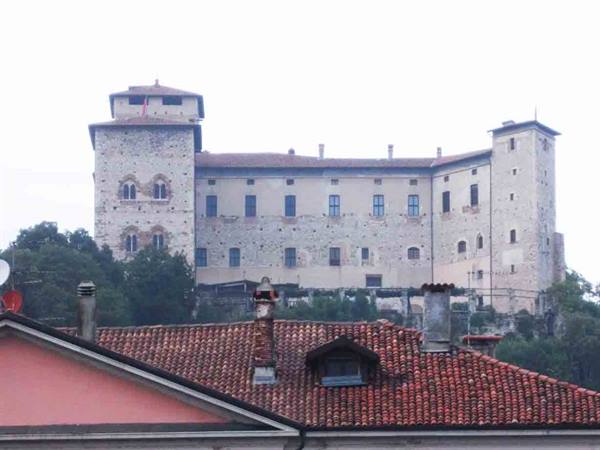
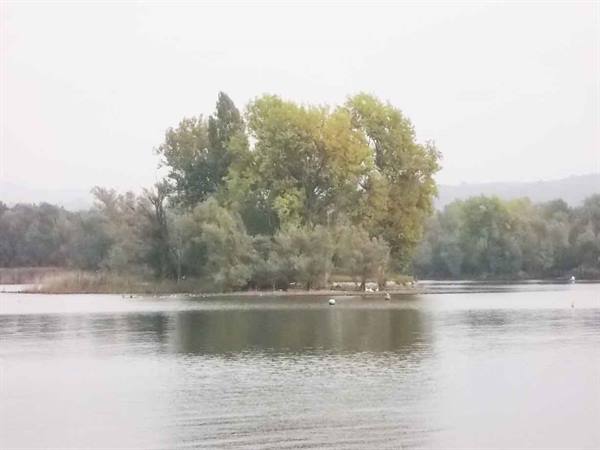
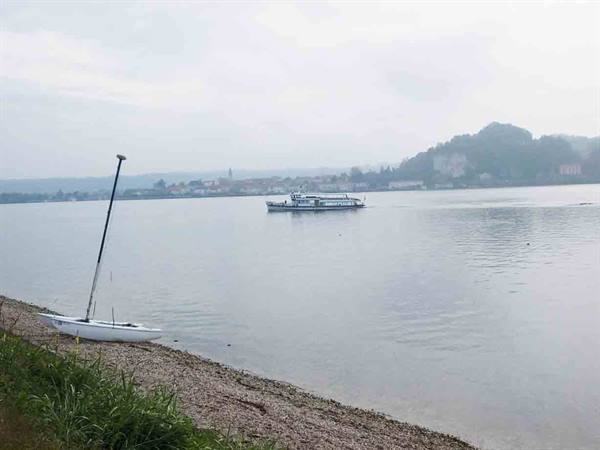
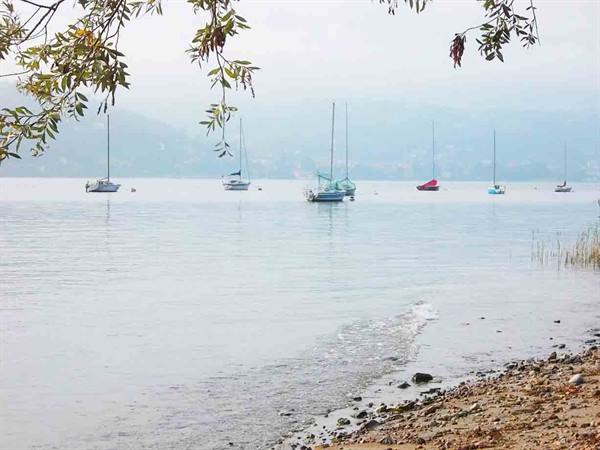
A nature reserve, an island whose story could inspire plenty of fantasy and noir novels, a Madonna who weeps, the smile of a thousand dolls and even a rock under water, affectionately called "sass da la bestemmia": these are just a few of the many curious and interesting things you can find in Angera, a splendid town on the eastern shore of Lake Maggiore. Our gaze scans the heights a little, meeting the famous Rocca Borromea, founded by the Lombards and today home to the Doll Museum, which dominates the landscape from a rock about two hundred metres high, and a little the azure expanse of water from which a pretty, tousled islet emerges. The Rocca and the island of Partegora: welcome to the stage where most of the romantic, miraculous but also bloody events of Angera's history took place. Many years ago a castellan lived in the Rocca with his daughter, the beautiful Radegonda.
In that period the inhabitants of Angera were terrorised by the Marquis Margolfo, who demanded very high taxes, and when the population couldn't pay them, he and his army set fire to the houses and ravaged the fields. To avoid running into him, before his raids Radegonda would always take refuge on the islet in front of Angera, but once she didn't manage to hide in time and Margolfo, as soon as he saw her, decided to marry her despite her not wanting to. The girl spent the time separating her from the wedding crying on her islet, where one day, however, a very handsome young man who had come down from the sky arrived to keep her company: he was the prince of the clouds. Radegonda managed to avoid the wedding with the terrible Margolfo thanks to the prince's sisters, the black clouds, which unleashed a storm and sank the marquis's boat, who nevertheless managed to take his revenge.
At the point where Margolfo's boat sank, during a terrible period of drought a rock emerged with the words written on it: when you see me, you will weep.
In the 1300s the saintly brothers Julius and Julian also stopped on the islet; they thought of building a house there for their old age. One morning, however, Julius had a prophetic intuition: "A wolf and a fox will wreak havoc on innocent flesh here. Let's move away!" The ominous prophecy unfortunately came true, even if many years later. The one who ended up slaughtered on the islet in 1066, at the hands of Bishop Guido da Velate (the wolf) and his niece, as well as concubine, Oliva de Vavassori (the fox), was Arialdo da Cucciago, saint and founder of the pauperist religious movement known as the Pataria. The brutal murder shook the people of Angera, and after some time Arialdo's image appeared to an elderly fisherman, who became the protagonist of a miraculous and abundant catch.
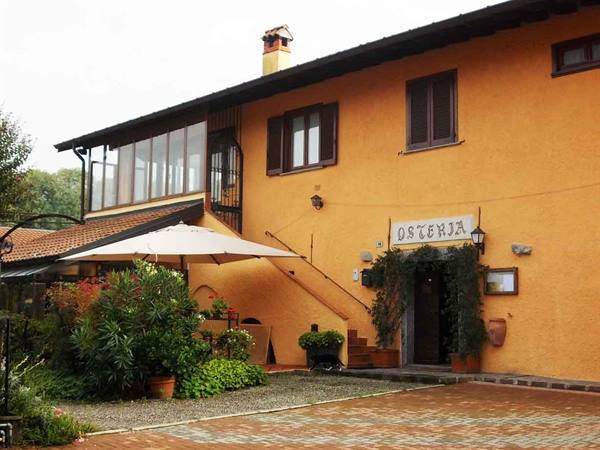
The murderers, fearing discovery, disinterred the corpse, cut it to pieces, burned it and threw it into the lake. But the remains of the good Arialdo were nonetheless found, near an enormous submerged rock (called the sass da la bestemmia), wrapped in a miraculous scent of lily, and after further hardships they were taken to Milan, where the saint finally found a worthy burial at the church of San Celso. It wasn't only the inhabitants of the town who shed tears for Arialdo's brutal death, but also the Madonna of a votive shrine placed on the lake shore. On the spot where in 1657 the sacred image wept tears of blood, today stands the Sanctuary of the Madonna della Riva, the centre of the Marian cult of the area. Following this moving journey through the history of Angera, we head towards our home for this weekend: the Locanda La Casetta at the Ristorante Osteria Vecchia Capronno.
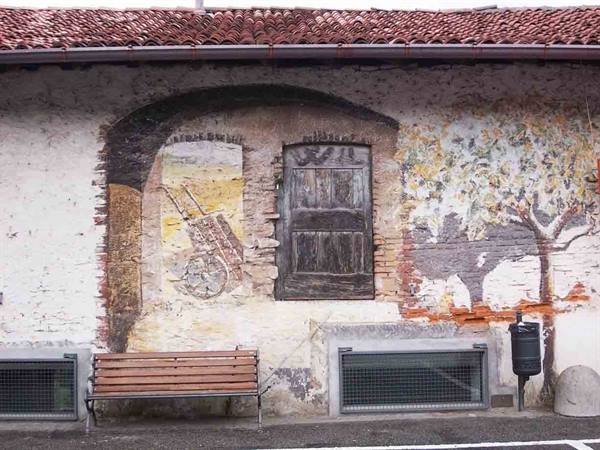
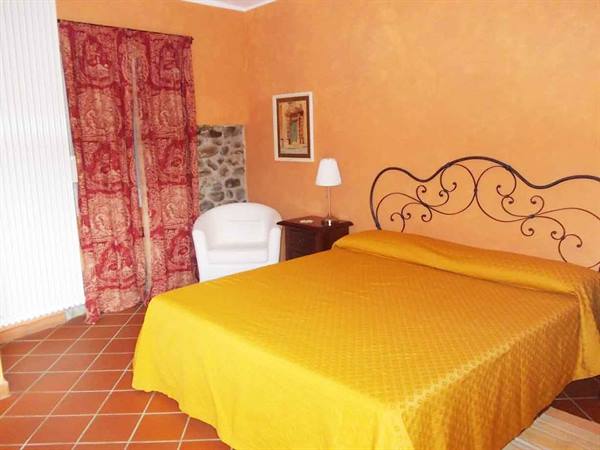
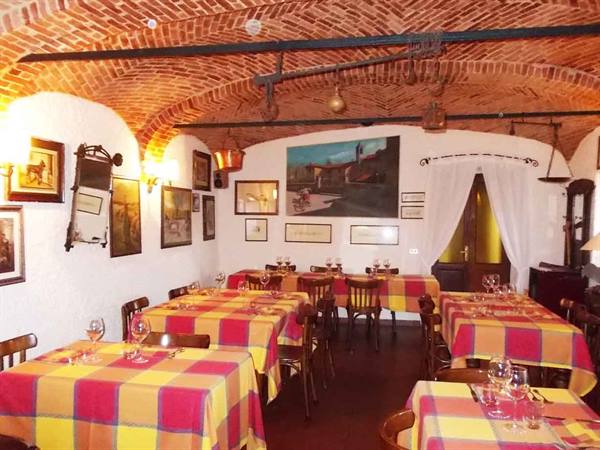
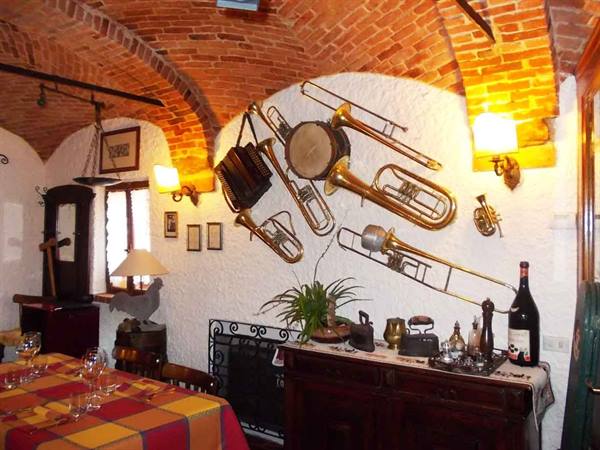
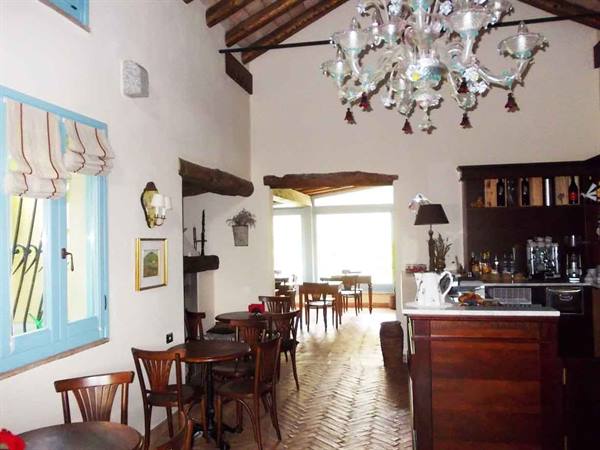
We reach the hamlet of Capronno, an autonomous municipality until 1928, after about ten minutes by car, and park comfortably in the courtyard of the property. Our rooms, bright and furnished with style and dressed in warm colours, are very comfortable and equipped with many comforts, including a minibar and television. Our impression of feeling at home, among family, is reinforced both by the tranquillity that characterises the small farming village with its timeless charm, and above all by the warm welcome given to us by the owners, the Ronga family. "Our parents, Giovanna and Federico, take care of the administrative management of the inn, while my brother Vincenzo and I look after the restaurant," Mr. Carmine explains to us as we settle into the characteristic dining room of the osteria.
"In this building in the historic centre of Capronno there has always been a little osteria, and since 1992 it was our family that decided to realise in this corner of peace our dream of opening a restaurant that, through food, drink and hospitality, would create a harmonious connection with the nature, peace, spaces and silence of the surrounding area," Carmine continues his story.
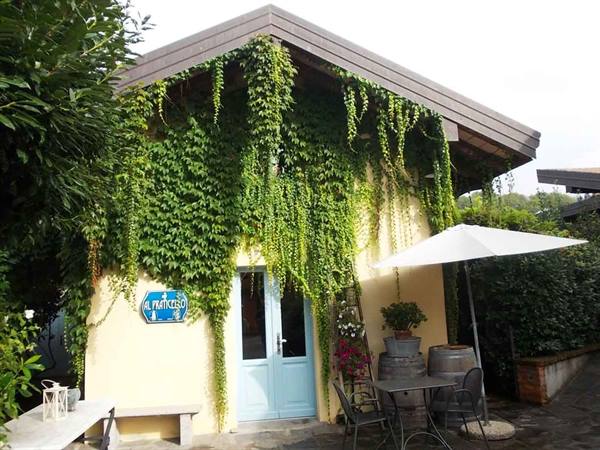
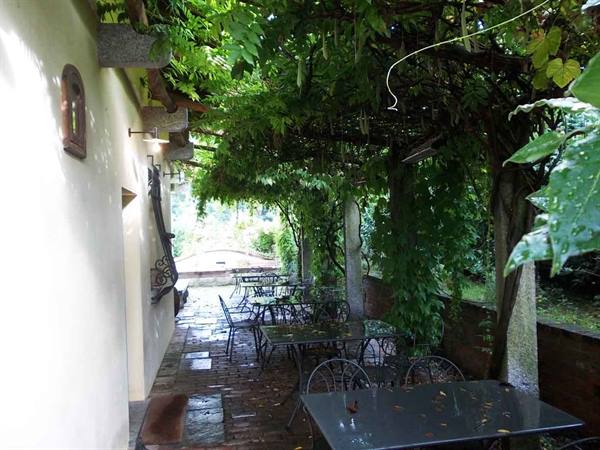
"Besides the osteria and the inn, we've also created a soulful venue called "Al Praticello", where we organise evenings of live music mainly with internationally renowned jazz artists, such as Gigi Di Gregorio, who played here some time ago." Our dinner, featuring a menu that changes almost every week and sometimes also includes dishes inspired by the moment, always following seasonality, begins with an exquisite soup of very delicate French onions, one of the various soups that are the star of the autumn and winter season, also based on cereals, pulses and various combinations with vegetables from the kitchen garden. We also taste the delicious formaggina all'antica, a fresh local cheese served with onion stewed in butter on a bed of polenta or with toasted croutons.
Next, we taste some first courses prepared with home-made pasta with fresh mushrooms and other tasty sauces, and we're lucky enough to discover a creation called "Tramonto di stagione", which Carmine also presented at the show cooking of the Settembre angerese event. It's a very good pumpkin risotto with French comté cheese and a reduction of Mott Carè from Cascina Piano, served on the risotto like a sort of sauce. Given the distance of a few kilometres from the lake, the menu includes little fish, although the agoni in carpione and the smoked salmerine trout are much appreciated. The mainstays among the dishes, however, are meat specialities, such as veal and pork shanks, which are the symbol dishes of the place, as well as stews and braised meats. We also very much like the grilled meats, accompanied by a caramelised red wine sauce and jams created with the fruit of Capronno.
Finally, we certainly can't resist the tasty home-made desserts, including the chocolate cake, the apple pie with cream ice cream, the caprese cake made with chopped almonds and dark chocolate from Capri – a speciality Carmine learned from his Neapolitan father – and the Linz, with chopped hazelnuts and berry jam. We spend the rest of our relaxing weekend between walks in the centre and in the Oasi della Bruschera, a protected area of 400 hectares with long dirt paths surrounded by white willows, black alders and reed beds. Before setting off back to the city, we pass again near the Isolotto Partegora. A cormorant from the colony that has lived there for some years looks at us as if to ask: "You'll come back, won't you, to this place of miracles?" Our answer is, naturally, yes.
Francesca Bertha
FOR INFORMATION:
Osteria Vecchia Capronno Fraz. Capronno Piazza Matteotti, 17 Tel.: 0331/957313
The journey's photographs
16 photographs · click to open them full screen
0 reader comments