Tripscoop›Europe›ITALY›The village, the galley and the Cheshire Cat: a day in Diano Castello, in the Liguria of wonders
ITALY · Europe
The story
The goddess Diana, lady of the forests, protector of wild animals and guardian of springs and streams, has had a beautiful kingdom on the hills of the western Ligurian coast since the days of the Roman Empire. Before the via Iulia Augusta was traced across the territory of present-day Diano Castello and the first posting station arose, the sacred wood known by the place name Lucus Bormani extended here, among whose trees the cult of the god Bormanus, guardian of the warm spring waters, was practised. With the birth of the Castrum Diani, that is present-day Diano Castello, Bormanus gave way to the goddess Diana, and later the territory became the fief of the marquises of Clavesana for over a century. In medieval times it was the most important centre in the valley, and the only fortified one.
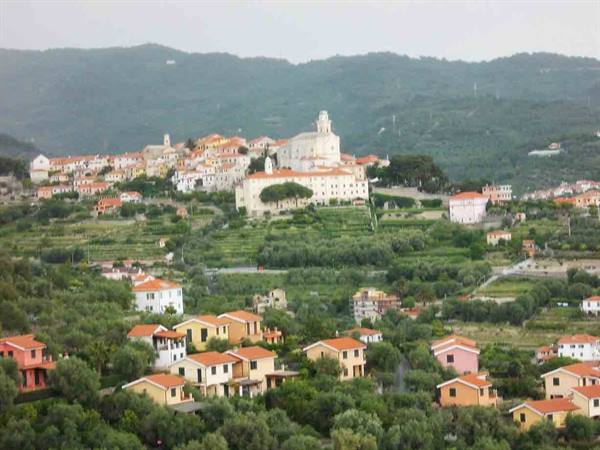
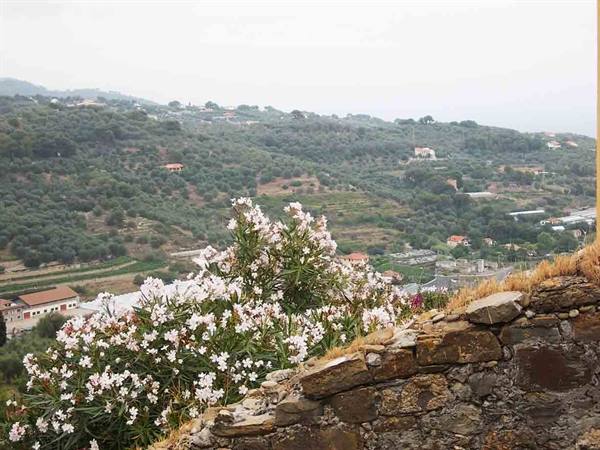
Its strategic position was further strengthened in 1199 with the establishment of the Communitas Diani, which united the villages of the Diano valleys. We arrive in Diano Castello following in the footsteps of the travellers who centuries ago walked these suggestive hill roads heading from the Po Valley to southern Gaul and back, confirming that if today the area between Capo Berta and Capo Cervo is among the most loved destinations for travellers, its vocation in this sense is certainly not recent. The couple of kilometres that lead us from the Diano coast up to the fortified height pass among brightly coloured villages immersed in flowers and in the pastel green of the olive groves, offering a breathtaking panorama.
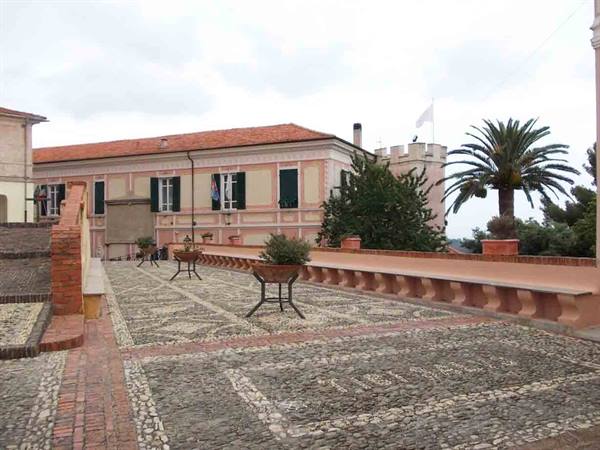
If we had happened to be among the alleys of the old village during the summer of 1284, we would have witnessed the fervent preparations that preceded the departure of a galley armed by the people of Diano Castello towards Pisa, where on 6 August the ship took part, making a precious contribution, in the Battle of Meloria, which saw the Republic of Genoa victorious over the Pisan fleet. The Diano crew, who fought with great courage, also hurling stones, boiling pitch and powdered lime at the enemy, besides proving the skill of its members as crossbowmen, earned Diano Castello the title of 'Magnifica'. On the façade of Palazzo Quaglia, the town hall, a 17th-century fresco recalls the glorious battle. The splendid sea of the Diano gulf, which today is the joy of tourists as well as of the people of the area, was in the past also a source of danger.
It was in fact precisely to defend themselves from the frequent attacks of Saracen pirates that the people took refuge on the heights, building the fortified village and equipping it with a wall whose layout can still be guessed, even though for the most part it had been destroyed over the centuries. During our walk in the centre we discover that in the Middle Ages the village could be entered through four gates: that of the Marina to the south, that of the Borgo to the north, that of the Portello di San Pietro to the east and that of the Mercato to the west. The walls were further reinforced by several towers, of which a piece still survives, still recognisable in a house in via delle Torri.
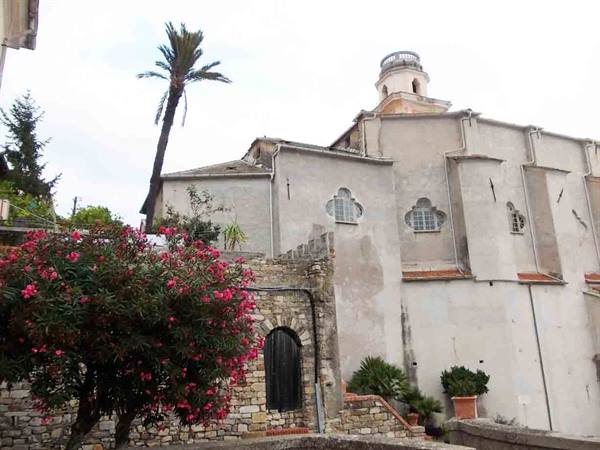
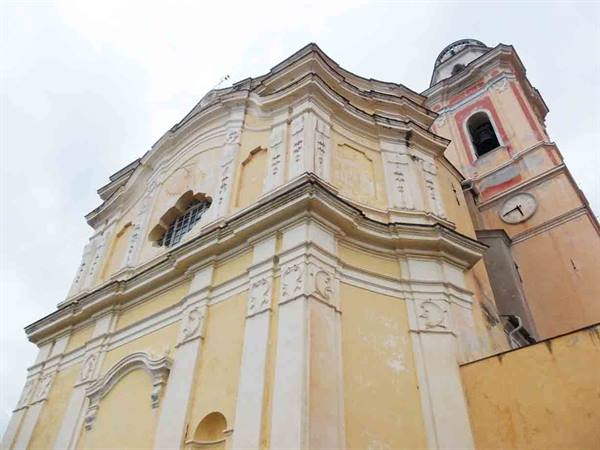
At the entrance to the village, on the other hand, the municipal loggia tells us a chapter of history, thanks to the coloured coats of arms of the towns that made up the Communitas Diani and to two 14th-century tombstones. After a few steps we reach the parish church of San Nicola, whose suggestive building stands out from afar and rises on the site of the ancient parish church that was the most important church in the area. Roughly from the same period is the 13th-century Romanesque church of Santa Maria Assunta, whose apse area is decorated with hanging arches resting on anthropomorphic corbels. We also visit the church of San Giovanni Battista, where we admire the 15th-century wooden truss roof, in which numerous painted panels are set depicting the cycle of the months, country work and representations of the saints.
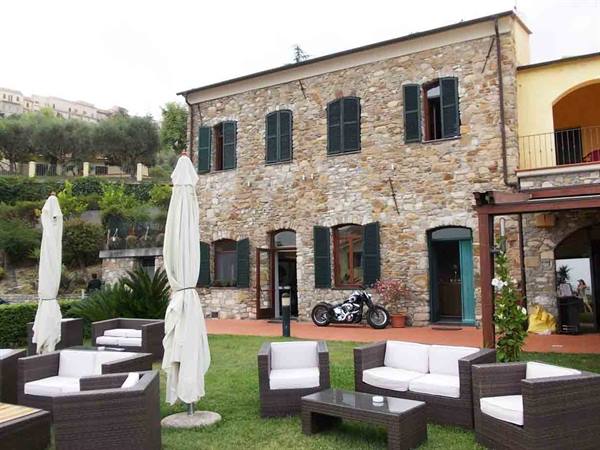
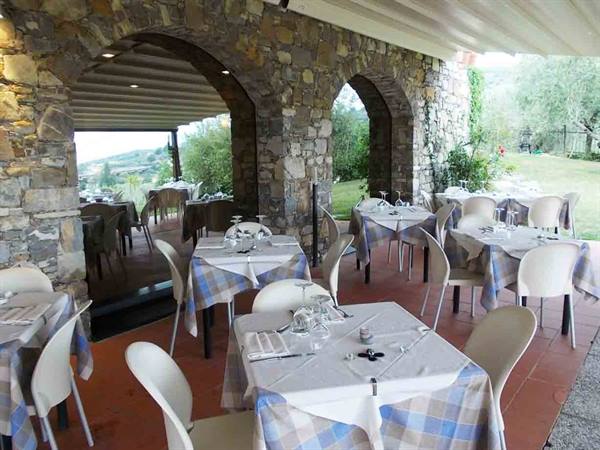
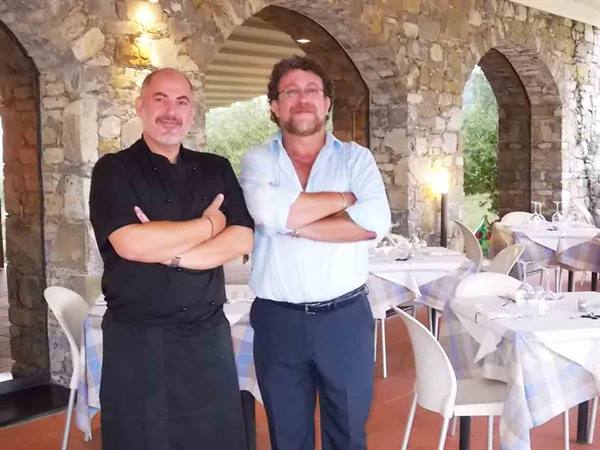
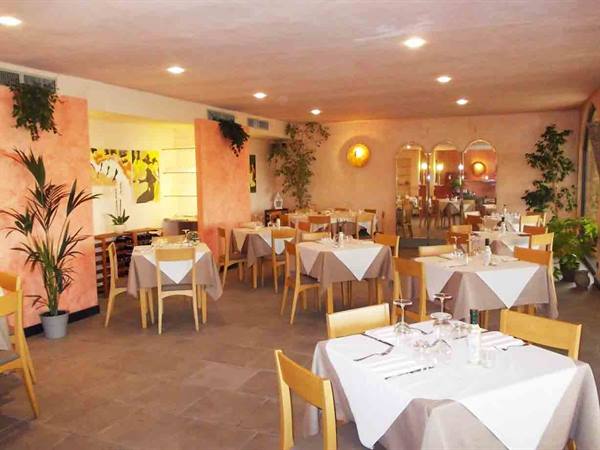
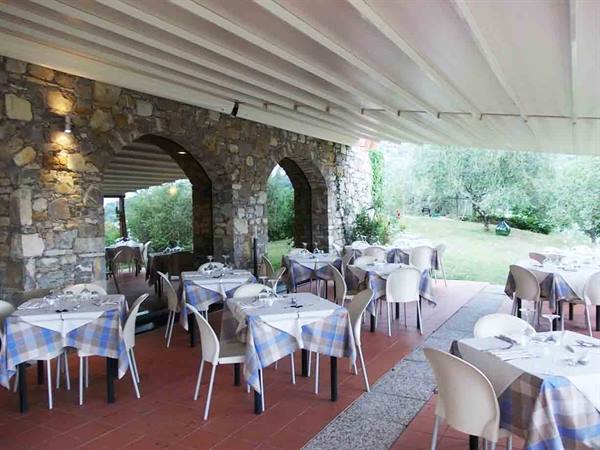
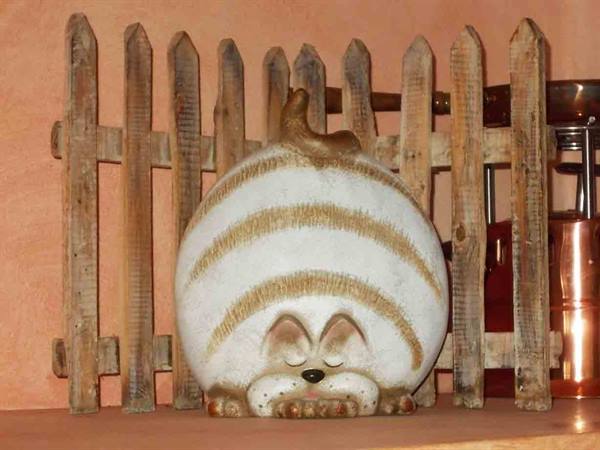
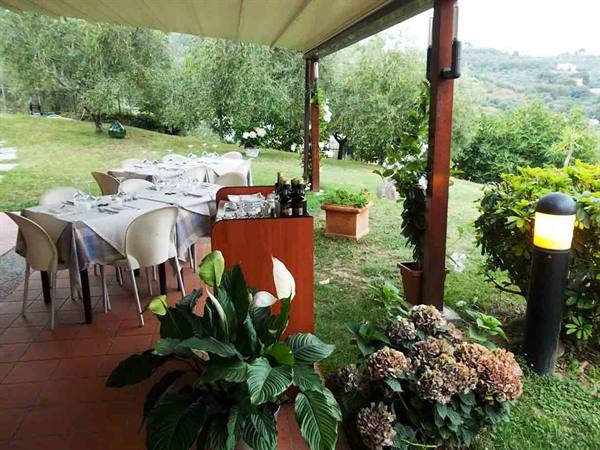
From the charm of history to the magical universe of fairy tales: our day continues ideally following the suggestions of a big cat who has stepped out of the story of Alice in Wonderland, the Cheshire Cat. It is in fact dedicated to this fairy-tale character that the new restaurant with rooms located in via Diano San Pietro, in a magnificent panoramic position, where we decide to stop for dinner. We leave the car in the venue's private car park and here we are at once in the cool garden, which opens onto a splendid view of both the sea and the surrounding olive groves. Welcoming us with great kindness are the owners Enzo and Natale, who have run the place with genuine enthusiasm since 14 July 2014.
'We are childhood friends, and after many years of experience in catering, including abroad, it took the Cheshire Cat to help us realise our wish to open this place together,' they tell us as we sip our aperitif on the large terrace which, together with the bright, warm-coloured indoor dining room, is also an ideal location for parties, ceremonies or corporate meetings. Twenty years of work as a chef in France for Natale, in close contact with the typical flavours of many peoples, and ten years in India for Enzo, managing restaurants in perhaps the most mystical corner of the world, full of life and authentic emotions: human and professional experiences that are the basis of the deep sense of hospitality and savoir-faire of the two owners, now back in that Liguria which had seen them grow up and from which years ago they had set off for distant lands.
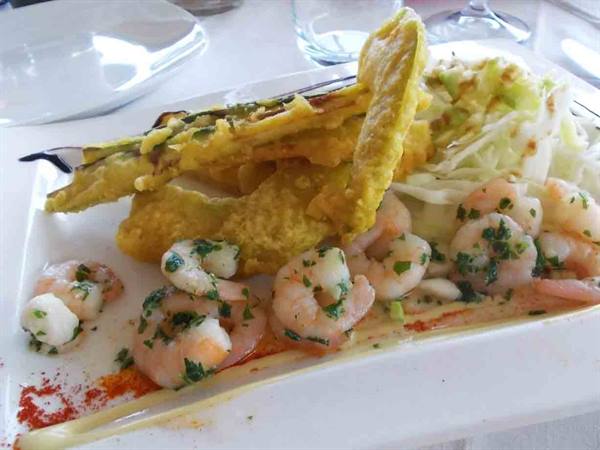
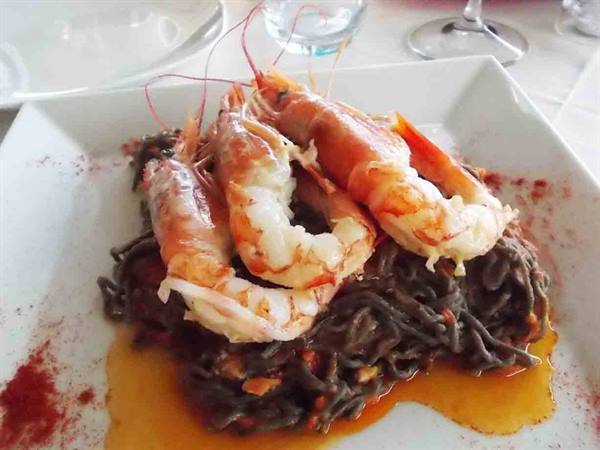
'Our menu changes often, also according to the seasonality of the products, since we offer a vast choice of always fresh, homemade dishes. The recipes of the area, which besides fish specialities also include several meat dishes based on selected meats and, in season, mushrooms and truffles, are elaborated with imagination. We also organise enchanted evenings, during which we offer ethnic specialities,' Enzo and Natale explain to us. Our 'enchanted' dinner begins with an exquisite fantasy of prawns and vegetables, while some of us choose the pan-fried scallops in Brandy or the beef carpaccio with diced peaches. We continue with a first course as intriguing as it is succulent, called Mefistofele: it is fresh tagliolini with cuttlefish ink, king prawns and crab. Delicious and full of flavour, thanks also to some special spices skilfully added by the chef.
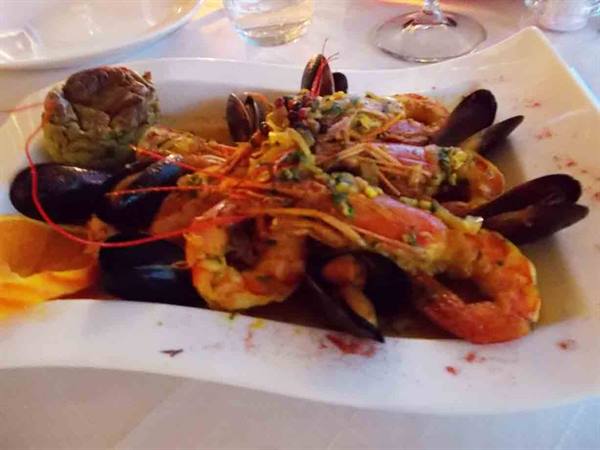
We also taste the spaghetti Calipso with seafood, prawns and squid, and the paccheri dello Stregatto, the 'Regina di Cuori' tagliolini and the Cappellaio Matto gnocchi are also very popular. Meanwhile the children who are with us, after having fun in the garden, happily enjoy the 'Stregattino' menu. We continue with the gamberi alla Modigliani, prepared with prawns flambéed in Brandy with orange sauce, a spot-on and original combination of flavours. Among our friends, the orata alla Creole in a virgin sauce and the San Pietro fillet stuffed with salmon mousse also win converts. We wash down these treats with excellent wines, mainly Ligurian, including Vermentino, Pigato and Arneis, as well as the rosé Sciac-Trà di Pornassio.
Our dinner can only end in the magical world of desserts, including the mela stregata, that is caramelised and filled with cream in puff pastry, the caramel soufflé with cream, the chocolate Charlotte with zabaione and a delicious coffee cremino. When evening falls, to the delight of the children we also fly some oriental paper lanterns that carry our wishes into the sky, including the very important one of coming back here soon to spend other lovely enchanted evenings.
Francesca Bertha FOR INFORMATION:
Ristorante Lo Stregatto Via Diano S
The journey's photographs
15 photographs · click to open them full screen
0 reader comments