The story
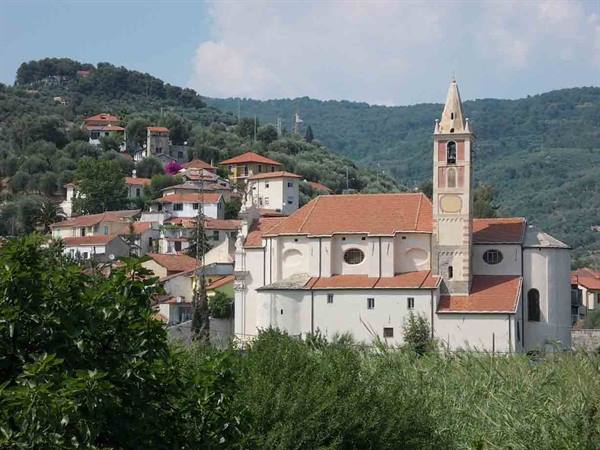
Just a few kilometres are enough, leaving behind the colourful bustle of the riviera, to find yourself immersed in the pastel-green sea of the inland olive groves, among whose waves rise characteristic villages with a charm unchanged for centuries. During our holiday on the Imperia coast, we thus discover Diano San Pietro, a municipality that in the Middle Ages was part of the Marquisate of Clavesana, and later of the Republic of Genoa. In 1199 the Communitas Diani was established, uniting the villages of the Diano valleys, all devoted to the goddess Diana, protector of hunters. If in ancient times the inland villages also represented a shelter from pirate attacks, today these places are loved by hikers and trekking enthusiasts. One of the starting points for the climb to Pizzo d'Evigno, also known as Monte Torre, 988 metres above sea level, is located right in Diano San Pietro.
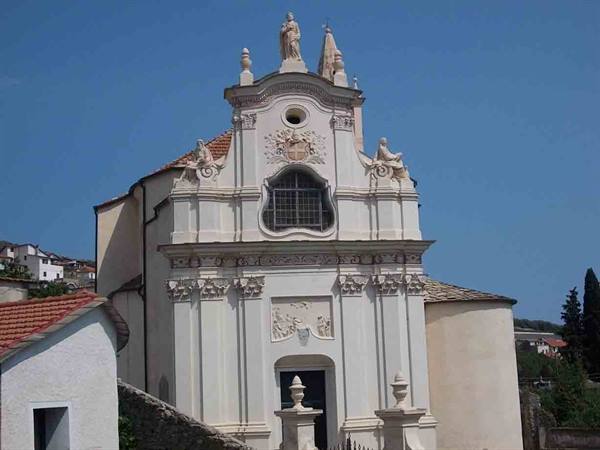
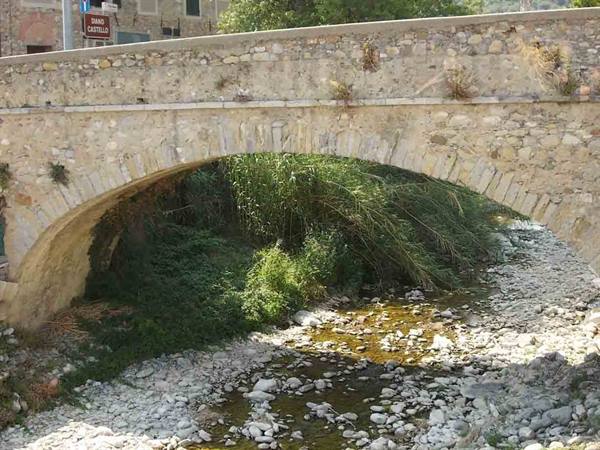
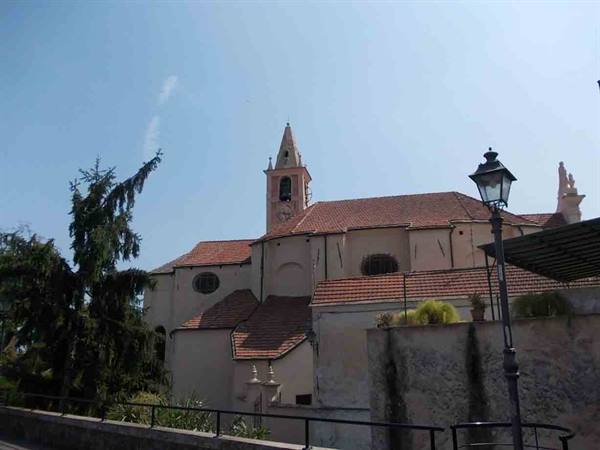
During our walk among the characteristic alleys we visit the most important monument of the village, the parish church of San Pietro, built on the remains of a Roman temple dedicated to the goddess Diana. The oldest structure still partly existing is the baptistery, dating back to the 5th century, while the Romanesque-Provençal bell tower dates from the 12th century. The Baroque façade, which recalls that of the nearby cathedral of Cervo, was completed in 1772. The church, which you reach by crossing an old bridge, is surrounded by a high boundary wall, built in 1564 to allow the inhabitants to take refuge in the churchyard in the event of a possible Barbary attack, fortunately avoided. We also visit the 16th-century Oratory of Santa Croce and, in the nearby hamlet of Moltedo, the church of San Pantaleone, dating from the 17th century.
The testimonies of the religious world in this territory are not, however, limited only to monumental churches: the Benedictine friars played a fundamental role in the establishment of olive growing, introduced in Liguria by the ancient Romans, but abandoned with the fall of the Empire. It was the monks of Taggia who resumed olive cultivation, determining the birth of the taggiasca variety and building dry-stone walls on the steep hills that allowed the creation of the typical 'fasce', that is the terraces formed by strips of flat land. During the 11th century the first intensive cultivations were born and in notarial deeds people began to speak of 'vineis, ficetis, olivetis', that is also of olive groves. The Diano territory became the heart of these noble agricultural activities and several 14th-century documents that regulated the work of the mills and the oil trade are known.
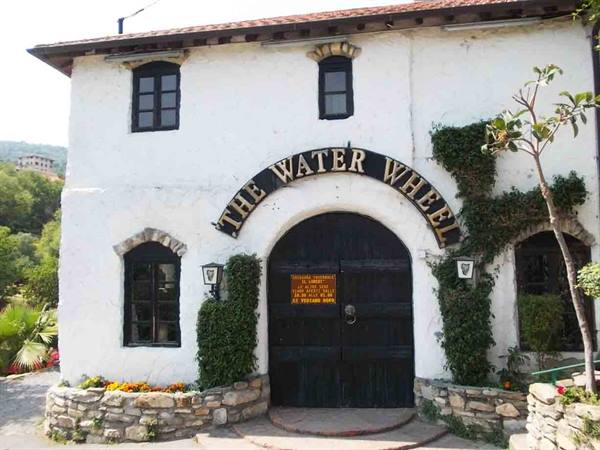
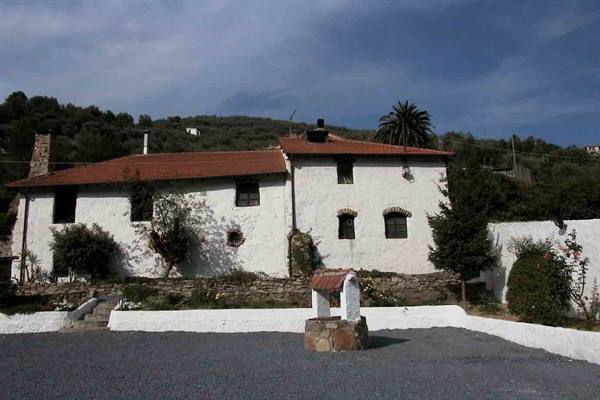
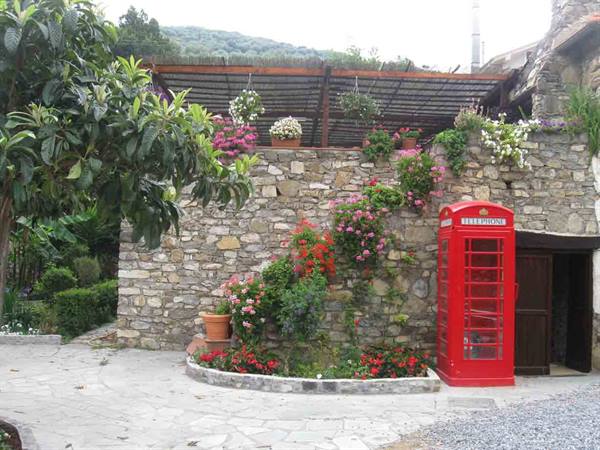
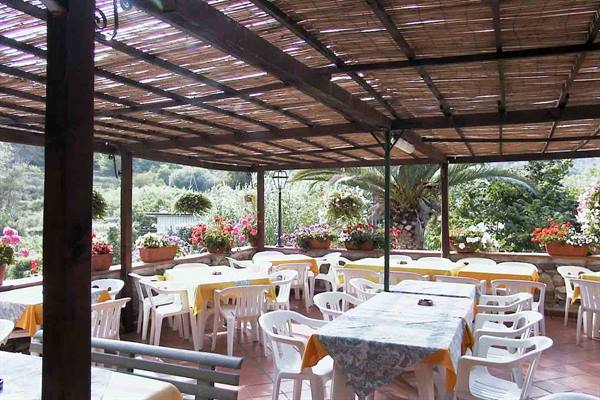
Our trip continues following the evolution of history, and takes us straight into 1537, to the only mill that has survived in its original condition among those located on the banks of the Evigno. After covering a stretch of road lined with olive trees, we arrive in the large car park of the pub 'The Water Wheel', and here our breathtaking journey within a journey begins. An authentic red English telephone box placed near the entrance, immersed in flowers, is the symbol of the history of this place, which is born from the connection between three countries: Italy, England and South Africa. An emotional story told partly in Ligurian and partly in English, which begins way back in the 16th century. The old building seen from outside has a fairy-tale air, but once inside, you are literally left speechless.
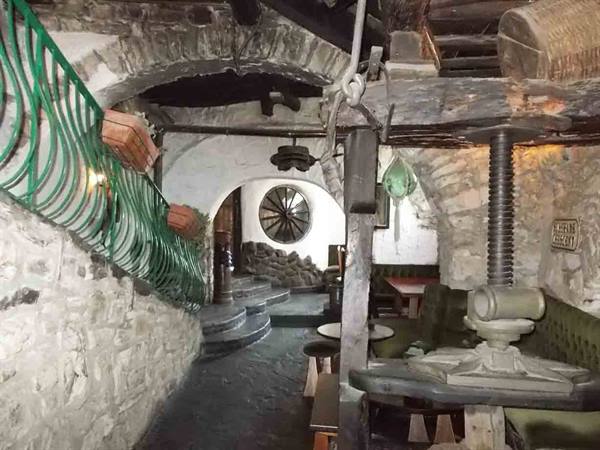
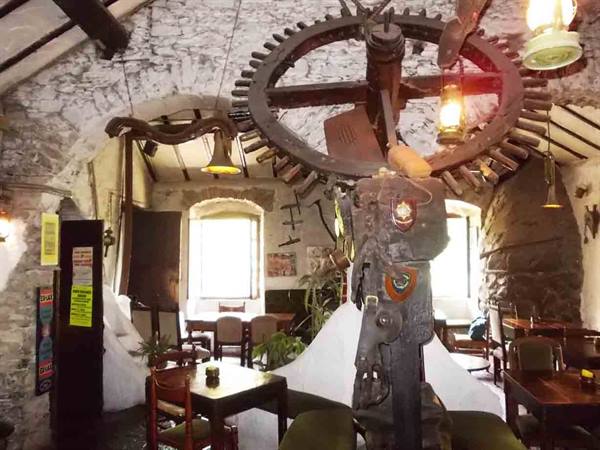
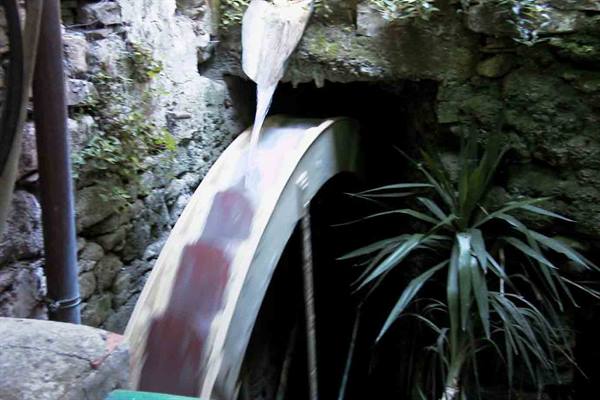
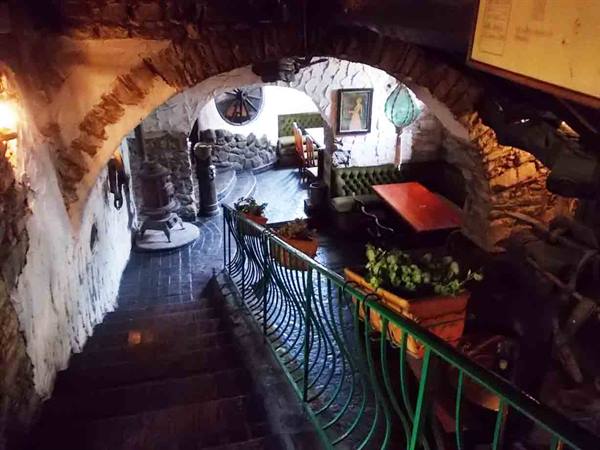
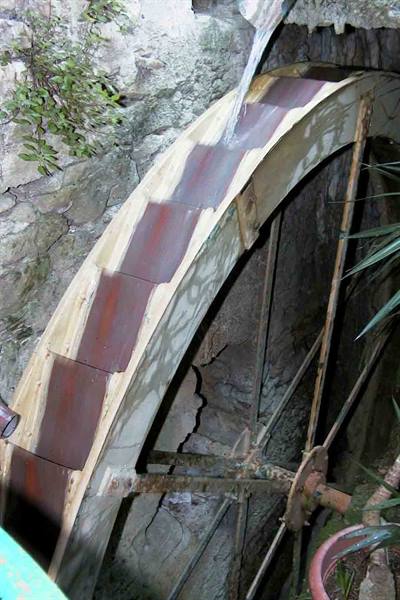
Welcoming us is the owner Adriano Valenti, who accompanies us on an exciting journey back in time. 'This was one of the largest mills with three big water wheels, originally built in wood and then in iron, two for producing oil and one for grinding wheat,' he explains as we admire open-mouthed the ancient presses and millstones that have come down to us in their original condition. Mr Adriano takes us to see the gigantic wheels located outside the building, still able to work, and shows us the intimate little rooms, carved out of the spaces once reserved for the various stages of oil production, and today furnished in perfect Irish Pub style.
The old oil barrels have given way to beer barrels, and the miracle of being able to see the old mill still in these splendid conditions is due to the fact that a few decades ago its fate became intertwined with the projects of Edward Ring, an English gentleman who had fallen in love with this suggestive place. Mr Adriano shows us the period photos in which you can see the mill in ruins before the renovation. 'After restoring the building, they turned it into a restaurant, and initially only a more sheltered space inside was used as a pub. Then, over time, things changed and the pub became the main activity.' After the death of Mr Edward, twenty-two years ago, the place was taken over by the current owner, and so the Italian-South African phase of the story began, given the origins of Mr Valenti, with a South African mother and an Italian father from an Istrian family.
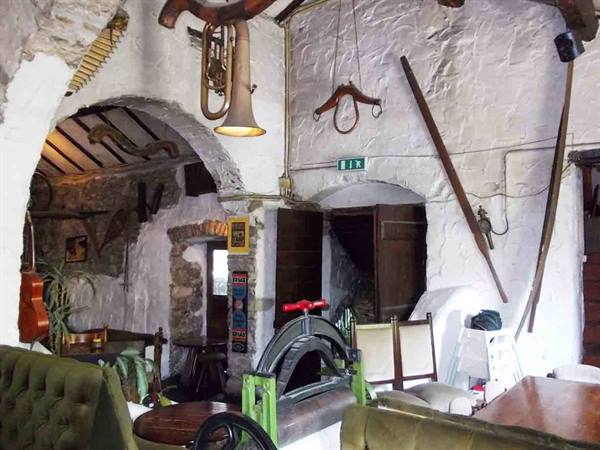
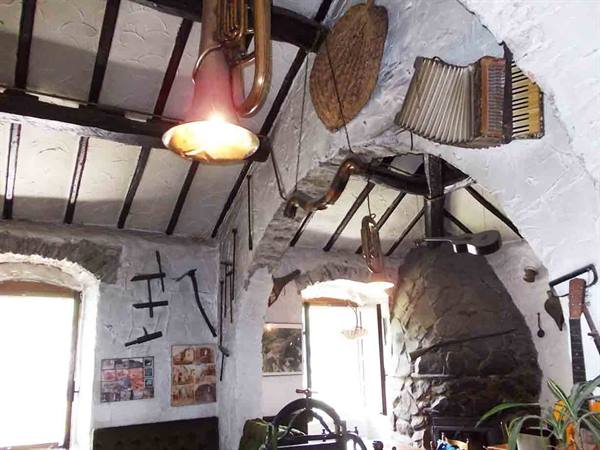
This interesting meeting between different cultures is also reflected in the menu, partly inspired by the multicultural 'Rainbow Nation' of South Africa. Even the ordering is organised according to the Anglo-Saxon system: you go to the counter to order drinks, pay and return to your table with mugs or glasses overflowing with beer. And what beers! Among the ever-present Guinness, the Scottish Tennent's Super double malt or the Cider, that is apple cider, there is a vast choice of draught beers, but the bottled beer list is also very rich, divided into blondes, reds and specials. After placing our orders we sit at a table lit by a very original trumpet transformed into a lamp, and shortly afterwards our tasty dishes arrive.
We could not give up a dip into international flavours, so here we are enjoying a nice curry & rice, a slightly spicy Indian speciality: rice with chicken and beef stew. Some of us choose the beef Rump Steak with chips, but the rostelle with focaccia, the mixed meat grills and the grilled king prawns with chips are also much loved. Besides the grilled specialities, the pizzas and focaccias prepared in the wood-fired oven are also excellent. Among the countless varieties we taste the 'Adriano' focaccia, with gorgonzola, onion and spicy salami, the Country with raw ham, fresh tomato, mozzarella and rocket, and the rustic one with porcini, sausage and mozzarella. Among the pizzas, our favourite is obviously the 'Water Wheel', with ham, artichokes, mushrooms, tuna, würstel and eggs.
Finally, we also give in to the sweet temptations of the homemade desserts, including the tiramisù and the waffel. In the song 'Watching the Wheels', John Lennon used the image of wheels to speak of the circularity of existence in a meditative key. After discovering this extraordinary place, in which the water wheels have marked every moment of history, we are certain we will come back here many times to relive the unique atmosphere released by the wheels and the centuries-old millstones, spending moments of cheerfulness over a good plate and a nice beer.
Francesca Bertha
FOR INFORMATION:
The Water Wheel Via Trinità, 6 Diano San Pietro (IM) 0183/429123 closed on Mondays
The journey's photographs
15 photographs · click to open them full screen
0 reader comments