Tripscoop›Europe›ITALY›Art, History and Good Food within Brunelleschi's Walls: a Day in Lastra a Signa
ITALY · Europe
The story
In the most important art galleries in the world there are many works portraying beautiful ladies wearing large, round, wide-brimmed straw hats. Although we cannot know the identity of those women who lived almost two hundred years ago, we do know for certain where their hats came from: from the workshops of Lastra a Signa, a town known since the fourteenth century for the production and trade of straw. The hats created using a very fine and luminous variety of wheat were not only beautiful but also good: Anaide knew something about it, one of the protagonists of Nino Rota's work "The Straw Hat of Florence", from whom a horse even stole the hat in order to eat it.
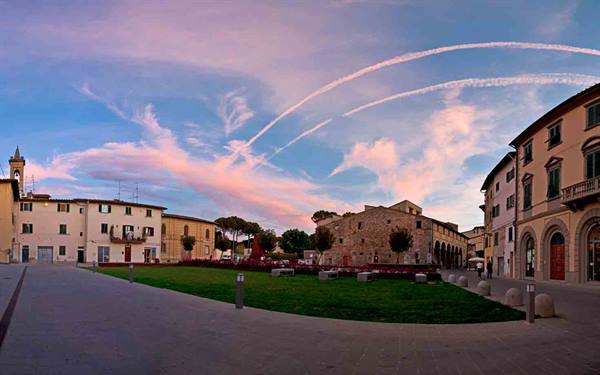
Situated on the bank of the Arno around a small river port, the town became, from the Middle Ages, an important commercial centre, through which goods passed from Florence towards Pisa and other destinations. The locality was named after the sandstone quarries from which stone slabs were extracted since the eleventh century. Today its importance is also largely touristic, due both to the surrounding natural beauties, including the hills of Chianti and the River Park of Lastra a Signa, and to its artistic riches. The strategic position of the town was, during the long centuries of history, also a source of wars, as the village soon entered the expansionist ambitions of Florence and found itself having to contend with the Pisan and Lucchese adversaries. For this reason, since the most ancient times, the town equipped itself with imposing fortifications, only partly surviving to us.
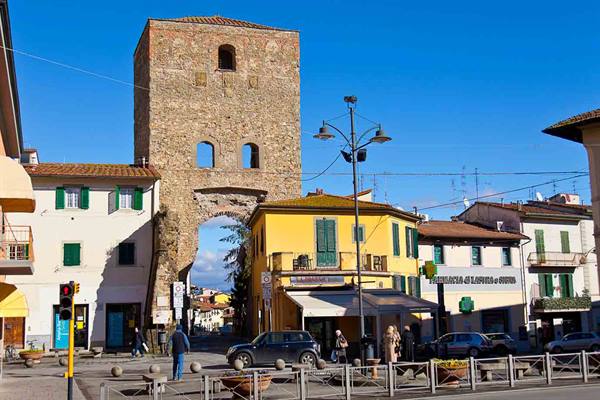
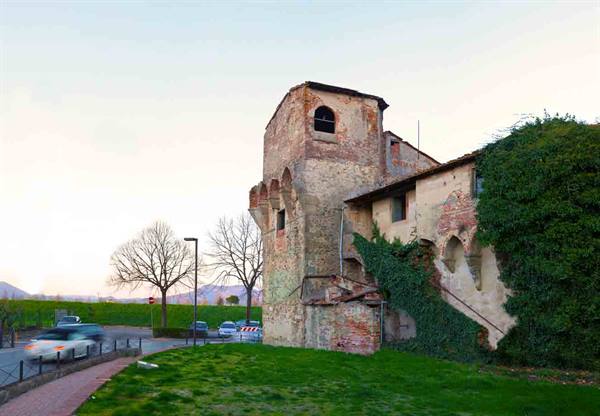
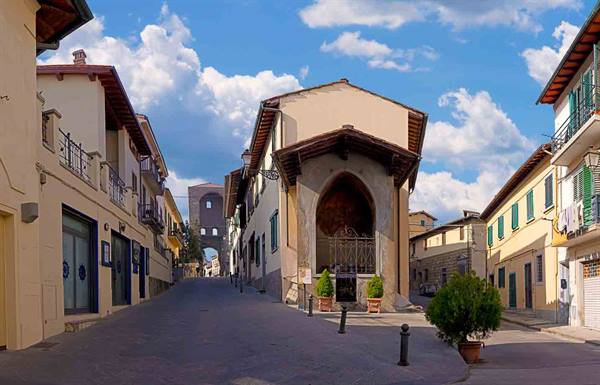
The castles of Monte Cascioli and Monte Orlando did not survive the storms of history; we can, however, admire the ancient city wall, originally built before the year 1000 and rebuilt in 1377. Between 1424 and 1426 the artistic contribution of Filippo Brunelleschi to the work was decisive, as he enriched the fortification with a projecting defensive apparatus, without machicolations, the first of its kind from the late Gothic period known in Tuscany. Three sides of the irregular trapezium that formed the original structure are very well preserved, as are two of the three ancient gates and as many as eight square-based towers. Besides Brunelleschi's Walls, those of the hamlet of Malmantile have also come down to us very well preserved, one of the best-preserved medieval villages in Tuscany.
Walking through the ancient streets, we happen to cross the Ponte Nuovo over the Arno, which is new only in its present form but is documented since 1120. Originally made of wood, it has always been the only important bridge between Florence and Empoli and, as documents and works of art testify, it was a seven-arch bridge. When Brunelleschi worked in the town, he probably also worked on the building of the Spedale di Sant'Antonio, commissioned by the Arte della Seta guild in 1411. Thousands of pilgrims and sick people passed through its elegant entrance loggia, while today the restored building hosts cultural initiatives.
During our walk we also visit numerous splendid churches, including the one considered most important from an artistic point of view: the Pieve di San Martino a Gangalandi. First mentioned in 1108, the church was probably the seat where the league formed by the four peoples who later formed the municipality of Gangalandi, the ancient place name of Lastra a Signa, used to meet, named after the family that at the time owned these territories. The church is very rich in precious works of art, in particular fifteenth-century frescoes, while the apse is the only work by Leon Battista Alberti of which he was both patron and designer. The pieve was built when the visibly leaning bell tower already existed, and even the structures of the Albertian apse were adapted to the inclination of the bell tower, which sways by about 4 cm while the bells are ringing.
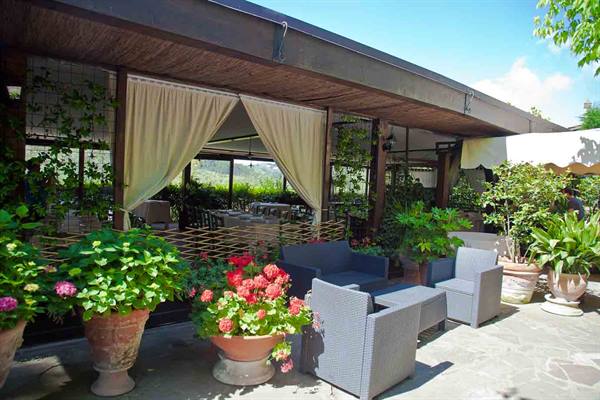
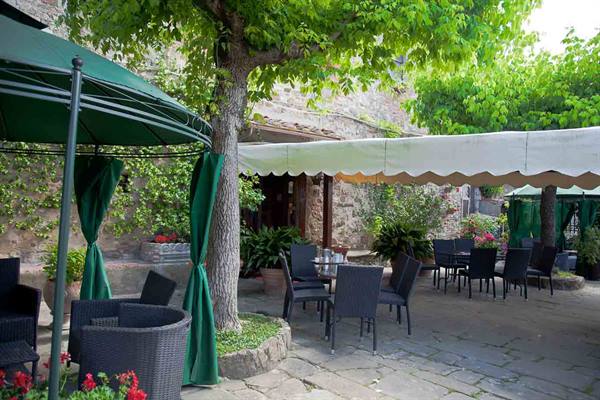
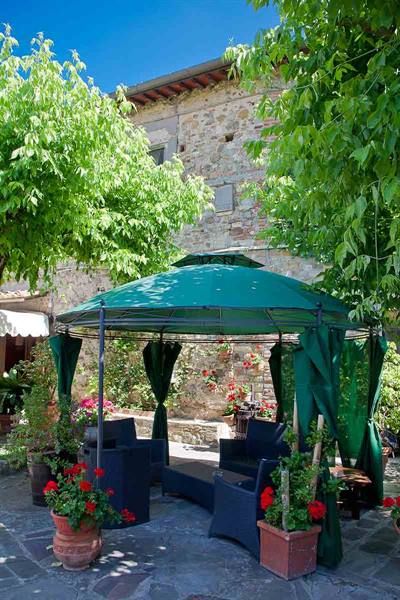
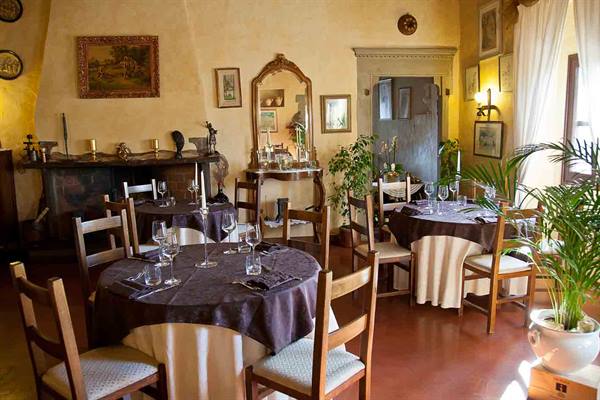
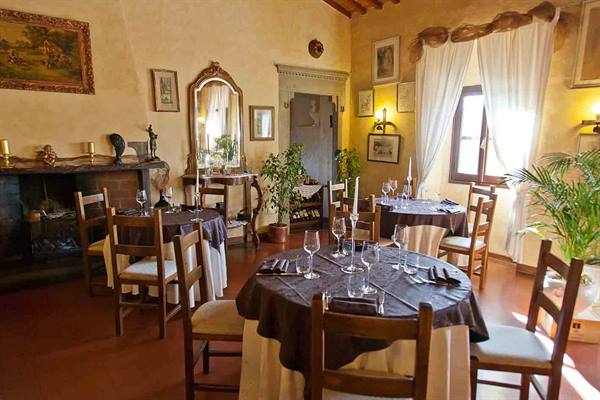
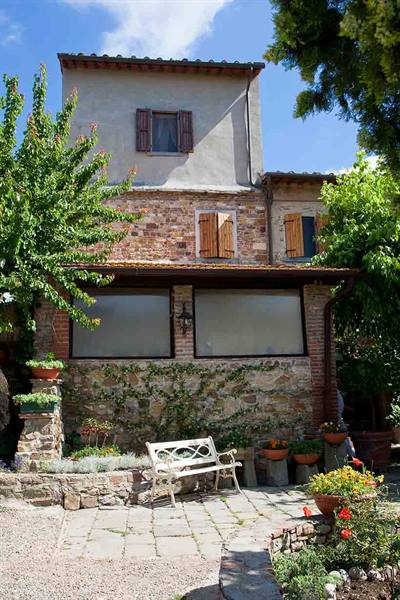
After visiting the pieve, we ideally follow in the footsteps of the friars who lived in these parts around the year 1000, reaching the place where their convent once stood. We thus arrive at the historic Ristorante Edy Più, in via di Calcinaia, located in a beautiful manor house built at the end of the 1500s on the ruins of the convent. The beautiful coffered ceiling, the door thresholds in pietra serena and the tabernacle niche are all precious details that take us back in time to discover a world full of charm. Settling into the elegantly restored room, we chat with Mrs Miriam, who runs the restaurant together with her husband Jonathan. "Ristorante Edy was founded in 1961 in piazza Savonarola in the centre of Florence. The owners were my mother Edy Lorenzini and my father Mario Luigi Bonaccorsi.
The genuine but imaginative dishes that originated in traditional Tuscan cuisine, prepared by my mother, enjoyed great success and she was even crowned 'Queen of the Mushroom' of Florence, a fame also endorsed by advertisements shown at the Cavour cinema. Thanks to my mother's culinary art, the restaurant had even entered the prestigious Club del Buongustaio," Mrs Miriam tells us. After a period of closure, the establishment reopened in 1988 in its current location, particularly suitable also for parties and ceremonies. The flavours of tradition are still decisive, and are enhanced by the passionate search for authentic dishes, which are sometimes reinterpreted according to today's lighter tastes. The ingredients are always very fresh and of excellent quality. "Some dishes are available all year round, others change with the seasons.
The flagship of the restaurant is the large olive-wood grill, on which the best meats are cooked, including the bistecca alla fiorentina," Miriam tempts us.
We start with crostini with various sauces such as chicken liver and capers, and mushroom. We also taste some slices of excellent lardo di Colonnata and then, perhaps the most famous dish of peasant cooking: panzanella, made by mixing pieces of vegetables and stale bread soaked in water and vinegar. We continue with exquisite first courses of fresh homemade pasta, including fusilli dressed with tomato passata cooked with garlic and fresh chilli, to which a mix of aromatic herbs is added at the end of cooking. Also very popular are the pappardelle with duck sauce, mushrooms and tomato. Some of us, on the other hand, cannot resist a tasty and filling dish of farro. We wash down these delicacies with excellent Tuscan wines chosen from around two hundred labels, both local and national. The highlight of the dinner is certainly the meat dishes, the true speciality of the establishment.
Here we are then, savouring a wonderful fiorentina cooked over olive-wood embers and served at the table on the brazier so that it does not go cold. Part of our group opts for the grilled steak, presented as a tagliata and sprinkled with a herb sauce, but the rabbit prepared with aromas and white wine is also a great success.
Our day in Lastra a Signa ends among the sweet temptations of the homemade desserts, including the soft bavarese prepared with added peach pulp and served with a sauce of puréed wild and cultivated strawberries, and the apple sfoglia with cinnamon and peach jam: sweet memories that will bring us back here soon for new trips in the name of authentic Tuscan atmospheres.
Text: Francesca Bertha Consultancy and photographs: Lorenzo Lotti
FOR INFORMATION:
Ristorante Edy Più Via di Calcinaia, 94 Lastra a Signa 055/8724562
The journey's photographs
11 photographs · click to open them full screen
0 reader comments