Tripscoop›Europe›ITALY›A Trip to the River, between History, Art and Good Food: a Day in Palazzolo sull'Oglio
ITALY · Europe
The story
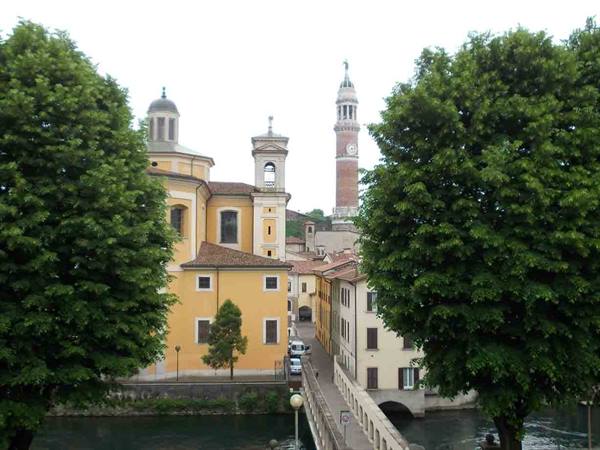
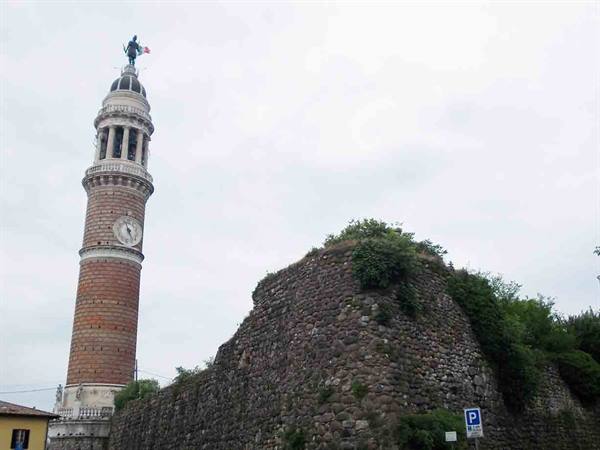
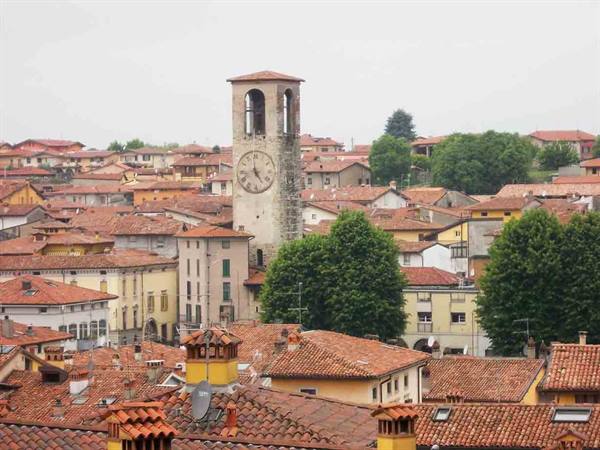
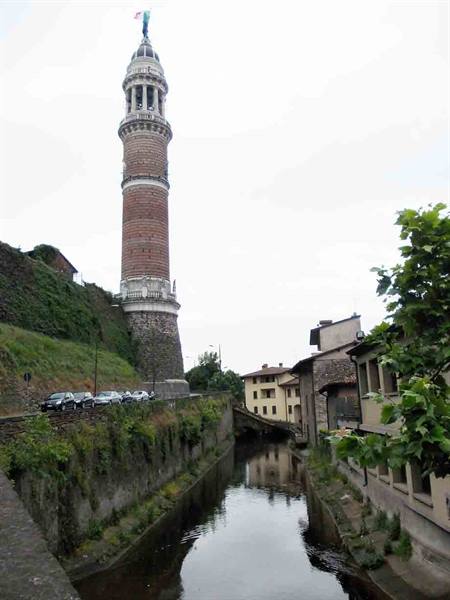
If, looking up, you see the tallest circular-section tower in Italy, you can be sure: you are in Palazzolo sull'Oglio, one of the oldest localities in Lombardy, situated halfway between Brescia and Bergamo. Standing 91.8 metres tall, the Torre del Popolo, also known as the tower of San Fedele, since a statue of the town's patron saint stands at the top, is the first monument you notice from wherever you observe the skyline of Palazzolo, and so our walk to discover the centre also becomes an itinerary to "conquer" the tower.
The town, which during the Roman Empire was called Palatium, and only from 1862 distinguishes itself from other places with the same name with the indication "sull'Oglio", develops on the banks of the river that flows through the centre. The Oglio is also one of the major naturalistic attractions of the area, and its extensive park is much loved both by tourists and by locals who practise various sports, from trekking to canoeing. In the town, on the other hand, the waters of the Oglio are the joy of anglers, one of whom manages to catch a fish right at the moment we arrive. The river has determined, since antiquity, the evolution of the Palazzolo territory and was also an object of contention during the Middle Ages.
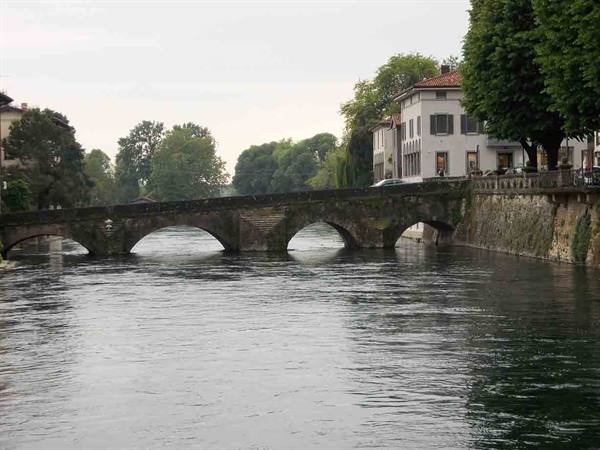
The splendid Roman bridge in the very centre bears witness to the times of the Empire, when the ancient municipality was a transit point on the Brixia-Mediolanum road, the so-called via Gallica. Probably built between the fourth and fifth centuries, on a stretch of the river where several islets formed during low-water periods, the bridge originally had four pillars and five arches and was hump-backed. In medieval times clashes arose between the built-up centre of Palazzolo and the fortified village of Mura, located on the other bank of the Oglio, over control of the river. The contrasts were resolved with the unification of the two villages with the Peace of Mura, signed in 1192, which gave life to the present municipality. To testify to those times, the round Tower of Mura has come down to us, also known as the Torrione, 25 metres high and built between the eighth and ninth centuries.
We can also admire the Rocchetta di Mura, that is, the "Rocha Parva", which stands opposite the Roman bridge and represents what remains of the castle of the hamlet of Mura.
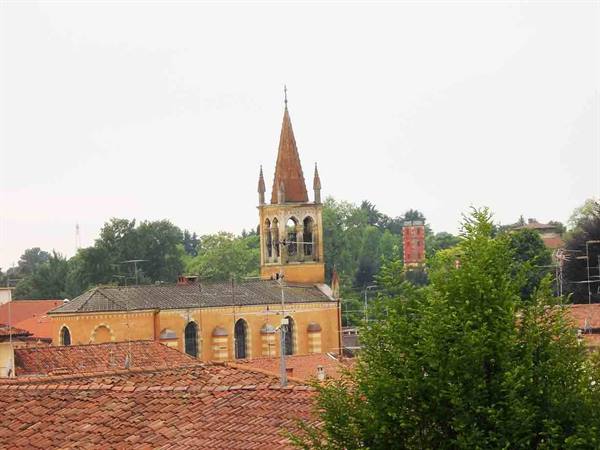
During our walk we also admire several beautiful churches whose bell towers, rising above the rust-coloured roofs of the houses, help to compose the picturesque panorama of the town. First we visit the eighteenth-century parish church of Santa Maria Assunta, and afterwards, reaching via Santissima Trinità, the Sanctuary of the Madonna di Lourdes. The stupendous religious building, which recalls the style of the basilica of Our Lady of Lourdes, was opened to the faithful in 1889. The Vecchia Pieve, on the other hand, is now deconsecrated but still steeped in the suggestive atmospheres of very ancient churches, dedicated to the patron Fedele of Como. The church, built in the fifteenth century on a pre-existing building of the eighth and ninth centuries, is today used as an Auditorium for cultural events.
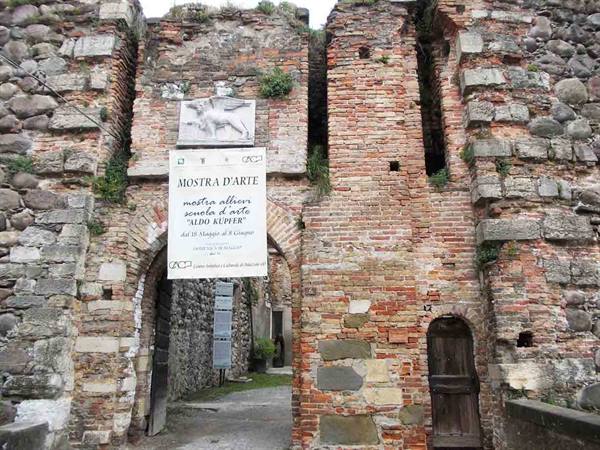
Leading us towards our initial destination, the "lighthouse" of the town that also helps you find your bearings with its peal of as many as twelve Ambrosian bells in A flat, is a panoramic climb leading to the Rocca Magna, and here we find four more towers. These are the round towers Mirabella, Ruellina, Porta di fuori, and the square-plan Torre della Salvezza, which served as the keep of the castle built between the ninth and twelfth centuries. From the large courtyard one enters the patrol walkways and the underground passages to the fortress walls are still walkable.
The Torre del Popolo was erected between 1813 and 1838 on the Mirabella tower, and although the members of the "Vetra di Chiari" irrigation channel opposed its construction for fear that a possible collapse of the tower could damage the canal that irrigated their land, it enjoys excellent health and has even become the symbol of the town.
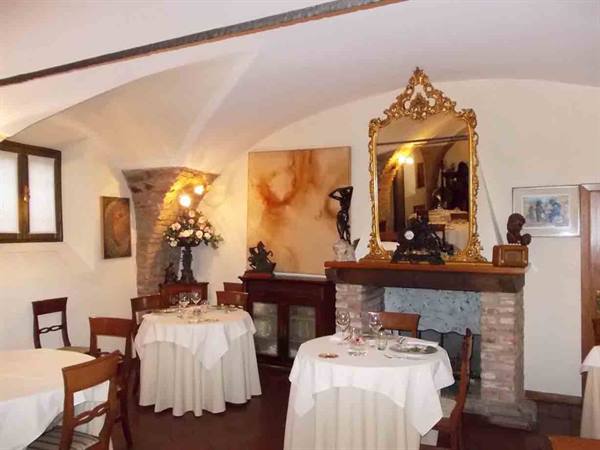
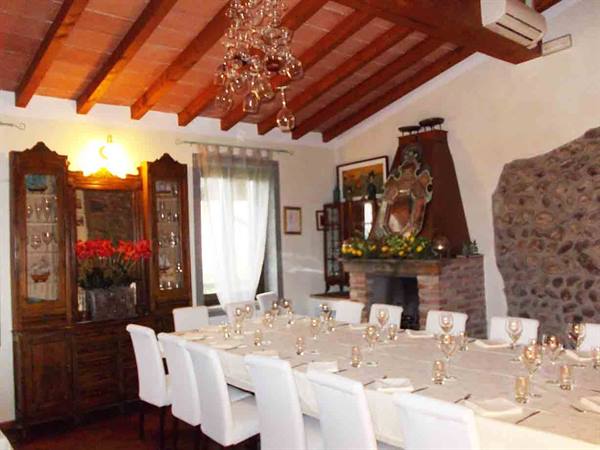
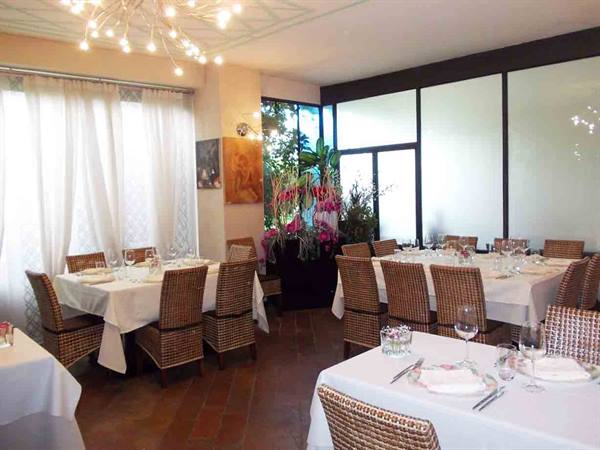
From the castle courtyard, our appetite brings us to "La Corte", an elegant restaurant located in via San Pancrazio. We settle into the bright room furnished with style and artistic taste: on the walls we can admire paintings by local artists, whose works also inspired the design of the menu, while in a corner a double bass and a phonograph are on display. Welcoming us very kindly are the owners Aldo Chiari and his wife Cinzia, who have run the restaurant with remarkable commitment and dedication since 1993, helped from time to time also by two of their four children, one of whom is a pastry chef. Seeing the thick walls of the structure and the beautiful vaults, we become curious about its origins. "Part of this building dates back to the sixteenth century, and it was a fortified farmhouse that probably served as a staging post for horses.
Next to it there was the ferry to cross the river to go to Brescia. The rest of the building, including this room, is instead nineteenth-century; the last remodelling took place in 1835," Mr Aldo explains to us. "When we took over the structure in 1990, it was about to collapse. There was a fig tree whose roots crossed the whole room. We carried out a careful restoration, opening the restaurant three years later."
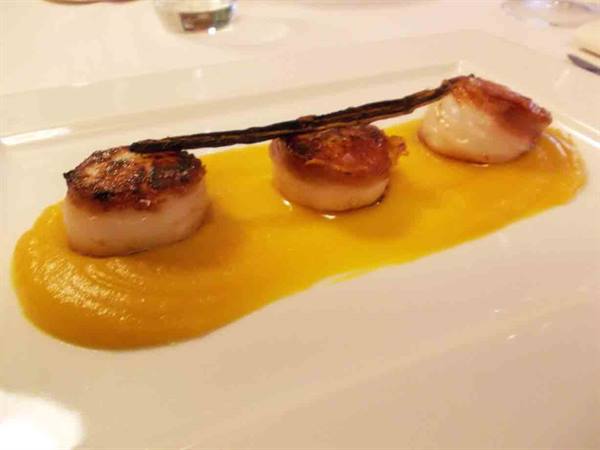
Our culinary excursion among the flavours of Mr Aldo's creative cuisine, based mainly on fish and vegetables, begins with crispy scallops on a delicious pumpkin cream, a starter where the balance between flavour, aroma and sunny colours enchants the senses. Our friends also taste the courgette flowers in tempura stuffed with ricotta and porcini mushrooms and the potato flan with smoked swordfish and caviar. The menu, they explain, often changes according to the seasonality of the products and a great variety of fresh vegetables is used, such as asparagus, wild hops, nettles (collected directly by the owners), shoots and flowers. The pasta and bread are homemade, always fresh.
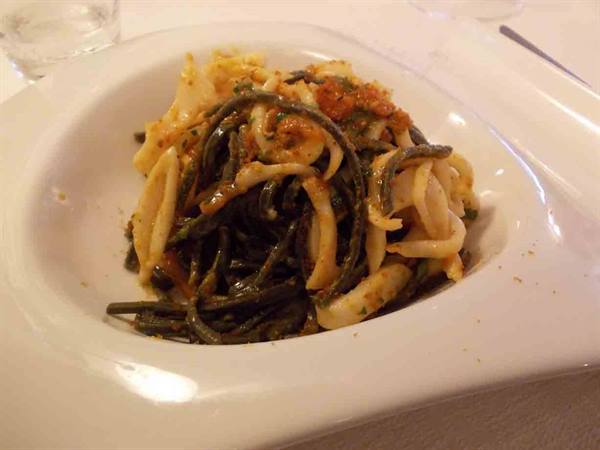
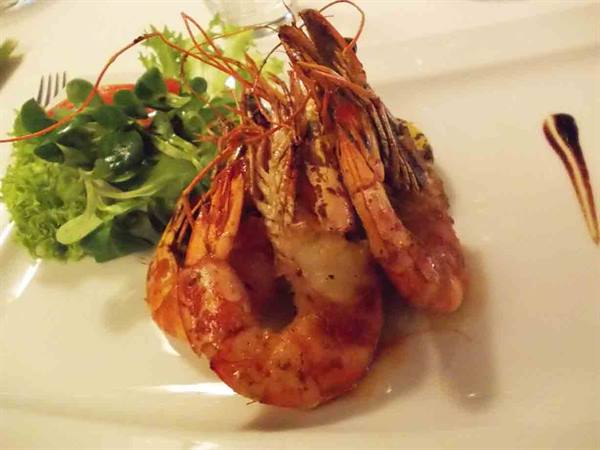
We continue with the very tasty black tagliolini with sea urchins, baby squid and amberjack bottarga, a true riot of flavours, while the rest of the group much appreciates the pairing of tagliolini with poppy seeds and truffle. We also taste the ravioli with bagòss and toasted almonds, another dish that enhances local ingredients. We wash down these delicacies with excellent Franciacorta wines, chosen from the more than 500 labels of the very well-stocked cellar, dug at a depth of six metres. About three thousand bottles, including many national and foreign labels, among which customers can choose their favourite. We continue with the prawns in their shell with polenta croutons, another spot-on and exquisite pairing that enhances the fresh and delicate flavour of the shelled prawns.
We also taste the tuna fillet with mustard and the sea bass tagliata with artichokes, while our "carnivore" friends opt for the veal fillet with robiola fondue and black truffle.
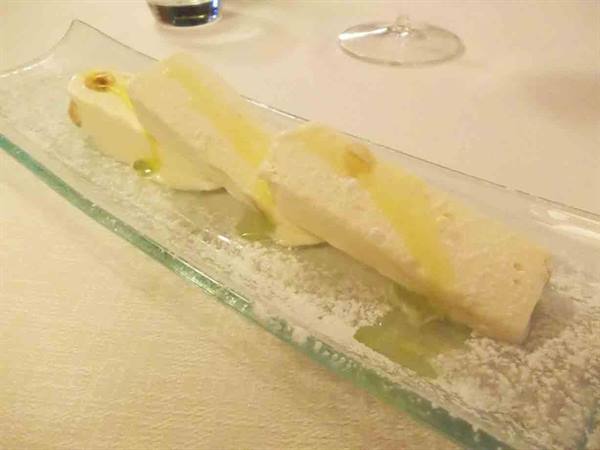
Our day in Palazzolo sull'Oglio ends with a delicious frozen nougat with sweetened extra virgin olive oil: one of the many reasons that will bring us back here on future day trips.
Francesca Bertha
FOR INFORMATION:
Ristorante La Corte Via San Pancrazio 41/49 Palazzolo sull'Oglio (BS) Tel.: 030/7402136
The journey's photographs
15 photographs · click to open them full screen
0 reader comments