The story
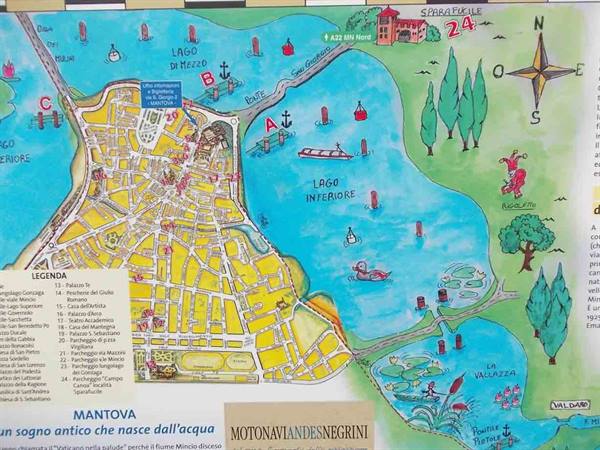
Once upon a time there was a prophetess named Manto, daughter of the seer Tiresias. Having fled from Thebes, after long wandering, the girl arrived in a marshy area. Overcome by despair, she created a lake with her tears, whose waters were, however, special: they conferred prophetic powers on those who drank them. From the marriage of Manto with the river deity Tybris was born the son Ocno, also called Bianore, who founded a splendid city on the banks of the river Mincio, calling it, in honour of his mother, Mantua. The origins of this story, reported by Virgil in the Aeneid, are lost in the mists of time, but what is certain is that Mantua is surrounded by three little lakes created with the waters of the Mincio for defensive purposes back in the twelfth century. Originally the lakes were four and surrounded Mantua, making it an island in every respect.
Today these ancient stretches of water are among the main tourist attractions of the town, also thanks to the spectacular lotus flowers that were introduced into the lake by the Saverian Fathers of Parma in 1914.
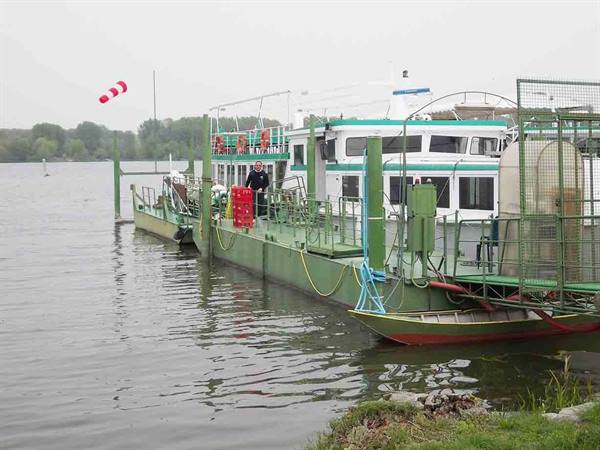
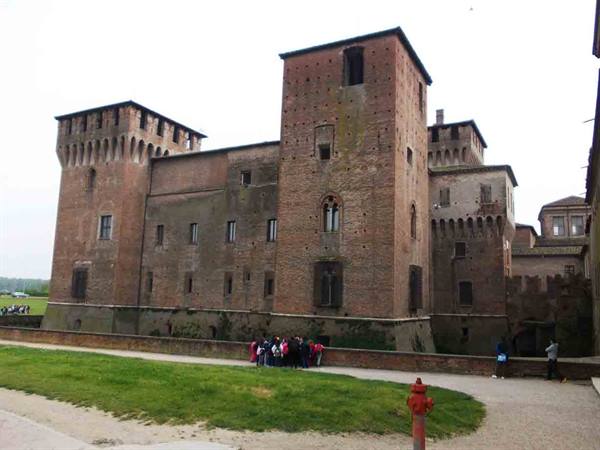
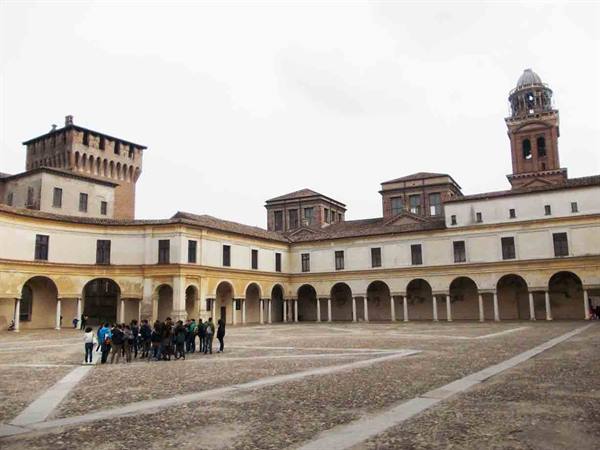
After a little boat trip we disembark near the imposing castle of San Giorgio, from which we begin to "conquer" the town, very rich in art and historical testimonies, for the most part linked to the Gonzaga, the dynasty that ruled Mantua from 1328 to 1707. The castle was built from 1395 on the rubble of a church, and was equipped with four corner towers, a water-filled moat and a drawbridge. The manor was for many years the residence of Isabella d'Este, wife of Francesco II Gonzaga and a famous noblewoman of the Renaissance, known for having wanted numerous artists and humanists at her court, including Andrea Mantegna, Perugino, Leonardo Da Vinci and Ludovico Ariosto.
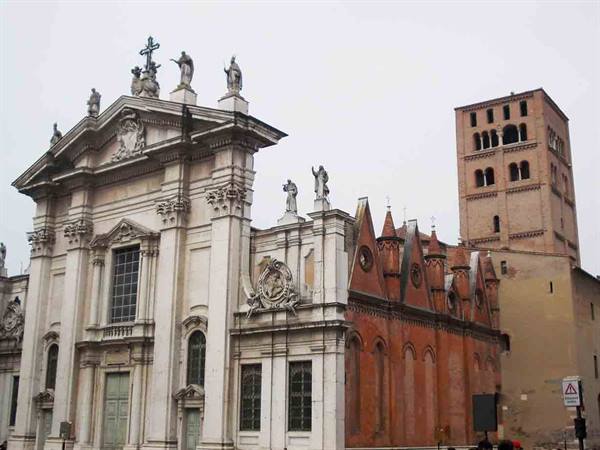
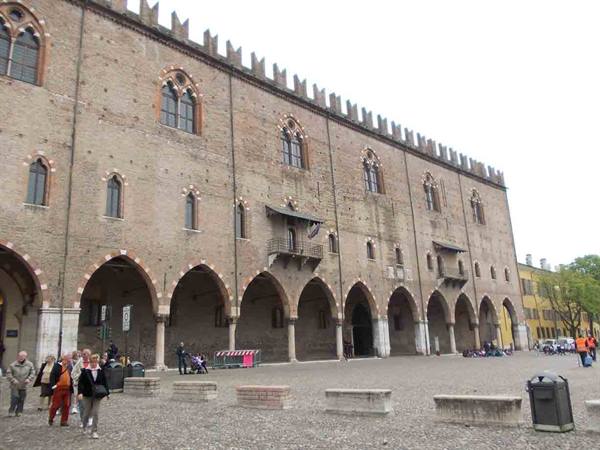
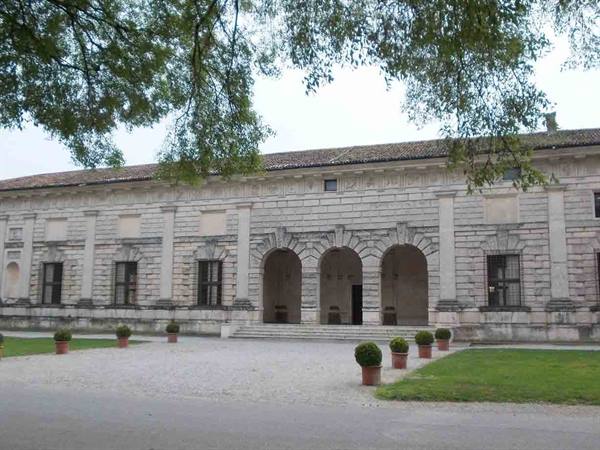
Our walk continues ideally in the court of the Gonzaga, reaching piazza Sordello, the ancient hub of the artistic and political life of Mantua. The immense square welcomes many of the most important monumental buildings of the town, such as the Palazzo Ducale and the Duomo, as well as Palazzo Bonacolsi and Palazzo Acerbi.
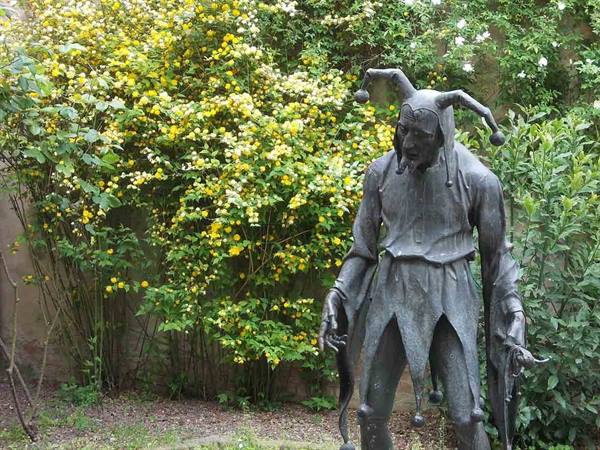
It is not, however, only great lords who "populate" the historic Mantuan square: if you knock on the door of a modest little house behind the Duomo, Rigoletto opens it, at least ideally. There are many children who have their photo taken in the company of the sculpture by Aldo Falchi, depicting the poor jester of Verdi's opera and placed in the romantic fifteenth-century little courtyard, and it is also thanks to that likeable statue that many young people discover and explore the famous opera set in the court of the Duke of Mantua, taken from Victor Hugo's play.
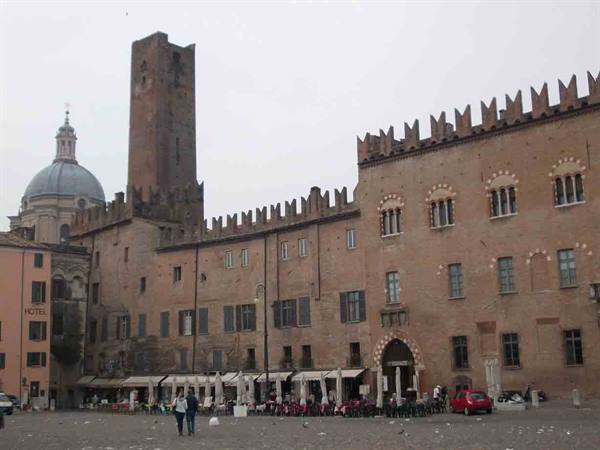
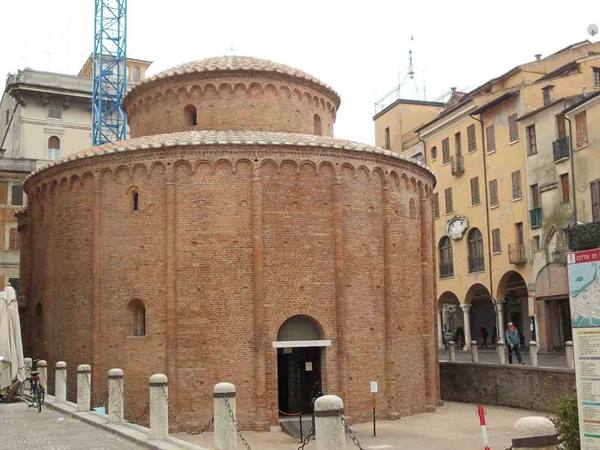
From piazza Sordello we move towards the place that was historically the centre of commerce: piazza delle Erbe, adjacent to the basilica of Sant'Andrea, a work by Leon Battista Alberti. The monuments of this square, including the Palazzo del Podestà, the Palazzo della Ragione, as well as the evocative Rotonda di San Lorenzo and the Torre dell'Orologio, bear witness to centuries of very colourful comings and goings among the merchants' shops and the stalls of the fruit and vegetable sellers.
Beauty and the delicacies to taste: a very apt combination that we also find at the Ristorante LaCucina, in via Guglielmo Oberdan, where we stop for lunch.
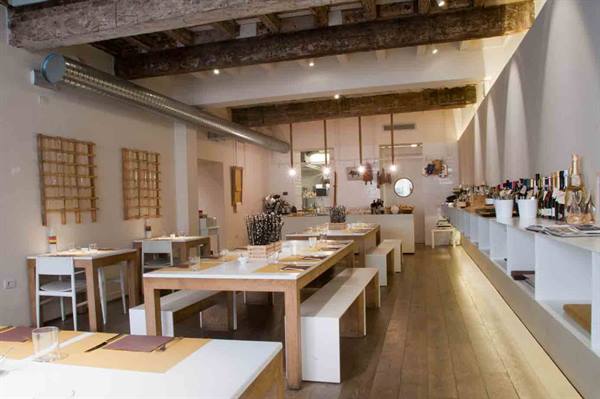
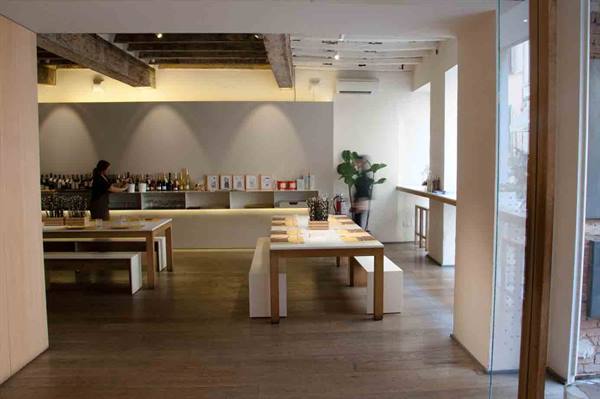
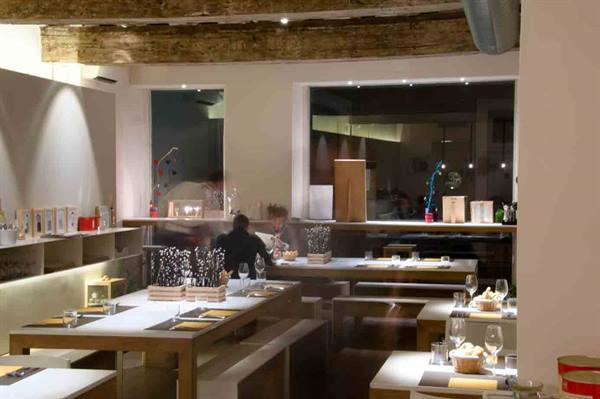
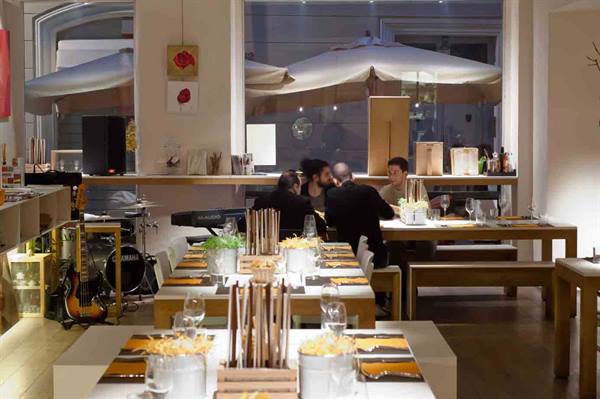
The modern environment, with an international inspiration, strikes us for its style, elegant and informal at the same time. The minimal, beautiful and functional furnishings fit into a bright setting with light colours in which one feels at ease and which, if needed, can become an ideal location also for private parties.
"We opened on 11/11/2011, after a careful restoration of the spaces that before us were occupied by a clothing shop. The credit for creating this original environment, reviewed several times also in important international design magazines, goes to the architect Diego Cisi, of Studio Archiplan of Mantua. Our goal was to reinterpret the traditional concept of cuisine in a modern key. Whoever sits at these long tables, which leave plenty of individual space but allow diners to socialise, feels as if they are in a large kitchen," Luca Zamboni, the owner, explains to us. The project that draws on tradition does not, however, stop at the exterior, quite the contrary.
"The restaurant was born as an expansion of a gastronomic workshop and responds to people's ever-growing need to return to their origins, to simple foods, but prepared with extreme care with ingredients of absolute quality," Luca tells us; he runs the establishment together with the very skilled cook Giorgia. Going to have a look at the open kitchen, we find confirmation of what has been said: the methods used are the traditional ones, starting with the terracotta pots. The dishes are all prepared fresh, using seasonal products. "Our menu changes often, and every day has its typical clientele, so we can range from very traditional dishes to more refined specialities," reveals Giorgia, who has a sense of the trade in her blood and conceives her work as a continuous creative process in which passion, but even her mood, can influence the dish.
"At lunch we offer a deliberately reduced menu, made up of few dishes, among which there is always a vegetarian speciality," they explain to us. The people who come in go directly to the counter and order what they want, as happens in certain London restaurants where the practicality of "fast" eating is combined with the quality of the food.
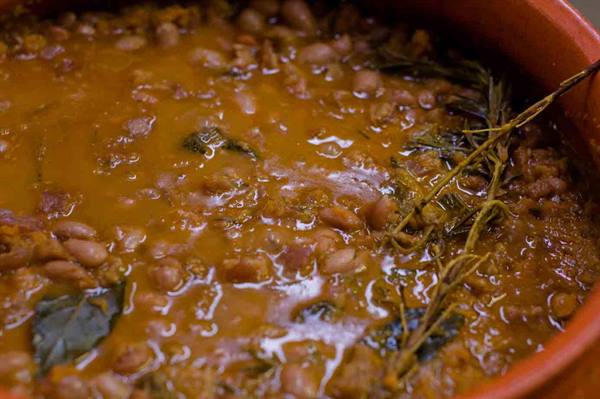
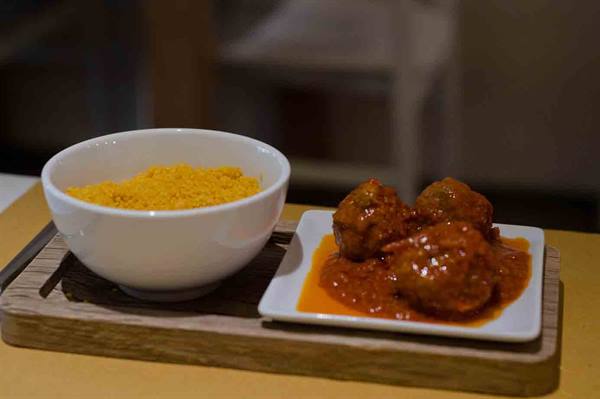
We start with a nice plate of pasta and beans, warm and tasty, but light. We continue with the exquisite curry meatballs (among the flagships of Giorgia's cuisine) served with cous cous, while our vegetarian friend enjoys a soft barley dish with asparagus tips and mushrooms. Finally, a lovely homemade tart.
When, after another long walk in the town, we return to LaCucina for dinner, we find a different atmosphere compared with lunchtime. The informal tone is the same as before, but everything is more intimate, more cosy and relaxing. With the time, the menu changes too, becoming more complete, although limited to a few choices per course, a sign and guarantee of freshness. Among the specialities we find the traditional Mantuan dishes, but also recipes that depart from the typicality of the territory.
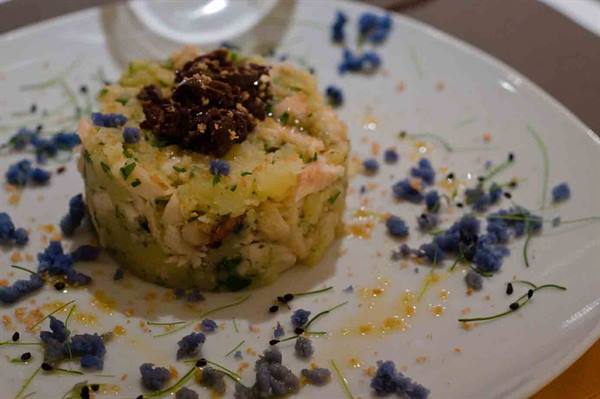
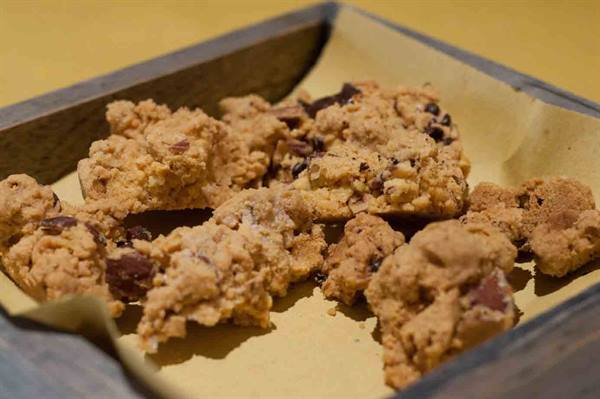
We begin by tasting an exquisite and tender liver pâté, and then the asparagus velouté, served with saffron bread croutons and Parmigiano Reggiano chips. We continue with ravioli with courgettes and ricotta with cherry tomatoes, fresh mint and oregano, and next we taste a lovely tuna tagliata with a salad of green beans and soya sprouts. Some of us, on the other hand, choose the octopus cake with potatoes and bottarga. At the end we delight in the tasty typical Mantuan dessert, the sbrisolona.
Returning to Mantua will always be a great pleasure, not only to immerse ourselves again in the Renaissance atmospheres, but also to enjoy the artistic, musical and literary offerings of the town on the occasion of the live music concerts at LaCucina, or during the days of the Festivaletteratura, which returns every year at the end of summer.
Francesca Bertha
FOR INFORMATION:
LaCucina Via Guglielmo Oberdan, 17 Mantua Tel.:0376/1513735
The journey's photographs
18 photographs · click to open them full screen
0 reader comments