Tripscoop›Europe›ITALY›In the City of Stradivari and Mina: A Day in Cremona Between Music, Art and Good Food
ITALY · Europe
The story
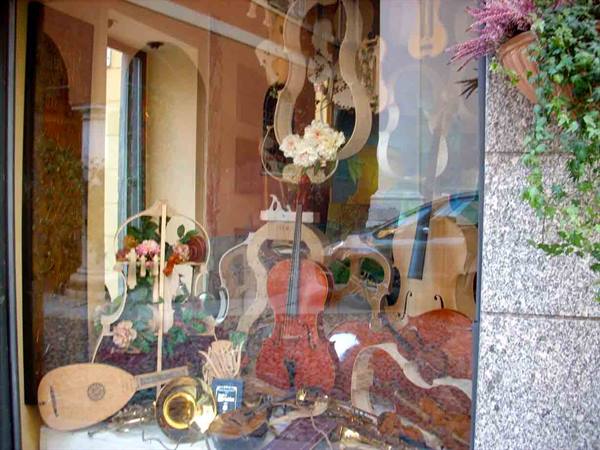
A walk through the historic centre where the voices of freshly built instruments occasionally ring out from the luthiers' workshops: had we arrived here towards the end of the 17th century or in the early decades of the 18th, we could have seen the world's most famous master luthier, Antonio Stradivari, born in Cremona in 1644, at work. The wonderful, unmistakable sound of Stradivari's violins is still the subject of scientific research: the secret of the sound quality they produce may lie in the density of the wood, as well as in the composition of the varnish, which seems to have contained volcanic ash, mineral crystals and even borax, a preservative already used in ancient Egypt. Among the first stops of our visit is the Museo del Violino, where visitors can relive the fascinating history of violin-making through interactive and multimedia displays.
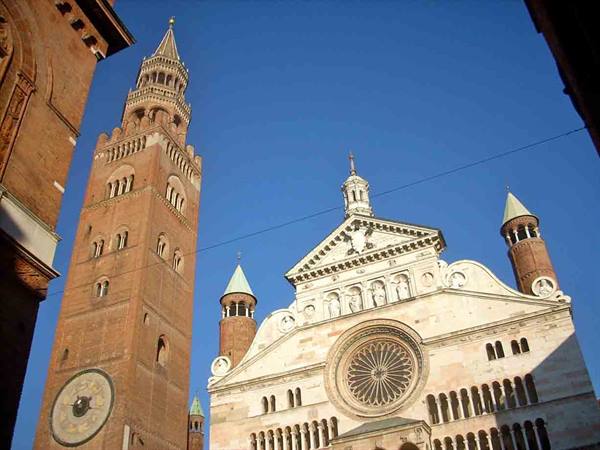
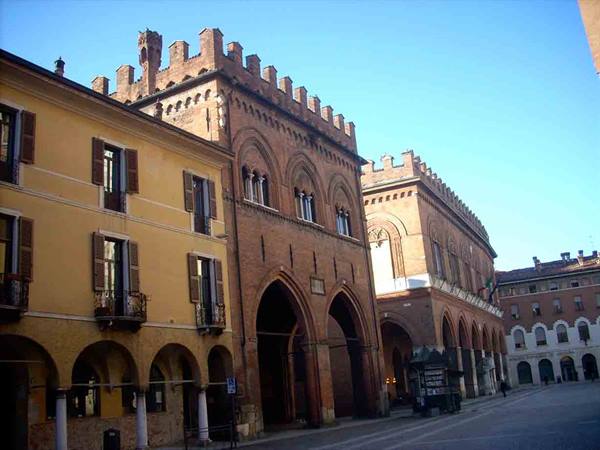
The city of the violin has also given the world of music and art several other great figures, including Mina, known as the Tigress of Cremona, and Ugo Tognazzi. Cremona is also jokingly called the city of the three "t": "turòon, turàss, tétàss", which stands for "torrone, Torrazzo and... buxom women". A less folkloric version of the saying cites Tognazzi instead of the ladies. Walking along the characteristic streets of the centre, it is impossible to resist the call of the first "t": the pastry-shop windows abound with the typical local torrone, as well as with brightly coloured little jars of mostarda. We thus reach the second "t", the Torrazzo, the bell tower that rises towards the sky beside the wonderful Cathedral. It is the symbol of the city and the tallest historic bell tower in Italy: it measures 112.27 metres with no fewer than 502 steps.
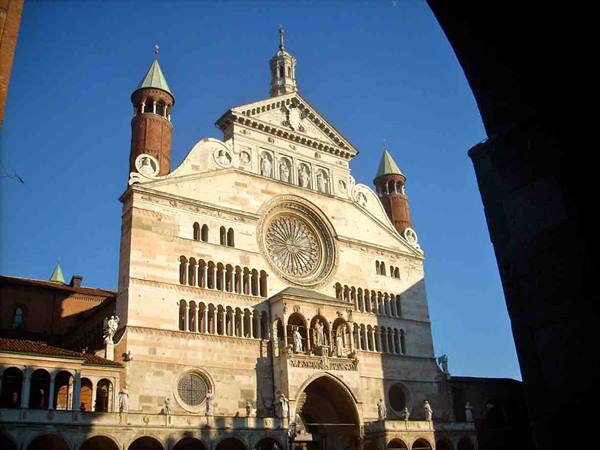
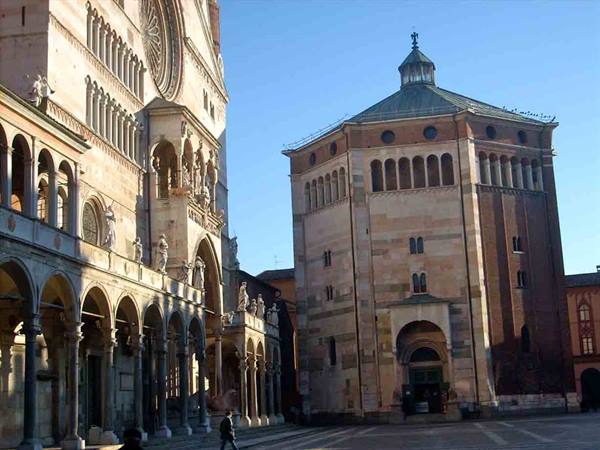
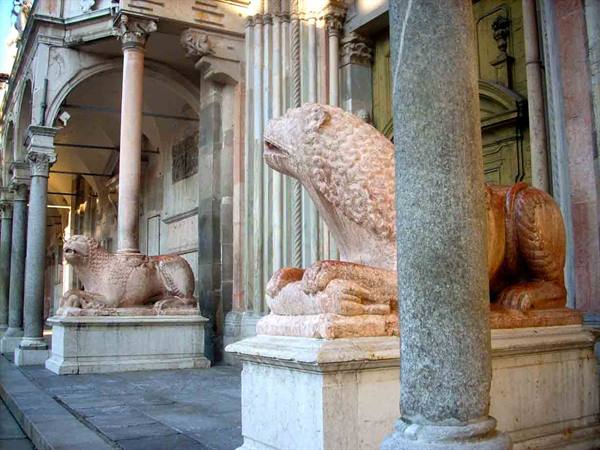
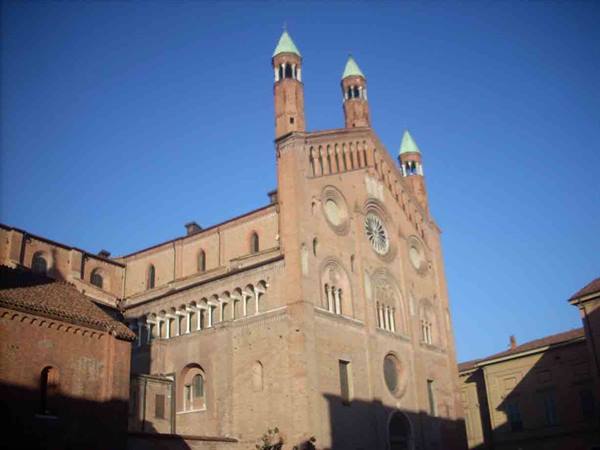
Its first construction dates back to 754 and it was completed in four phases, ending with the building of the marble spire in 1309. On the fourth floor of the Torrazzo is set one of the largest astronomical clocks in the world, built between 1583 and 1588. The people of Cremona can enjoy every day the concert of the seven bells, to which the hour bell is added. Dominating the square is the Cathedral, or Cathedral of Santa Maria Assunta, a vast and stunning Romanesque religious building, repeatedly adapted with Gothic, Renaissance and Baroque elements. Built from 1107, in a period of great prestige for the city, the Cathedral was erected on the highest point of the medieval core, not far from the centre of the original Roman castrum.
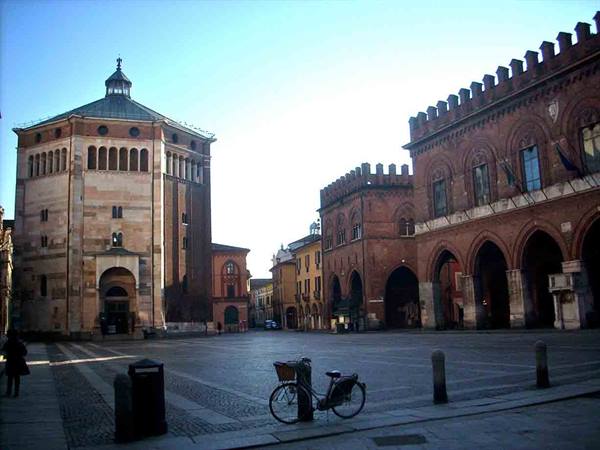
Inside we admire remarkable masterpieces of sculpture and painting, including the "Arca dei martiri persiani", a 15th-century sculpture by Giovanni Antonio Amadeo, and an extraordinary cycle of frescoes spanning from late Gothic to Baroque, making a journey through art so intense and moving that, according to some, the church can be considered the "Sistine Chapel of Lombardy". Next to the Cathedral we visit the imposing Baptistery, whose octagonal plan symbolises eternity, as it is the sum of seven, which represents time, and one, God. Begun in 1167 in brick masonry, it was during the Renaissance era that it took on its current form, partly covered in marble. We also go to the convent of Sant'Abbondio, known for its beautiful cloister and for the cult of the Black Madonna of Loreto, which, it is believed, saved the city from the plague in 1630.
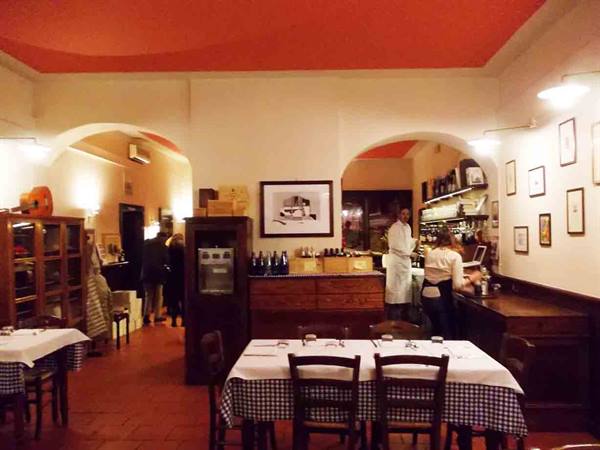
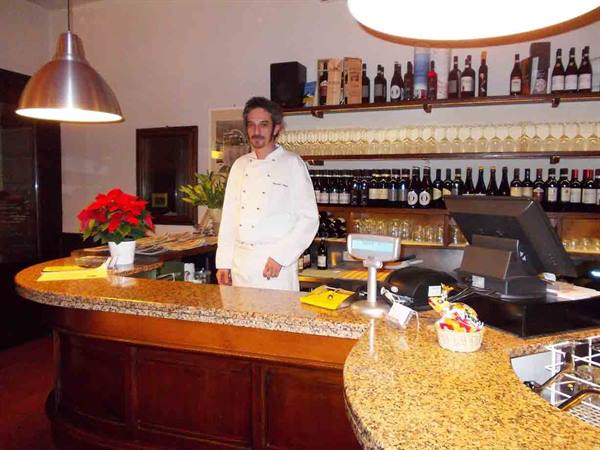
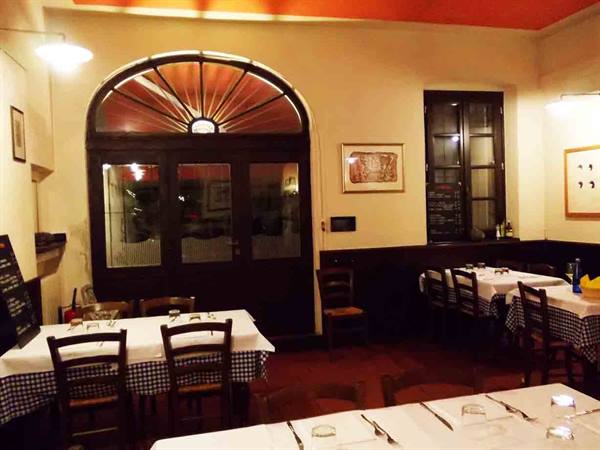
After this fine tour through history and music, we decide to crown the day with a succulent dinner at the Osteria degli Archi, in Corso Venti Settembre. Authentic Cremonese atmospheres accompany us in the characteristic rooms of the venue too: on the wall we notice a cello back autographed by the luthier Francesco Toto, winner of important awards. Welcoming us very kindly is Mr Emanuele Mosconi, the owner who has run the restaurant for two and a half years with great enthusiasm, together with the assistant cook Lorenzo, Nadia in the dining room, helped by Renzo at weekends, and Corazon, the lady who takes care of the cleaning. A chef with a long experience behind him, built up since his studies at the Institute Paul Bocuse in Lyon, an important reference point of French cuisine, Emanuele has spent long periods working around the world, from England to France, from Ireland to Germany.
"I was born in Cremona and after so much travelling I decided to return to my city, creating a blend between local flavours and international influences, able to modernise dishes that in their original version today would be too heavy and sometimes obsolete. I use only and exclusively fresh products, never resorting even to frozen or semi-prepared food. The fish we serve is the fresh catch of the day, and the menu changes periodically according to the seasonality of the products," Mr Emanuele tells us. Indeed, we notice that the menu is written on a blackboard that is not even that big: a varied but limited choice is a guarantee of freshness.
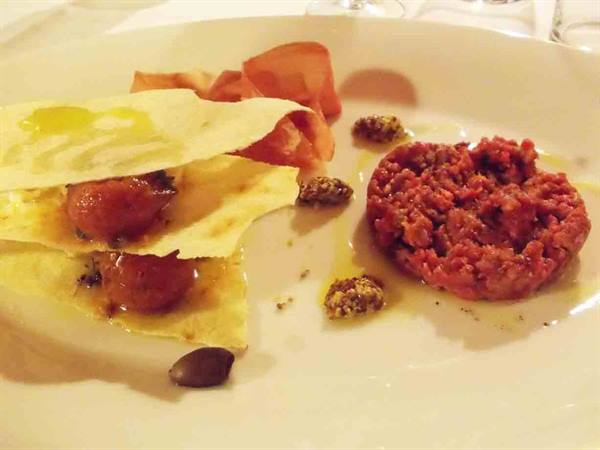
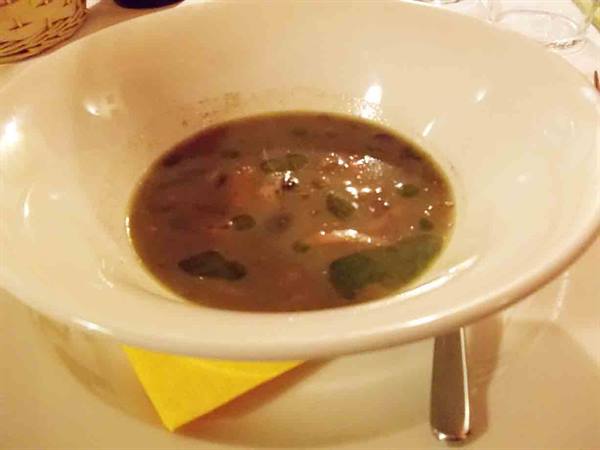
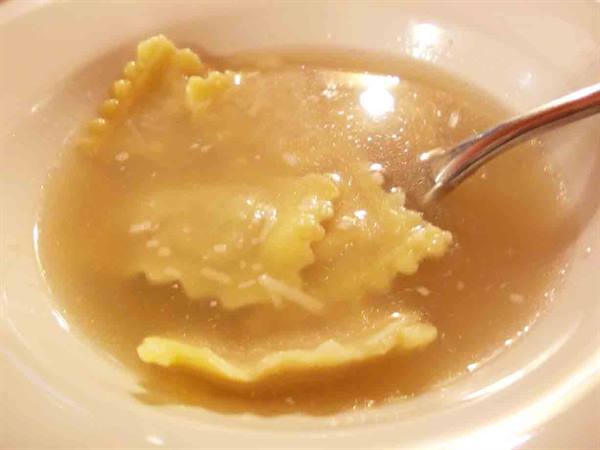
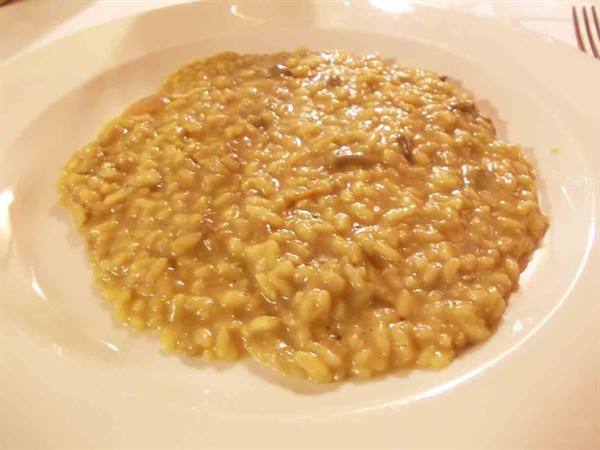
We begin with a rich starter: the beef fillet tartare seasoned with pink grapefruit juice, flake salt, extra-virgin oil and black pepper, with a Dijon whole-grain mustard alongside; the culatta cured in a single piece and the fanciful caprese sbagliata, made with carasau bread, buffalo mozzarella and tasty confit cherry tomatoes. We continue with a warm legume soup with musky octopus, prepared every day with the fresh molluscs available at the fishmonger's. Next we taste a fine porcini risotto, while some of us opt for the typical marubini in broth filled with boiled and braised meat. As we sip an excellent Dolcetto di Calorio, we discover, talking with the owner, that this venue was originally a master coopers' shop, later becoming a shop with wine on tap and then an osteria and bar with a kitchen.
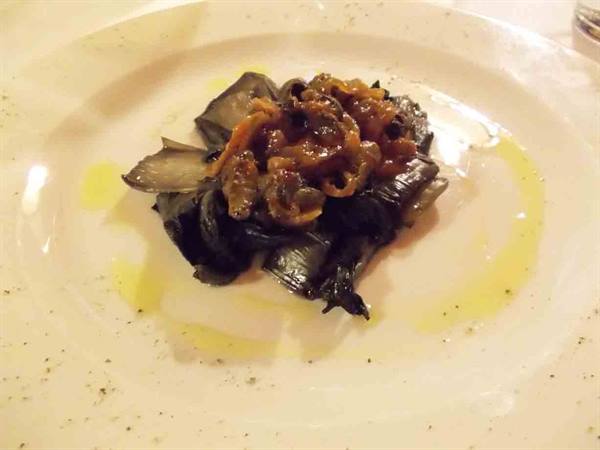
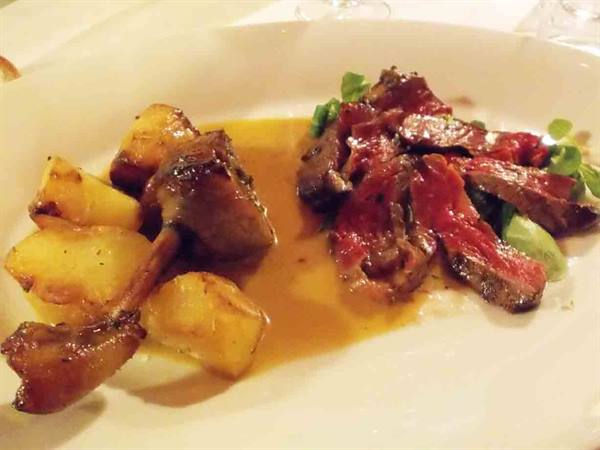
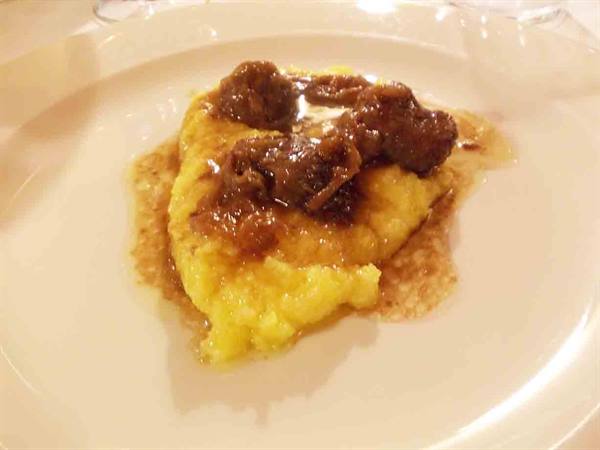
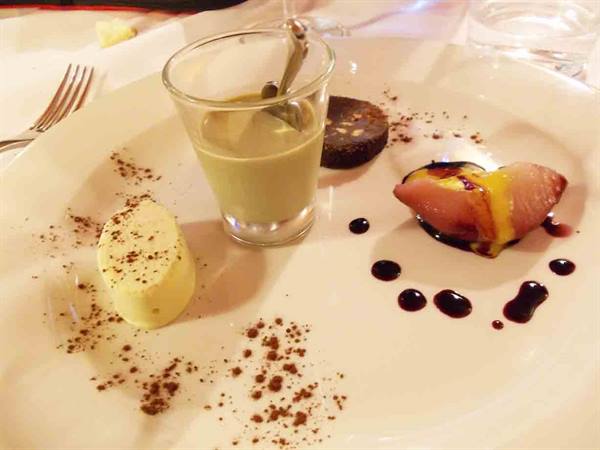
"We source mainly from three Piedmontese cellars, where we have direct contact with the producers; we also have a few labels from Friuli and Oltrepò, and specialities such as the must of Fortana grapes, which pairs very well with cold cuts and was once much used in osterias," Emanuele explains. We accompany the main courses with a Nebbiolo di Ca' Nova, from Barbaresco, but we also taste the sparkling wines of Luigi Coppo, made by four generations using the classic method. Among the dishes we choose an exquisite tagliata and the duck leg with Martini, as well as some particular little snails that feed on artichokes, and the typical, tasty butòon de pajass. The succulent dinner ends with a tasting of tasty homemade desserts, including the Bronte D.O.P. pistachio cremino, the chocolate salami, the pear cooked in red wine and a semifreddo with almond milk.
After this splendid day, and a dinner to make your mouth water, spent perfectly at our ease at an honest price, without even paying the cover charge, we are certain to return here very soon for new outings in the name of music, including live music at the osteria. Playing, once a season, is a group of friends: the singer Alberto Moglia, area manager at a high-profile steel company, the multi-instrumentalist Lorenzo Colace on guitar, the veteran pianist and organist Giovanni Guerretti, who has also played with Cesare Cremonini and Mietta, the bassist Federico Fasani, who is also the town planning councillor of the Municipality of Cremona, and the percussionist Simone Gagliardi on drums.
Evenings when the guitar, on other days placed on a piece of furniture in plain sight, also comes out to play again: it belonged to a musician friend of the owner, and it is proof that in Cremona music never stops.
Francesca Bertha
The journey's photographs
19 photographs · click to open them full screen
0 reader comments