The story
Many centuries ago there was a fisherman who lived on the island of Burano. With his modest boat he made long trips every day out to sea and in the lagoon, braving the bad weather and the fog with courage, always thinking of his beloved waiting for him on the island. Yet it would have been all too easy for him to fall into a fatal temptation: the sirens, each more beautiful than the last, kept trying to lure him with their song. One day the queen of the waves rewarded the man by giving him a beautiful bridal veil created from the foam that rose from the water at the swish of a siren's tail. The friends of the fortunate bride, seized by envy, set about trying to create veils of similar beauty themselves. According to the legend, they thus began the historic tradition of Burano lace, which became famous, in the following centuries, all over the world.
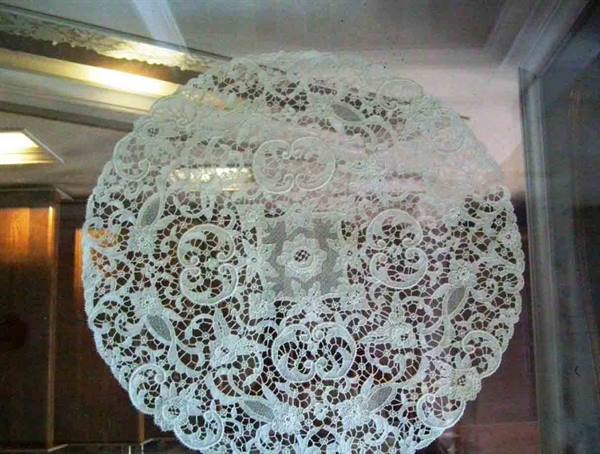
One of the stops on our trip is indeed the Lace Museum, where even very old works can be admired.
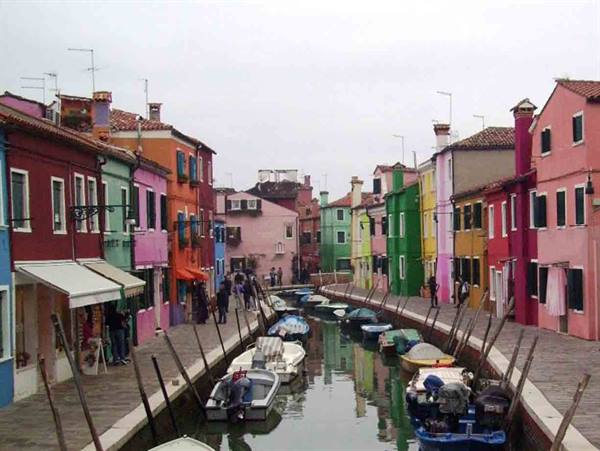
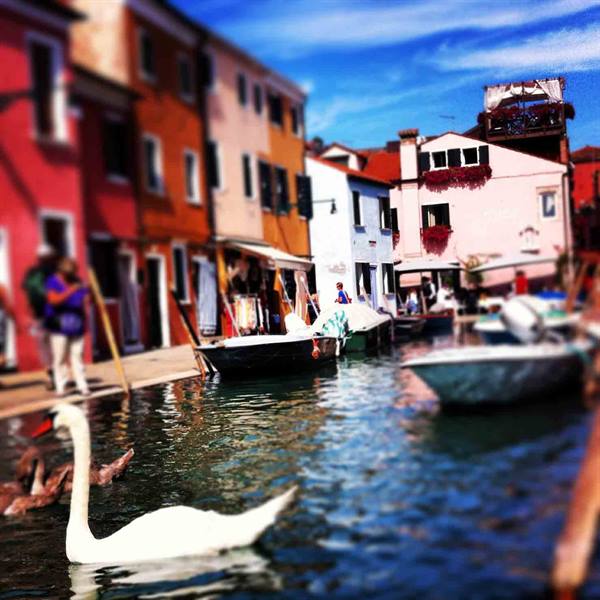
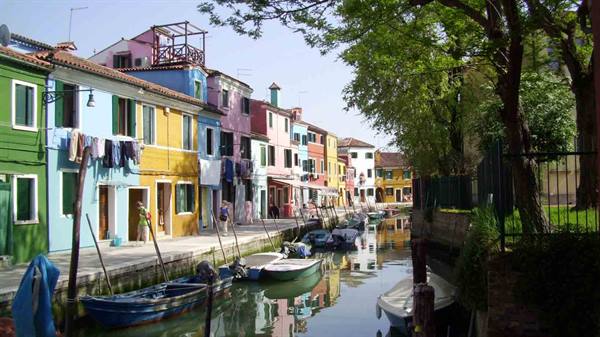
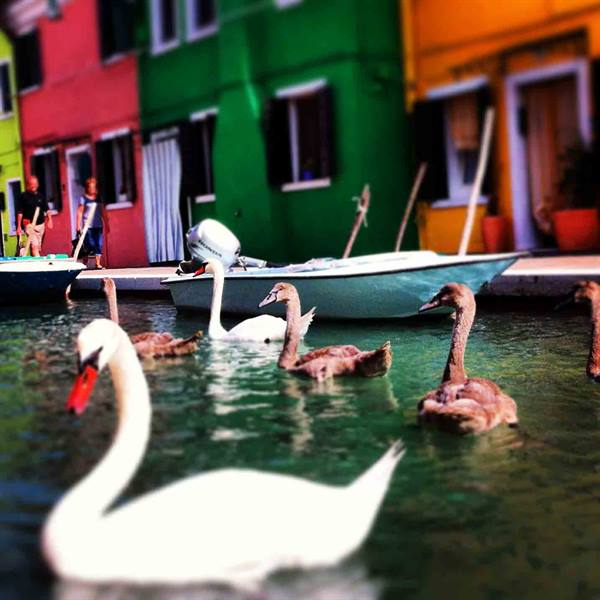
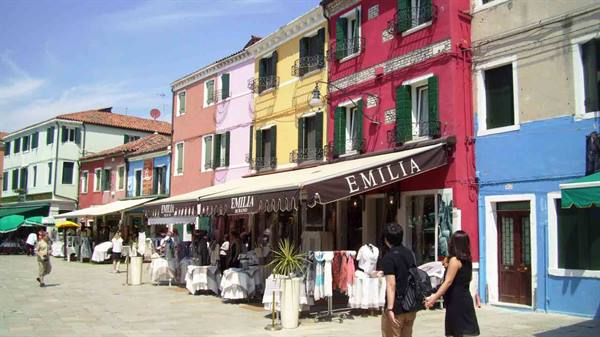
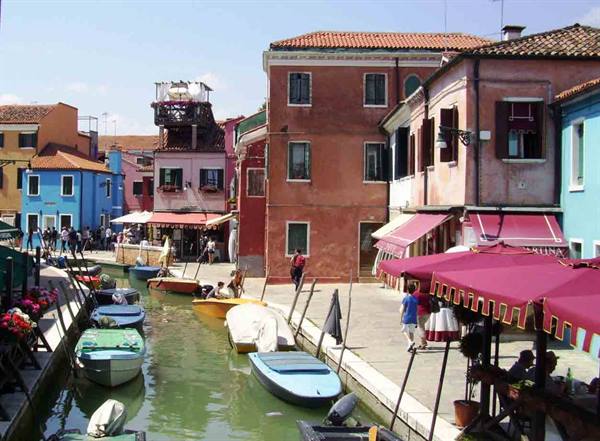
Whether this tale is true or not, we don't know, but the fairy-tale charm of Burano, thanks to its beautiful colourful houses, is enchanting. Walking the little streets of this splendid place, which until 1923 was an independent municipality, is like strolling on a rainbow. They say that in the past each colour corresponded to a family and that throughout the Kingdom of Italy a superintendent's permission was needed to change the colour of one's house. The thousand bright shades that dress the island are also linked to the fishermen: according to one theory, the bright colours of the houses helped the boatmen find their own home in the thick fog.
It isn't only the mystical figure of the queen of the waves who worked a miracle at Burano: the saints did their part too. Indeed, in the year 1000 a great and very heavy stone chest was found floating, which only four children, thanks to the strength of the purity of their souls, managed to pull ashore. The chest contained the bodies of the island's future patron saints: St Albano, St Domenico and St Orso, along with a small barrel of wine at their side. It isn't because of the contents of that “big barrel of St Albano”, today kept at Murano, that the bell tower of Burano's only church, dedicated to San Martino, leans. That feature is instead due to the partial settling of its foundations, built on piles.
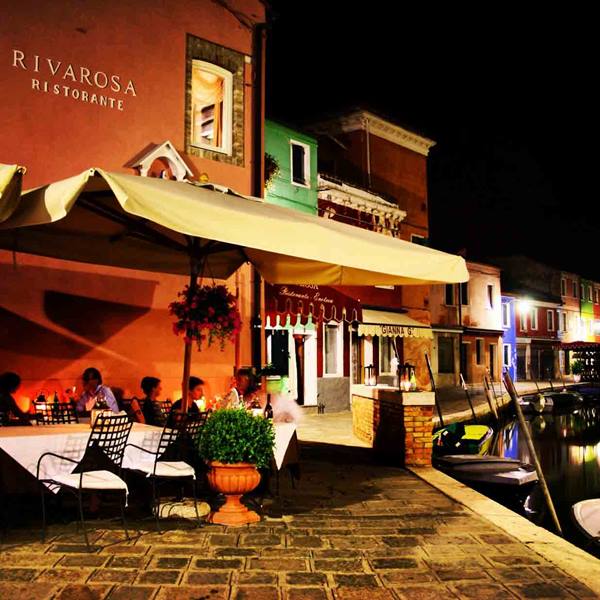
Our day continues in a typical three-storey Burano house, a hundred metres from the boat stop: Ristorante Riva Rosa. A place where the journey through the island's traditions reaches its peak at the table. “This building once housed a convent. Until 2000, before we turned it into a restaurant, there was a workshop of Emilia Burano here, making the island's typical lace,” Mr Lorenzo Ammendola, one of the owners, tells us; he also devotes himself to the historic lace business, designing the patterns to create them and running a museum-shop, with a workshop and a collection of antique lace inside, a few steps from the restaurant. “Catering has always been the great passion of my father Giuseppe, who is at the helm with my brother Andrea and me,” Lorenzo explains, as we settle at our table after a walk amid beauty.
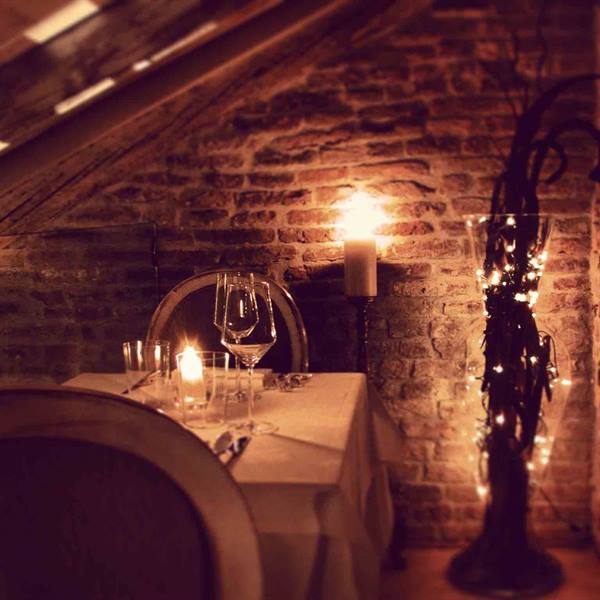
From the outdoor garden with a public fountain, we reached our room admiring various precious pieces of lace, some even from the 15th century, kept in glass cases. From the little balconies multicoloured views open up, while above us is the altana, a coveted space for romantic dinners for two. “We believe in the quality of the true, simple and genuine flavours of the area and prepare every dish to order. Our menu changes with the seasons and according to the day's catch; we use only fresh fish and vegetables from the market gardens of Mazzorbo and S. Erasmo, from which the excellent Orto wine also comes,” Lorenzo explains.
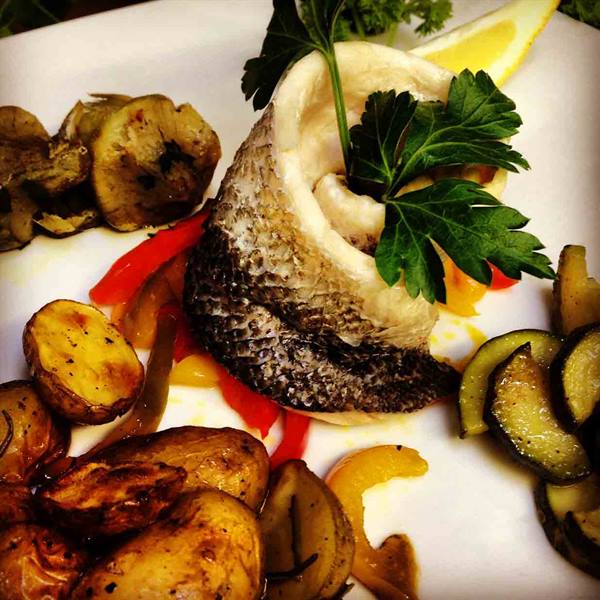
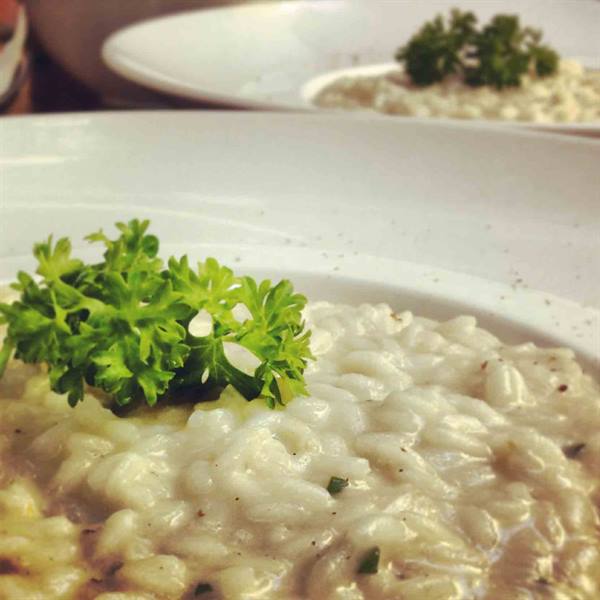
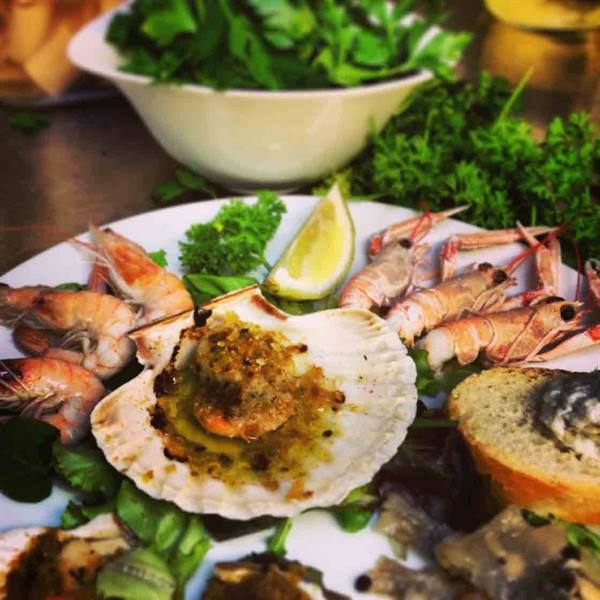
We start with a rich raw-fish tasting, followed by exquisite seafood starters including spider crab served in its shell, oven-baked crab with olive oil and rosemary, and sardines in saor prepared according to an old recipe. Among the first courses we especially like the risotto di Go, typical of Burano: it's made with the small fish called, precisely, “go” in dialect (goby) and with rice grown at Eraclea. Some of us also enjoy the tagliolini in ink with fasolari clams, vongole, mussels, queen scallops, scampi and prawns. We continue with the gran fritto Riva Rosa, which we appreciate very much for its lightness and the variety of products, while our friends can't resist the steamed sea bass fillet with island artichokes.
Finally, we let ourselves be seduced by the homemade desserts, including the “Buranelli” biscuits with zabaglione cream and even Casanova's tiramisu: a “spicy” and sweet touch that rounds off our day of all-colourful pleasure.
Text: Francesca Bertha Consultancy and Burano photos: Stefano Zanus
FOR INFORMATION:
Ristorante Riva Rosa Via S. Mauro, 296 Burano (VE) Tel.: 041/730850
The journey's photographs
12 photographs · click to open them full screen
0 reader comments