Tripscoop›Europe›ITALY›A journey through the colours and flavours of the ancient Serenissima: a day at Rialto
ITALY · Europe
The story
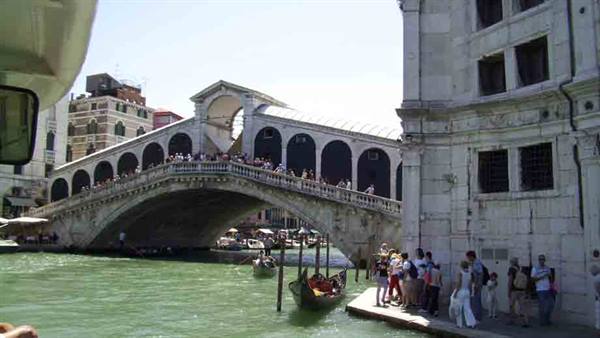
One of Italy's symbolic monuments, which almost everyone in the world has seen at least in photographs, is the Rialto Bridge, in the heart of Venice. Countless writers and travelling poets devoted splendid lines to this historic district, including Goethe, Stendhal and Hemingway. Not only that: Giacomo Casanova too, between one adventure and another, used to stop in the area's osterie.
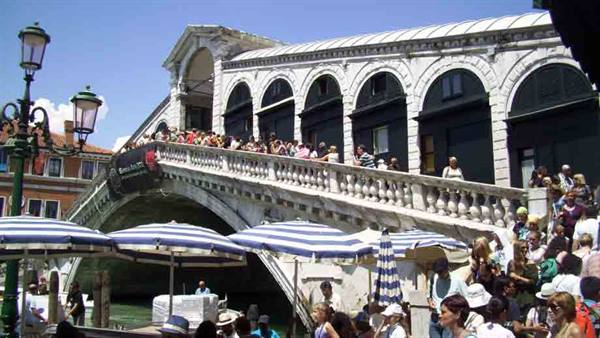
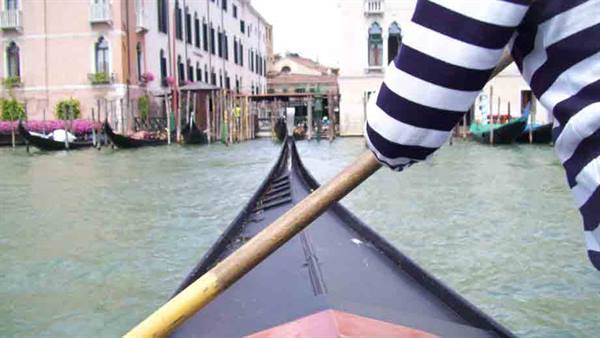
Today's tourists, caught up in wonder as they admire the splendid noble palazzi and the elegant whiteness of the bridge, perhaps don't even realise they are in a veritable archipelago: indeed, the first records of the district date back to the time of the Hun and Lombard invasions that led to the birth of Venice Marittima, an era in which refugees from the mainland found shelter on the Realtine Islands, a group of dry lands around a narrow bend of the Rivus Altus, that is the “deep channel”, known as the Grand Canal. The bridge we admire today was completed in 1591, and before that date even reaching the other bank was, at times, a challenge. The first crossing of the Grand Canal was a floating bridge, made of boats, built in 1181 by Nicolò Barattieri, who also made the two columns in St Mark's Square.
They called it the Ponte della Moneta because of the nearby mint, and soon that construction also took on a symbolic meaning, that of linking distant peoples through the flavours, scents and colours of a myriad of products that arrived here from every part of the world aboard galleys and were traded at the famous Venice market, which was moved to Rivoalto in 1097. The area around the church of San Giacometto became ever more important, in 1107 also becoming the seat of the Patriarch of Grado.
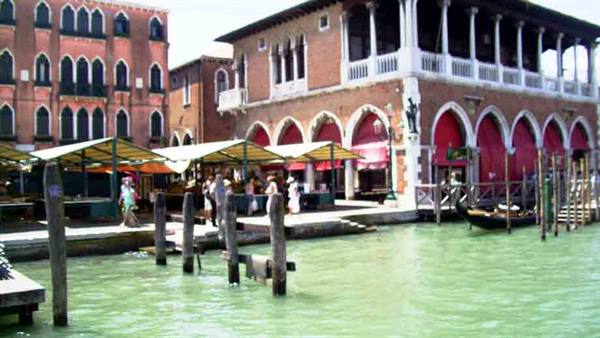
A little wander around the historic market is an emotion today as it was hundreds of years ago, and strolling among the colourful stalls, amid a thousand voices in Venetian and many other languages, it's easy to daydream, thinking of the times when people, doing their shopping at the erbaria, the naranzeria, the casaria or the pescaria, that is in the market's most traditional areas, crossed the bridge, which since 1250 was a structural wooden one, the same one we can admire in the famous painting by Vittore Carpaccio devoted to the Miracle of the Cross at Rialto. At the “Ruga dei Oresi” jewels were bought, at the “Ruga dei Spezieri” the precious spices of the Orient, lands from which also came the silks and fabrics sold in the “marzarie”, that is the haberdashers.
In 1444 the wooden bridge, already battered by a revolt, collapsed under the weight of the great crowd present for the passage of the procession of the Marquis of Ferrara's bride. It was rebuilt, but collapsed again in 1524.
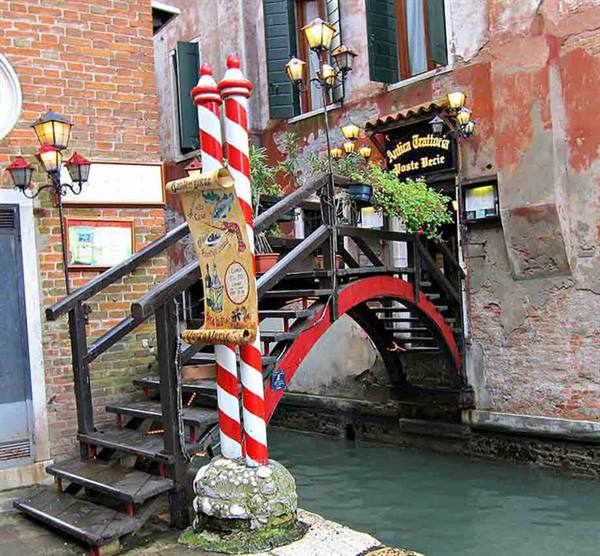
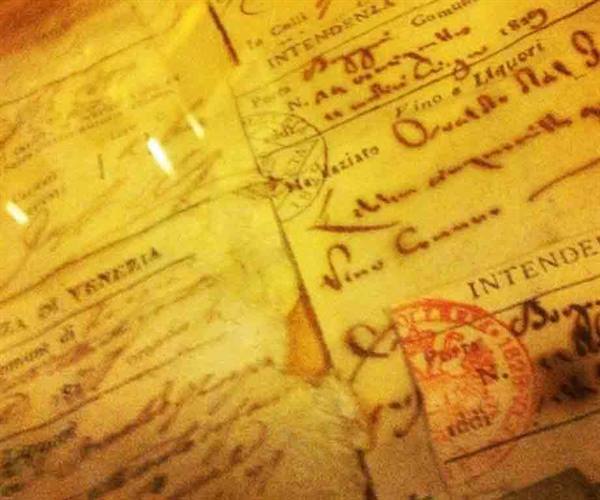
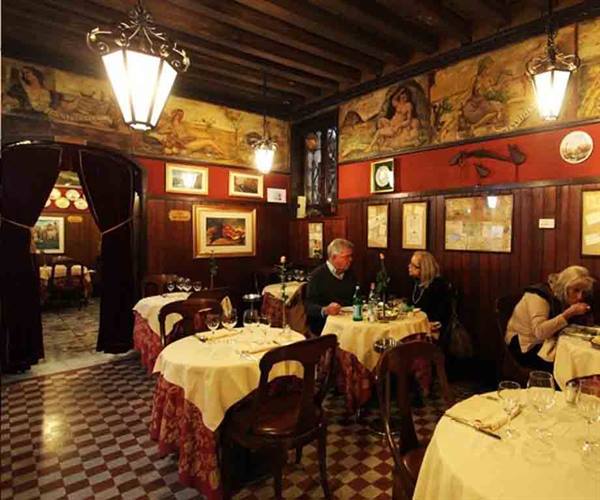
We don't know for certain, but it seems likely to us that many of the letters in which the details of the bridge's reconstruction were agreed passed through the halls of the old post office, the same ones that since 1500 have housed the Antica Trattoria Poste Vecie, where we decide to stop for dinner. We are in the most fitting place to continue our walk through the history of the Serenissima in spirit: indeed, this is the oldest restaurant in Venice. Here in the past there was the frantic work of sorting Venetian mail and still today, inside the characteristic little rooms, you can admire letters, seals and period coins, perfectly preserved.
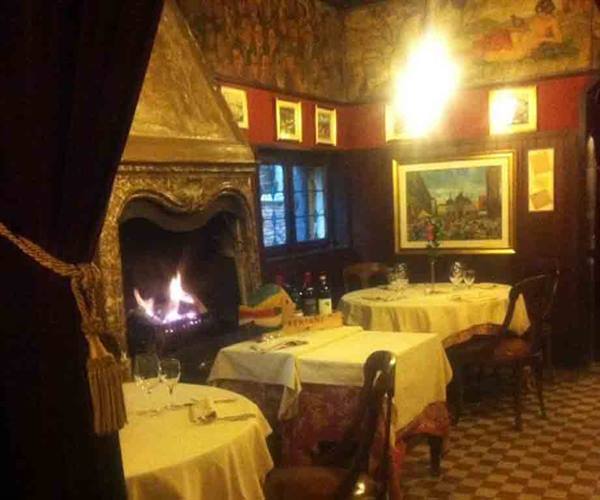
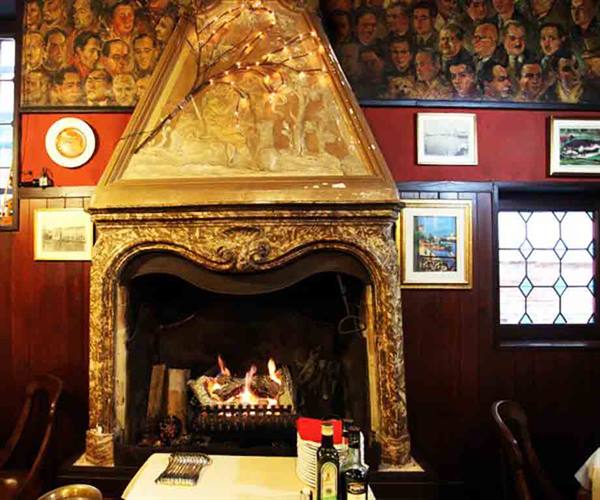
We settle in the first of the two historic rooms, steeped in the atmosphere of the ancient Serenissima, also thanks to the 16th-century fireplaces, still working. Besides the flavours of good cooking, we're also delighted by the sight of unique artworks: we are, in fact, in the Room of Vices, so called because its precious frescoes depict the seven deadly sins. In one image are also portrayed the members of the Poste Club who, around the turn of the 20th century, discussed art and politics right here, sipping a good glass of wine and eating Venetian cichetti.
The restaurant is set within the historic Rialto market, so the freshest fish always arrives at the tables, along with seasonal vegetables. The rest of the wonders on the table are the fruit of the chefs' inspiration, who prepare first-rate ingredients above all in the spirit of Venetian tradition. Among the delicacies we enjoy are baccalà mantecato, as well as spider crab and cuttlefish Venetian-style, along with many other specialities that we wash down with the excellent white wine Orto di Venezia, which is made on an island in the lagoon.
We'll certainly be back here soon, also to spend lovely evenings in the outdoor garden, and every dinner will be a new exciting voyage on the galleons of the Serenissima.
Text: Francesca Bertha Consultancy and photographs: Stefano Zanus
FOR INFORMATION:
Antica Trattoria Poste Vecie San Polo, 1608 30124 Venezia Tel.: 041/721822
The journey's photographs
13 photographs · click to open them full screen
0 reader comments