Tripscoop›Europe›ITALY›In the footsteps of the Sun King, among mystery, art and good food: a day in Pinerolo
ITALY · Europe
The story
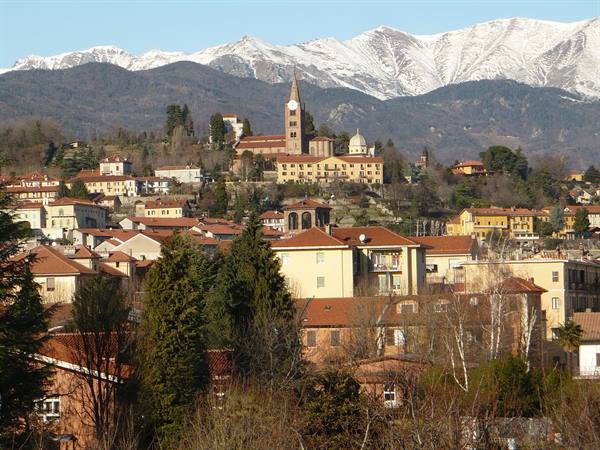
For the Ligurian writer and educationalist Edmondo de Amicis, Pinerolo was the most beautiful city in Piedmont. What fascinated him was its position at the mouth of two beautiful valleys at the foot of the Cottian Alps, in front of a vast plain from whose lush green white villages emerged. The natural beauties of the place had already struck the Latin-Barbarian populations who inhabited it many centuries ago: indeed, the toponym Pinarolius, from which Pinerolo derives, dates back to the year 1000 and clearly refers to the pines. Just over thirty kilometres from Turin on the road to Sestriere are enough to find ourselves immersed in these authentic Piedmontese atmospheres, in which the charm of the landscape is joined by the mysterious one of history, and immediately it is like being inside a novel by Alexandre Dumas.
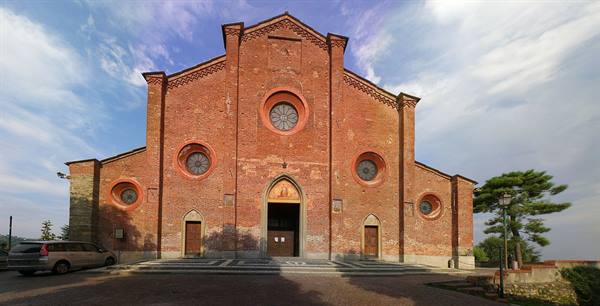
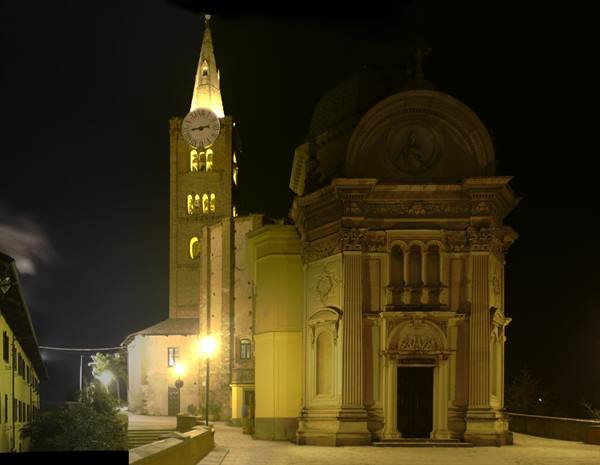
The first destination we reach in the city is its oldest nucleus, which rises on the slopes of the San Maurizio hill, dominated by the remains of the Citadel. Here we visit the Basilica of San Maurizio, already mentioned in 1078 and with a late Romanesque bell tower from 1336. Inside we admire several 15th-century frescoes, as well as a painting from 1743, the Ascension of Jesus. Set just a few decades earlier is the most mysterious story of Pinerolo, which inspired both Voltaire and Alexandre Dumas senior: it is the legend of the Man in the Iron Mask, to which a historical re-enactment is dedicated every year at the end of October. Towards the end of the 17th century there was in the Citadel of Pinerolo a very particular prisoner whose identity has never been established.
The strange character enjoyed special treatment, had good food and quality clothes, but could not speak to anyone and always had to wear on his face a mask of black velvet with metal edges: hence the name Man in the Iron Mask. One of the possible hypotheses regarding his identity is the one accredited in Dumas's novel "The Vicomte of Bragelonne": the man with the Iron Mask, who in 1698 was transferred to the Bastille, may have been the twin brother of Louis XIV. According to others, he was instead the king's natural father. However things went, the Sun King, when in 1696 Pinerolo was recaptured by the Savoys, before leaving blew up the citadel and the castle, leaving this chapter of history shrouded in mystery.
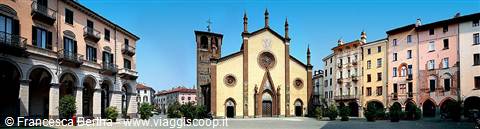
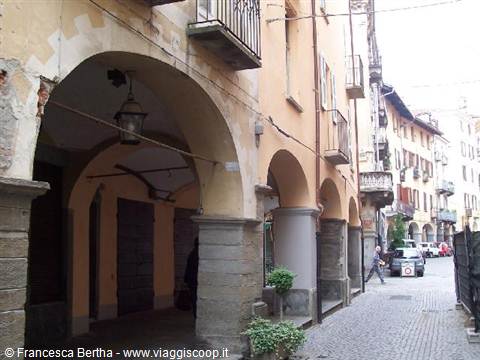
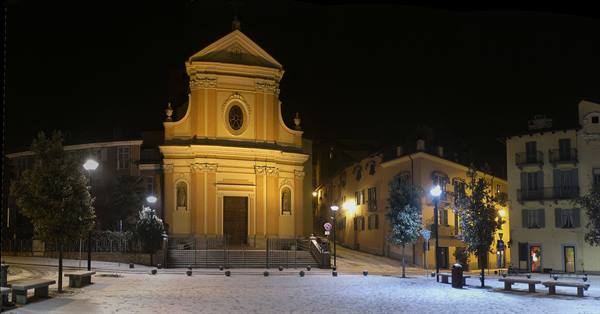
Strolling through the streets of Pinerolo you may even feel like you are on a film set: several films have mentioned this city, including "Cavalleria" with Anna Magnani in 1936, "Fantozzi contro tutti" and "I nuovi mostri" with Alberto Sordi, who introduces himself to some soldiers as a cavalry second lieutenant from Pinerolo. Wandering in the centre we admire several other splendid religious buildings, including the Sanctuary of the Madonna delle Grazie, which dates back to 1584, and the Duomo, dedicated to San Donato and already mentioned as far back as 1044. Its 15th-century bell tower, left unfinished, was in the Middle Ages a civic tower. We also visit the Baroque Church of Santa Croce, and several of the many museums, including the Museum of Prehistoric Art, the Civic Art Collection and the Historical Museum of the Cavalry Corps.
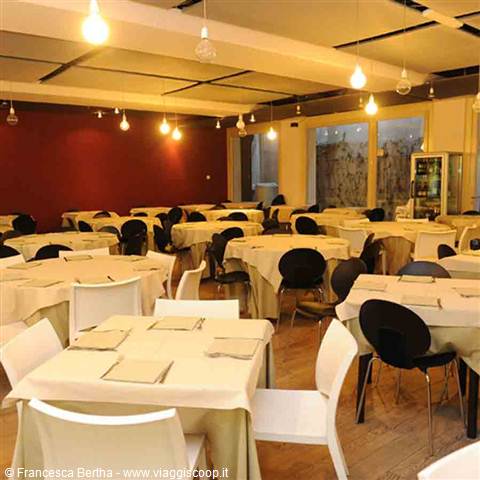
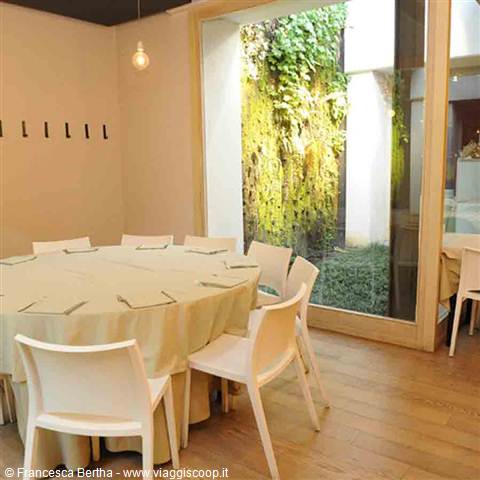
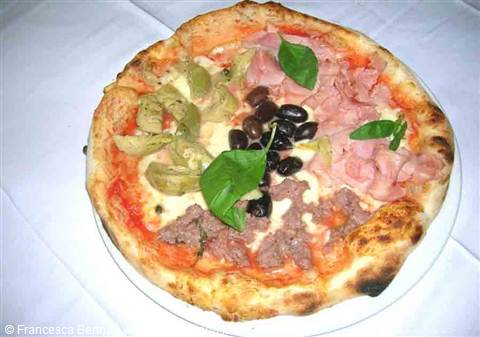
After this long walk among the beauties of Pinerolo, we are very pleased to crown the day with a succulent dinner at the Ristorante Filodendro, in Stradale Orbassano, located in the building of the Hotel Cavalieri. We settle into the vast underground room, restored with great care and elegantly furnished: features that do not escape a friend of ours looking for a location to organise her baby's baptism. Exchanging a few words with the owner, Mrs Liliana, we discover that we can taste not only specialities of the North, but also a series of authentic Neapolitan dishes, starting with pizza. "One of our strengths is the typical Neapolitan pizza with high edges, filled with products from Campania," she explains. Part of our group, in fact, chooses without hesitation the fantastic Neapolitan pizzas, while the others dedicate themselves to the restaurant's specialities.
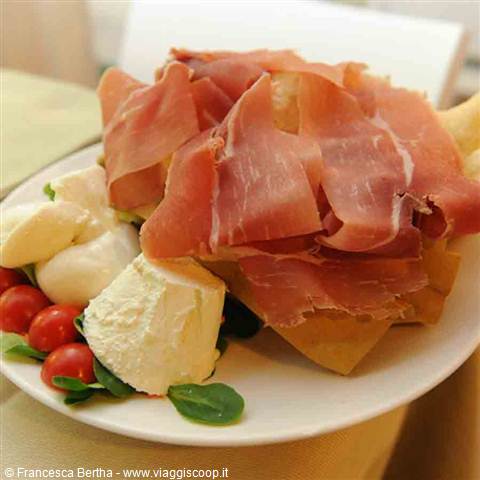
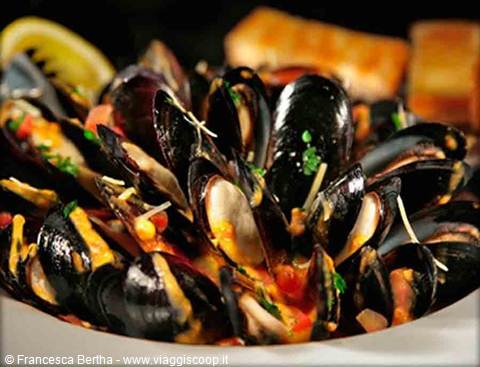
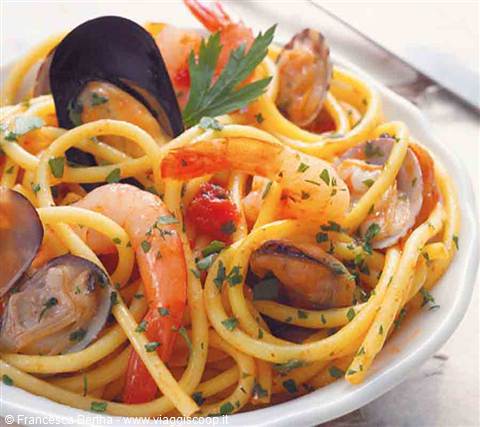
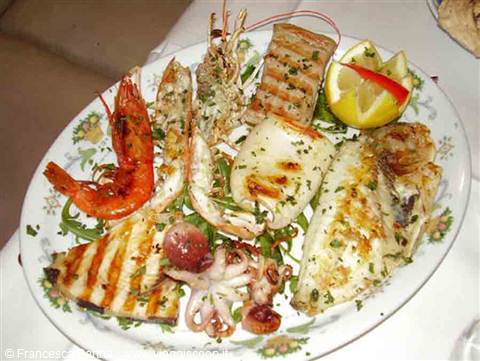
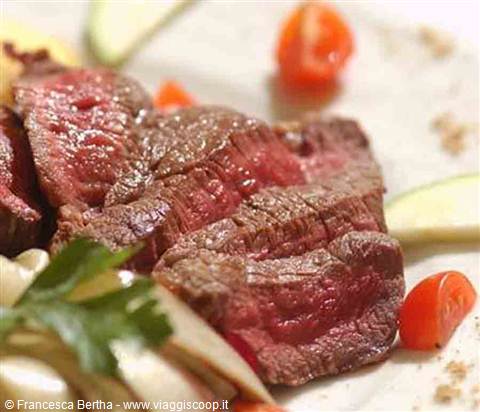
We start with fried gnocco with raw ham and a trio of fresh cheeses, as well as an exquisite warm seafood salad and the peppered mussels. Among the first courses we cannot resist the spaghetti allo scoglio and the spaghetti with clams, but we also taste with great pleasure the paglia e fieno tagliatelle. We continue with skilfully cooked main courses, including an exquisite grilled fish and, for the "carnivores" of the group, the excellent Argentine tagliata. After this lovely day we are certain to return here as soon as possible, and we think that if the mysterious historical figure with the unknown face could have enjoyed such a good dinner, he would certainly have taken off his iron mask to thank us with a smile.
Francesca Bertha
FOR INFORMATION:
Ristorante Pizzeria Filodendro Strada Orbassano, 23 Pinerolo (TO) Tel.: 0121/378141
The photographs of the city are the work of Iron Bishop, with the exception of the following: View of Pinerolo (by Francofranco56, public domain), panorama of the city and view of the centre, taken from the Municipality's website. Iron Bishop's photos come from Wikimedia Commons and are published under the Creative Commons - "Attribution Share Alike 3.0 Unported" licence.
The journey's photographs
14 photographs · click to open them full screen
0 reader comments