The story
In the 1520s there was a fifteen-year-old boy named Andrea di Pietro, who, after eighteen months as an apprentice stonemason in Padua, began attending the workshop of the sculptor Girolamo Pittoni in Vicenza. Everyone noticed his skill, and indeed the young man was enrolled in the Guild of Masons by the age of sixteen. After more than a decade of study, his meeting with Count Gian Giorgio Trissino, poet and tragedian, changed Andrea's life, starting with his surname: his mentor gave him the lofty nickname Palladio, beginning to guide him in his studies. Discovering the beauties of Vicenza is a journey into the art of Andrea Palladio, the most important architect of the Republic of Venice, to which Vicenza belonged from 1404 to 1797, living the happiest and most fruitful period of its history.
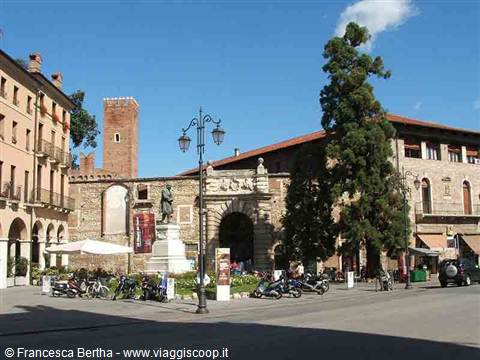
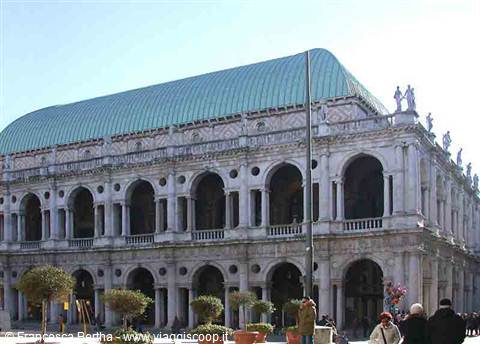
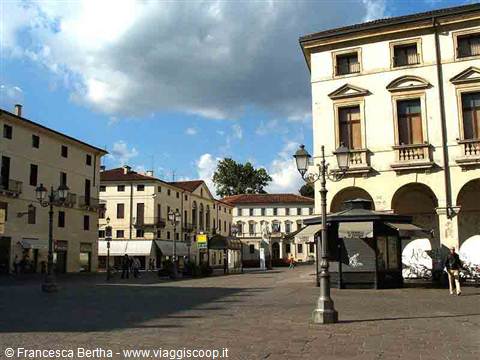
Today the buildings he designed, which aroused the admiration even of Goethe and Salvador Dalí, are a UNESCO World Heritage Site. One of the main destinations of our walk in the city dominated by Monte Berico and crossed by several rivers that allowed the settlement of Paleo-Venetian populations as early as the 6th century BC, is the Basilica Palladiana, the city's most famous public building. Facing the very central Piazza dei Signori, it was the hub of political and economic activity as early as the Middle Ages, as it was after the Palladian reconstruction from 1549. Beside the Basilica our gaze is invited to fly upwards following the thirteenth-century Torre Bissara, 82 metres tall and a survivor of the devastating 1347 earthquake.
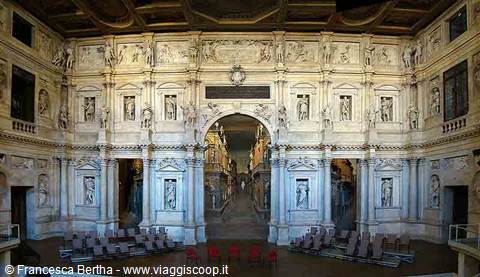
We also visit the Teatro Olimpico, which Palladio designed also using studies of the Teatro Berga, the city's first Roman amphitheatre, of which ruins were still visible at the time. Construction of the Teatro Olimpico began in 1580, the year in which the great architect died. Wandering around the centre we discover that Palladio's name is also linked to two other symbols of the city: the Gioiello di Vicenza, which he designed, and the Rua. The first was a model of the city of Vicenza, made of silver plates in 1578 and considered one of the masterpieces of the city's thousand-year goldsmith tradition, destroyed by the Napoleonic government. The Rua, that is "Wheel", was a wooden pyramid-shaped tower with a large wheel set in its centre.
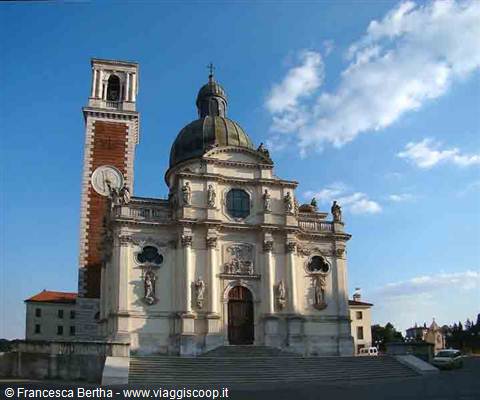
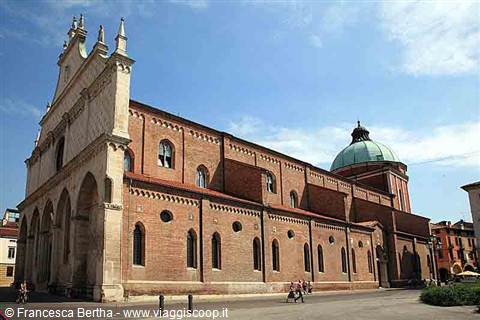
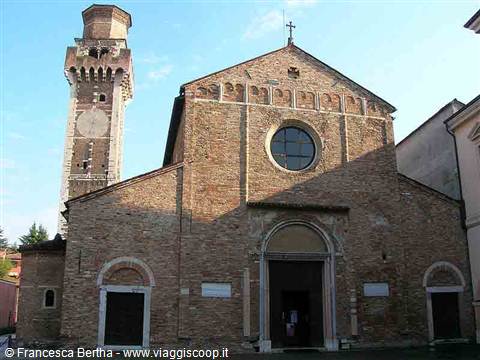
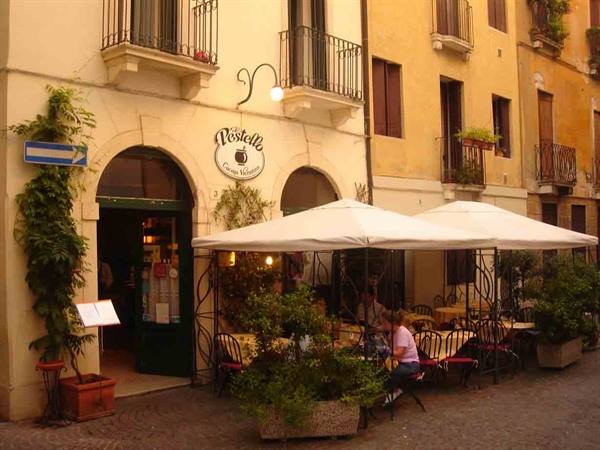
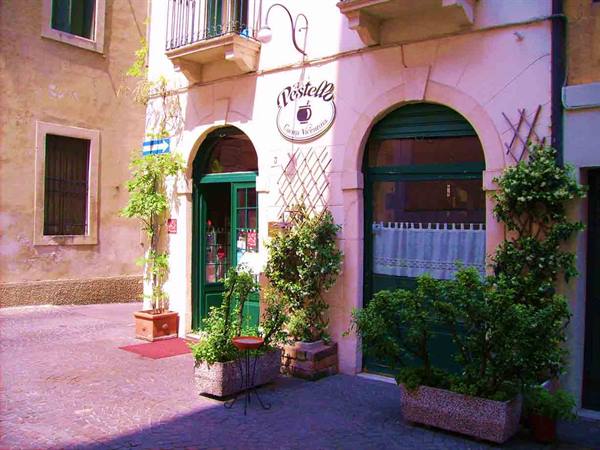
In 1944 a bombing destroyed it, but in 2007 it was rebuilt, and the historic "Giro della Rua" was also restored on the occasion of the feast of the patron saint, the Madonna of Monte Berico. Among the many splendid religious buildings we visit there is, besides the Cathedral, the very Sanctuary of the Madonna of Monte Berico, built as two churches on the site of two apparitions of the Madonna to a peasant woman in 1426 and 1428. We remain in the historic heart of the city for dinner too, settling at the tables of the Ristorante Al Pestello, beside the Church of Santo Stefano, founded in the 12th century and built starting in 1695.
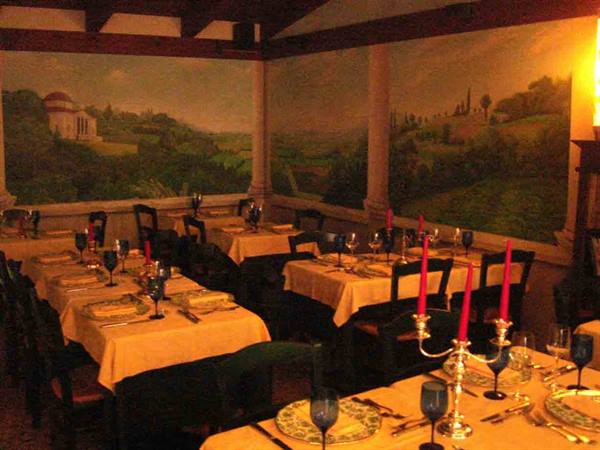
"A tavern has existed in this place since 1910; in fact Al Pestello is one of the 1,300 Historic Italian Businesses," Fabio Carta, sommelier and owner of the restaurant since 1986, tells us; he runs it together with Marco Majoli, who heads the kitchen with "his girls". "When I arrived, the place was a simple neighbourhood bar, which I decided to turn into this elegant trattoria whose kitchen is constantly in search of 'Vicenza-ness' in its recipes and raw ingredients," Fabio tells us. Even before tasting the dishes in which traditional flavours are enhanced by contemporary pairings, we immerse ourselves in the charm of Vicenza's culture thanks to the menu written in dialect. We start with the bresaola "sweets" with a light grappa aroma, and we also taste the sopressa vicentina with grilled pears, as well as the prawn-tail salad with chickpea cream.
After these exquisite starters we continue with the typical bìgoli with duck, the strugolo filled with trout and crunchy celery, the traditional gargàti, that is short maccheroni with a coffee aroma in a white pork ragù, and we are introduced even to the court of the King of the forest with black truffle from the Berici, that is the tagliatelle made from chestnut flour. We wash these delicacies down with excellent local wines, following the old proverb: "the kitchen eats the cellar". Among the many dishes we opt for the fantastic polenta and baccalà alla vicentina (not by chance Al Pestello is part of the "Baccalà Restaurants" chosen by Vicenza Qualità). We also taste the pastissada de cavàl, the snails stewed alla vicentina and the beef braised in Cabernet from the Colli Berici.
Our friends can't resist either the guinea fowl breasts with black truffle sauce and the donkey stew with Tocai Rosso. There is still so much for us to discover in this wonderful city, where we will certainly return, also to delight again in the good cuisine of Vicenza.
Francesca Bertha
FOR INFORMATION:
Ristorante Al Pestello Contrà S. Stefano, 3 Vicenza Tel.: 0444/323721
The photos of the city come from Wikimedia Commons and are published under the Creative Commons licence - "Attribution Share Alike 3.0 Unported".
The journey's photographs
10 photographs · click to open them full screen
0 reader comments