The story
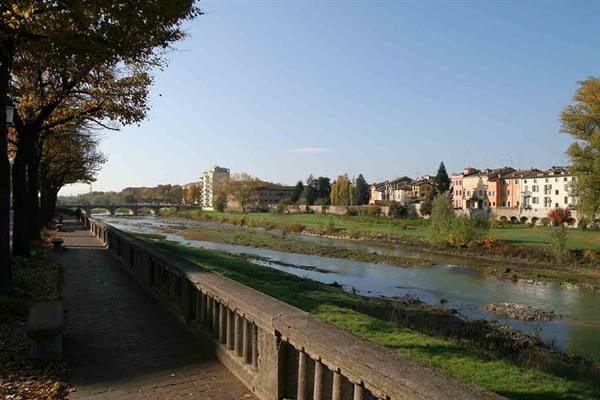
For many people the desire to visit the ancient capital of the Duchy of Parma and Piacenza is born after reading Stendhal's famous novel, “The Charterhouse of Parma”. The romantic atmospheres of the book, among which the scenes in which Fabrizio Del Dongo, imprisoned in the Farnese Tower, feels ecstatic at being able to admire from his cell not only the chain of the Alps, but also a window where from time to time the woman of his desires appears, have made millions of people dream. Arriving in Parma, a city crossed by the torrent of the same name and inhabited since the Bronze Age, the first monument we start looking for is precisely the Charterhouse. To our great surprise, we find as many as two. The complex of the Certosa di San Girolamo, known as the Charterhouse of Parma, which stands in the San Lazzaro district, was for half a millennium a monastery of Carthusians.
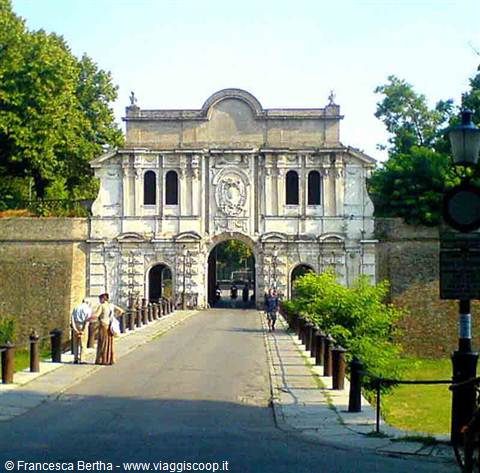
The abbey that inspired Stendhal's novel, however, is another one: the Certosa di Paradigna, built from 1298 and also known as the Abbey of Valserena or of San Martino de’ Bocci. Approaching the old town, we discover that the city was surrounded by ancient walls and that some of the gates are still well preserved. Among them the most important is Porta San Francesco, built in 1261, through which pilgrims heading to Rome along the Via Francigena left the city. Historically, the defence of Parma was also entrusted to the Cittadella. Inside the great 16th-century fortress today it is the children who play knights in the large equipped green space. Marcel Proust, before visiting Parma, had imagined it “smooth, compact, mauve and soft”: adjectives that are all confirmed when admiring the historic palaces and the countless religious buildings.
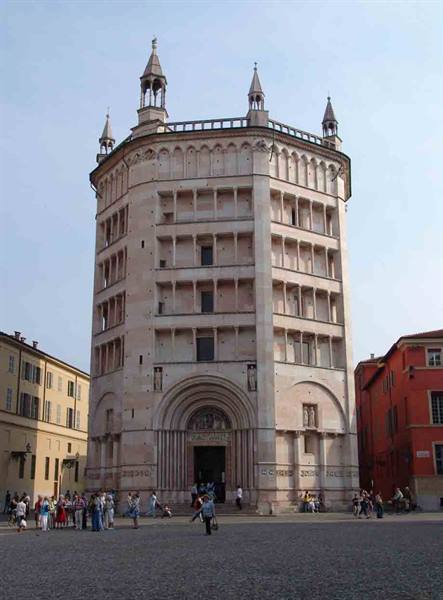
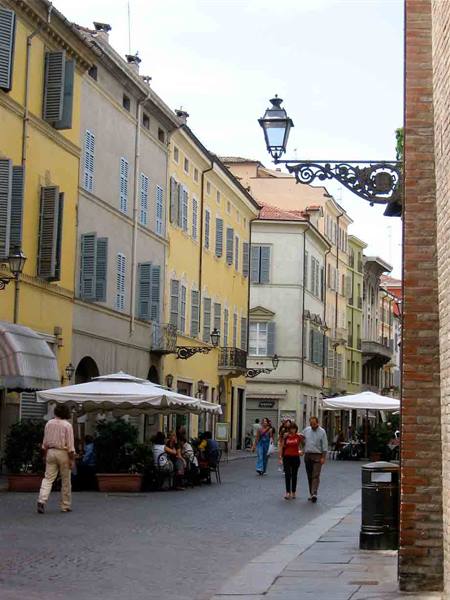
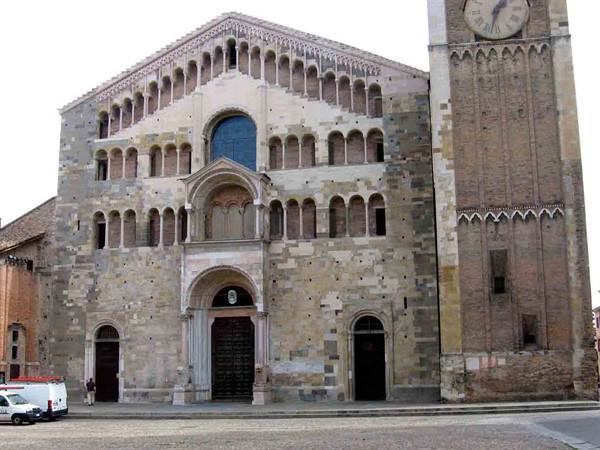
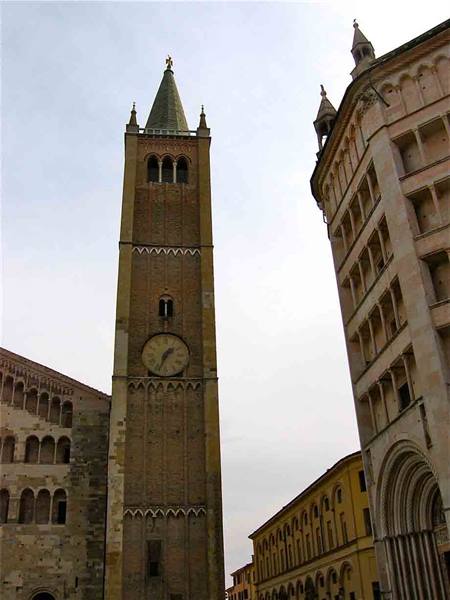
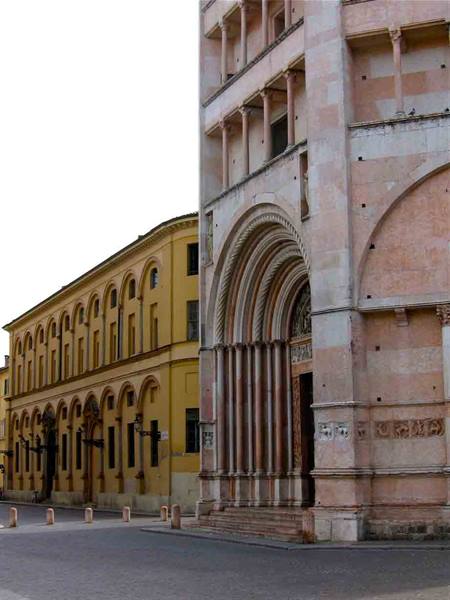
Among them the most important is the Duomo, considered among the greatest works of Romanesque architecture in Italy, famous also thanks to its dome, painted by Correggio. Beside the bell tower we admire the beautiful Baptistery in pink marble, the point of junction between Romanesque and Gothic architecture. A short distance away, between the Bell Tower and the Baptistery, we glimpse the Abbey of San Giovanni Evangelista, a Benedictine complex whose dome is also frescoed by Correggio. During our walk between the old town and the Oltretorrente district, we also visit the church of the S.S. Annunziata, of elliptical shape, but there is also the Church of Santa Maria del Quartiere, of 1619, in the shape of a hexagonal prism and with the dome frescoed by Pier Antonio Bernabei, depicting Paradise.
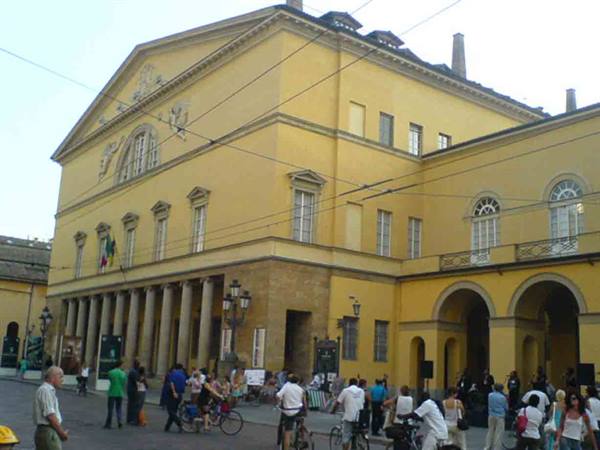
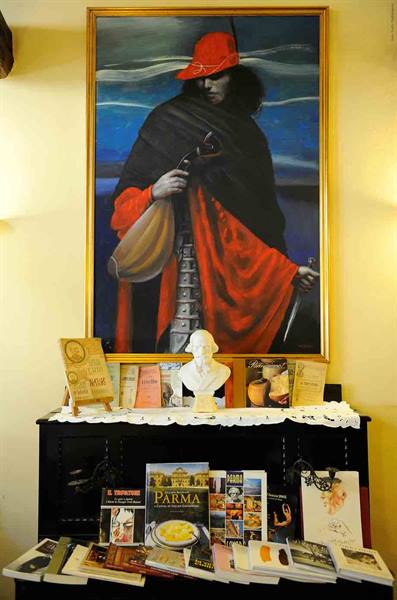
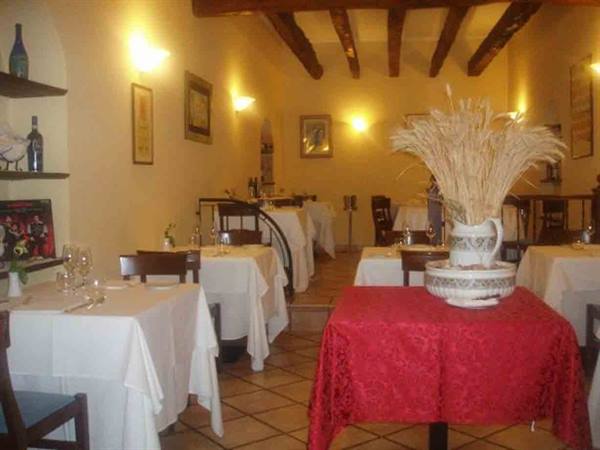
Our Parma walk continues to the notes of Giuseppe Verdi, born in Roncole, a hamlet of Busseto: indeed, we decide to stop for dinner at the Ristorante Il Trovatore, in via Affò, a stone's throw from the Teatro Regio, in the old town steeped in Verdian musical culture. We take our seats in the refined and comfortable dining room of the establishment, renovated at the end of the Nineties, which also has a large summer dehor. We are welcomed with a glass of sparkling wine that we sip while listening to Verdian notes in the background. Chatting with the host Pasquale Giordano, who runs the restaurant together with the chef and sister Lucia Giordano, we discover that the menus, also translated into English and French, include strictly seasonal specialities and that traditional cuisine is reinterpreted with touches of creativity.
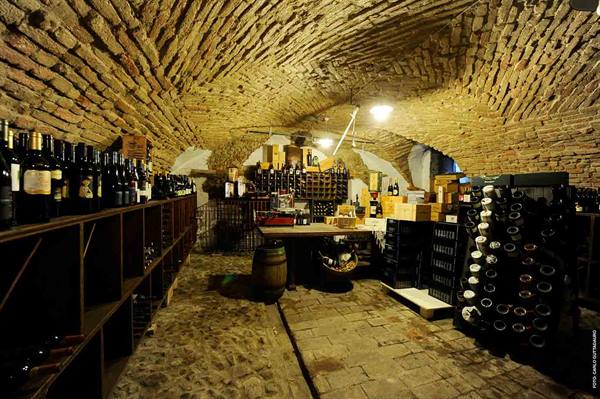
We start with a rich land starter ranging from culatello di Zibello with brioche bread and salted butter to Parma ham aged 24 months with homemade giardiniera, as well as other excellent cured meats of the Parma tradition, and local cheeses from both the plain and the mountains. We continue with the classic Parma herb and pumpkin tortelli with melted butter and parmesan, the pumpkin and crispy pancetta risotto and the tagliatelle with crispy Parma ham strips on a leek cream. All the pasta, as well as the bread and desserts, are homemade. We wash down these delicacies with excellent Italian wines, selected with great care by the owner and stored in the 17th-century cellar of the restaurant, which we also have the pleasure of visiting. Among the main courses we taste the beef fillet with balsamic vinegar with glazed borettane onions and the braised pork cheek.
We conclude with a rich tasting of selected cheeses, with honey and homemade jams. Our friends, on the other hand, prefer the seafood menu, tasting, among other things, the oven-baked prawns on sweet-and-sour vegetables, the crispy octopus on chickpea cream, the tagliolini with lobster, the scampi with cherry tomatoes and cous-cous, the tuna tagliata with balsamic reduction and onion and raisin compote and the famous lobster à la catalane. Finally, we give ourselves over to some tasty house desserts and close by tasting a wide selection of spirits. It will be a pleasure to return to Parma on the occasion of the next cultural events, moments that we will certainly combine with the joys of good food.
Francesca Bertha
FOR INFORMATION:
Ristorante Il Trovatore Via Affò, 2/A Parma Tel.: 0521/236905
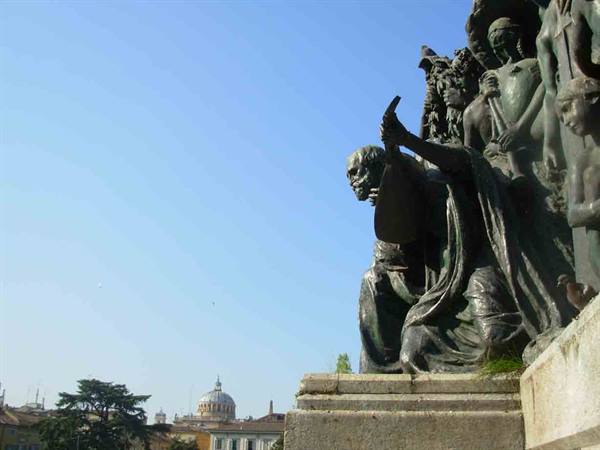
The photographs of the city are by Zsuzsanna Petrovics, with the exception of the following: Teatro Regio, Cittadella, Monumento Verdi (public domain), the Baptistery (by Philip Schäfer) and the Torrente (by Davide Bolsi), which come from Wikimedia Commons and are published under the Creative Commons – “Attribution Share Alike 3.0 Unported” licence.
The journey's photographs
14 photographs · click to open them full screen
0 reader comments