The story
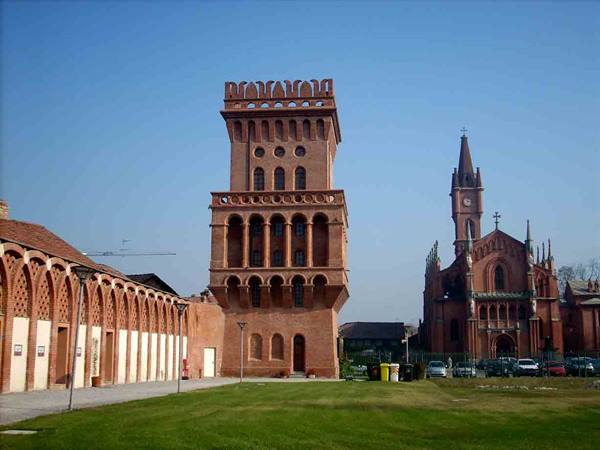
You travel along a very panoramic road that, bend after bend, skirts interminable vineyards whose autumnal reflections colour the Langa with gold: and so you arrive in the heart of Piedmontese Baroque, splendidly represented by the palaces and churches of Bra. The first "travellers" to leave their traces in this area were tribes of the Neolithic era, but it was then the ancient Romans who found the Tanaro valley so irresistible that they built there, in the 2nd century BC, the city of Pollentia, today's hamlet of Pollenzo. We begin the discovery of this beautiful town right from the Castello di Pollenzo, built in 1386. Today the structure is part of the UNESCO World Heritage, and it houses the University of Gastronomic Sciences, born from an idea of Carlo Petrini, founder of Slow Food.
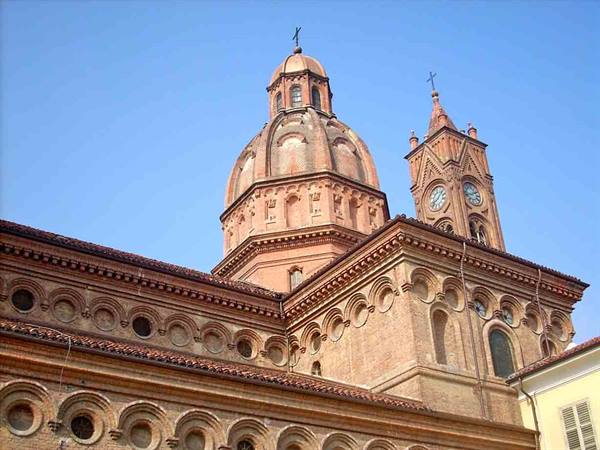
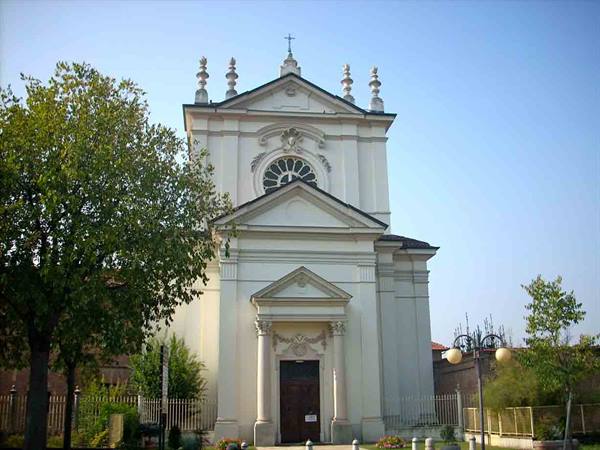
Wandering in the historic centre of Bra, a town since 1760, evocative views laden with art open up here and there, and step by step you enter one of the most flourishing periods of Bra's art, the eighteenth century. It was in fact in those very years that the town was enriched by the architectural works of Bernardo Antonio Vittone, who created both the Church of Santa Chiara and the rounded façade of the Town Hall. In the Piazza dei Caduti per la Libertà stands the statue of San Giuseppe Benedetto Cottolengo, a priest born in Bra in 1786, who founded the Little House of Divine Providence, a charitable institute based in Turin. A short distance away we admire the Parish Church of Sant'Andrea, designed by Bernini.
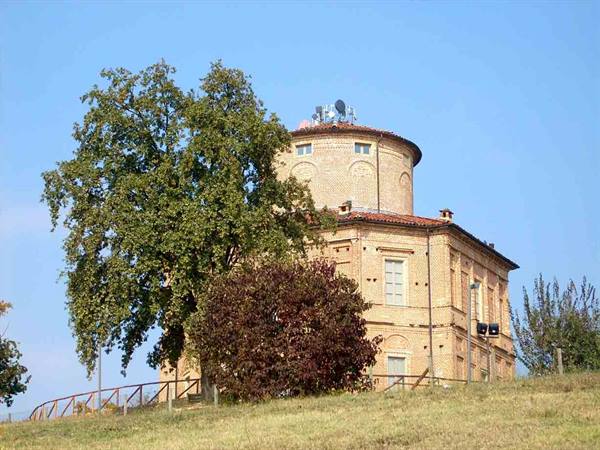
This quarter, called "della Rocca", is the oldest in the town, and within a few steps you reach other historic monuments such as Palazzo Traversa, today the seat of the Civic Museum of History, Art and Archaeology, or the portico of the Ala and the Church of the Battuti Bianchi. We walk along several characteristic little streets of the centre until we reach the Church of San Giovanni Battista, the oldest parish church in Bra. As we walk we notice on Monteguglielmo the symbol of Bra: the Zizzola, with its octagonal plan and topped by a little tower, erected in 1840. The Zizzola is reached on foot with a healthy walk that repays the effort, also thanks to the wide view over the town. Back down, we visit another beautiful sacred place, the Sanctuary of the Madonna dei Fiori, erected in 1626 on the site of the apparition of the Madonna that took place in 1336.
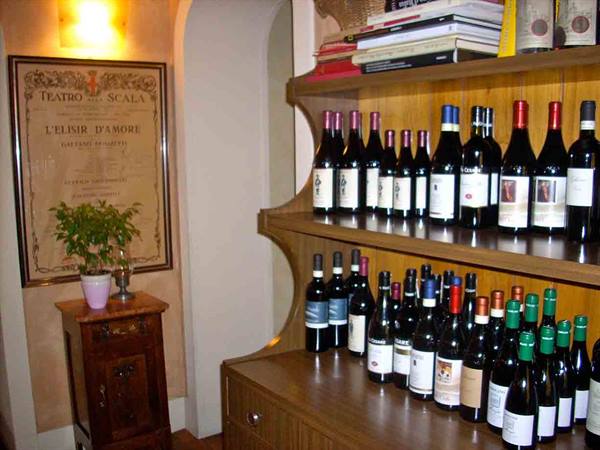
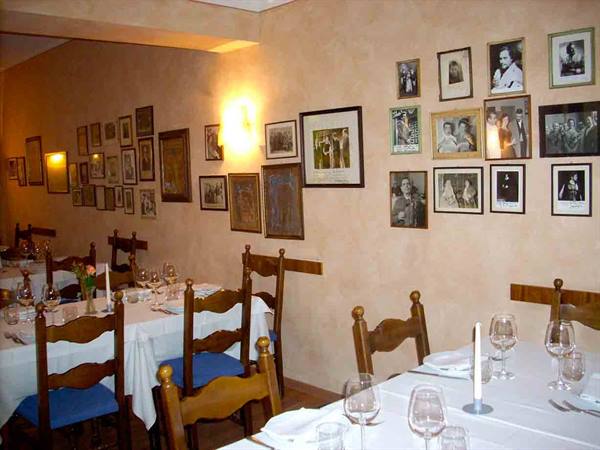
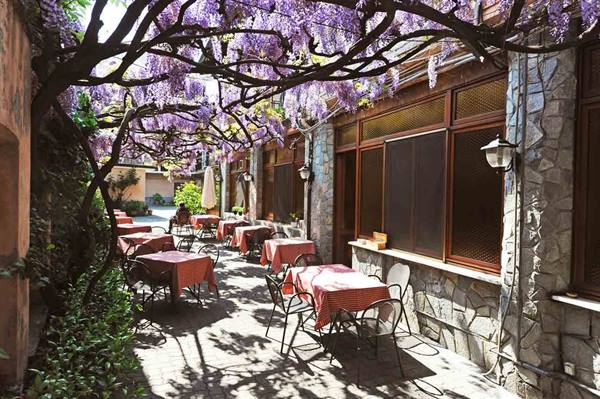
Among the irresistible attractions of Bra its cuisine also stands out, so we decide to give in to the pleasures of the palate, taking our places at the tables of the Ristorante Battaglino, in Piazza Roma. We immediately discover that we are in a historic restaurant, where culinary art goes hand in hand with musical art. "The place was founded by my great-grandparents Emma and Sebastiano in 1919. Afterwards, with my grandfather Carlo at the helm, a great opera lover, the restaurant was frequented by numerous Vips, among them even Maria Callas," says Alessia Battaglino, who today runs the place together with her partner Carlo Fanti and with the precious help of her father Beppe Battaglino, as well as Sabrina in the dining room and the cooks in the kitchen. "The great character of the restaurant is my father Beppe himself, a profound connoisseur of opera.
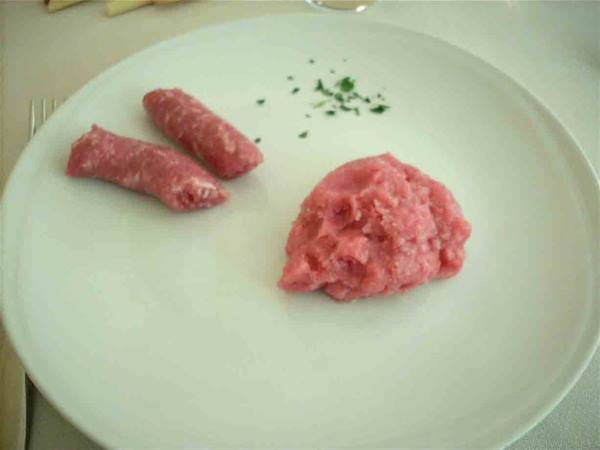
He often entertains the customers with excerpts from various operas." We begin to taste the delicious starters, among them the Piedmontese raw meat, the mythical Bra sausage, the salad with warm hen and Castelmagno, dressed with balsamic vinegar, and the crespelle with spinach and sautéed mushrooms. We continue with the first courses, all freshly prepared in-house, with hand-made pasta: the agnolotti al plin with roast sauce, the tajarin, which some of us choose with meat ragù and others with butter and truffle, and the potato gnocchi with Castelmagno. We wash it all down with excellent local wines, among them the Nebbiolo, skilfully selected by Mr Carlo. We follow these delights with the irresistible mixed boiled meats, accompanied by the traditional home-made cugnà, and served from the trolley directly by Mr Beppe, who accompanies it all with quotations from opera.
Some of us instead opt for the braised meat in Barolo, and we also taste the tripe and the finanziera, a mix of meat and vegetables, a typical dish by now very hard to find anywhere. Meanwhile our vegetarian friend too has enjoyed an excellent dinner devised for her by Alessia, an expert on the subject and very attentive to food intolerances. The sweet conclusion of our dinner sees us give in to the temptation of bunet, panna cotta, tiramisù made with Chantilly cream, pavesini soaked in coffee and chocolate on top, as well as the little meringues called Delizie di Battaglino. For Gioacchino Rossini the truffle was the Mozart of mushrooms. After this tasty dinner we can say that, to enjoy it, along with many specialities of Bra, the best place is where opera feels at home. Francesca Bertha FOR INFORMATION: Ristorante Battaglino Piazza Roma, 18 Bra (CN) Tel.: 0172/412509
The journey's photographs
14 photographs · click to open them full screen





0 reader comments