Tripscoop›Europe›ITALY›Between games and sports, immersed in the green of Liguria: a day in Crocefieschi
ITALY · Europe
The story
A caravan loaded with salt leaves behind the endless azure of the Ligurian Sea and slowly sets off along a winding mule track through the wild heights of the Apennines. After many days it will reach the Po Valley, from where, once the salt and salted fish have been sold, it will return along the same route towards the sea, with carts full of wool bought in Lombardy. Anyone arriving in the area of present-day Crocefieschi a few hundred years ago would easily meet the salt merchants, who often stopped right at the locality of Croce, at about 800 metres of altitude, which became a fief of the Fieschi around the middle of the 13th century. For a day of relaxation we choose to follow the traces of these merchants, reaching Crocefieschi after a few kilometres of bends from the Busalla motorway exit.
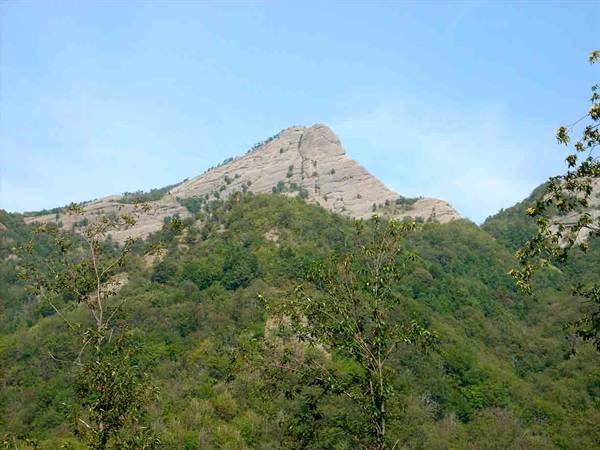
A sign informs us that we are in the Antola Nature Park, one of the most suggestive areas of Liguria's hinterland. A sort of earthly Paradise for hikers, who can tackle a full 270 km of itineraries, not to mention the opportunities for canoeing down the waterways or horse trekking along the trails. While we, a little group of two families with children in tow, settle for a gentle stroll through the colourful historic centre, we soon discover that in Crocefieschi even the most daring hikers find something to sink their teeth into. You only have to venture onto the Rocche del Reopasso, which certainly don't betray the expectations suggested by their name, nor does the highest peak, called in Ligurian Carrega do Diao, that is, the Devil's Chair.
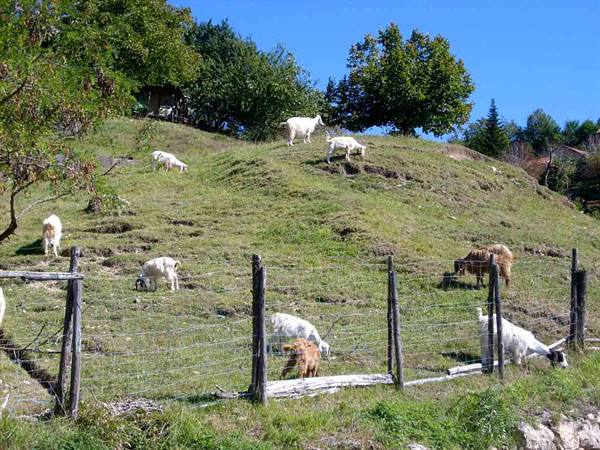
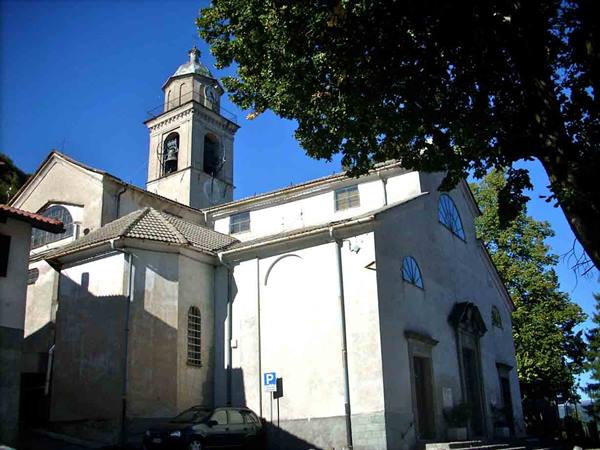
Giving up for now on the adrenaline-pumping challenges, we start having fun photographing the friendly goats grazing in a garden, and set off along the very panoramic road that crosses the village. From whatever point you look around, you see wonderful mountain ranges and houses immersed in the green and blue of an enchanted landscape. Reaching the historic centre, we visit the 16th-century Parish Church of Santa Croce, which preserves inside two statues from the school of Anton Maria Maragliano and 17th-century paintings. The Oratory of San Giovanni Battista, built at the end of the 16th century, preserves a fresco depicting the Baptism of Jesus.
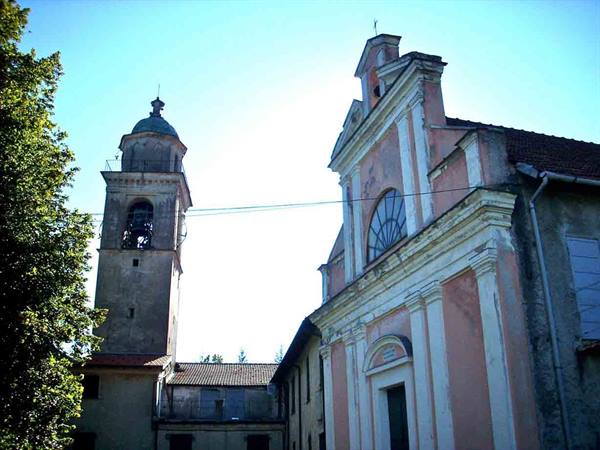
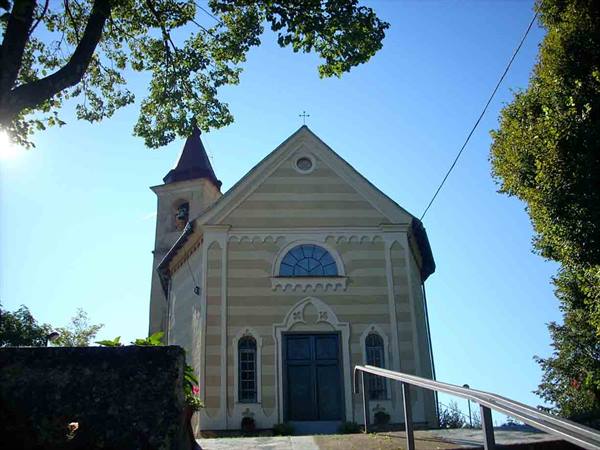
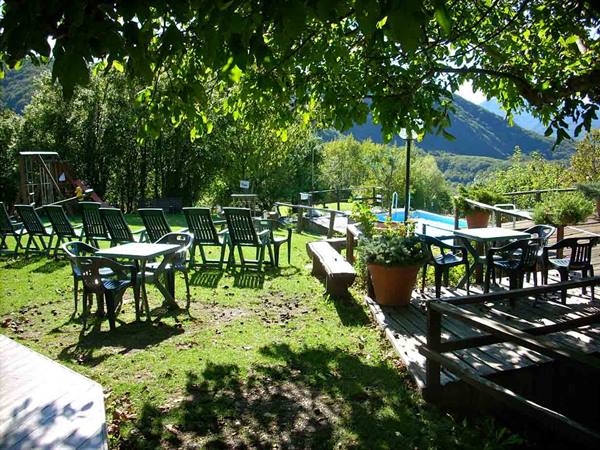
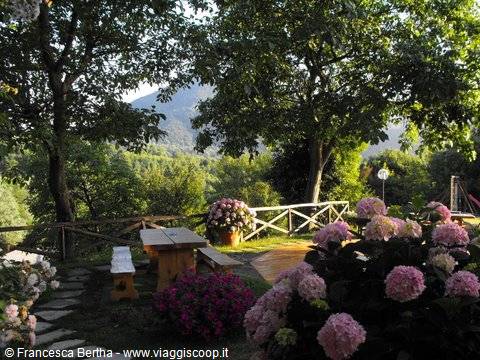
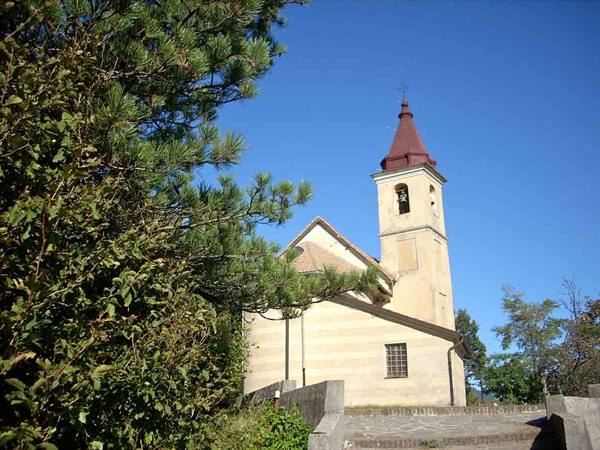
In the centre we also visit the Palaeontological Museum, and continue along the uphill alleys to the top, where we reach the Sanctuary of Nostra Signora della Guardia, built in 1854 following a vow made by the population to ward off a cholera epidemic. In the nearby municipality of Vobbia, until 1903 a hamlet of Crocefieschi, stands the 13th-century Castello della Pietra, whose ruins continue to bear witness to the strategic importance the village had over the centuries. After this lovely walk, we need a place to relax and let the children play before dinner: the Cà do Mei, that is, the House of the Apple Tree. It is a green oasis, where good cooking goes hand in hand with the chance to spend free time outdoors, among lots of sports and games.
The children in our group, taking advantage of the still summery temperatures, dive into the pool, while some of the adults try their hand at "golfino": a golf course ideal for the curious and beginners, with 6 holes, two or three of them quite difficult because they are on a slope. But there is also a 13-station fitness trail, with signs indicating the free-body exercises, as well as table tennis, five-a-side football, a slide and a swing: "You can come to us not only to eat, but also to spend a lovely day," Mrs Gianna, who runs the restaurant with her husband Aldo, tells us. "This was an old farmhouse that had existed for about two hundred years, but had been abandoned for a decade. We restored and extended it; we opened in March 2003," they tell us.
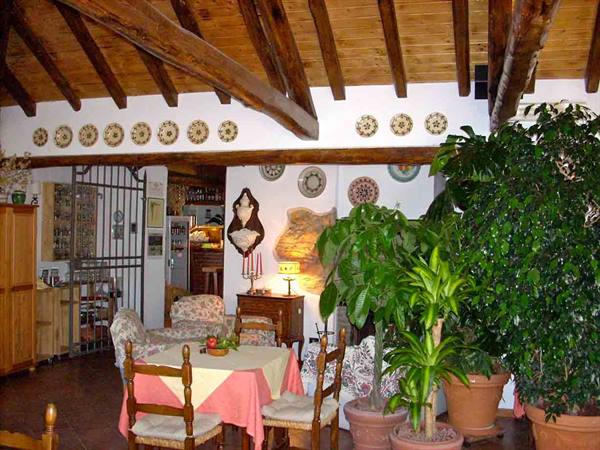
We begin a dinner in the name of home-style flavours with assorted starters and mixed cured meats, continuing with tasty first courses such as buckwheat maltagliati with a cheese and walnut cream, trofie with pesto and meat ravioli with "tocco". Some of us can't resist the excellent Recco-style cheese focaccia, prepared in the wood-fired oven with hazelnut wood. "Our menu changes a couple of times a month, depending on the season, and apart from the wine and the ice cream, everything else, bread included, we prepare ourselves at home," Mrs Gianna explains. In choosing the main courses we divide between veal strips with porcini and rocket, Chianina fillet with green pepper, and rabbit Ligurian-style.
Our day in Crocefieschi ends with the exquisite desserts of the house, including crème catalane, baked chocolate flan and cantuccini with Vin Santo, and with the decision to come back here soon with our hiking boots to discover the adventurous side of this splendid place too.
Francesca Bertha
FOR INFORMATION:
Cà do Mei – Good food and leisure Via Camarza, 27 Crocefieschi (GE) Tel.: 010/931224
The journey's photographs
14 photographs · click to open them full screen




0 reader comments