The story
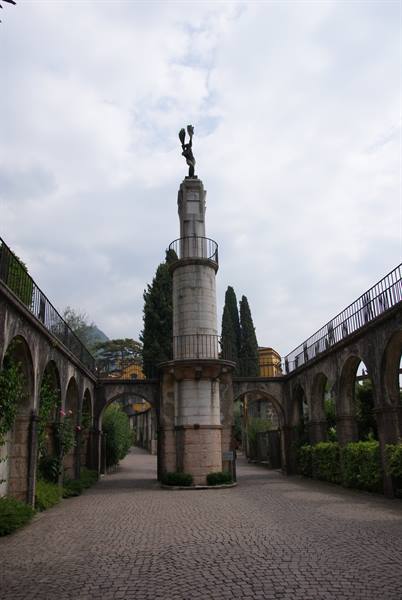
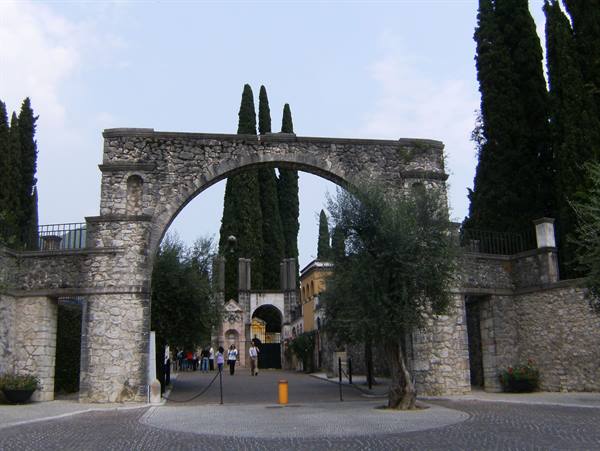
The Vittoriale degli Italiani is a monumental little city extending over about nine hectares. D'Annunzio set it up between 1921 and 1938 thanks to his collaboration with the architect Gian Carlo Maroni, to whom he entrusted the task of enclosing "his memories" in a "stone" case, reserving the decoration for himself. He surrounded a complex of buildings with a ring of walls, reached by crossing streets and squares. Right after the double entrance arch overlooking Lake Garda is the great Amphitheatre, home to a prestigious theatre season, which also includes a new space for temporary themed exhibitions.
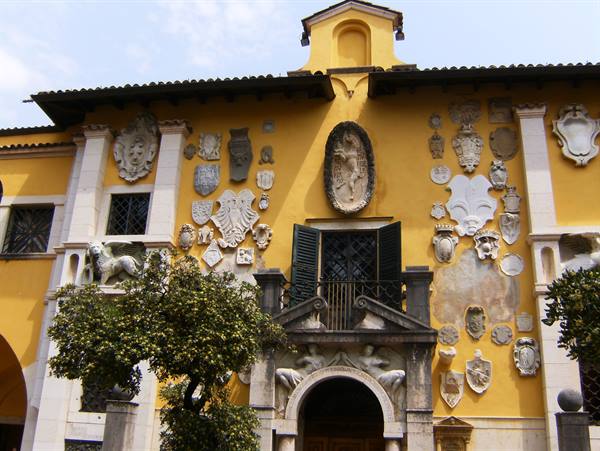
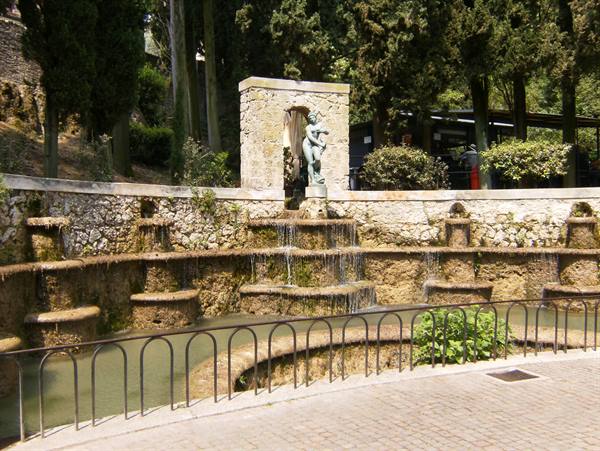
Two squares, the Exedra and the piazzetta Dalmata, lead to the Prioria, an exceptional testimony to D'Annunzio's personality, sensitivity and tastes; here thousands and thousands of art objects are gathered, ancient wooden statues, ceramics, glass, silver, carpets, bookcases housing a library of around 30,000 volumes, some of them ancient and rare, as well as mementoes recalling the heroic moments of the Poet's life. The gardens of the Prioria, restored with a contribution from the European Union and open to the public since 1993, were the first to be created and are important for some mementoes and works of art, among which: the Boulders of Grappa and other War Mountains; the Arengo, dedicated to oath rituals, ceremonies and meetings, where 17 columns commemorating the victories of the Great War are placed in a grove of magnolias.
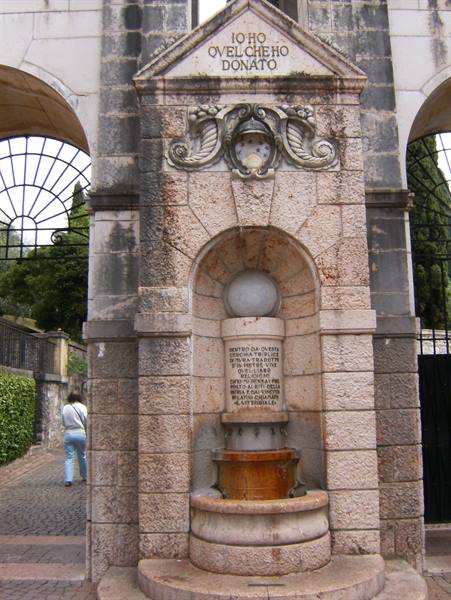
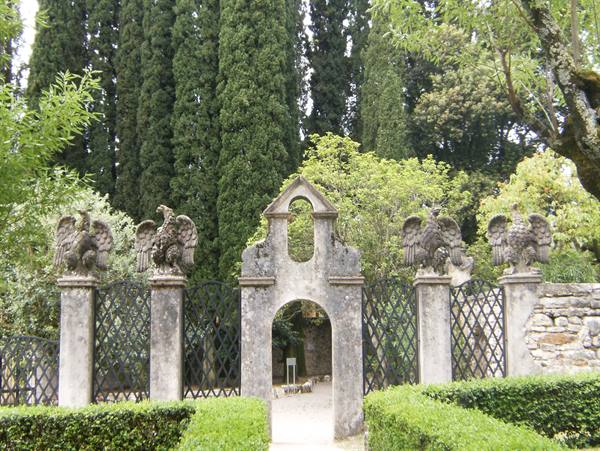
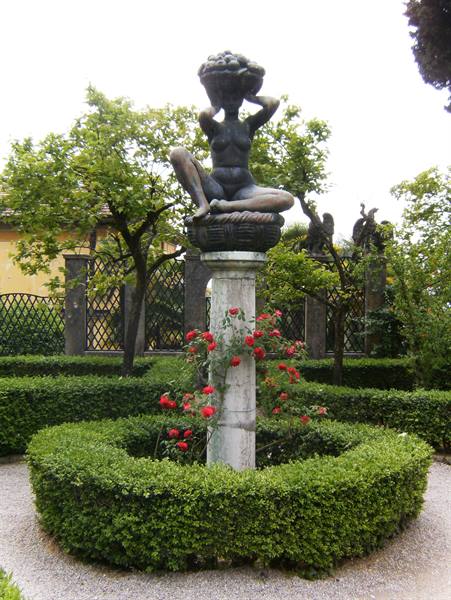
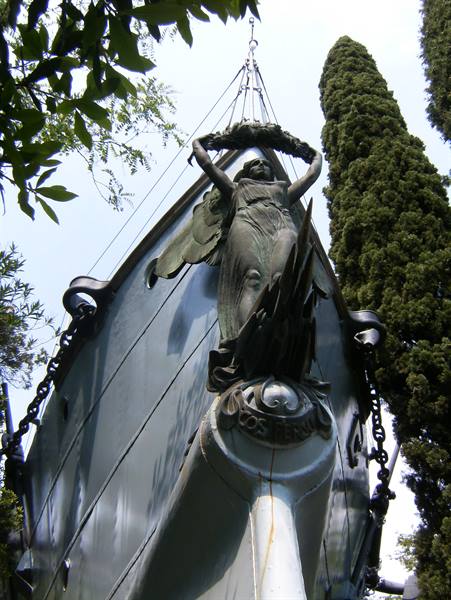
Following the paths of the lemon houses and the garden you reach the orchard, where the bronze Canephora by Napoleone Martinuzzi is placed, a work of great value. The bow of the ship Puglia, which, donated by the Navy in 1925, is set into a hill and enriched by a Winged Victory, a work by the sculptor Renato Brozzi. Since June 2002 it has housed the On-board Museum, where the original furnishings of the Royal ship Puglia and 10 models of warships belonging to the private collection of HRH Amedeo of Savoy, duke of Aosta, are exhibited. On the highest hill is the Mausoleum, the burial place of D'Annunzio and the legionaries of Fiume. Votive shrines and tree-lined avenues make the Vittoriale an open-air museum of remarkable size
The journey's photographs
11 photographs · click to open them full screen
0 reader comments