The story
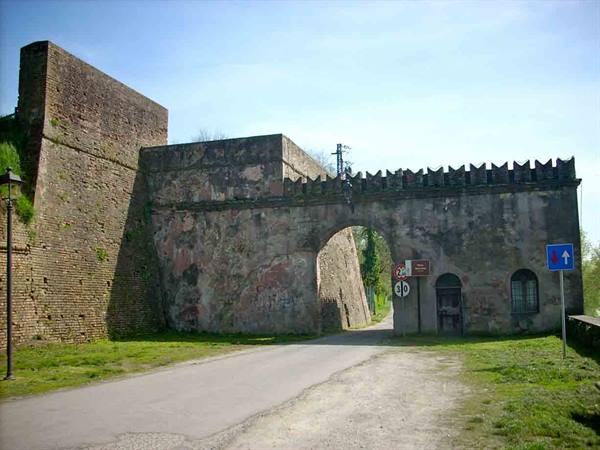
A city like those depicted in adventure films, peopled with knights and princesses: surrounded by a mighty ring of walls, crossed by a fine river, with a bridge leading beneath an ancient tower where almost five centuries ago even a French sovereign was held prisoner. The feeling of having stepped into a fairy-tale novel grows as, during our walk through the characteristic streets of Pizzighettone, we discover the so-called “Case matte”, not to mention the nearby Valle del Serio Morto, which we learn was the ancient bed of the Serio river. Pizzighettone is a genuine architectural jewel, whose historic centre is embraced by the Spanish walls which, in the appearance we see today, date back to around 1650. We begin our discovery of the “walled town” from Porta Cremona Nuova, near which we admire the semicircular Rivellino.
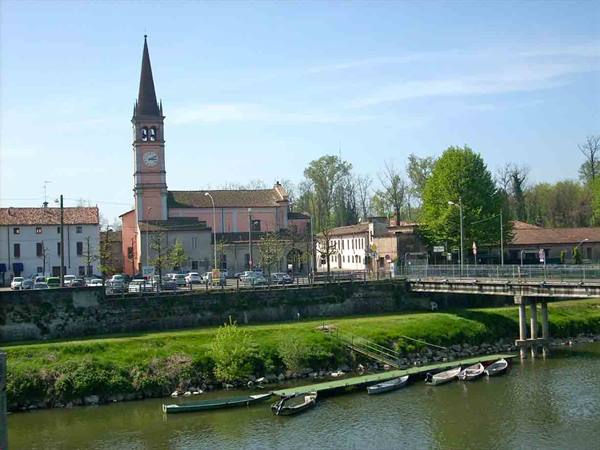
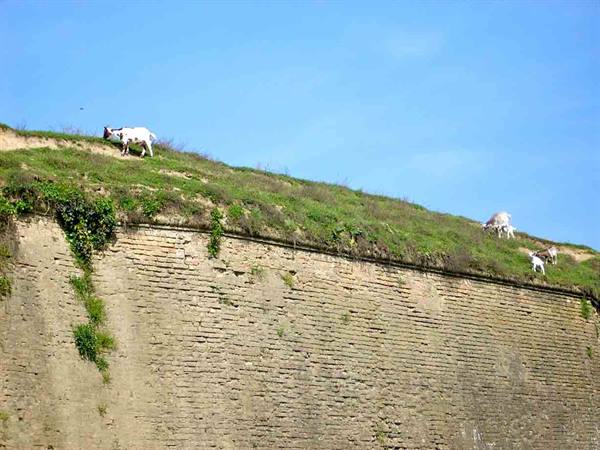
Continuing along the wall circuit, flanked by a defensive moat, we notice high up, among the grass growing above the walls, some charming little goats busy on a “green itinerary” all of their own. We thus arrive near the first “case matte”, and discover that they are barrel-vaulted spaces connected to one another. Further “case matte” can be seen on the other bank of the river, in the Borgata di Gera, where the church of Santi Rocco e Sebastiano stands, dating from 1486 and housing important paintings of the Cremonese school. Pizzighettone is the only town crossed in its historic centre by the lower course of the Adda, and arriving on the riverbanks we are welcomed by a very pleasant setting, where one strolls while the gaze roams among rowing boats, trees mirrored in the river, and glimpses of the opposite bank.
The presence of the ford was, since antiquity, the element that gave the castrum its strategic importance, while today the river is the focus of the ever-flourishing cycling and walking tourism that draws visitors to Pizzighettone, set within the Parco Adda del Sud. One of the various suggested cycle routes starts right here and leads to the point where the Adda flows into the Po. The town was founded on the remains of the Celtic Acerrae, which dates back to the 3rd century BC and disappeared with the fall of the Roman Empire. The historical memory of Pizzighettone is concentrated, besides in its monuments, in the Museo Civico and in the Museo delle Arti e dei Mestieri di una volta “Fiorenzo Barili”, which holds over two thousand objects recovered by the Volontari delle Mura, who also promote the eerie Museo delle Prigioni.
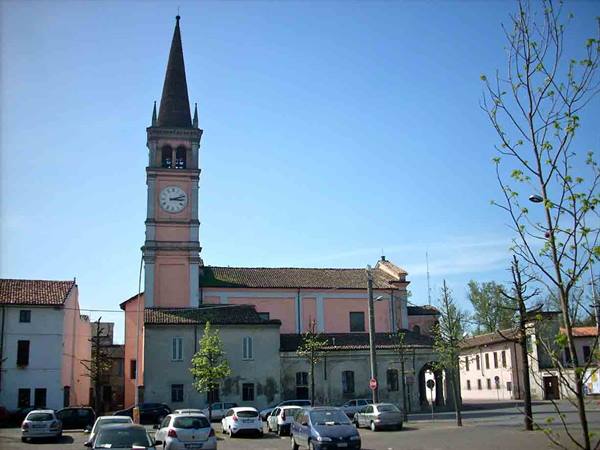
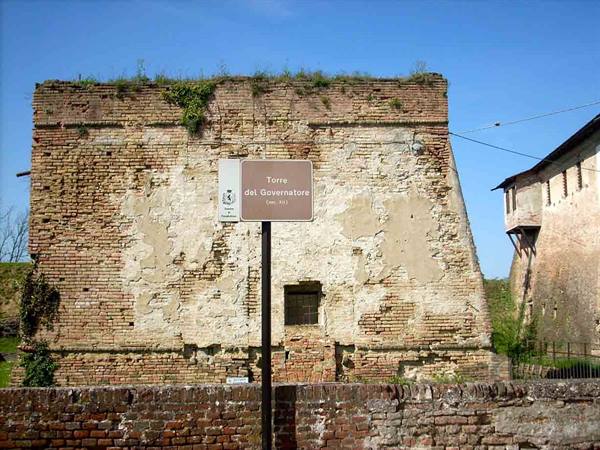
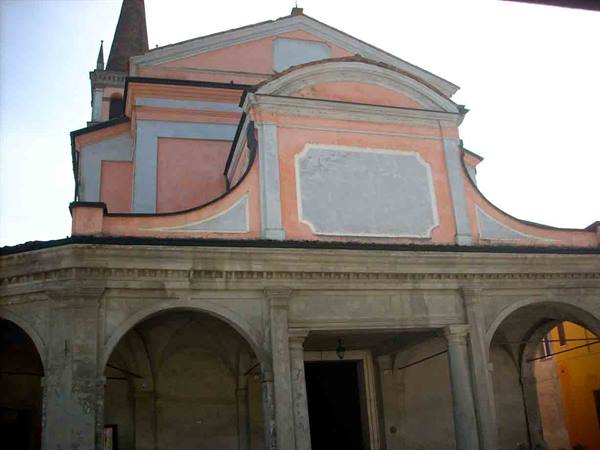
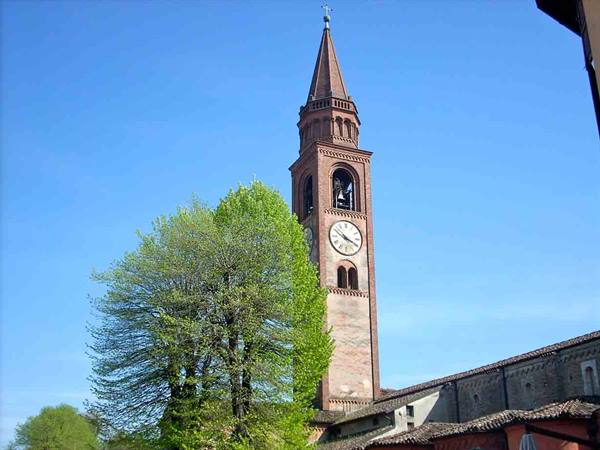
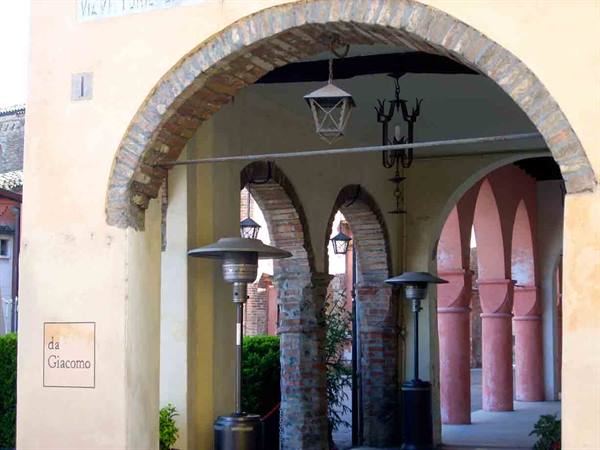
Continuing our stroll, we reach the famous Torre del Guado, known as the Torrione, which is the only survivor of the four towers of the past. Here, in 1525, after the Battle of Pavia, the French sovereign Francis I of Valois was held prisoner. Our walk through the history of Pizzighettone ends in the heart of the town, with a visit to the Parish Church of San Bassiano, built in 1158 by the people of Lodi who had taken refuge here after the invasion of Lodi by the Milanese. Inside we admire several works of art, including a crucifixion frescoed by Bernardino Campi. Opposite the church stands the Palazzo Comunale, dating from 1479, which, with its portico, adds to the evocative atmosphere of the square. And it is here that we decide to stop for dinner too, at the Ristorante Da Giacomo.
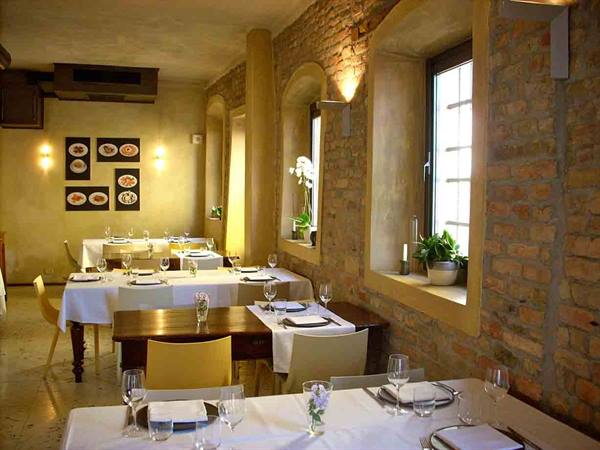
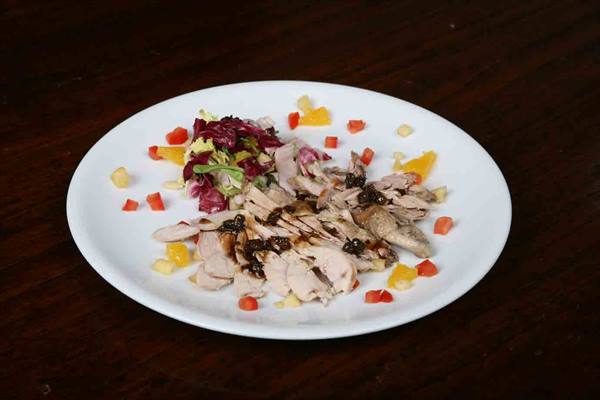
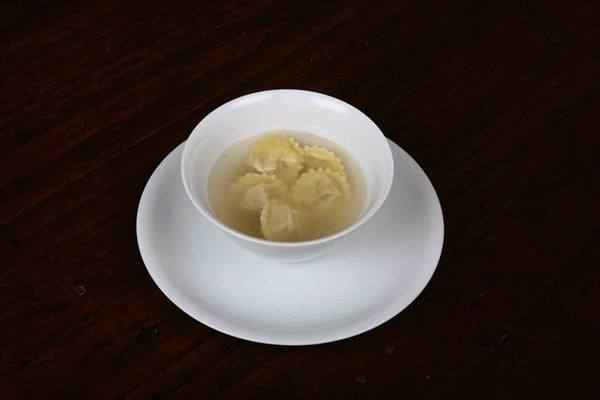
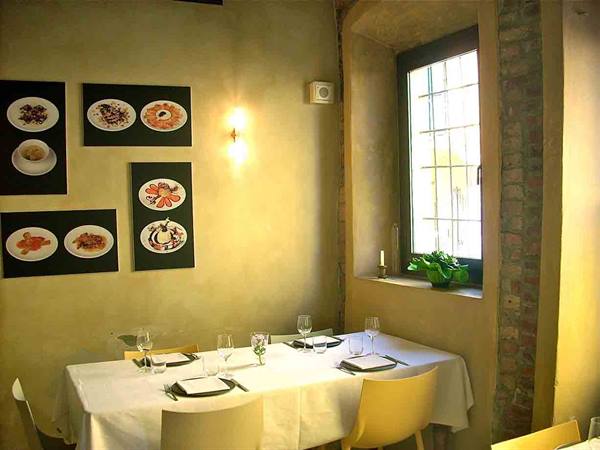
We settle into the elegant yet rustic setting of the establishment run by Giacomo Verdelli with chef Francesco Cremonesi, and begin studying the menu, which offers delicacies of the area chosen according to the current season and made even more inviting by creative elaboration. We start with a partridge salad with Salina capers, a foie gras terrine with fig coulis, herb-and-pink-pepper marinated char, as well as a Jerusalem artichoke flan with sheep's blue-cheese fondue. After the rich starter we continue with one of the restaurant's flagships, the marubini in three broths, but we also taste the “Maranello” corn shavings with “pata negra” pork cheek alla vaccinara and the tortelli with buckwheat flour, goat's ricotta, herbs and aubergine velouté.
We note with great pleasure that the menu also indicates the precise origin of several ingredients such as the flour, the rice and the corn pasta. We follow these treats with a scottona entrecôte with rosemary and juniper and happily try a seventeenth-century recipe too, the boned roast stuffed duck. We wash it all down with excellent wines, also available by the glass, so we can taste several labels. The end of our dinner is also worthy of a fairy tale, thanks to the house desserts: grape, strawberry, green tea and ginger sorbets, a shortbread with mascarpone cream, a citrus crème brûlée with “moro” orange coulis and the bonèt with strawberry coulis.
Francesca Bertha
FOR INFORMATION:
Ristorante Da Giacomo Piazza Municipio, 2 Pizzighettone (CR) 0372/730260
The journey's photographs
14 photographs · click to open them full screen


0 reader comments