Venice is a unique, special city! It is unique for how it is built, special for the atmosphere and the air you breathe. It feels like entering a dream, another dimension.
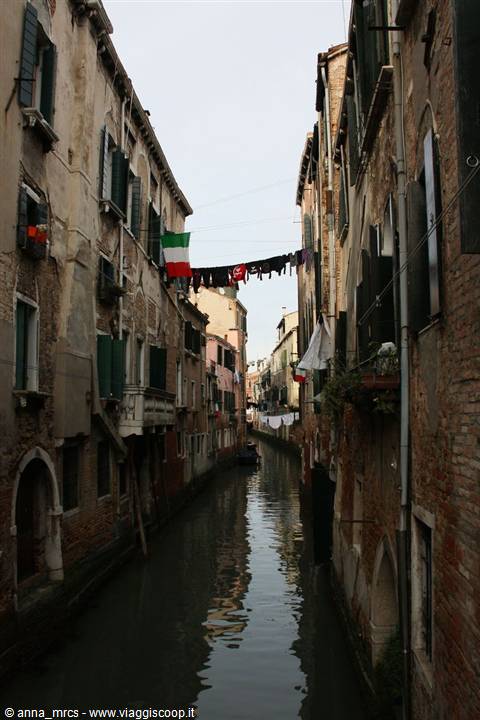
It is the most visited city in Italy. Going there for the first time is a discovery, going back is a bit like reliving the emotions of that discovery and finding new ones. Strolling through its alleys, leaning over a bridge to watch a canal, seeing the washing hung on the lines that cross the canals or the narrow alleys, the children running through the calli, the elderly women pulling the shopping cart, the colours of the fruit on the market stalls or some cat dozing along a canal or in front of a doorway, these are the images I like to remember of Venice, of the true essence of Venice.
Certainly splendid is the Venice of the great and sumptuous palaces, the Venice of the wonderful bridges over the Grand Canal, of the splendid churches, of the museums and of its islands. But it was also lovely to stroll far from the most touristy places in search of the everyday Venice far from the crowded masses of tourists.
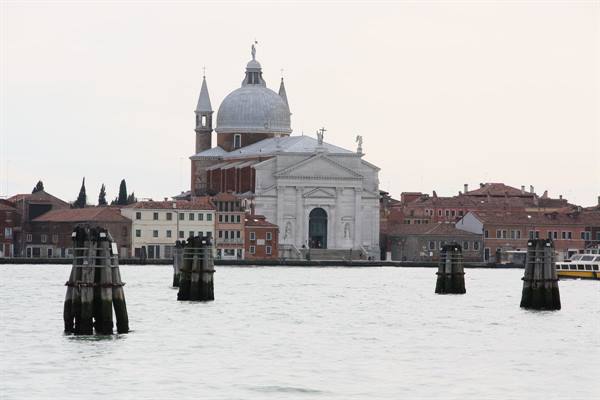
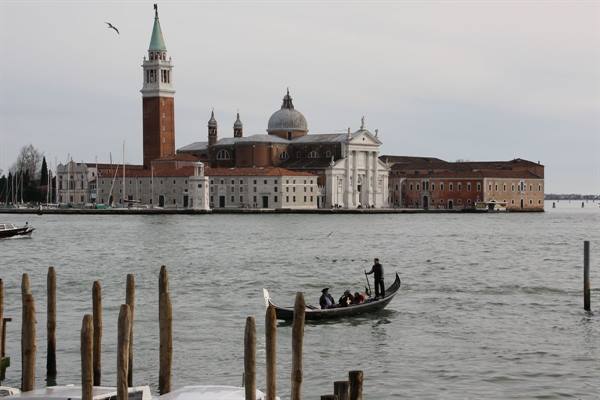
Venice was built on more than 100 islands in a marshy lagoon. This hardly easy environment sharpened the ingenuity of the first Venetian builders, who thus had to resort to rather singular construction techniques. The city and its buildings rest on a kind of stilts made of long wooden poles driven into the soil of the marsh. This singular technique worked nevertheless, since the city has, more or less, held up to this day. In 1966 the city was hit by a terrible flood that raised concern about the survival of this city, so solid and yet so fragile. Erosion and pollution are a nasty beast for this city, undermining its survival.
Day 117 Mar 2011
We reach Venice by train. It's perhaps one of the most convenient ways to reach the city. The square in front of the station overlooks the Grand Canal itself. The vaporetto stops, which are the city's buses, are right there in front. The ticket cost, for a single ride, is 6.50, the ticket valid for 12 hours, which also allows you to go to the other islands of the lagoon, costs 16 euros. There are then other ticket formulas of different durations. The Santa Lucia station stands on the land where the church of the same name once stood and bears the number 1 of the sestiere of Cannaregio.
Tradition holds that Venice was founded in 421 AD. Many Venetians, to escape the Goths who crossed the Veneto to go to Rome looting and ruining everything, took refuge in the lagoon, building this city. It was during the Middle Ages that the city grew from every point of view and its power extended throughout the Mediterranean. In the 16th century the city's dominion was enormous; its monopoly on trade extended throughout the Mediterranean and its possessions ranged from the Alps to the Adriatic. Such a vast territory and such an exclusive commercial monopoly meant that the city, in order to maintain its dominion, was continually at war. Diplomacy even then, as today, didn't work properly. In the 18th century the glorious past of the Serenissima was nothing more than a memory. The aristocrats squandered their riches in festivities, thus making Venice a symbol of decadence.
In 1797 Napoleon put an end to this decadence by besieging the city and forcing the Doge to resign. The city was then ceded, by Napoleon, to the Austrian empire. Something the Venetians didn't like at all. It would take until 1870 for Venice to be freed from Austrian rule. And so we come to our days, where Venice is a lively city animated by millions of tourists from every corner of the world. An important film festival is held every year in Venice Lido. In short, the city has managed to return to its original splendor.
After leaving our suitcase at the hotel, we spend what remains of the afternoon discovering the Sestiere of Cannaregio. In Venice there are no quartieri or borghi but sestieri, there are no streets, but canals, alleys and calle and, apart from Piazza San Marco, there aren't even any piazzas, only campi. Only San Marco, being large enough, has earned the title of piazza; all the others are too small to claim and obtain this title.
The name Cannaregio seems to have two origins: from Canal Regio, which was the ancient name of the Cannaregio canal, which before the railway connection was the main access route to the city, or from regio cannarum, because in the past there were many reed beds in this area.
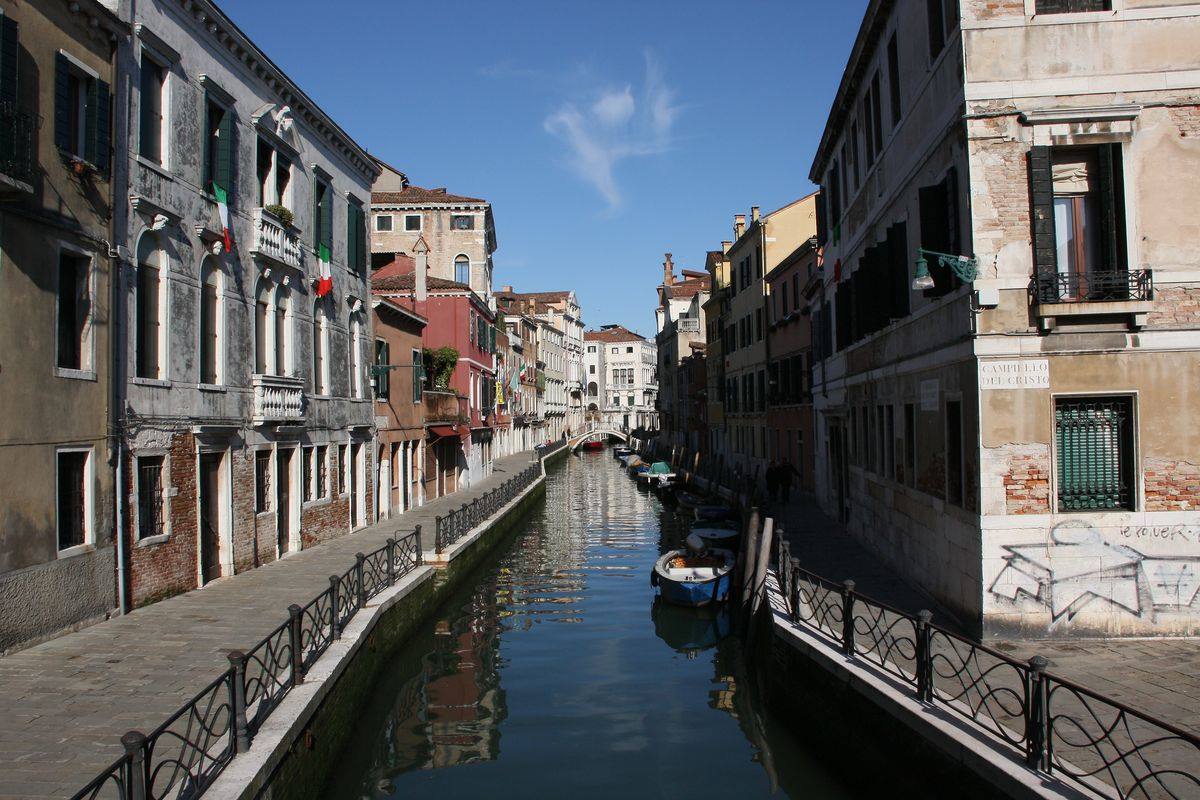
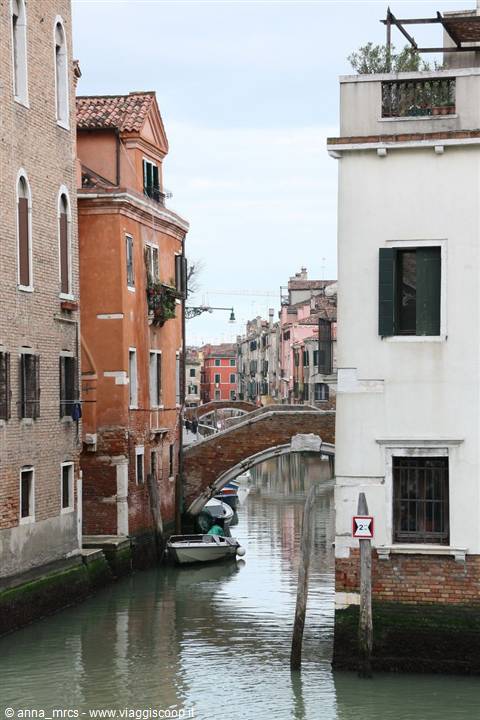
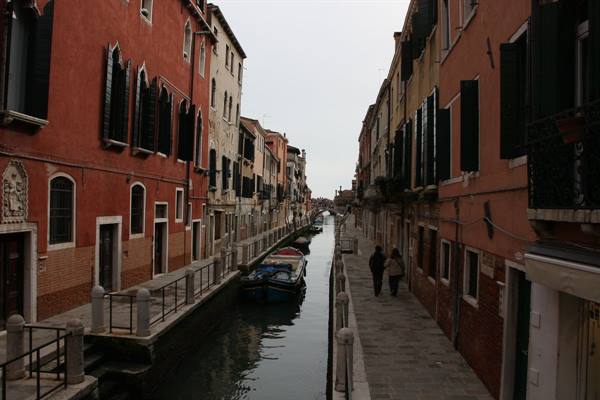
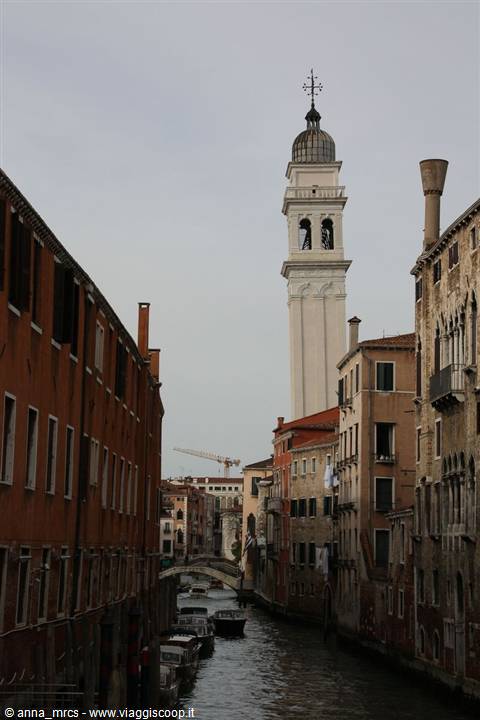
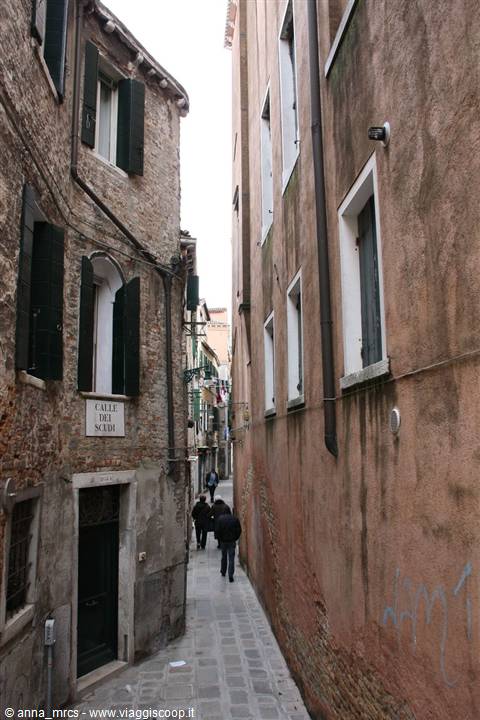
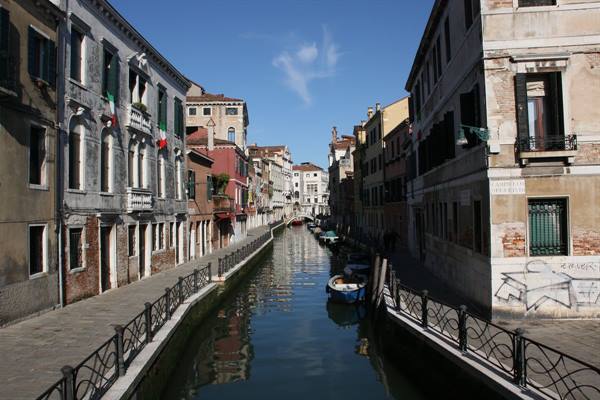
We leave a very busy street full of tourists, shops and cafés to make our way among the alleys and canals of a very suggestive corner of this district. We meet very few other tourists, and it's indeed pleasant to stroll through these alleys. The bridges for crossing the canals today all have railings; in the past this wasn't the case. For Venetians, wandering at night could be dangerous if they didn't pay attention not to fall into the canal. Among other things I also read that initially the bridges were private and you had to pay a toll to cross them. Along fondamenta Sella, a quiet street that runs alongside a canal, we can see the typical crumbling Venetian façades and also the house where Tintoretto lived and died. His real name was Jacopo Robusti but he was nicknamed Tintoretto because of his father's trade, who dyed silk, as it happens.
He too certainly made good use of colors! Among the most famous figures of Venice who were born in Cannaregio there was also a great traveler, perhaps the first par excellence: Marco Polo. He was a Venetian merchant who traveled to China, where he spent more than twenty years at the court of Kublai Khan. A curious thing: when the book was published, many didn't believe his account and nicknamed Marco Polo "Marco Il Milione" (a million lies, as it happens). This nickname explains the name given to the two small courtyards (Corte Prima del Milion and Corte Seconda del Milion) where Marco Polo's family lived. These Venetians are terrible!
We arrive in front of the beautiful Gothic church of Madonna dell'Orto, which has already closed a few minutes ago. It's also known as the English church of Venice, a nickname (here's another one!) given to it because, after the terrible flood of 1966, the restoration of this church was done thanks to British funds. The church had originally been dedicated to San Cristoforo but later, after the discovery, in a garden not far away, of a statue of the Madonna that seemed to have miraculous powers, the church was dedicated to the Madonna. Inside are splendid works by Tintoretto.
It's really pleasant to stroll through the almost deserted streets of this sestiere; we even reach the Sacca della Misericordia, from which we can see a glimpse of this lagoon: the island of Murano and the island of San Michele.
Even in the history of Venice there was a ghetto, and it was right in this sestiere. In 1516 the Council of Ten decreed that all Venetian Jews be confined to a small island of Cannaregio. Obviously the area was isolated by wide canals with gates operated by guards. Legend or history holds that the term ghetto, assigned to this portion of Venice, derives from the fact that in this area there was a large foundry called getto or ghetto, which meant 'casting'. This term was later borrowed and used to describe, just about everywhere, the enclaves of Jews around the world that followed in the centuries to come. The inhabitants of this ghetto could leave the ghetto's boundaries during the day. Very many people lived there and in 1797 Napoleon destroyed its gates, but with the Austrians everything went back to as before. Only in 1866 was freedom granted to them.
What happened afterward we know all too well. Although Venetian Jews today can, rightly, live wherever they please, the neighborhood has nonetheless maintained its identity. Besides two synagogues, there is also a Jewish library and typical shops.
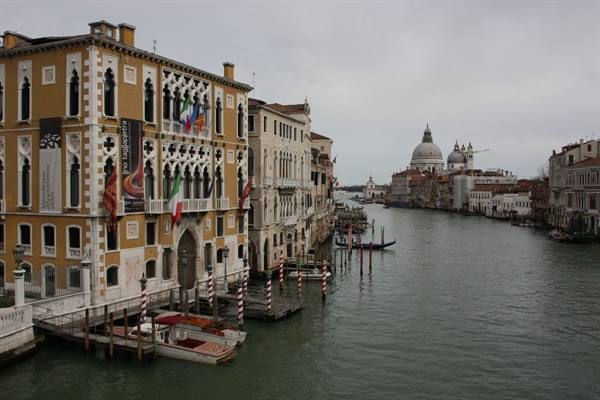
Having left behind these corners of Venice relatively untrafficked by tourists, we take the crowded Strada Nova heading toward the Ca' D'Oro. The best view of the house's façade is had by sailing along the Grand Canal, where the Ca' d'Oro indeed overlooks. It is undoubtedly one of the most beautiful palaces in Venice. An austere and romantic façade with well-decorated ogival windows. It was built in 1420 by a wealthy patrician who wanted to have the most beautiful palace in the city. The palace changed owners several times until, in 1846, it came into the hands of the Russian prince Troubetzkoi, but by then it was rather dilapidated and semi-abandoned. Troubetzkoi bought it for a ballerina, one Maria Taglioni, and had it renovated for her...who knows who she was! The palace today houses a picture gallery.
Venice
Day 218 Mar 2011
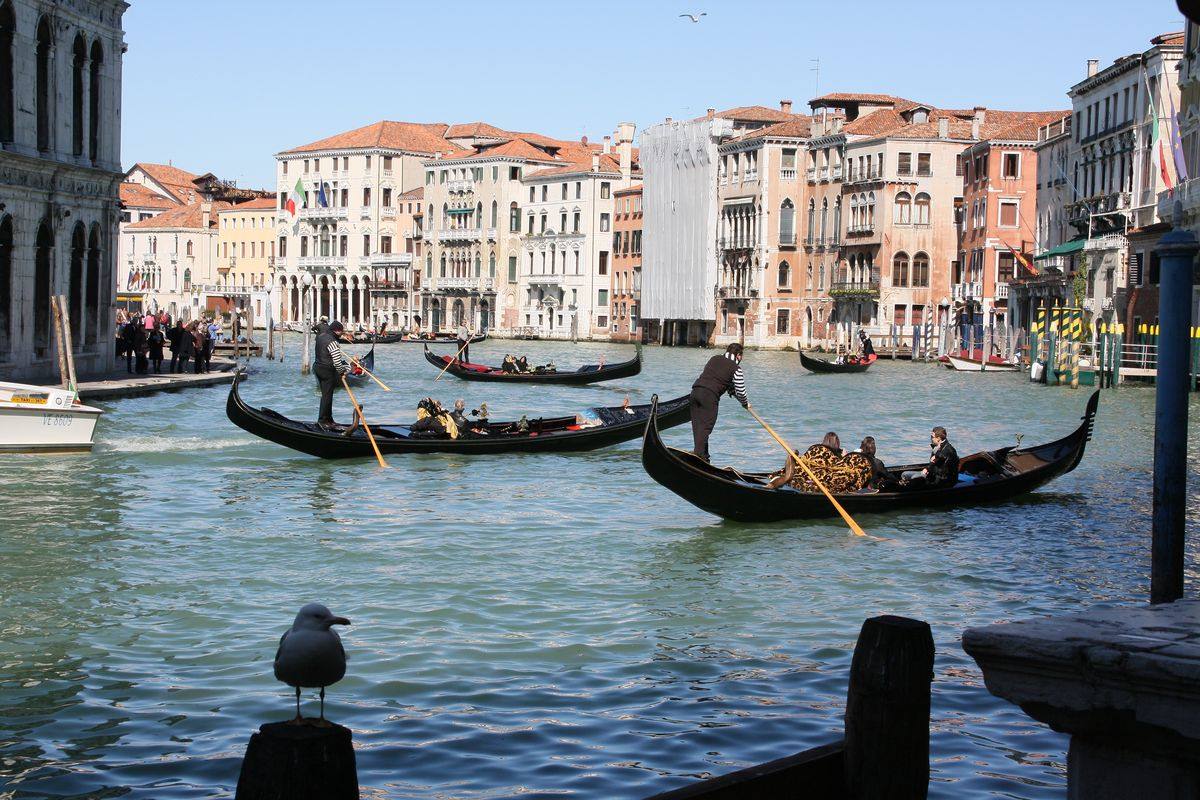
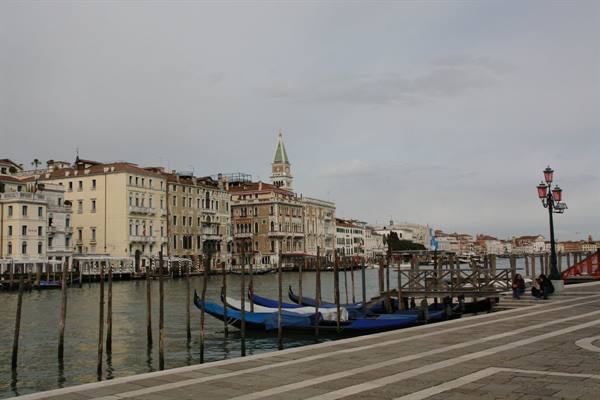
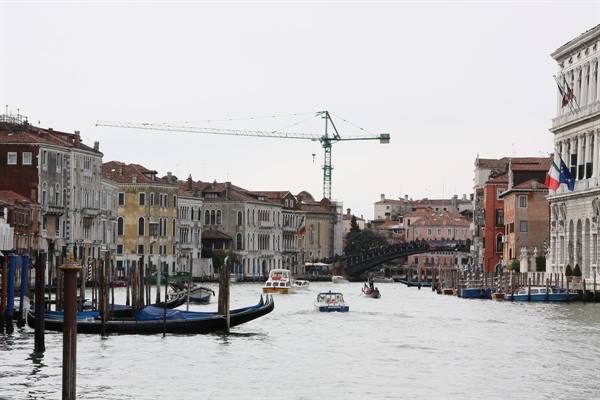
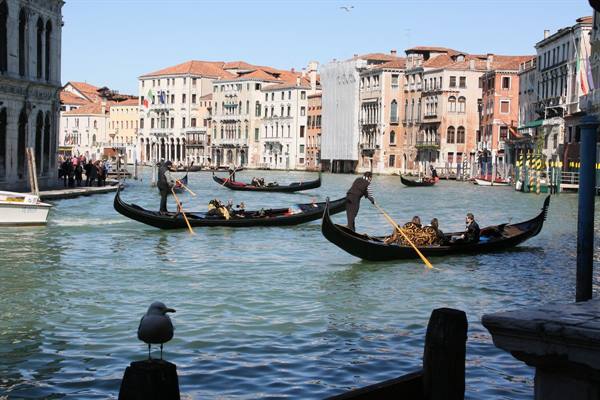
Navigating along the Grand Canal from the Santa Lucia station to Piazza San Marco is not a simple journey but the discovery of this world of sumptuous, serious and aristocratic residences that overlook the canal. Having bought our daily tickets, we take vaporetto number 1, which travels slowly toward Piazza San Marco and allows us to calmly observe the palaces and houses that flow along the canal. The canal is 4 km long and between 30 and 70 meters wide; it takes us more than 30 minutes to travel it to our destination. There are only three bridges crossing it: the one right in front of the station, the degli Scalzi, the very famous Rialto, and the Accademia. In some points of the canal you can cross using a sort of ferry service done with gondolas. Along the Grand Canal and in the smaller canals of the city you often see gondolas sailing, gently taking tourists around.
At San Zaccaria we change vaporetto and take one to Murano. We stop at the island of San Michele, where the current city cemetery and the church of San Michele are. The journey seems endless but finally we arrive in Murano. Like Venice, Murano also stands on a few small islands connected by bridges. Murano is the island of the glass artists, where splendid glass objects are produced. Murano became the center of glassmaking since 1291, when the master glassmakers left Venice to move to these islands. The reasons why they left Venice were due to the fire hazards caused by the furnaces, necessary for working glass, and the smoke they produced. The island, thanks precisely to glassmaking, prospered a great deal, to the point of being independent and minting its own coin. In the 15th and 16th centuries it had become the main center of glassmaking in Europe.
The master glassmakers enjoyed many privileges, but for those who moved elsewhere, harsh punishments were instead provided, in some cases even death. What an exaggeration!
Although the furnaces today are greatly reduced compared to once, it's possible to watch glassmaking in one of the furnaces still in use. So we too go to see one of these artists at work. The master, as he is introduced, is working on creating a large glass eagle. Some assistants and a young apprentice assist him. We stay quite a while watching the various steps of the work. On the way out, a tour of the company's shop is a must. There are beautiful glass objects, true works of art.
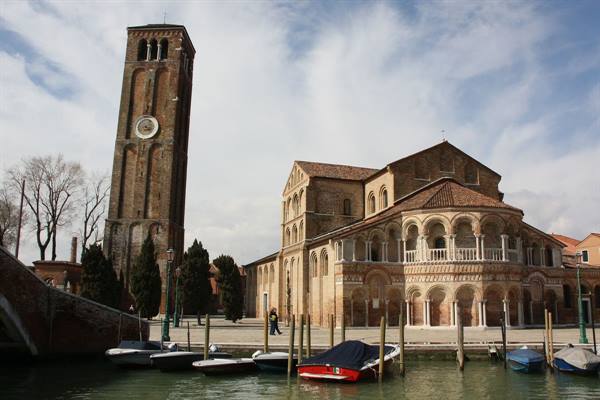
We stroll through the alleys of Murano, visit the Basilica dei Santi Maria e Donato. Its apse, which overlooks the San Donato canal, is distinctive.
We take a very crowded vaporetto that takes us to Burano. The journey was rather long and uncomfortable, also due to the sardine effect! Arriving in Burano we immediately take the ferry to the island of Torcello, which fortunately attracts fewer tourists than the other islands, so we do the short ferry ride comfortably seated.
The island of Torcello is a quiet place, although in the past it was a flourishing island with almost 20,000 inhabitants; today barely 60 remain. What brought us here is the Byzantine cathedral, the church of Santa Fosca and Attila's seat. A pleasant walk that skirts a small canal takes us from the pier to the cathedral. It's a quiet place, you can hear the birds singing, many cats dozing in the meadows, and the tourists' commotion, the crowd of the ferry to Burano feels light-years away. There are a few restaurants and a few houses for sale.
In the shade of a tree is Attila's seat. A photo sitting on what was Attila's throne is a must. The church of Santa Fosca dates back to the 11th and 12th centuries, while the cathedral was built in 1008 but preserves much older elements inside. Of particular value are the mosaic of the Last Judgment and the pulpit. Inside the Estuary museum there are treasures from ancient churches and also archaeological finds.
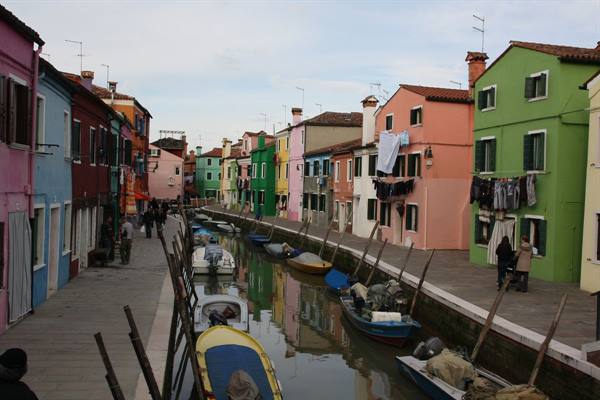
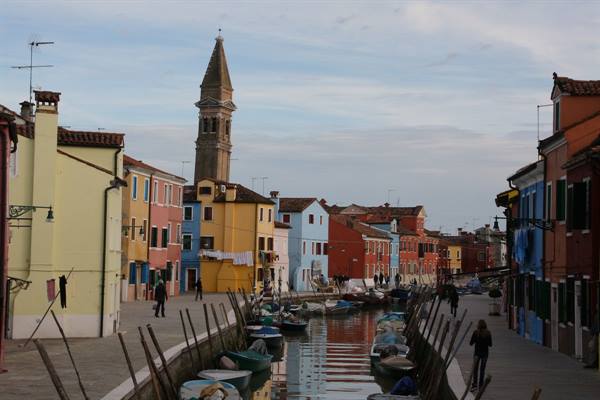
We leave the quiet and pleasant Torcello to return to Burano. Still delighted by the peace and quiet of Torcello, we begin our visit of Burano from a side street, thus putting off the crowds of tourists who throng the main streets. Burano is a little jewel, perhaps the most picturesque of the lagoon islands. The houses of Burano are all colorful: blue, yellow, red, green, orange, pink. A festival of colors and cheerfulness. The cats that stroll along the street and stop in front of the houses, the flowers on the windowsills and the laundry hung at the windows make every corner of Burano a suggestive painting. A painter wouldn't know which corner to choose, it's all so beautiful and evocative. The church's bell tower is tremendously leaning. If Murano is the island of glass, Burano is that of lace (there's also a museum).
The center of the island is packed with tourists and shops selling sweets and lace. In the 16th century the lace that was skillfully worked here by the women, while the men were fishermen, was the most sought-after in Europe. The decline of the Venetian republic marked the decline of this prosperous activity as well. In 1872 a school was founded to recover this tradition that was being lost. The shops are full of laces and lacework but I've read that authentic Burano lace is very hard to find and above all not cheap, given that its creation requires many weeks of work.
Our return to Venice is again on a very crowded vaporetto.
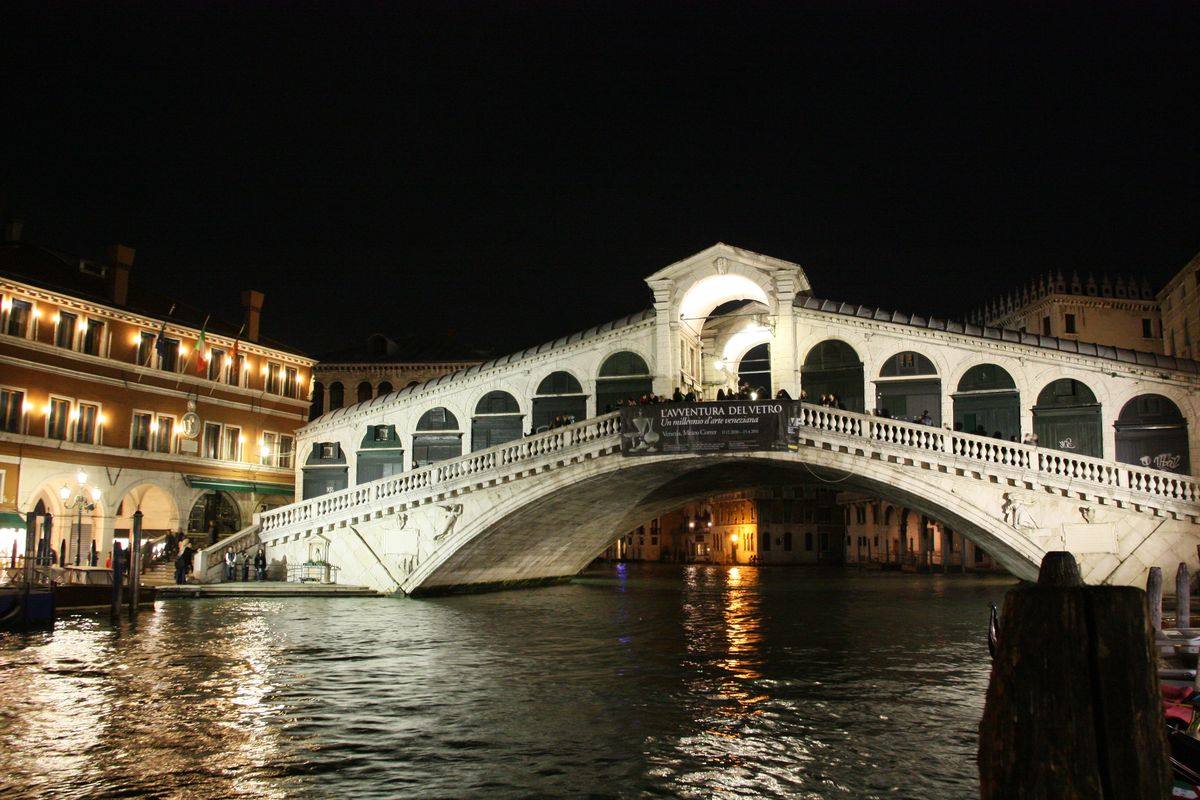
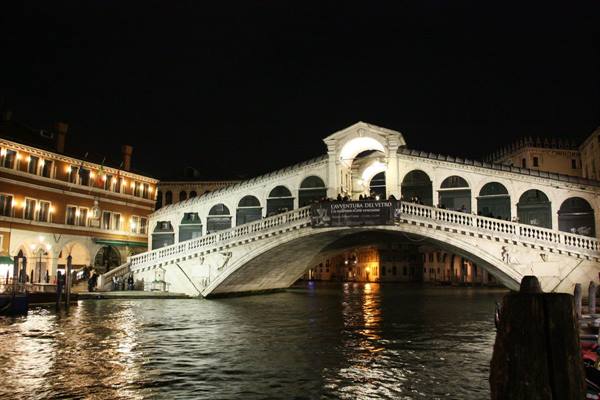
After dinner we have a nighttime visit of Venice waiting for us. We take advantage of our vaporetto pass to treat ourselves to a ride on the vaporetto along the Grand Canal. I was expecting greater illumination, but instead the palaces are dimly lit. The Rialto bridge, on the other hand, is suggestive. We go all the way to Piazza San Marco and linger a while enjoying the city in its evening dress, sitting on the many high-water walkways set out on the square. We return, again by vaporetto, sailing once more along the Grand Canal. Always suggestive.
Venice
Day 319 Mar 2011
Castello is the largest sestiere of Venice. It takes its name from the 8th-century fortress that stood on the island where the church of San Pietro di Castello now stands, the city's religious center at the time. Very beautiful is the facade of Santa Maria dei Derelitti, also known by the name of Ospedaletto right next to the church of Santi Giovanni e Paolo. It was built in 1527 to assist the sick, the elderly and to educate orphaned or abandoned girls. The church that was part of the Ospedaletto was designed by Andrea Palladio in 1575. The church of Santi Giovanni e Paolo is one of the largest Gothic-style churches in the city. It was built between the 13th and 14th centuries. Its dimensions and its austerity are surprising. The church is also known as the Pantheon of Venice because of the countless tombs, some true works of art, of the doges contained within it.
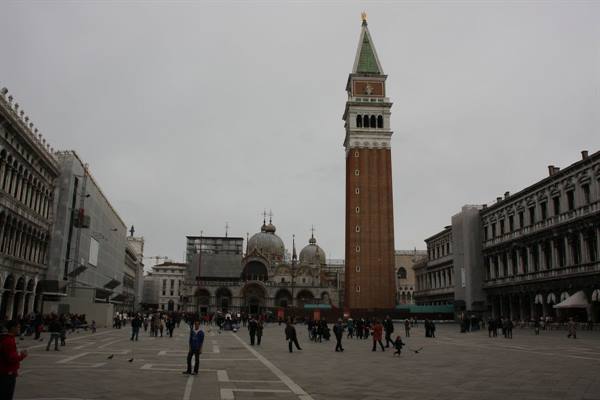
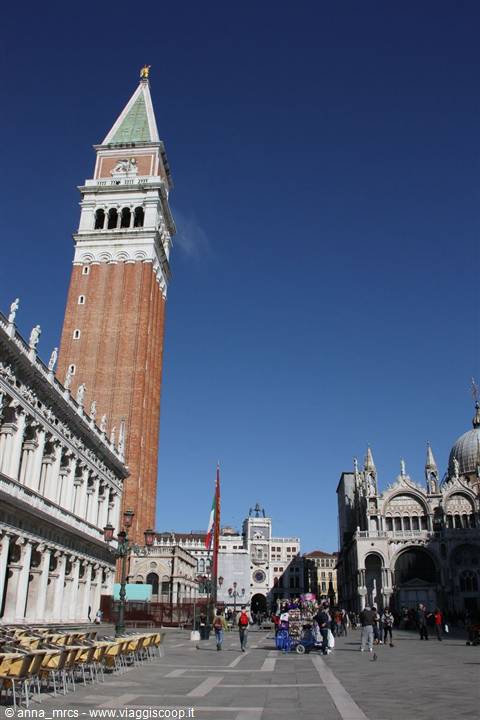
A full 25, to be exact! Piazza San Marco, defined by Napoleon as "the most elegant drawing room in Europe," is the only one that can boast the title of piazza in all of Venice. This large square has always been the stage for shows, a place of processions, political movements and of the parade and celebrations linked to carnival. The origins of what is one of the most famous and appreciated carnivals in the world are very ancient. The word 'carnival' appears for the first time in official documents of the Serenissima dated 1094, but the actual festivity was sanctioned by an edict in 1296. It was born somewhat with the same purpose with which the Romans of ancient Rome had created the Colosseum and the various circuses. All of it served to give the people, even the humblest classes, a bit of entertainment and an occasion to take part in the celebrations.
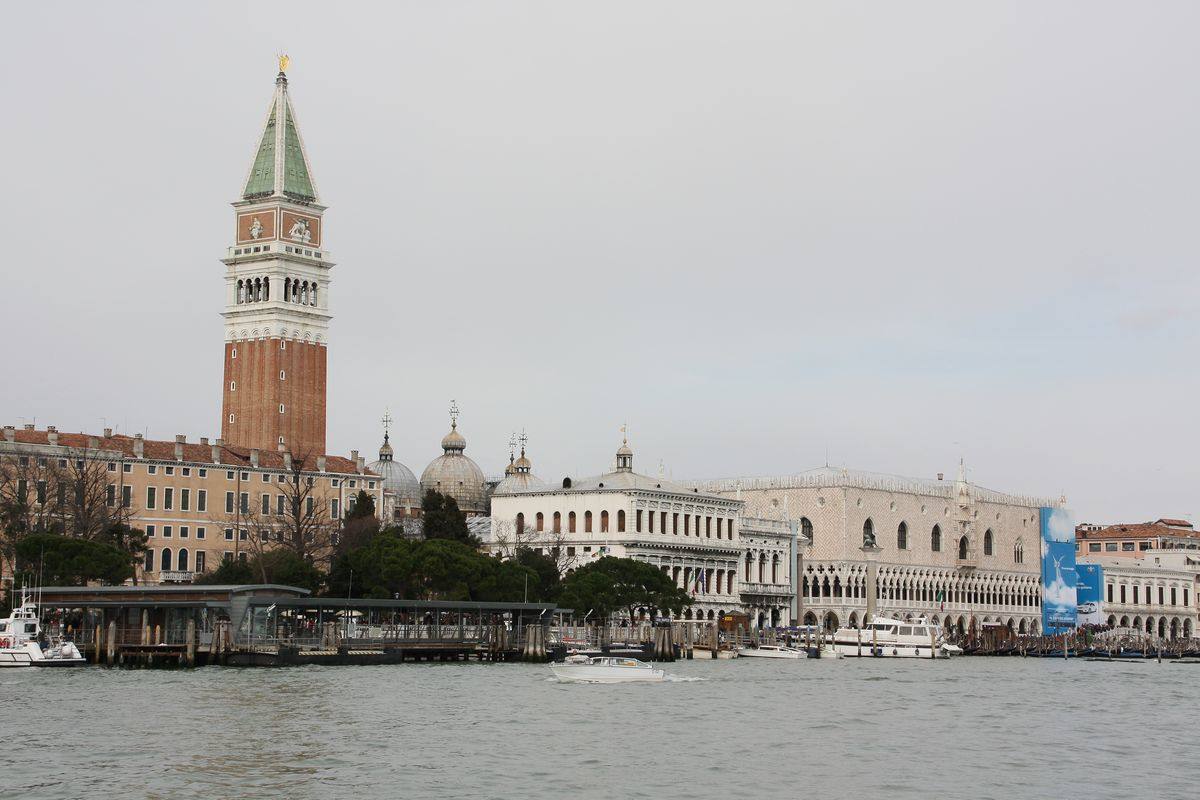
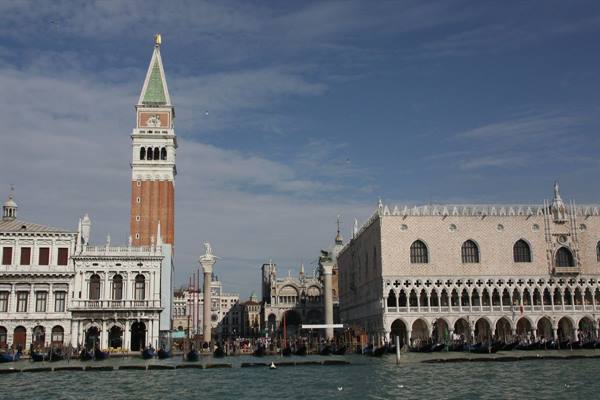
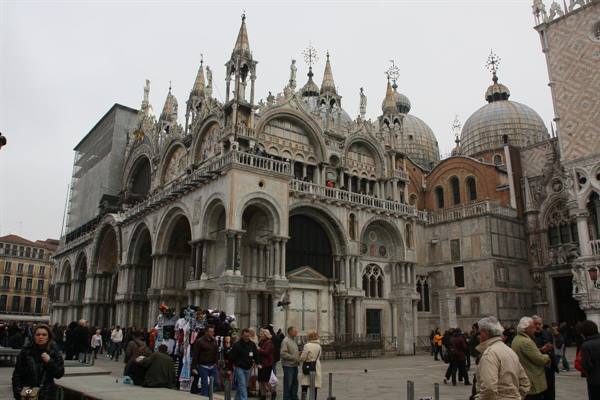
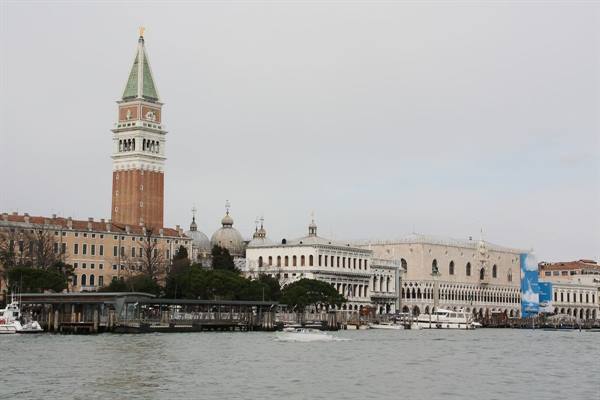
Anonymity was guaranteed by masks and costumes. During carnival everything else took second place; having fun and celebrating were the priority. Many were the shows and parties that were staged in Piazza San Marco and in the city's main streets. Napoleon, in 1797, also put an end to the Carnival of Venice. What a spoilsport! It was necessary to wait until 1979 to see the historic Carnival of Venice rise from its ashes and return, in a short time, to being what we all know. On Piazza San Marco some cafés face the square with their outdoor tables, tourists stroll, interested and captivated by the place, and the pigeons, undeterred, search for some crumb. St. Mark's Basilica and the nearby Doge's Palace are the further jewels that embellish this square. St. Mark's Basilica is imposing, the exterior is impressive as is the interior, though I always find it dark and gloomy.
It has a Greek-cross structure and five enormous domes. It is the third church erected in this place. The first, which was built in the 9th century to house the body of St. Mark, was destroyed by a fire. The second, built in the 11th century, was demolished to make room for a Basilica that better suited the style of the growing Venetian republic. Thus in 1063-94 the first version of the Basilica was built, which over the course of history underwent various enlargements and modifications. Only in 1807 did it become the Cathedral of Venice in place of San Pietro di Castello; until then the Basilica was used privately by the doge and for state ceremonies. On the facade, now partly under renovation, you can see a copy of the bronze horses whose originals are kept inside the Basilica. A curiosity I read in a magazine these days, concerning precisely these horses...
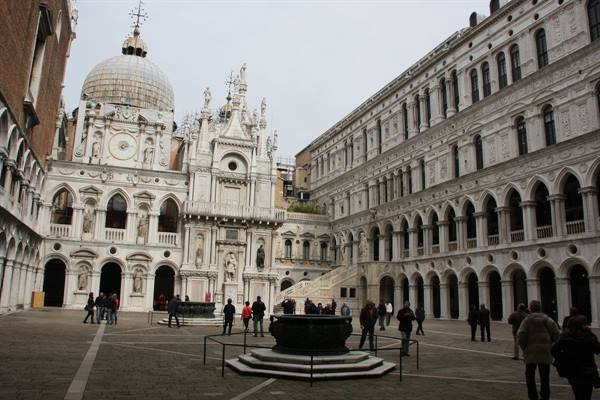
until 1204, the year they were stolen by the crusaders, along with other furnishings of inestimable value, these horses were part of the artistic heritage of Hagia Sophia in Istanbul! The interior of the Basilica is a collection of stunning art and objects. The Golden Altarpiece (whose access requires payment) is peculiar and draws rivers of tourists who wait in line for their turn to see it. The Doge's Palace dates back to the 9th century. At that time it was a fortified castle that was later destroyed by a series of fires. The current palace was built between the 14th and 15th centuries. A true example of a Gothic masterpiece. The Serenissima was administered by the Doge, an elective office, although in practice the power to decide was held by the Council of Ten and the Greater Council made up of about 2,000 members. The visit to the palace is astounding.
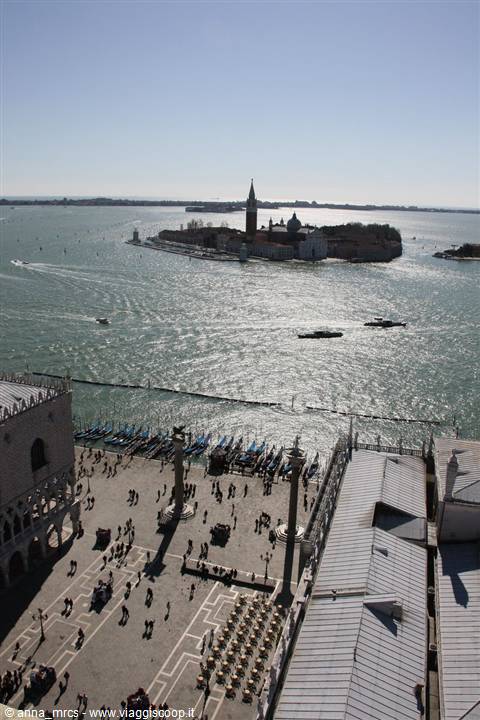
The halls, the frescoes, the Golden Staircase, the Hall of the Greater Council, everything is truly beautiful. Even the prisons, with their gloomy rooms and heavy doors of wood and iron, offer a glimpse of what the golden years of the Serenissima were like. During the visit you also cross the famous Bridge of Sighs, over which the accused passed on their way to the State Inquisitors, in an era when torture was standard practice. The name indeed comes from the moans of the prisoners. The bridge was built around 1600. On the Piazzetta di San Marco stand the columns of San Marco and San Teodoro. These too are, so to speak, spoils of war and come from Constantinople. They were erected in 1172. Between the two columns the executions of criminals were held until the mid-18th century.
Criminals guilty of terrible crimes were then cut to pieces and scattered throughout the city so as to serve as a warning to all the others who intended to commit similar crimes... a somewhat macabre and questionable system. Even today, superstitious Venetians avoid passing between the two columns. We move on to visit the alleys and the area west of Piazza San Marco, many shops and boutiques along Calle Larga XXII Marzo and many tourists strolling there. This street owes its name to March 22, 1848, when the Manin revolt took place. The Teatro della Fenice hosts theatrical and operatic performances. It has a land entrance and a canal entrance for the lucky ones who can reach the theater by boat or perhaps by gondola. It was rebuilt in 1996, having been destroyed by a fire. Fires seem to have been a constant for this theater since it was first built in 1792.
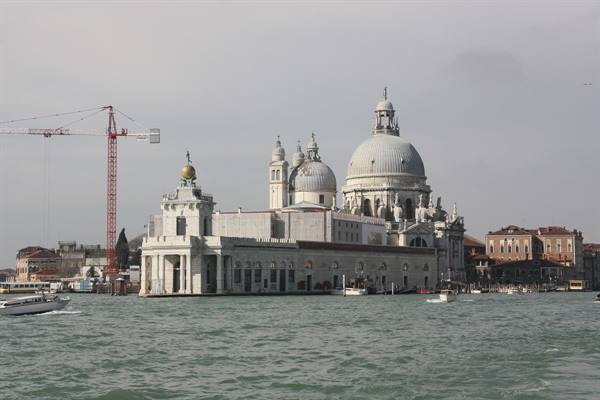
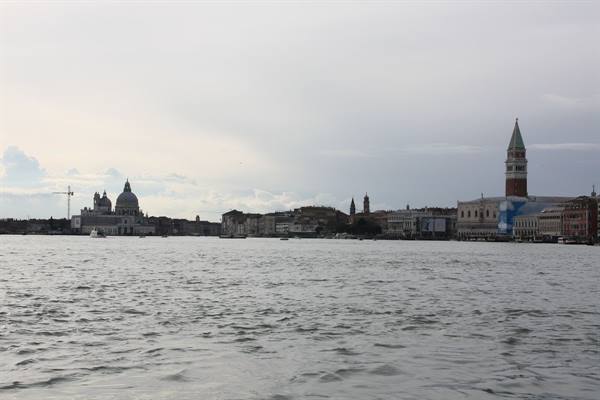
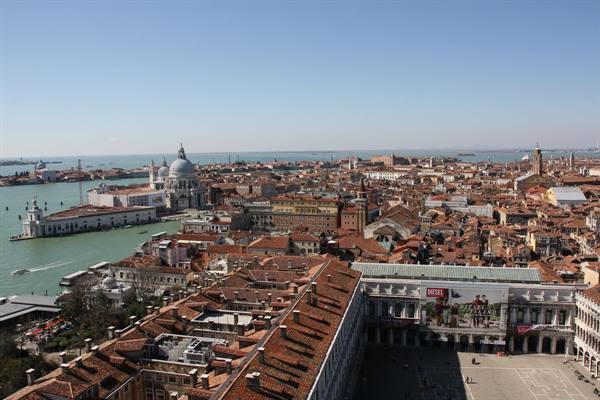
A fire destroyed it in 1836, it was rebuilt the following year. It owes its name to the mythical bird, the phoenix, which rises from its own ashes. The fate of this theater was indeed to rise several times from its own ashes. Perhaps it would have been better to choose another name! We cross the Grand Canal on one of its three bridges, the Accademia bridge, to move to the sestiere of Dorsoduro, which takes its name from the substrate of land on which this sestiere is built. We stroll through the alleys until we reach the tip of the island at Santa Maria della Salute. The church, in Baroque style, was built as a thank-you for the end of the plague in 1630, hence the name 'salute.' Every year on November 21, on the occasion of the Feast of the Salute, the faithful arrive there by crossing the Grand Canal on a pontoon bridge, set up for the occasion.
The Arsenale was the heart of the city's maritime power. The Arsenale was founded in the 12th century and later expanded from the 14th to the 16th century. During the period of greatest splendor of the maritime republic, up to 16,000 people worked here. The great Venetian ships, the galleys, were built, repaired and equipped here. The enormous entrance surmounted by two towers are the only testimonies that remain of this place, which was said to be a city within the city, because there were workshops, foundries, warehouses, foundries and docks. With the decline of the Serenissima this place lost importance and the activity in yo
Venice
Day 420 Mar 2011
Castello is the largest sestiere of Venice. It takes its name from the 8th-century fortress that stood on the island where now there is the church of San Pietro di Castello, at the time the city's religious center. Very beautiful is the façade of Santa Maria dei Derelitti, also known by the name of ospedaletto right next to the church of Santi Giovanni e Paolo. It was built in 1527 to assist the sick, the elderly, and to educate orphaned or abandoned girls. The church that was part of the Ospedaletto was designed by Andrea Palladio in 1575. The church of Santi Giovanni e Paolo is one of the largest Gothic-style churches in the city. It was built between the 13th and 14th centuries. Its dimensions and its austerity are surprising. The church is also known as the Pantheon of Venice because of the countless tombs, some true works of art, of the doges contained within it.
As many as 25, to be exact! Piazza San Marco, called by Napoleon "the most elegant drawing room in Europe," is the only one that can boast the title of piazza in all of Venice. This great square has always been a stage for performances, a place of processions, political movements and the parade and celebrations tied to carnival. The origins of what is one of the most famous and appreciated carnivals in the world are very ancient. The word 'carnival' appears for the first time in official documents of the Serenissima dated 1094, but the actual festivity was sanctioned by an edict in 1296. It was born somewhat with the same purpose for which the Romans of ancient Rome had created the Colosseum and the various circuses. It all served to give the people, even the humblest classes, a bit of entertainment and an opportunity to take part in the celebrations.
Anonymity was guaranteed by masks and costumes. During carnival everything else took a back seat; having fun and celebrating was the priority. Many were the shows and parties staged in Piazza San Marco and in the main calle of the city. Napoleon, in 1797, put an end to the Carnival of Venice too. What a party pooper! It was necessary to wait until 1979 to see the historic Carnival of Venice rise from its ashes and return, in a short time, to being what we all know. On Piazza San Marco some cafés overlook it with their outdoor tables, tourists stroll interested and captivated by the place, and the pigeons, undeterred, go in search of some crumb. The Basilica di San Marco and the nearby Palazzo Ducale are the further jewels that embellish this square. The Basilica di San Marco is imposing; the exterior is impressive as is the interior, even though I always find it dark and gloomy.
It has a Greek-cross structure and five enormous domes. It is the third church erected in this place. The first, which was built in the 9th century to house the body of San Marco, was destroyed by fire. The second, built in the 11th century, was demolished to make room for a Basilica that better suited the style of the growing Venetian republic. So in 1063-94 the first version of the Basilica was built, which over the course of history has undergone various enlargements and remodelings. Only in 1807 did it become the Cathedral of Venice in place of San Pietro di Castello; until then the Basilica was used for the doge's private use and for state ceremonies. On the façade, now partly under renovation, you can see a copy of the bronze horses whose originals are kept inside the Basilica. A curiosity I read in a magazine these days, which concerns precisely these horses...
until 1204, the year they were stolen by the crusaders, along with other furnishings of inestimable value, these horses were part of the artistic heritage of Hagia Sophia in Istanbul! The interior of the Basilica is a collection of art and stupendous objects. The Pala d'Oro (access to which is paid) is distinctive and attracts rivers of tourists who queue waiting their turn to see it. The Palazzo Ducale dates back to the 9th century. At that time it was a fortified castle that was later destroyed by a series of fires. The current palace was built between the 14th and 15th centuries. A true example of a Gothic masterpiece. The Serenissima was administered by the Doge, an elective office, although in fact the power to decide was held by the council of ten and the greater council made up of about 2000 members. The visit to the palace is astonishing.
The halls, the frescoes, the Scala d'Oro, the hall of the greater council, everything is truly beautiful. Even the prisons, with their gloomy rooms and heavy doors of wood and iron, offer a cross-section of what were the golden years of the Serenissima. During the visit you also cross the famous Bridge of Sighs, over which defendants heading to the State inquisitors used to pass, in an era when torture was standard practice. The name is in fact due to the laments of the prisoners. The bridge was built around 1600. On the Piazzetta di San Marco stand the columns of San Marco and San Teodoro. These too are, so to speak, war booty and come from Constantinople. They were erected in 1172. Between the two columns, executions of criminals were held until the mid-18th century.
Criminals guilty of terrible crimes were then cut to pieces and scattered throughout the city so as to serve as a warning to all others who intended to commit similar crimes... a somewhat macabre and questionable system. Even today, superstitious Venetians avoid passing between the two columns. We move on to visit the alleys and the area west of Piazza San Marco; there are many shops and boutiques along calle Larga XXII Marzo and many tourists strolling there. This street owes its name to March 22, 1848, when Manin's revolt took place. The Teatro della Fenice hosts theatrical and operatic performances. It has a land entrance and a canal entrance for the lucky ones who can reach the theater by boat or perhaps by gondola. It was rebuilt in 1996, having in fact been destroyed by fire. Fires seem to have been a constant for this theater ever since it was first built in 1792.
A fire destroyed it in 1836; it was rebuilt the following year. It owes its name to the mythical bird, the phoenix, which is reborn from its own ashes. The fate of this theater was precisely to be reborn several times from its own ashes. Perhaps it would have been better to choose another name! We cross the Grand Canal on one of its three bridges, the Accademia bridge, to move into the sestiere of Dorsoduro, which takes its name from the substratum of land on which this sestiere is built. We stroll through the alleys until we reach the tip of the island at Santa Maria della Salute. The church, in Baroque style, was built as a thank






0 reader comments