After visiting Prague, we couldn't miss the appointment with another historic city of Eastern Europe. The Paris of the East, as many guides call it. The capital of Hungary, Budapest.
We tackled the journey, lasting 5 days, right after New Year. Undeterred by the biting cold and the risk of finding many attractions "closed for snow"! The organisation of the trip was entirely "do-it-yourself": hotel booking (expedia) and flight (edreams) were made directly on the internet. I must say the savings were quite considerable, especially on the hotel!
Transfers
We arrived at Budapest's Ferihegy international airport in the afternoon of January 2. The cold was biting, the temperature was around zero degrees (compared with the 11° C of Rome there was already quite a difference). To get from the airport to the city there are two possibilities, both cheap: the first is the scheduled bus that takes you to the Ferihegy metro stop (line 3). Or (much more convenient, at least for the outward journey) you can use the Airport Minibus Service. This is a "shared taxi" service that gets you to your booked hotel. The price is fixed from the start and you pay directly at the airport. There's no haggling of any kind, you don't risk falling victim to the "rip-off" of the inexperienced traveller! If I remember rightly the price is around 10-12 euro per person. If you buy the return at the same time it comes to about 18 euro in total.
Allow 30-40 minutes to reach your destination. It depends a lot on where your hotel is. Bear in mind that, being a shared vehicle, you'll have to sit through all your fellow travellers' stops. We had booked the Art'Otel, located in Buda. The first thing to understand is that the city is divided into two macro-areas: Buda, the hilly area, where all the main tourist attractions are (the castle, the old town, etc.) and Pest, the flat part, exquisitely commercial and certainly livelier. The two districts are divided by the imposing Danube, which splits the city in two.
Accommodation
The Art'Otel is a beautiful 4-star hotel, but the internet offered it to us at a much lower price. The standard double room costs 200 euro a night (continental breakfast included), but thanks to Expedia we managed to get it for 105 euro with the last night free!! What's more (a pleasant surprise) the price includes use of the sauna (worth trying!!), the gym and the internet station for one hour a day. The hotel is located on the riverbank, right behind the castle and the old town, reachable in a few minutes on foot. Also, 200 m away is the Batthyany Ter stop on metro line 2. The downside is that in the evening the area is a bit dead, there aren't many venues and those that are there are rather expensive. To move around the Pest area you have to take public transport because the distance is considerable.
As I said before, with hindsight I'd book a hotel in the Pest area rather than Buda, to avoid long (and tiring) journeys to have dinner or go out for a drink somewhere.
Things to see
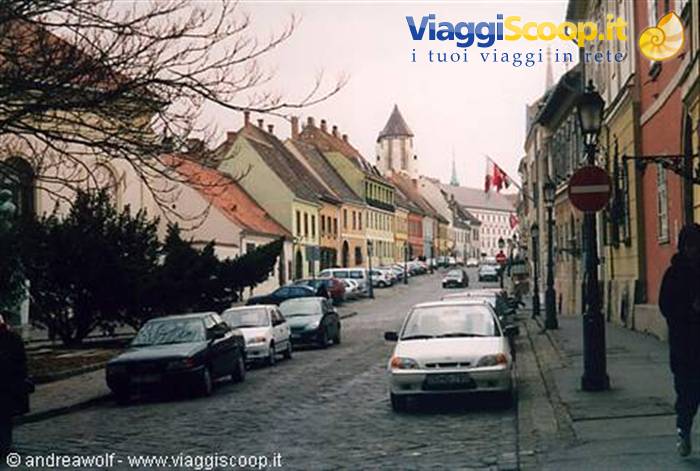
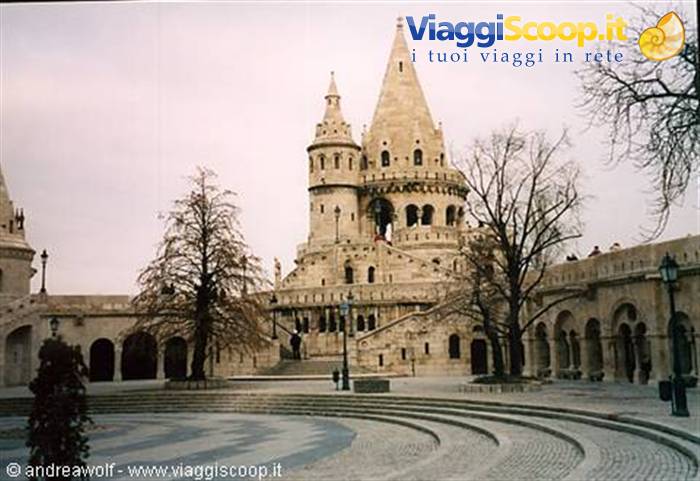
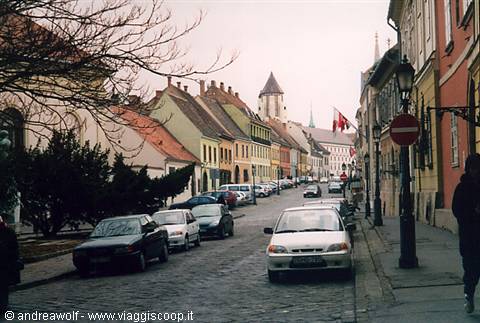
If you go to Budapest you can't miss a visit to Castle Hill (Varhegy). Declared a UNESCO World Heritage Site, it is divided into two distinct parts: the Old Town (Var) and the Royal Palace (Budavari Palota). Once you're up on the hill you can't miss the view offered by Fisherman's Bastion (Halaszbastya)... truly fantastic! You'll be able to admire the whole city! Wander aimlessly through the Old Town... this is the oldest part of Budapest, where the city arose... the streets, the houses, the colours are those of another time. There are several museums but honestly I didn't find them so exciting as to be worth visiting (like the Hungarian Postal Museum...) but de gustibus...
To get up to the hill you can use the Royal Steps, but if you don't want to walk then you have to take the Siklo funicular. Honestly it's not worth it... From the Old Town you can't help but arrive at the Royal Palace through Szinhaz Utca. Here you can admire the buildings that were the residence of the Hungarian kings (and apparently, soon, of the President of the Republic...) or visit the National Gallery or the National Library.
If you're still not tired (or cold, as in our case) then you can continue your walk as far as Gellert Hill. It takes its name from the Italian missionary put to death in 1046 and rolled down the hill in a barrel full of nails. In memory of this terrible episode there's an enormous statue recalling the Italian prelate. Climbing to the top of the hill you'll find another historic part of Budapest, the Citadella. It's a fortified town built by the Habsburgs to defend the city from uprisings, but in reality it never saw any battle. Not to be missed is the Independence monument, represented by a beautiful woman holding a palm, proclaiming the freedom of the city. The story of this statue is curious: erected after the Second World War to pay homage to the Soviet soldiers who had liberated Budapest from the Nazis, it underwent a deep "revision" at the end of communism in 1992.
All the soldiers' names written in Cyrillic were erased, as were the statues of the Russian soldiers around the monument.
This is one thing that stays with you after seeing Budapest. The marks the communist occupation left on Hungarians are strong. All the symbols of communism have been torn down as if to erase the memory of a sad era without dreams. Striking how all the symbols have been subjected to revision and meticulous destruction, except those that serve as historical memory for possible future revisionists. And so the building of the Secret Police, where dissidents (real or supposed) were tortured, has remained and been turned into a museum. Seeing it from outside, with its imposing facade and thick walls (seemingly so that the screams of the tortured prisoners couldn't be heard) fills you with a deep sadness. The hope is that no one will have to relive these experiences in the future.
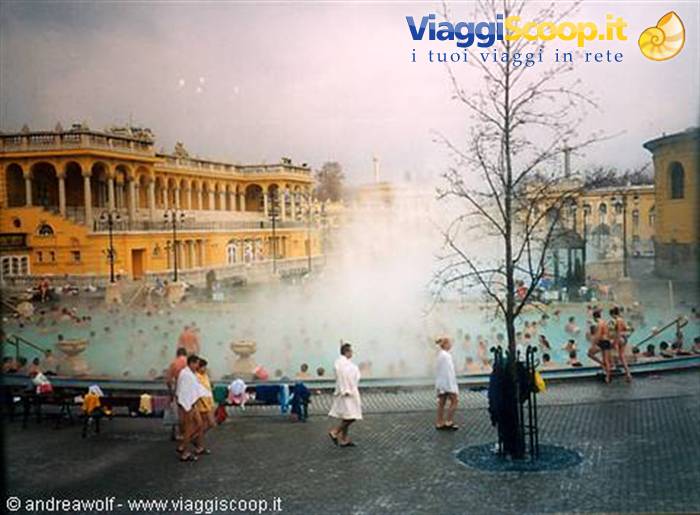
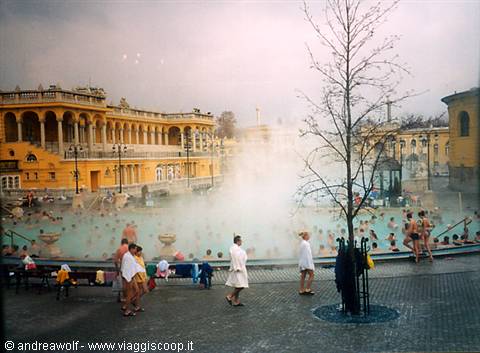
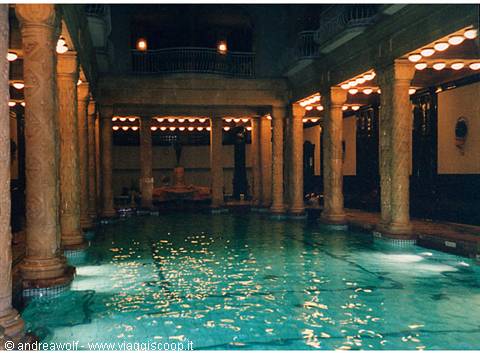
Since you're on Gellert Hill, then you can't miss the most famous thermal baths in Hungary, those of the Hotel Gellert. It's a very famous spa, with thermal baths, outdoor pools (they work in winter too, but don't worry, the water is heated!) and indoor ones, massages and mud of every kind. It feels like being in a medieval cathedral, with imposing marble columns and a truly evocative atmosphere. You can't not go, you'd miss one of the main attractions of Budapest. As for the pools, they are mixed, i.e. men and women together. The thermal areas, on the other hand, are separate. For the pool you can also rent a swimsuit and towel, while in the thermal areas you won't need them.
You go in strictly naked! But you'll quickly discover that a sense of modesty is absolutely unknown to Hungarians and after a few minutes of embarrassment you'll manage to enjoy the beneficial effects of the thermal waters! Among the various spas in Budapest (there are 6 very beautiful ones), besides the Gellert ones I'd point you to those of Szechenyi in the City Park. They are the largest thermal baths (nine pools in all!) and, being municipal, they have reduced rates... the less you stay the less you pay! Part of the entrance price will be refunded to you on the way out in proportion to how long you stayed!! Bear in mind that entering the spa costs no more than 15 euro per person (including swimsuit rental).
Day 13 Jan 2004
Pest
Pest is definitely the liveliest part of the city, full of bars, shops and also interesting places to visit. Don't miss the Jewish quarter, which starts at Oktogon Ter and reaches the heart of the inner city (Belvaros). These are places rich in recent history, where the wounds inflicted by the Nazi occupation are still open.
On the eastern side of Pest, facing the hill, there's the most photographed monument (so they say) in Budapest: the Parliament. It's an imposing building, austere and of an intimidating beauty. Unfortunately visits are allowed only on certain days, and so you'll have to be very lucky to be able to visit it inside.
Another great attraction of Budapest is its Bridges over the Danube. They were all destroyed by the Germans during the Second World War and all promptly rebuilt. The most famous is probably the Chain Bridge, the oldest in Budapest. But equally beautiful are the Elizabeth Bridge and the Independence Bridge. If you want to walk across these bridges to cross the Danube, be prepared for a good long walk... we did it at -6° and in a snowstorm!! It wasn't exactly a nice experience, also because the wind funnels into the bed of the Danube and reaches tremendous speeds, and you'll realise it halfway across!
The Szechenyi baths in the City Park
Day 23 Jan 2004
Shopping
For a bit of shopping you can't fail to visit the commercial area, that of Vaci Utca. It's a real tourist trap, where you'll find everything... much more expensive! Move away from this area, go towards the central station or enter one of Budapest's gigantic shopping centres and, incredibly, the prices will drop! I'd point you to the "Mammut" shopping centre with a gigantic indoor fountain, or the West End City Centre. I personally preferred going to the Petofi Csarnok flea market. It's an "old style" Porte Portese, where you can find everything... records, cassette players, relics of the Russian occupation, Romanian detergent canisters, etc. Another place to do some shopping is the Great Covered Market. It's an enormous market spread over two floors. On the ground floor they sell foodstuffs of every kind... from Hungarian salami to the Unicum bitters...
you'll find a vast assortment that will satisfy any culinary need of yours. The prices are truly low... bear in mind that the market is frequented by local people who have an average salary of 300 euros a month. Do the maths yourself!
The second floor is more touristy... you'll find laces and embroidery, embroidered tablecloths, Bohemian crystal (much more expensive than in Prague!) and the secret boxes (secret box)... they're little boxes that let you hide some precious object.. a very popular souvenir that won't strain your finances much. For embroideries, on the other hand, be prepared to pay exorbitant amounts! Haggling is allowed, but don't be too insistent, because Hungarians gave me the impression of being very proud people, and so excessive insistence could offend them.
Inside the market there are also several places where you can eat and drink something for a few euros. It's a very fun place and if the weather (as in our case) is inclement then you'll like it even more!
Avoid: the crystal, absolutely not typical of Hungary. Don't miss: the Herend porcelain (with an attached ten-year mortgage to be able to buy it!).
A glimpse of the Old Town (Var)
Day 34 Jan 2004
Meals, weather and transport
The thing Budapest and Hungary are famous for all over the world is Goulash. We tried it in several places and must say it's fabulous. A boiling broth, with pieces of meat and paprika. All for less than 2 euros! On a freezing winter evening it will give you the courage to leave the place to face the cold! If you're not a meat lover you're in trouble, though several places offer fish (from Lake Balaton) or vegetarian dishes. The tastiest dishes are venison and wild boar, baked with potatoes and lots of paprika! Paprika, like sour cream, are very common condiments and are put practically everywhere. If you don't like them, you'd better say so in advance! I suggest you avoid the places in the Buda area, which are quite expensive and excessively touristy. Instead, stop at the classic trattorias (vendeglo) of Pest.
Don't worry, many have the menu in English and anyway the waiters are very patient and will help you eat what you want. The prices are affordable (except in the tourist restaurants) and the portions super-abundant. A complete meal (beer, goulash, crêpes) will cost you between 5 and 10 euros. Remember to order one course at a time, otherwise you risk not finishing everything. Do try the famous Hungarian crêpes (palacsinta) at least once, the one with chocolate and walnuts is superb. There's a place in Buda, Nagyi Palacsinta, that serves crêpes 24 hours a day! Without wanting to influence you too much, I'd like to point you to two places. The first is Pozsonyi Kisvendeglo. A place frequented by very young people, it offers abundant and traditional Hungarian dishes, truly delicious! Low cost, but you have to book or wait patiently, because the place is small and very well known.
The second, on the other hand, is a trattoria located in the Jewish quarter at Dob Utca 26. You eat well and spend little... or nothing, depending on your luck! In fact when the bill comes, the owner turns up with a glass and three dice... if you manage with one throw to get 6 on all three dice... you don't pay the bill!! Wine lovers will discover the variety of Hungarian production and above all the cost of certain bottles... nothing to envy in the prestigious Italian and French wines. Worth mentioning is a local production, the wine of Eger, very famous. Hungarian wines indicate on the label the composition of the grape varieties used to produce the wine: the higher the percentage of prized grape varieties, the more "stars" and the higher the price. Remember to also taste the grappas produced by Zwack and the Unicum bitters.
If you have to buy alcohol to take home and you don't have particular requirements, I suggest you go to any supermarket in Budapest, while wine shops are reserved for true connoisseurs and holders of credit cards of a certain level! Be careful with the airport Duty Free, because you could be very disappointed by the prices, much more convenient than the elite wine shops of Budapest but certainly higher than the supermarkets!
Climate
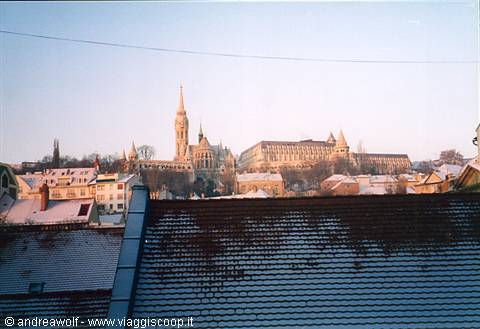
We went in the middle of winter. It's very cold, during the day the temperature never rose above zero. It snowed for two days. But it's truly enchanting, with all the roofs white, the Danube strewn with sheets of ice... mulled wine will be your favourite travelling companion! Unfortunately in winter many activities are suspended (for example the trips on the Danube) but you'll still have the chance to have fun and see lots of things. Bring warm clothes and comfortable shoes, don't forget a woolly hat and gloves... at - 10 °C your fingers could fall off!!
Local transport
Getting around Budapest with local transport (metro, bus and lots of trams) is the best choice. You can reach any place in a few minutes. The stress comes from buying the tickets! In fact there are no single tickets as in Italy and in many other places in Europe. Instead they're combined tickets. Let me give a few examples: 1) metro ticket max 3 stops without changes 2) metro ticket max 5 stops with one metro change 3) bus/tram ticket max 5 stops without changes 4) bus + metro ticket (only one change) max 90 minutes A 5-stop metro ticket costs about 1 euro. There are two possibilities: with saintly patience, tackle the purchase of each ticket by explaining to the person at the ticket window where you intend to go (be careful because very few speak English, but they're anyway very helpful and patient).
The second possibility is to buy a ticket that allows you to travel without limits on the whole Budapest transport network. There are two types: valid for 3 days or the (less convenient) one for 1 day. I strongly advise against buying the Budapest Card. This card (costs about 20 euros) gives you the right to travel on all means of transport and to access lots of Budapest attractions for a certain number of days. But in winter many of the places "included" are closed and many of those open have no particular interest. Those of greater interest, on the other hand (you'll soon find out!), can be visited at a discount (and are not included in the package!).
Emotions
Budapest is a city rich in emotions. The feeling is one of strong dignity and above all of a desire to emerge and excel. For too long this population was marginalised, suppressed and mistreated. Now in Hungary too there's a breath of freedom and innovation. It's a very beautiful and fascinating place, I knew that before going there... but the real surprise was the welcome of the people. All helpful and with a mad desire to engage with foreigners, to absorb their culture, to get closer to their mindset. They're very determined, they'll succeed very soon. Happy travels to everyone!
The Fishermen's Bastion (Halaszbastya) from which to enjoy an incredible view of Pest


0 reader comments