Before departure we decided to try our luck and find accommodation directly on site: as soon as we disembarked from a 30-hour journey we found a room in a charming residence in Aghia Efimia, Hotel Logaras, at quite reasonable prices: we spent 45 euros for two in a studio with terrace and kitchenette. We moved all over the island, in daily stages of course, but we visited it almost entirely: truly enchanted places full of peace and tranquility. We particularly liked the north of the island, with the town of Fiskardo and the beach of Emblisi, cooler and breezier areas compared to the south, with Skala or Xi. We made a quick trip to nearby Zante, discovering its blue caves at Cape Skinari. The spirit of the island is so tied to calm and relaxation that within a few hours we were infected and let ourselves be completely enveloped by the beauties of nature and of the tables.
A trip truly full of surprises.
Day 18 Aug 2010
the long journey
We boarded at 1:30 p.m. on 07-08-2010 in Ancona and disembarked in Patras the next day at 11:30 a.m. We drove for about two hours to reach the port of Kilini, where the ferry to Poros was waiting for us. This port is tiny and not even properly signposted; we found it purely by chance, even though it is the connecting point with Kefalonia. We face a very rough sea and in about an hour and a half we disembark at Poros. Since we hadn't booked any room before setting off, we head towards Sami in search of accommodation: our attention focused on Sami or Aghia Efimia as they are positioned centrally with respect to all the other towns on the island. Sami disappoints us, perhaps due to the tiredness after 30 hours of travel, but we don't find anything convenient and the people even treat us rather curtly.
Disheartened, we move to Aghia Efimia, which is five minutes away by car, and after a bit of searching we find an apartment in a street behind the port, at the Logaras hotel: the owner was really extremely helpful and the price quite reasonable (45 euros for a small apartment and 55 euros for a large apartment), a quick shower and immediately out to discover the little port village: it is all developed along the road that runs beside the port, where there are countless venues, but it has a charm all of its own: everything flows calmly and without the rush of tourist towns, you savour the true Greek style.
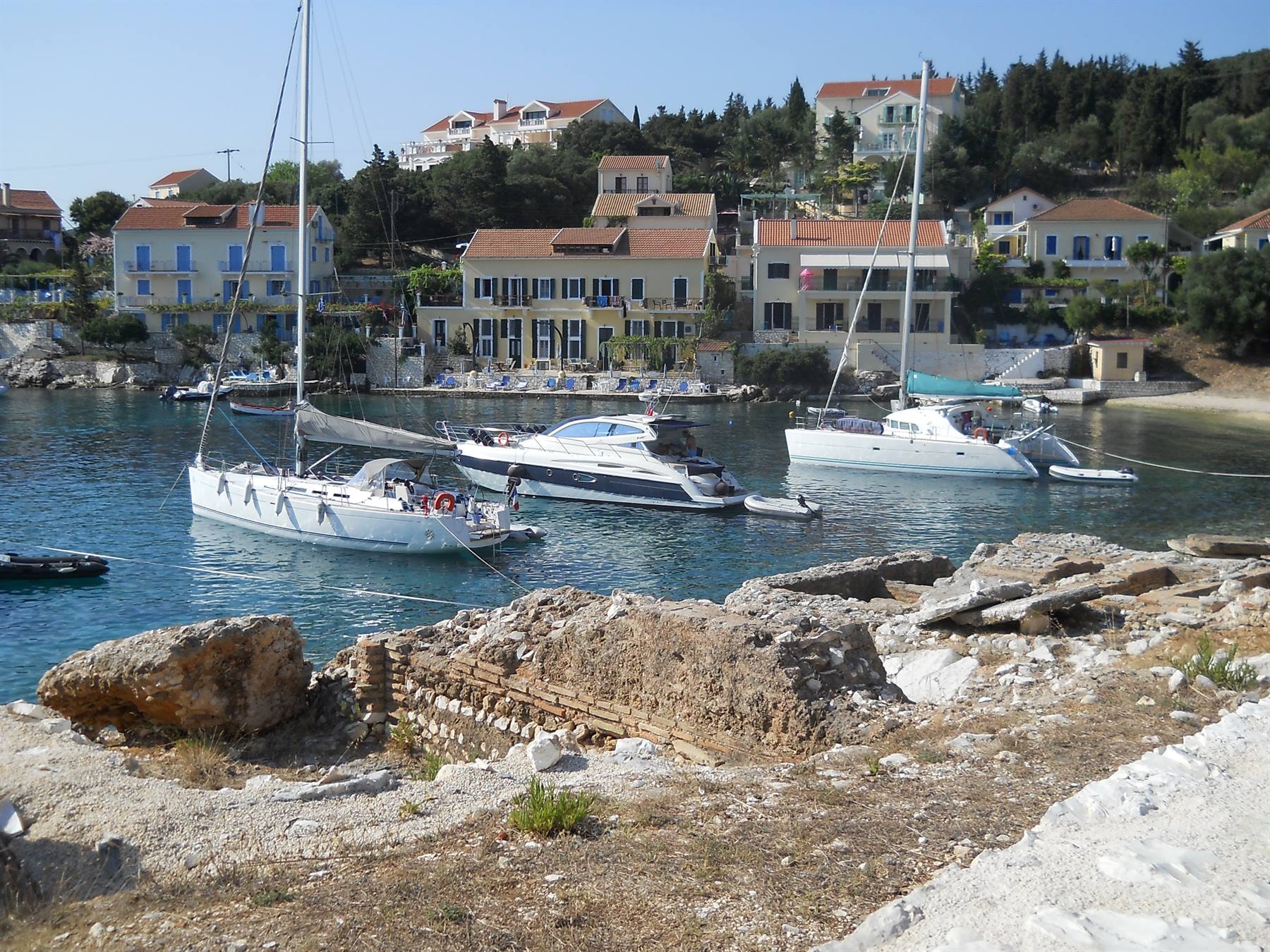
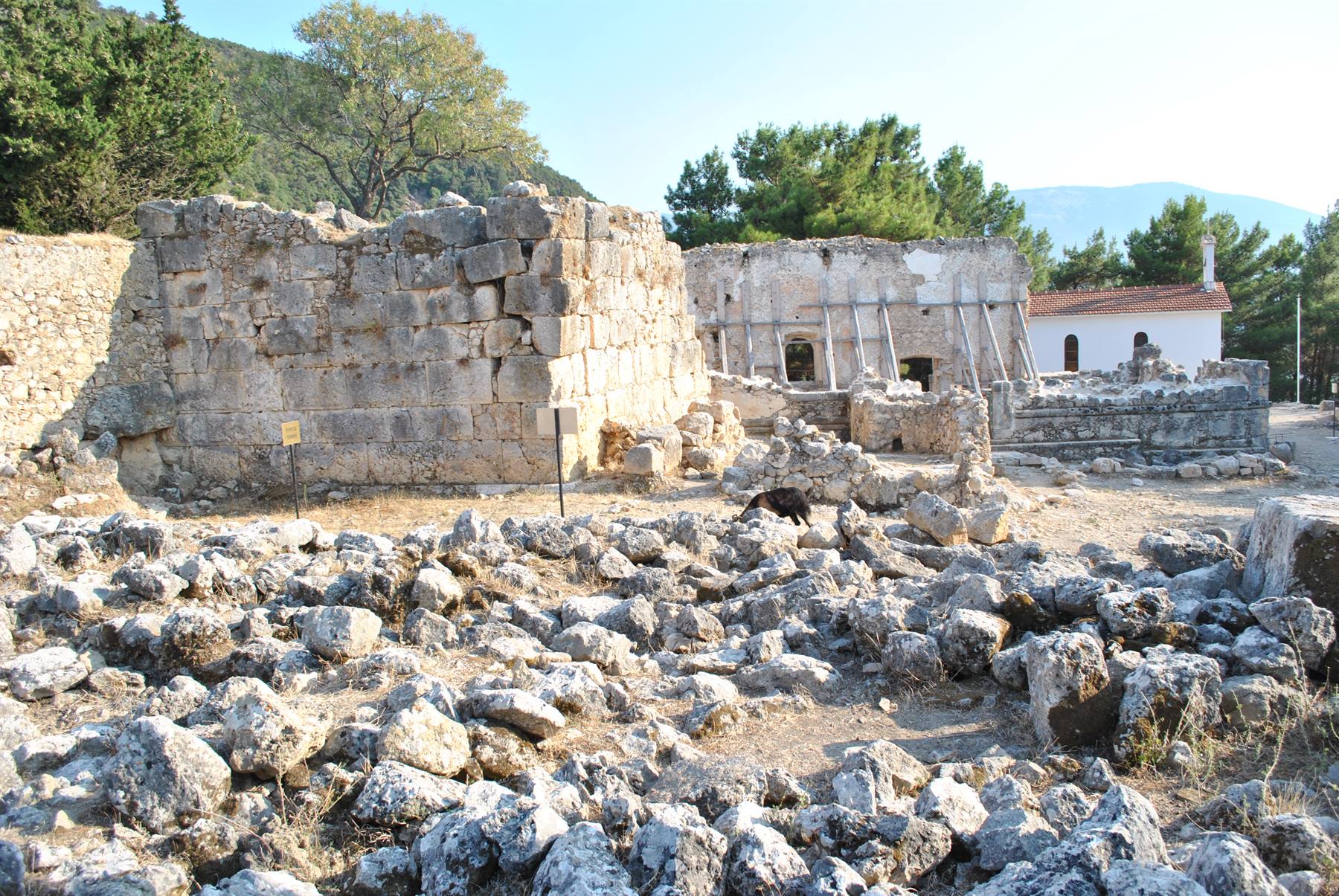
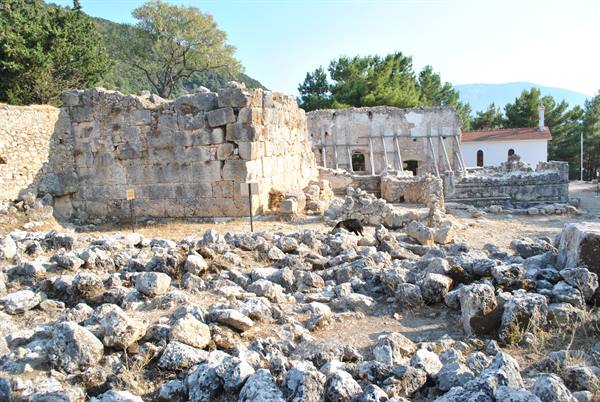
Roman cemetery in Fiskardo
Day 29 Aug 2010
discovering the north
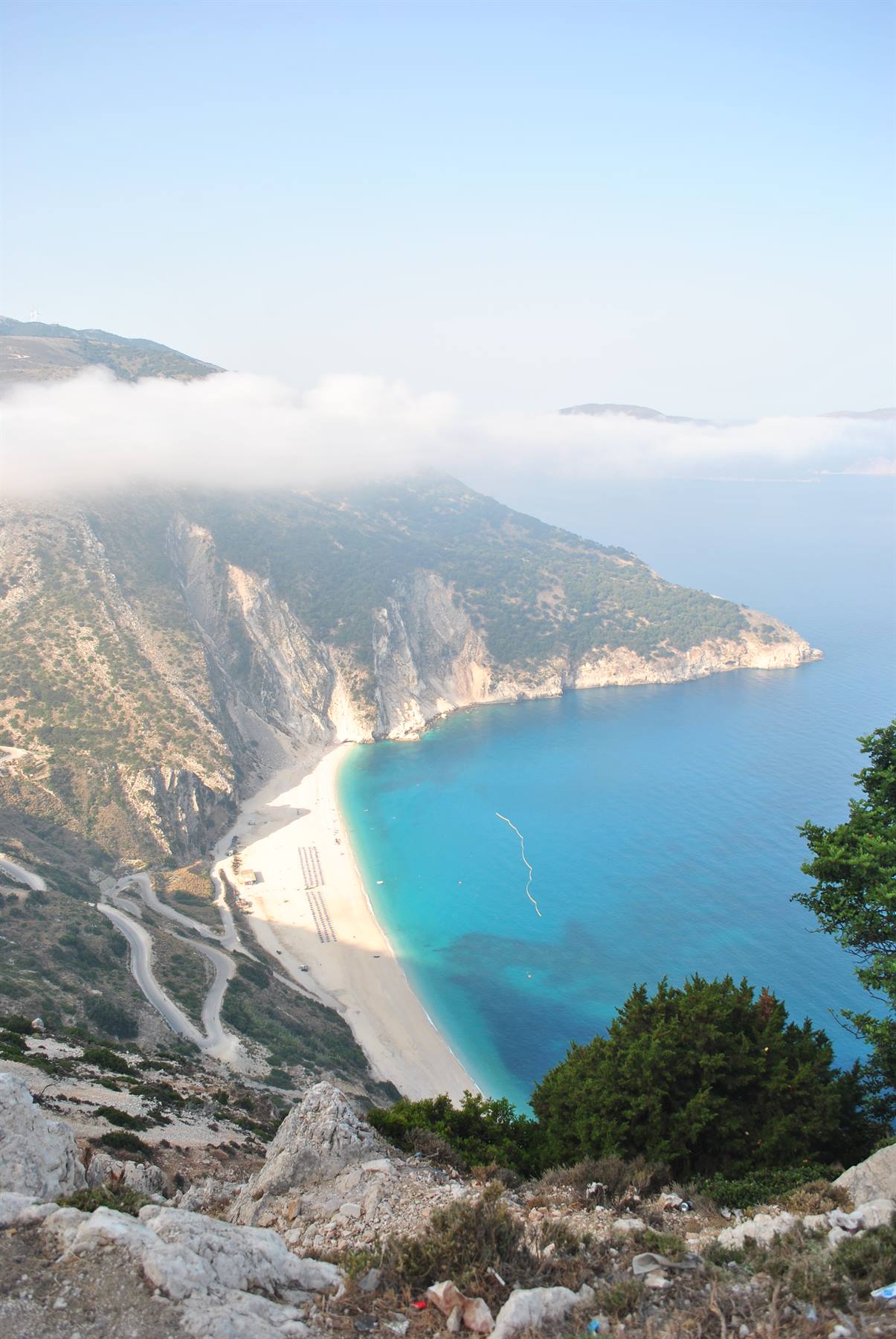
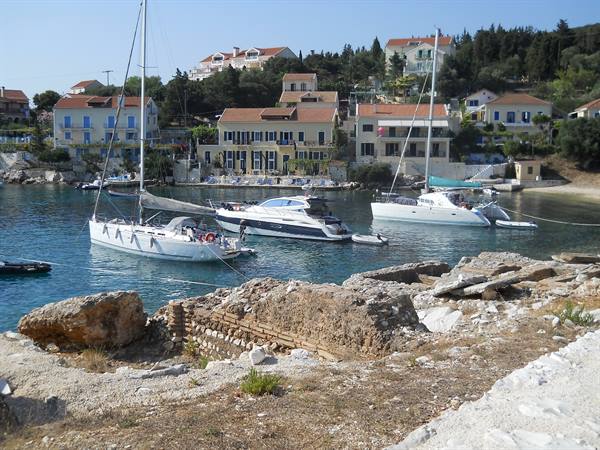
On the 9th we set off early because the visit to the north of the island awaits us: the first stop is Fiskardo. Along the way we stop at the viewpoint above Myrtos beach: a breathtaking panorama over an equally spectacular beach: unfortunately early in the morning it is still in shadow; the ideal would be around 11 so as to see the turquoise colour that characterises it. We arrive at our destination: the little village completely captivated us, it's a corner of paradise, off the usual routes. The flowerpots of the houses full of colourful pink and fuchsia flowers, the crystal-clear bay, the remains of a Roman tomb right by the sea, an endless number of tavernas, bars and little shops along the small harbour. It has remained as it was before the earthquake, in Venetian style: it is the only village that was saved from the destructive earthquake that struck the island in 1953.
From Fiskardo we head back towards the Assos peninsula: along the way we follow the signs for Emblisi beach and we are left open-mouthed before so much beauty. A small bay full of trees and vegetation right by the crystal-clear water; equally beautiful but much more evocative is Aliates beach, which is reached from a little road right in the centre of Manganos: there are cliffs that plunge into the sea and a tiny strip of sand. We take the road again for the Assos peninsula: at the junction we stop at the viewpoint that offers us the sight of steep walls plunging down.
We descend along narrow hairpin bends and park outside the little village: here too the houses and little places are all along the small harbour on an emerald-green bay; we also find a few ruined houses, a memory of times gone by! The peninsula is dominated by the ruins of the castle of Assos: you reach it on foot along a road that climbs for 1.8 km. I had read that it isn't worth it, but we decide to judge for ourselves: in reality it really isn't worth it!!
Myrtos beach
Day 310 Aug 2010
poking around Aghia Efimia and Sami
On 10 August we decide to go to Myrtos beach hoping not to find a rough sea. We descend the dangerous road with many hairpin bends and settle on the beach: at 8 in the morning it is completely deserted because it is still in shadow, but above all because life in Greece doesn't begin before 10. Around 10:30 you start to see the comings and goings of cars that completely fill the available car park. Unfortunately the sea is very rough, but we try to swim anyway: the waves are deadly and it can even be dangerous because they hurl you towards the bottom, which is stony (I got a very painful hit from a stone on my foot!!).
The turquoise colour, from down below, can't really be appreciated, and honestly I think it makes more of an impression from above than from the shore, but it's a matter of taste!! After the beach we head towards Karavomilos, right next to Sami: along the way we see the signs for the monastery of Themata and decide to pop in. Too bad we get lost several times along the way due to the absolute lack of signs: in the end we manage to find it, surrounded by cows and calves, but it's closed. Disappointed, we come down from the mountain and go to see this geological phenomenon at Karavomilos: it is a siphon of water that sinks into the ground north of Argostoli, at Katavothres, and comes out here in a pond adjacent to the sea; a paddle wheel marks the slow movement of the current.
The same water also passes inside the Melissani cave: the cave is visited by boat (9:00-19:00), with 10 places, but spending 7 euros for a 15-minute tour seemed a bit excessive to us, even though the spectacle it offers is truly sensational. There is a turquoise-blue water, a mixture of fresh and salt, on which the sunlight is reflected because the roof of the cave has collapsed: it creates plays of different colours according to the time of day you go. Still wanting more sea, we move to Andisamos beach, which is reached by heading towards old Sami: from above you could see a great many cars, but the pebble beach is very long and the people are well spread out, plus there is a large dirt car park available. It is the only sea in which we immersed ourselves to observe the fish and we actually found them: a myriad of little colourful fish and steep seabeds.
Another stop we make is at old Sami, the archaeological site on the hill right above the new Sami: as usual there aren't many explanatory signs but the setting is truly evocative and there are some spectacular olive trees. By now tired, we go back home and for dinner we taste our first pita: we choose a place on the port, the Grill House, and we enjoy our dinner at an absolutely ridiculous price: 2.20 euros each!
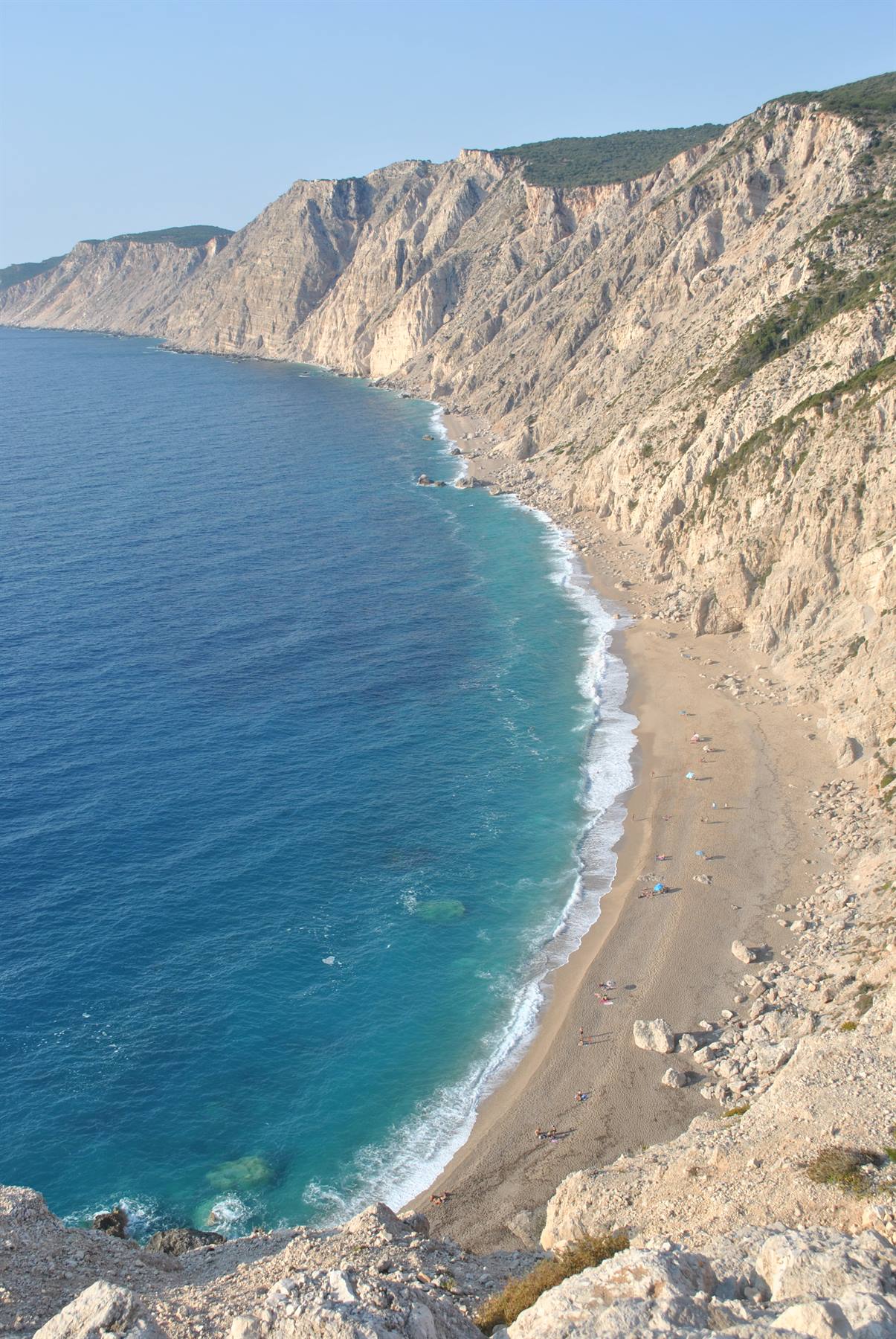
Platia Ammos beach
Day 411 Aug 2010
heading south-east
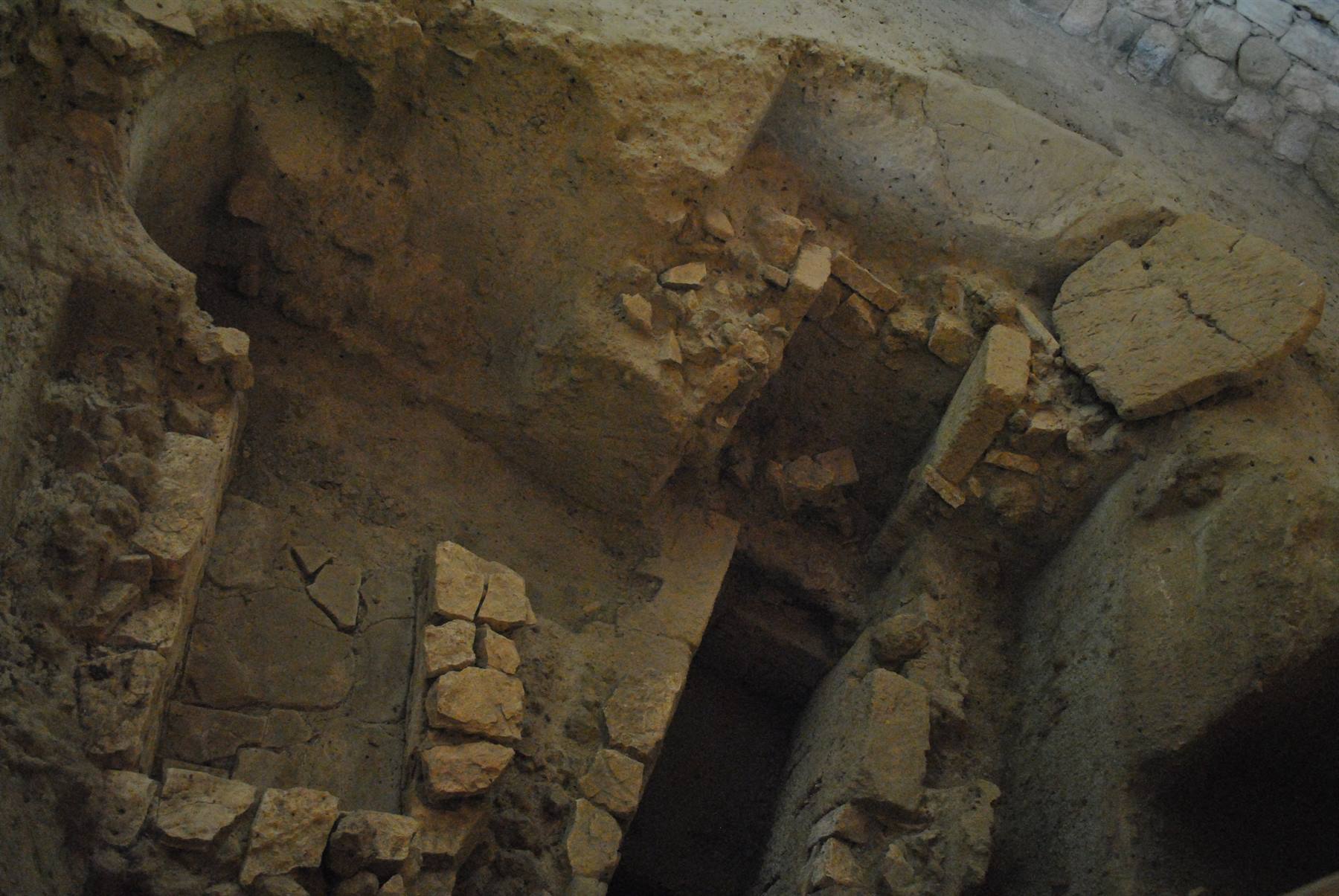
On 11 August we get ready to visit the south-east of the island. The first stop is Tzannata and the Mycenaean-era tholos tomb: a truly enveloping place, and a very well-preserved and well-presented historical testimony. It is the largest and best-preserved Mycenaean tomb in Western Greece. Entry is free and the lady we found on site even speaks Italian. We had thought of stopping at Poros to see the Drakena cave, but the lady advised us not to go since it can't be visited and all the finds discovered there are kept at the archaeological museum in Argostoli. We continue towards Skala, where we go to see the remains of a Roman villa, from the 2nd century BC: here too entry is free and it is absolutely worth it because the mosaics on the floors are nothing short of stupendous and very well preserved; there is also a very helpful guide.
Seized by attacks of sultriness (in the south it is much hotter than in the north, even though it is a small island), we go down to the beach and choose the one at Kaminia, where the turtles come to nest: obviously we didn't see any and after a refreshing swim we set off again on our tour. Along the road to Pessada, we stop at the church of the Madonna at Markopoulo, built on the site of an ancient convent: according to tradition, on 15 August, the feast of the Assumption of the Virgin, harmless little snakes with a cross on the back of their heads appear in the church, which are shaken, and are a good omen; the custom holds that they protect the island from earthquakes. The legend tells that during a pirate attack on the convent, the nuns who lived there prayed to be transformed into snakes to avoid being taken prisoner; their prayers were granted.
We continue the journey passing through Lourdas (it takes us a very long time), but we don't stop at the beach because it is very narrow and chaotic, and we continue on to Pessada. To go down to the beach there are no signs except near the little village; we decide to pass through here because it is the point from which the ferries to Zante depart and we need information: there is only one bar within a 10-kilometre radius, and it doesn't sell ferry tickets. These must be bought at the moment of boarding. Lunchtime is approaching and we ask where to eat some good fish: a gentleman directs us to the little harbour of Spartia; unfortunately there are no road signs and we get there by intuition. The place is called WaterWay: the food is very good but we were expecting slightly lower prices.
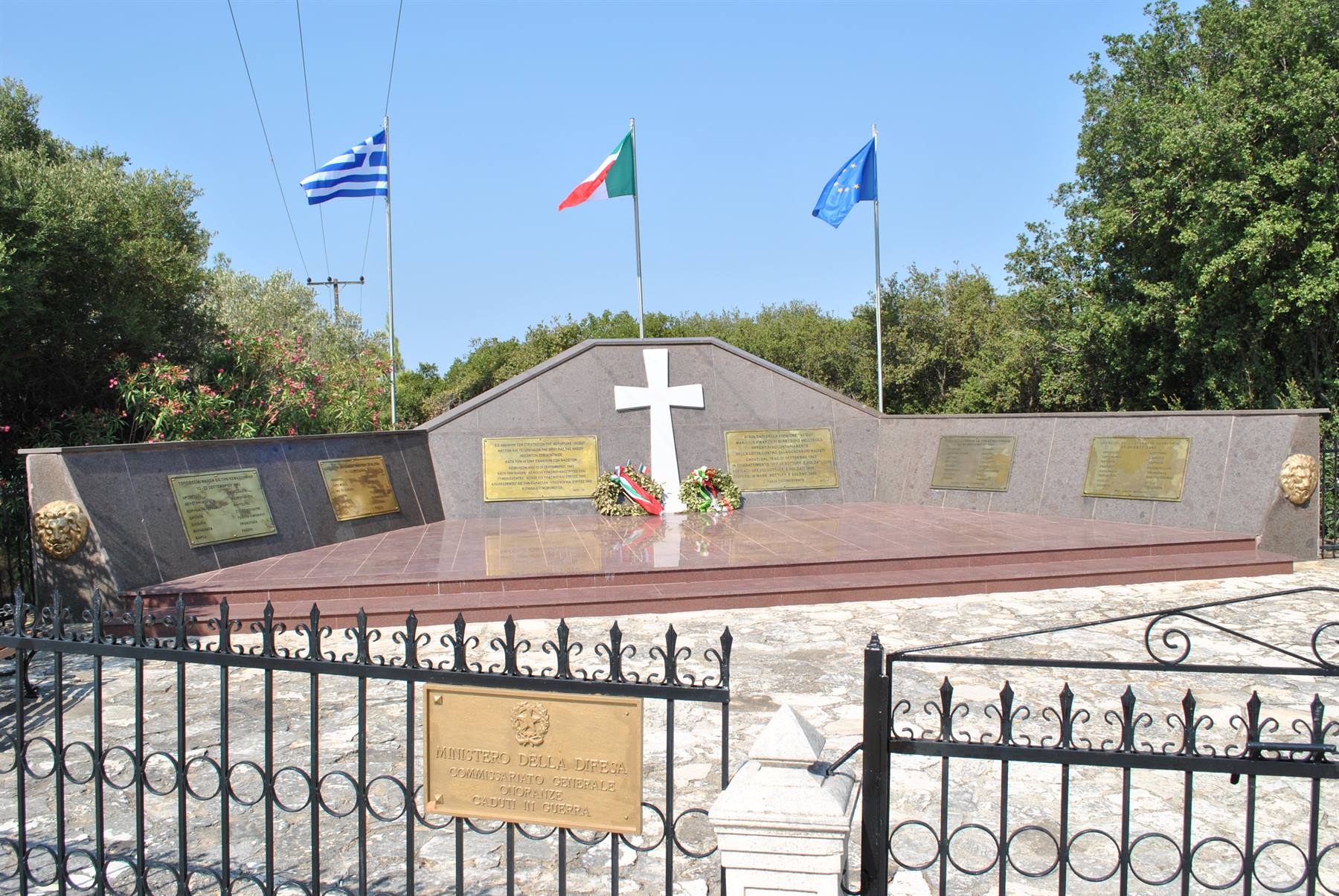
Once the meal is over we go down to the beach below the cliffs there: the bay is very pretty but at 5:30 p.m. it is already in shadow, so it's advisable to go there in the morning. The next stop is Argostoli: we decide to stop even though we'll come back later at our leisure; the pedestrian centre is really nice, there are lots of little shops, bars and restaurants; there is also a Catholic church where mass is celebrated in Italian on Sundays, and adjacent to it the museum dedicated to the massacre of the Acqui Division. We stop to talk with a gentleman in charge of the museum who tells us a bit about the history of the massacre and gives us information for reaching the altar dedicated to the division. The inhabitants of Argostoli and the Italians themselves on holiday won't be able to help you find the monument, and unfortunately the signage is scarce.
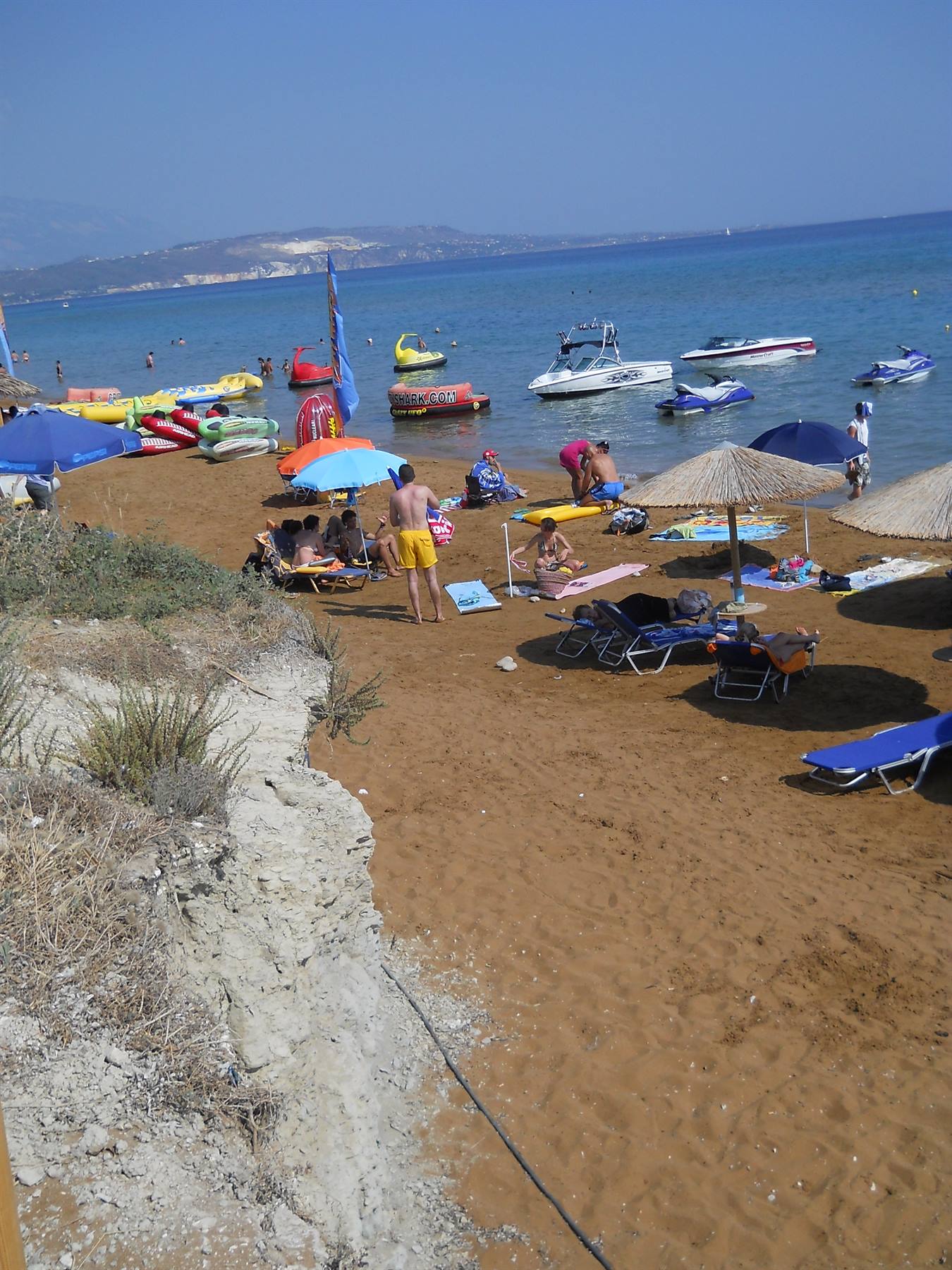
Xi beach
Day 512 Aug 2010
Argostoli and the clay beach
On 12 August we decide to devote ourselves to Argostoli and the Paliki peninsula. We arrive in Argostoli and immediately set about looking for the memorial: it is located on a hilltop and the place has a total sacredness and respect about it; it feels like going back in time and in feelings; a little further along the road there is also the pit, where the officers were shot, but unfortunately it is privately owned and the Italian state has not been able to pay homage to this second place (I recommend watching the film "Captain Corelli's Mandolin", inspired precisely by these events). The second stop we make is at the archaeological museum, where all the finds discovered in the various Mycenaean tombs of the island and others are kept; it's small but very well done. We continue our stroll to discover the little alleys, the shops and the views over the sea.
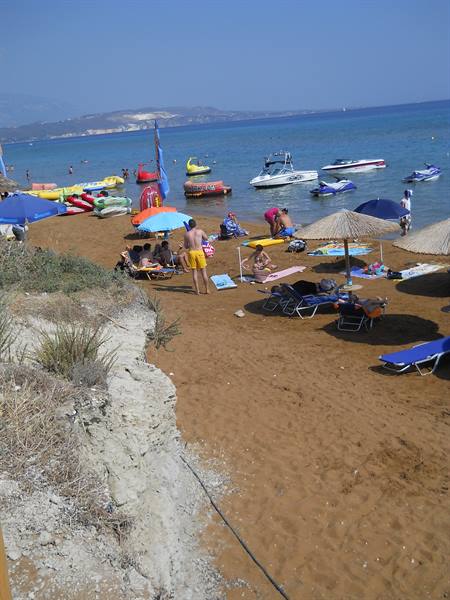
We set off again for Lixori, but we decide not to stop and go straight to find a special place for lunch, in Mantzavinata. The beach is called Agios Nicholaos Vatsa and is announced by a nice danger sign about crocodiles and kangaroos. We arrive at the restaurant Spyros Antonellos, a really lovely place, with tables and chairs on the sand, shaded by dried palm leaves and right by the sea. The beach below isn't worth much but the place, with its simple dishes, takes you back in time and leaves you with a sense of calm. For the beach we decide to go to Xi: we didn't know what to expect from this clay beach. We arrive and we are literally astonished: a beautiful "burnt Siena" brown sand and a whole series of clay cliffs above. The beach is very long and you can take lovely walks, but you have to be careful of pieces of cliff that break off because it is very crumbly.
Don't be shocked if along your walk you come across green men and women, they are there to apply clay packs and it's a good excuse to then dive into the water. The beach has lots of facilities, there are beach concessions, spaces to play and the possibility of doing water sports: by moving a bit away from the centre of the stretch you can also find calm and solitude. After a bit of relaxation we decide to move towards Petani beach, to enjoy the sunset, and to visit other destinations during the trip. The first one we stop at is the monastery of Kipoureon: a structure perched on the sea; from the terrace, besides a spectacular view, you enjoy the lapping of the waves breaking on the cliff; it's a return to nature.
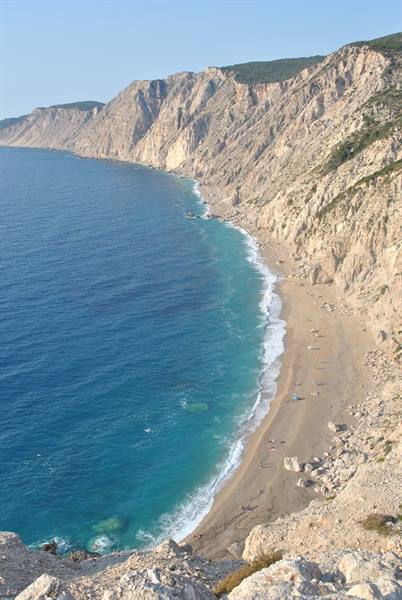
Continuing on we land at Platia Amos beach, also known as the beach of the 300 steps; to get there you have to go down a dirt road with quite a few hairpin bends and ruts, so be very careful. At the bottom of the road there is a large open area where you can park. Our laziness didn't allow us to go down all the steps and we stayed admiring the transparency and colours from up above: it is definitely worth going down. We set off again for our destination, Petani: finding the road wasn't easy from the point where we arrived, from the south, but by asking the elderly people in the little villages we managed to find it.
Unfortunately there are no panoramic terraces along the road that descends as there are for Myrtos, to be able to enjoy the beauty of the colours: we go straight down and are a bit disappointed; the pebble beach seems a bit left to itself despite there being bars and facilities for renting sun umbrellas; not even the sunset was that spectacular because there wasn't a cloud in the sky and there were few plays of colour.
remains of old Sami
Day 613 Aug 2010
rest
We take 13 August as a day to recharge: we've covered a lot of kilometres and we decide to relax in a little cove along the road connecting Aghia Efimia to Sami, and we take the opportunity to do a bit of fishing: don't bring fishing rods to Kefalonia, because the fish along the coasts is absolutely absent, and don't listen to the local advice to fish with feta and bread (maggots are nowhere to be found!).
Mycenaean tomb in Tzanata
Day 714 Aug 2010
around Mount Enos
On 14 August we have to change rooms because we've decided to extend our stay in Kefalonia, without going to Lefkada, as we had thought before setting off, and fortunately we don't have to change accommodation because the friendly owner got busy finding a solution. In the early afternoon we set off for the plain of Omala, below Mount Enos. First of all we go to visit the fortress of San Giorgio: entry is free, the remains are very beautiful, but the fortress is on the whole poorly presented because there are no guides, no explanatory signs, and the visitor is left to himself: despite this, the view you enjoy from up there repays every disappointment; even Byron was impressed by it. The time of the visit wasn't a great choice because there is little shelter from the sun and we suffered the sultriness enormously.
After recovering a bit, we set off again for the Monastery of San Gerasimos: on 16 August there is the feast in honour of his birth and it's full of stalls and people on pilgrimage. Inside the church there is a quarry beneath the floor: it is the place where the saint shut himself away to meditate. Behind the monastery there is the Robola cooperative, where you can taste and buy Kefalonian wine: there are several varieties, each better than the last (we tasted a sweet rosé wine that was a mix between our fragolino and moscato, a delight for the palate): for buying wine this is perhaps one of the best places since the varieties available are many.
Intending to bring home only Greek specialities, on our way back towards Aghia Efimia, we stop at Makriotica where there is a dairy cooperative that sells very fresh feta: it arrived home safe and sound, after two days including the journey!!! Near Sami, on the other hand, we bought some very delicate thyme honey from a lady who was selling it at the roadside, and the producer was her husband.
memorial to the Acqui Division in Argostoli
Day 815 Aug 2010
excursion to Zante
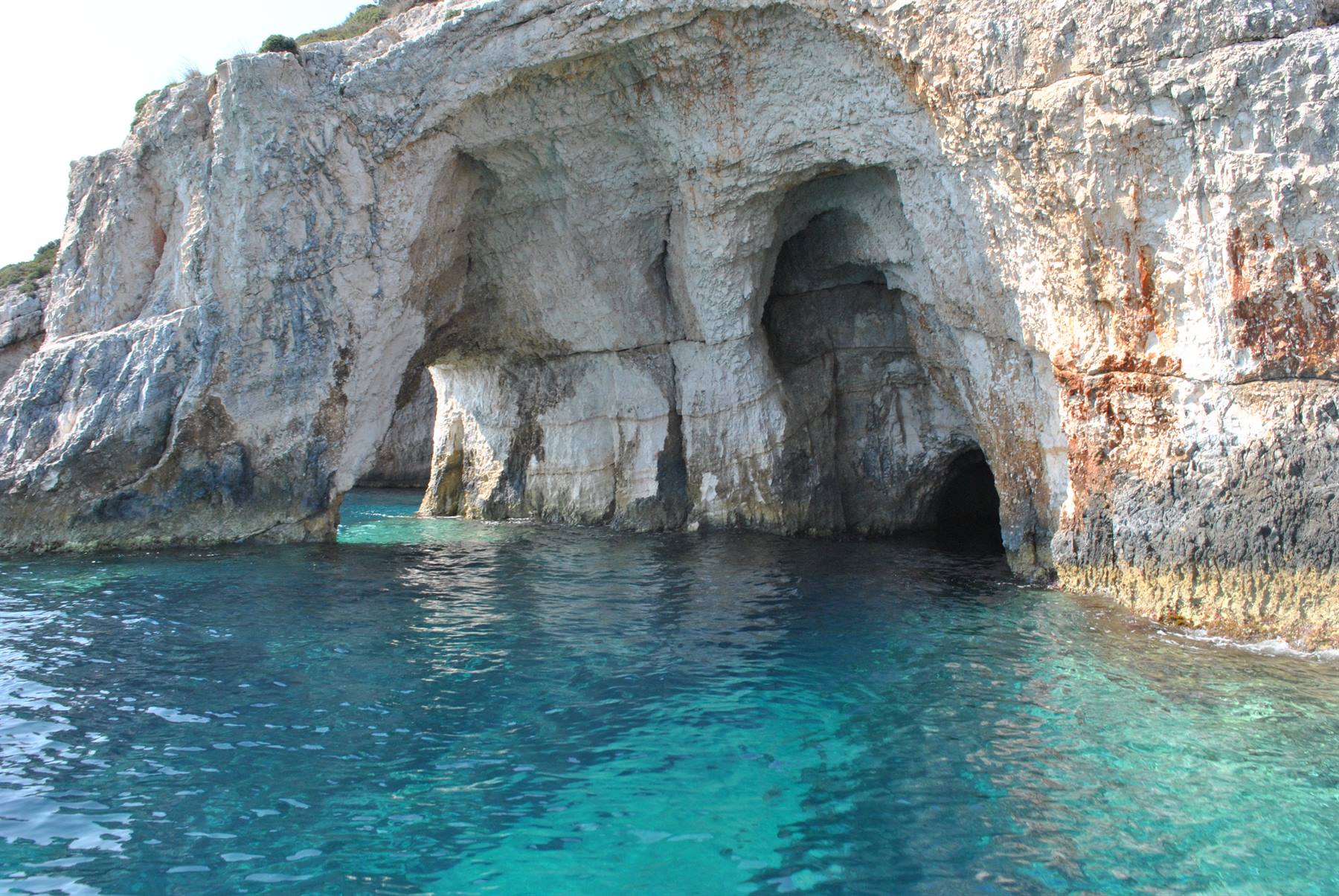
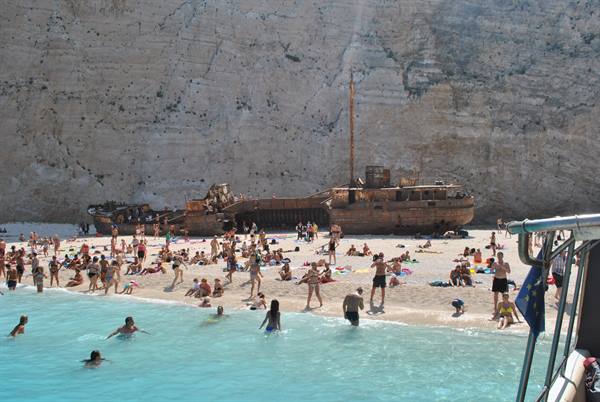
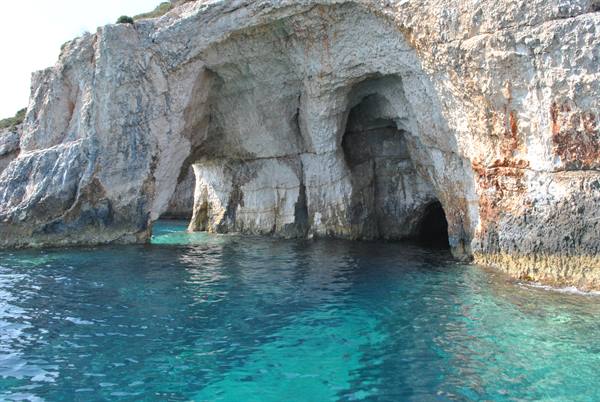
For the day of Ferragosto the excursion to the blue caves and the shipwreck beach on Zante is planned. We get up early to go to Pessada to board (the ferries depart from Pessada at 8:00 and at 18:00, while they depart from San Nikolaos at 9:45 and at 19:45; there's no need to book the ticket, you do it directly on site at the moment of boarding. The cost is 7.50 € per person and 31 € for the car) and after an hour and a half we disembark at the little harbour of Agios Nikolaos. We are on foot and we hope that the company we've chosen for the boat excursion is nearby: it is at Cape Skinari, the northern tip of the island, and there are three very friendly and helpful brothers who for 15 € take you on the whole tour of the blue caves and take you as far as the shipwreck beach where they leave you for an hour.
It took us about an hour on foot to reach the lighthouse of Cape Skinari (at the port there are no services for renting scooters), travelling along secondary dirt roads with a slight incline, but with a breathtaking panorama over the sea. We arrive at the lighthouse, pass it and go down along the cliff where we find the Potamitis Bros and the boarding point for the excursions. Having confessed that we arrived on foot, the brothers were very kind and assured us a lift to the port at the time of departure from Zante. We get on the boat and an hour of navigation awaits us among the many caves with truly crystal-clear water, with lots of coral and some with water of such a vivid blue as to make the body's colour seem blue: we swam in the most beautiful ones. Their visit is always recommended in the morning because they are positioned to the north-east and in the afternoon they are in shadow.
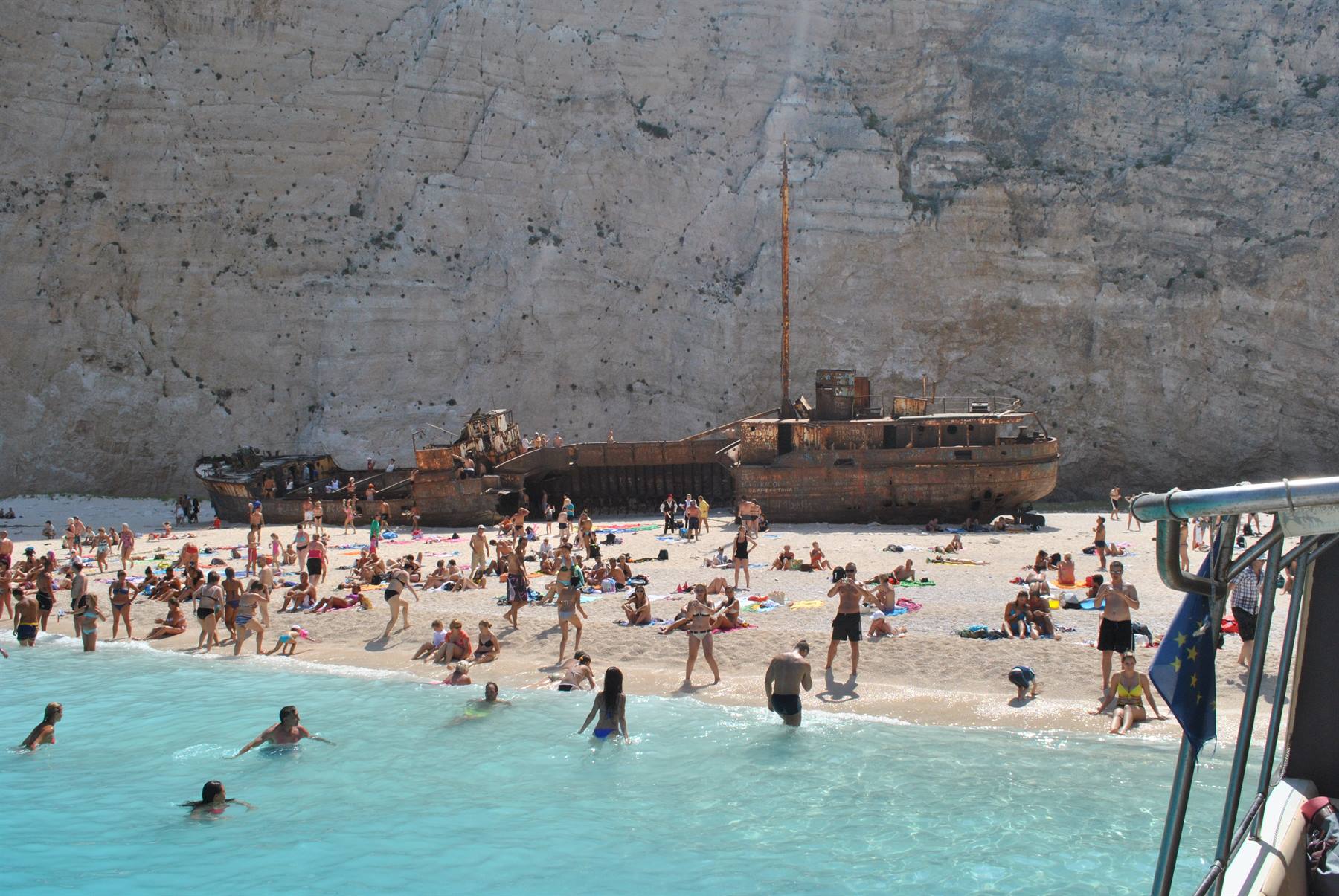
We return to the starting point, change boat and, together with a larger group of tourists, we head for the shipwreck beach: they leave us here for an hour to enjoy the crystal-clear blue sea that characterises the bay, which has access only from the sea. On the beach there is the wreck of a smugglers' ship that ran aground here following a breakdown: the atmosphere is truly fascinating; you can climb onto the ship but be careful of the protruding iron. When the hour is up the boat comes to pick us up and takes us back to the lighthouse. We climb back up from the cliff and stop for lunch at the restaurant taverna To Faros, also run by the three brothers, who also have two windmills with rooms to rent.
On the cliff they have also set up a wooden terrace for sunbathing and it is connected to the blue cave below by a long staircase: we spent the whole day at this fantastic, original and complete facility. When departure time came, as promised, one of the brothers came to pick us up with the boat at the bottom of the staircase and took us back to the port of Agios Nikolaos: without him we would have had to walk another hour.
shipwreck beach in Zante
Day 916 Aug 2010
last glances at the island
It's the last day of vacation and we sadly say goodbye to the very friendly hotel owner. We head north because it's from Fiskardo that the ferries to Lefkada depart. Along the small harbor there's an information center where you can book the ferry ticket (tel. 2674041440), to be picked up at boarding time but in total chaos (the cost is 7.50€ per person and 33.50€ for the car). Before boarding we stop to enjoy the crystal-clear waters one last time at Emblisi beach and around 12:00 we look for a place to eat before leaving. It was extremely difficult because in Greece lunch is from 14:00 to 16:00 and dinner from 21:00 until late at night: we found a place, restaurant Lagoudera, all colorful and very cute, which did us the favor of letting us eat, luckily.
At the appointed time we head to the boarding point: the port is truly disorganized because there's a narrow road that has to accommodate both cars coming down and those that need to go up, and alongside it there's a kiosk where you pick up the tickets, but without any sense of an orderly line, so people crowd together as best they can. Having survived this, the return journey begins: we disembark at Vasiliki and, here too with a bit of luck, we manage to break free from the chaos that reigns and set off to cover the 160 km that separate us from the port of Igoumenitsa. Tired but satisfied, we settle in the corridor of the ship and nostalgically start going through all the photos we took.




0 reader comments