Greece had never been at the top of our travel dreams, for a number of reasons. First of all because it is scattered, then because even when you decide to focus your attention on the area from which you would like to start, it is not easy and/or cheap to reach. So, having the wonderful Sardinia at our disposal, we had somewhat snubbed the Greek sea and also its culture. This summer we wanted to try the cruise experience and the trip that we liked and that suited us touched precisely on some Greek ports, so we finally began to penetrate the Hellenic world, forming various impressions in a single trip. First of all, I can say that we gave top marks to almost everything we saw, even more than what had been presented to us. On July 31 our ship took us to Corfu, an open door onto Greece.
We had decided to rent a car and to tour the island as much as possible on our own, having about 8 hours at our disposal. As soon as we disembarked, we took this little car and headed immediately northwest, to find our first chosen stop: the sea of Paleokastritsa. In about 45 minutes we reached it: there was an embarrassment of choice among the various little coves to choose from, so we picked one at random, but from there we took a pedal boat and also saw other bays directly from the sea. Fantastic water but strangely freezing cold. Then, once we returned to shore and dried off, we went up to visit the Orthodox monastery overlooking the sea: intimate, welcoming and..free! That's when I finally felt a bit in Greece.
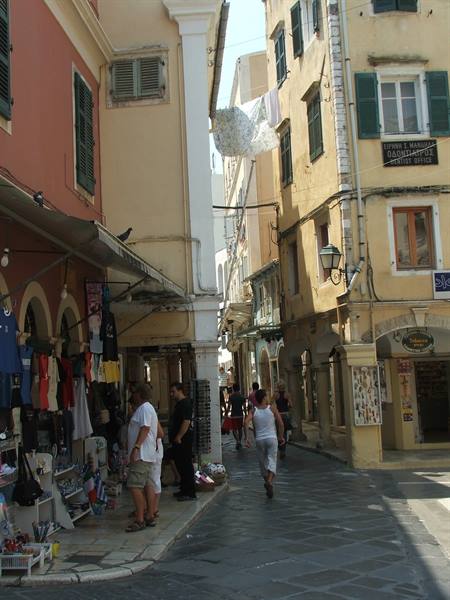
At that point we headed a bit further north, toward the long beach of Aghios Georgios, through some switchback roads, just to get a sense of another rather famous seaside spot. Here too the water was beautiful and always very cold, as if it were not July 30, in the Adriatic Sea! Here too a quick swim and, without even being completely dry, we set off again to visit Kerkira, the capital of Corfu. We mostly walked around and I must say that among everything seen during our cruise, this little town was the only thing we saw that was absolutely not up to our expectations. We had read of a strong Venetian influence in its architecture...which we found almost none of! Then it was very very dilapidated and you didn't immediately realize it because of the many little souvenir and trinket shops that distracted attention from the crumbling and peeling walls and the dirty alleys.
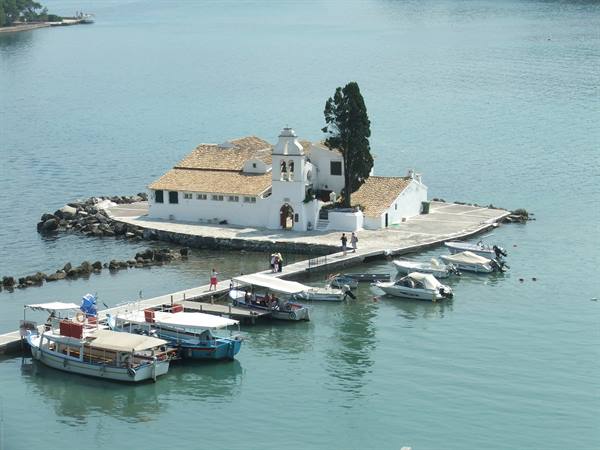
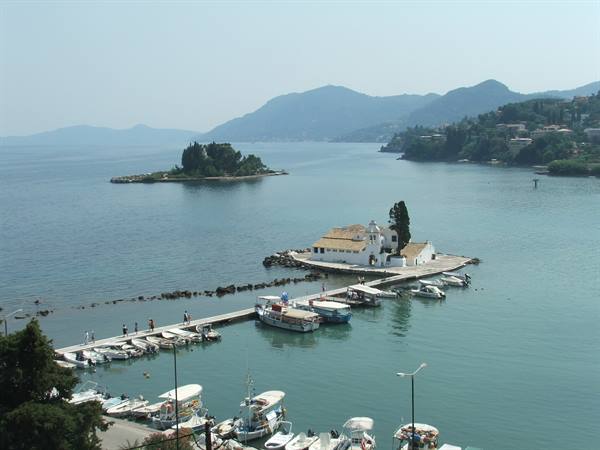
After the walk through Kerkira we went a little south of the town to look for the monastery of Vlaherna, located on a kind of peninsula as big as the monastery itself and which represents Corfu in many advertising photos. The setting is nice, but the monastery consists exclusively of a little chapel where all the Orthodox continually kiss the icons and a tiny courtyard in front of it. We still had a little time, but not enough to go and visit Empress Sissi's villa or some characteristic fishing village we had read about. More than anything we didn't want to risk it, so we returned to the ship, after obviously returning the car.
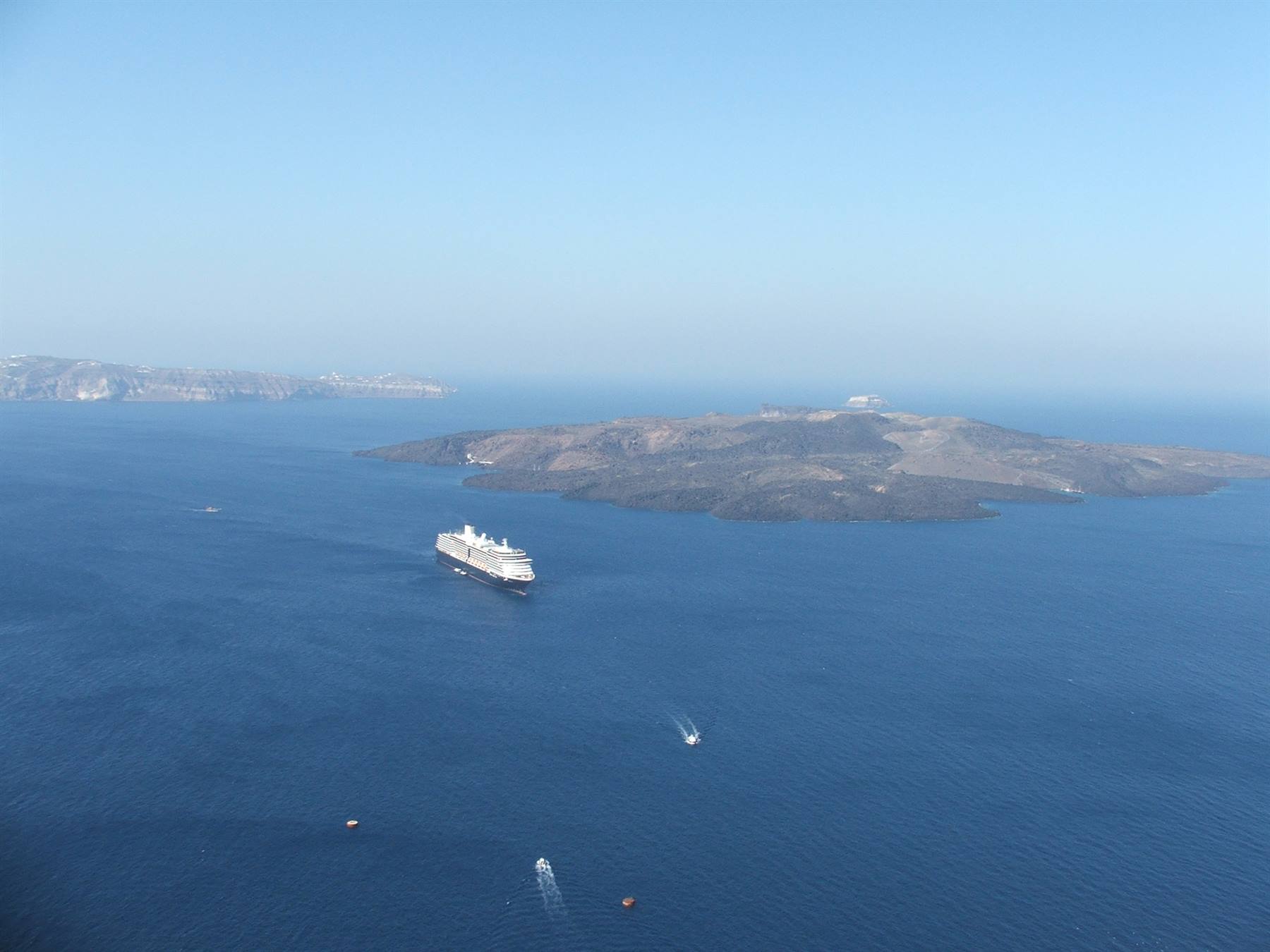
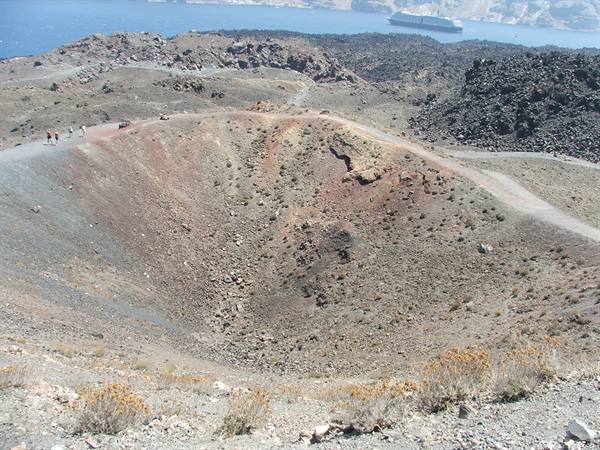
Nea Kameni, Santorini
Day 21 Aug 2009
Katakolon,Olimpia
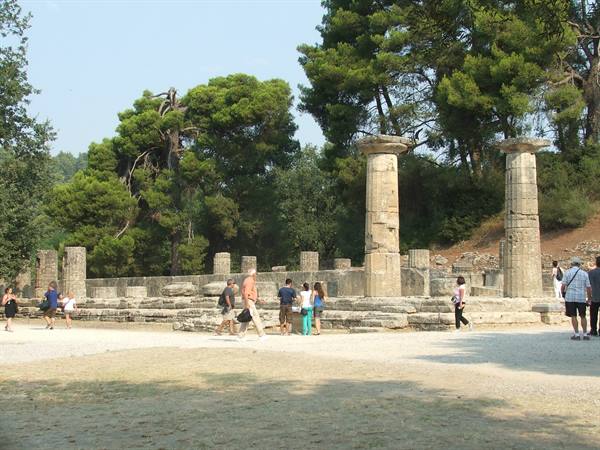
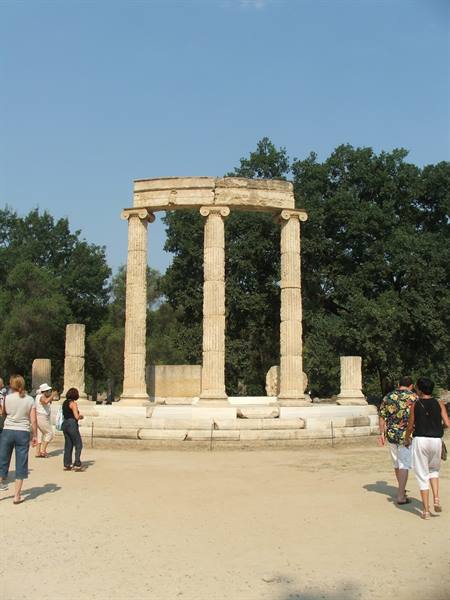
On the first of August we arrived in Katakolon, a small port in the Peloponnese, built practically only to allow cruise ships to dock so passengers can visit the legendary Olympia, about thirty kilometres away. Here we had decided to rely on a guide and therefore on an excursion organised by the cruise. And we did well for two reasons: first of all, Olympia is basically made up of a collection of ruins and without a guide you'd understand very little; secondly, we got a very well-prepared young woman named Margherita, who spoke excellent Italian, learned in a non-intensive course taken in Athens that lasted only 8 months! Already on the bus, along the way, she told us lots of things about modern Greece, but when we arrived on site, she literally led us into the Olympic world, making us understand the spirit of peace that pervaded the panhellenic games of antiquity.
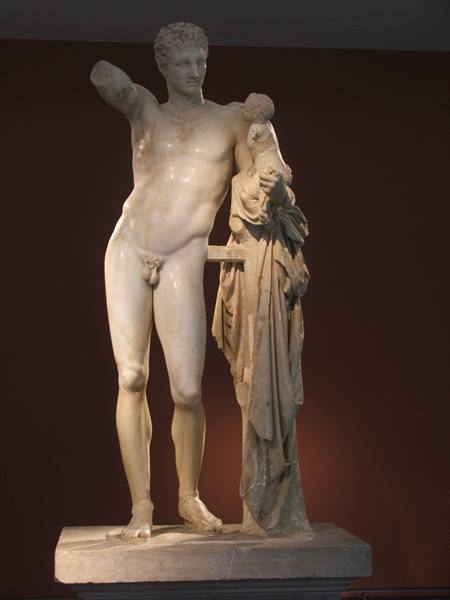
A wonder and an emotion when we saw the racing track, where the starting line was still visible. We also visited the museum and then returned to Katakolon completely satisfied and not particularly overheated, considering that many people had painted us a picture of unbearable heat in this site in particular. We still had about forty minutes before we had to board, so we sent the kids onto the ship and my husband and I took a little stroll through the port's small shops and sat down in one of the many bars facing the sea to sip an ouzo. Not a beautiful view, but at least we relaxed, savouring a little more of Greece.
Thirassia,Santorini
Day 32 Aug 2009
Santorini
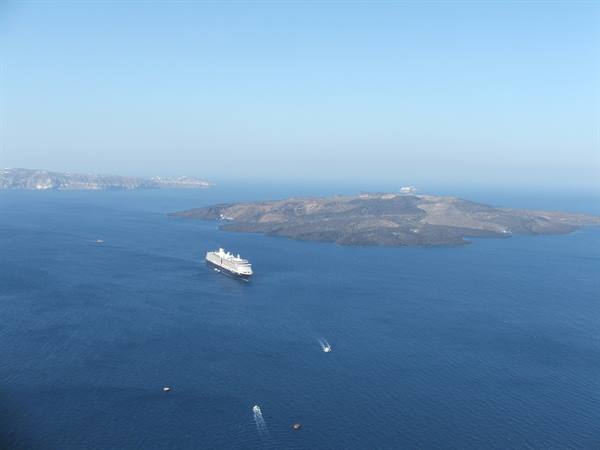
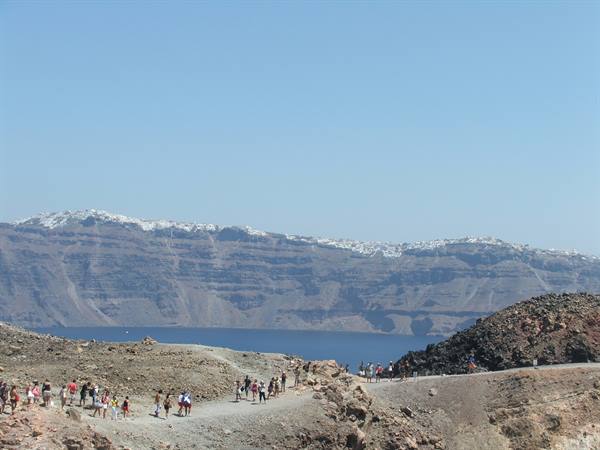
The third Greek stop was the most wonderful and unexpectedly so: Santorini! We arrived at 8 in the morning and had 12 hours available before returning to the ship, which wouldn't leave until 9 pm! We visited and "lived" so much in a single day, but if the guide on the ship had been more competent, we would have done even more! Our Noordam docked in the middle of the island, that is, in the middle of the sea! Yes, because Santorini consists of the longer piece of the circumference of a hypothetical ring, completed then by a shorter piece, represented by the island of Thirassia (Santorini in Greek is Thira). Let me explain better: in ancient times there was a single large volcanic island with the classic shape of a big mountain, more or less regular.
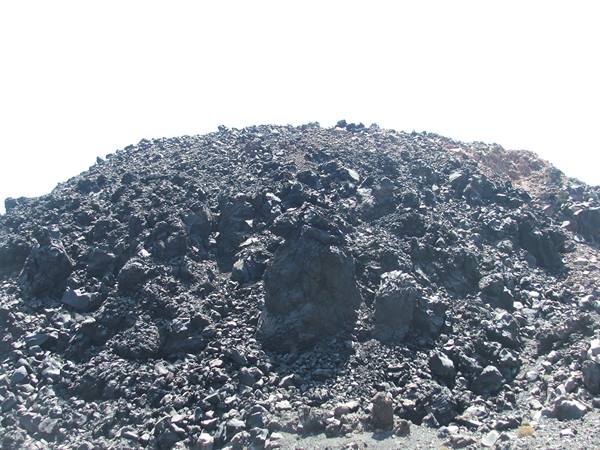
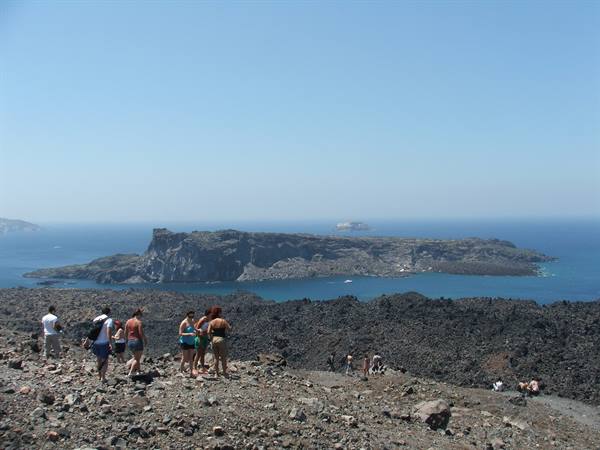
In 1623 BC a destructive and phenomenal eruption, so powerful as to make the entire centre of the island sink and to split the outer part of the caldera into 2 elongated islands. It has been proven that the ash reached Chile and Australia and that the roar was heard in Spain and Norway. Among the most accredited theories for the sudden disappearance of the Minoan civilisation, settled in Crete, is the tsunami caused by this volcanic eruption. And again because of this event, Santorini is one of the suspected locations of the mythical Atlantis! But that's not all: in fact about 450 years ago the volcano "plunged" 1 km below the sea, which had always remained alive, began again to churn out so much lava as to give birth to an island, the youngest in the Mediterranean, Nea Kameni, which with various successive eruptions has become a respectable little island, surrounded by another 2 islets.
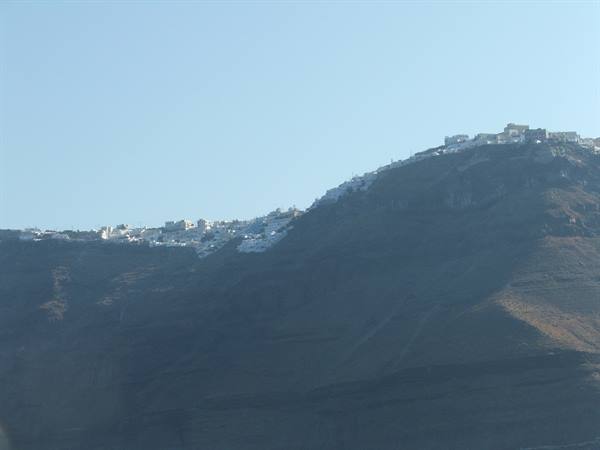
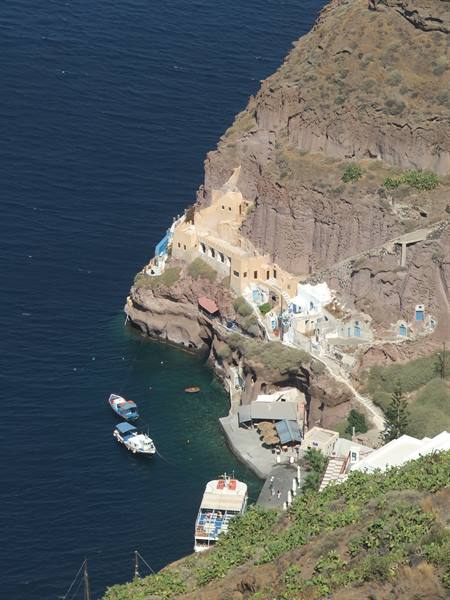
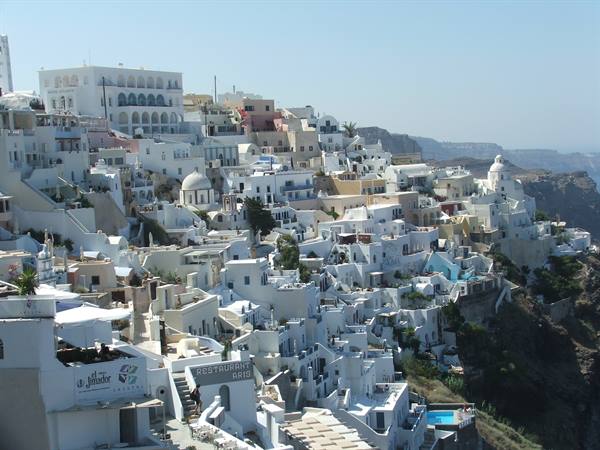
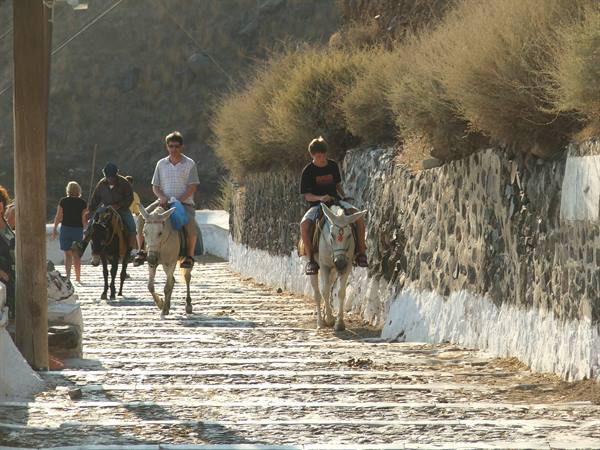
Absolutely in the centre of the Santorini "caldera". So, our ship stopped between this young volcano and the older Santorini, whose name was given by the English after the year 1000 and which derives from Saint Irene, much venerated on the island. For the Greeks, it remains Thira, which is also the name of its most important town, as well as the capital of all the Cyclades islands. From the ship we moved with one of the tenders that connected all day with the tiny port at the base of Thira. Once here, for €5, we tried the fun experience of going up to the town on donkey-back. Or you could go up by cable car for 4... or on foot, for nothing, but it's really hard and the zigzag path with long steps is literally covered in donkey poop... an experience we had on the way down!! Fira is beautiful, characteristic, but a bit too touristy.
We lazed around for quite a while and by chance we learned that from the little port we had just come up from, sailboats left at regular intervals doing trips to the volcano, to a solfatara in the sea and to the island of Thirassia. With no small amount of anger towards our ship's guide, who should have told us and saved us from going up and coming back down, and after a good family argument in which we were men against women... the weaker sex won, we went back down to the sea and took the boat trip. Everything was organised in a manner I'd call Teutonic, respecting the timetables perfectly and also providing us, to a guide's surprise, with a guide who explained everything in Greek, English and... for once in Italian!!!! The volcano was interesting, also for the views it allowed us to see all around us, literally at 360 degrees.
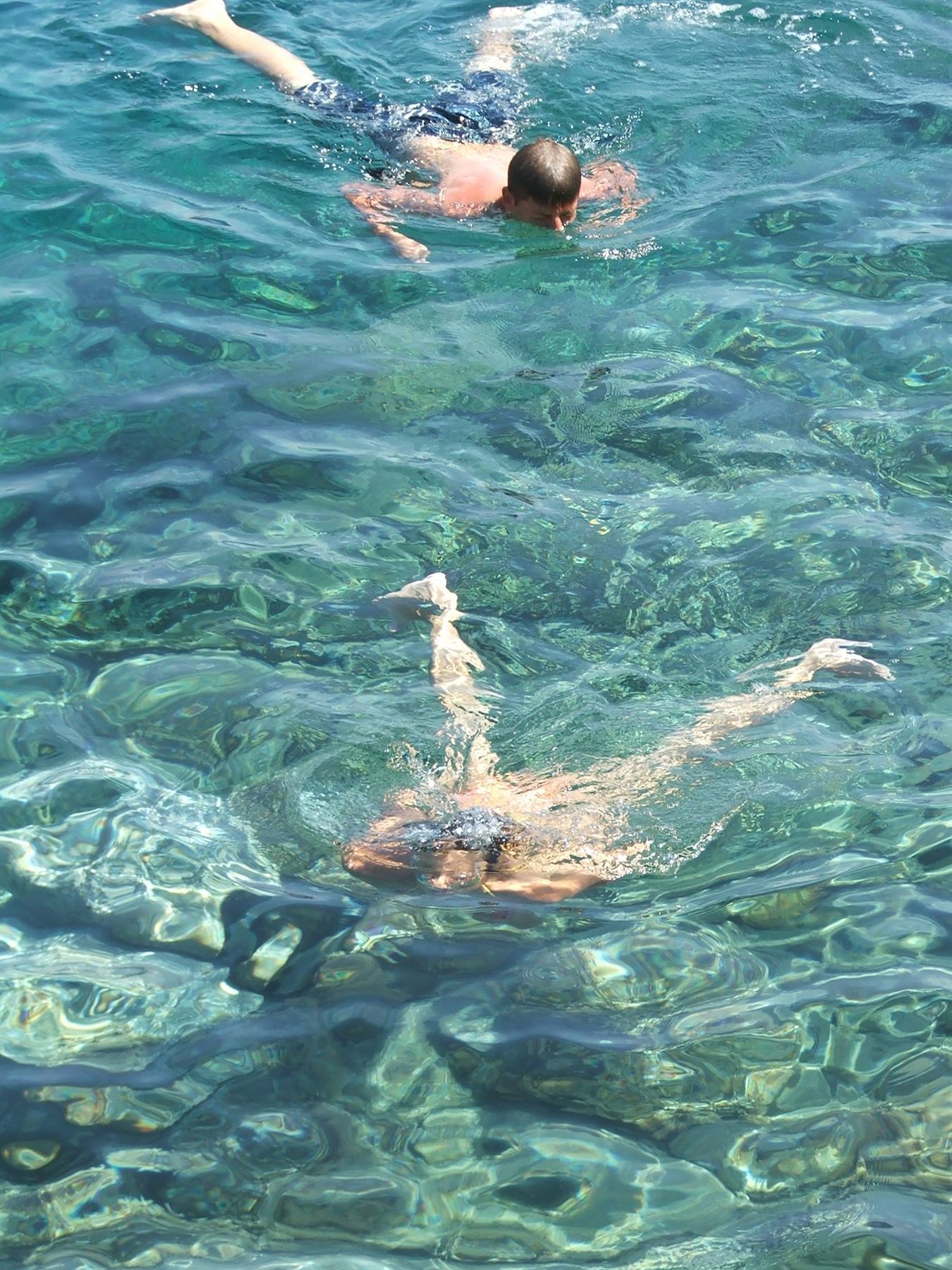
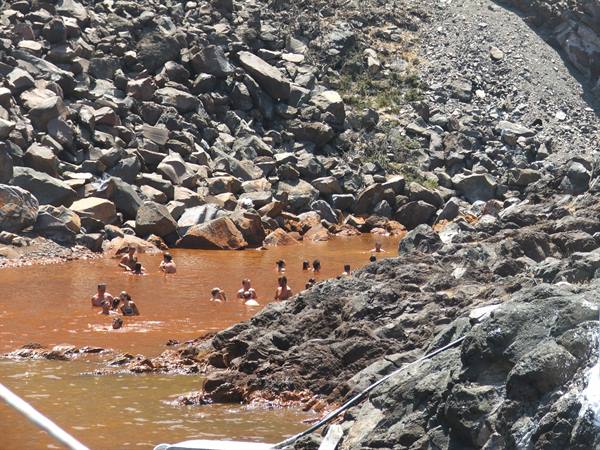
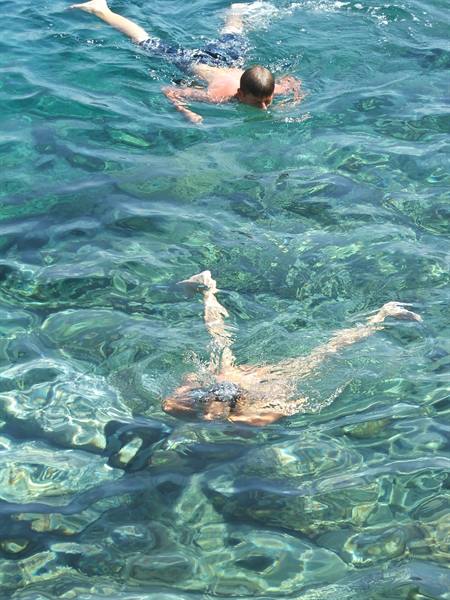
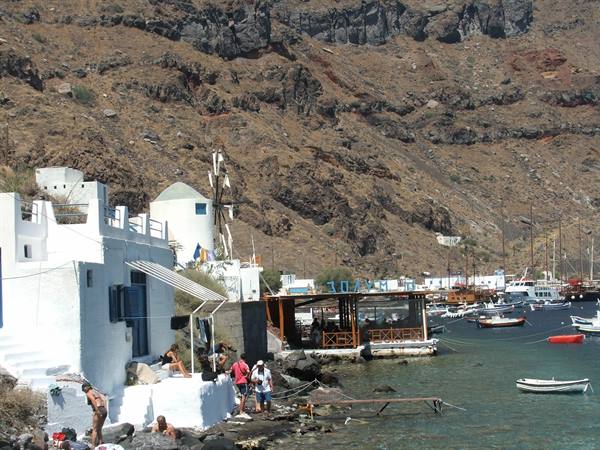
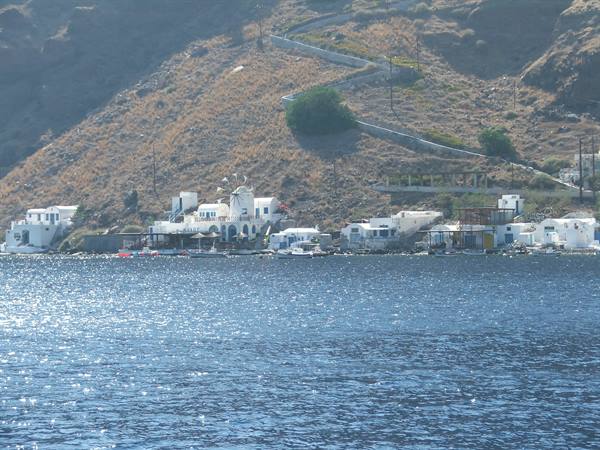
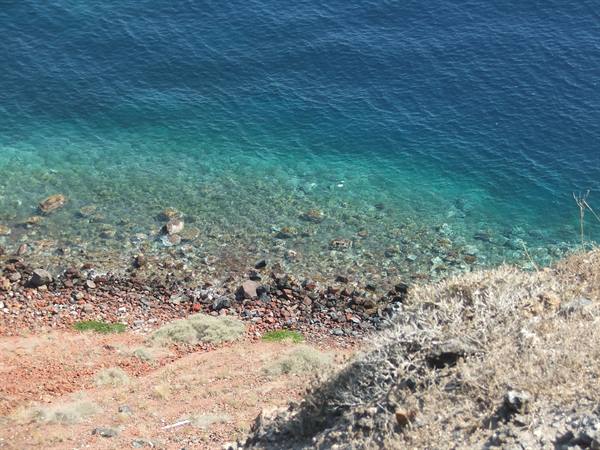
Then we made a half-hour stop in this sea "solfatara", that is, a small inlet with yellow water that was slightly warmer, which we reached by swimming after diving from the boat about 3 metres above the sea... and being the first to do it...!!! The next stop was the wildest Thirassia, where there is a single row of houses with restaurants and windmills built directly on the sea and the town is up high. We decided to stay down below: a swim in a splendid sea and then a light lunch not on the sea, because I'd dare say inside it (many were actually stilt houses in the sea) with Cycladic and Greek specialities: grilled octopus skewers, moussaka, Kalamata olives and melted feta with bread and oil: a marvel for the palate and for creation! Having reboarded our boat (Santa Irini, indeed) at exactly 4 pm, we went to Oia, the other important centre on the island of Santorini.
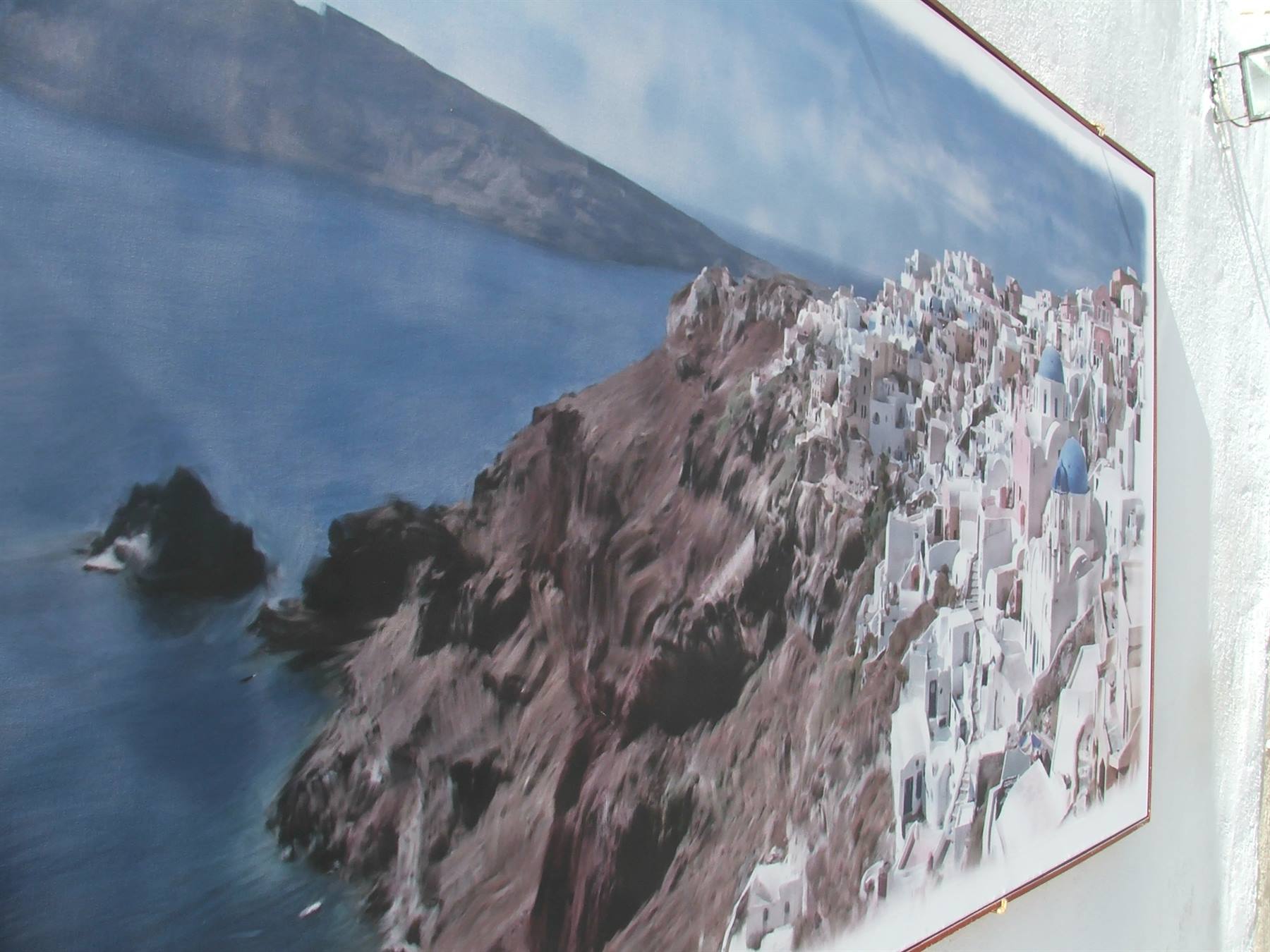
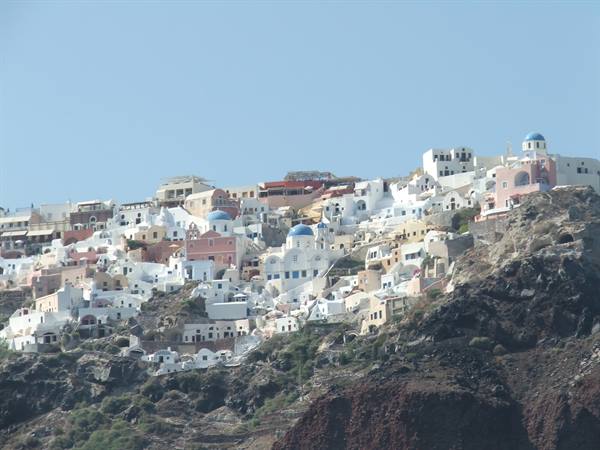
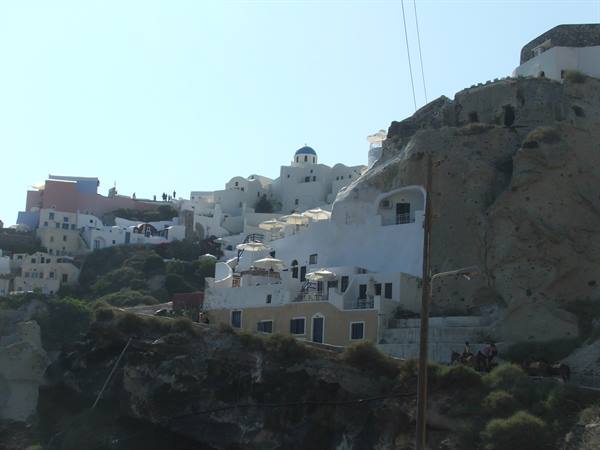
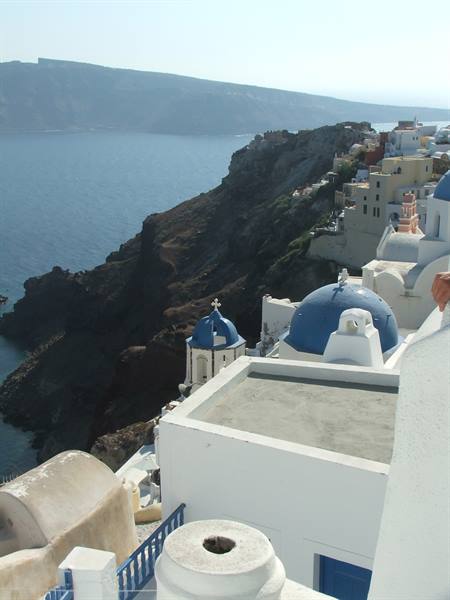
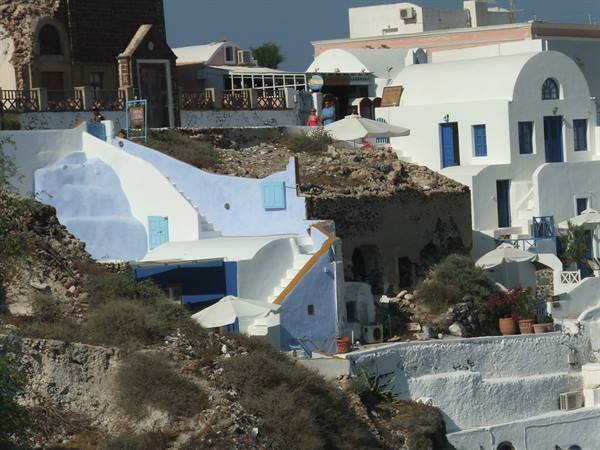
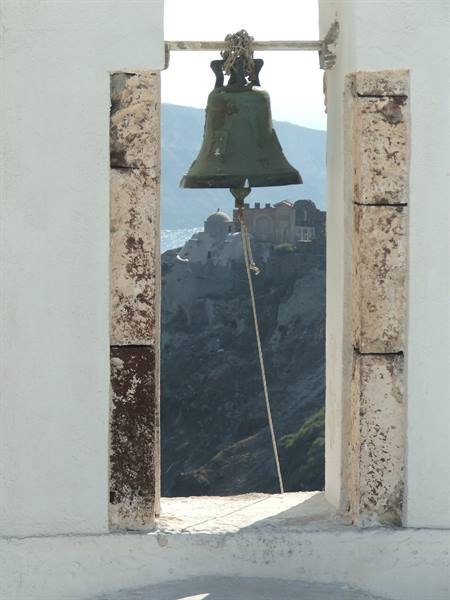
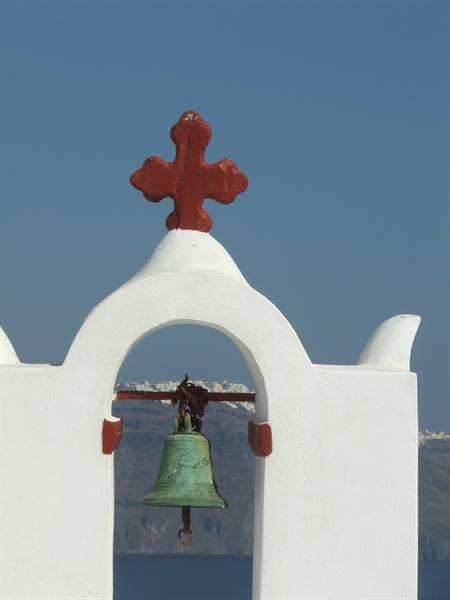
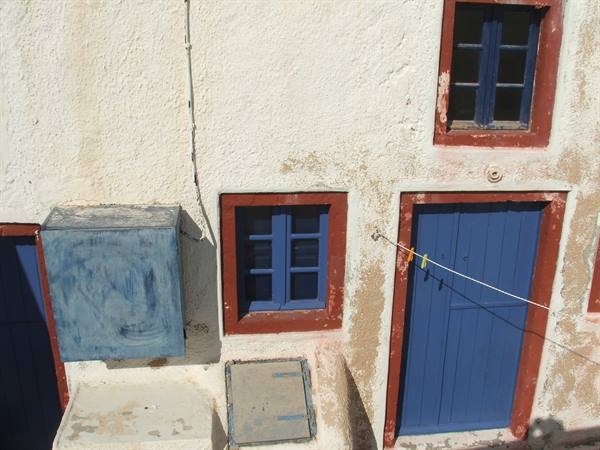
And it's also the mythical one, famous for the sunsets you enjoy from here. As usual, a monstrous climb to do, apparently shorter, so we decided not to take the donkey here either... but it was to die for, by the end I was about to throw up from the effort!! Oia has the architectural features of Thira, white houses, terraces over the sea, spherical white and blue roofs, a few windmills and flowering plants, but... all of it much, much more magical! Yes, because with fewer cheap shops, more refined and with less mass tourism overall. After becoming intoxicated by this atmosphere, we returned to Thira by a local bus, and after a further pause for an aperitif in one of the town's many terraced bars, we went back down along the usual path full of dozens of donkeys, asses and mules coming up at the end of the day, and we took the tender back to the ship.
After a quick freshening up, I planted myself on the ship's deck to enjoy that incredible landscape, until, by then at sunset, at 9 pm, after having greeted us as always with its powerful sound, our ship set sail. And I swear I cried with emotion. For the view, for the atmosphere, for the beautiful and intense day and... for having been on a ship in the middle of an island. Surrender: after Santorini, no more islands.
Santorini..in a dream
Day 44 Aug 2009
Atene
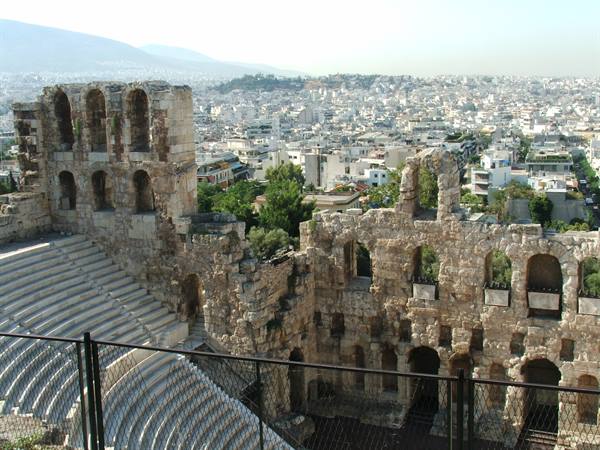
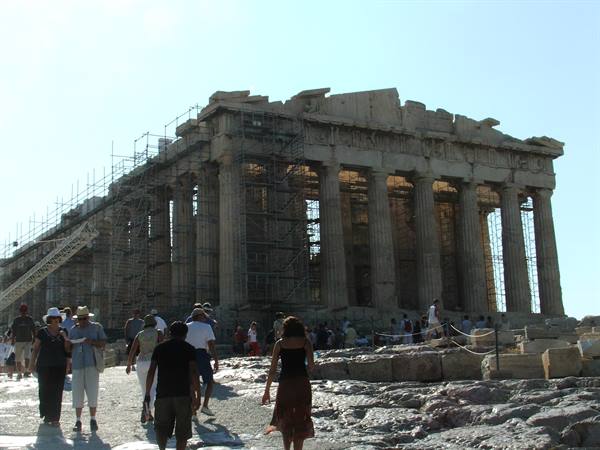
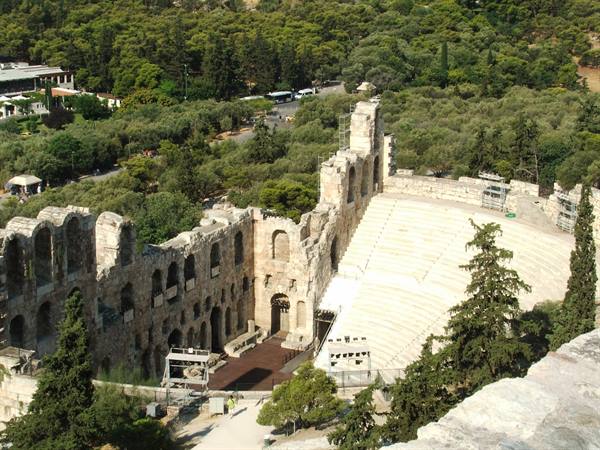
Our last Greek stop was its capital, Athens. Of this city I had only heard the Acropolis praised; for the rest I had been told only about the dirt, the chaos and the inefficiency of the services and the unfriendliness of the Greeks. As for the Greeks, I'd say they're like us Italians: many honest, others sly ones who give their own country a terrible reputation. As for the services: with one euro we got from the port to the centre: the buses were very frequent and clean, the metro was clean and frequent, but very slow.
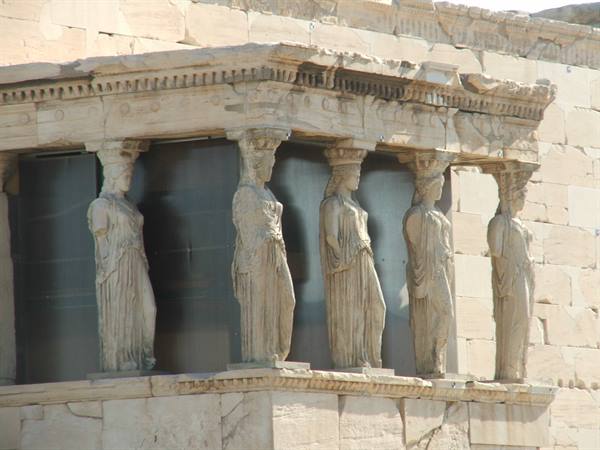
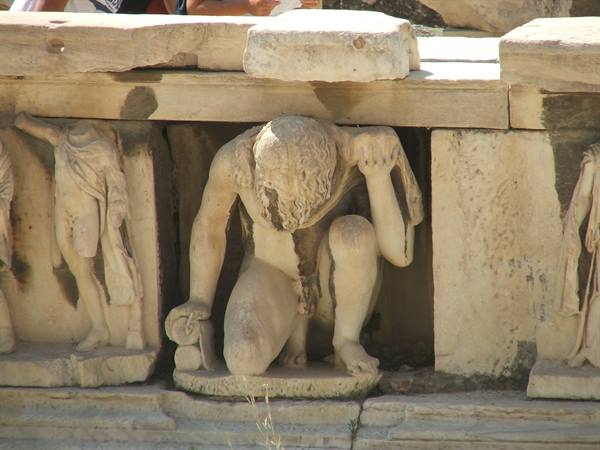
The Acropolis moved me, but as a citizen of Rome and a great admirer of my city, I felt a certain anger at seeing so many tourists in a single archaeological site! Then I reflected that they, as their true monument of Athens, have only that one, while we Italians have a capital that is the most beautiful in the world and that you never finish discovering its monuments! Then we visited the new Acropolis Museum, containing above all the few surviving friezes of the Parthenon and the Caryatids. We took a walk through Plaka, the characteristic neighbourhood at the foot of the rock, which I must say is not as insignificant or uncharacteristic as I had been told.
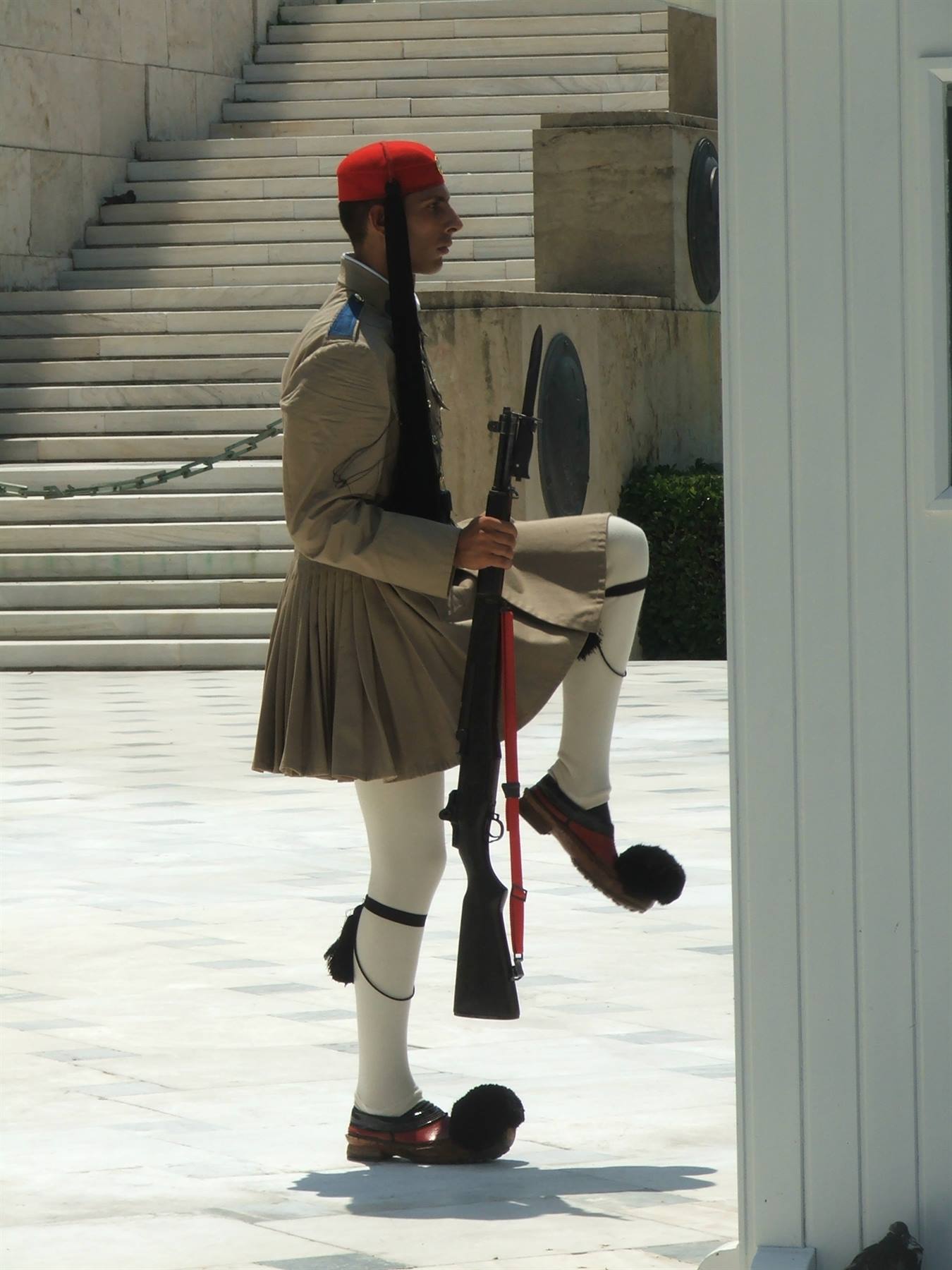
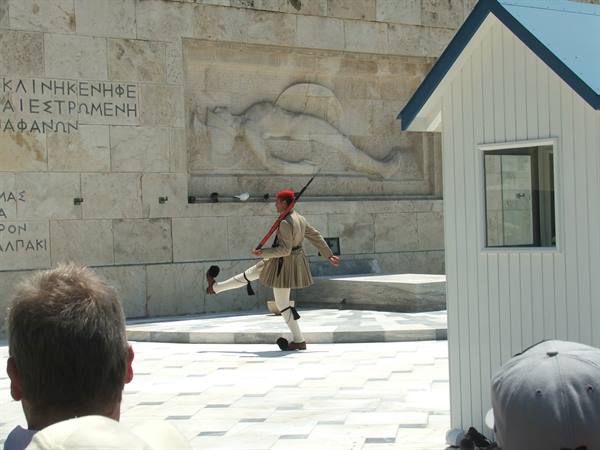
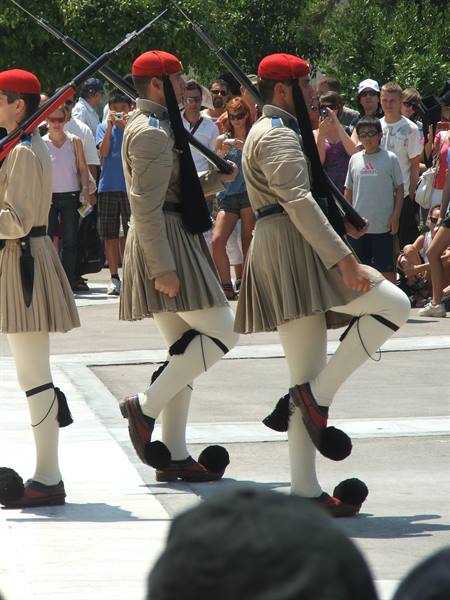
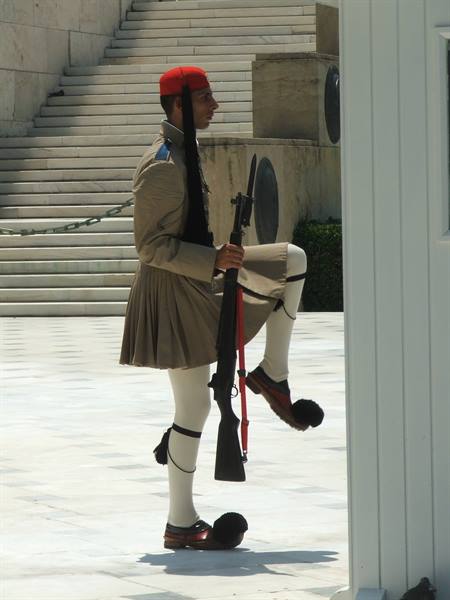
By chance we managed to see the characteristic and fascinating changing of the guard: the soldiers are part of a particular volunteer infantry corps, their little skirt has about 400 pleats, which represent the years of slavery under the Turkish yoke, but their particular step and the metal studs under their heels are meant to signify that they crush that and any other slavery. We ate Greek salad in a nice little trattoria in Plaka, but they tried to cheat us on the price (remember the reference to Italy), without success, moreover. But, what a shame, this somewhat spoiled the atmosphere of our last day in Greece. Tired and overheated, we returned to our ship and then left the very crowded Greek capital, greeting it together with the islands you can see as far as the eye can reach on all sides, from the deck of our ship. Anyway, with one thought: Greece, see you again!















0 reader comments