Greece. A Mediterranean land. Scorched by the sun, rich in olive trees, orange groves, rugged mountains, endless coasts, wild, untouched.
Greece. A land of culture. Ancient home of one of the peoples who made the history of humanity. Temples that enchant, that stir emotions, that preserve a heritage of inestimable value.
Greece. A land with simple people. Warm and smiling. Humble and proud. An incomprehensible language, but a single glance is enough to understand everything.
Greece. Beyond the land, the sea. And its islands. Indescribable pearls. Slow rhythms for those who love tranquility. Overwhelming rhythms for those who love the social scene. And all around, a sea that would make the Caribbean envious!
Athens, a chaotic but fascinating confusion, protected by its Acropolis. Delphi, nestled among the mountains, considered in antiquity the center of the world. Meteora, a place where man and nature have found the right balance. Corfu, perhaps kissed by a Goddess, chosen by Sissi as a vacation spot, one of the many pearls of the Ionian Sea.
Trip program: boarding in Ancona on the Superfast with car in tow (journey duration 21 hours). Disembarkation in Patras and continuation to Athens. After traveling the Apollo Coast to Cape Sounion, we reached Delphi. Then we crossed Continental Greece to Epirus, where Meteora is located. From here, a winding road crosses the Greek mountains covered in dense pine forests (a little Switzerland), until reaching Igoumenitsa. Boarding the ferry to Corfu (1 hour and a quarter). Eight days on the island discovering the beaches, the town, and the most evocative corners. Return to Italy from Igoumenitsa with Superfast (17 hours).
Athens
Not just the Acropolis
After disembarking in Patras, we continue toward Athens on the highway that leads almost to the center. Athens is truly a chaotic city, always busy; luckily for us it's Saturday, and the traffic, though disorderly, flows fairly well and we reach our hotel without too many problems.
In the late afternoon we set off for our first exploration of Athens, using the very convenient metro that leads to the main tourist sites: the three stations used most are: Acropoli, Syntagma and Monastiraki.
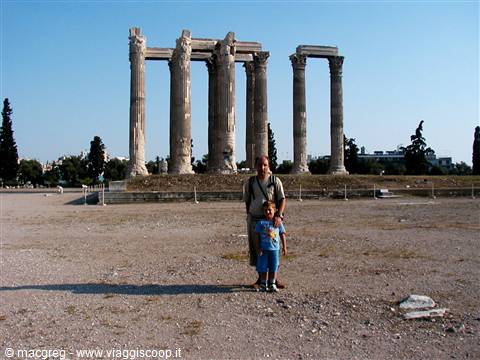
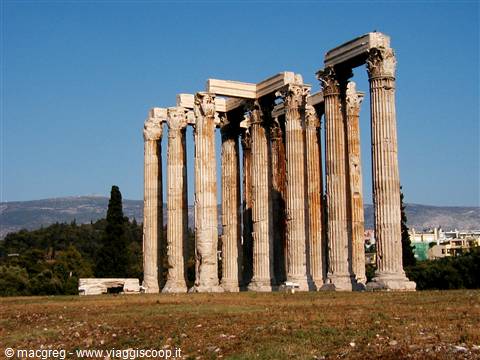
We decide to get off at Acropoli and walk through Plaka until we reach Monastiraki, the main square of Athens. First stop, the Temple of Olympian Zeus. We buy the ticket that's valid for 3 days and allows visits to the main monuments of the city (cost €12). The columns are imposing; it's the largest temple ever built in Greece, impressive. Located right at the foot of the Acropolis, you enter by passing through Hadrian's Arch, an ancient gateway built by order of the emperor.
We then make our way into Plaka, the most characteristic area of the city, with narrow alleys lined with small antique shops and various souvenirs, interspersed with Byzantine, Orthodox and Catholic churches. Plaka is also the best area to have dinner, with numerous restaurants where you can eat outdoors with a splendid view of the Acropolis above. The two most characteristic streets are Adrianou and Kydathinaion. Despite the constant flow of tourists, it's undoubtedly the most pleasant area of Athens. The restaurants offer excellent menus where you can enjoy excellent fresh fish, or grilled meats. The prices aren't high; you dine very well, without pretensions, for €15 per person.
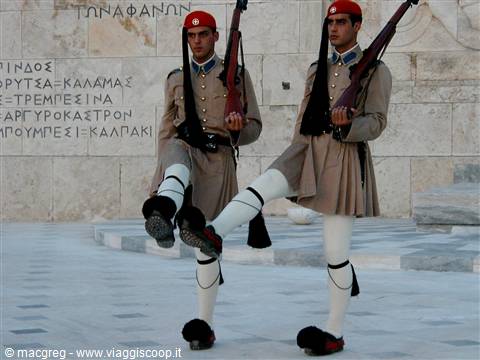
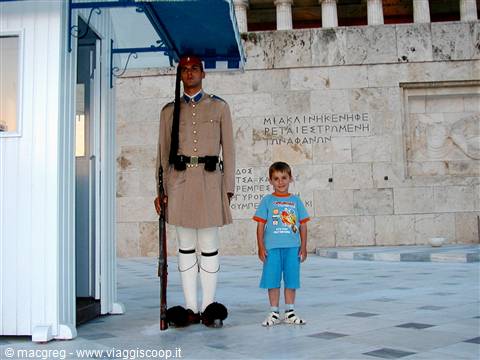
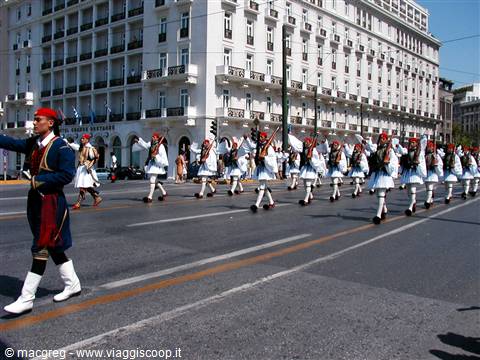
After dinner we continue through Plaka until we reach the very long pedestrian street Ermou, the city's commercial street that ends at the main square Syntagma (Constitution Square), with the Parliament behind it. We have fun watching the original changing of the guard: they're the famous Evzones, soldiers dressed in a rather singular way, who relieve each other marching in a strange way.
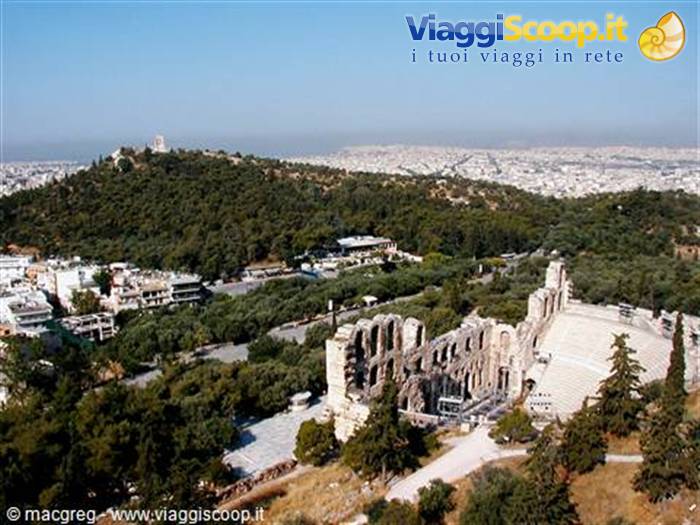
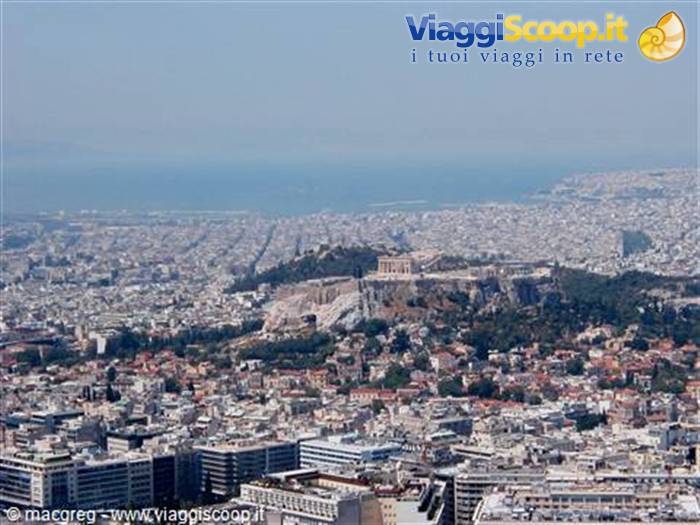
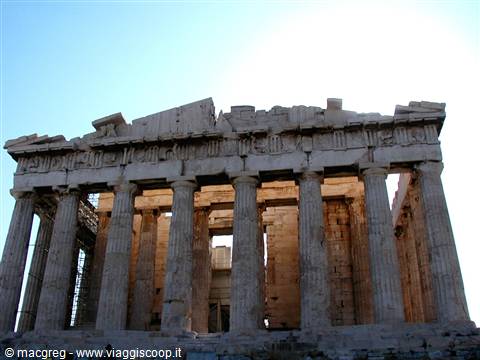
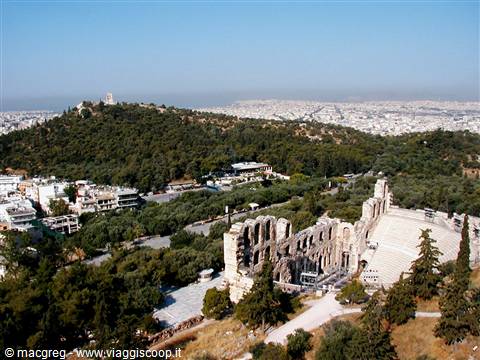
The following day is entirely dedicated to visiting the city. We leave early to try to reach the Acropolis before the great heat and the large groups arrive: by 8:30 we're already at the foot of the most important archaeological site in the West. The climb from Dionysiou takes about 15-20 minutes, a very pleasant walk given the continual glimpses the path offers of the city. After the peak of the Theater of Dionysus, the first grand building you encounter is the Theater of Herodes Atticus: simply majestic. At this point you enter the Acropolis proper, passing through the monumental Propylaea (unfortunately under restoration). But then, there before us, appears the splendid Parthenon, the temple that more than any other symbolizes the ancient splendor of Greek civilization. The only one built entirely of Pentelic marble, it truly takes your breath away.
Fortunately, despite the ongoing restoration work, there's always one side available to observe the monument without the annoying but indispensable scaffolding.
I imagine how this place could have been at the time of its ancient splendor.
We continue with a visit to the Acropolis Museum, then move on to visit the Erechtheion, which was the true sanctuary of the Acropolis. The portico with the Caryatids is beautiful (the original statues, however, are kept in the museum).
We finish the visit and at the exit of the site we encounter the first floods of tourist groups that create no small amount of confusion: our decision to arrive early was well thought out.
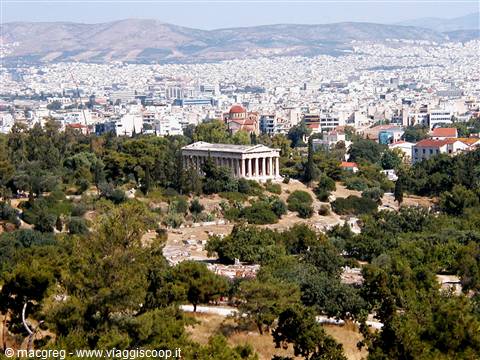
We go down into the city on the opposite side to reach the upper part of Plaka that we hadn't yet visited. The descent offers breathtaking views of the ancient Agora, dominated by the Temple of Hephaestus, the best-preserved Doric temple in Greece. We arrive at Syntagma Square in time for the solemn Sunday 11:00 changing of the guard ceremony, where hundreds of Evzones parade, accompanied by the band, under the scorching sun. What torture!
From here we head by taxi to the departure point of the funicular for Lycabettus Hill (€5 each way). Round trip costs €8, decidedly too much despite the beautiful view enjoyed from the top, comparable anyway to what we've already admired from the Acropolis.
The National Museum is a place not to be missed to truly understand the magnificence of the places visited and houses the most beautiful collection in the world of Greek antiquities (admission €7).
The last stop of this long day is Monastiraki Square, a characteristic area where the city's artisan shops and markets are concentrated, with the famous Sunday flea market and the Turkish bazaar street, decidedly pleasant to walk through.
The following morning we leave Athens. It's Monday and we set off around 8, to avoid the chaotic traffic that according to a taxi driver should start around 8:30. The city is already quite busy, and it takes us almost an hour to cross it completely and get onto Vouliagmenis which leads to the famous Cape Sounion, passing among other things next to the grand Olympic Stadium.
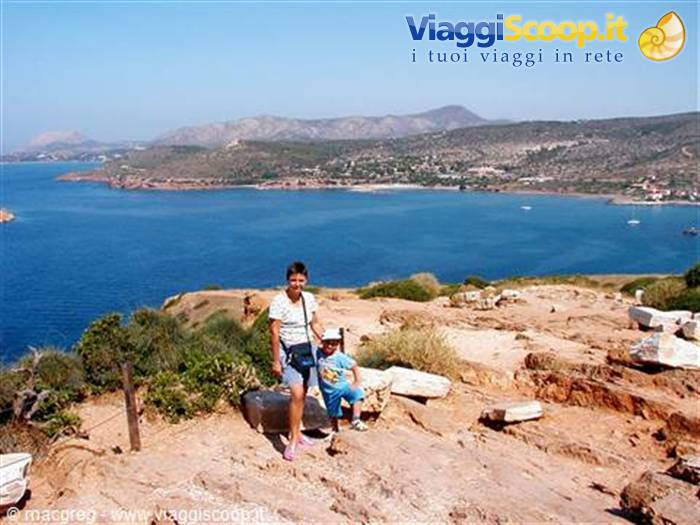
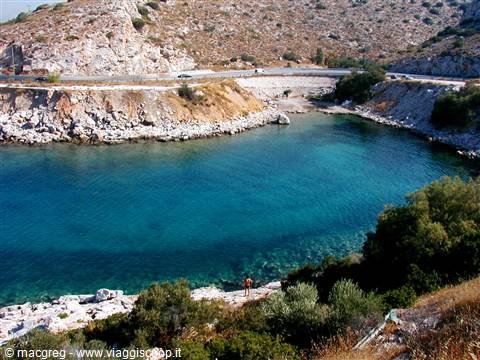
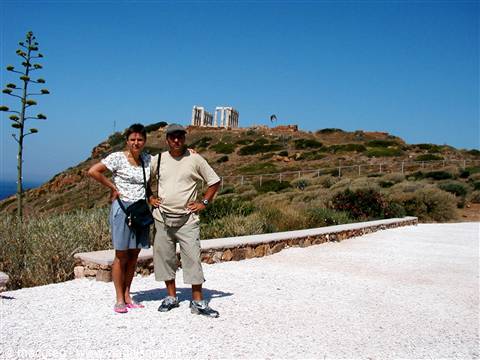
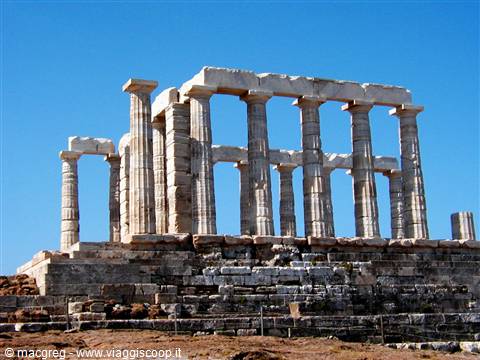
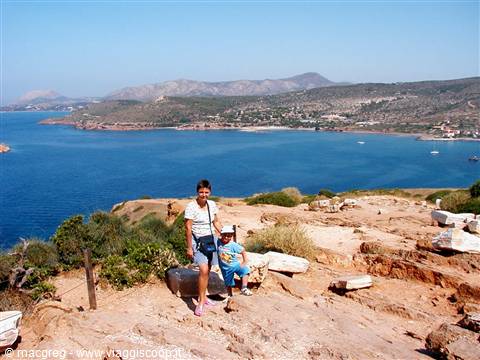
But as soon as the endless Athens ends, suddenly peace reigns. The splendid road runs along the evocative Apollo Coast: beautiful coves interspersed with pleasant seaside resorts with long sandy beaches, almost nonexistent traffic, a characteristic that will accompany us from now on throughout Greece. After Athens it takes us 45 minutes to reach Sounion, a promontory dominated by the incredible temple perched on the sea, in an inimitable position. Besides the temple, well preserved, you can see the endless bay at the foot of the promontory, with a beautiful beach where we take the opportunity for a nice refreshing swim before leaving for Delphi.
Accommodation: Hotel Oscar (3 s







0 reader comments