The story
A few kilometres from the centre of Munich stands one of the places that have marked the history of the last century, a place that deserves a visit to reflect on the atrocities produced by the perverse minds of men. We are talking about the Dachau prison camp, the first of Hitler's Nazi era, which saw the birth of the project to exterminate the Jews and not only them.
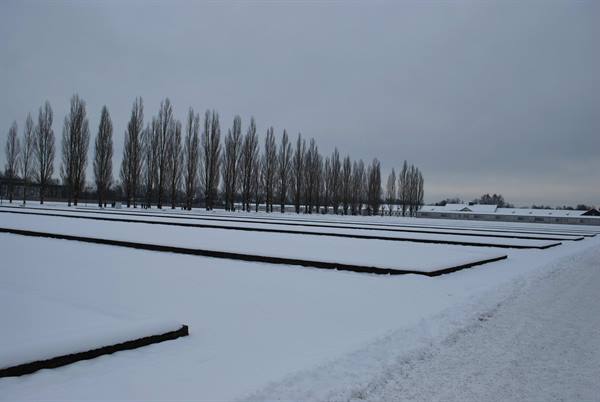
Visiting this place of profound sadness and anguish is a necessary experience, so as not to forget and to carry the vision of those atrocious truths around the world: doing it in winter at -10C, in my view, really conveys an idea of how those unfortunate people could have lived.
To go to Dachau you just need to rely on the Munich metro. You take the S2 line from the central station and reach the Dachau stop in less than 30 minutes. Once you get off at the metro station you can take a bus number 726 from the square to reach the camp. If you show the driver your validated metro ticket, the ride is free.
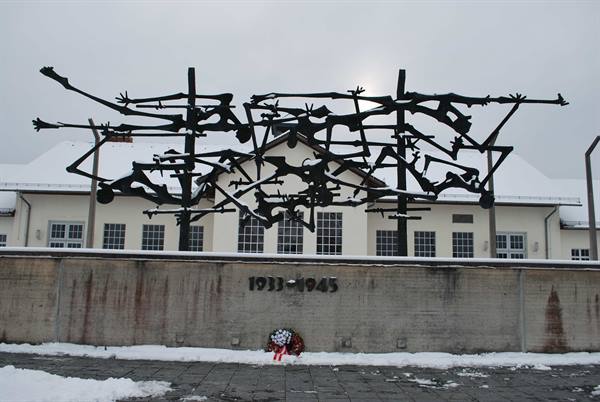
Once at the camp there is an information centre waiting for you, where I recommend you take either a guide or an audio guide in Italian, which, complete with a map, will act as your cicerone through the atrocities of the camp. It is necessary because it explains in detail the camp's activities and also many anecdotes that to me personally were entirely unknown, such as, for example, the controversy over the building of the memorial to the camp's victims.
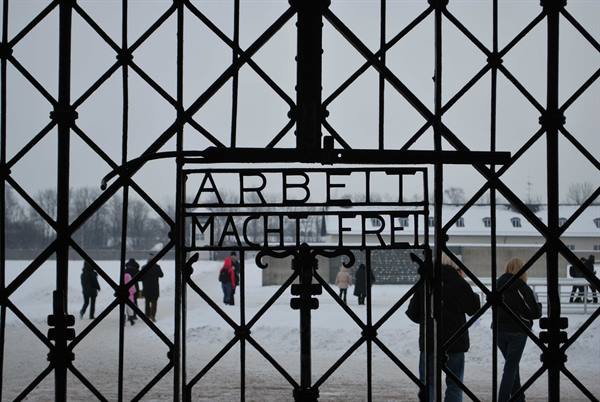
Entry to the camp is free and the camp is open every day except Monday, from 9 to 17. To enter the camp you pass through the gate with the tragically famous inscription "Arbeit Macht Frei" (work sets you free, the tragic illusion granted to the camp's detainees).
The Dachau camp was the first built by the Nazi government and was the inspiring model for the others: the Dachau camp did not arise strictly as an extermination camp (like Auschwitz, for example) but as a prison camp where Hitler's opponents were locked up and subsequently housed Jews and minorities not favoured by the Nazis, such as Jehovah's Witnesses, homosexuals, emigrants, Roma, and Polish, Russian, and convicted prisoners, etc.
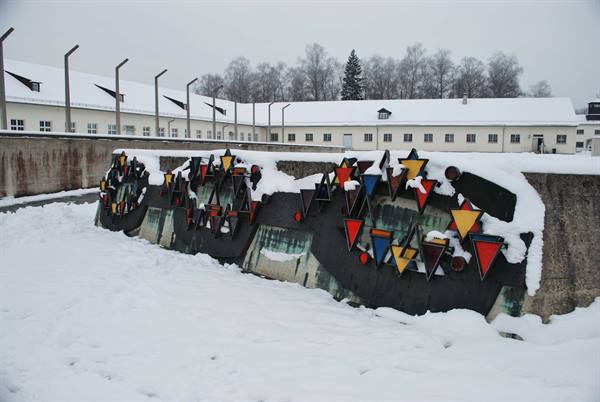
This element was important for the creation of a memorial mausoleum that did not, at least initially, include some categories of people (highlighted through the colours of the little tags sewn onto the prisoners' clothes), such as homosexuals. This made me reflect a great deal, because in my personal view it was like discriminating against the discriminated, and I did not understand the sense of it, and it saddened me even more.
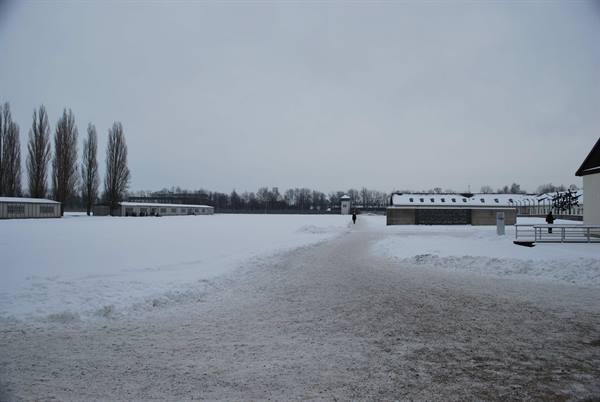
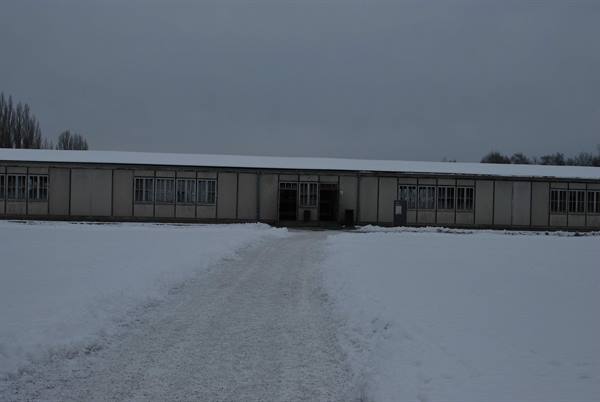
Once registered, robbed and dressed in rags and open shoes, the detainees were placed in one of the 34 large barracks that no longer exist today, and the only one you can visit has been rebuilt. It stands right in front of the large square where roll call took place, devastated by cold and wind. The barracks could hold 6,000 prisoners, but at the time of liberation the Americans counted 32,000 people. Visiting the barrack leaves the mark of an unheard-of violence, with ice on the inside of the windows and hygienic conditions truly beyond imagination.
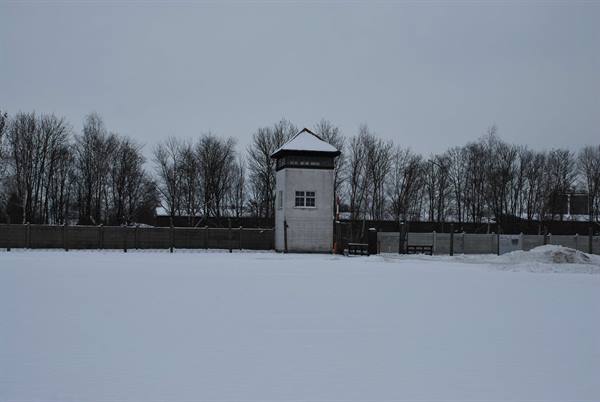
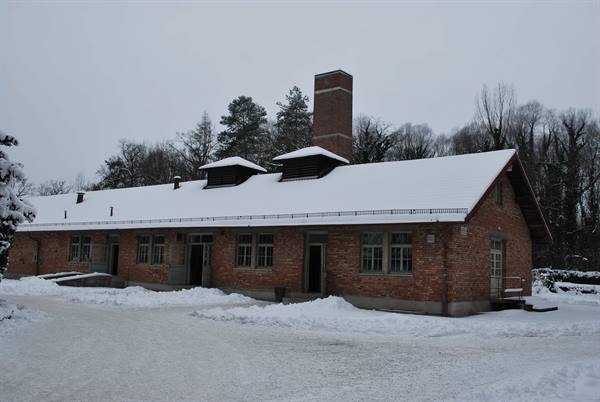
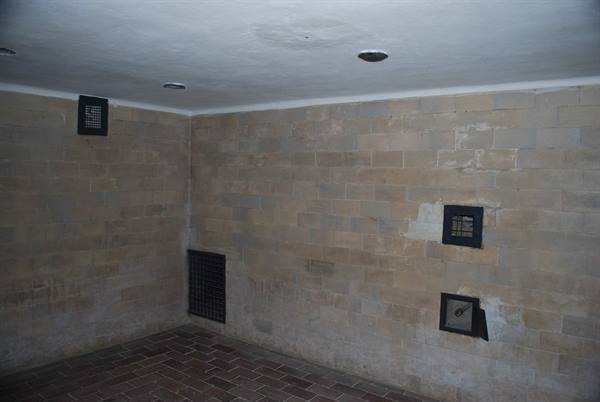
At the far end of the camp, whose perimeter was guarded with watchtowers, barbed wire and armed guards, is the crematorium and the gas chamber. The crematorium served to dispose of the camp's victims and to eliminate the mass of defenceless bodies that daily filled the barracks, while the gas chamber (which I assure you leaves you speechless) never seems to have been used within the camp, but those destined for this death were deported to other sites.
In the end an estimated more than 30,000 people died during the camp's years of activity, of whom 2,000 died after the liberation of 29 April 1945, due to the hygienic state they were in (and this is another fact to reflect on at length). Distressing is the museum on the right (opposite the roll-call square), where there are hundreds of photographs and original documents that will illustrate to you in a crude and violent way a world that, personally, I would never have wanted to know.
It was a life experience that will make you reflect for a long time and that will leave a deep mark on your holiday in Bavaria.
The journey's photographs
11 photographs · click to open them full screen

0 reader comments