The story
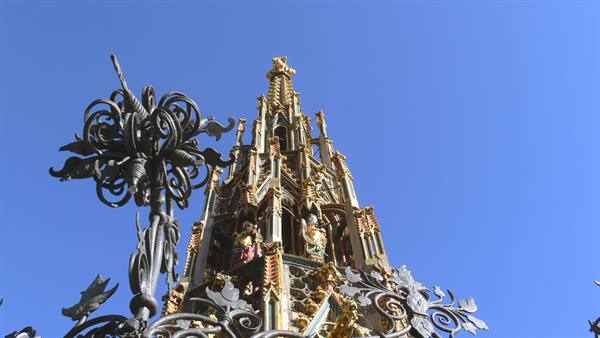
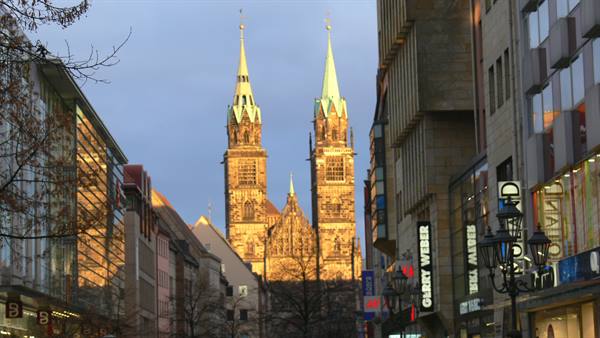
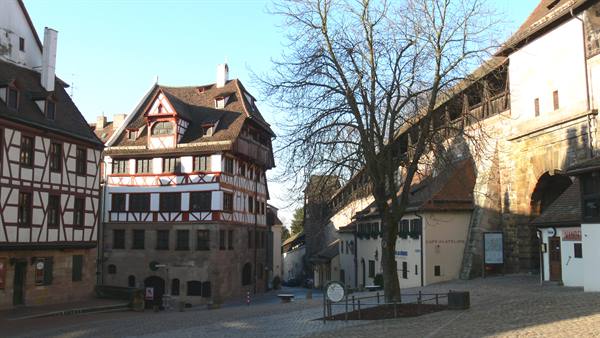
We set off by car and from the Italian “border” we reach Nuremberg in about 5 hours: we find sleet on the Tauern and heavy traffic (a queue) around Munich. Booked online following danieladisa's directions at the Burghotel, the expectations of comfort and good service turned out to be true: we didn't move the car for four days and stayed in a comfortable and warm room. It's a big city, completely rebuilt after the Second World War. It doesn't give the impression of being remade and has many romantic and welcoming traits. Among the many things to see are: the Kaiserburg (the Emperor's fortress), the Market square with the famous fountain to which legend attributes the power to grant all wishes if you rub the golden ring three times, the historic centre with its numerous old palaces, the church of St. Lawrence, Albrecht Dürer's house.
For those who love museums: the old railway museum and the fascinating toy museum (not to be missed!). Nuremberg is the “homeland” of toys but let's not forget the culinary specialities: the famous Nuremberg sausages, which you can taste while walking or sitting comfortably in one of the many Braustuberl in the centre. We're in the final week of carnival but there's no sign of this period at all. Suddenly on Sunday morning, along the city's main artery, the roads start being closed for the classic parade of floats and a few timid fairies, faded little ladies and noisy cow-boys appear: costumes by now little used in our country. Towards 12.00 many people crowd along the set route and cheerfully wait for the masked floats to pass. On their arrival the spectators, who don't seem at all chilled, take lively part in the laughter, the dances and the popular songs offered.
The parade, accompanied by flying sweets and paper toys, passes quickly and is immediately followed by a careful road-cleaning job. Incredible: by 16.30 everything is as before. Fortunately the photos remain, which take me back to carnivals of several years ago in Italy. On this holiday, on the Monday, a visit to Rothenburg is planned, reached by driving along the Romantische Strasse for about seventy kilometres. It's a town with a unique charm for the feeling it gives of being in a sort of medieval Disneyland. It's entirely surrounded by 14th- and 15th-century walls: no advertising sign, no neon sign disturbs the “ancient” impression, which is respected with great rigour.
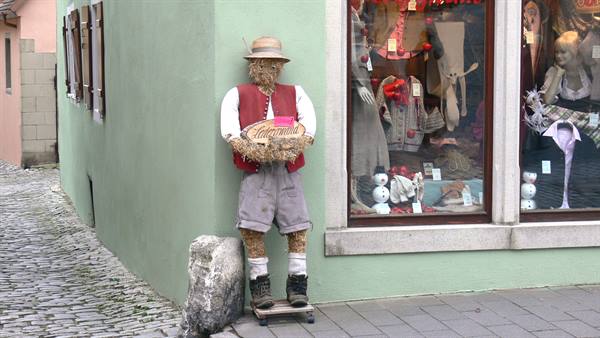
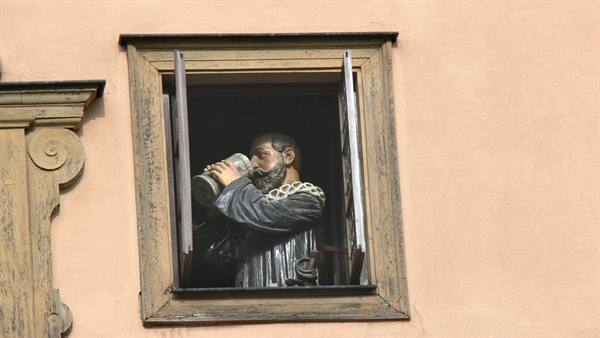
Worth seeing: the Marktplatz (market square), always the main focus of town life thanks to the presence in the square of the Rathaus, the Baumeisterhaus (the architect's house), the many typical half-timbered houses, the Gothic “Jakobskirche” church, and the extremely interesting “Medieval Crime Museum” (not to be missed!). Entering the lanes less travelled by tourist flows you can discover truly enchanting, fairytale corners. Only after a while, looking carefully, do you get the impression that the town isn't a place where one wants to live but a town to be visited, a village to be looked at (it recalls our San Marino or Gradara). To avoid falling into defeatism, it's time to let yourself be won over by the story of the “legendary drinking bout” and step into one of the many establishments to taste the mythical “snowballs”.
Aided by a temperature truly pleasant for February and an often clear sky, I'm fascinated by this Germany of other times and decide with my travelling companions to organise other “expeditions” in this country that I had always considered cold and unengaging.
The journey's photographs
10 photographs · click to open them full screen



0 reader comments