16 Brussels-Berlin Train to Liège p. 9.03 a, 10.06 ICE train Train Liège 11.12 Change at Cologne a. 12.15- p. 12.48 arrival HBF Berlin 17.12 ICE We slept 7 nights at Motel One Berlin Hauptbahnhof Invalidenstrasse 54 € 84 a night Reichstag - Brandenburg Gate – Unter den Linden 17 July Berlin Cathedral – Pergamon Museum – Alexander Platz – Marienkirche Nikolaiviertel with the church of Saint Nicolas. Nikolaiviertel is the oldest quarter of the city of Berlin. All its little streets and medieval buildings are worth discovering.. 18 Berlin Potsdamer Platz – Gemäldegalerie 19 Berlin Potsdam with the S-Bahn line s 7. Sanssouci Park – New Chambers – New Palace – Spandau with the old building, the watchtower, the museum and the famous art exhibition. 20 Berlin Mauerpark – Bernauer St. n. 111 – Charlottenburg – Ka. De. We.
21 Berlin Sachsenhausen Extermination Camp at Oranienburg 22 Berlin Holocaust Memorial – Gendarmenmarkt – Checkpoint Charlie – Hamburger Bahnhof - Zionskirche 23 July Berlin Departure From Berlin Schiphol airport to Pisa 12.15-14.15 Easyjet € 81
Day 116 Jul 2012
Arrival and Hotel
In moving from Brussels to Berlin we took the regular train to Liège and from there we travelled with the ICE with a change at Cologne. In Berlin, however, we used the Tageskarte for three days (less than 7 € each). The ticket must be validated even though nobody checked during the long journeys we made. The S-Bahn and U-Bahn map is not the easiest to read also because the legend is written very small. A modest piece of advice: go to a copy shop and have it enlarged to A4. Motel One Invalidenstrasse 54 Berlin The hotel is located a hundred metres to the left of the Hauptbahnhof and is visible with its eleven floors as soon as you leave the station looking to the left. The reception consists of kind staff who speak correct English although we mostly spoke in German. The structure is very modern, the rooms are clean, the towels are changed every day.
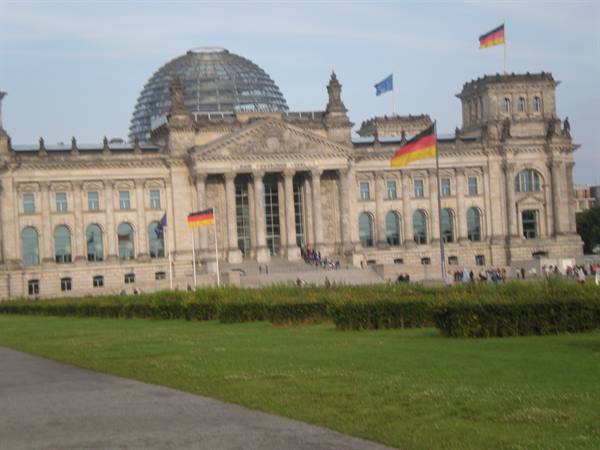
The television is large, with a flat screen and many channels, including RAI 1, which is not the best of Italian television. Central, it allows you not only to use the station's services for breakfast or dinner, but also there are supermarkets nearby (Penny in Alt Moabit). In this way we can pay an honest price for a bottle of water. We used the Tageskarte for three days and the metro starting from the station, while on the other four we easily reached all the planned destinations on foot. Reichstag We see it right away, on the evening of 16 July, shortly after leaving our suitcases at the hotel. Today it is the seat of the Bundestag, the German Parliament, and the new symbol of the German republic. Near the central station it stands in the Spreebogen, a horseshoe-shaped meander of the river Spree.
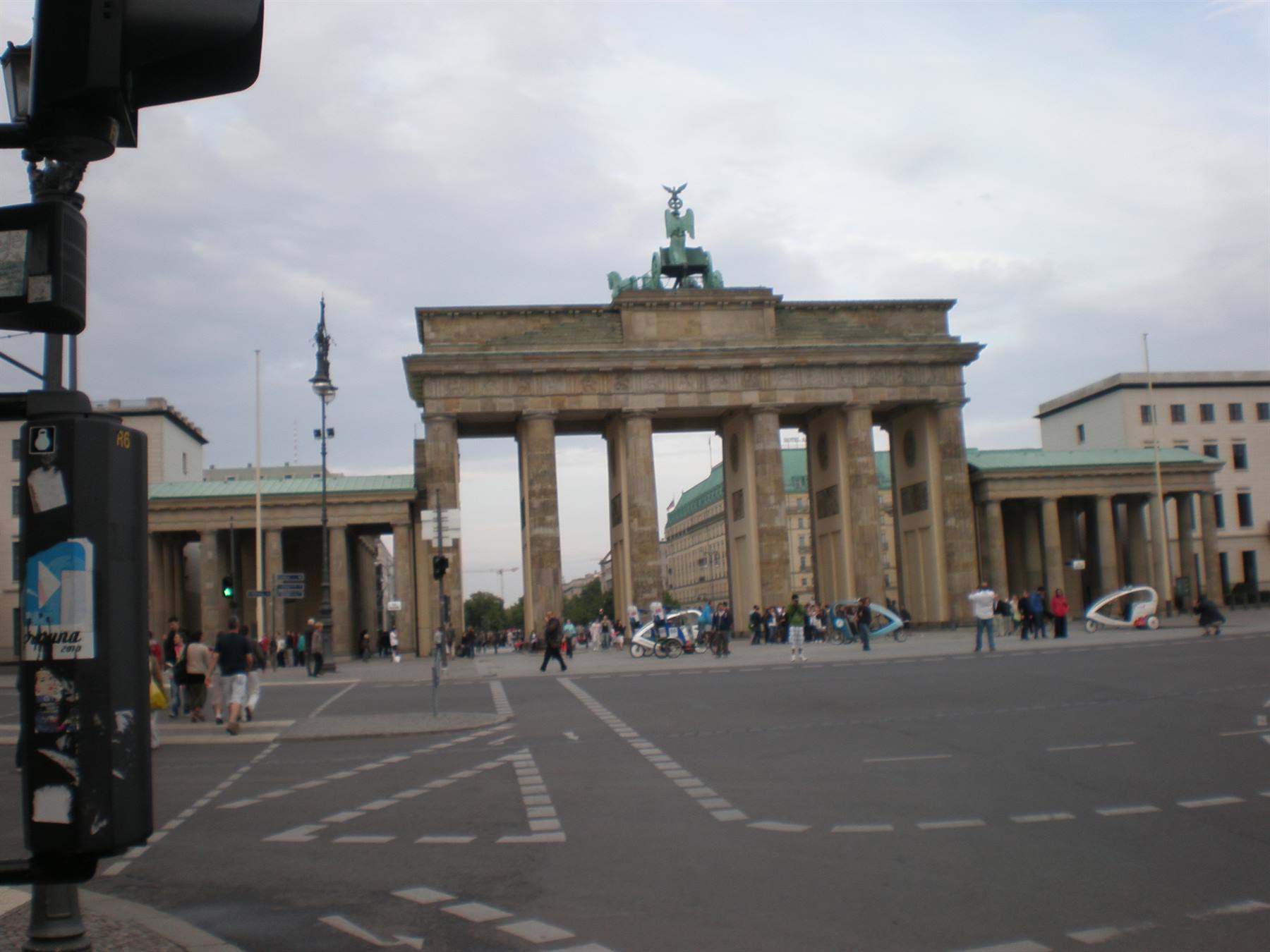
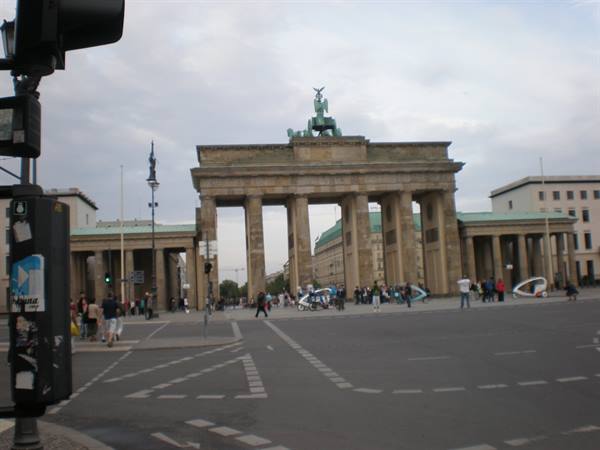
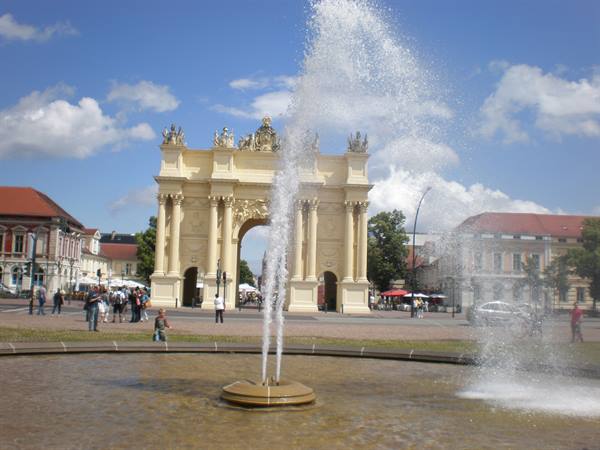
Entry is free, but you have to book in advance and there is always a queue at the booking kiosk located to the right as you look at the building, across the street. The modern architecture of the Reichstag, while respecting the imprint of the original building, is well integrated into the harmony of the government district, and from the top of the dome, easily reached by a ramp, you can admire a beautiful panorama. The vast lawn in front of it is much frequented by children for their games, while adults, dressed from head to toe, sunbathe (what little there is) on deckchairs rented by little baths with bars as you see on our beaches. The atmosphere is pleasant and we passed in front of it often. Brandenburg Gate The Brandenburg Gate, 26 metres high and 65 wide, is the only city gate still existing in Berlin. It is the centre of tourist attractions for pointlessly passing your time.
A mandatory passage for anyone moving on foot. On Sunday we found there two jokers with a flag disguised as American soldiers for the joy of a Kodak moment, Minnie and Mickey Mouse, a bear, some Star Wars characters, a skilled gymnast dancer and bicycles of strange shapes. To be avoided
The Brandenburg Gate
Day 217 Jul 2012
Alexander Platz and surroundings
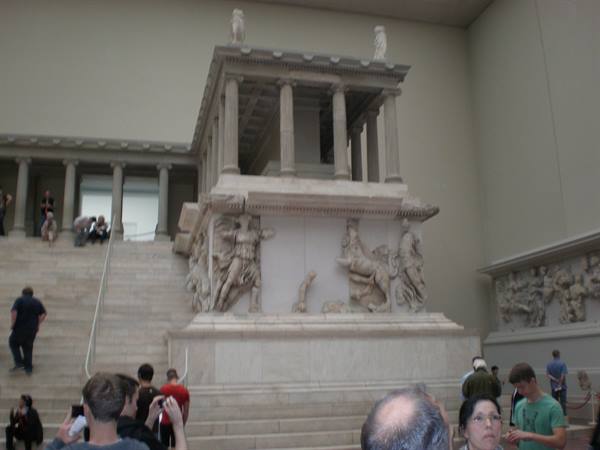
Berlin Cathedral (Berliner Dom) We saw the exterior on 17 July while we were waiting to go inside the Pergamon Museum. Entry is paid (5 €). It is located in the Mitte district and rises along the banks of the Spree. Its dimensions are mammoth: 114 metres long, 73 metres wide and 116 high. We admired the beautiful façade, but we did not enter for reasons of time. Pergamon Museum We buy the tickets at 9 (10 € each) so we save ourselves the queue at opening. The museum comprises three distinct collections. The first, the Pergamon collection, gives the museum its name. A shame that the works have not remained in the beautiful original archaeological site located in Turkey. The second collection concerns the Near East: the Babylon of Nebuchadnezzar, in particular the Ishtar Gate. A staircase leads to the upper floor where the Islamic art collection is located.
It takes almost three hours to see everything. Bildung durch Wissenschaft. Alexanderplatz The name of this square takes its cue from Tsar Alexander I who visited the city of Berlin in 1805. Erich Honecker, former East Germany, decided in the early 1970s to transform the square into the symbol of socialist glory and destroyed its original structure, having various famous buildings constructed, among them the Fernsehturm, the Television Tower, the second tallest structure in Europe. In the centre of the square is the Universal Clock of 1969, a structure that continuously rotates showing the time in the various zones of the Earth, and the great Fountain of Friendship, also from 1969, once a meeting place for young punks. There are also numerous shops where we did a modest amount of shopping. Marienkirche Also near Alexanderplatz we find this church built with characteristic red bricks.
Construction of the church began in 1270, with later additions such as the tower and the Baroque dome that sits above the tower. Inside is kept the fresco the Dance of Death (Totentanz), two metres high and 22 long, dating from 1485, protected by a thick glass pane. Inside there are numerous paintings and an 18th-century organ, a masterpiece by Walther. Entry to the church is free. Rotes Rathaus The neo-Renaissance Berlin City Hall was built in red terracotta bricks. During the communist era the building served the municipal administration of East Berlin, keeping the name Rotes Rathaus ('Red Town Hall'), from the colour of the façade. In 1991 the colleagues from West Berlin also moved here from their own town hall. Nikolaiviertel with the Church of Saint Nicholas Nikolaiviertel is the oldest quarter of the city of Berlin.
All its little streets and its medieval buildings are worth discovering. The "Nikolaikirche" (Church of Saint Nicholas) is one of the oldest churches in Berlin. Built around 1230, the "Nikolaikirche" is in late Gothic style, with three naves and a cross vault; the current structure is the result of various modifications. It rises a few steps from Alexanderplatz. Many define the "Nikolaiviertel" quarter a city within the city that has endured since 1200, but much of the quarter was rebuilt after the bombing of the Second World War.
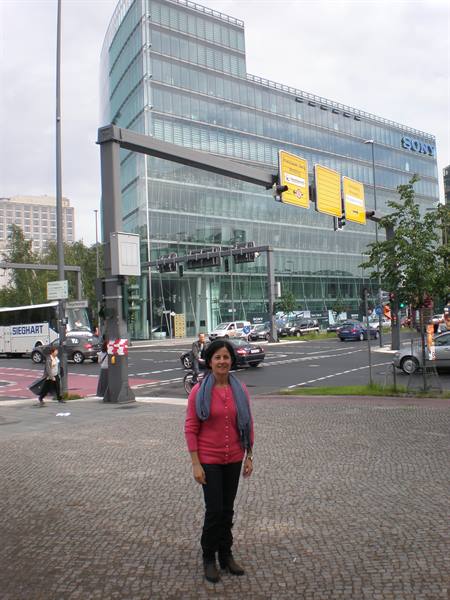
the Sony building in Berlin
Day 318 Jul 2012
Potsdamer Platz
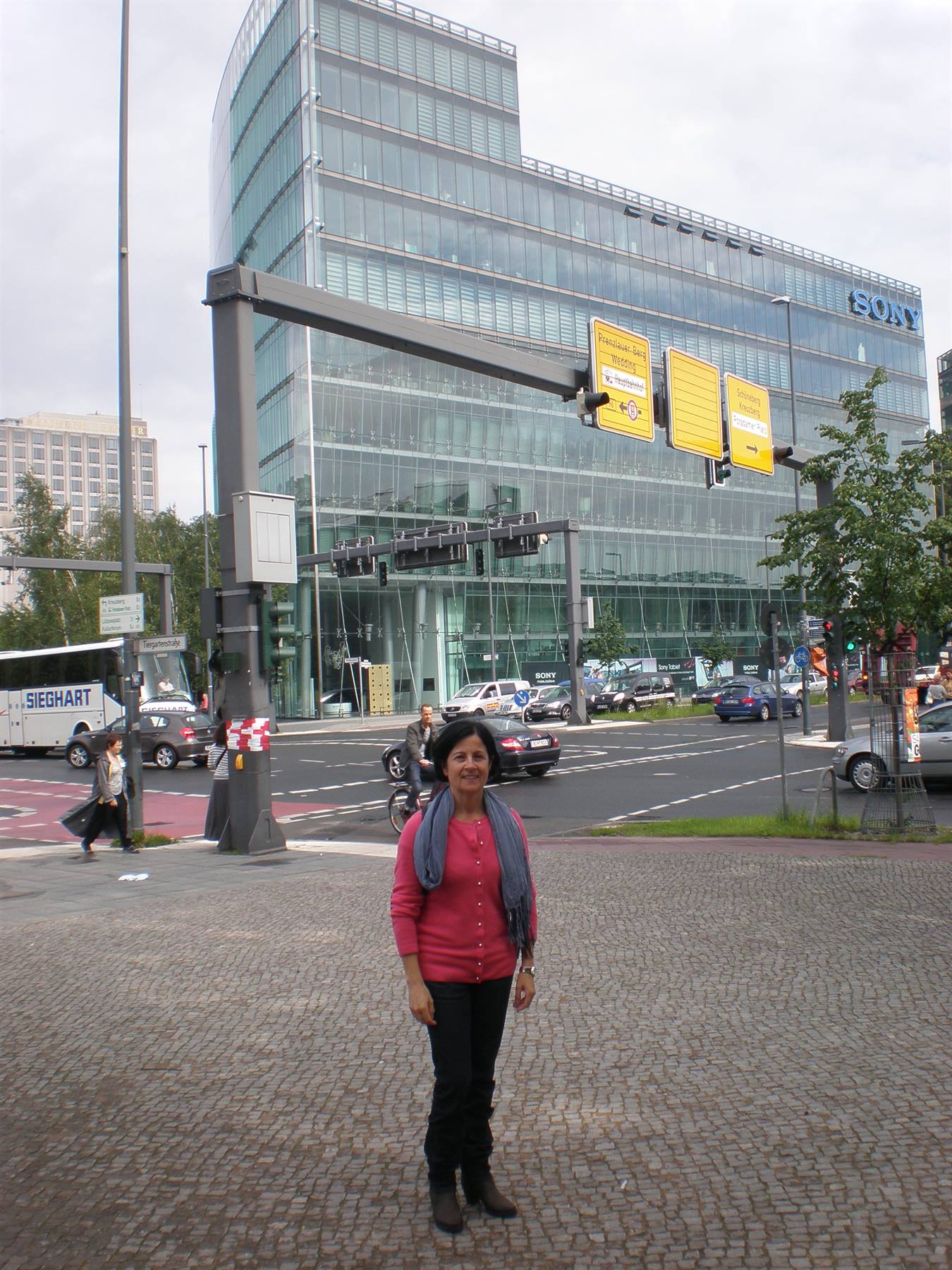
On July 18 we reached Potsdamer Platz on foot, crossing the Tiergarten. During the 1930s this was one of the liveliest squares in Europe, full of cafés, cinemas, luxury hotels, elegant department stores and a major transport hub for the city. It was then completely destroyed by the bombings of the Second World War. Today, it is admired for its futuristic look. There are numerous skyscrapers, among which the Sony Center is interesting. Sony Center The Sony Center is today one of the most successful constructions of the new Berlin. It is a complex of buildings with the most diverse functions: shopping, cinemas, theatres. The Sony Center measures about 26,000 sqm and hosts several attractions: besides large restaurants, cinemas, offices, private apartments, services etc...
For potential customers, Sony has obviously also opened a store where you can see and use its newest products: from Playstations to mobile phones, from games to video cameras. We rushed to the computers to take advantage of a connection and read the news that Italian newspapers transmit on the internet. We managed it with only one computer and one tablet. We were struck by the televisions with three-dimensional images, Gemalde Galerie The ticket for the art gallery costs €8 and includes the use of the audio guide in Italian. In the gallery there are 1,500 paintings, among which those by Rembrandt (to whom a room is dedicated), Titian, Goya, Botticelli (a Venus), Holbein, Canaletto, Rubens. There is also a well-known painting by Caravaggio and very many by Italian authors, some of which were probably looted during World War II.
The castle of Potsdam
Day 419 Jul 2012
Potsdam and Spandau
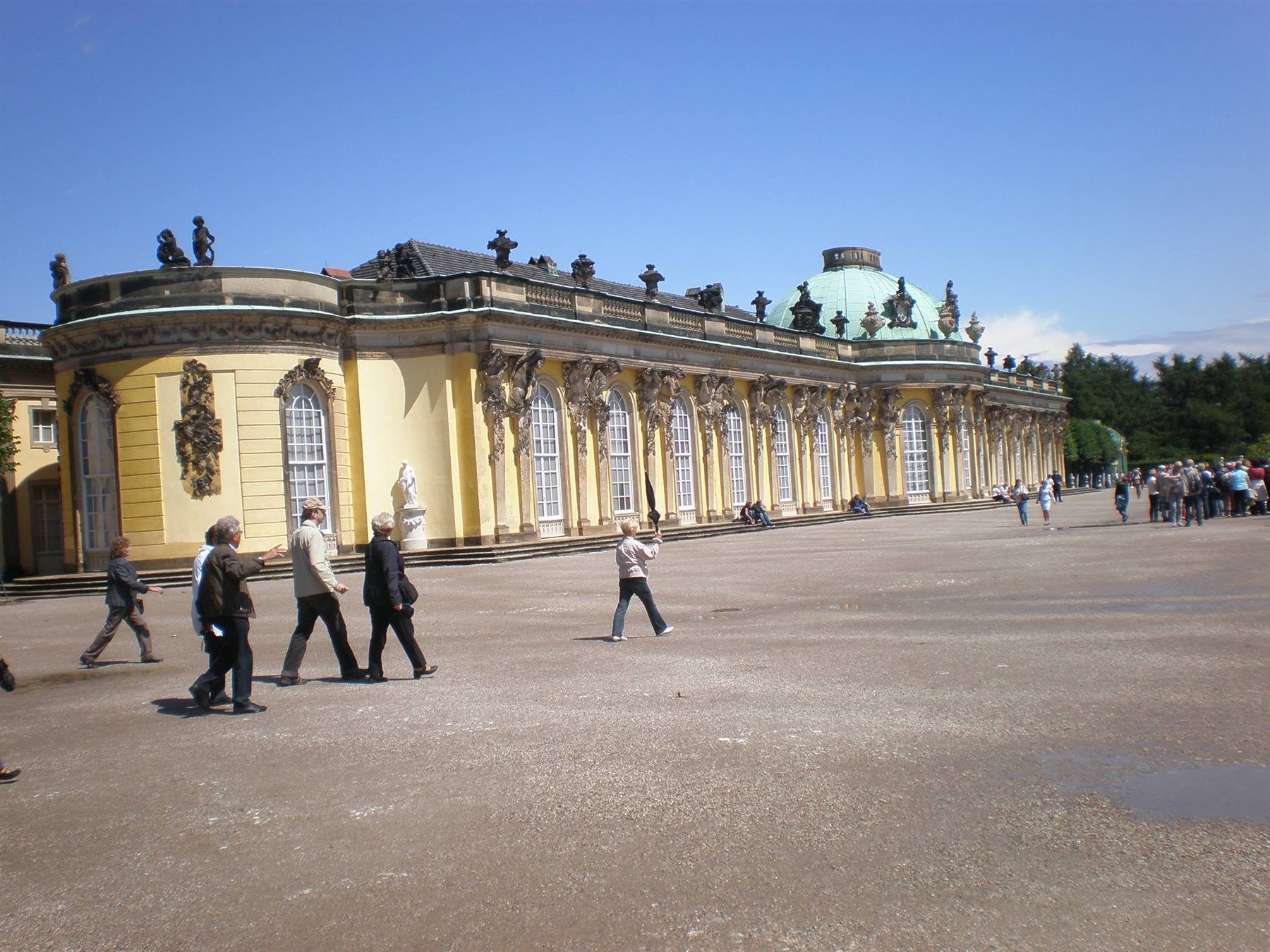
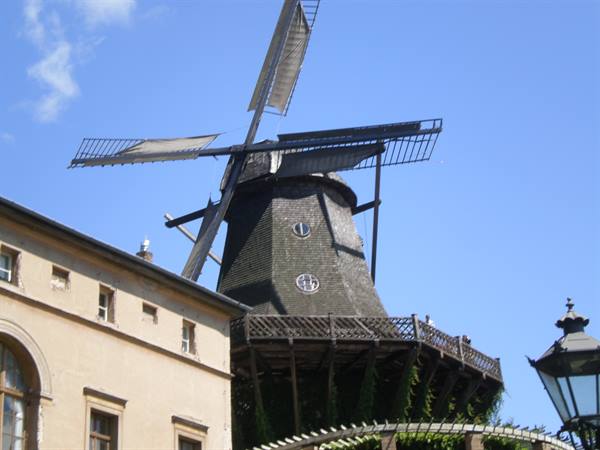
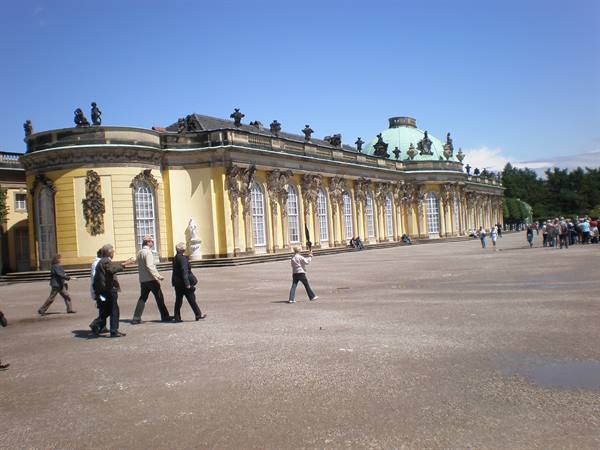
POTSDAM You arrive in Potsdam from the central station by taking the S 7 from platform 16. The small town is known, besides its historic centre, for the Sanssouci Park where interesting buildings, well-tended gardens and a botanical garden are found. At the New Palace we found marquees, music and celebration. We visited the New Chambers. The highlights are the old castle of the Park and the old mill, entirely rebuilt. SPANDAU After visiting Potsdam, on July 19 we make a stop in Spandau where we admire the historic centre. The Spandau Zitadelle is the only fortress remaining in the Berlin area. It is located in the centre of the district of the same name at the confluence between the Spree and Havel rivers.
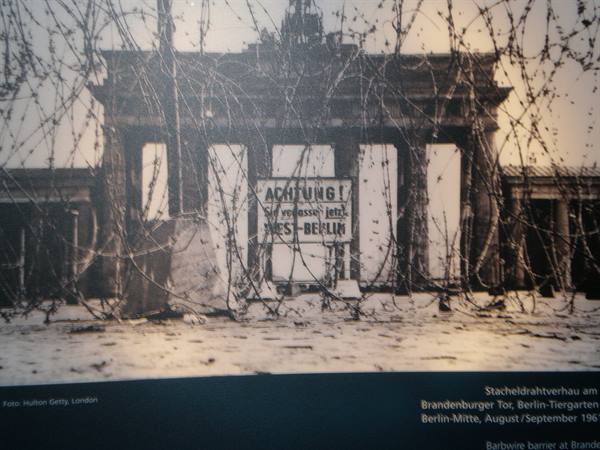
The Berlin Wall at the non-touristy Mauerpark
Day 520 Jul 2012
The Berlin Wall
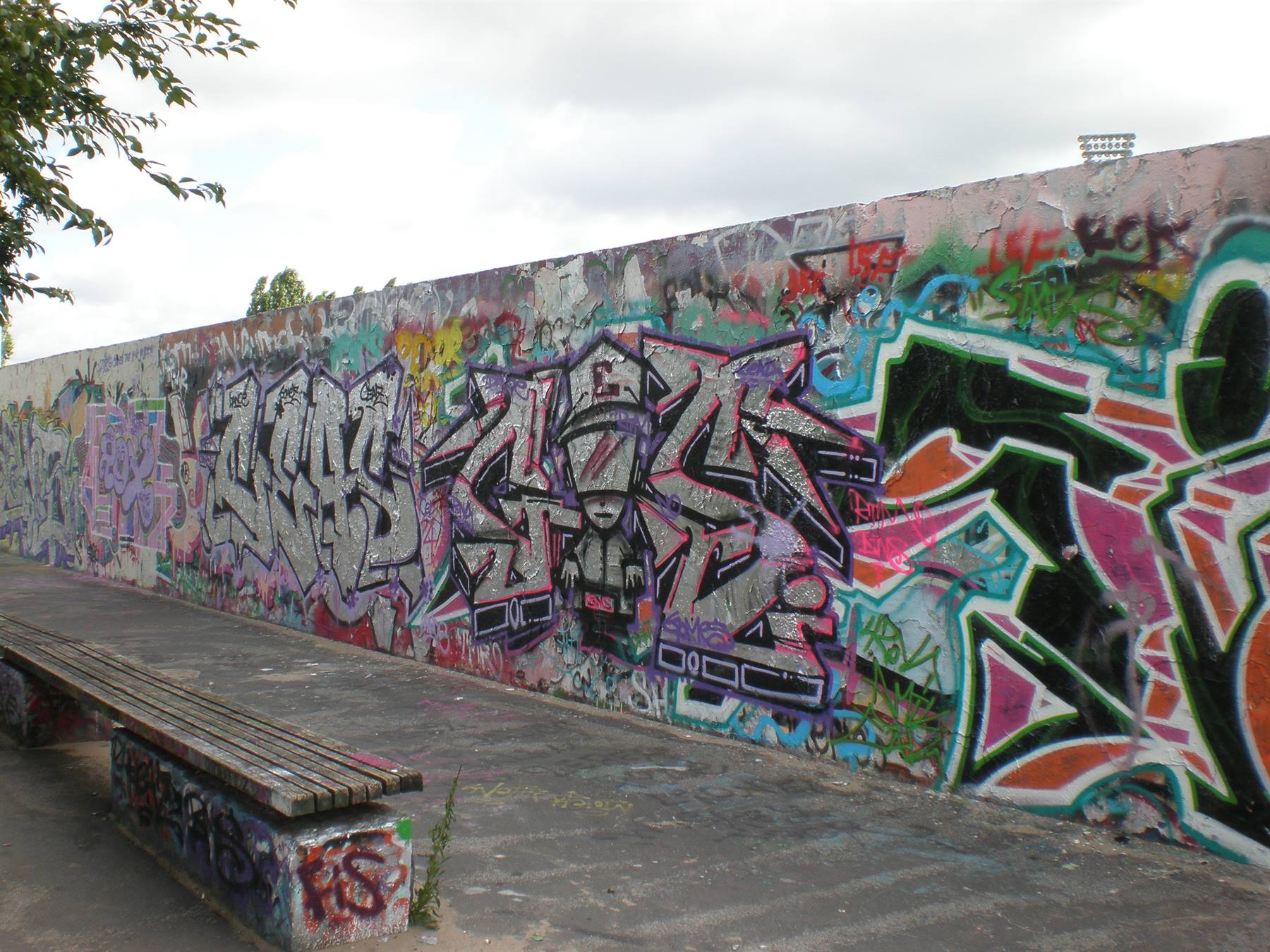
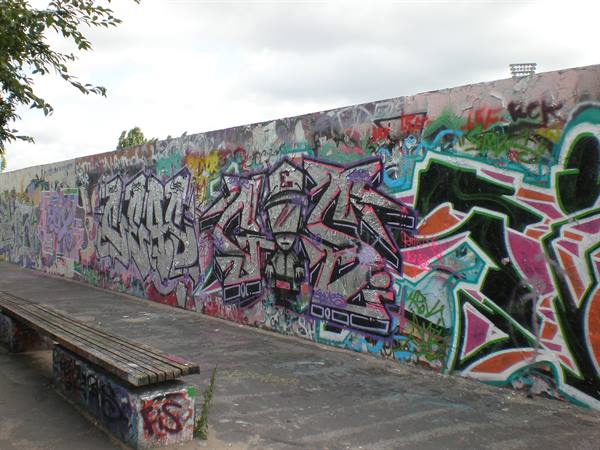
Mauerpark Bernauer St. no. 111 On July 20, after having visited Potsdam and Spandau on the 19th, we reached the Mauerpark and then the Wall Memorial. "Leben mit der Erinnerung", living with the memory: that of the Wall, that of the extermination camps. And not removing them. Access to the Memorial is free. The structure is located at no. 111 Bernauer St. near the Nord Station. It is advisable to go first to the Mauerpark to see the authentic wall. The one for tourists is too aseptic. The films and photos, on the other hand, are chilling. Suffice it to recall the images of the Berliners who threw themselves onto the firemen's blankets in 1961, the day the construction of the Wall began.
And suffice it to recall the too many dead, among whom Cetin Mert, killed on her fifth birthday, in 1975, when she tried to cross the wall between Kreuzburg and Friedrichst, So much horror is hard to forget. Charlottenburg In the afternoon of July 20 we visit Charlottenburg. The "Schloss Charlottenburg" is an imposing construction in Berlin, which bears witness to the importance and splendour of the Hohenzollern dynasty, a German family of electors, kings and emperors of Prussia, Germany and Romania. The splendour of the "Schloss Charlottenburg" is also felt outside the palace, in the immense baroque-style garden that surrounds it. Meticulously tended and rigid in style, initially in the French style, it was later transformed into an English-style garden. We did not enter the palaces, but limited ourselves to looking at and photographing the exterior.
In front of the Castle there is a festive atmosphere with pavilions, food offerings and music.
Ka. De. We The most famous Berlin department store is the KaDeWe (Kaufhaus des Westens, an authentic shopping paradise and a clear landmark, easy to identify on Wittenberg Platz. With its 60,000 sqm (the equivalent of 9 football fields), 380,000 items and 40,000 visitors a day, it is the most extensive and legendary department store in Europe, especially for the gastronomic offerings on the top floor.
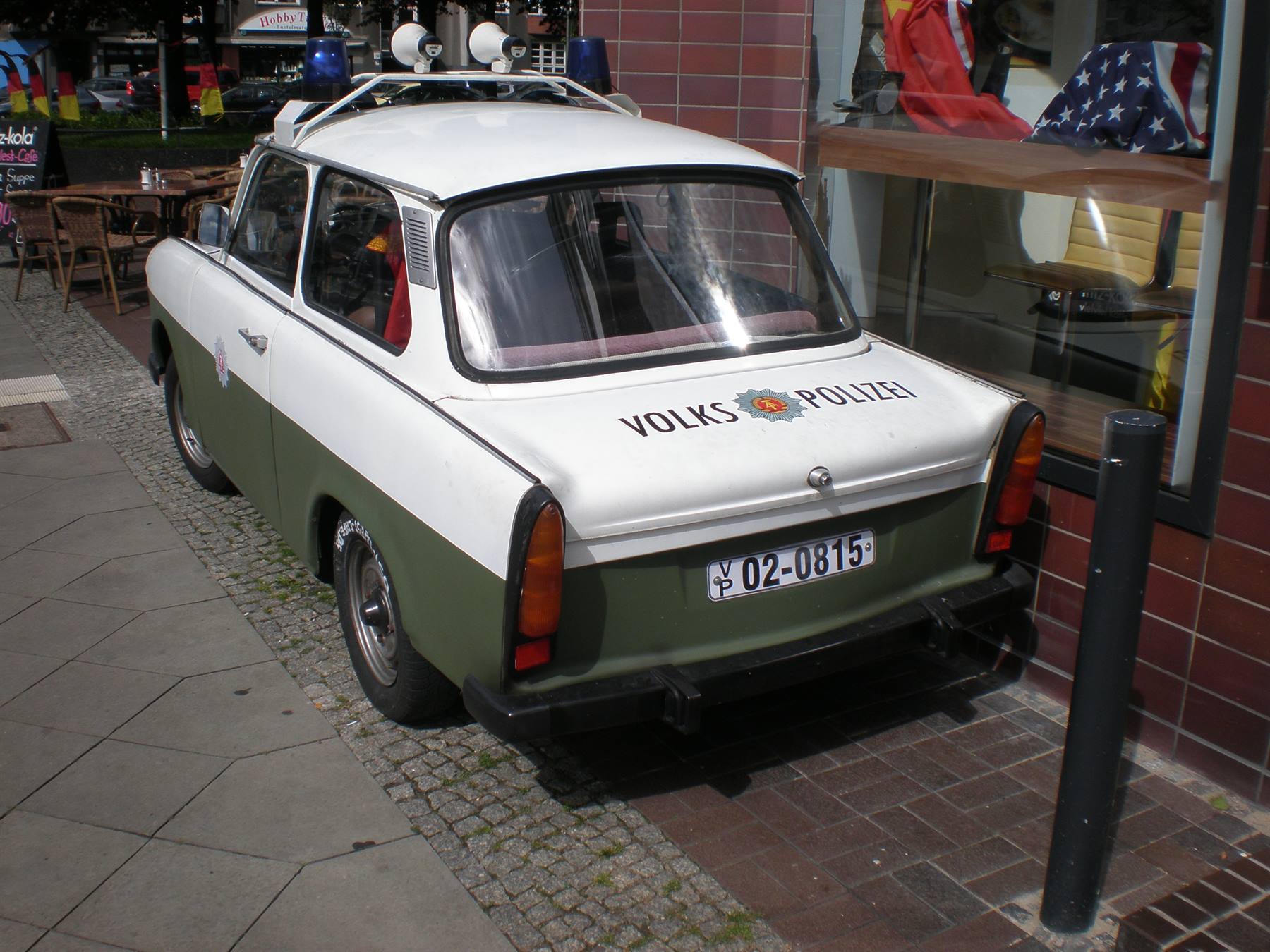
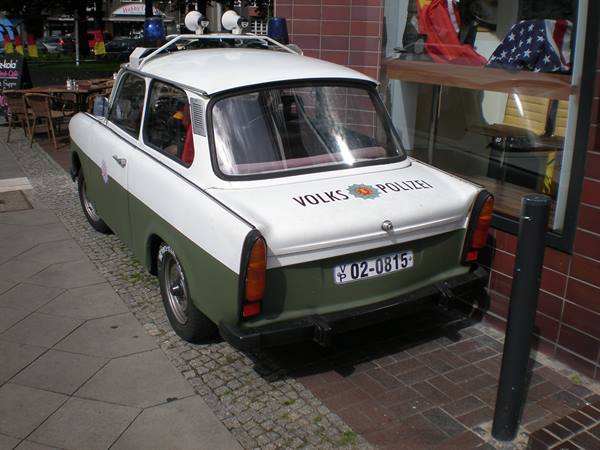
the Trabbi (Trabant) car of the GDR
Day 621 Jul 2012
The Nazi extermination camp
On July 21 we went to Sachsenhausen, the Nazi extermination camp 35 kilometres from Berlin, where prisoners of various ethnic and political origins were piled up, doubling the number of barracks to more than sixty in a space that had become cramped and triangular in shape, and increasing the number of prisoners in one barrack from 146 to 300. The camp is located less than two kilometres from the Oranienburg S-Bahn station and is easily reachable on foot by following the indications on the signs. It is worth preserving the memory even though the audio guide rented for three euros contains the not-new thesis that "even if" the German Nazis were bad, the Soviets were no less so. The Gospel says that before removing the speck from your neighbour's eye, you must remove the beam from your own eye. Otherwise the memory of the poor victims becomes indefinite and is lost in time.
In the extermination camp 10,000 Russians were shot in 1941 and 350 Jews in 1942, all the atrocities that sick human minds could conceive were perpetrated, all scientific means of killing one's fellow human beings were studied, from shooting in the back of the head to lethal gas trucks. Cruel ferocity that is extensively documented and that leaves one aghast. Oranienburg is nevertheless a beautiful German town where today it is possible to have breakfast at the "Petit Café" just after the station, on the right, and lunch at the Café "rendez-vous" with Schnitzel, Kartoffeln and gemischte Eis for 22 euros for two. The address is Bernauer St. 92. Since the town's eateries and services are not many, we think it useful to list them. Gedenkstätte und Museum Sachsenhausen Straße der Nationen 22 D-16515 Oranienburg Tel.
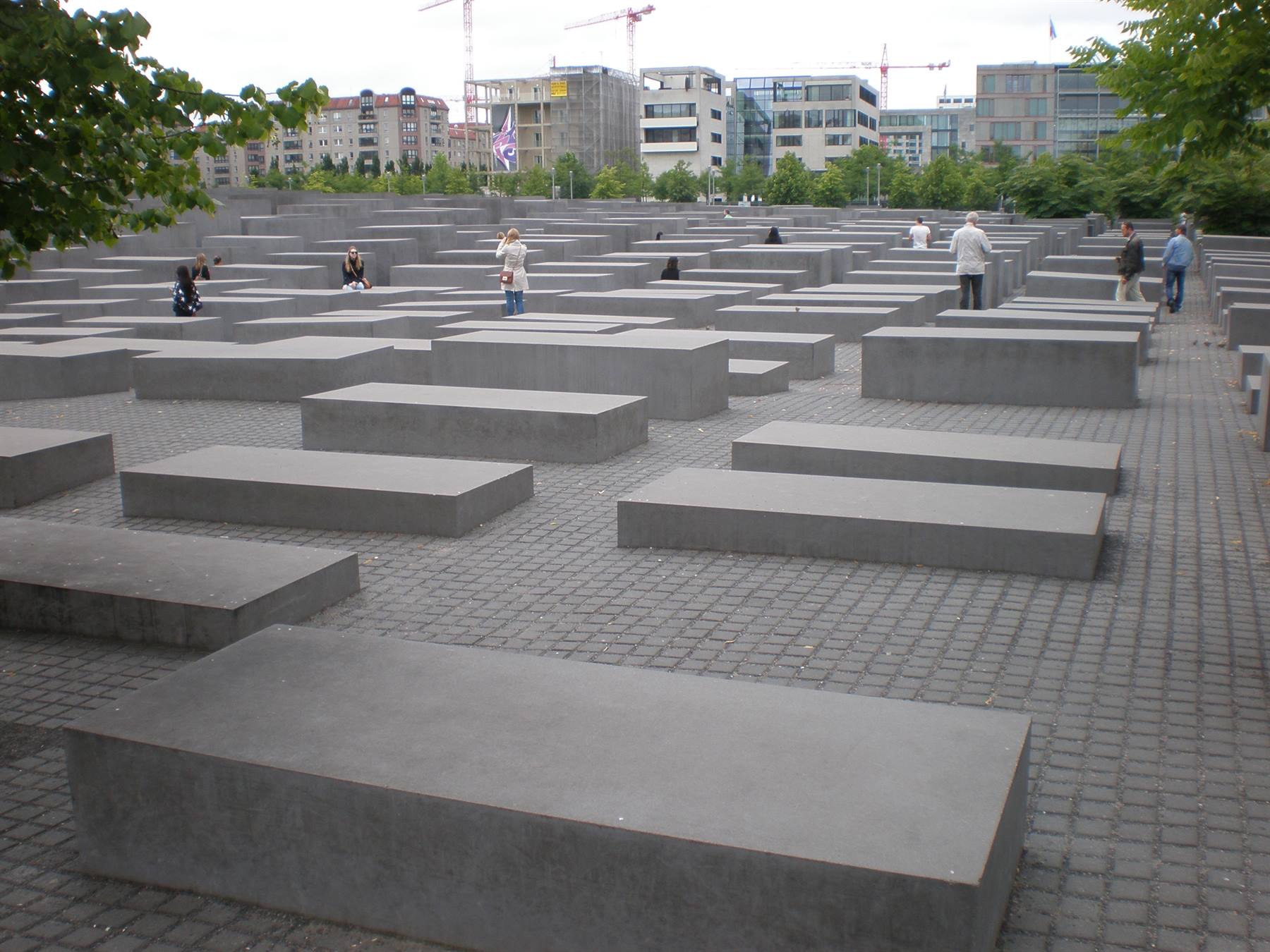
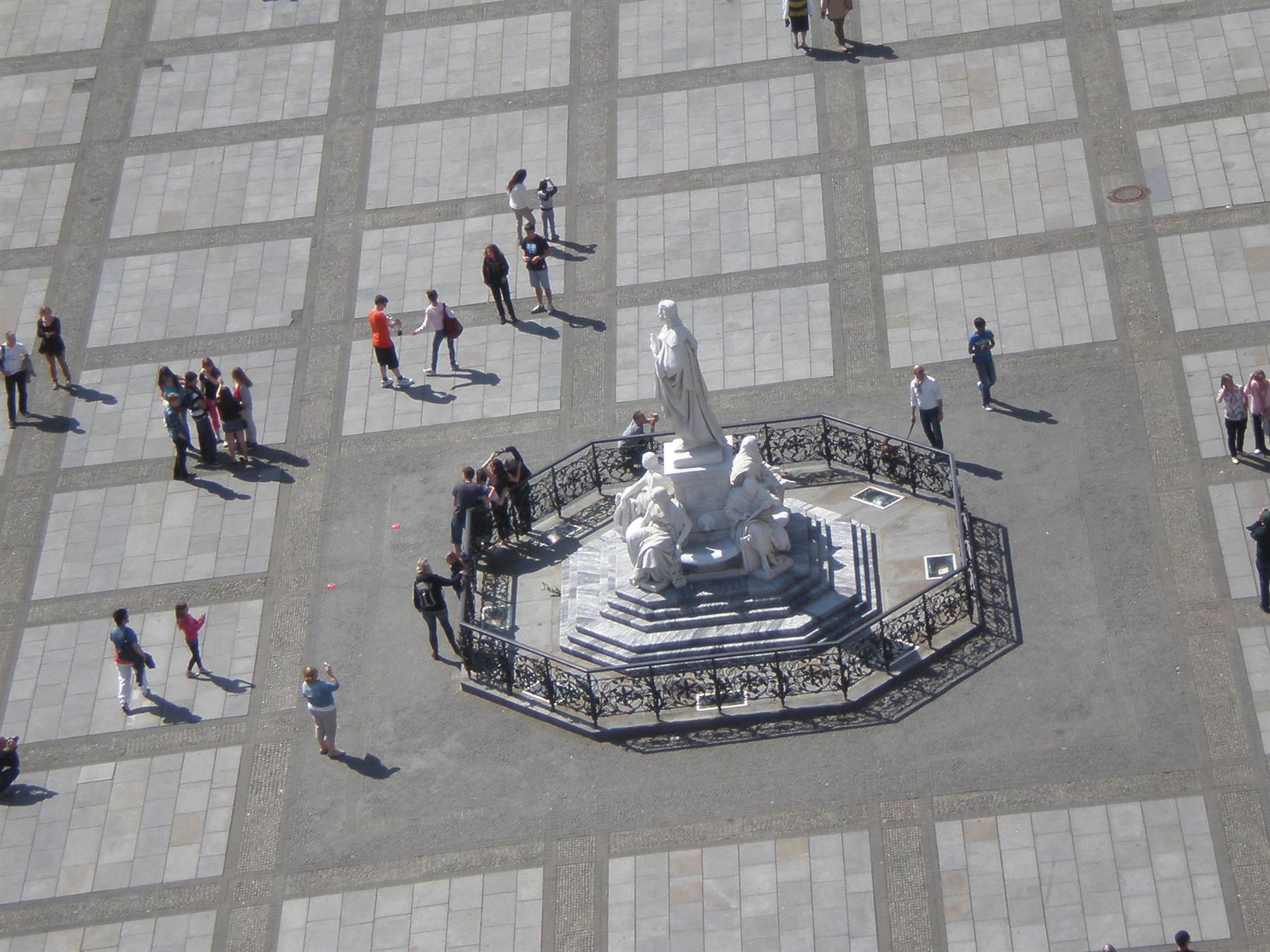
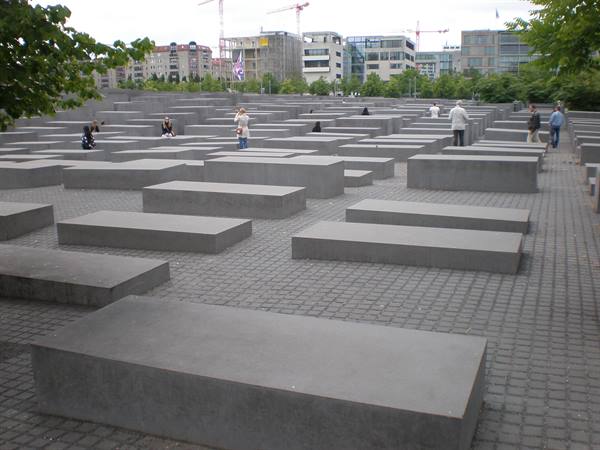
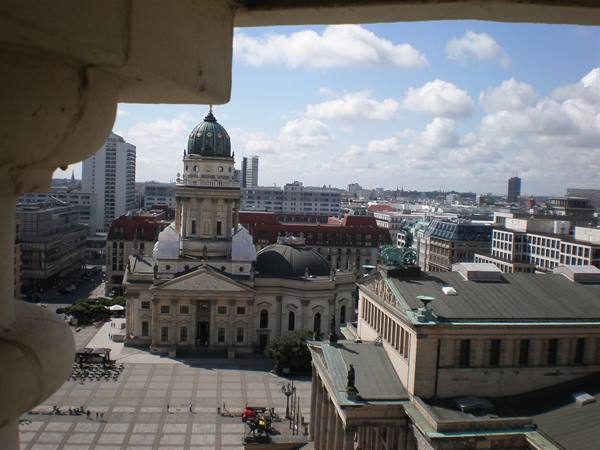
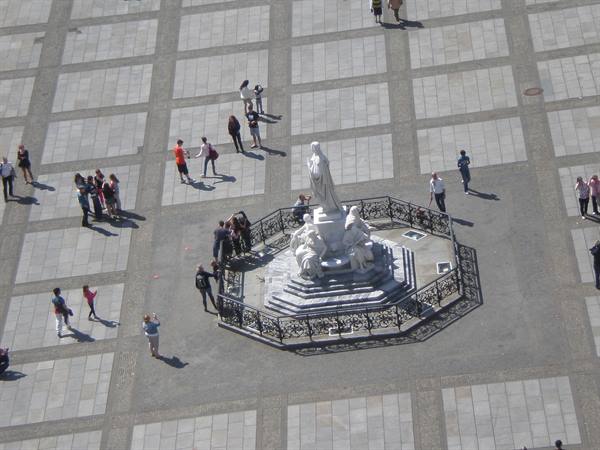
Holocaust Denkmal After visiting the Nazi extermination camp on the 21st, on July 22, for the sake of consistency, we go to see the memorial near the Brandenburg Gate. The Holocaust Denkmal is located near the Brandenburg Gate. The site was conceived by Peter Eisenmann and consists of 2111 stelae of different sizes arranged in rows with paths on undulating paving. There are several information centres that open at 10.00 and there are already tourists queuing. It is a memorial and as such it stays in the visitor's mind. Gendarmer Markt Overlooking the square are the two churches of the French and German Calvinists, as well as the neoclassical Konzerthaus. We climbed the 250 steps of the Franzosischer Dom and were pleasantly surprised by the sound of the bells and by the view of Berlin you can enjoy from above. The two churches are topped by twin domes and the overall effect is enchanting.
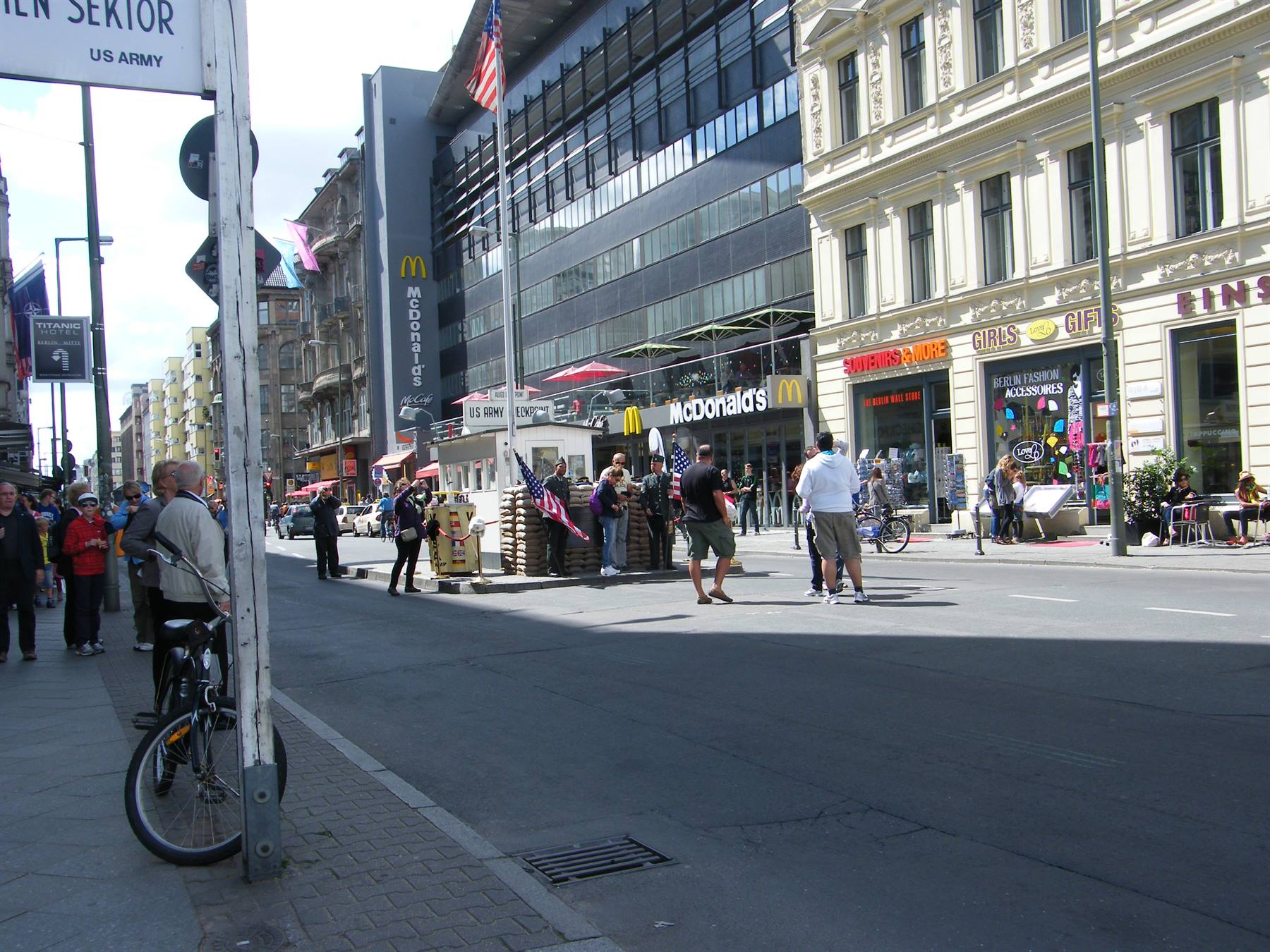
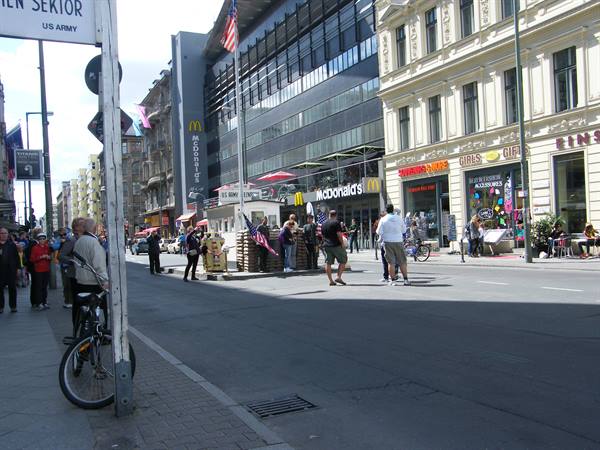
Charlie point All very folkloristic except for the historical exhibition. The exhibition was opened in the spring of 2006. Since then visitors passing along Friedrich-, Zimmer and Schützenstrasse can inform themselves free of charge on three different themes: the numerous escape attempts at the border crossing, both failed and successful; the meaning as a symbolic place of harsh international confrontation that the Allied checkpoint Checkpoint Charlie had; the most important places of remembrance and memory, the authentic remains of the Wall, the museums and documentation centres on the subject of the German Division and the Berlin Wall.
Hamburger Bahnhof It is the perfect museum if you want to see modern art. It is the largest museum in the city specialising in this art. Andy Warhol, Kandinsky, Picasso, Klee Zionskirke Church reached in the afternoon of the 22nd and of which we can admire from the outside both its imposing size and its beautiful stained-glass windows. Back at the hotel we prepare ourselves spiritually for the departure by plane the next day.
gENDARMENMARKT BERLIN
Day 823 Jul 2012
Departure
We reach the airport by changing metro at Ostkreuz and taking line S 9 on platform 11 for Scoenefeld. Departure 12.15 and arrival at Pisa airport 14.15 with Easyjet €81 each. Peaceful trip without any problems whatsoever.
0 reader comments