The story
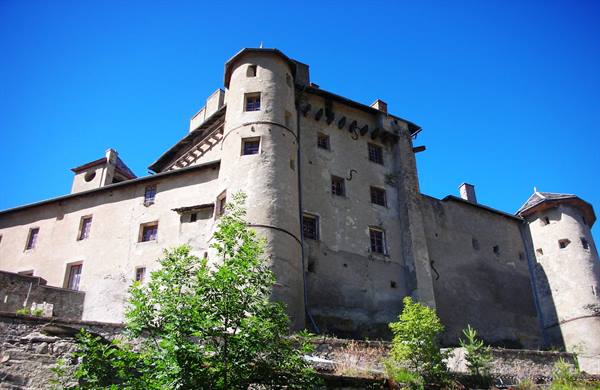
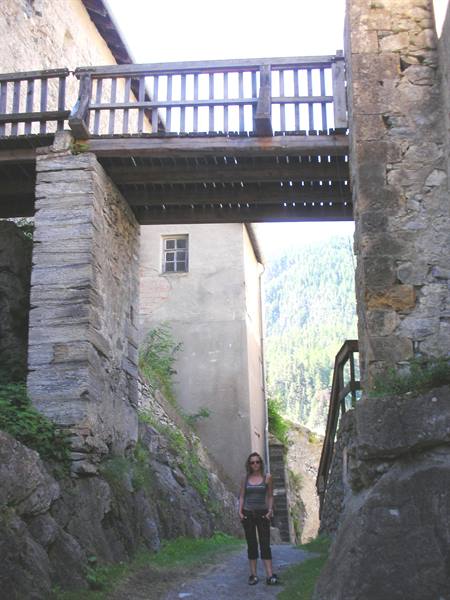
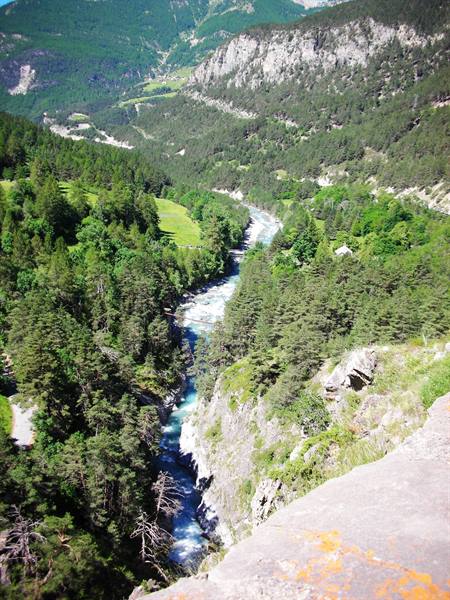
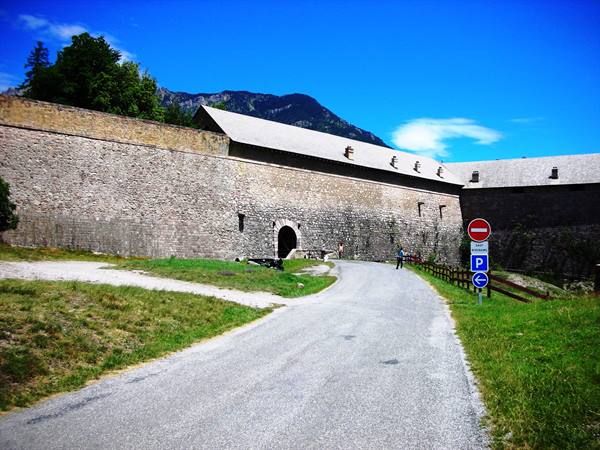
The Fort de Queyras is a historic monument, a 13th-century castle; it is part of the tourist buildings of France and is positioned in an optimal spot, on the top of a rocky promontory overlooking the valley and the Guil river. On arrival you can park down below, in the square of the small village; from here the dinghies for rafting on the river set off, and there are tourist information points and places to sign up and get information for sports in the valley. On the riverbanks you can also go walking and rock climbing. Continuing on foot, everything is well signposted and you reach the fort in 10 minutes; at the entrance, after the wooden drawbridge, there is a little lawn with the information booth and the ticket office, 7.50 euros each. Maps, leaflets and information are handed out.
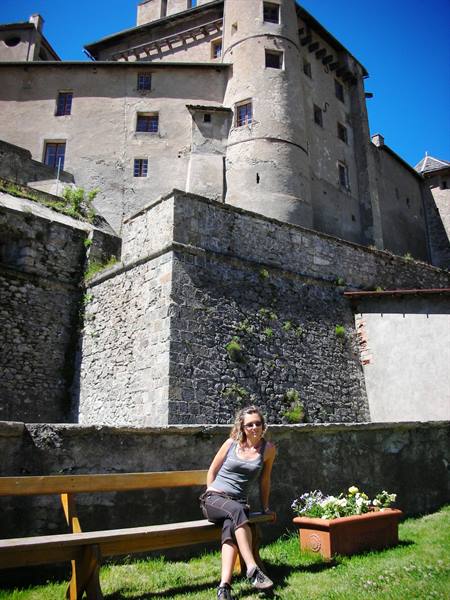
Once inside, with a self-guided visit, everything is well explained both on the information boards placed in front of each important point and in the leaflets we were given. The visit lasts about an hour if done independently; the fort is very beautiful, at times bare and at times with re-creations of everyday life scenes of the place. In the tower there is also an exhibition of photographs, paintings and costumes of the period. In the inner garden there are a bar, benches, a little souvenir shop, a chapel and some well-tended flower pots. You start from the entrance and inner garden, the area called Mezza Luna, then continue with Porta Dauphine, the guardhouse and the tower, wooden balconies, stone towers, cramped spaces enclosed between high walls, ruins and interesting places.
You move on to the north-east bastion and the North Casemate battery, then back outside from the tall cylindrical tower to the North bastion with stone walls and arches. The visit continues in front of the goods lift, the drawbridge and moat and the barracks; here everything is very bare, it has remained much as it was in its time, rough and military. Interesting is the bakery area with ancient ovens, the water reserve and the officers' mess. The hospital, which is point of interest no. 11, is rather eerie; in the rooms scenes have been re-created with mannequins, beds etc.... and some scenes are very crude. Every explanatory sign is in 3 languages: French, Italian and English. You then pass to the storehouse and the 70-step staircase going down that runs through some small gardens down to the lowest and largest walled garden, with a view over the Guil river.
Continuing, you reach the knight's tomb, with a mannequin dressed as a Knight of the period lying among shields and coats of arms. The Powder Magazine is then a large room with a semicircular ceiling and a drawing at the back on the wall, depicting the castle on the rock among the mountains with knights and mountain pines. You come out into a green little garden; from here you have access to a courtyard with a bar, a little souvenir shop and a water well, and from here the armoury. In the room there are reproductions of helmets and headdresses used in the battles of the past, armour, lances, shields and some suits of armour.
Section 17 is the Great Tower; you go up a narrow spiral staircase and stop at each floor to admire the re-creations of scenes of life such as the kitchen, the embroidery room and the costumes of the ladies of the period, the scribe's room and an exhibition of photographs and paintings of the castle and other places. From the Artillery Courtyard to the Royal Gate, you return to the entrance and the tour is over. The visit is interesting; a guided one is certainly a different matter, but we settled for the self-guided one. It is a place both of culture and of majesty; the landscape from the fort is very evocative, and in the little souvenir shop you can buy statuettes, medieval costumes, postcards, little objects etc.... mid-range prices.
The fortified citadel stands on a rocky height in a strategic position for defence against attacks. To get there you have to climb a little by car up to a sort of car park, an open space amid unspoilt nature bordered on one side by a slope at the bottom of which the Guil river flows. When we parked, I expected so much from this place; I was excited about it even before seeing it.... a fortified citadel, an enormous fort.... and who knows what the dolphins have to do with it?? We parked around one in the afternoon under the only free tree.... a bit of shade was needed, hot as hell..... all around nothingness, nature, rock, mountains, meadows.... We set off towards the big sign that said guided tours were only from 15:00 and cost 7.50 euros per person....
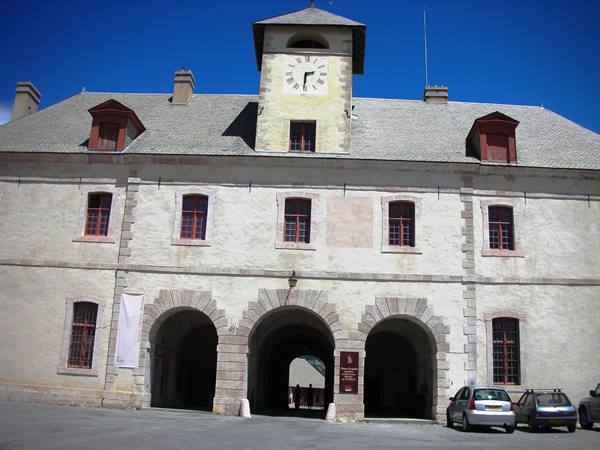
well!! We walk anyway towards what looks like the entrance and pass near a little "fort" or something similar, circular, amid grassy dunes and hollows. It felt like being in a place forgotten by God, some dry and scorched wooden palisades, rocks, a paved road, a few fortified low walls here and there and the signs indicating the entrance. At the entrance we expected it to be closed, but instead it was wide open; we cross a little bridge and I read the sign saying the place is a candidate for Unesco world heritage. The real entrance has a marble facade in Greek-Roman style; the moat below us is wide and green, we come out into a little square and I turn to look at the entrance building, or rather the exit building, with a portico and a large clock on a small tower.
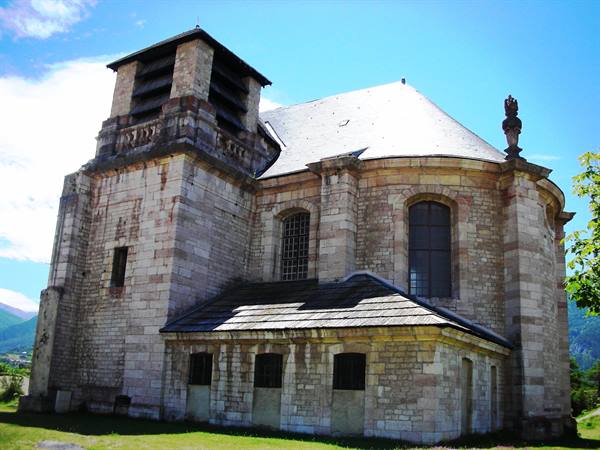
We stroll along the central downhill street; on both sides there are houses, little houses, restaurants, shops and bars; in the middle of the street an old water drain, apparently from the period; some little fountains with flowers are placed near the widenings; walking on we come to a private club. Walk, walk, and we find ourselves in an area outside the built-up zone, in the greenery, among trees and crunching gravel; we approach a little church that has nothing special about it, it is small, compact, and its roof recalls a Nordic one; it is the church of S.Louis, a few roses in front of the churchyard, little mounds of earth on the left side.... behind, nothingness, grass and the perimeter wall marking the boundary of the citadel; from there you can admire the panorama below with the Guil and the fields, roads and the valley, and to the right the high Alps.
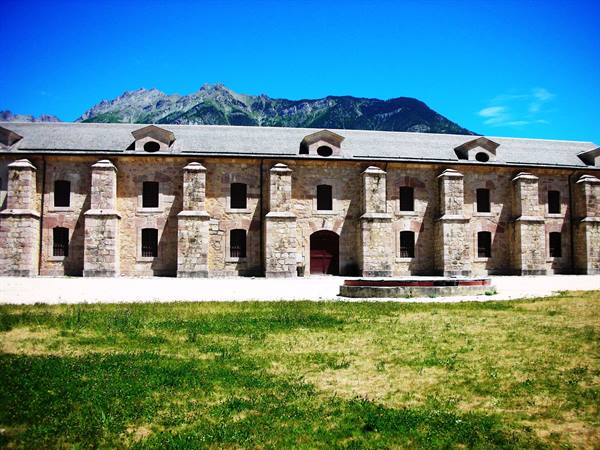
Near the church there is a large building, of light stone, ancient; approaching the door I read: Arsenal, large courtyard, nothing else. Heading south we come across a fort/castle, a fortified construction with high grey stone walls; will it be visitable? I wonder..... maybe..... let's say there is nothing super-thrilling in this Dauphiné..... Anyway the fortification isn't open to visits, but someone is preparing the horses for an evening show in the courtyard. The construction is grand, and if only it could be visited..... it would surely be worth the Dauphiné on its own. We pass through a wooden gate called Porte d'Embrun, a mini drawbridge, probably the back entrance of the citadel. Here there are low stone buildings, gardens where a little goat grazes and the horses for the evening show in enclosures.
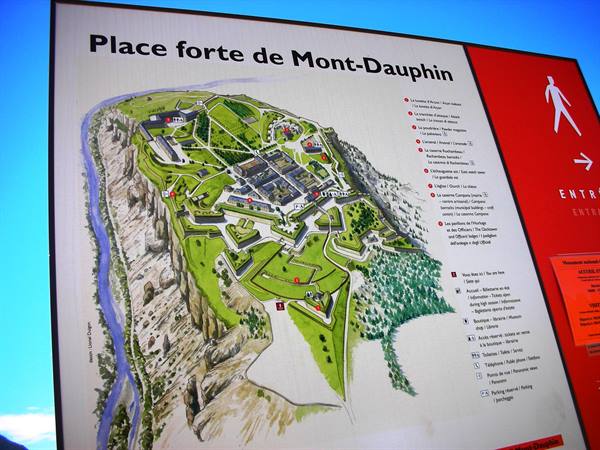
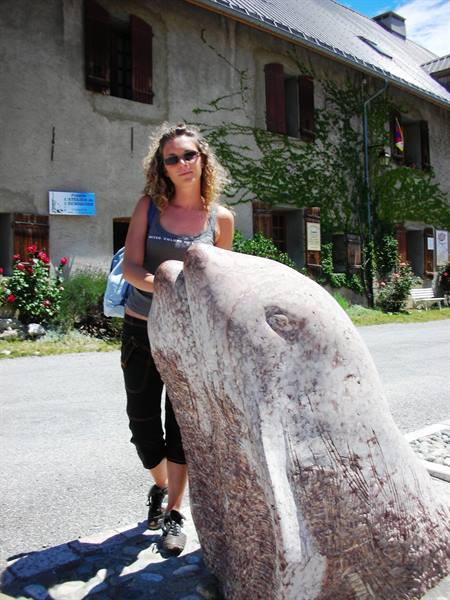
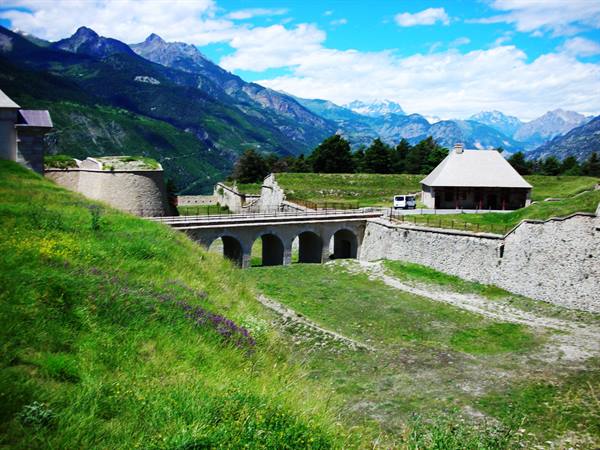
We reach the centre and change street, and so we discover the stone dolphins representing the Dauphiné; some shops along the street, but they are all closed; in the entire citadel there is hardly a living soul, very few people around. We then discover an area towards the green hill where there are stone sculptures shaped like animals and people, carved stone vases, inscriptions..... and I reach the top of the hill, from which I can see the fortifications and the moat, a bridge, some buildings. Everything is in excellent condition. As we leave we stop at the information office for a souvenir, some information, and I start studying a large map of the citadel.
The journey's photographs
15 photographs · click to open them full screen




0 reader comments