The story
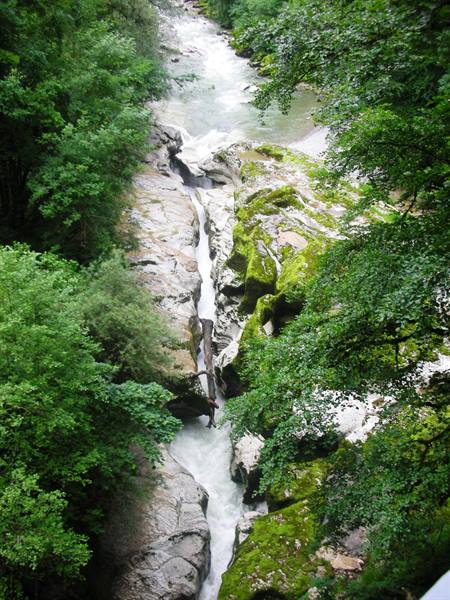
Lovagny: the Fier gorges. The Fier is one of the main rivers of Haute-Savoie; it crosses the plain of Annecy and reaches the lower part of Montrottier Castle, where the Gorges du Fier are formed, one of the great phenomena of water erosion. Lovagny, where the gorges are located, is only 10 km from Annecy; you get there by car, along a paved mountain road, and you can park in the large car park outside the site. Everything around seems to be decaying, deliberately left so because it creates an atmosphere typical of a Wild West kind of area. On arriving at a sort of small village you'll find a bar/restaurant, the ticket office, a mini photo gallery of the gorges, the toilets and a souvenir shop. From here you set off on the free route through the gorges.
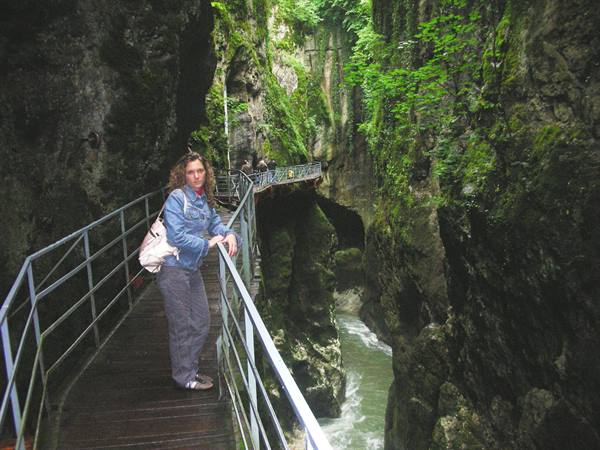
The work of the walkway built attached to the bare rock of the mountains was long and costly, and today it is often modernised and rebuilt to guarantee maximum safety for tourists. A "balcony" over the Fier gorges 250 m long, fixed 30 metres above the low waters of the stream, gives a view of the gorges looking down and up; the gorges are about 70 m deep in all. You proceed from the entrance to the bottom with some "suspended" stopping points, such as the suspended metre, which, attached to the mountain rock, indicates the levels of flooding in various years (highest in 1960), a terrace with benches and the final part, about 100 m, with a walk over the mountain rock until you see the lake that holds the waters of the gorges.
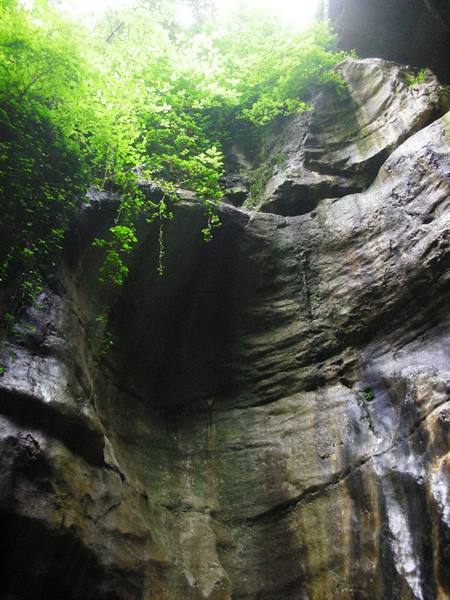
The first stage of the walkway stops at the Saut du Fier (overall view of the Fier leap); then you pass the Portail (the gate, so called because two rocky outcrops form a narrowing, a limited passage), to then arrive at the narrowest point of the gorges. The passage of water through the gorges is very narrow; in cases of torrential rain the water can rise by about 20 m in just a few hours. Then we have the stages: the Vestibule, the Corridor and the Cathedral. Above, the walls of the narrow gorges form a green vault covered in vegetation. Vegetation is an ever-present feature along the whole route, lush and very beautiful. Continuing on you find 2 rocky bridges built by man, one of which is the railway bridge. The last part is called the belvedere; here you can read a legend on a sign stuck into the rock. The return route is the same, walked back the way you came.
The site can be visited from March to October, from 09:00 to 18:00; the route takes about 40/50 minutes and is done on foot. Address: Route des Gorges 74330 Lovagny FR
I had never visited gorges... at least not so beautiful, so bewitching. We arrive with a little difficulty because they aren't well signposted from Annecy (strange) and we buy our tickets. We follow a marked route and pass through an iron gate with "Entree" written on it. Before entering we explore the small centre made up of a few little houses but nice, with a souvenir shop (where I buy my usual... the local fridge magnet). With a sheet written in Italian we head to the entrance of the gorges and, before venturing along this route that looks set to be magnificent, we learn more or less everything there is to know about the place. The gorges are about 70 metres deep and at a height of 30 metres above the low waters there is this terrace, a wooden walkway fixed to the left wall of the gorge, attached to the bare, vertical rock that forms the gorge.
At the start there's a lovely overall view of the river below and of the valley; nature here reigns supreme. Let me say upfront that the whole thing is an almost unequalled spectacle. I immediately start snapping photos in bursts; the place is too beautiful and evocative to leave out even the smallest glimpse — a boulder, a little tree growing in a hole in the rock, some creepers, holes, narrowings... it feels like being in the jungle, in the canyon and in paradise all at once. At first it's all very beautiful but the best comes later. Not many people visit the gorges; the site isn't well known except in France. The suspended footbridge has undergone countless repairs and restorations over the years, and over the passage of some floods that uprooted and completely submerged it.
Building the footbridge so that people could see the beauty of this place was a truly difficult and costly undertaking, and we appreciate every centimetre of it. We proceed at a slow pace (we're always suspended over rocky gorges and rushing water, after all...), we pass a narrowing formed by an outcrop of boulders and, looking down, we spot a white boulder in the middle of the riverbed; the water must be freezing. As we go deeper, the sun and light filter through less and less and the environment becomes more evocative and cooler. We then admire a tall metre-mark placed on the wall that indicates the floods over the years; there have been floods that completely blocked the gorge, so I'll leave you to imagine... the comfort given by that metre-mark. Breathtaking views... wild nature... beautiful.
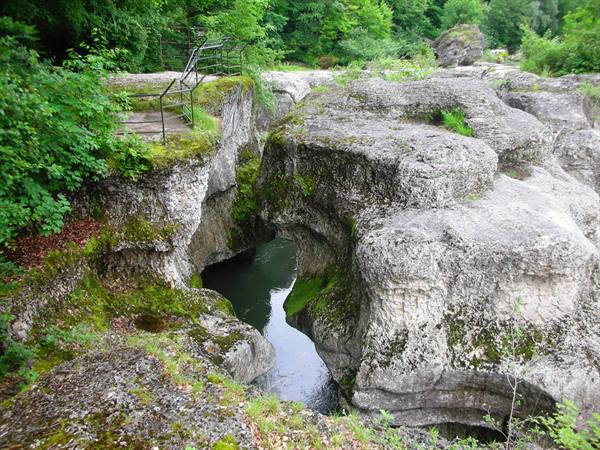
The quintessential sound is that of the water flowing many metres below us, and we see that the floods have left changes — trunks wedged in narrowings among the boulders, trunks stuck in holes in the rock 50 metres above the bottom. Everything is astonishing. I walk slowly and warily along the footbridge and step by step I discover the gorges above and below me; everything is too big, I feel so small in there. We reach points where you can admire little cascades and smoothed rocks, caves, vegetation hanging down for metres. At the end of the footbridge we don't stop but carry on to peek from the belvedere at what can actually be seen. We walk over rocks and mud, earth and grass; the next route is a walk on solid ground to the lake where the stream of the gorges, the Fier, flows out. We have to go back along exactly the same route and we meet someone coming the other way.
It's all so unique that I wouldn't want to leave any more, and I stay for minutes and minutes staring at everything around me. When I think that all that great tunnel carved into the rock is the work of water, I wonder how much power water has. The environment is damp; we stop at a point with benches and rest and admire the rock in front of us, so high, so special. It's a place I'm very happy to have visited; it cost me no small effort to visit it but it's worth it without hesitation. Haute-Savoie is a hiding place of unspoilt and beautiful spots; I didn't know such beautiful places were hidden here and I recommend it to everyone, for the gorges and for a thousand other magnificent places, including Montrottier Castle which is very close to the gorges, a unique medieval castle that can only be visited in the afternoon and which, alas, I couldn't visit.
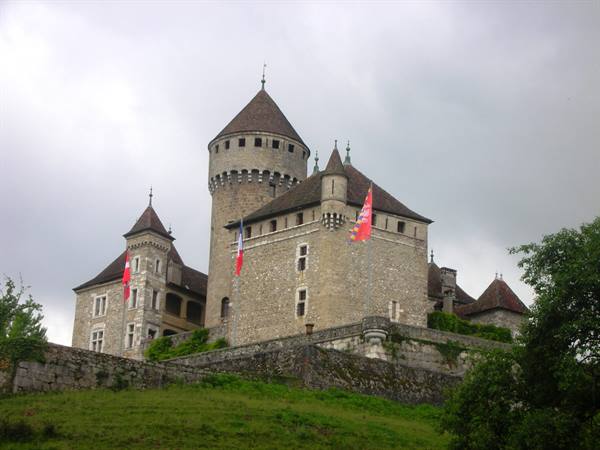
Will I go back??? Well, what a question.......... Of course!! Lovagny: Montrottier Castle. The medieval castle is in Lovagny, 10 km from Annecy, and is owned by the Académie Florimontane. The fortress has a pentagonal plan that develops around a central circular keep. The oldest part dates back to the 13th century; the interior is restored and complete with antique furnishings, ornaments, statues, paintings, etc.... The castle is open from March to October; visits inside are guided only and the times are afternoon only, from 14:00 to 18:00. Group visits are by reservation in various languages. The castle is very well kept and restored, close to the famous Gorges du Fier. Address: Route des Gorges 74330
The journey's photographs
6 photographs · click to open them full screen

0 reader comments