The story
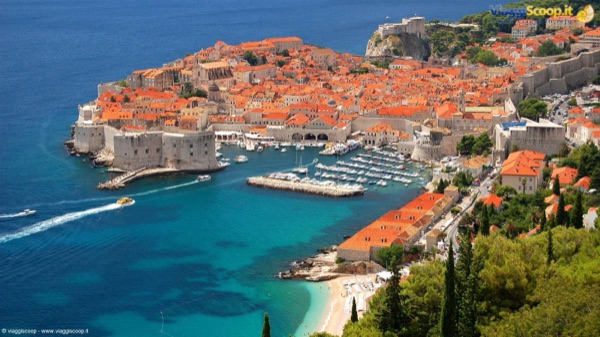
Ragusa, called Dubrovnik in Croatian, is a city on the Dalmatian coast, listed among the UNESCO World Heritage Sites.
Few cities offer a more immersive experience of the past than the walled city of Dubrovnik. With its thick medieval walls, imposing gates and imposing battlements, Dubrovnik transports visitors to an era when the fortified city was a great maritime power that commanded the third largest fleet in the Mediterranean.
The beautifully preserved city has long been the country's main tourist destination, and is gaining even more attention today as a filming location for the popular HBO series "Game of Thrones". History and fantasy fans will delight in all of Dubrovnik's places and attractions; the nearby beaches and islands offer plenty of opportunities for fun in the sun too. Even a short visit to Dubrovnik makes it easy to understand why the city is nicknamed the Pearl of the Adriatic.
Dubrovnik Old Port
Located in the eastern part of Dubrovnik, the Old Port is protected by two breakwaters: the Porporela, built in 1873, and the much older Kaše, built in 1485 from massive stones piled on wooden foundations. At the height of Dubrovnik's maritime glory, forts were built around the perimeter of the port to protect the city's ships. Today, the Old Port is both a tourist attraction and a departure point for cruises to the beaches of the nearby island of Lokrum. With its panoramic views and built-in benches, the Porporela breakwater is a popular place to take an evening stroll and watch the sun disappear over the Adriatic Sea.
Banje Beach
Banje Beach is the closest beach to the historic centre, which makes it the most convenient beach and the beach with the best view of Dubrovnik's walls. The island of Lokrum can also be seen. Part of this pebble beach requires an entrance ticket, but there is also a public section, which is increasingly lively and more relaxed. It is a great way to overcome the heat after visiting the old town. Activities here include beach volleyball, mini football or water polo. You can also have fun lying down sipping a drink.
Onofrio's Fountain
During the 15th century, Dubrovnik took measures to ensure the city had a fresh water supply by building an aqueduct system connected to a spring in nearby Šumet. The master builder Onofrio Giordano della Cava was put in charge of the task. Two fountains bearing the architect's name mark the end points of the aqueduct system. The more impressive of the two is the 16-sided Big Onofrio fountain, which stands on the Stradun opposite the church of St. Saviour. Topped by a large dome made by the Milanese artist Peta Martinov, the fountain still offers cold, clear water to thirsty visitors.
Pile Gate
The busiest entrance to Dubrovnik's walled Old Town is Pile Gate, which is actually two gates in one. Built in 1537, the outer gate features an arch built into a semicircular fortification. Adorned with a statue of St. Blaise, the city's patron saint, the 15th-century inner gate leads visitors to the Stradun. The drawbridge in front of the double gate is no longer raised at night with winches and counterweights. Nowadays, the gates remain open 24 hours a day, 7 days a week. Locals dressed in period costume sometimes pose as guards for paid photographs.
Fort Lovrijenac
Located on an imposing rock overlooking the Adriatic Sea, Lovrijenac was built as an independent fortress to repel attackers from both land and sea. The original structure dates back at least to 1301. Its triangular shape and staggered terraces were built to accommodate the shape of the rock. The fortress was so impenetrable that it could be held by a garrison of 25 men. Today, Lovrijenac is a popular attraction in Dubrovnik and hosts a variety of cultural events, from world cliff-diving series to local productions of Shakespeare's Hamlet. It also served as the backdrop for some of the most memorable scenes of the "Game of Thrones" series.
Rector's Palace
Besides serving as the seat of the Rector of the Republic during his term, the Rector's Palace was also a meeting place for the city's governing bodies, an armoury, a prison and the local jail. Like other structures in Dubrovnik, the original medieval palace was rebuilt several times over the centuries. The palace is notable for managing to blend Gothic, Renaissance and Baroque elements into a unified whole. Now home to the Cultural History Museum, the Rector's Palace has been furnished with period furniture to recreate the styles of the original rooms.
Dubrovnik Cable Car
The best way to enjoy a panoramic view of the ancient city of Dubrovnik is to glide to the top of Mount Srđ on an ultra-modern cable car. Located just outside the city walls, the cable car station offers visitors a fast, easy and scenic means of transport to the top of the small, rugged mountain. Besides the restaurant, snack bar and souvenir shop at the summit, there is also a small museum and a memorial commemorating the homeland war of the 1990s. Hikers can have fun descending the mountain along a steep cable-car path.
Stradun
Much of Dubrovnik was destroyed by an earthquake in 1667, but the reconstruction gave the prosperous city the chance to rebuild with an organised layout. The rows of Baroque houses and shops lining Dubrovnik's main artery are a lasting result of this careful planning. Crossing the centre of the old town, the Stradun is a beautiful street where visitors can buy souvenirs, enjoy an ice cream at a pavement café or join the locals for the traditional evening stroll. Many of the city's monuments are also on the Stradun, including the 15th-century bell tower at the end of the Stradun in Luža Square.
Dubrovnik City Walls
Walking along the medieval city walls is the highlight of any stay in Dubrovnik. The walls surround the entire Old Town district and it takes at least an hour to explore them. Most of the walls were built during the 13th century, but they were reinforced over the years to withstand repeated attacks. In the 15th century, a series of imposing towers intended to protect the city from the Turks were added. Fans of the TV series "Game of Thrones" will recognise the sections used as settings for the show's capital of King's Landing. Standing at a height of 25 metres in places and up to 6 metres thick in others, the walls are an exceptional sight, but the views they offer of the city, the port and the Adriatic Sea are simply spectacular.
The journey's photographs
8 photographs · click to open them full screen




0 reader comments