The story
Departure from Trieste, for a total of 1400 km, a 9-seater Fiat Turbo Diesel minibus (excellent) and a car. Organised by a priest but very intimate (13 people in all). It's 650 km passing through Slovenia and Dalmatia (I'd recommend a 15-day trip to see forests, fjords and wonderful coasts!). The Croatian motorway that leads almost all the way to Split and then turns off into Bosnia is very beautiful, the tunnels almost completely finished. Very high bridges cross truly spectacular fjords; it costs about 33 euros for the minibus. We stayed in a small hotel in the centre of Medjugorje; there are lots of them, they're in full tourist expansion due to the increase in pilgrimages. Bosnia and Herzegovina is a karst land, harsh, with many stones and red earth, very similar to the province of Trieste. The hills are rugged with juniper and beautiful blue thistles.
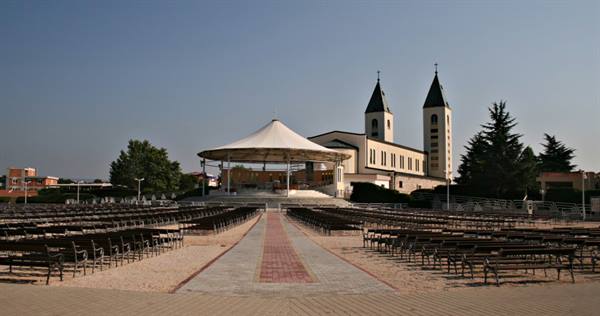
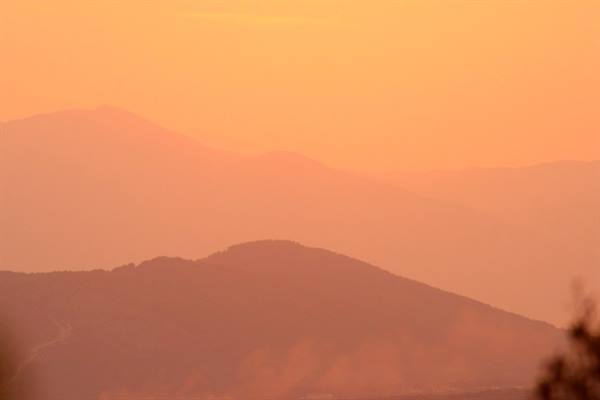
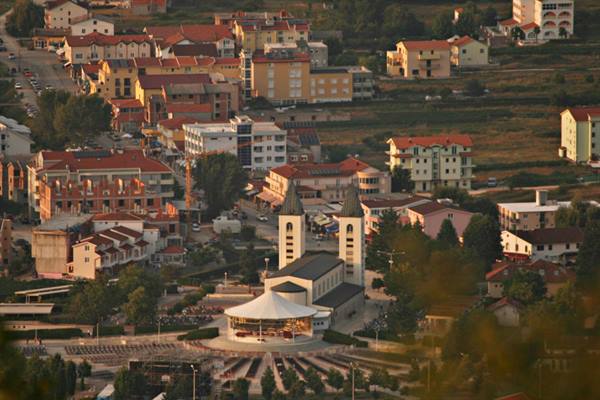
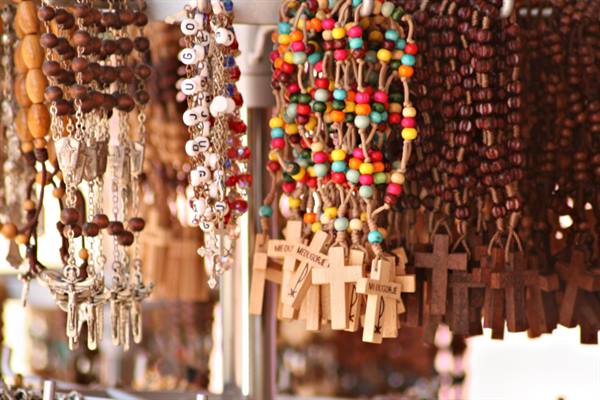
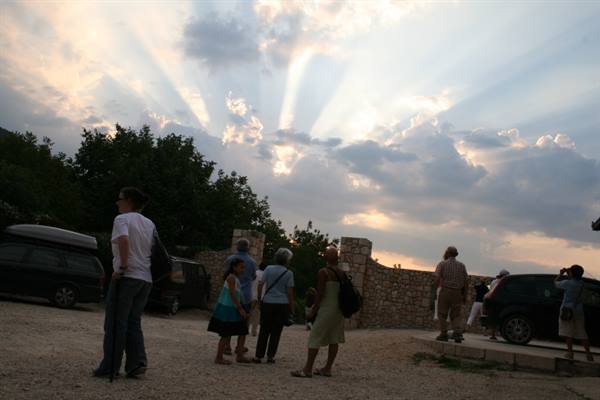
Medjugorje is a place mainly for Catholics, but it also attracts people of other religions and even non-believers because of its particular characteristics, such as the colour of the sky with its very strange pink tones at sunset (I'm a photographer and the result in the images is very particular). The atmosphere is very spiritual, but its two or three only streets are full of little shops with gadgets of the Madonna, Saints and Rosaries. Bars, pizzerias and little fast-food restaurants are not lacking and the prices are very good. They accept the euro, possibly in small denominations because it isn't their currency. About a kilometre as the crow flies from the church of Medjugorje rises Mount Križevac which, joining Mount Crnica, forms a corner.
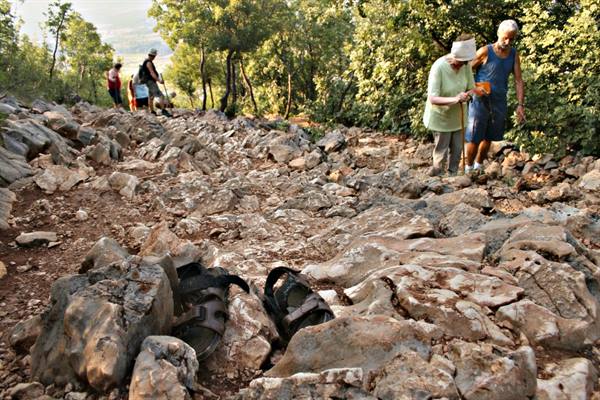
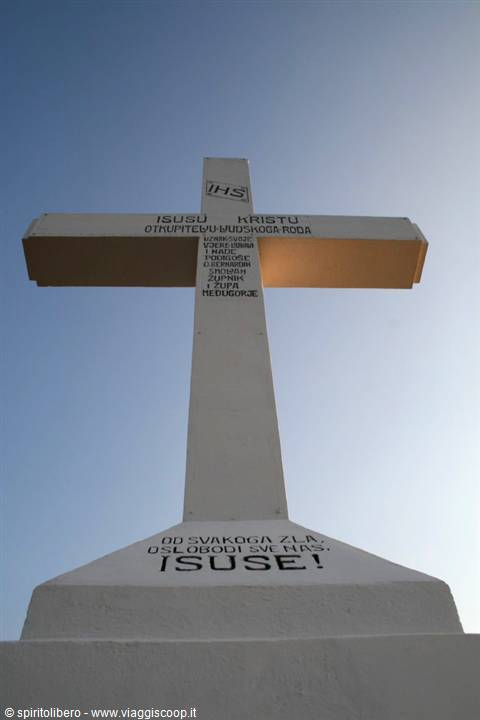
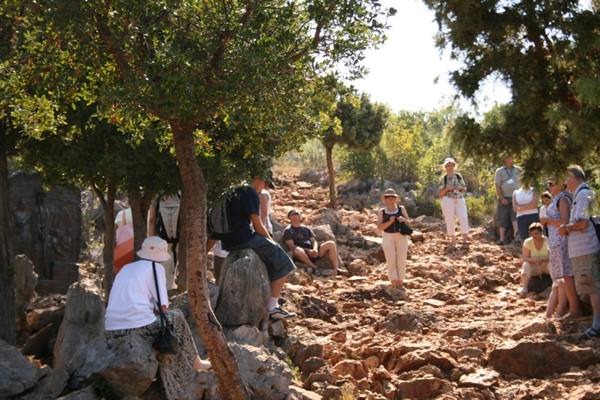
On its summit (520 metres above sea level) the parish priest of the time and the inhabitants of Medjugorje raised a reinforced-concrete cross 8.56 metres high. On the cross they carved these words: 'To Jesus Christ, Redeemer of humanity, as a sign of faith, love and hope in memory of the 1900th anniversary of the Passion of Christ'. Some of the faithful climb the stony, steep path barefoot, praying the rosary at the Stations of the Cross. Podbrdo is the place where the Queen of Peace appeared for the first time and in the early days. This name actually doesn't indicate the mount, but the area beneath it. The name of the mount is Crnica. It's nothing more than a bare hill full of stones. In the early years, the path was almost impassable.
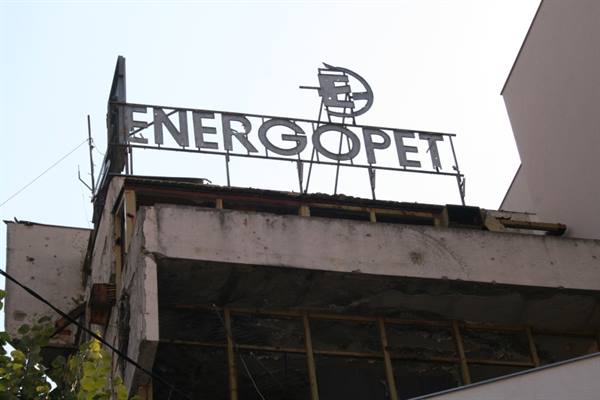
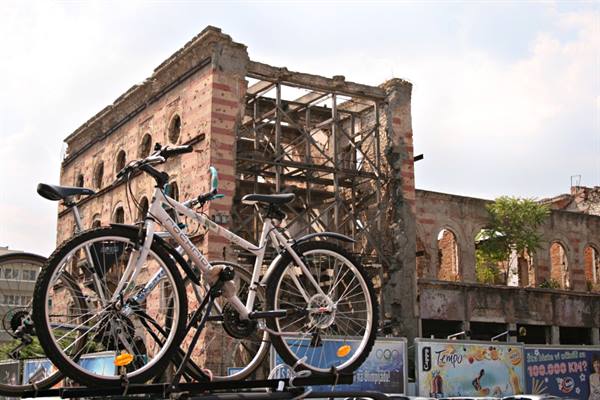
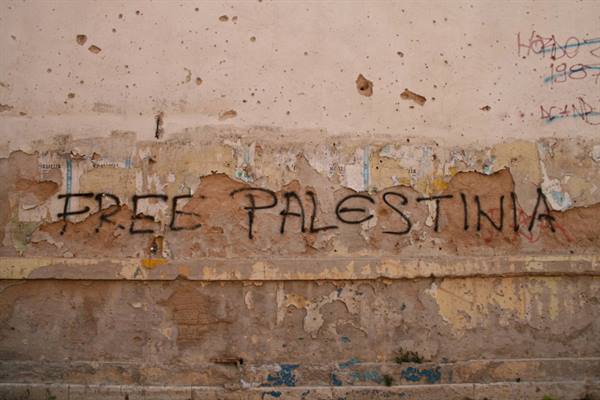
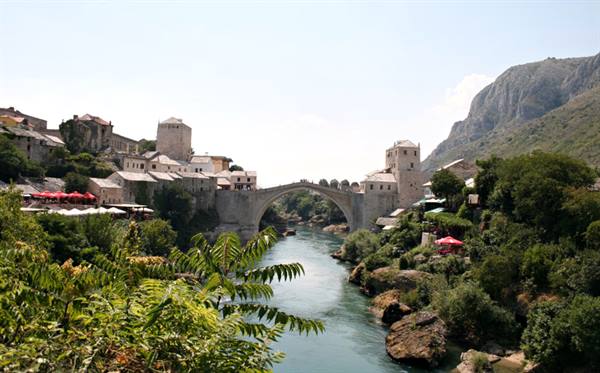
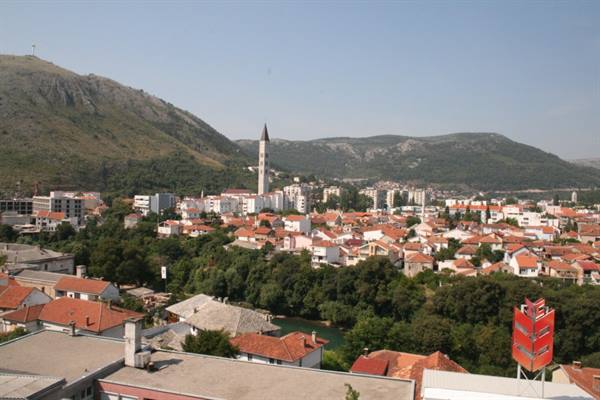
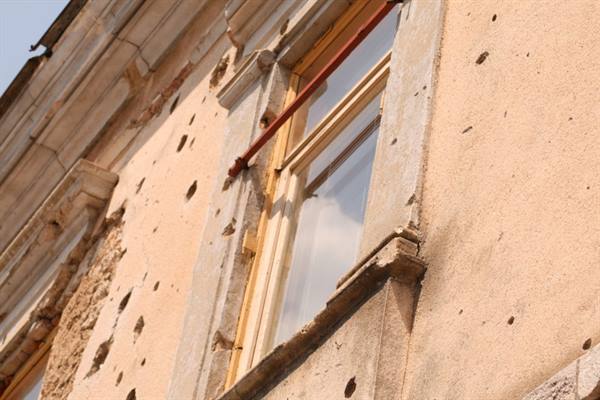
Today, instead, thanks to the great number of pilgrims who climb it every day, the path is much easier, even though the ascent still involves a certain effort. Mostar is 32 km away; the roads are in order but winding. Mostar is the unofficial capital of Herzegovina, and is built along the Neretva river, the centre of the Herzegovina-Neretva Canton of the Bosniak-Croat federation. Between 1992 and 1993, after Bosnia and Herzegovina declared independence from the Socialist Federal Republic of Yugoslavia, the city was subjected to a nine-month siege. The city remained divided between Croats and Bosniaks, and only in 1996 was the possibility of passing from one side of the city to the other restored. For those who love nature, I'd recommend staying at least two days to also visit the parks near the city.
My trip was very short, since it was a pilgrimage; I chose this site to publish it because I'd like to recommend it as an expanded trip. 15 days passing along the Dalmatian coast. The fjord that leads to the Krka waterfalls. Krka river. The Krka river rises below the Krcic stream waterfall and flows across the Knin plain, entering a 50 km-long canyon (in some places even 200 m deep), forming a series of waterfalls and lakes. The largest waterfall is 26 m high and is in the upper course of the Krka, while the largest lake is that of Visovac, at the centre of which, on an island, stands a Franciscan monastery. Upstream of this islet opens the Skradinski buk waterfall with its 17 steps; then the Krka flows into Lake Prikljansko, forming a wide gorge up to its mouth in the sea. A spectacle. Split is another truly stupendous destination.
It's famous above all for Diocletian's Palace and the cathedral with its celebrated bell tower. It's also an archbishopric seat. Nearby, the Roman ruins of Salona are noteworthy, although the archaeological excavations should be expanded. Unfortunately the surrounding landscape was disfigured in the last century by the creation of a vast industrial zone. Plans for recovery and protection are nevertheless under study. Just outside the city you come across splendid landscapes, both along the coast and the facing islands, and inland. A trip between nature, sea, history and religiosity, very beautiful!
The journey's photographs
27 photographs · click to open them full screen



0 reader comments