9 July Amsterdam-Brussels International train Amsterdam Brussels platform 15 b Central station at 8.46 € 42 We slept seven nights at the hotel Hotel The Moon Rue de la Montagne 4 Brussels 63 € a night B & B We visited the Grand-Place 10 July Brussels-Bruges-Brussels Cathedral-Belfry-Tour of the canals-Groeninge museum-Onze Lieve Vrouwekerk 11 July B-Antwerp-B Station-Grote Markt- Rubenshuis-Stadhuis- Onze Lieve Vrouwekerk Cathedral 12 Brussels Manneken Pis – Flea market – Palais de Justice – Le Grand Sablon – Le Petit Sablon- Warande 13 Br – Ghent - Br Belfry – Stadhuis – Sint-Baafskathedraal – Sint-Niklaaskerk – Graslei – Korenlei – Dulle Griet – Het Gravensteen 14 Brussels The European Parliament – Musée d'Art Ancien – Musée Magritte 15 Brussels Bozar – St Michael and St Gudula 16 Brussels-Berlin Train to Liège p. 9.03 a, 10.06 ICE train Train Liège 11.12 Change at Cologne a. 12.15- p.
12.48 arrival HBF Berlin 17.12 ICE
Day 19 Jul 2012
Arrival and hotel
To move from Amsterdam to Brussels we took an intercity at 8.46, platform 15 b, train every hour, 42 € each. It is better not to take the Thalys, which costs twice as much and which runs at 8.16 and then every hour. Hotel The Moon rue de la Montagne 4/bis Brussels We can only speak well of this hotel. The reception staff are extremely kind and moved our suitcases for us because we had arrived early and had left them at reception, we had not booked and we changed rooms over the seven days of our stay. The staff speak several languages, including Italian, but we preferred to talk in French or English. The price is low and includes breakfast, which does not differ much from what we have at home. There are five tables for breakfast and we never found them all occupied. We discovered that not only the station and the Grand Place were close, but also the cathedral, the park, the museums.
We slept for three of the seven nights in a triple at 75 euros with plenty of space. The double at 63 euros is small, but functional. It is not advisable to eat in the nearby restaurants because they are expensive, but to go beyond the Bourse, beyond Boulevard Anspach so as not to be fleeced, even if the prices are always those declared at the entrance Rue Neuve We walked along it from the very first evening (9 July). Rue Neuve seems like an enormous open-air shopping centre. Closed to traffic, it lets you reach the Boulevard du Jardin Botanique without noticing. If the crowd that invades the street frightens you, come back through the parallel Boulevard Adolphe Max.
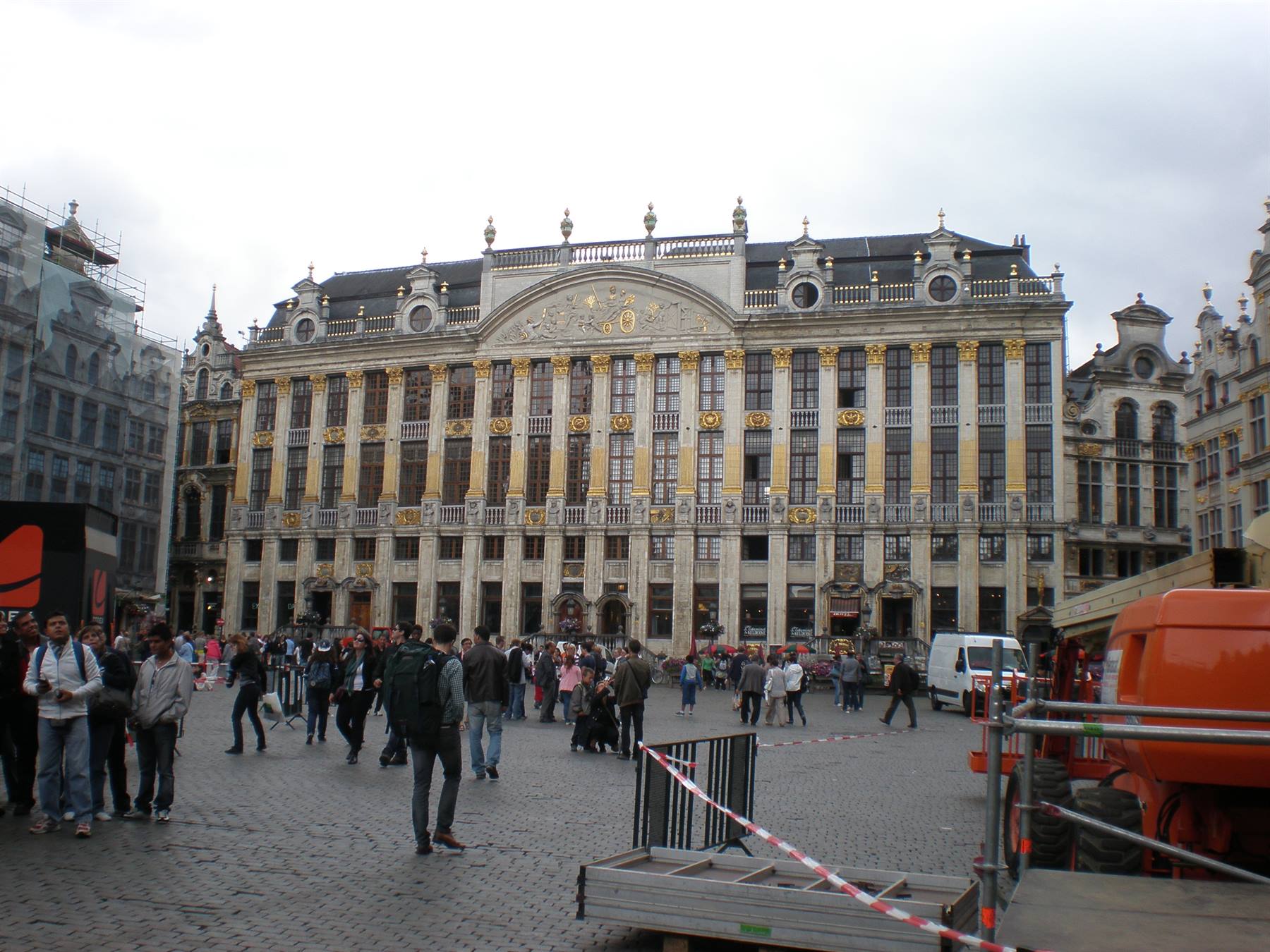
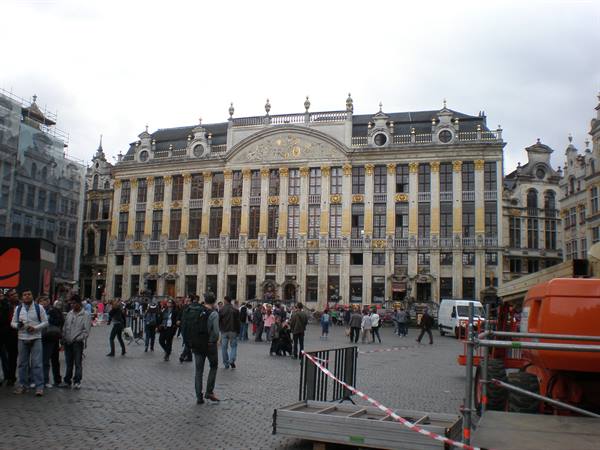
The Grand Place Entering the Grand Place when it is not occupied by marquees for music leaves you bewildered, the Stendhal syndrome in the face of beauty, and so we photograph, turn around, look on in admiration trying to catch the details of the façades, enter the Stadhuis and return to the square several times over the week of our stay in Brussels, in the morning, in the afternoon, in the evening. The main star of Brussels' Grand Place is the Hotel de la Ville, with Saint Michael dominating the city from on high. Facing the Hotel de la Ville is the old House of Bread, later renamed Maison du Roi. Despite the name, no King resides there, while there is a Museum of the History of Brussels. All around the square are the Houses of the guilds.
Grand Place Brussels
Day 210 Jul 2012
Bruges
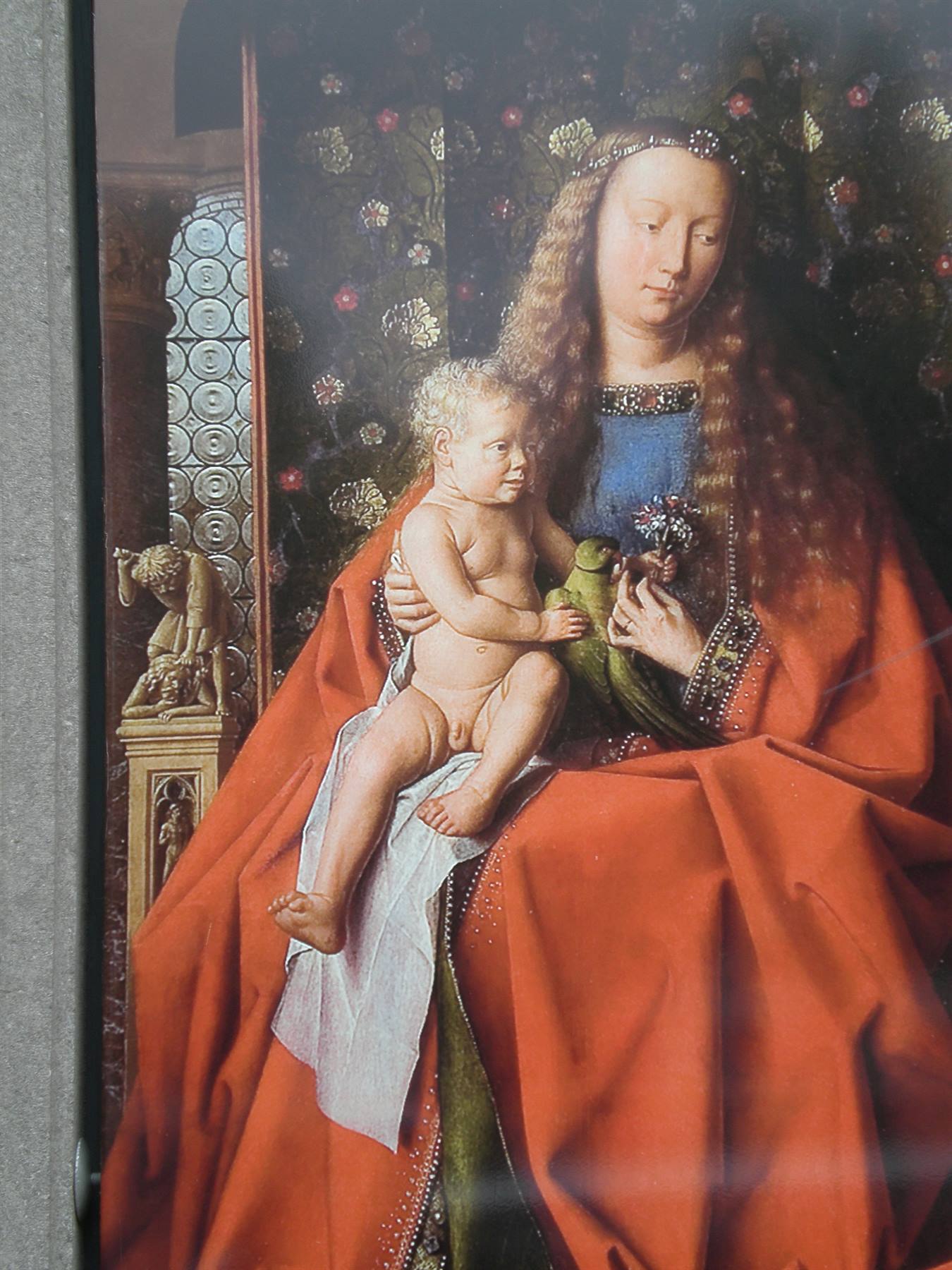
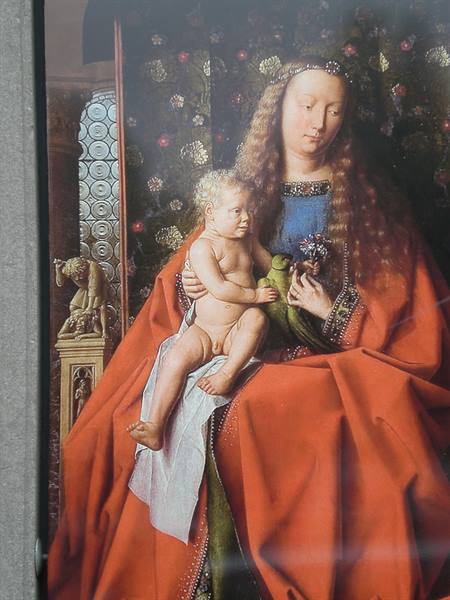
BRUGES We arrive in Bruges on 10 July after having seen only a few things in Brussels. We are drawn by the fame of the best-preserved medieval city in Europe. The centre of the city is two medieval squares, the Markt and the Burg. The Markt is the main square of the city, dominated by the Belfort, the bell tower 83 metres high with 366 steps, the central element of a 2008 film: "In Bruges". In the middle of the square there is a statue of Pieter de Coninck and Jan Breydel, two local heroes. The Burg is a beautiful adjacent square overlooked by the 14th-century Stadhuis, the oldest town hall in all of Belgium, famous for its beautiful Gothic hall and its inlaid wooden ceiling. The Groeninge Museum (8 €) houses the city's finest art collection with paintings by Van Eyck (Madonna with Child and Canon), Bosch (the Last Judgment), Van der Goes, David.
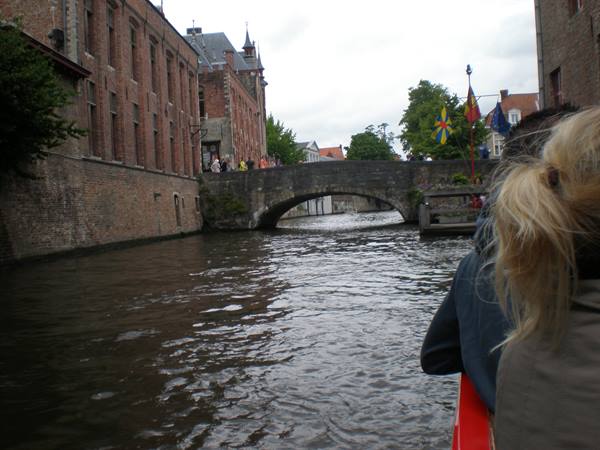
There are also more modern paintings by Delvaux and Magritte. Famous is the Church of Our Lady, begun in 1220 and finished two hundred years later, which contains a sculpture by Michelangelo. The guided tour of the canals and the chance to see ancient buildings from below is warmly recommended (€ 7.60). In the afternoon we visit, once back in Brussels, the Sainte-Catherine area with the church entirely under restoration. The square is large and not well maintained. We dined at the Café de Markten Oude Graanmarkt 5. We discovered the place by chance while wandering in the Sainte-Catherine Square area. We had a salad with salmon washed down with good beer and spent little. The waiter was a bit clumsy, but very likeable and we even left him a tip. The atmosphere is lively and it is pleasant to eat in this place.
Bruges Art Gallery
Day 310 Jul 2012
Antwerp
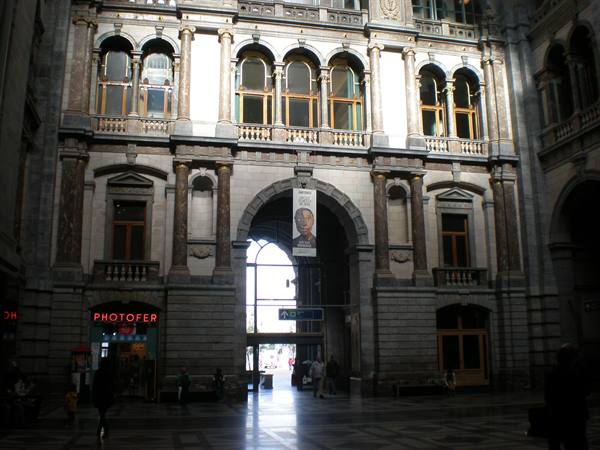
On 11 July we went to Antwerp. Antwerp (the Flemish name) is the second city of Belgium and is located in Flemish territory. It is crossed by the river Scheldt and by a ring road that embraces it for about three quarters. It is also a port of world importance. It is home to the largest Gothic church in Belgium (Onze-Lieve-Vrouwe Katedraal) and is the birthplace of Rubens. Antwerp station is enormous, arranged over several levels with the tracks crossing according to the floor height. An efficient system of escalators ensures travellers can move quickly. The aesthetics of the station may not please everyone, but it is very distinctive. In the entrance and exit hall you can admire several paintings up high. The street to reach the Grote Markt, the centre, is called Keyserlei, then Leisstraat and finally Meir, the most famous street in Antwerp with luxury shops, closed to traffic.
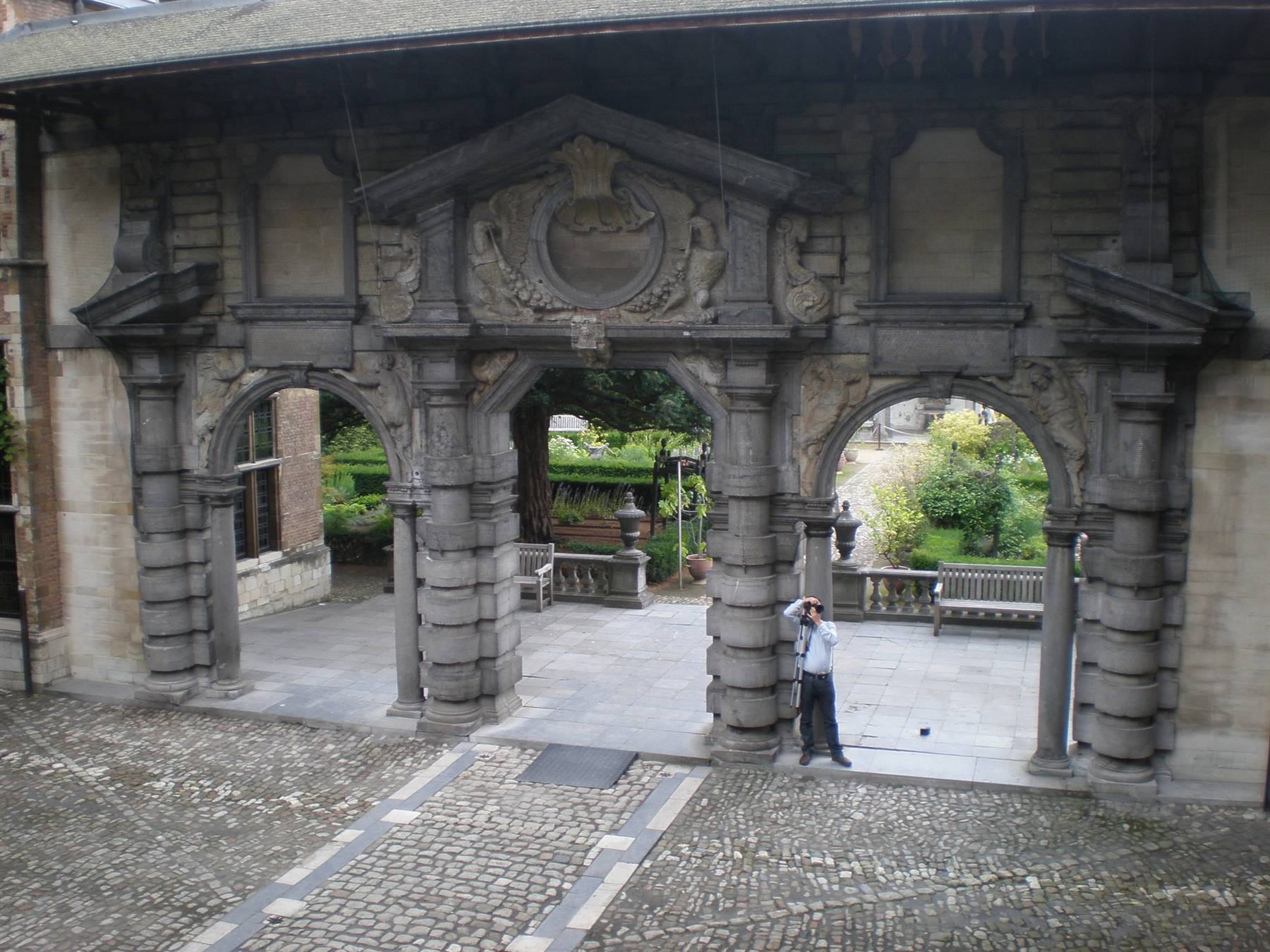
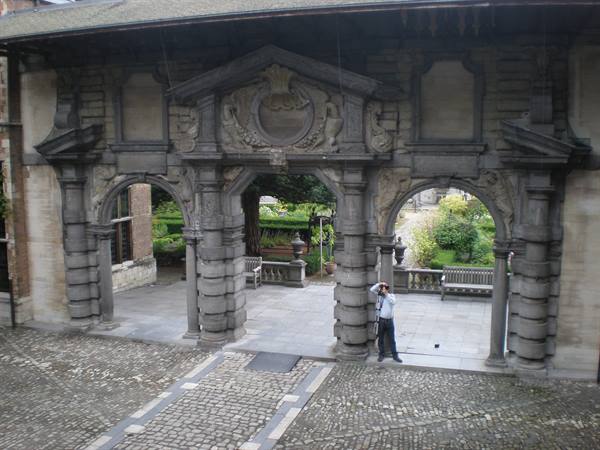
With a small detour from the Meir it is possible to reach Rubens' house (Rubenshuis). It is a villa, imposing for the time, restored after the war, where paintings and other precious objects of the famous painter are exhibited (entrance 8 euros). In the Rubenshuis our man lived between 1611 and 1640. Rubens must have been rather short, judging by the bed. In the paintings of the Rubenshuis and in those of the Cathedral, which we will see, Rubens, the Junoesque women who made the painter famous do not appear. The visitor can make use of either a written guide or an audio guide. The former is free and lists 52 works with commentary. Besides the house (the studio, the Kunstkamer, the dining room, the Familienkamer and the bedroom) it is interesting to visit the garden where the influence of the Italian Renaissance is clear, apart from the Baroque portico built to a design by the painter.
We visit a few shops and when it starts to rain we are in front of the Stadhuis. In the middle of the square we photograph the Roman soldier Silvius Brabo as he throws the hand of the giant enemy into the Scheldt. The throwing of the severed hand, which also appears in gigantic size in a street before the Grote Markt, gives Antwerp its name. Antwerpen in Dutch means "throws the hand". In the pouring rain we take refuge in the Onze-Lieve-Vrouwe Katedraal. It is the largest Gothic cathedral in Belgium and required two centuries of work starting in 1352. It contains two triptychs by Rubens (the Raising of the Cross and the Descent from the Cross) and numerous paintings by other artists. Among the narrow streets that surround it, it stands tall with its 123 metres. Inside there are seven side chapels. Entry is paid.
We then manage to reach the Grand Bazar of Antwerp, an integrated system of shops where we eat and drink a coffee. Then we pluck up courage and head for the station, where we arrive soaked to the bone despite umbrellas and raincoats. On our return to Brussels we stop at an Internet Point to check times and prices of trains to Berlin. Compared to the 300 € (for two) suggested by a railway employee we find a solution with the ICE at 210 € plus 7.5 € to get to Liège (two train changes instead of the four indicated by the employee). Earlier that morning another employee had got the ticket to Antwerp wrong three times, managing it on the fourth. In Italy such horrors had never happened to us! In the evening we dine at the Thai Restaurant Pataya Rue Antoine Dansaert 49. We tasted Thai food for the first time: rice stir-fried in a pan with scampi and with chicken and chives respectively.
We drank water. The price is reasonable and it is recommendable for anyone who wants to try the experience.
Rubens' house Antwerp
Day 412 Jul 2012
Without rain we walk
Manneken Pis On 12 July it is not raining and after Bruges and Antwerp we devote ourselves to Brussels. Passing through the Grand Place we go to see the "Manneken Pis". One of the symbols of the city of Brussels is this bronze subject of a little fountain depicting a boy urinating. It is located at the corner of Rue de l'Étuve (Stoofstraat) and Rue du Chêne (Eikstraat) and is one of the most photographed monuments in Brussels. If the real dogs at the corner of Rue du Vieux marché aux Grains and Rue des Chartreux were not enough for anyone, you can also find the dog doing its business. Statue of Charles Buls Speaking of statues, when we enter and leave the hotel we see in the Agora square, seated in the shade with his dog, the burgomaster Charles Buls.
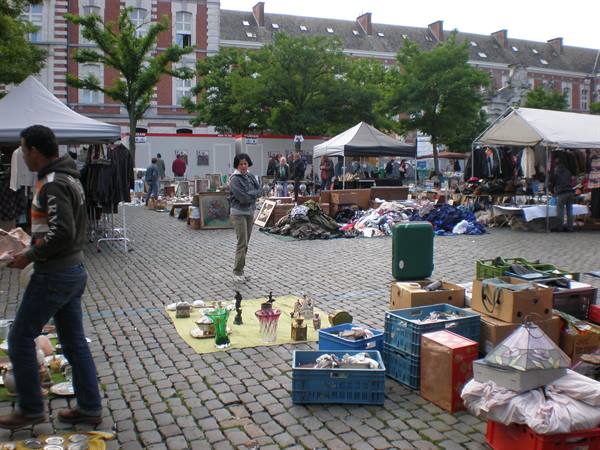
He does not move because he is a bronze statue with gilded knees thanks to the pretty girls or the muscular matrons who sit there to be photographed. He remains silent even when they stroke his moustache, which has in turn become gilded. Nobody pays any attention to the dog and it has remained black over time. Flea market In the Marolles district, in Place du Jeu de Balle, every morning from 6 to 14 the flea market is open. Although lacking enthusiasm since we set off with small suitcases, we stop to look at the most varied objects put up for sale that may appeal to the collector or, like the porcelain figurines and some paintings, even to the simple tourist. On Sunday we also happened upon the Marché du Midi, an immense market around the station and very popular with the inhabitants of Brussels.
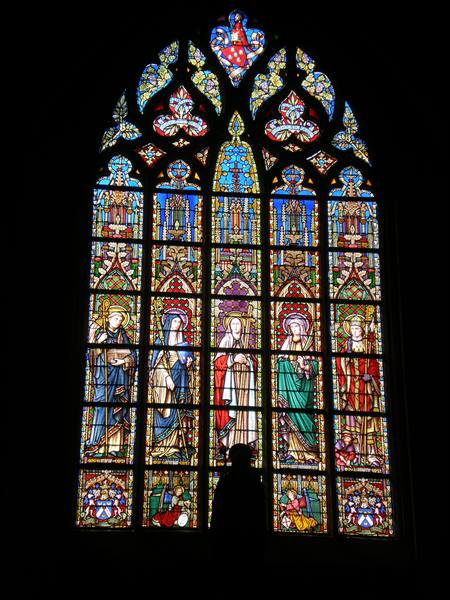
What we can see is the "melting pot", the crucible of different cultures, that meets in the ancient act of exchange, sale and purchase. Palais de Justice Having left the flea market we see from a distance the building of the Palace of Justice, with its façades being completely redone. The first thing we notice is the enormous copper dome topped by a crown that stands at a height of one hundred metres. The building is enormous and very distinctive. Place du Grand Sablon The square is so called because in passing from the lower part to the upper part of the city or vice versa the old road passed through sandy marshes. The square extends from the Jacques Berge fountain located at the top to the Gothic Church of Notre Dame du Sablon. Having entered the latter we were able to photograph the multicoloured vitraux and the various organs of the church without incurring the wrath of some prelate.
Construction was undertaken from the end of the 14th century and completed in the full 15th century. The building, with its elegant proportions and sublime architectural decorative details, presents a good stylistic uniformity and has remained almost intact over the centuries; without undergoing particular later additions or manipulations. The exterior of the church is imposing and we walked all around it admiring the beautiful garden. Place du Petit Sablon In the middle of the square there is a garden of incomparable beauty. It is surrounded by a wrought-iron balustrade with numerous sculptures representing the 48 trades of the time of construction and which surround the square itself. Each stone column beneath the individual statues is adorned with an original design and the columns themselves are crossed by carved motifs, each one different from the other.
In the centre of the square is the fountain of the Counts of Egmont and Horn, which symbolise resistance to Spanish tyranny during the 16th century. This group is surrounded by ten statues arranged in a semicircle representing political men, scientists and artists of the time. Warande Warande Park is an oasis of greenery in the centre of Brussels, while further away are the Parc Leopold (which we visited) and the Parc du Cinquantenaire. We visit it on the afternoon of 12 July. The Park is animated by the flying sculptures of Patrick Croes, born in 1980, who particularly depicts mussels of all kinds. Signs explain the meaning of the individual works. At the far end of the square there is a fountain rich in water, but without particular artistic merit.
There are about thirty ancient sculptures and majestic trees such as the Platanus hispanica, the Aesculus hippocastanum and the Acer pseudoplatanus, all three with a trunk circumference of more than three metres.
Eglise Notre Dame au Sablon Brussels
Day 513 Jul 2012
Ghent
Ghent is located at the confluence of the rivers Leie and Scheldt and was once the scene of armed struggles by its citizens. Ghent is not as picturesque as Bruges but has several interesting ancient monuments. From the station to the historic centre you walk about two kilometres, always going straight until Veldstraat, which is part of the city centre. The Belfort and the Stadhuis are occupied by ongoing works with enormous trucks moving, marquees for music concerts, the beautiful façades can barely be seen. Since it is Friday the 13th we think it best to flee and take refuge in the Cathedral, the only monument with free entry. In the Sint-Baafskathedraal there is a masterpiece by Jan van Eyck: the Adoration of the Mystic Lamb. To see this painting 4 € is required. If the Louvre adopted the same system for the Mona Lisa you would need a month's salary.
A Rubens, on the other hand, is freely accessible. The Sint-Niklaaskerk was the Church of the merchants as it was close to the medieval river port of Ghent which was located between the Graslei and the Korenlei, the two raised quays facing each other where the port actually was. The church was built in the Scheldt Gothic style, an austere style, but characterised by large windows that light it up. The Baroque altar contrasts with the whole. The Church stands tall over the river and is very evocative on the outside. The Graslei has elegant façades at numbers 14 and 15, unfortunately partly covered by awnings of restaurants or commercial establishments, as does the Spijker at number 10, in Romanesque style, as far as the awning below allows you to see. No better fortune has befallen the buildings of the Korenlei either, equally partly covered.
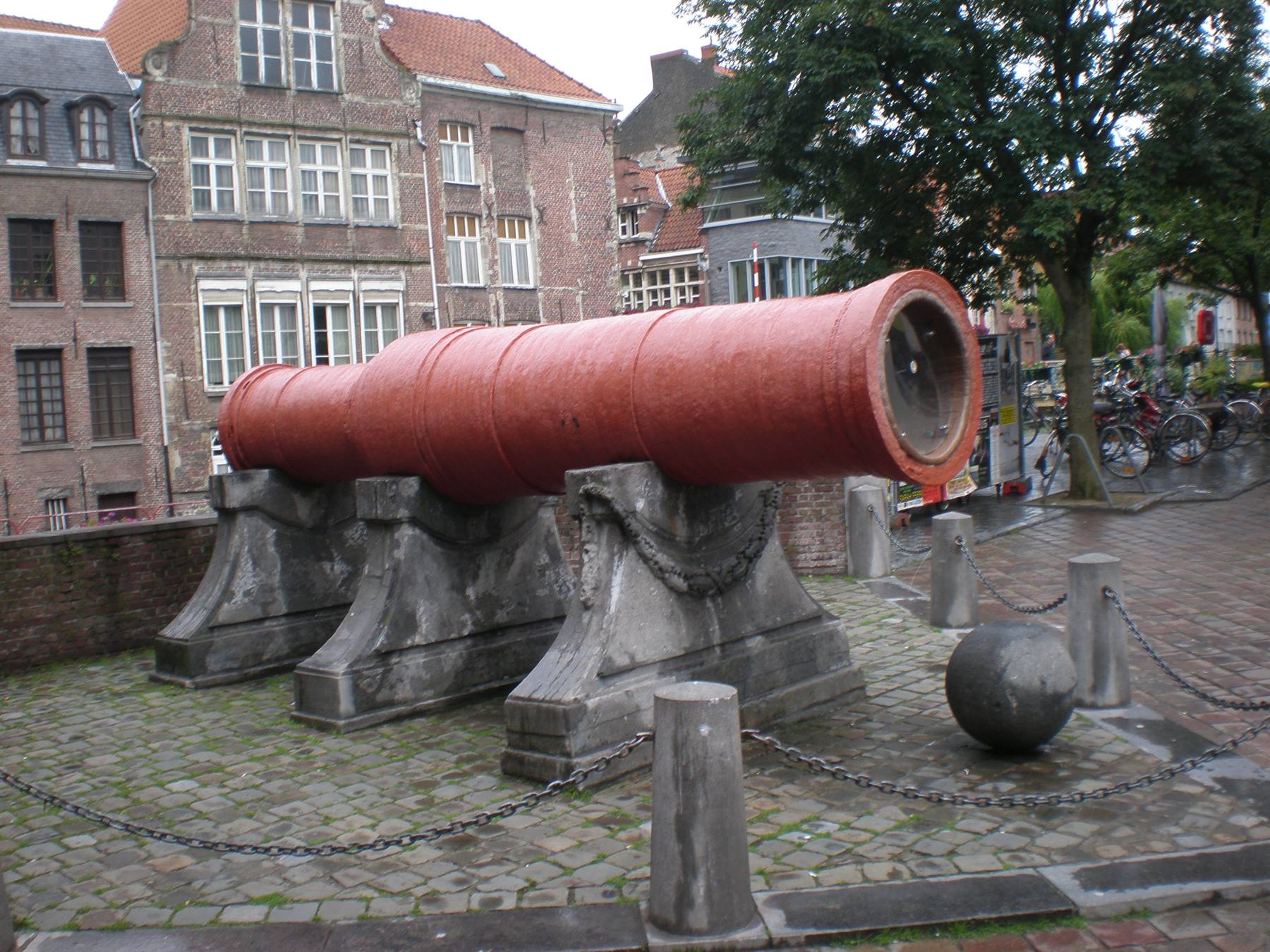
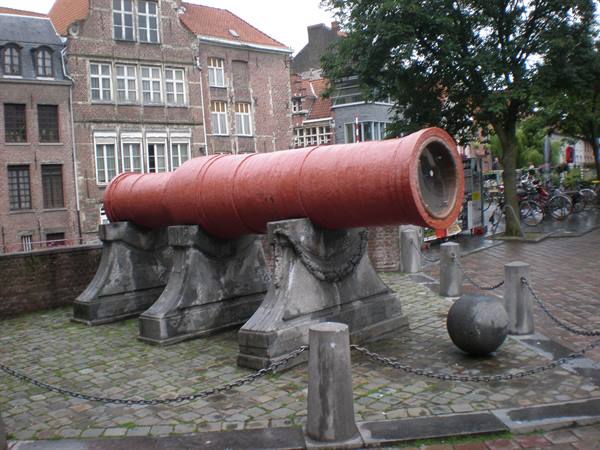
The Dullegriet, recently repainted in its original red colour, was cast in 1450. It is not of great interest. The Het Gravensteen is the Castle of the Counts of Flanders. The information in the individual rooms allows the tourist to get an idea of how people lived at the time. Horrible is the sight of the instruments of torture used at the time. The high ramparts and the turrets allow you to see the city. Of particular interest to us were the old dispersing toilets that dropped excrement from a height of about twenty metres into the moat. Out of modesty there are no explanatory signs. In the evening we dine at Hector Chicken place de Brouckère 15. Half a chicken each and French fries at a low price. Queue at the entrance with fast service. Multiracial and multicultural presence. Melting pot.
Dulle Griet the red cannon of Ghent
Day 614 Jul 2012
Brussels museums
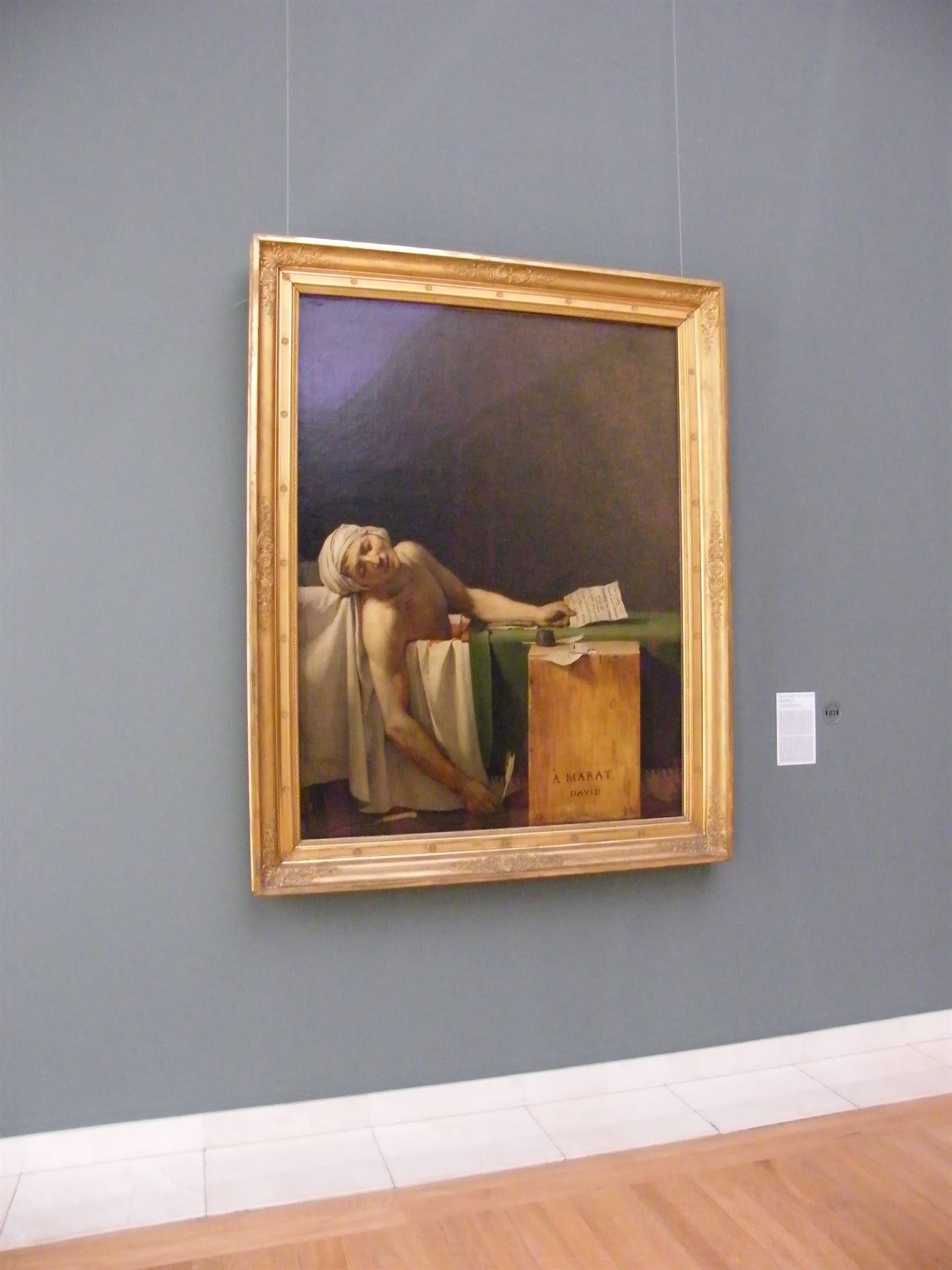
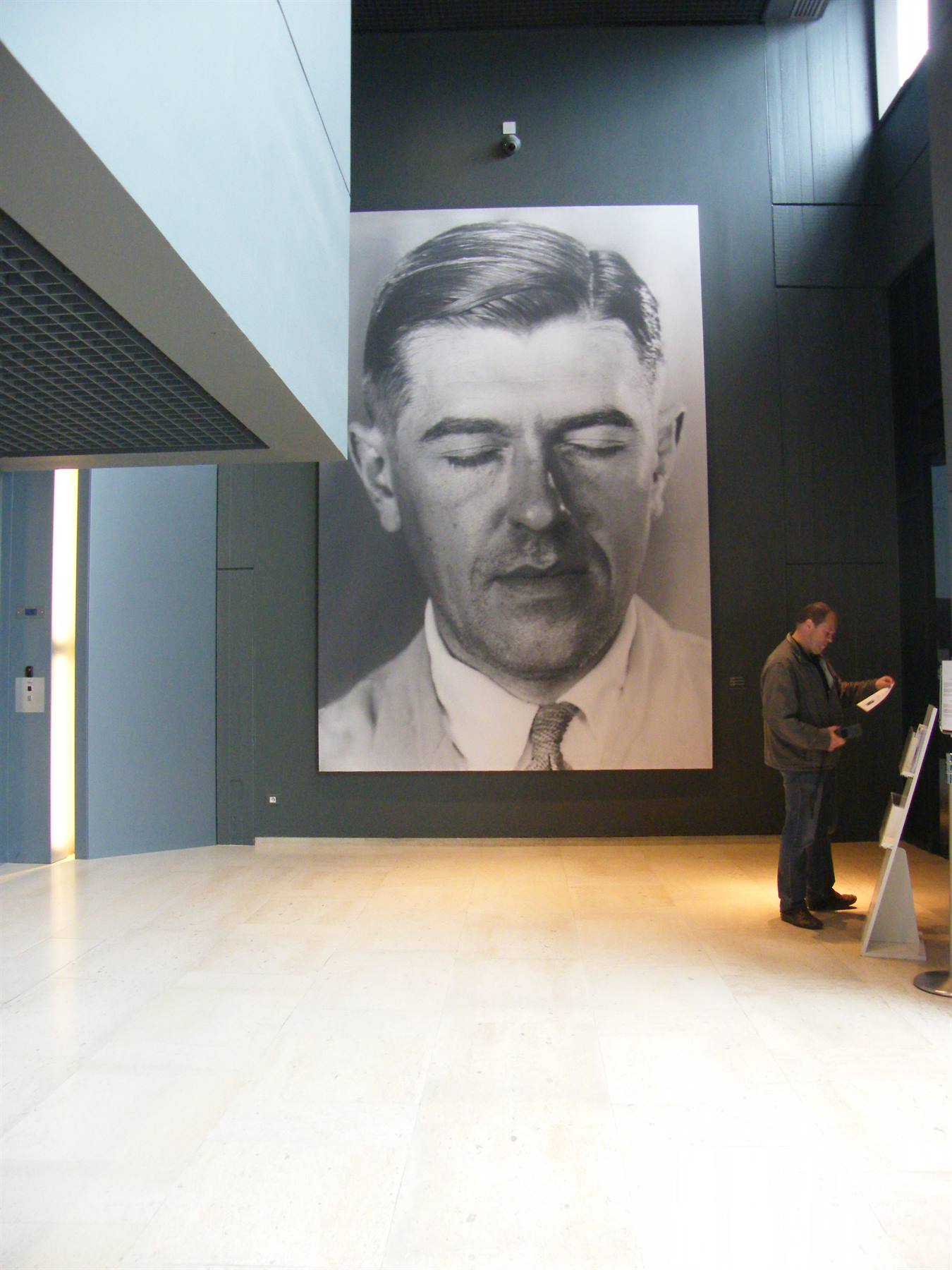
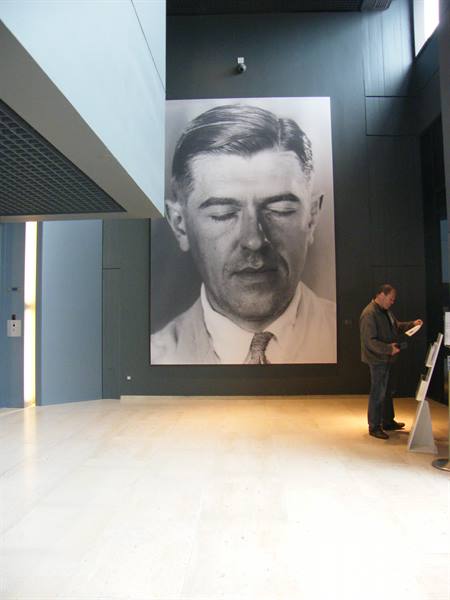
On 14 July we go to the European Parliament, whose building is known as "caprice des dieux" with reference to the well-known cheese. They work until Friday morning and it is all closed. We take a walk in the adjacent park in the rain and take refuge in the nearby Gare du Luxembourg, where the toilets are closed because the women employed to clean them work a short week. We decide that it is time for the museums. Museums of Ancient Art and Magritte We first visited the Musée d'Art Ancien, very rich with works by Flemish painters and others: David, Van Dyck, Rubens, Hans Memling, Jan Bruegel, Bosch, Pieter Bruegel. We then focused on the 200-plus works by Magritte. In the interval between the two museums we had lunch at the museum café. Magritte also painted a work a day and was very prolific.
We remember among the many "Le joueur secret" and "The territory of Arnheim" as well as a variation of "Ceci n'est pas une pipe". In the Magritte section there are also works by Henry Moore, Georges Seurat and Rik Wauters.
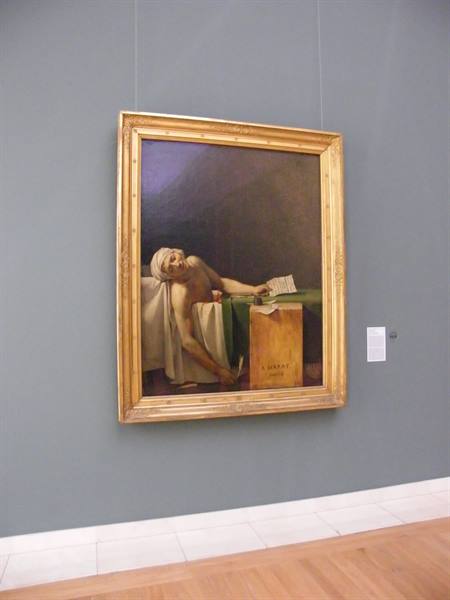
Musée d'art ancien Marat by David
Day 715 Jul 2012
Brussels from North to South
Bozar We go there on the afternoon of 15 July after a long walk that led us from the botanical garden to the Gare du Nord and from there, along the Brussels-Charleroi canal, to the Gare du Midi, passing through the Sainte-Catherine square. At the Gare du Midi we find a gigantic ethnic market that makes it hard for us to find the station, where we eat in a café. The building is a jewel of Belgium's architectural heritage. It was created by Victor Horta in Art Nouveau style in 1920. The Bozar is an active and dynamic arts centre that welcomes more than a million visitors every year: 4,000 m² of exhibition spaces, a grand concert hall, a chamber music hall, two small theatres, three new multimedia rooms, and the Royal Film Archive, famous throughout the world for its highly valuable collection. St Michael and St Gudula The St.
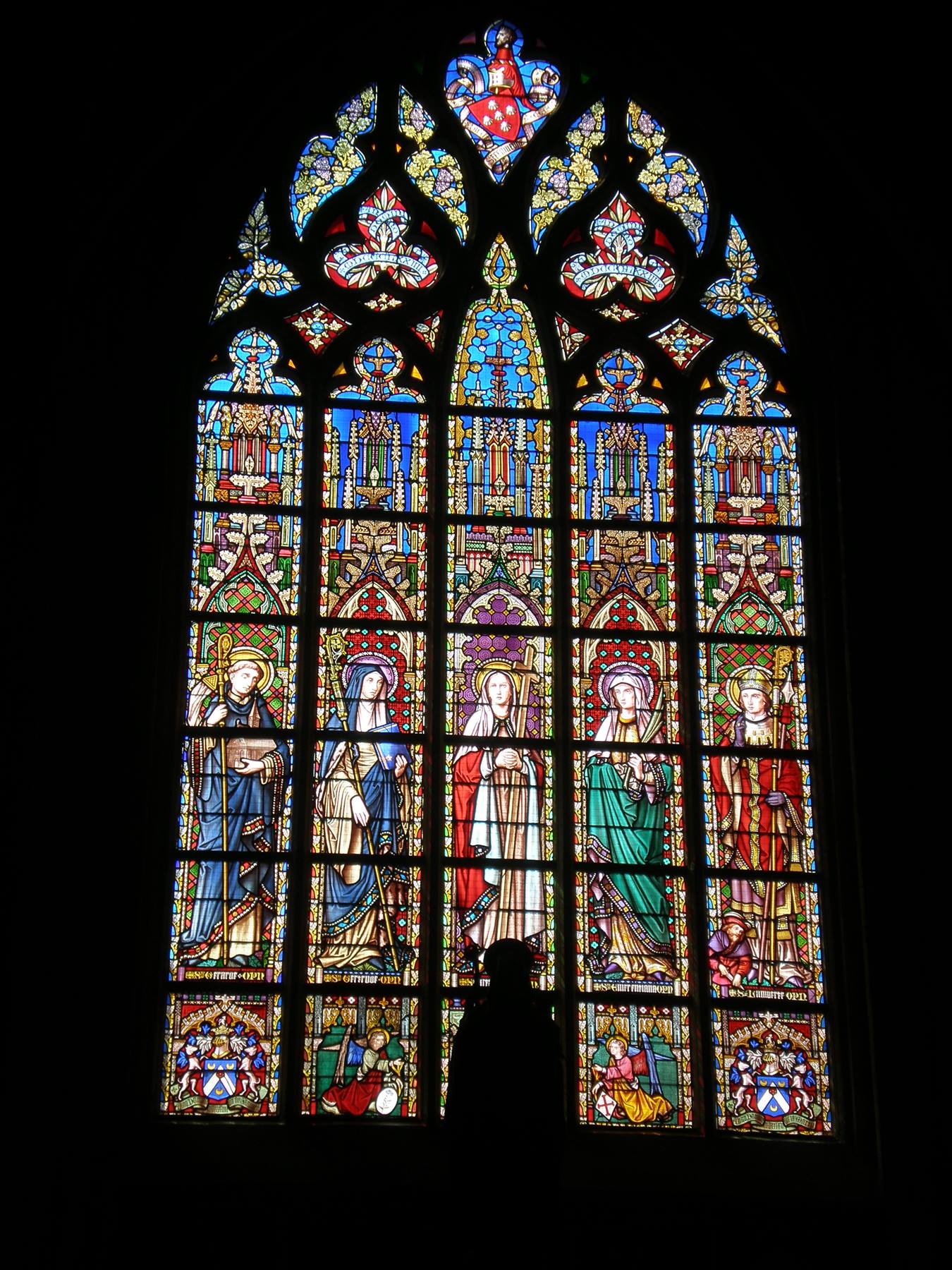
Nicolas et Gudule cathedral rises high and with one photo it is difficult to capture it all unless we position ourselves to one side. Imposing from the outside and rich in stained glass and harmonious on the inside, the cathedral is a mixture of different styles: the towers are Gothic in style, the stained glass has a Renaissance imprint, the façade takes up elements of 15th-century architecture. In the evening we dine at the Taverne Restaurant Plattesteen Brussels. A bistro where we ate excellent and abundant pasta (egg tagliatelle with ham and béchamel). A shame we found it on the last evening. The next day a long journey to Berlin awaits us.
0 reader comments