The story
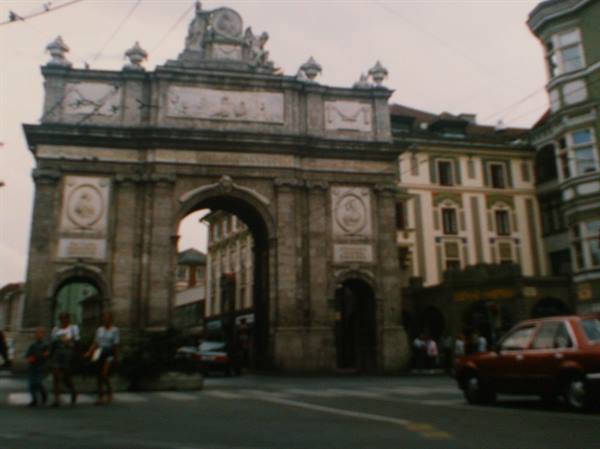
This year we decided to go to (Italian) South Tyrol and, since getting to Austria is a stone's throw, we cross the border and go to visit Innsbruck and Salzburg; the journey is quite long, especially for Salzburg, but it is really worth it. For the overnight stays we had no difficulty finding what we would consider agritourism, and the prices are fairly normal. The city of Innsbruck originated on the site of what was the ancient Roman castrum of Veldidena. It takes its name from Inn and bruck, that is, bridge over the river Inn, and remained a border locality throughout the era of the Roman Empire. In 1232 it was raised to the rank of city and in 1248 it passed into the domains of the counts of Tyrol, and was later ceded to Rudolf IV of Habsburg, who named it capital of Tyrol, in 1363.
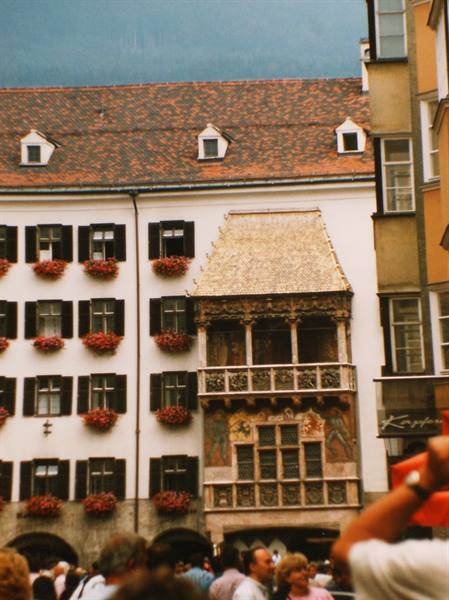
Having become the official residence of Emperor Maximilian I, the city experienced a period of great splendour and economic growth between the 16th and 17th centuries. With the Peace of Pressburg (1805) it passed to Bavaria and then legitimately returned to Austria with the Congress of Vienna in 1815. In modern history it was temporarily occupied by Italian troops in 1918 and then heavily bombed during the Second World War. Of great artistic value is certainly the Goldenes Dachl (the Golden Roof), the balcony of Maximilian I's residential palace, distinguished by a roof made with gilded copper scale tiles and parapets richly frescoed by Kolderer and N. Turing the Elder. Late-medieval-style buildings are limited to the historic centre, while the neo-Gothic style reappears in some buildings such as the Hofkirche (1533-1563), a church with three naves designed by Andrea Crivelli.
The tomb of Maximilian I, grand in its forms and distinguished by 28 bronze statues, which is found inside it, is in Renaissance style. Of some importance is also the town hall tower, a complex dating back to 1358. To the Baroque period, on the other hand, belong some sacred buildings such as the Jesuit church, the Mariahilfkirche, the church and convent of Wilten, but also private buildings such as the Fugger Palace and the Palace of the Provincial Diet. Also of relevance is the city's castle, Ambras Castle.
The journey's photographs
8 photographs · click to open them full screen
0 reader comments