We left the city of Oaxaca around 21:30, aware that ahead of us awaited about ten hours of suffering, through the steep mountains of Chiapas, a continuous up and down to 2,200 meters, passing through a thousand hairpin bends and impossible curves. All things considered, the journey didn't turn out so bad and we even managed to doze off, bundled up in our sleeping bags, given the sharp drop in temperature. Around seven in the morning we finally reached the small station of San Cristobal. To be honest, perhaps because of the rather ungodly hour or perhaps because of the cold we weren't used to, we felt a little disoriented... what's more, for the first time, we had no information about where to find a hostel to rest our weary backsides.
But it wasn't that hard to get out of this situation: we had barely set foot outside the station when a friendly young man immediately came up to offer us what, to him, must have been an excellent place to stay. Having no other choice, we trusted this bold young man and jumped into the taxi to be taken to our destination. Indeed, the hostel wasn't bad at all... besides a decent private room, the service included coffee, internet and cable television, all things considered for a modest sum. After enjoying a good cup of coffee and spending about an hour in front of the television (of which only a vague memory remained by now), we decided to get our first taste of the city. Right away we understood that this town wasn't so immense either, all contained within a few square kilometers.
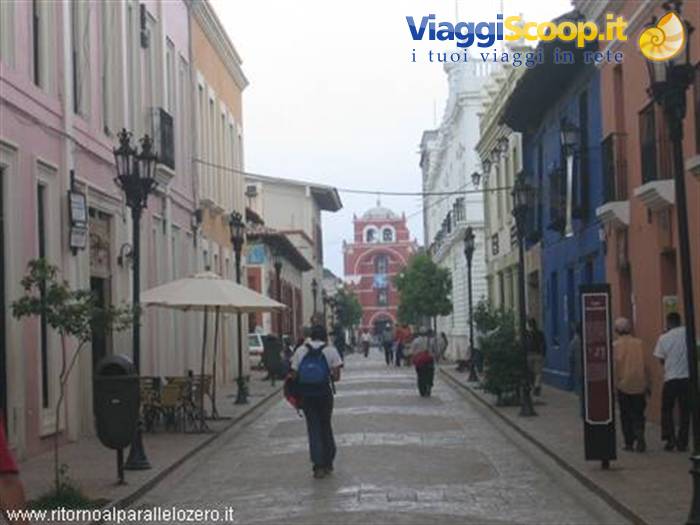
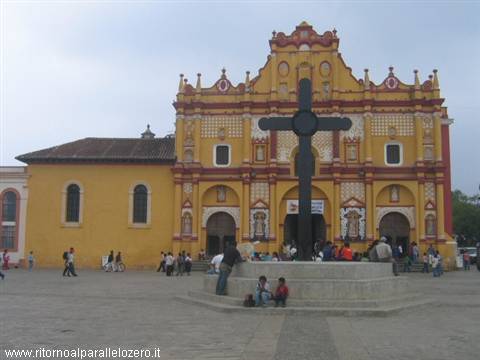
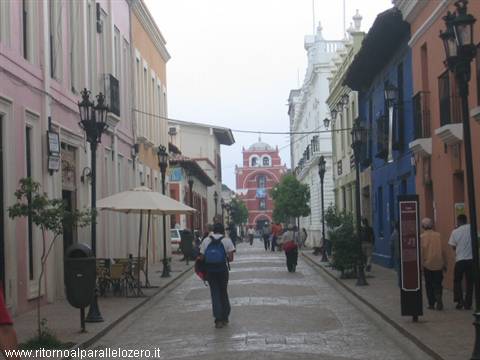
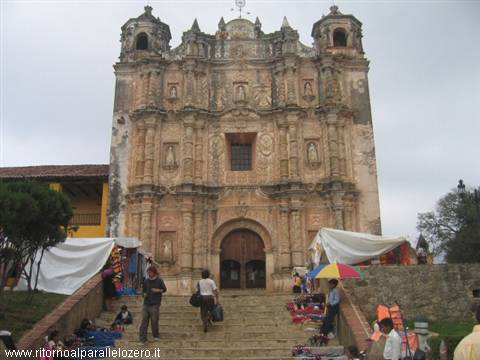
We immediately headed toward the Zocalo (the main square) through narrow streets lined with colorful houses and crowded with stalls and people busy haggling. The Zocalo was very nice, surrounded by shaded arcades under which countless restaurants proliferated. Directly opposite the Zocalo stood the imposing cathedral, which also had a large square extending in front of its main nave. This square was literally stormed by the "campesinas," the peasant women from the immediate outskirts, who, together with their broods of little ones, were busy offering tourists various little works born of their artisanal skill. Having fallen into the "trap," we too gave in and made a purchase.
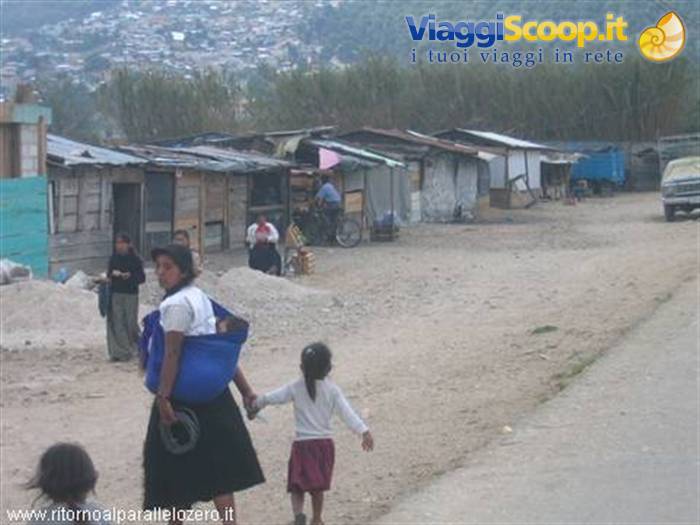
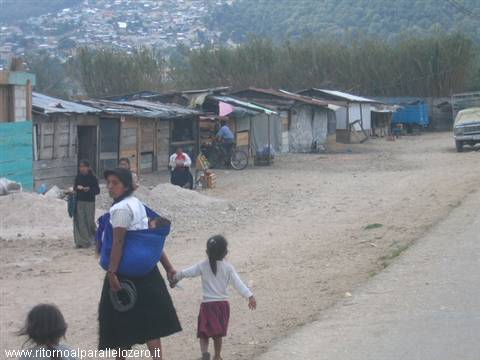
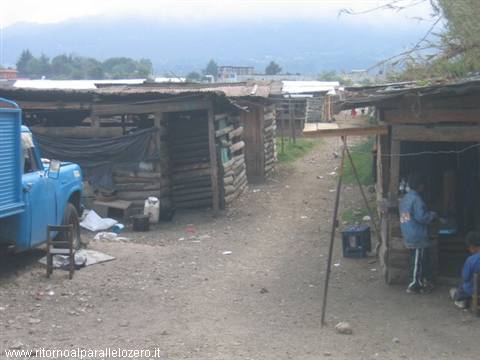
After a quick visit inside the cathedral, characterized by the usual mega main altar steeped in gold and silver, we headed to the nearby tourist office to get a map of the city and further information on what was possible to visit. Among the possible options available to us, one in particular caught our interest: the Museum of Maya Medicine, located in the first outskirts. To reach it we crossed half the city, noticing how, as we proceeded outward, the condition of the buildings degraded before our eyes. From the charming colonial houses of the center, to anonymous buildings constructed with exposed concrete blocks, down to the first shantytowns of wood, sheet metal and mud that surrounded the museum area. Despite the precarious conditions of the place, our attention was above all captured by the incredible number of children playing and having fun chasing each other among the shacks.
But let's get back to the museum... at first glance it appeared decidedly spartan, in keeping with the neighborhood in which it was located. Besides, it was getting late by now and we had to move if we wanted to manage to visit it in its entirety. We made it, and with the support of a little book written in Italian too, we managed to fully appreciate the meaning of the museum. Through various rooms, it presented, through images of daily life, all the experience and skill of the Maya people in extracting from the plants that surrounded them what today we buy at the pharmacy. It was incredible to see how, for every most disparate ailment, they had identified a natural remedy, accompanied by rites and gestures that were part of their culture.
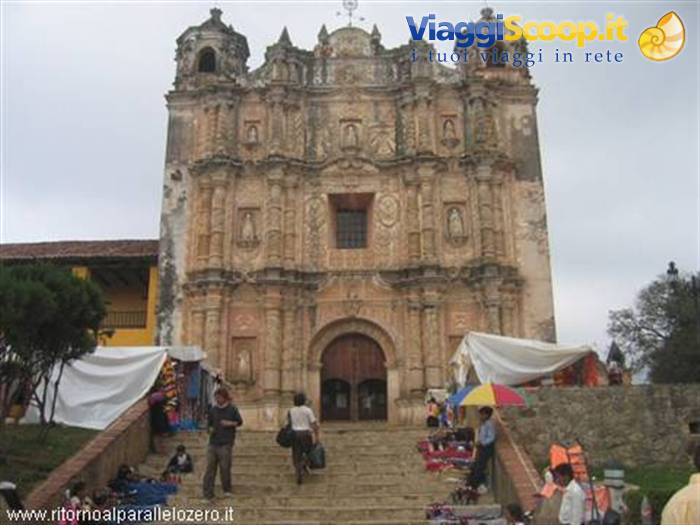
Beyond the superstitious rites, performed almost always with the sacrifice of a black hen, and toward which one can harbor understandable perplexities, the fact remains that the effectiveness of the plant extracts is instead indubitable. To demonstrate this, alongside the museum a kind of pharmaceutical factory has also sprung up, where the old Maya remedies are produced and sold. We left the museum when the sky was already beginning to darken, retracing the road in the opposite direction, visiting the market, which was closing up shop, and the basilica, which, given the late hour, we promised ourselves to revisit the next day. Back at the hostel, it was time for a refreshing shower and then to go out and put something in our stomachs.
The choice fell on a cheap restaurant that offered tortas, the Mexican equivalent of our sandwiches, and we then headed toward the Zocalo for the usual digestive stroll. Specifically, our attention was drawn to a large illuminated arch that somehow brought to mind the legendary Arch of Constantine that towers over our beloved capital.

0 reader comments