Discovering one of the most varied countries on the continent, a mix of magnificent landscapes made up of tropical forests, mountains, white beaches; large metropolises stand alongside majestic archaeological sites, or communities very far removed from our customs and consumption habits, with their own ceremonies and beliefs. Mexico strikes you from every point of view: historical, ethnic, religious, cultural and folkloric. The Chiapas region, in particular, surprises the visitor with the beauty of its landscapes and the spirit of its people, as well as the most impressive archaeological site in the entire country: Palenque. The tour was organised perfectly by Clipper (which later went bankrupt), with excellent organisation and at one of the most competitive prices. Each area was visited with a different local guide, in small groups of at most 6-8 people.
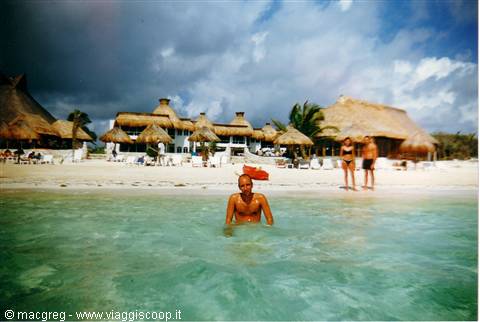
Large tour operators with groups of 50 people are not recommended: the time we took for some visits, they spent on the toilet break. Visiting during the summer is not recommended: the rains can be torrential and sometimes Palenque is not even visitable. The seaside stay was also arranged at a resort managed by Clipper in Puerto Morelos: small in size and perfectly organised, excellent cuisine and a splendid beach, even though the sea was beautiful up to 5-6 metres from the shore and then instead presented a carpet of algae on the seabed that gave the sea a dark colouring.
1Milan - Mexico City
Flight via New York to Mexico City with arrival in the late evening, overnight stay at the Hotel Casablanca, a good first-class hotel a few steps from the Paseo de la Reforma, comfortable and at a reasonable price.
Chiapas, Agua Azul
Day 211 Mar 1997
2nd) Mexico City
Visit to the city with its main monuments: the beautiful Cathedral (which sinks by a few centimetres every year due to its unstable foundations), the Zocalo, the enormous main square of the city, with the Sagrario and the National Palace. We visit the famous Templo Mayor, then move on to the Plaza of the Three Cultures, where in a single glance you can admire archaeological remains, a detail from the colonial period and the modern era. Moving through the metropolis, the enormous and orderly streets strike you, reaching eight lanes. On Sundays the traffic is fairly light, but during the week it is something frightening. We then move on to the National Museum of Anthropology, one of the largest in the world, set within the immense Chapultepec Park, the green lung of the city.
The sky is a splendid blue and the temperature pleasant, unlike what I had read before departure, which described Mexico City as one of the most polluted cities on the planet (and it surely is as well), with an always grey sky so much so that you never see the sun.
Palenque
Day 312 Mar 1997
3rd) Mexico City (surroundings)
What surprises you most in Mexico City is found 50 km from the city: the splendid temples of Teotihuacán. The archaeological site (completely restored) covers a vast area dominated by the Pyramids of the Sun and the Moon (the view from the top is unique), separated by the long Avenue of the Dead, where the sacred Aztec city stood between the 2nd and 7th centuries AD, when it was inhabited by over 200,000 people. Along the return road we visit the Basilica of Our Lady of Guadalupe, a very modern church, among the most venerated in Mexico and a destination for many pilgrims. To end the day, we stop at the picturesque floating gardens of Xochimilco, where aboard characteristic flower-decked boats, you sail along the ancient canals of the city, among typical Mexican musical ensembles and stalls selling food.
Uxmal
Day 413 Mar 1997
4th) Tuxtla Gutierrez - San Cristobal de Las Casas
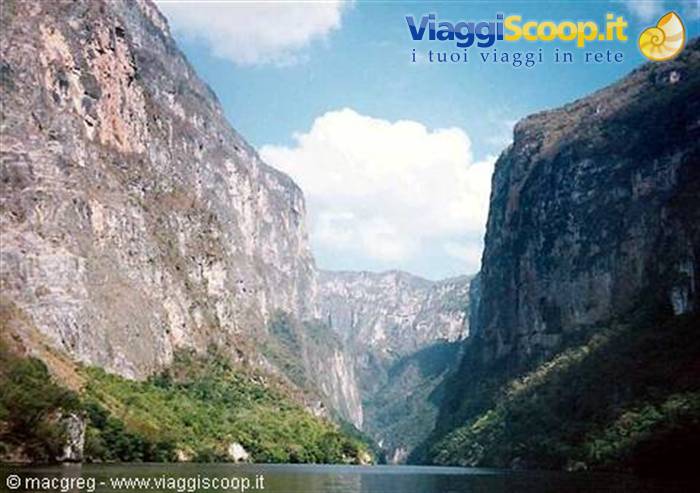
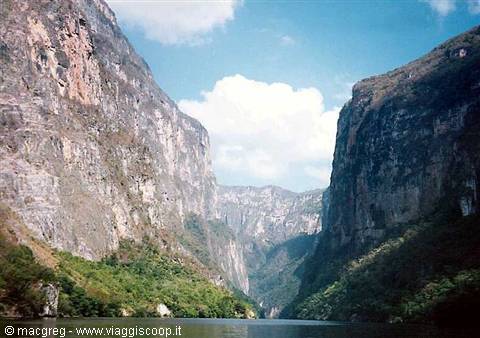
Transfer to the airport and flight to Tuxtla, the capital of the state of Chiapas, and continuation to the Sumidero River. The Sumidero Canyon is visited by navigating by motorboat on the river, which over the centuries has carved its way through a mountain creating vertical walls up to 1000 metres high and entirely covered in tropical vegetation. We continue to San Cristobal, along the road of the Anos, called that because of the 365 hairpin bends you have to tackle along the climb, interspersed with numerous speed bumps (a real pleasure...). Accommodation at the hotel (3 stars of poor quality, old rooms, à la carte breakfast). The hotels in San Cristobal, apart from one 4-star, are all fairly simple.
Riviera Maya
Day 514 Mar 1997
5th) San Cristobal de Las Casas and surroundings
Wake-up at 7. The first thing that strikes you is the temperature: early in the morning it reaches 4-6 degrees, by 11 it is already 30. San Cristòbal, situated in a valley at 1700m altitude, is one of the most beautiful colonial cities in Mexico, with its churches, elegant Spanish villas and the market, one of the most colourful in Mexico, with exotic foods and beautiful craft objects. Nearby we visit the indigenous communities of San Juan Chamula and Zinacantan, where time seems to have stood still (they are the famous "Indios", but don't say this word in front of them because it is an insult). These villages have very colourful unconsecrated churches, where they perform their very particular rites.
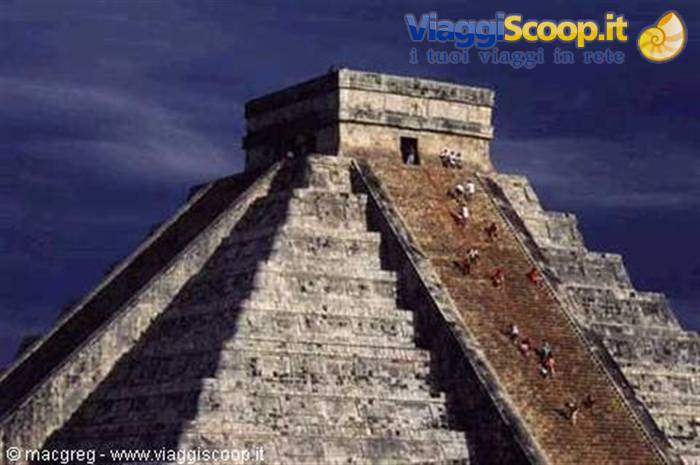
Chichen Itza, Pyramid of Kukulcan
Day 615 Mar 1997
6th) Agua Azul Falls - Palenque
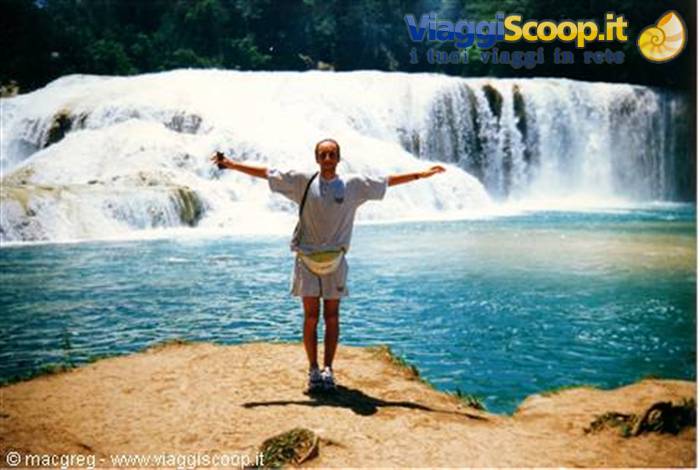
We set off towards one of the natural wonders of Chiapas, the Agua Azul waterfalls, which are reached through a long 4-hour journey through beautiful unspoilt nature, surrounded by lush still-intact jungle. I don't remember passing through any towns along the way. Agua Azul cannot be compared to the great waterfalls like Niagara or Victoria either for water flow or for the drop, which is only a few metres. The charm lies in the surrounding nature, the clarity and turquoise colour of the water and the white rocks emerging from the water. You can easily swim, the water in some points is shallow and forms natural pools; with a bit of care you can swim up to the main waterfall, which is about a hundred metres long, and you can even pass under the jet and then sit behind the waterfall and admire the unique spectacle of the water falling before your eyes, while you are dry.
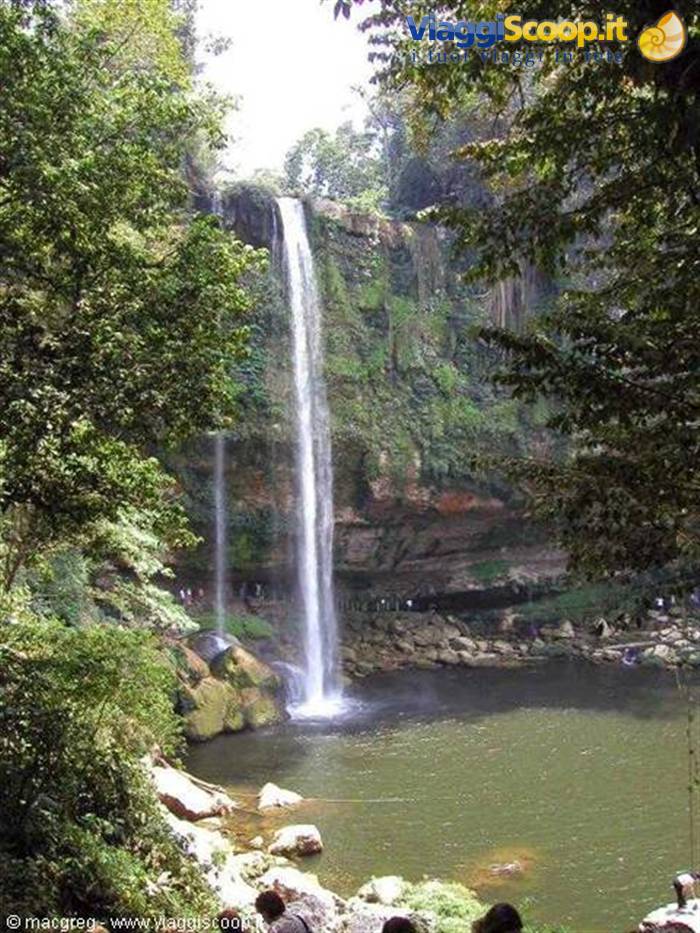
Around there are trails with beautiful walks, which lead to many panoramic points and to smaller but no less charming waterfalls; there are picnic tables and a restaurant specialising in river fish. We continue for another 2 hours with a stop at another waterfall, Misol Ha, then accommodation at Mission Palenque, a beautiful lodge immersed in nature.
Chiapas, Misol Ha waterfall
Day 716 Mar 1997
7th) Palenque - Merida
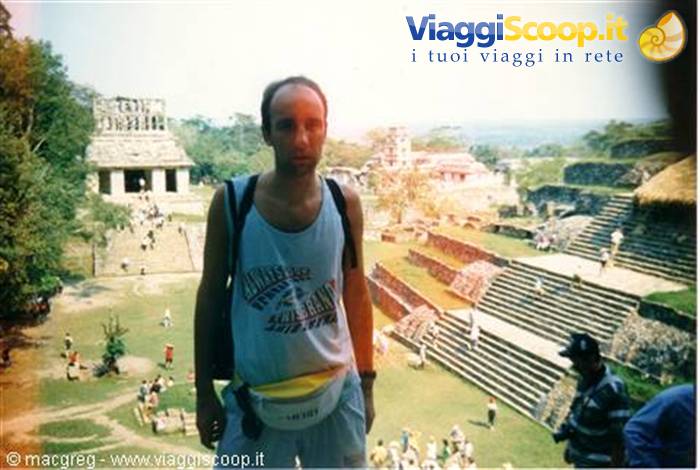
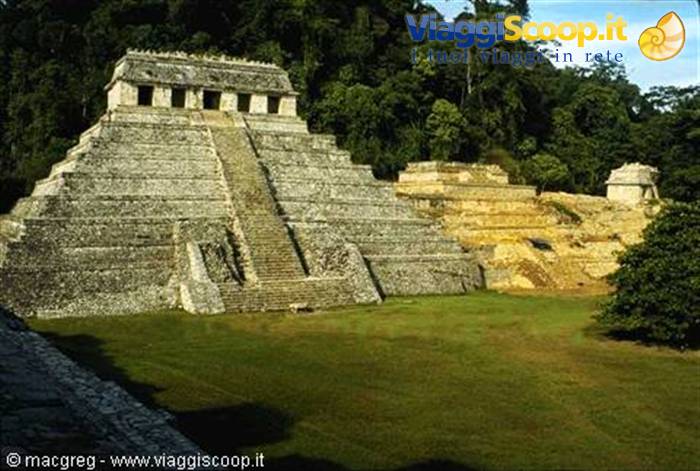
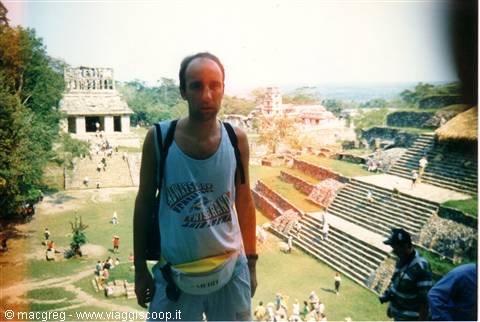
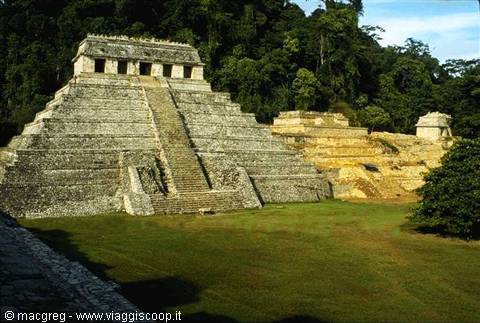
Early in the morning we visit Palenque (and please go early otherwise the heat and the crowds ruin the visit). The archaeological zone of Palenque, immersed in the exuberant tropical vegetation that hid its wonders for a long time, is considered by many to be the most beautiful in Mexico. This place marks the architectural apogee of the Mayan Empire. You can visit splendid pyramids, such as the Temple of the Inscriptions, from which you can admire a splendid panorama over the main Palace with the astronomical tower, up to reaching the Temple of the Cross; all very evocative. It would seem that many buildings are still hidden by the jungle. We continue to Villahermosa airport, then fly to Merida, in the Yucatan, and accommodation at the Hotel Casa del Balam, very intimate and characteristic, and right in the centre.
Palenque
Day 817 Mar 1997
8th) Uxmal
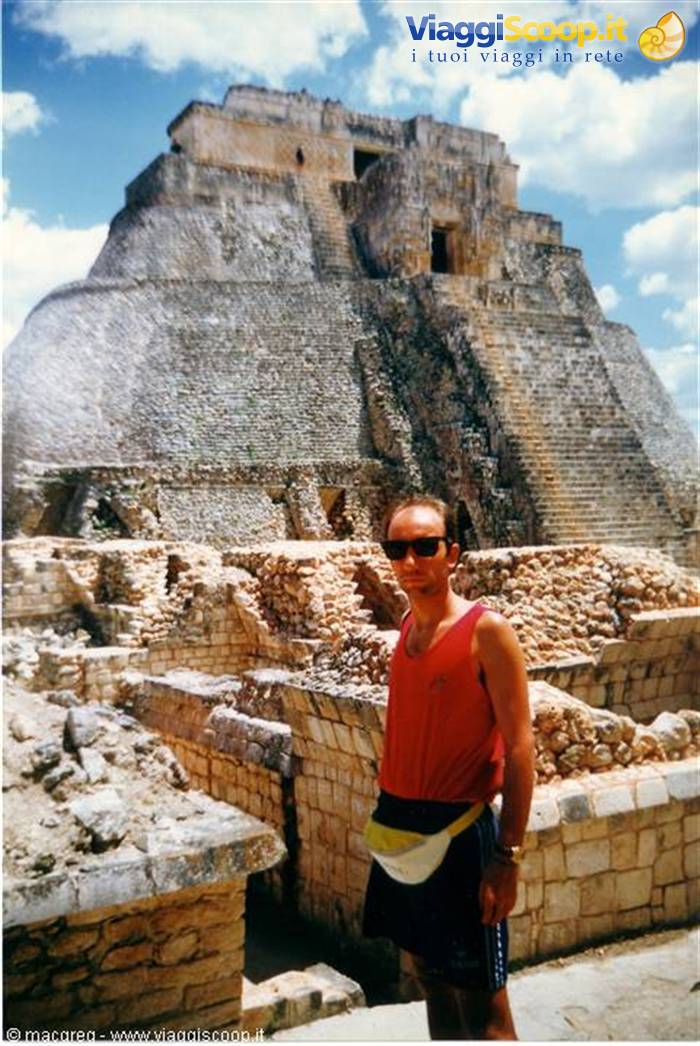
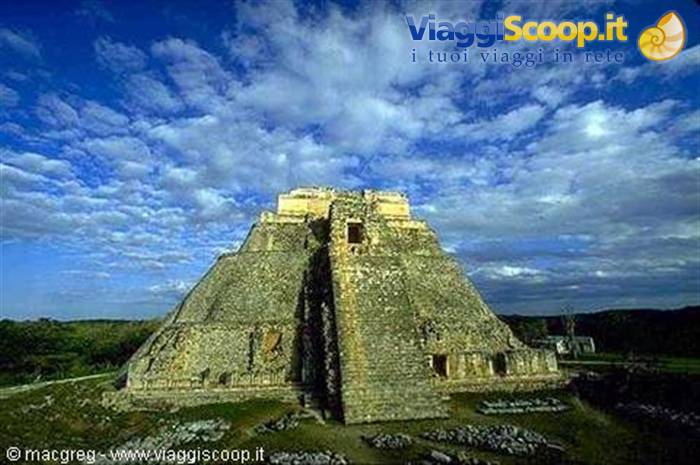
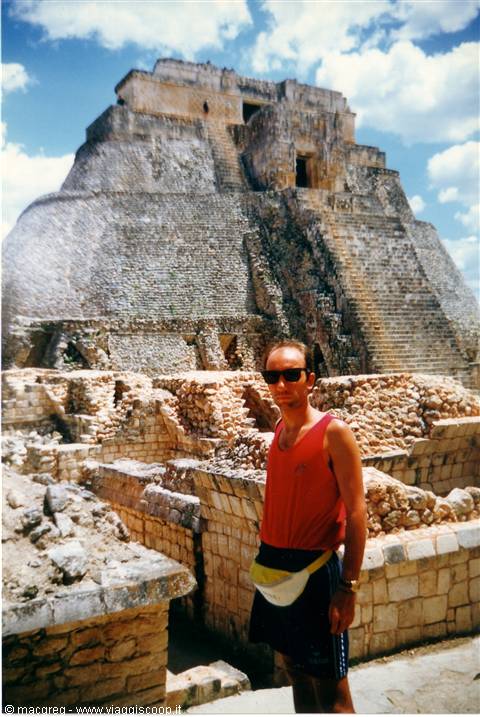
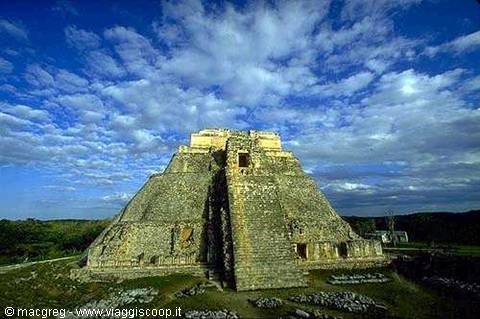
Departure for the archaeological site of Uxmal, reachable from Merida in a good hour. In this region it is very hot, and the rather high humidity is a bit annoying; we also encounter the first clouds, which will no longer be plentiful, but to be honest, those few times the sun disappears behind the clouds it is a real pleasure. Uxmal is very beautiful and less crowded than the more famous Chichen Itza: you can visit the Pyramid of the Magician, 30 metres high and reachable via a very steep stone staircase, so steep that from the top you can no longer even see the stairs to come down; from the top you can admire the entire archaeological site in its vastness. We then move on to the visit of the Nunnery Quadrangle and the Governor's Palace, a long and magnificent building considered by experts to be the greatest example of Mayan culture.
We return to Merida and in the late afternoon we wander a bit in this beautiful city, called "the White", because of the clothes worn by its inhabitants, where we visit the beautiful cathedral and the town hall.
Sumidero Canyon
Day 918 Mar 1997
9th) Chichen Itza - Riviera maya
Two hours of travel separate Merida from one of the most famous archaeological sites in the world: Chichen Itza. The Pyramid of Kukulcan, known by the name of "El Castillo", is impressive. With a few steep steps you reach the top of the pyramid, where you can admire the whole site in its vastness: the Temple of the Thousand Columns, the Caracol, the observatory where the Maya developed the science of astrology, and the Pelota ball game court. After the visit we continue on the long journey to the Riviera Maya, as far as Puerto Morelos, a small town about 40 km from Cancun.
Tulum
Day 1019 Mar 1997
10-14th) Riviera maya
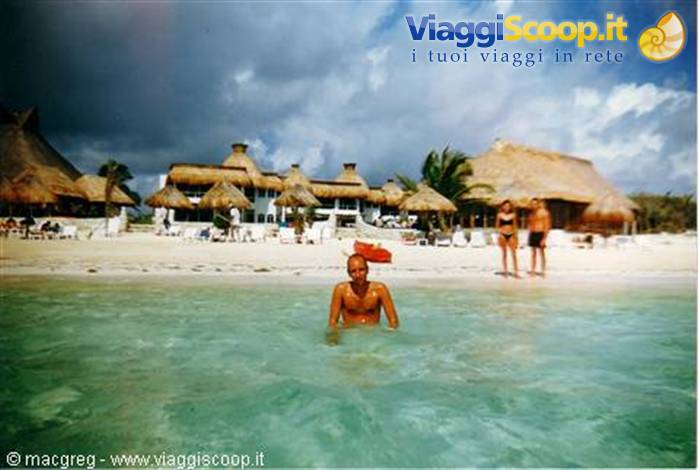
In 1997 the Riviera Maya is at the beginning of its development, and along the coast between Cancun and Tulum there are at most about ten resorts. The best places for the sea are Puerto Adventuras and Akumal, where the coral reef in some points is very close to the beach, and Playa del Carmen, where the blue of the sea continues for many metres from the shore. In Puerto Morelos, the sea is beautiful up to 5-6 metres from the shore and then instead presents a carpet of algae on the seabed that gives the sea a dark colouring. The Clipper resort is very small and intimate, unlike the enormous hotels later built; the cuisine excellent and with a very varied buffet, even though the clientele did not reach 100 people.
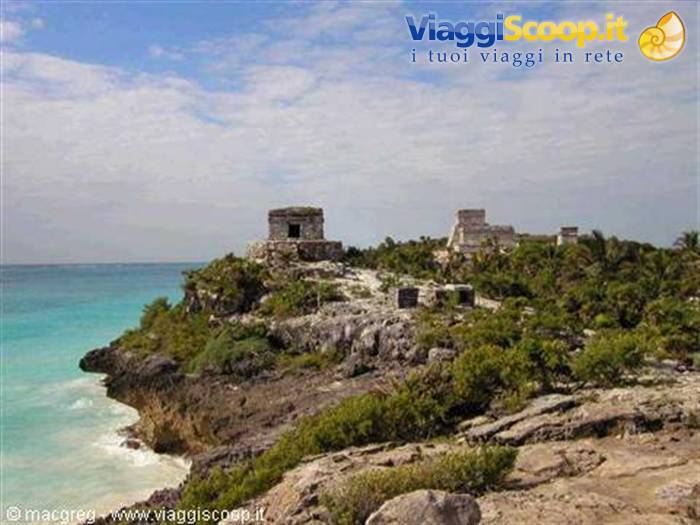
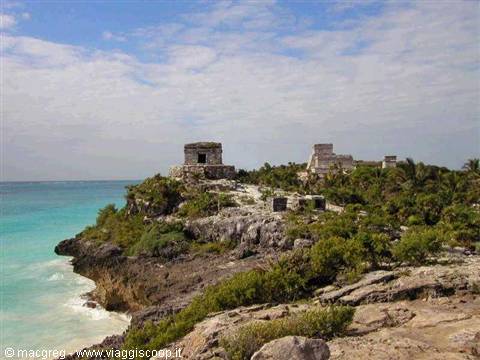
With the help of an employee of the hotel we rented a car with driver for a day (100 dollars for the 3 of us), to visit the surroundings: first a short stop in Playa del Carmen, then continuing to the marine park of Xel-Ha, where we arrive in the morning relatively early. At this hour the park is splendid and almost deserted, we take the opportunity to do some snorkelling and a few swims in the lagoon. We leave around midday, when the park is unfortunately getting crowded, and continue towards Tulum, the only fortified Mayan city built on the sea; the archaeological site is splendid, both for the ruins and for its incredible position, with the main building, El Castillo, right on the ocean, and a small beach where you can take a refreshing swim: here you can truly say you have taken a...
dive into the past!!! We continue with a stop in a cenote, a cavity of crystal-clear and refreshing fresh water, then for a swim in the beautiful bay of Akumal.




0 reader comments