Ho Chi Minh, Can Tho, Ben Tre, Chau Doc · Vietnam del Sud
When
14 Jan 1994 – 17 Jan 1994 4 days · trip of 1994
Who
antonio · @antonio ·
How
Travel diary
The story · 4 days
Having arrived in Vietnam as the first stop of a tour in Indochina also including Thailand and Cambodia. I landed in the evening at Ho Chi Minh Airport on an Emirates flight coming from Dubai (United Arab Emirates). I was travelling in the company of two friends.
Day 114 Jan 1994
Ho Chi Minh
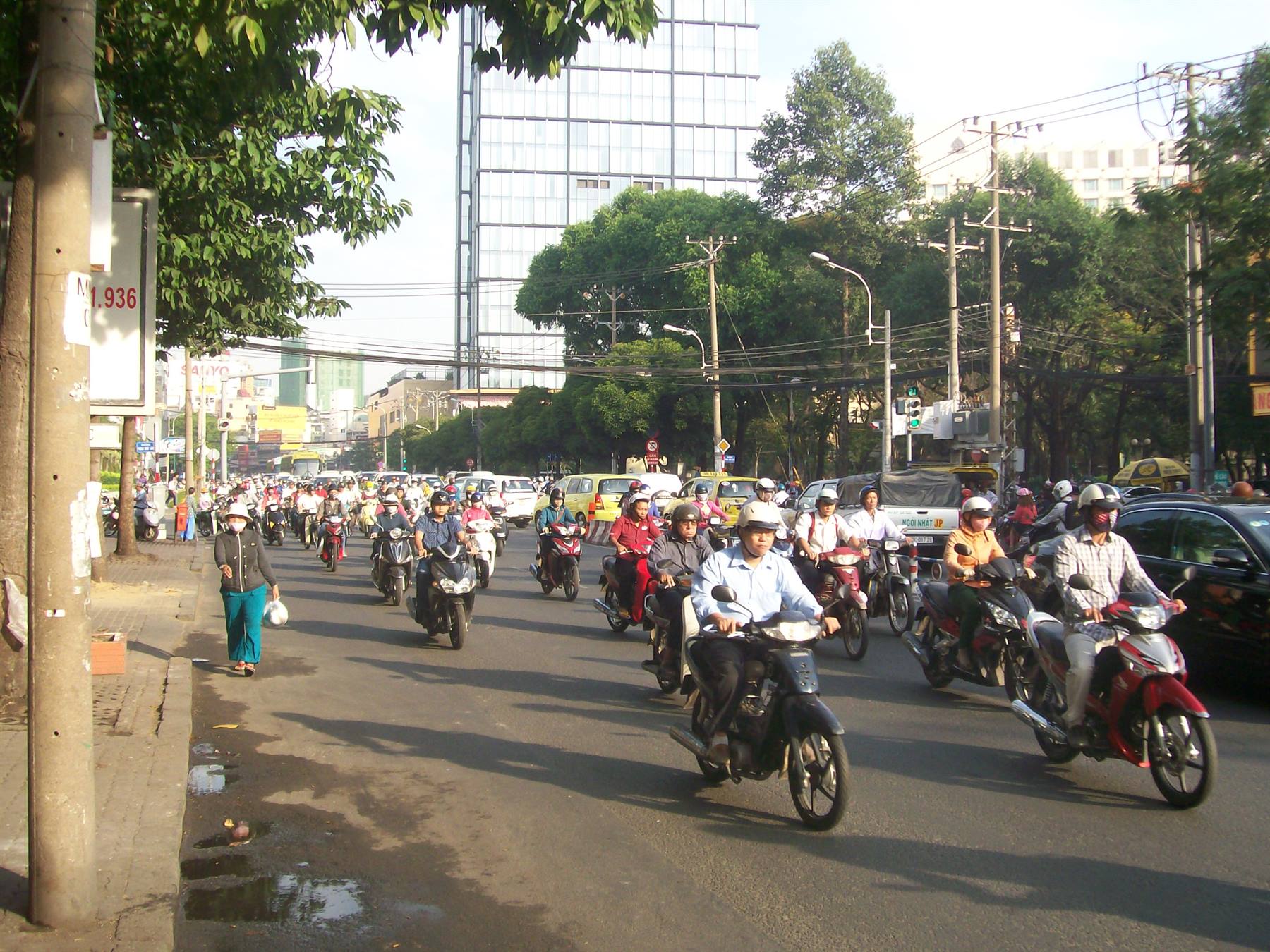
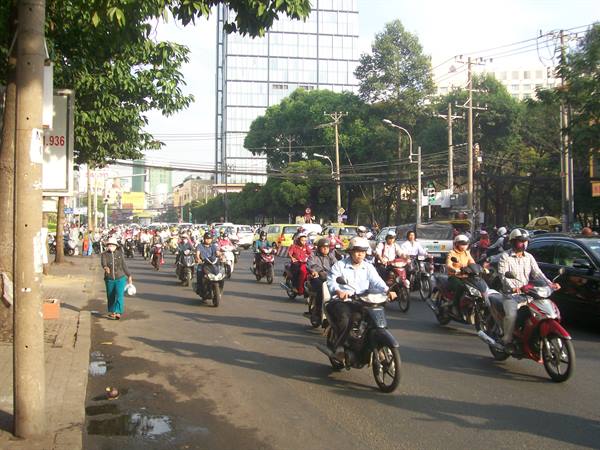
We landed in Ho Chi Minh in the evening and took a taxi to the hotel we had booked from Italy, located right in the city center, in District 1. After settling into our triple room, we went to a nearby hotel to meet a friend who had already been in Vietnam for a few days. Together we went to dinner at a small place right in front of our hotel. Meanwhile, we had received a phone call in our room from the Vietnamese girl who will be our guide starting tomorrow morning. After saying goodbye to our friend, we took a walk through the crowded center of Ho Chi Minh, the largest city in the country, once known as Saigon, the capital of South Vietnam. Since the unification of the country, the capital has been Hanoi, about a thousand kilometers further north. The main streets of District 1 are clogged with traffic consisting mainly of mopeds, which make crossing difficult.
The area frequented by Western tourists is teeming with venues playing live music and go-go bars where attractive young ladies entertain guests without much modesty. Here too, mopeds are numerous and make their way by dodging tourists and the little carts selling decidedly unappealing food. The street vendors of dried squid intrigue me. The Vietnamese all seem busy, walking hurriedly whether they're riding mopeds or moving on foot. We return to the hotel for the night.
Ben Tre
Day 215 Jan 1994
Ben Tre
The next morning we have breakfast on the top floor of the hotel, the tenth, in front of a glass wall overlooking the city, though it doesn't offer anything spectacular. We also find time for another walk around the block, mainly to watch the river of motorbikes moving in unison every time the traffic light turns green at an intersection. Our guide arrives at the hotel right on time, a young woman who speaks decent Italian and goes by the name Li. We learn that she studied in Florence and lived in Figline Valdarno. We get on the minibus placed at our disposal and head to the Mekong Delta. Once we leave the city, we travel through a rural region dotted with rice fields, on which there are occasionally tombs. Until the ban imposed by the government a few years ago, it was a tradition among farming families to bury their loved ones in the land they had worked for a lifetime.
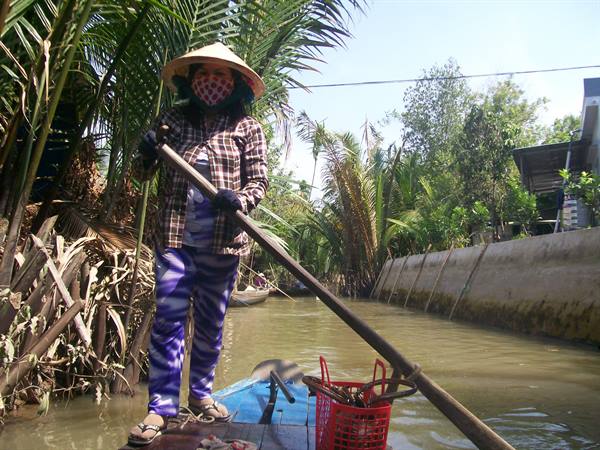
The Vietnamese, who practice a Buddhism stuffed with animism, believe that the presence of their ancestor on the land is a good omen for a good harvest. From time to time we see farmers along the road working with the characteristic conical hat on their heads. Besides the headwear, the women often wear a mask like the ones surgeons use. A tan in Vietnam is seen as a sign of poverty and is considered ugly, so people always try to protect their faces. As in Ho Chi Minh, on the road we're traveling there's also heavy moped traffic, mostly Japanese-made, sometimes carrying entire families. Only the driver wears a helmet, and in some cases I've even seen newborns on board. They seem more like tightrope walkers than motorcyclists; it's already hard enough to navigate the chaos of the city, but carrying overflowing goods of every kind on the saddle is certainly no less.
Along the way, we stop at a place built specifically for tourists with souvenir shops, restaurants, and cafés. The setting is elegant nonetheless, a kind of botanical garden complete with ponds crossed by wooden bridges and water lilies. We arrive at the Delta, a region marked by the numerous channels into which the Mekong divides before emptying into the South China Sea. The river's branches split the territory into hundreds of islands, large and small. Upon arriving on Ben Tre Island, we board a barge that takes us to the opposite shore, to a village immersed in lush vegetation. A local family welcomes us and offers us a cup of tea and proposes their own honey, which we won't buy. In the village there's also a candy factory that uses coconut pulp, and the guide explains the long production process.
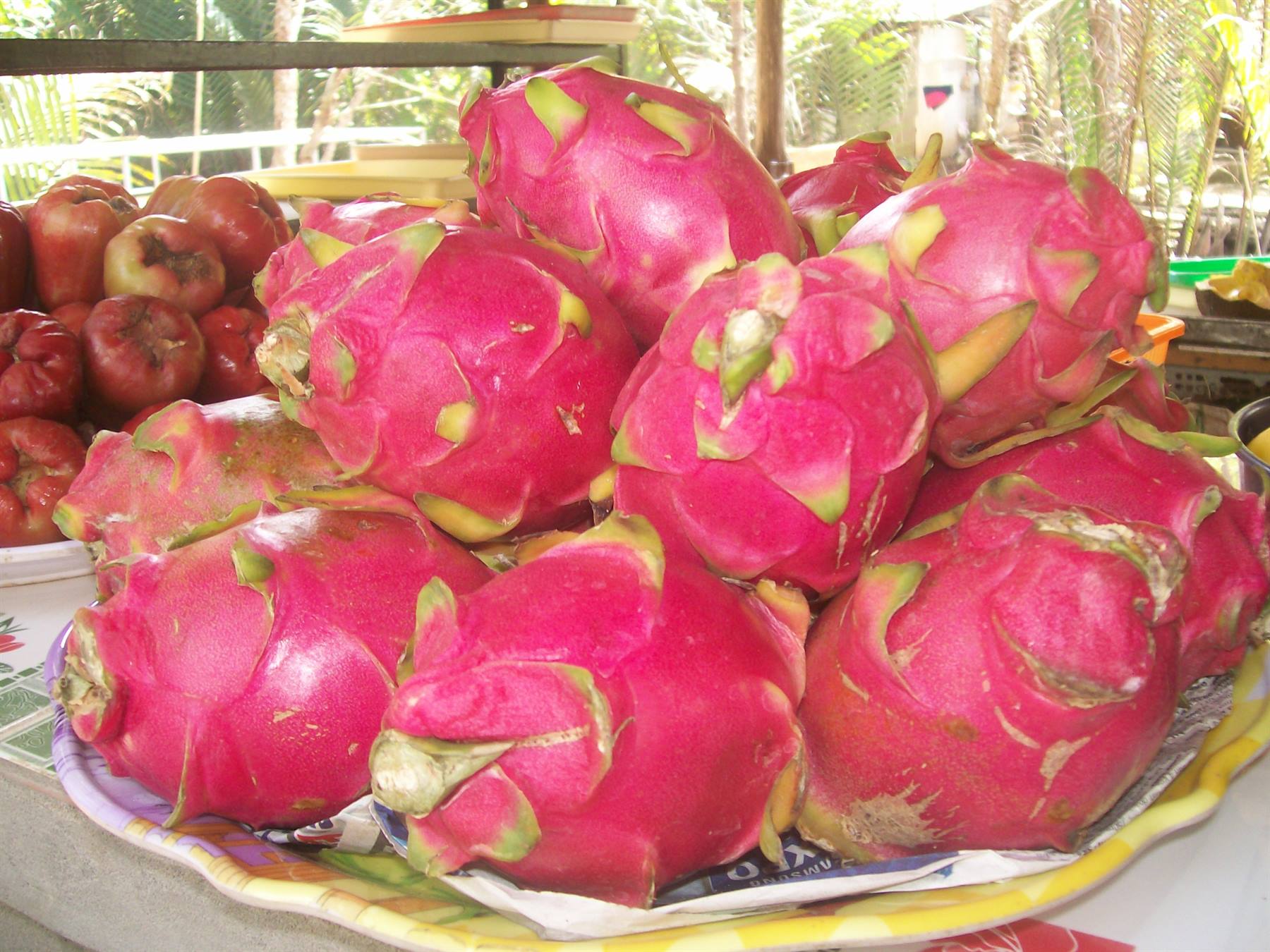
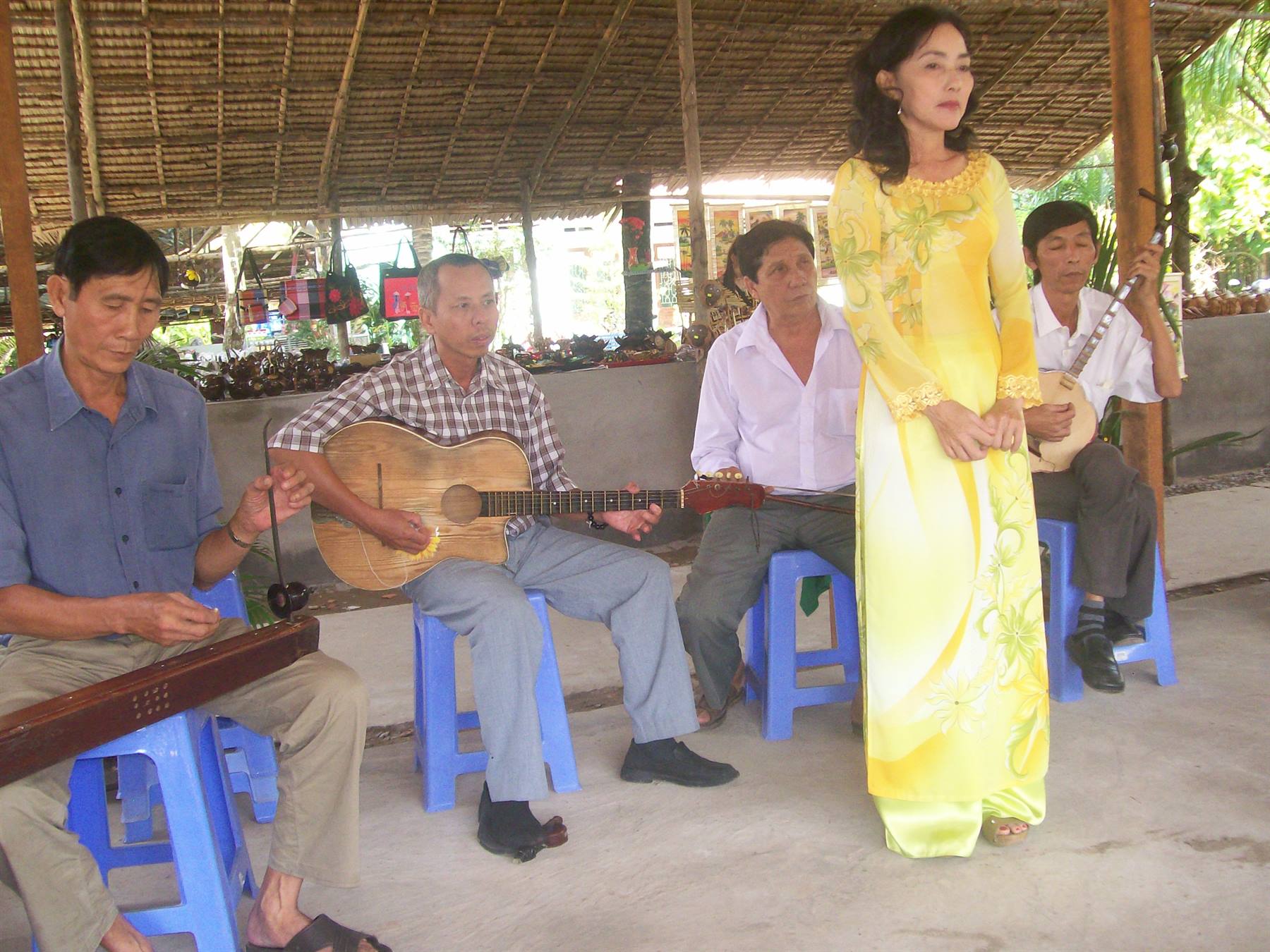
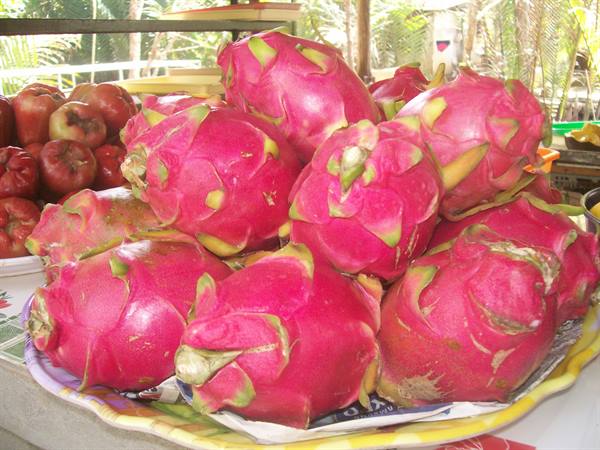
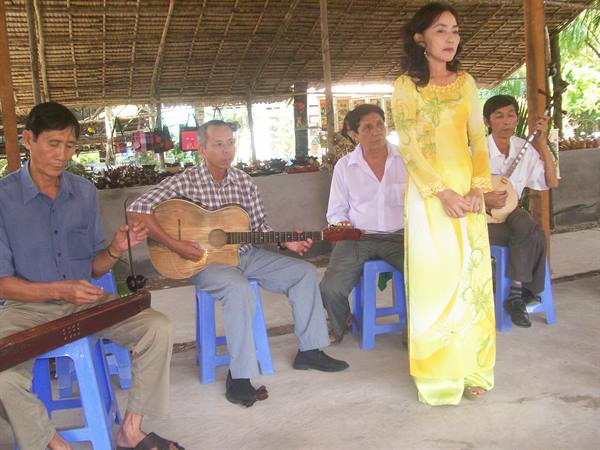
We taste a still-warm candy wrapped in a sheet of rice paper, a bit too sweet for my taste but with a soft texture like a marshmallow. Here they also sell a local distillate sealed in bottles with a snake placed inside. We walk along a path rich in tropical plants such as the breadfruit tree, dragon fruit, the smelly durian, bananas, pineapples, mangoes, cacao, and coconuts. Along the path we encounter farmers going about their daily chores. The guide points out a fern with particular leaves that close in on themselves when touched. At the end of the path, we find ourselves on a country road where we get on a horse-drawn cart and ride to another village on the river. Here there are small restaurants for tourists; first they offer us a tasting of tropical fruits, then a performance of folk songs.
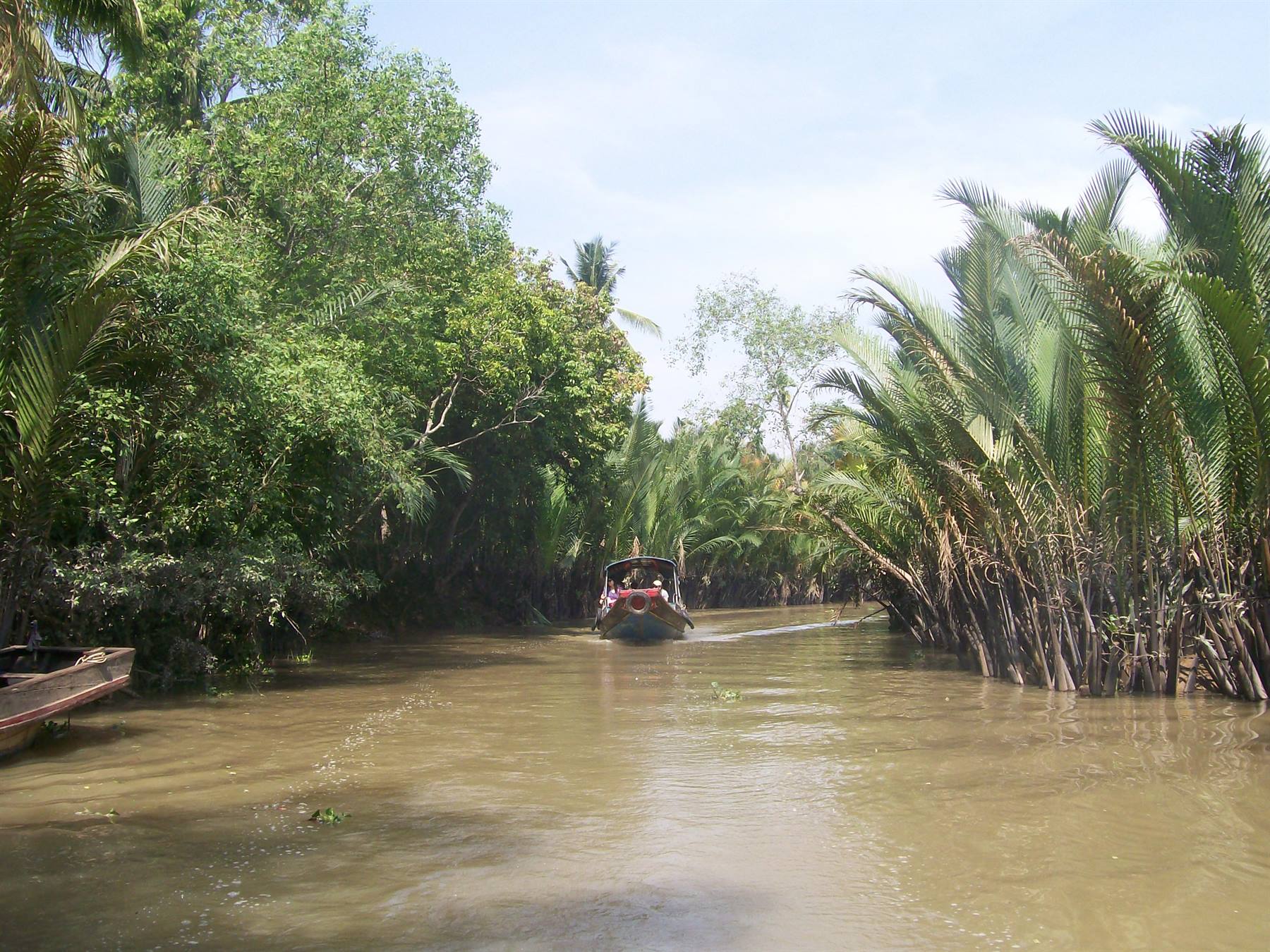
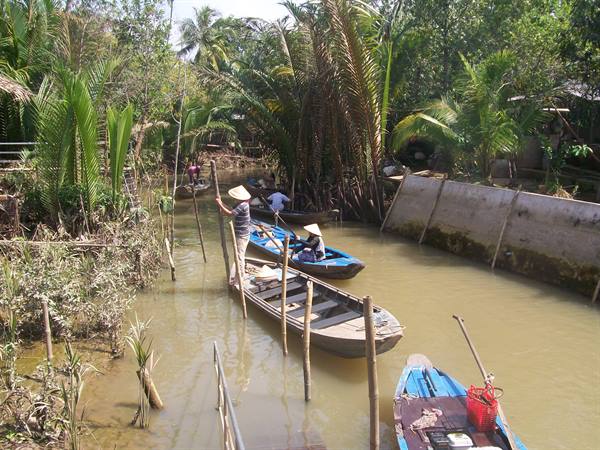
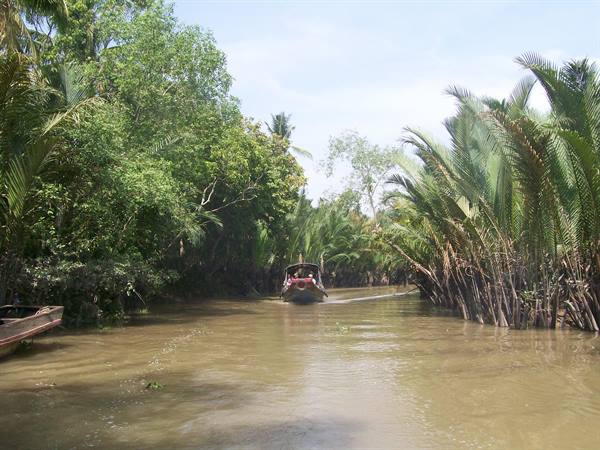
The musical group consists of a singer and two beautiful female singers in traditional dress, accompanied by players of strange string and percussion instruments. From the landing stage below, we board a sampan, the typical Delta boat, and sail through the waters of a narrow canal surrounded by mangroves and palms. The boat is steered by a woman rowing while standing. At the end of this secondary waterway, we come out onto one of the large branches of the river, board a larger boat, and transfer to the restaurant overlooking the river. We have lunch with a local specialty, a roasted fish served not horizontally on a plate but vertically, propped up on a small wooden frame. I can't imagine how I'm supposed to eat it, but then a waiter comes, puts on a pair of thin gloves, and debones it, wrapping everything in rice paper leaves.
From this whole operation come small rolls that we just have to dip in a small bowl filled with a sauce that pairs well with the dish. We finish the meal with fresh fruit. Then we resume navigation on the barge that takes us back to where we started this morning. Our driver is waiting with the minibus, and we take the road to the city of Can Tho. We arrive in the early evening at the Hau Giang Hotel, located right in the center. After settling into the room, we take a walk around the city to see the avenue glistening with thousands of colorful luminous decorations and the nearby night market consisting of hundreds of stalls selling everything from clothing to food. There's no shortage of fried insect vendors, but fortunately we don't see any dogs on spits. We return to the hotel for the night.
The dragon fruit
Day 316 Jan 1994
From Can Tho to Chau Doc
We wake up at dawn, have breakfast at the hotel, and then transfer by minibus with our guide to the riverside, where we board a boat to go to the Cai Rang floating market, the most famous and authentic in the Delta. Unlike many floating markets in Indochina that cater to tourists, this is a real market serving the local population. They sell wholesale, and the only thing you're allowed to buy is pineapples, served from a boat after being skillfully cut. The market is full of barges loaded with every kind of merchandise. Among the larger boats, small boats of individual sellers, comparable to our street vendors, weave in and out. We also board a barge used as a fruit and vegetable shop.
On the way back, we observe the poor floating houses of the fishermen, a lumber sawmill with large tree trunks kept in the water so they don't dry out, and the occasional plants floating on the surface of the Mekong. We land at a covered market where fish, meat, clothing, bags, suitcases, and trinkets of all kinds are sold at retail. Everything appears chaotic to our Western eyes; the dusty, disorderly environment gives off strong smells. The fishmongers, crouched with their conical hats, take the still-live fish from plastic containers and gut them, preparing them for sale. Another handles some unidentifiable meat that I really hope isn't dog. On the way out of the market, we find ourselves on a dusty street lined with small shops for locals and carts with inedible food, while all around the ever-present mopeds try to make their way through the crowd.
On foot, we reach our minibus, which awaits us for a long transfer to Chau Doc. We have to walk for hours; along the way, we stop for lunch at a Crocodile Farm. The place is clean; we eat crocodile tail and some fruit. We visit the tanks housing numerous crocodiles born in captivity, most of which are destined for the leather industry. There's also a dog breeding operation, and I dare not think what will become of them. Then we continue to Chau Doc. Upon arriving in the city, we make a first stop at a large hotel for an initial panoramic view of the river from the terrace, then we proceed to the landing stage, where we take our seats on a boat. First stop at the floating fishing village, consisting of large barges on which the dwellings are placed.
In front of the house, the rest of the barge serves as a terrace, with a hatch opening onto the fish farm, almost always pangasius, from the catfish family. Throwing feed into the hatch produces a swirl of fish splashing in the water, causing high sprays. We get back on the boat and head to the stilt village of the Cham ethnic group, a Muslim population originally from central Vietnam. The stilt houses are connected to one another by high and seemingly precarious walkways. While we watch where we put our feet, the local children cross bridges and walkways with absolute ease. The stilt houses serve two purposes: they protect the dwelling from the numerous Mekong floods and provide shade during the sweltering days, since people mostly live beneath the house. The stilt village is divided in two by a raised road, on which the small Mosque faces.
After retracing the walkways in reverse, we return to the boat that takes us back to the landing stage from which we had departed. By minibus we go to the hotel that will host us tonight. In the evening, we take a walk in the center among stalls and multicolored lights. We then return to the hotel for the night.
Vietnamese folk music
Day 417 Jan 1994
Chau Doc
Upon waking, we have breakfast at the hotel, then transfer by minibus to the landing stage on the Mekong. Here we say goodbye to our guide Li and meet the young man who will assist us as far as Cambodia, though only in English. We board the fast boat, but not too fast, that will take us to Phnom Penh. Cruising the waters of the Mekong, we pass in front of stilt villages. After a little more than an hour, we reach Vietnamese customs, located on a barge, where we complete customs formalities. We get back on the boat and continue to the nearby Cambodian customs (see Cambodia itinerary).
0 reader comments