Chiang Mai, Golden Triangle, Bangkok, Ayutthaya, Phuket, Phi Phi Islands
When
21 Jan 1994 – 31 Jan 1994 11 days · trip of 1994
Who
antonio · @antonio ·
How
Travel diary
The story · 11 days
Having arrived in Thailand together with two friends on an Air Asia flight from Siem Reap in Cambodia to Don Mueang Airport in Bangkok. Our plan was to spend the night in the capital and then continue to Ayutthaya, but due to serious unrest the day before we opted to move immediately to the north, to Chiang Mai. The Tour of Thailand is part of a trip in Indochina also including Vietnam and Cambodia (see the relevant itineraries).
Day 121 Jan 1994
Chang Mai
After landing at Don Mueang Airport in Bangkok, we go through customs, have lunch at Burger King, and wait for the Air Asia flight to Chiang Mai. The flight is short, and in a little over an hour we're in the country's second city, in the capital of the Lanna. Just enough time to book a taxi in the airport hall, and here we are at the hotel we hastily booked only yesterday afternoon. We're slightly outside the square that encloses the historic center; the lobby is nice, the rooms a bit less so. We have two double rooms available, but neither room has hot water. We take a walk around the moats that once surrounded the walls, of which only short stretches remain. One of the gates that gave access to the city is still standing.
At night, however, life unfolds outside the historic center, particularly along a long street enlivened by go-go bars full of young girls who, with their sinuous bodies, invite tourists to come in to drink with them or play the ubiquitous stick billiards. There are also numerous massage centers and restaurants for all tastes and all budgets. From this street branch off some side lanes hiding nightclubs and rather dubious venues. There's also a large covered structure housing stalls, go-go bars, and a ring for Thai boxing, a form of boxing in which feet are also used. At the end of the street is the Night Market, where you can find a bit of everything and especially counterfeit goods, though at not-too-convenient prices. Along the way, we have dinner at a restaurant where you can listen to good live music.
On the way back to the hotel, we walk along the moats surrounding the historic center; here too there are numerous businesses, including travel agencies, one of which we booked tomorrow's tour with. Back at the hotel for the night, I realize the first symptoms of traveler's diarrhea are beginning, which will partly ruin the next three days.
Golden Triangle
Day 222 Jan 1994
The Golden Triangle
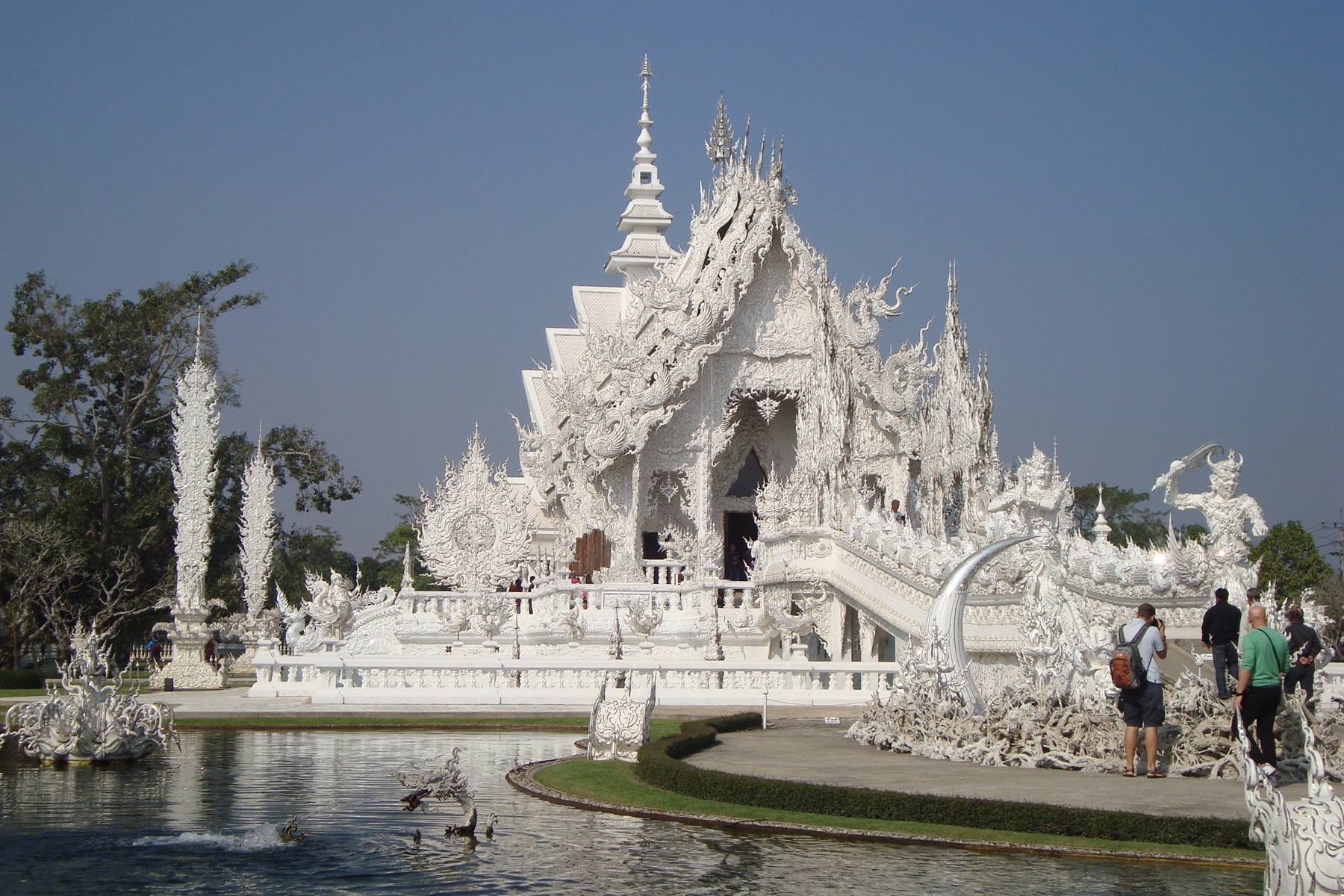
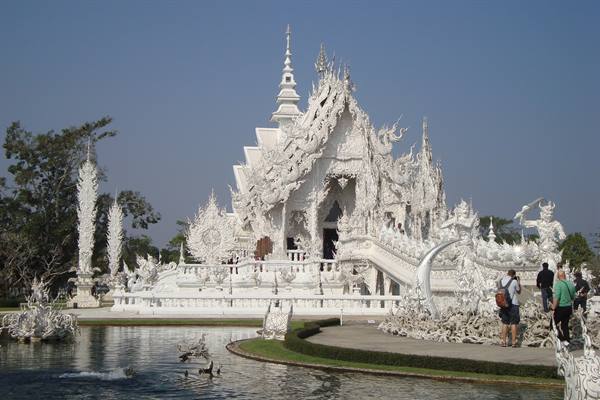
After spending the night with diarrhea and chills, I decide not to eat or drink for the entire day. I muster my courage and, after making sure I don't have a fever, I set off with my friends for the Golden Triangle tour. The area thus defined is in northwestern Thailand and is crossed by the Mekong, which marks the borders with Laos and Burma. In the 80s-90s it was sadly famous for being the world's main drug market thanks to extensive opium poppy plantations. The transfer is long, so during the journey by minibus, which came to pick us up near the hotel, we stop at a spa center where hot water springs up. Arriving near Chiang Rai, we visit a very white Buddhist temple, finely elaborated down to the smallest details. The complex symbolism ranges from statues of the damned stretching their hands from the underworld to the bliss of attained salvation.
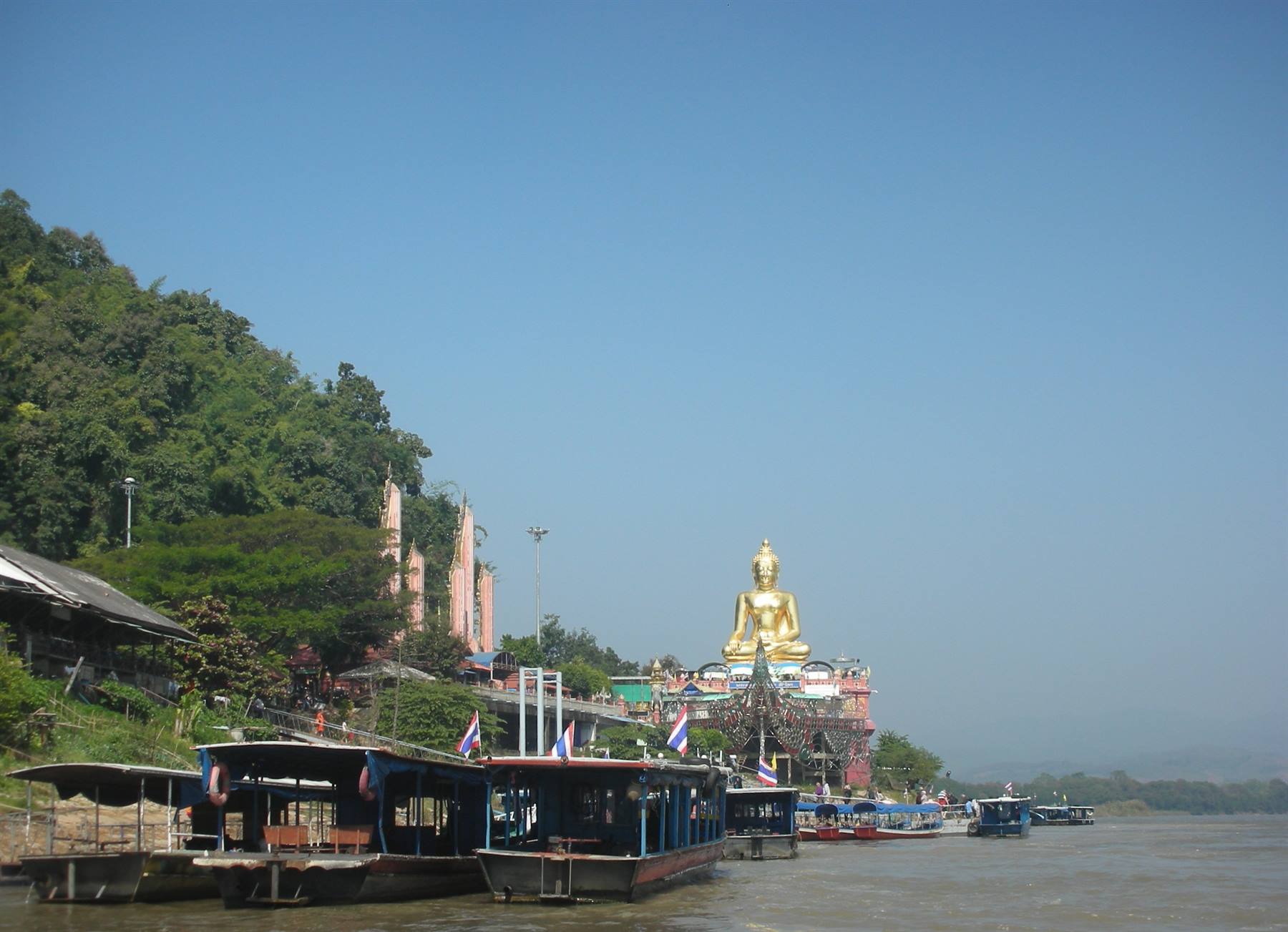
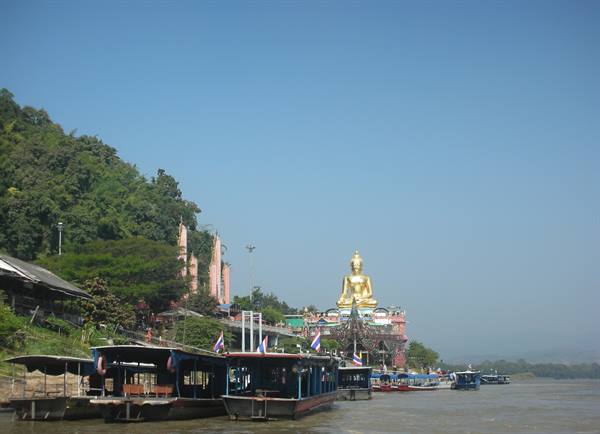
The temple is very beautiful to photograph. We continue to the actual Golden Triangle, the border area where opium smuggling took place, now converted to mass tourism. On the riverfront there's a large golden statue of Buddha. We board a small motorboat that first takes us near a Burmese islet, then makes a stop in Laos, where we go ashore (see related itinerary). Back on the boat, we return to the other bank of the river, in Thailand. From the landing stage we continue further north, stopping at a restaurant where I don't touch food as a precaution. We then stop in the town of Mae Sai, located right on the border with Burma, a country that for some years has been called Myanmar. We visit the local covered market, which ends with a terrace overlooking a stream that marks the border between the two countries. Only about thirty meters separate us from the houses in Burmese territory.
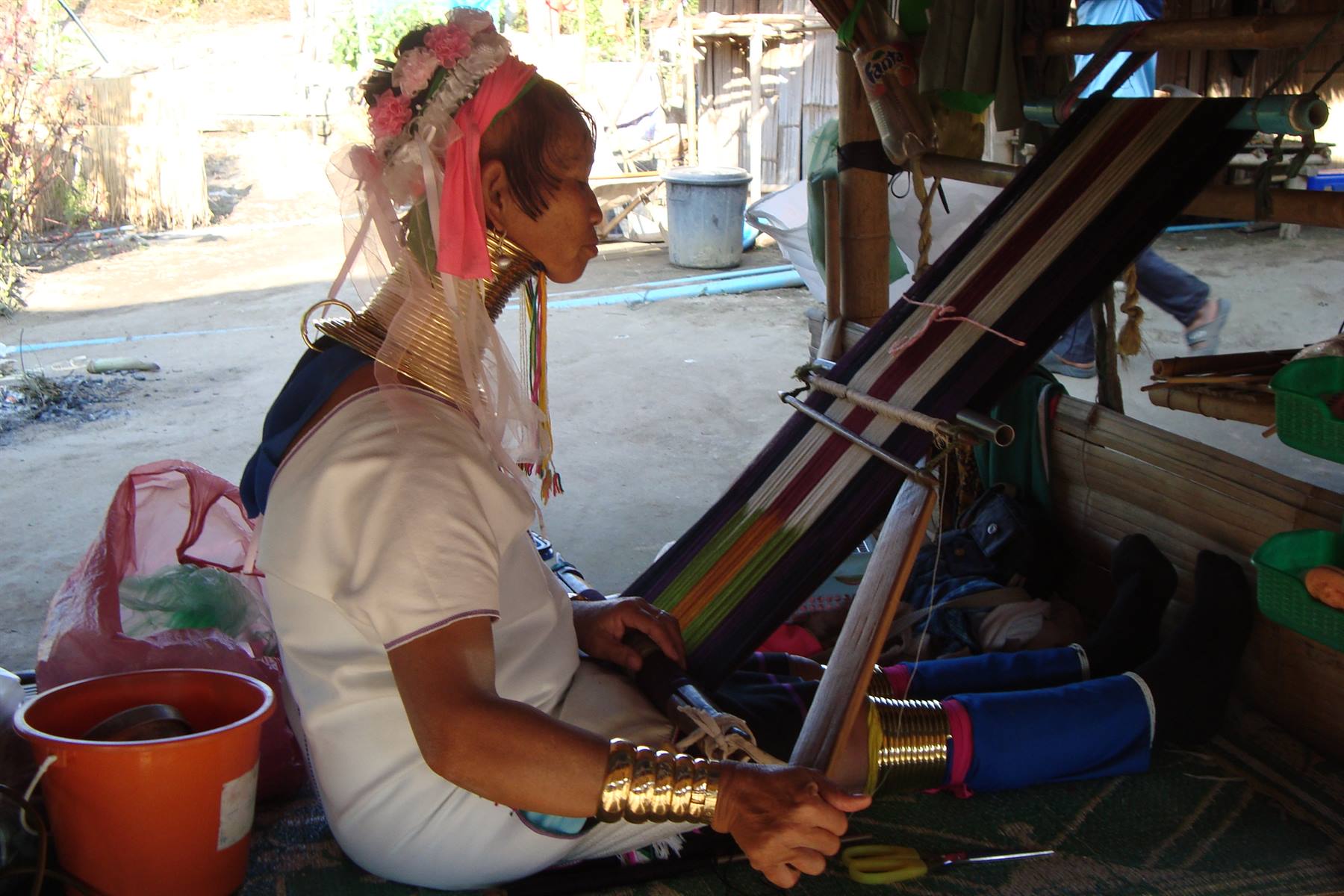
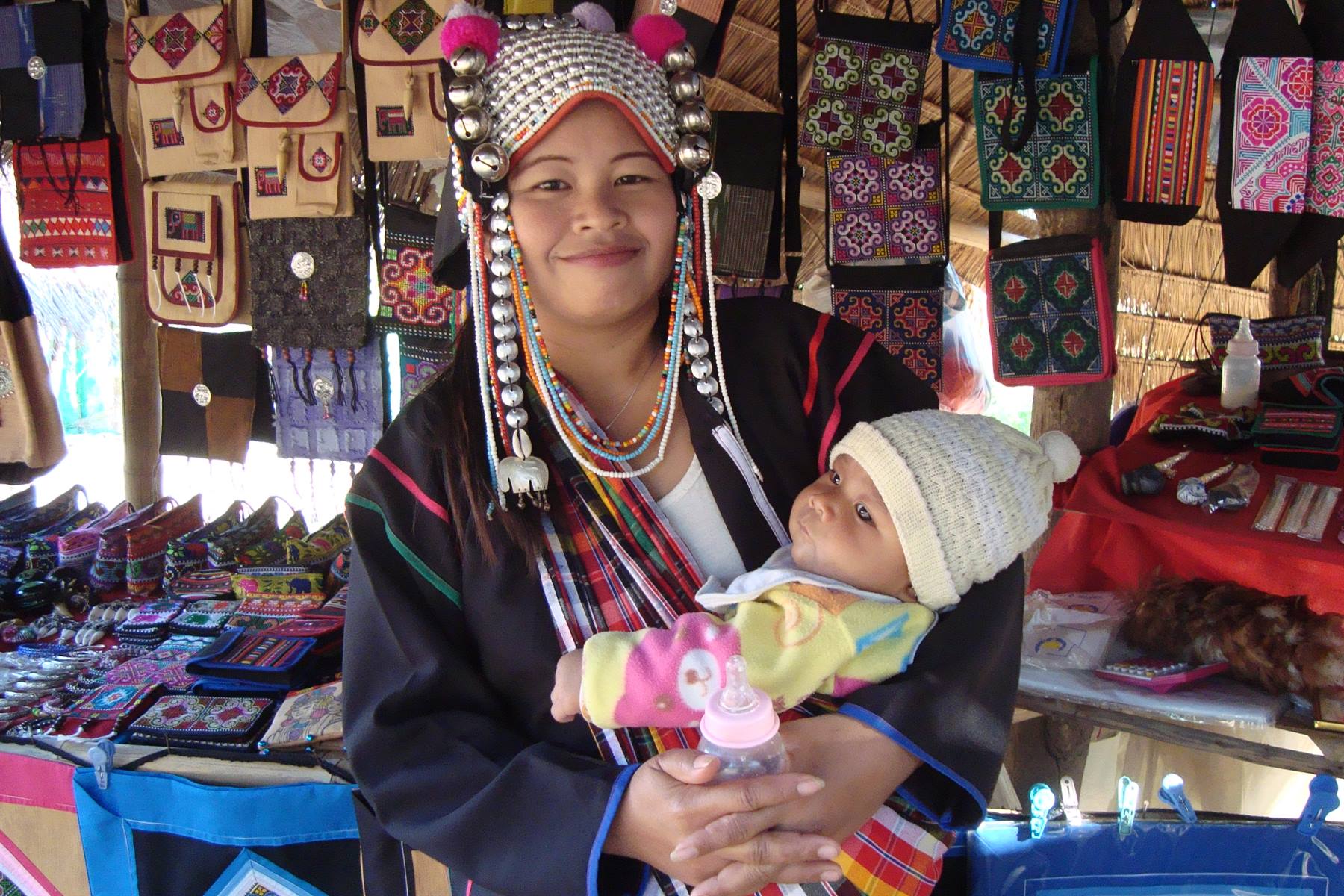
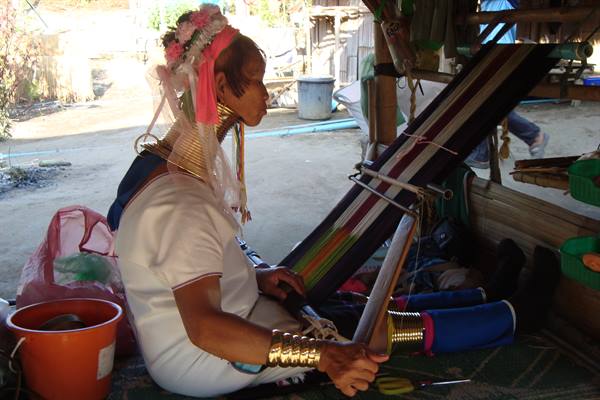
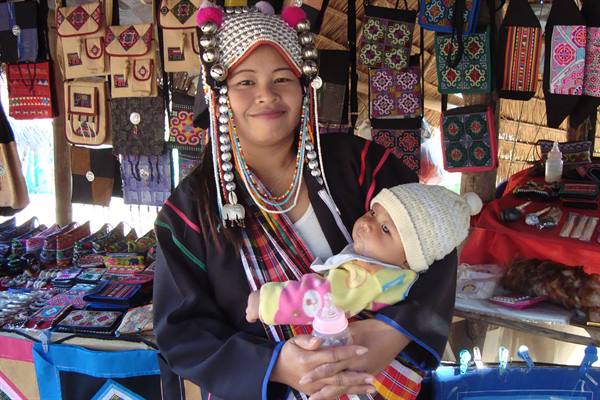
We set off again to visit a multi-ethnic village with its artisanal market. Here we meet, among others, the Akha and the Karen. The Akha, who are originally from Yunnan in China, are known for their particularly elaborate headdresses, finished with silver balls. The Karen are famous for their women, whose necks are lengthened from childhood with metal rings. These are the so-called giraffe women, whom we see here working at the loom. The village consists mainly of huts, but peeking into the back of the shops, you notice that here too, thanks to tourist contributions, modernity is arriving. Next to the humble huts are mopeds and satellite dishes. Even the most original of the Karen, proudly showing off her long neck, doesn't give up using her cell phone. Everything tribal in these parts has become a business. After a long and uncomfortable transfer, we return to the hotel in Chiang Mai.
By tuk tuk we return to the nightlife street to have dinner at a small restaurant. Today, though still feeling unwell, I haven't had diarrhea, so I risk having dinner. On the way back to the hotel I'll bitterly regret it; I'll spend the night in the bathroom.
Chiang Rai
Day 323 Jan 1994
Doi Sethup and Chang Mai
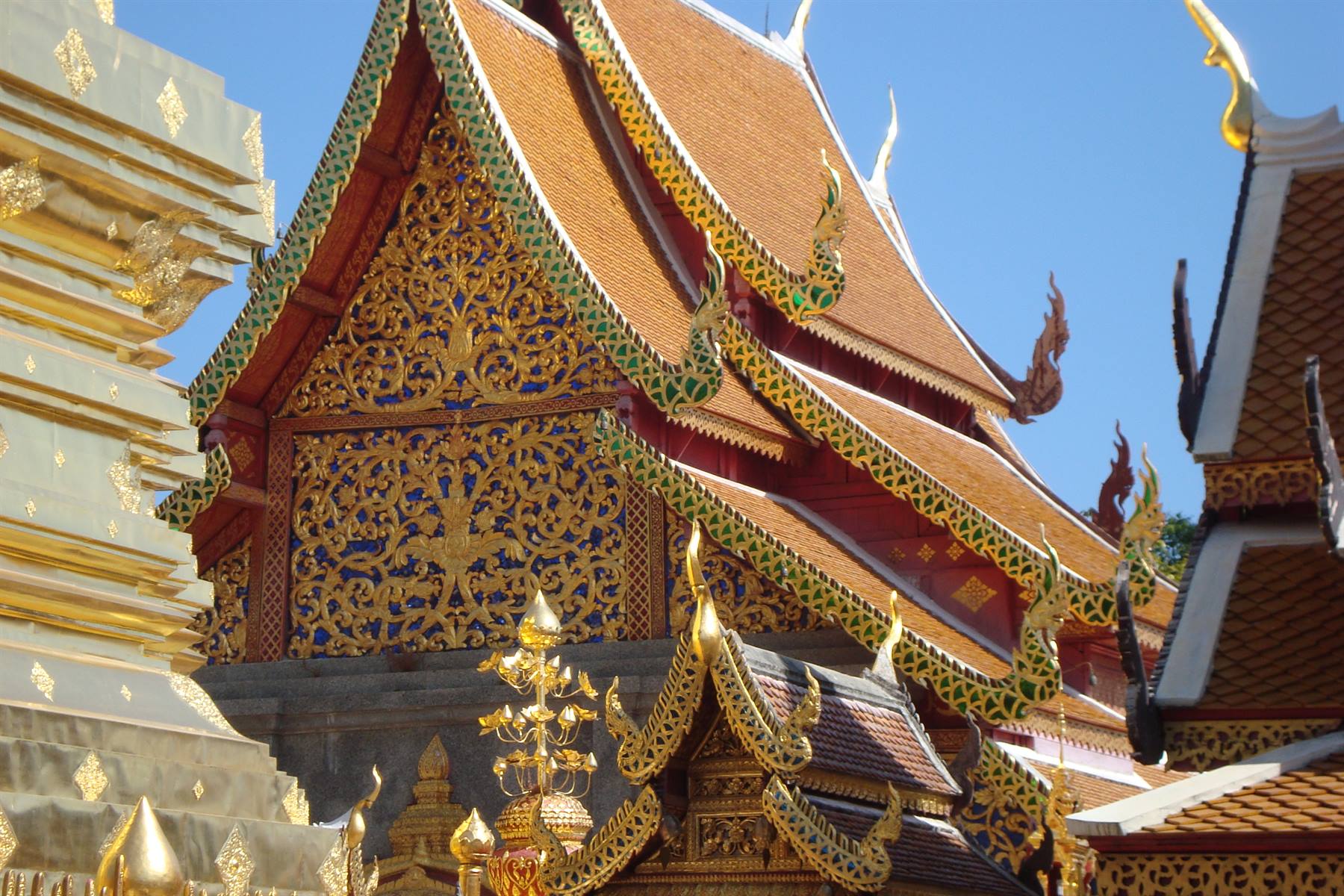
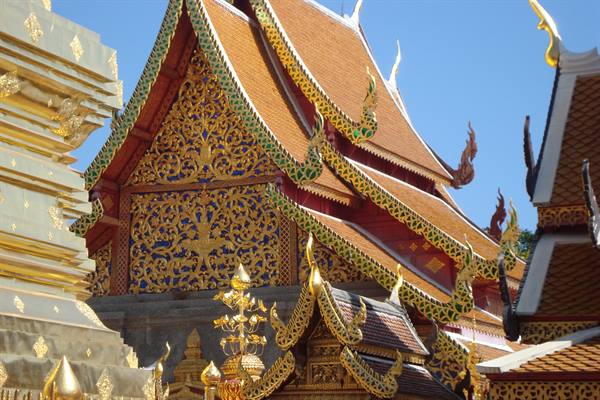
Today too I'm very troubled by traveler's diarrhea, but we have to change hotels and go to the one booked from Italy, located inside the city walls. Our room is near the room where breakfast is served, from which a good smell comes. Moreover, the accommodations are better than the previous ones, although hot water is still lacking. We take one of those red minivans used for transporting people and go up Doi Suthep hill, which overlooks the city and houses the most famous temple in northern Thailand. The road goes up to a certain point, then you continue on foot up a long staircase whose handrail is formed by a naga (a kind of giant serpent) or alternatively, as we did, on a rack railway. At the top of the mountain, you could enjoy a panoramic view of Chiang Mai, but the haze due to smog prevents it.
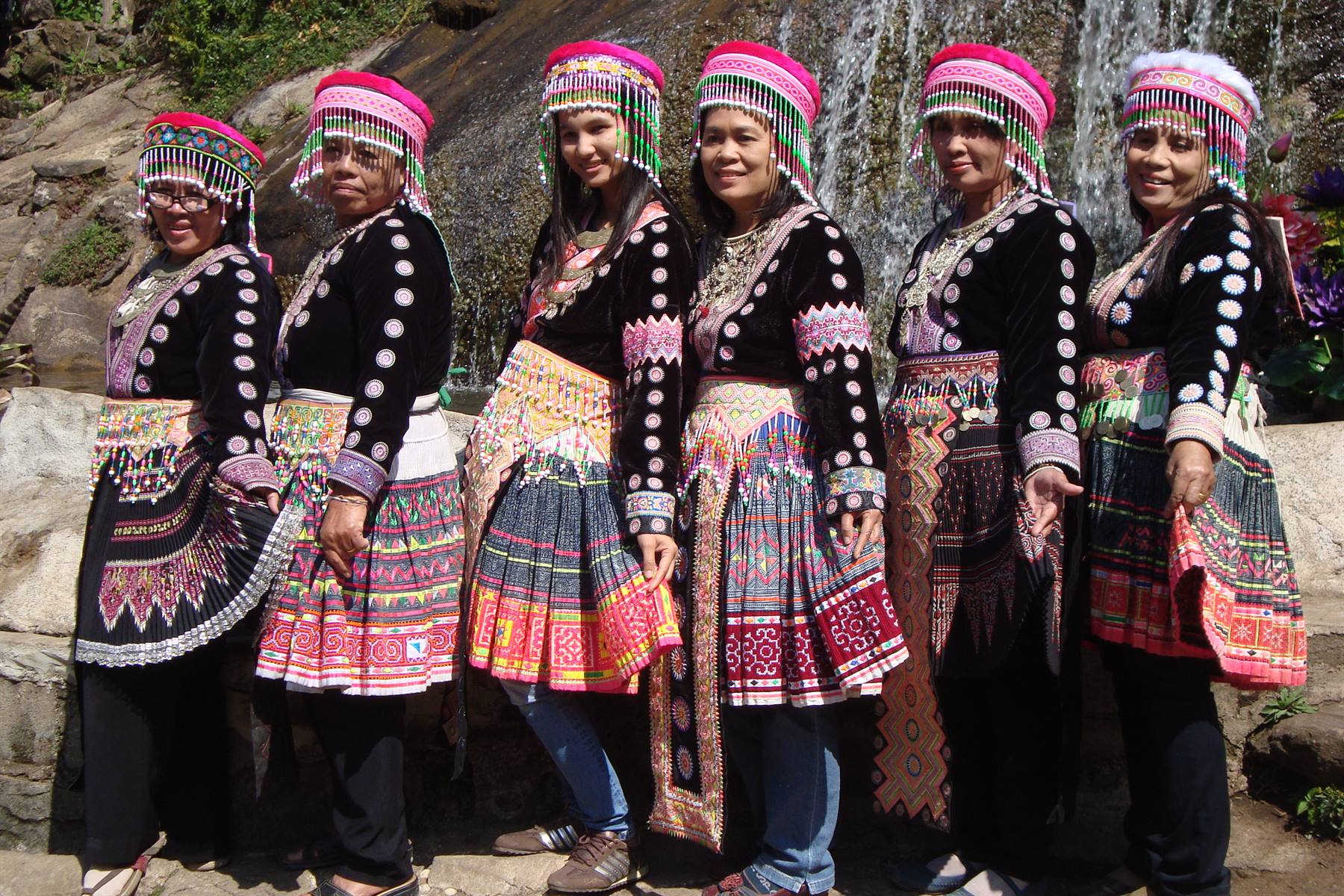
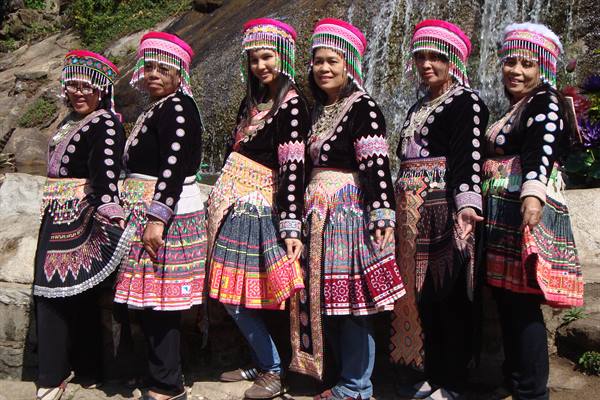
The Wat, as temples are called in Thailand, features all the classic Buddhist architecture: golden statues, chedis, Buddha images, elephants, nagas, etc. We go down the staircase and take the minivan again, heading higher up to a village of the Mong ethnic group. The village is authentic but too touristy; in practice it's a large artisanal market, though I believe many of the items on display are industrially produced. The prices are low, perhaps due to the plentiful competition. Among the stalls we glimpse a few huts of the locals. There's also a small but insignificant museum and a terraced botanical garden dominated by opium poppies. A small artificial waterfall completes the idyllic picture that hides this region's past as a drug crossroads.
We return by van to Chiang Mai, and after eating a hamburger at a pub along the moats, we devote ourselves to seeing the main temples of the city: We enter in order the Wat Chedi Luang, which also features a tall, ancient stupa damaged by an earthquake, the nearby Wat Phan Tao in teak, and the Wat Phra Singh, the most celebrated in the city. The three temples are beautiful, built in Lanna style with sloping roofs overlapping one another. Inside, which you enter after taking off your shoes, there are large golden statues of seated Buddha. The interiors would be sober and elegant, but all the golden trinkets hanging from the ceiling and walls, like our ex-votos, make them kitschy. Seeing these three temples involves a long walk, at the end of which we take a tuk tuk to the hotel.
We manage to go out only in the evening, again by tuk tuk, to have dinner at an Italian restaurant in the historic center. Back at the hotel, traveler's diarrhea starts making itself felt again.
giraffe woman
Day 424 Jan 1994
At the Hotel in Chang Mai
This morning I had booked an organized tour to the highest mountain in Thailand, but I'm still not feeling well and prefer to stay in bed at the hotel. I also call the travel insurance doctor who gives me some advice. I'll only go out in the evening for dinner, being very careful about what I eat. A day of forced absolute relaxation but it seems to have done me good because I'm feeling better. My travel companions, after buying me some medicine today, spent the day visiting markets including the one in a nearby village famous for producing decorated umbrellas.
giraffe woman
Day 525 Jan 1994
From Chang Mai to Phuket
This morning after having a bite at the hotel's breakfast buffet, we take a taxi to the airport where we catch the direct flight to Phuket. The airport where we land after about two hours is in the north of the island; we take the microbus to Patong along a heavily trafficked road. We arrive at our destination after about an hour and a half. We're staying at The Guesthouse, a place a fifteen-minute walk from the town center. We have two double rooms available. From here we go to dinner at a nearby upscale Italian restaurant where I prefer not to eat, then we go to Bangla Road, the street of nightlife. It's a pedestrian street crowded with tourists, lined with go-go bars, huge nightclubs like the Tiger full of lap dance dancers in skimpy outfits, night clubs, brothels disguised as massage centers and erotic theaters that here they call ping pong.
All this, however, we can only imagine because tonight the venues are closed for public order since a very delicate election round is underway, preceded in recent days by clashes in the square that have even led to the death of some people. These episodes actually happened in the distant capital but the ban on having fun and drinking alcohol is extended to the entire national territory. So we walk along Bangla together with thousands of tourists bewildered and surprised by the forced blackout. Near the Tiger, as arranged, I meet a fellow townsman of mine who lives in the United States and together with him, who has been here a few days, we go as far as the beach. Since I didn't have dinner at the restaurant, I stock up at a supermarket on Gatorade and dry biscuits. Having left my townsman, with whom we arrange to meet the following evening, we return to the Guesthouse for the night.
The owner, who is from Brianza, has booked tomorrow's excursion to the Phi Phi Islands for us and we have to get up early.
Donna Akka
Day 625 Jan 1994
Phi Phi Islands and Patong
We get up early; in fact, we are the first to open the gate of the Guesthouse. We wait much longer than expected for the agency's microbus to arrive, even urging them with a phone call made by a English couple who will be traveling with us. Finally they come to pick us up and take us to a private port near the city of Phuket. First they take us to the agency's office where they offer us a breakfast that I gladly skip, then to the wooden pier where we board a very fast boat. Too fast to be able to appreciate the scenery. After being violently tossed about, we stop at the small island of Khai. The sand is white and impalpable and this island is probably beautiful too, but it's so crowded with tourists and umbrellas that it's hardly enjoyable. There are rocks separating the two beaches. Having left the little island, we continue the cruise toward the Phi Phi Islands Archipelago.
They are islands with a high rocky profile whose silhouette plunges vertically into the sea. Cliff aside, the islands are covered with lush vegetation. Now and then, between one cliff and another, narrow bays open up, washed by a sea that takes on strange shades. Small beaches unreachable by our boat have found space at the bottom of the bay. This place, on a small scale, resembles a Norwegian fjord. Having left the bay, we stop at a beach crowded with motorboats and tourists, not to sunbathe, but to eat at the buffet the dreadful stuff offered by the local restaurant. As on Khai island, there are no piers and to reach the shore you get off the boat and walk in the water. After the insufficient meal we go by boat to the nearby Monkey Beach where some monkeys live, so accustomed to the many tourists that they don't appear at all bothered by our presence.
A little monkey calmly drinks a bottle of Pepsi Cola. We continue the cruise, we stop in front of the Viking Cave which opens in one of the tall cliffs. Pirates should never have lived here but the cave is used by locals to collect swallows' nests highly sought after by Chinese cuisine. There are in fact bamboo scaffolds for this purpose. Morphologically it resembles some caves I saw a few years ago along the Li River in China. After passing another beautiful bay, so narrow and surrounded by cliffs that it feels like being in a canyon submerged by water, we stop at what has become a must in recent years, Maya Beach. The place is famous for having been the set of the film "The Beach" with Leonardo Di Caprio. Unfortunately it's extremely crowded and impossible to appreciate.
We return to the small port from which we set off and from where, by microbus, they take us back to Patong near the guesthouse. The excursion was disappointing, the food scarce and unappetizing, the places super crowded, the boat too fast and a continuous animation in English that was too noisy. In the evening we go to Bangla Road and compared to yesterday the situation has changed considerably. Now the night venues are all open, the huge bars like the Tiger which occupies an entire block are packed with young girls dancing lap dances; on the street attractive prostitutes blend in with lady boys and dark queens, an open truck with two guys mimicking Thai boxing noisily invite people with a megaphone to the fights and some guys advertise the erotic shows that here they simply call ping pong.
We meet up with my townsman who lives in the USA and on his advice we have dinner at a fish restaurant. Indeed it's a large covered structure at the end of a side street off Bangla Road where numerous restaurants specializing in fish are located; there's just too much choice. We go to the most popular one and have our fish cooked after choosing it on the counter. Fortunately traveler's diarrhea has run its course and I've resumed eating normally. While walking along Bangla, a couple of elderly gentlemen approach us and offer us an evening at the "ping pong". Out of curiosity we accept but only after long negotiations on the entrance price.
The show is ridiculous; there are some beautiful topless girls doing lap dances on a counter exactly the same as those seen for free in the bars of Bangla Road; the only difference is a no-longer-young and unattractive lady who, completely naked, inserts ping pong balls into her vagina and then "spits" them into a glass. She also manages to insert a blowpipe into her vagina and, by pushing air, burst a balloon with a dart. An indecent show; you see better ones in Italy. Having left early, we say goodbye to my townsman who tomorrow morning will leave for Malaysia. We return to the guesthouse for the night.
Chiang Mai - Doi Suthep Temple
Day 726 Jan 1994
James Bond Island and Phang Nga Bay
Again this morning we get up early for an excursion. After yesterday's not-too-positive experience we face it with little enthusiasm but we can't leave Phuket without having seen the famous James Bond island. This time the agency's microbus is on time, the transfer to the port much longer because we have to reach the north of the island. The port is also better than yesterday's; the pier is reinforced concrete and not warped boards like yesterday's. The boat is not a fast speedboat but a rather large and slow vessel. This will allow us to enjoy the scenery and sail gently, savoring the sea breeze. Before us stand the spectacular sea stacks that make up the Phang Nga Bay Marine Park. It feels like being in Guilin in China but the temperature here is decidedly more pleasant. It's a kind of Halong Bay in the tropics; everything is scenically very beautiful.
The first stop is in front of one of these limestone islands that offer their steep walls to the sea. Our ship is equipped with canoes and the crew is made up of numerous rowers who will accompany us. Each canoe holds two to three tourists plus the rower. We paddle, entering inside a cave at the end of which we find ourselves in a lagoon inhabited by monkeys and surrounded by mangroves. We go through the cave in reverse; the boatman with a torch lights up some stalagmites and a colony of bats for us. We get back on the ship and continue the cruise. A whole different thing compared to yesterday's nerve-racking tour; today we can relax, we can eat fresh fruit, very good filled biscuits and all the drinks we want.
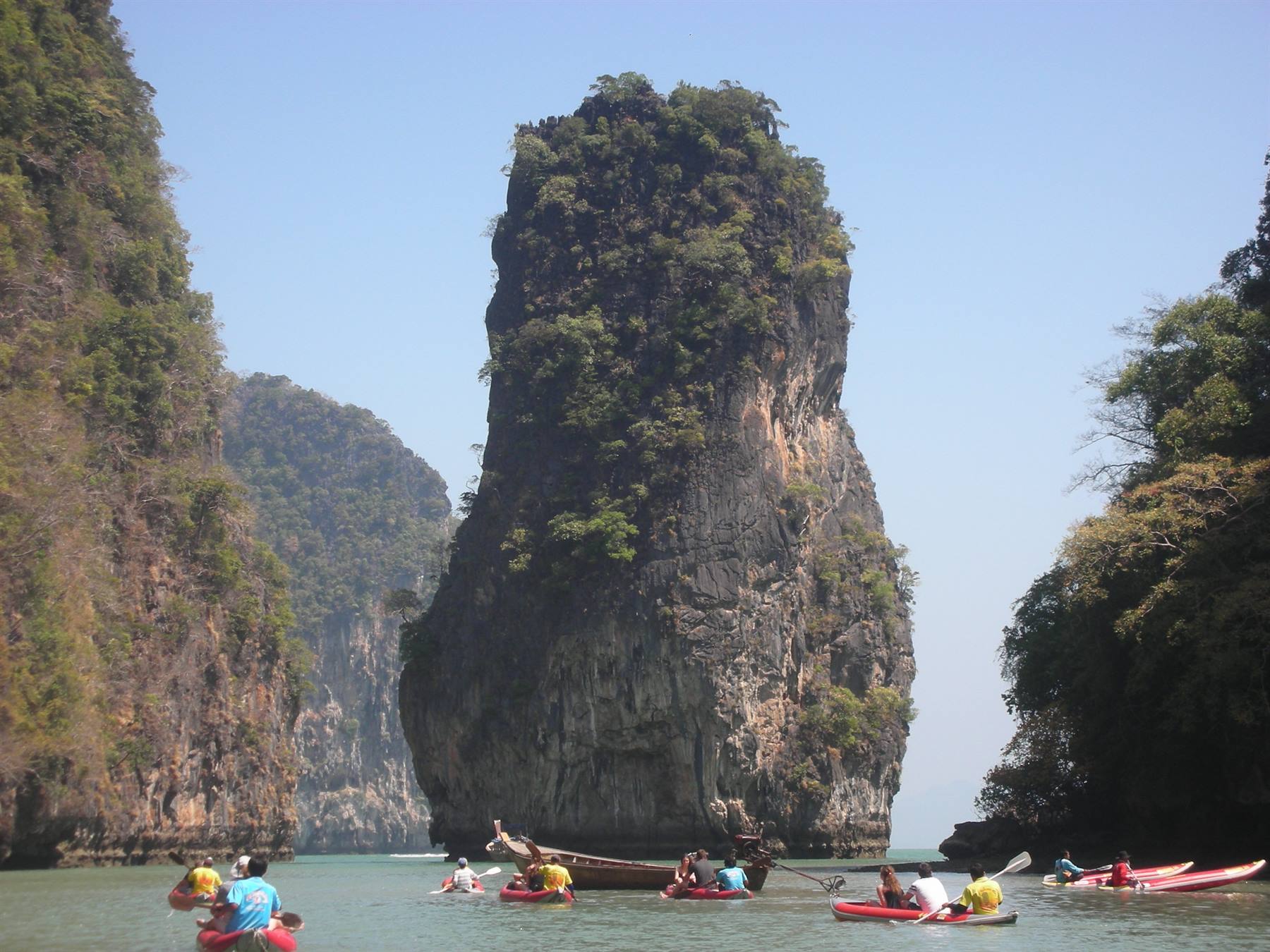
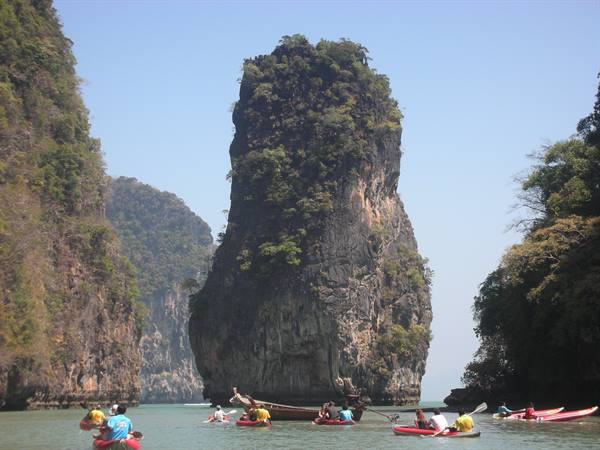
We get into the water again with the canoes near another island-cliff and passing through a narrow opening we find ourselves in a very beautiful inner lagoon with mangroves and a small beach where we land. After a very brief stop we get back into the canoe going back through the natural tunnel that separates us from the open sea and reach the ship. On board a buffet lunch awaits us with fish, rice and fruit. Meanwhile we set course for James Bond Island, near which we transfer to a long boat to dock at the pier. This small island too is made up of a steep limestone formation. It became famous worldwide after part of the film "The Man with the Golden Gun" from the 007 series was shot there in '74. The man in question was played by Christopher Lee who had his secret hideout on this island.
Indeed on the island there is a cave but above all there is that isolated sea stack rising from the sea that has become a real must. Obviously, following its fame, here it's full of tourists and there's even a resulting souvenir market. All this, however, cannot spoil a place that is truly beautiful in itself and we too feel like adventurers like 007 after a day spent sailing in such a spectacular place. We leave this island but only to go to another one, of a completely different kind. This time it's the classic tropical island with white sand and crystal-clear sea. To come here too you have to use canoes because there are no landing points. We take the opportunity for an hour of swimming. There aren't many tourists so we can enjoy the beach and the bar where we have a drink. As the high tide begins to rise, we reach the ship by canoe and set off for the return to Phuket.
Arrived at the pier, we get on the microbus which in about an hour takes us to the Guesthouse in Patong. A beautiful excursion with which I am fully satisfied and which repays me for the disappointment of the previous day. We spend the evening on Bangla Road where we have dinner at the same restaurant as the previous evening. A bit of chatting with the numerous guests of the Guesthouse and then to bed.
Hmong women
Day 827 Jan 1994
Patong
As with almost all the other stops, we have a rest day in Patong too, which means we have no excursions and nothing scheduled. We get up late and each of us does whatever they want. For example, one of my travel companions has himself taken by taxi to Kata beach, while I wander aimlessly between Patong and the Guesthouse. In the evening, instead, I go out with one of my friends to have dinner at the fish market where you choose what you want to eat and have it cooked grilled or fried. You then sit at a table where you order drinks and watch a little show. We have the chance to see artists skillfully playing with fire. There's also good live music and a good local singer. We return to the Guesthouse passing through the crowded Bangla Road.
Hmong women
Day 928 Jan 1994
Ayutthaya and Bangkok Night
As soon as we get up, they come to pick us up with the taxi booked yesterday at the Guesthouse and take us to the airport. As on the way out, the road is quite long but the traffic this time is limited and we arrive in about forty minutes. We wait at the gate for more than three hours then we depart with an Air Asia flight bound for Don Mueang Airport in Bangkok. The airport is north of the capital, about thirty kilometers from the center and 80 from the city of Ayutthaya. We take a taxi to Ayutthaya where after about an hour we have ourselves dropped off in front of the railway station. We leave our luggage in the storage at the station. On the way out we are practically surrounded by a tuk tuk driver who at astronomical prices would like to take us around the city.
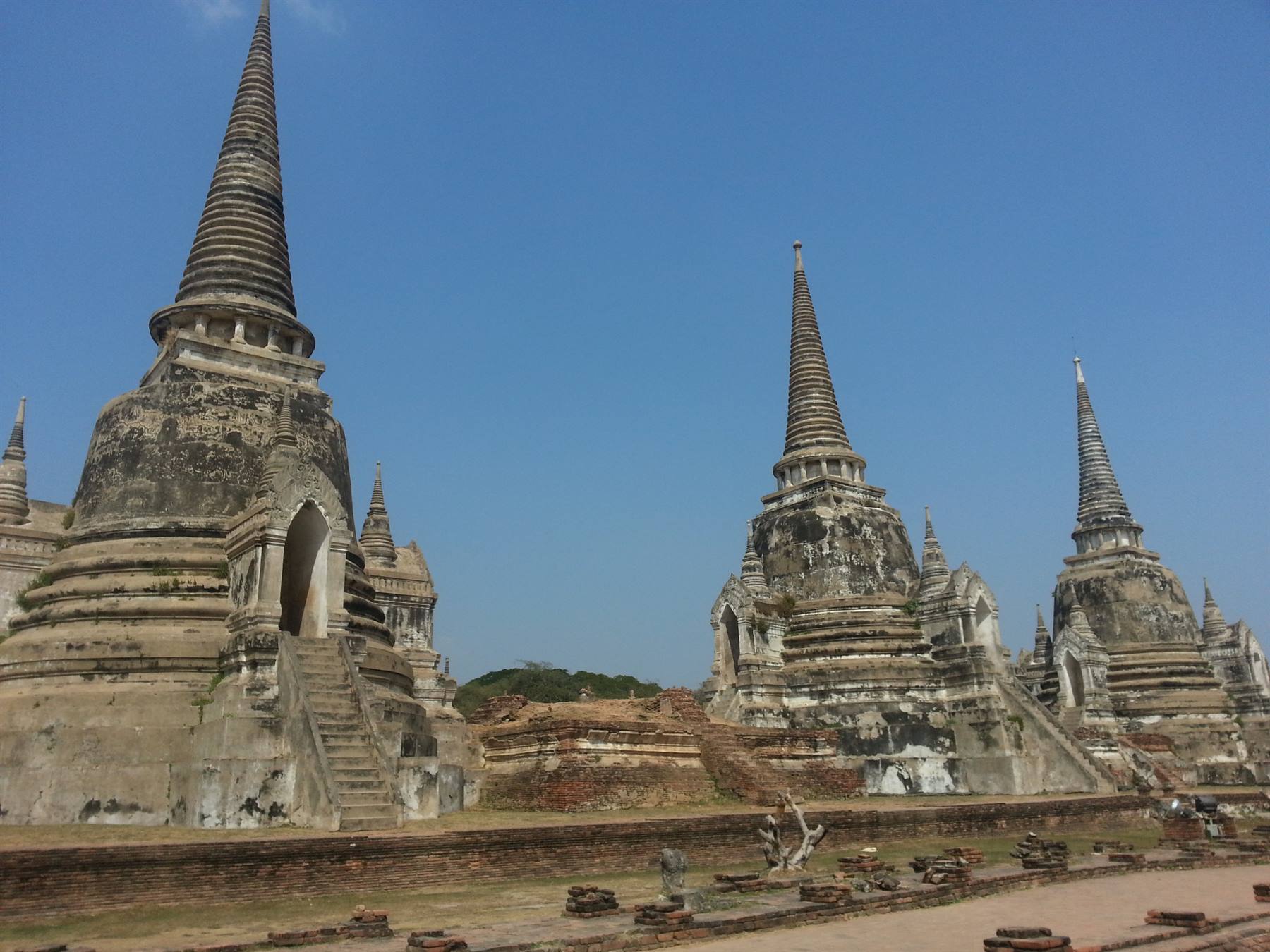
We try to negotiate the price with a colleague of his but it immediately becomes clear to us that there is a cartel among the various drivers so the price doesn't come down. Crossing the street, however, we solve the situation by renting a bicycle each with its own lock; the price is reasonable and they also provide us with a map of the historical sites. For the whole afternoon we wander among the various temples enclosed outside and inside the historic center, which consists of an island surrounded by rivers and canals. First stop at Wat Mahathat to observe the numerous remains of stupas, courtyards, statues of Buddha. Ayutthaya was the capital of Siam and at the height of its splendor conquered Angkor Wat and the Khmer Empire, but in turn was occupied and destroyed by the Burmese.
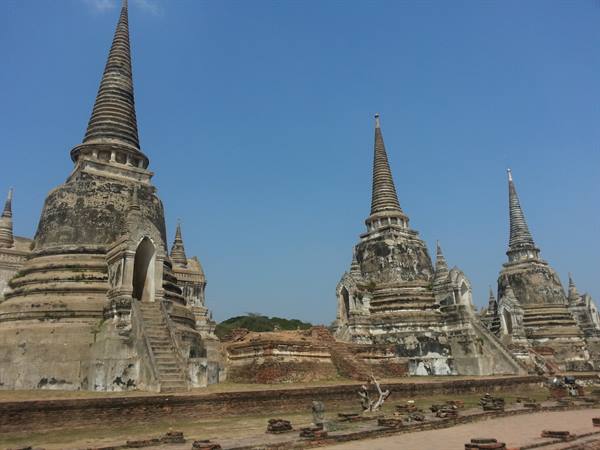
From the Cambodians it borrowed the style of many of its temples, of which today, after the looting by the Burmese, only some main structures remain. Entrance to the temples is almost always paid but the price is cheap. Visits are self-guided. We too, like all tourists, have ourselves photographed with the Buddha head wrapped in a lattice of branches, a statue that has become the symbol of the city. From here we move to Wat Phra Sanphet, also making a brief stop along the way that allows us to see from the outside the great stupa of Wat Ratburana. In a rather vast area preceded by a large market of stalls, some of the main monuments of Ayutthaya are found. We first enter the more recent Wat Phra Mongkhon Bophit to contemplate the enormous golden statue of Buddha.
The temple was built with contributions from Myanmar, ancient Burma, as late reparation for the lootings committed in the past. The temple looks very much like the numerous ones seen in Chiang Mai, with the polychrome sloping roofs intersecting one another. Next to this are the three great stupas of the Wat Phra Sanphet Temple and close to these the ruins of the ancient Royal Palace. In the distance we see elephants complete with a canopy sheltered by an umbrella taking tourists for a ride. Having picked up the bicycles again, we cross a bridge, leave the island and go to see the reclining Buddha, located in a somewhat hidden area and dressed in a yellow tunic. With a long transfer along one of the many canals, we arrive at the beautiful Wat Chai Wattanaram which recalls the Bayon of Angkor for its numerous towers in Khmer style.
Another long and tiring ride under the sun and we return to the railway station, hand back the bicycles, collect our luggage from the storage and take the first train to Bangkok. Fortunately trains are frequent and we leave right away. The train we get on is comparable to one of our regional trains but much more dilapidated, which is saying something. In practice it's a heap of rust on rails but compared to ours it has the advantage that the floor gets mopped and a guy comes around with a bucket full of ice and canned drinks. Arrived at the Bangkok station facing north, we take a taxi to the hotel we booked from Italy. It takes us a while to find it due to the capital's traffic but above all because the taxi driver doesn't know it and ends up going haywire.
At a certain point he stops for about twenty minutes at a traffic light without going any further, he seems not to know which road to take, then finally he has a flash of genius, so to speak, and asks a colleague who directs him to one of the most beautiful and luxurious hotels in the city, the Lebua, which occupies a futuristic tower that is the pride of Bangkok. Knowing that ours is a fairly cheap accommodation we don't understand. Then the mystery is revealed; indeed we will sleep in an apartment in the tower that the Lebua has sold to private individuals who in turn sublet to tourists. And so to our great amazement we find ourselves in an apartment completely similar to the Lebua suites, with all the related comforts and a terrace wide open onto the city. Among other things, to go up to the floor of the apartment we use the lobby and elevator of the Lebua.
The accommodation is exceptional: a spacious room, a large liquid crystal television, a DVD player, a spacious bathroom, shower with hot water and a fully equipped kitchen. We go out into the city and discover the first drawbacks of our lodging; they take us for Lebua clients and client procurers and tuk tuk drivers assault us with numerous offers. It's not hard to understand that here too there's a tuk tuk lobby. Anyway we take one to go along Silom Road as far as the two parallel streets of??? 1 and 2 where the nightlife takes place. But Silom Road too is lively and hosts a market of hundreds of stalls where everything is sold: from peeled pineapple, to suitcases, from fried insects to phallic prostheses. I'd like to dwell on the latter, sold on an open-air counter like clothes are sold back home; the owner sitting nearby has her little girl, 2 or maybe three years old, in her arms.
No more and no less as I've seen done many times in Italy, the little one puts her hands on the goods on the counter, but here she's not playing with a blouse or a hat, she's handling a large latex phallus, an absurd scene and inconceivable for us, a child spending the day in her mother's lap among vibrators and sex toys, but... We have dinner at an Italian restaurant located in a side street off Silom Road; we spend the right amount and pay what we would have paid in Italy. We take a walk along the nightlife streets among sellers of trinkets, go go bars with attractive young girls, discotheques and massage centers. It's a much scaled-down Bangla Road. From here we take a tuk tuk that takes us back to the hotel for the night.
Ayutthaya
Day 1029 Jan 1994
Bangkok
We wake up in our beautiful suite; this time from the terrace you can enjoy a daytime panoramic view of the capital. Breakfast is not included but near the lobby there's a Starbucks Coffee and we take the opportunity for an American breakfast. Even though this is our last day in Thailand, we won't leave until after midnight so we've booked the room so we can keep it until tonight. This will allow us not to carry our luggage around and to be able to take a shower before the flight. My travel companions and I split up; one of them has already seen Bangkok many years earlier, the other is more interested in the largest shopping center in the world that the Italian restaurateur told us about at dinner last night. I take a tuk tuk that offers to take me for a ridiculous sum to the nearest pier on the Chao Phraya, the river that crosses the capital.
I soon discover that the ridiculously low tuk tuk price is due to the fact that the driver isn't taking me to the pier where the public boats leave but to the one for tourist boats. The price difference between the two boats is abysmal and while the tuk tuk waits for its percentage from the boatmen I don't let myself be cheated and on foot I reach in about ten minutes the other small port, the one where the public transport barge stops. Here the price is very low since it's a means of transport also used by locals moving from one part of the city to another. It's crowded, I'm forced to stand, but the panoramic view offered by the short cruise is the same as the tourist boats that cost twenty times as much. I get off at the stop near the Royal Palace, preceded by a long line of food and non-food stalls.
When I come out of the market, the long perimeter wall of the Palace opens up before me. I follow the walls and the flow of tourists and find the entrance. The ticket is a bit expensive but it's worth it because the Royal Palace has a lot to offer. Among other things, I join an organized trip of Italians to take advantage of their Thai guide. This place is not only a Royal Palace but also a vast sacred area where numerous stupas are located, among which three stand out above the others, placed one beside the other and with different architectural styles: Thai, Khmer and Sri Lankan. Some chedis were built by the various Kings in memory of their loved ones. Here too is found the most venerated sacred image of Thailand, the jade statuette called the "Emerald Buddha", placed in Wat Phra Kaew.
There are many who want to enter this temple so you're allowed to stay for a very short time, just to take a look at the statuette, dressed by the sovereign at every change of season in golden robes. We then go to see the Palaces from the outside and enter the throne hall, the funeral ceremonies hall and the armory. Even though the King has lived in another Royal Palace for years, the most solemn anniversaries, such as the coronation, are still celebrated here. I thank the group of Italians who hosted me and following the outer walls of the Palace I reach Wat Pho, perhaps the most beautiful temple in Bangkok, historically and architecturally very important. Here the first official school of Thai massage was born; here is the enormous reclining Buddha, a long golden statue.
Although it is the most visited in the temple, this is certainly not the only depiction of the Buddha; there are hundreds of them in the courtyards and inside the ordination halls. Wat Pho too has an entrance fee but they give you a complimentary small bottle of water. From the temple I return with a long walk among the numerous stalls to the pier near the Royal Palace. From here I board the public barge to return to the area of my lodging. Sailing on the Chao Phraya I pass in front of Wat Arun, the first temple built in the Bangkok area when the capital was moved here from Ayutthaya. The sacred building is somewhat the symbol of the city with its shape of a tall stupa with a terminal spire.
When this building was constructed Bangkok didn't exist yet; together with the court the venerated Emerald Buddha was also moved to the temple, later definitively moved to the opposite bank after the construction of the Royal Palace. Arrived at the pier, keeping the tall tower where we're staying as a reference point, with a long walk I return to the Lebua hotel where I casually run into my travel companions. They have been to the enormous shopping center, took a short cruise on the Chao Phraya and were for a while at the mercy of a tuk tuk driver who tried to take them where he wanted rather than where they wanted. With a taxi we have ourselves taken to the restaurant of the previous evening but here too we suffer an attempted scam. At the entrance of the place there's a sign with the dish of the day, pasta alla carbonara, on special offer.
Obviously one of my companions takes advantage of it and orders that pasta but surprisingly when the bill comes it costs three times more than the offer. After the following protest and various absurd justifications from the Italian owner about the fact that the portion was larger than normal (but who asked him for it?), we manage to have the promotional price applied. The restaurant is called "La Tana" and is located in a side street off Silom Road, on a parallel street to the two nightlife streets. From here on foot with a long walk we reach the hotel. We wait in the room for departure time then by taxi we go to the airport, this time BKK which is the international one. We check in and wait for the flight.
James Bond Island
Day 1130 Jan 1994
Off we go
We wait for the flight which leaves around one in the morning. We board an Emirates plane for Dubai (United Arab Emirates) where we have decided, taking advantage of the wait for the flight to Rome, to make a very brief panoramic visit of the city.
0 reader comments