Comment
First of all, a premise: anyone intending to leave Italy to spend an idle holiday in the Maldives should seriously consider the idea of extending their stay to discover a truly fascinating country: just think that when I was there, a week with a full-board tour of Sri Lanka cost only 200 euros more than the Maldives-only package. Even today, though it has increased, the cost is not prohibitive. In Sri Lanka there are no incredible monuments to see: to make myself clearer, there are no places comparable in importance to a Chinese wall, or an Aztec temple, or a pyramid.
The country is made up of many small historical sites of little importance to a foreigner, many Buddhist temples, some perhaps anonymous, a capital, Colombo, that has no particular attractions, but all these things, combined with gentle and relaxing natural beauties, its people, poor but proud, a sense of spirituality that can be touched anywhere, from a ceremony in a temple to the bustle of a market, make it an unforgettable destination. But the beauty of Kandy is truly indescribable, with its colours, its scents, its people. The people here are truly poor, the houses are built with mud and wood, the children, especially in the countryside, have nothing, as soon as you go among them they ask you for everything, sometimes insistently, certainly out of need but also out of habit. The prices are very low, from silk to food to precious stones.
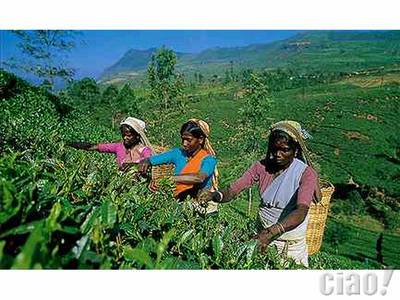
The narrow roads, sometimes unpaved, cross unforgettable scenery, sometimes through tea plantations, other times among very tall palms, or thick vegetation: it can happen that your vehicle has to stop because it encounters an elephant on the road casually eating. The luxurious facilities for tourists contrast incredibly with the poverty that surrounds you: it leaves you bewildered, hard to understand such a world, such a different way of life, especially at the time for a boy like me used to having everything. Yet life flows calmly: the affluent and fortunate schoolchildren, well dressed in their white clothes, visiting the botanical garden, a couple kissing near a tropical plant, a man working the land, the women picking tea leaves under a scorching sun, a grandfather extracting rubber with medieval methods, a woman bowed in a temple intent on praying.
The strength and wealth of the country is this: making up for the lack of economic and industrial resources with the spirit of its people through a deep bond with their religion.
But here is a short guide to the main places to see, or rather, those that struck me in some way:
KANDY
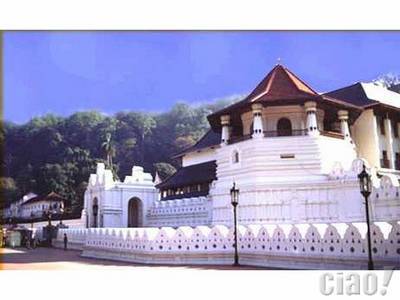
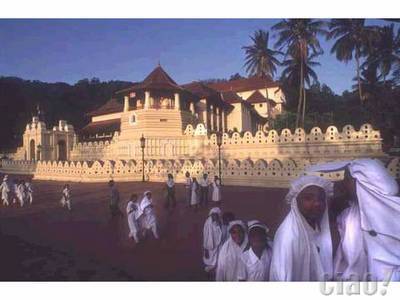
The image of Kandy when you arrive at sunset is something that takes your breath away: positioned at the foot of green hills, directly on a lake in which the colours of the sun are reflected, the few lights on the road, the people walking to go to the sacred places. Fantastic. The town is famous for its spirituality, which can best be understood by visiting the Temple of the Tooth of Buddha, named after the relic it guards. The visit to the temple is something that strikes you deeply, an indelible mark. The long avenue leading to the entrance is surrounded by kiosks selling flower petals of various colours, which pilgrims buy to bring as an offering. As soon as you cross the entrance, you immediately realise you have entered a world different from yours, the colours are vivid and dazzling, and the evocative ceremony of the donation begins.
Some monks play drums with engaging rhythms, the crowd is crazy and the pilgrims dressed in white are crowded together waiting for their turn to pass in front of the relic and deposit their offering, people bowed to the ground intent on praying: you may not know Buddhism, you may not be a believer, but you realise that this is religion, this is the way to practise a religion, if you consider yourself a believer. Hard to explain the feelings experienced, the only way is to live it, even for just a few moments. But the very fact that I am describing these feelings after 14 years, something must have stayed with me. Kandy is also famous for its botanical garden, where in an immense park you can admire trees from all over the world (even a cocaine plantation).
The centre is very characteristic, with shops, folkloric markets where you get lost, deafening noises and typical buildings with curved roofs.
NUWARA ELIYA
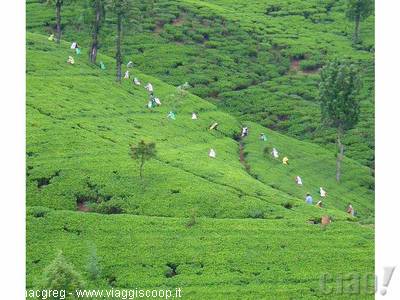
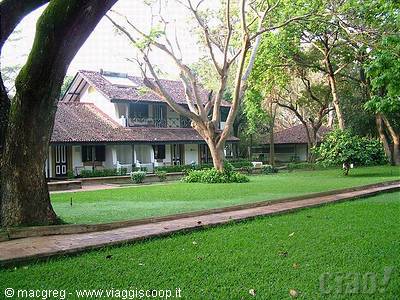
From Kandy you can reach in a day the highest resort in the country, situated at almost 2,000 metres above sea level and reachable via a road that follows a breathtaking route, crossing very green tea plantations where you can observe the women at work, truly strenuous, and stop at one of the many factories to see the processing. When you arrive at Nuwara Eliya, it feels like being in England. The lawns are very green and well kept, the buildings are typically English: in fact the resort was founded during the period of English colonisation, which turned it into a holiday resort, thanks to its cool climate.
COLOMBO
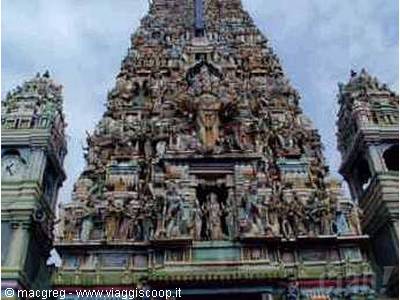
The capital did not leave me with enthusiastic memories: the city is scattered with temples, churches and mosques testifying to the mixing of the different races it hosts. Very peculiar is the pedestrian area where there is a fixed but at the same time improvised bazaar, amid din, crowds and kids who pretend to charm snakes by pulling them with a string, the classic image with a wicker basket and the snake rising up. I remember a very particular temple, the name escapes me, made of many statues placed one on top of another forming a kind of pyramid.
SIGIRIYA
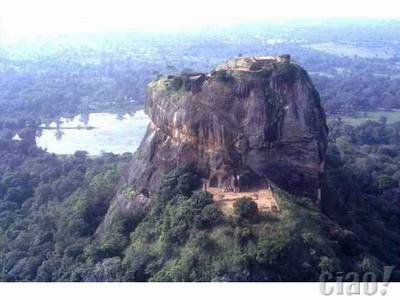
This is perhaps the most spectacular place on the island. A rocky mountain 200 metres high with sheer walls, rising isolated in the flat savannah. And so far nothing exceptional, if it weren't for the fact that in the 5th century AD, a sovereign had the brilliant idea of transforming its summit into an incredible "fortress palace", with a thousand concubines at his side (lucky him). Now very little remains, but the climb up steep steps hanging from the walls lets you imagine its history and how much there could have been at the time. The climb up its almost 1500 steps, besides being very tiring, lets you admire curious and intact frescoes and a splendid view. Needless to say, this fortress was almost impregnable. Nearby is DAMBULLA, one of the most striking temples, in an enormous cave numerous statues of Buddha have been placed, one of which is carved into the rock, very evocative.
POLONNARUWA
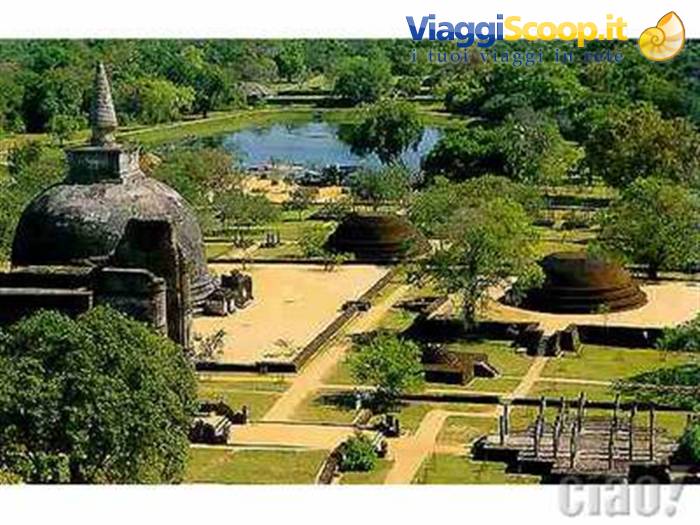
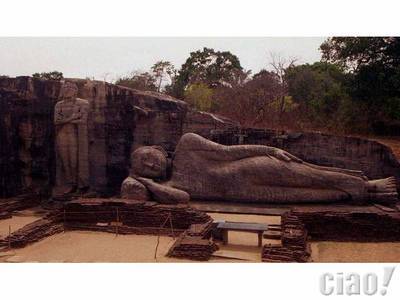
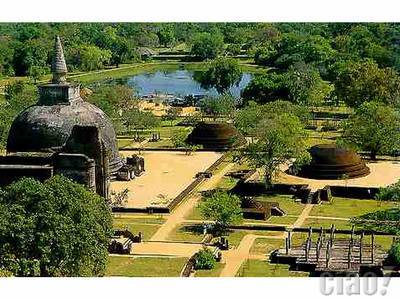
These are the remains of the ancient capital of Ceylon, and it now houses multiple temples. The most evocative, Gal Vihara, one of the most beautiful, houses four enormous statues of Buddha, amid a coming and going of monks dressed in orange, with the classic little umbrella and bare feet.
Please note that in Sri Lanka there is a civil war in progress, and the northern part of the island is not open to tourism. Anti-malarial prophylaxis is also necessary.

0 reader comments