The story
Mongolia, wedged between two great nations, China and the former Soviet Union, is one of the most fascinating and mysterious countries in the world. On its territory, almost six times larger than Italy, made up of plateaus between 1,000 and 3,000 metres in altitude (the highest peak, Tabin Bogdo Ola - 4,356 metres - is in the Altai range in the north), temperatures range from +40 C in summer to -50 C in winter. 90% of Mongolia in fact consists of a large plateau divided into two zones: the green steppes of the Khangai in the north and the Gobi desert in the south. It's a territory mainly given over to grazing, with no access to the sea, 7,670 kilometres of border and only 2.5 million inhabitants, the makers of a history full of twists and turns.
The great leader Genghis Khan began here the conquest of an empire that would be the largest in history, from the gates of Europe to the Yellow Sea, including cities such as Moscow, Beijing, Damascus and Baghdad. Then, around 1600, the conversion of the Mongol people to Tibetan Lamaism transformed their indomitable, fierce nature into an opposite docility, which turned the Mongols from conquerors into conquered, effectively making them a Chinese colony and later a buffer state between China and the Soviet Union. Today the Republic of Mongolia is a country of great spirituality, where animism, shamanism and Lamaist Buddhism meet in a harmonious whole.
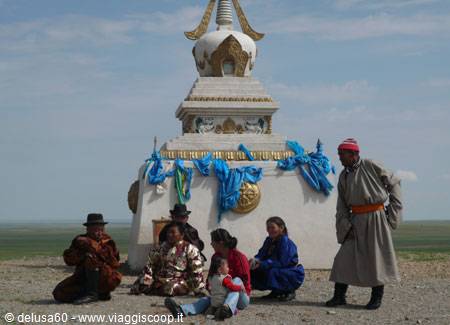
On the most inaccessible heights the eye rests on the ovoo, the great mounds of stones topped by propitiatory little flags entrusted to the wind to transmit to the spirits the dreams, wishes and prayers of a simple, hospitable people who preserve an innate love for their own land, vast as the sea. 2 August, Sunday, day 1 - ITALY/BEIJING Meeting of the participants in Bologna and transfer to Rome Fiumicino by plane or coach, as convenient and per the schedule. Departure for Beijing on scheduled Air China flight CA 940L at 20:10. Dinner and night on board. 3 August, Monday, day 2 - BEIJING Arrival in Beijing at 12:00, completion of entry procedures and transfer to the hotel. Visit to the 'Forbidden City' or Imperial Palace, passing through Tiananmen Square.
In this Palace, which extends over five square kilometres, twenty-four Chinese emperors of the Ming and Qing dynasties spent their lives amid wars and intrigues, receiving provincial dignitaries in audience, dividing their private life between empresses and concubines (an emperor could officially have three wives, six favourites and seventy-two concubines). Meals at the hotel. Overnight stay. 4 August, Tuesday, day 3 - BEIJING/ULAANBAATAR Breakfast, transfer to the airport and departure for Ulaanbaatar, the capital of Mongolia. Air China flight CA 901L at 8:10 / 10:35. Arrival, transfer to the hotel and accommodation in the reserved rooms. Western-style second breakfast in a restaurant. In the afternoon an introductory tour of the city, built along the banks of the Tuul river and surrounded by evocative mountains.
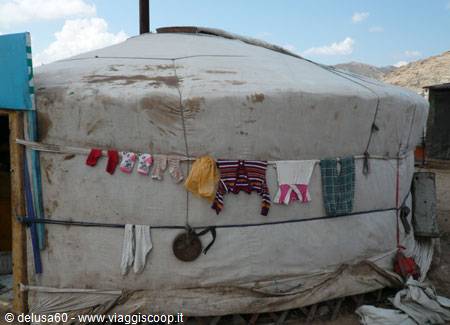
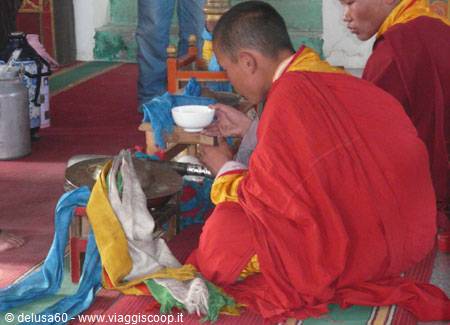
The city is characterised by Soviet-style buildings but in the outskirts you still find the traditional ger, the circular felt tents. Visit to the great Sukhbaatar Square, surrounded by the Parliament and Government Palace, the Mongolian Stock Exchange and the Opera and Ballet Theatre. In the centre is the statue of the national hero Sukhbaatar, after whom the city was renamed Ulaanbaatar (Red Hero) after the 1924 revolution. We also visit the Zaisan Memorial: the monument to the soldiers fallen in the Second World War, and the National Museum of History. Dinner in a traditional restaurant. Overnight stay. 5 August, Wednesday, day 4 - ULAANBAATAR Breakfast and visit to the Gandantegchenling (Gandan - 1838), the largest Buddhist monastery in all Mongolia, inside which is the magnificent white temple Migjid Janraisig.
The walls of this building are covered with countless images of the Buddha of Longevity (Amitayus). Continuing with a visit to the Winter Palace of the last king of Mongolia, Bogd Khan, spared from destruction by the Russians at the end of the 1930s. Second breakfast in a restaurant and in the afternoon continuing with a visit to the Choijin Lama monastery-museum (museum of religion). This monastery escaped destruction because it was turned into a museum. Dinner in a traditional restaurant. Overnight stay. 6 August, Thursday, day 5 - ULAANBAATAR / TERELJ / ULAANBAATAR (200 km round trip) Breakfast and departure for a visit to Terelj National Park, which lies north-east of the capital at 1,600 metres in altitude. In this area, which offers fine mountain scenery, there are also some ger camps.
Stop for second breakfast and visit to an interesting rock formation shaped like a turtle in a side valley of the park. Then time to spend walking in the park along the banks of the Tuul Gol, the river that rises here and flows down to Ulaanbaatar. Typical dinner at the incredible Hotel Mongolia. At the end of dinner, return to Ulaanbaatar for the overnight stay. 7 August, Friday, day 6 - ULAANBAATAR / KHUSTAI MOUNTAINS (150 km) Breakfast and completion of the visits in the capital with the Museum of Fine Arts and the Natural History Museum. After the Western-style second breakfast, departure for the Khustai Mountains National Park, reached after about two hours of travel heading south-west.
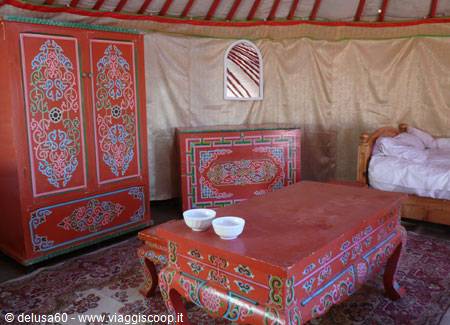
The park, with its wooded-steppe environment, is the habitat of the Mongolian wild horse, unfortunately endangered (the Takhi Przewalski, mythical winged horses with two extra chromosomes), and of other animals such as wild deer, manul cats and steppe gazelles. After settling into the camp in traditional ger, visit to the archaeological complex and the magnificent stone statues of Ongot found in the river valley on the edge of the park. It's thought that here was an ancient burial place of a people of Turkic origin (Ongot). Visit to the horse museum. Dinner and overnight stay at the camp. 8 August, Saturday, day 7 - KHUSTAI MOUNTAINS / KARAKORUM (300 km) Breakfast and departure for Karakorum, the ancient capital of the Mongol empire of Genghis Khan in the 13th century.
Before arriving, visit to the Ertene Khamba Monastery and, in the beautiful valley at the foot of the Khognokhaan, the Ovgon Khiid monastery, destroyed in 1640. Second breakfast en route at a tented camp. Arrival in Karakorum and continuing with a visit to the Erdene Zuu Monastery, the first monastery in the country, whose construction began in 1586. Accommodation in a tented camp. Dinner and overnight stay. 9 August, Sunday, day 8 - KARAKORUM (160 km) Breakfast and a full day dedicated to visiting Karakorum and the surrounding areas reachable only by tracks. Ancient Karakorum was a stop on the long trade route linking west and east; it lies in the valley of the Orkhon river and was the capital of the world, described with astonishment even by Marco Polo.
It's said that in the garden of the imperial palace there was a life-size tree entirely of silver from which flowed arak, wine, beer and other drinks, offered to the guests. From 1220 until the 14th century Genghis Khan and his ancestors Ogedei Khan, Guyuk Khan and Mongke Khan lived here, until Kublai Khan (Genghis Khan's grandson) moved the empire's capital to Beijing. After this change the city fell into ruin and was completely destroyed by the Ming dynasty in the 14th century. What remains today are some monumental turtles of
The journey's photographs
5 photographs · click to open them full screen

0 reader comments